
Top 7 Non Woven Bag Making Machine Models for 2026: Ranked by Production Versatility
Top 7 Non Woven Bag Making Machine Models for 2026: Ranked by Production Versatility
A non woven bag making machine is usually judged on seal quality, speed or after-sales service. But for a factory whose order book changes every month, one question decides the purchase: how many different bag constructions can a single machine actually produce, and how wide is the working envelope in which it can produce them? This article ranks seven models from the ZXL 700 series by exactly that measure — production versatility.
The seven models are built by Zhejiang Zhengxin Machinery Co., Ltd. (ZX Zhengxin Machinery), a manufacturer of non woven bag making machines and complete non woven bag production lines headquartered in Wenzhou, Zhejiang, in China's packaging machinery cluster.
Quick answer: the most versatile model in this lineup is the ZXL-E700Ultra — a 5-in-1 non woven box bag making machine with online handle attaching, covering a 100–800 mm bag width range and a 200–580 mm bag height range, running at 40–120 pcs/min on an 18 kW drive, with a zero-trim design documented as saving about 5% of raw material. The most specialized model is the ZXL-G700, the only machine in this comparison with an adjustable 60–200 mm side gusset. All rankings use published machine parameters only.
Scope note: this is a model-level ranking inside a single manufacturer's lineup. It is not a manufacturer ranking, and it does not compare units from other brands. Zhengxin is listed among key players in third-party bag-making-machine research (Dataintelo; LP Information) and appears alongside manufacturers such as Ounuo (Oyang) and Wenzhou Ruizhi in Metoree's category listing — but no manufacturer is ranked here. Models are ranked.
What \"Production Versatility\" Means in This Ranking
Production versatility is the number of technically distinct bag constructions a machine platform can produce without changing platforms, combined with the dimensional and material envelope inside which those constructions can be produced. It is a capability measure, not a quality measure.
Five dimensions were scored for each model:
- Configuration breadth — whether the platform is documented as dedicated, 4-in-1, or 5-in-1 with online handle attaching.
- Bag width envelope — the published minimum and maximum finished bag width.
- Bag height envelope — the published minimum and maximum finished bag height.
- Structural capability — attached handles, side gussets, bottom gussets, 3D formation, punching.
- Material window — the published fabric thickness range in g/m² and any documented fiber-type compatibility.
Rated production speed (pcs/min) was recorded but used only as a tie-breaker. A machine that produces more bag types at 60 pcs/min is more versatile, by this definition, than a machine that produces one bag type at 120 pcs/min.
What this ranking does not measure: seal strength, dimensional accuracy, energy consumption per bag, price, spare-part availability or after-sales response time. A low rank here does not mean a weak machine. Several models ranked below #4 are the same platforms that dominate documented multi-model installations in Africa, Southeast Asia and South America.
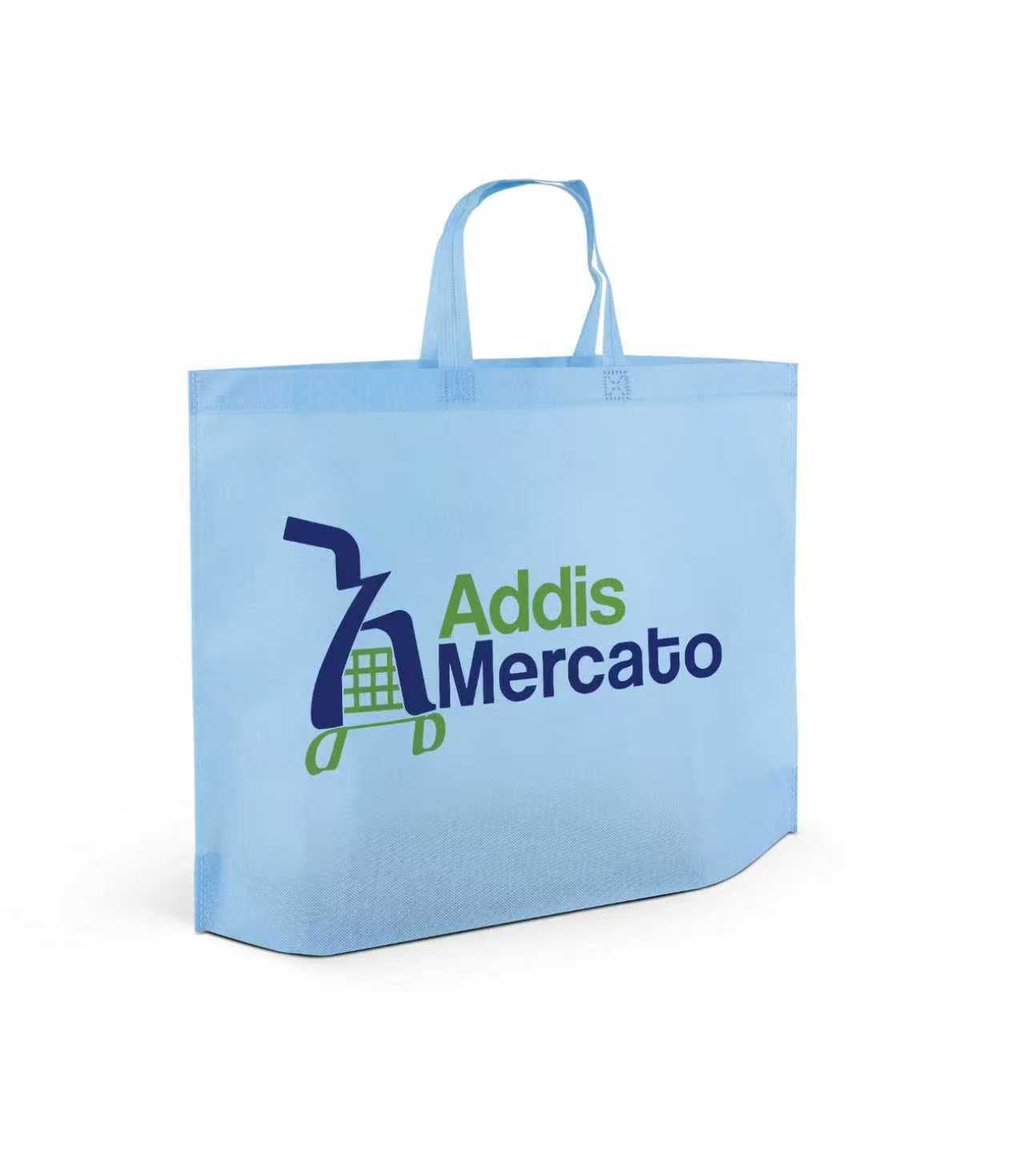
Bag construction is the first versatility dimension: flat bags, handled bags, box bags, D-cut bags, drawstring bags and gusseted organ bags require different machine configurations.
Industry Background: Why Model-Level Versatility Matters in 2026
Demand for non woven bag machinery is being reshaped by regulation rather than by fashion. More than 140 countries have enacted legislation restricting or banning single-use plastic bags as of 2026 (Dataintelo). The specialized global non-woven bag making machine market is forecast to grow from US$179 million in 2025 to US$733 million by 2032, a CAGR of 22.5% from 2026 to 2032 attributed to plastic ban policies (LP Information).
Two structural details matter to buyers. First, automation is already the default: automatic bag making machines held 52.4% of the product-type market in 2025 (Dataintelo). Second, the supply base is concentrated — Asia Pacific accounted for 43.6% of bag making machine revenue in 2025 (Dataintelo) — while the average price of a non-woven bag making machine was approximately US$29,000 per unit in 2025 (LP Information), a reference figure that varies widely with configuration.
The practical consequence is that replacement demand created by plastic bans is not demand for one bag style. Supermarket chains want vest bags and box bags. Food delivery operators want box bags with clean, odour-free seals. Garment exporters want dust covers and suit covers. Promotional buyers want small batches with multi-colour print and fast changeover. A factory that buys a single-construction machine acquires a single-construction order book; a factory that buys a versatile platform can move between product lines as the mix shifts. That is why this ranking is organised around versatility first and speed second.
How the Ranking Was Built
All seven models were scored with the same rule set, applied in order. When two models have different envelopes, the model with the wider dimensional or material envelope ranks higher. Additional structural capability — a side gusset, an online handle-attaching section, a bottom-gusset mechanism — breaks a tie only when the envelopes are equal. Where two models share an identical parameter set, as the ZXL-E700 does with the ZXL-E700Ultra, and the ZXL-A700 does with the ZXL-A700Ultra, the model with the larger documented material-saving feature ranks above its twin.
Every figure below comes from the published parameter set of the model named. Nothing in this ranking depends on unstated performance claims, and no competitor specification is inferred.
The Top 7 Models, Ranked by Production Versatility
#1ZXL-E700Ultra — 5-in-1 box bag platform with zero-trim design
The ZXL-E700Ultra is a fully automatic non woven box bag making machine with online handle attaching, documented as a 5-in-1 platform. It is the broadest machine in this comparison.
- Bag width: 100–800 mm; bag height: 200–580 mm
- Fabric roll width: 500–1300 mm
- Material thickness: 30–100 g/m²
- Handle length: 380–600 mm; handle material thickness: 50–100 g/m²
- Production speed: 40–120 pcs/min
- Voltage: 380 V / 220 V; total power: 18 kW
- Overall dimensions: 12,000 × 2,050 × 1,900 mm; weight: 4,000 kg
- Zero-trim design documented as saving about 5% of raw material
Why it ranks #1: it holds the widest bag width envelope in the lineup — a 700 mm span — together with the 5-in-1 configuration, an online handle-attaching section, box bag capability and a material-saving feature that no other model in this ranking documents. That combination covers box bags, handled bags and flat formats on one platform.
Where it stops: bag height is capped at 580 mm and the material window at 100 g/m². A factory whose orders include 700 mm-tall vest bags belongs on the ZXL-A700 platform instead, ranked #6 and #7 below.
Best-fit project: supermarket and retail shopping bag lines with a mixed box bag / flat bag / attached-handle order book.
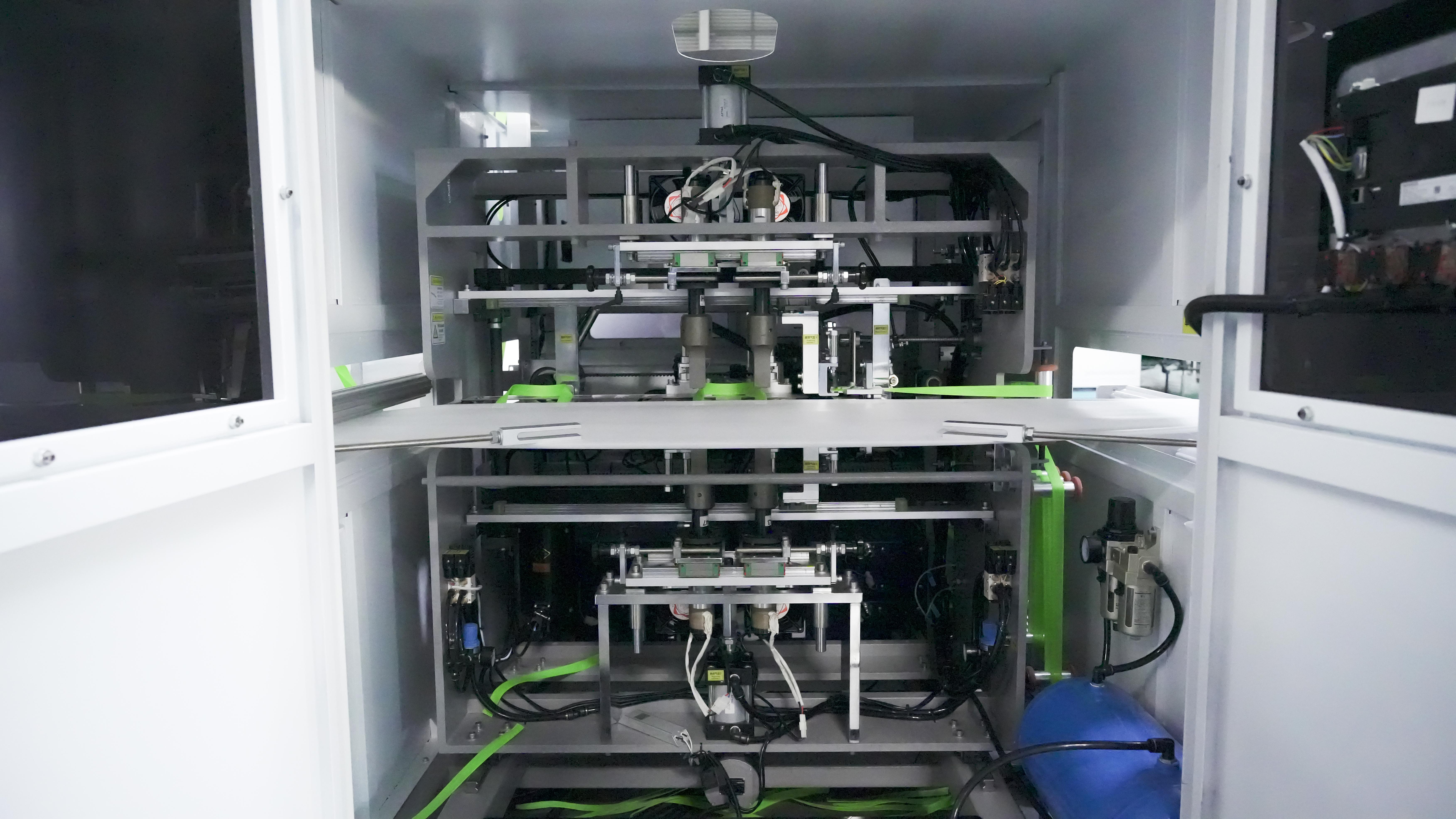
Online handle attaching is a core versatility dimension: it allows a single platform to switch between handled and unhandled bag formats.
#2ZXL-E700 — the same 5-in-1 platform, without the zero-trim design
The ZXL-E700 is the twin of the #1 model. Its published parameter set is identical in every dimension that matters to versatility.
- Bag width: 100–800 mm; bag height: 200–580 mm
- Fabric roll width: 500–1300 mm; material thickness: 30–100 g/m²
- Handle length: 380–600 mm; handle material thickness: 50–100 g/m²
- Production speed: 40–120 pcs/min; total power: 18 kW
- Overall dimensions: 12,000 × 2,050 × 1,900 mm; weight: 4,000 kg
- Documented features: ultrasonic welding without needle or thread, PLC control with touchscreen interface, photoelectric tracking, stepper-motor length control, automatic counting and alarms, 1–2 operators per machine
Why it ranks #2: it matches the #1 model on configuration breadth, width span, height span, handle capability and material window. It ranks second only because its published parameter set does not include the zero-trim material-saving design, so on the versatility-plus-efficiency combination used in this ranking it sits one place lower.
Where it stops: the same 580 mm height ceiling and 100 g/m² material ceiling as the #1 model.
Best-fit project: identical to the #1 model — a mixed box bag, flat bag and handled bag order book — where a documented 5% raw-material saving is not the deciding factor for the volumes involved.
#3ZXL-D700 — 4-in-1 flat bag platform with online handle attaching
The ZXL-D700 is documented as a 4-in-1 non woven flat bag making machine with online handle attaching, producing four bag styles from one platform.
- Bag width: 100–800 mm; bag height: 200–580 mm
- Fabric roll width: 500–1300 mm; material thickness: 30–100 g/m²
- Handle length: 380–600 mm; handle material thickness: 50–100 g/m²
- Production speed: 40–120 pcs/min; total power: 15 kW
- Overall dimensions: 10,000 × 2,050 × 1,900 mm; weight: 3,200 kg
- Documented features: automatic feeding, web guiding and tension control; lead-screw fold-over width adjustment; a gusseting mechanism using a rotary disc and metal plate to control bottom gusset dimensions; ultrasonic handle attachment; optical sensor positioning for printed bags; 15 kHz ultrasonic sealing; independent computer control console; finished bags stacked on the discharge table
Why it ranks #3: it shares the 700 mm width span of the #1 and #2 models and adds a bottom-gusset mechanism that increases a bag's internal volume — a real capability advantage for bulky retail contents. It ranks below the 5-in-1 platforms because it carries one configuration fewer and its published parameter set does not document box bag formation.
Where it stops: the material window tops out at 100 g/m², and no side gusset parameter is listed. Organ-style bags with expandable sides require a different platform.
Best-fit project: flat and handled shopping bags, bottom-gusset supermarket bags and printed retail bags at mid-to-high volume.
#4ZXL-B700 — D-cut and drawstring platform
The ZXL-B700 is documented as a non woven D-cut bag making machine and a non woven drawstring bag making machine — two structurally different bag families on one frame.
- Bag width: 100–800 mm; bag height: 200–580 mm
- Fabric roll width: 500–1300 mm; material thickness: 30–120 g/m²
- Production speed: 40–120 pcs/min; total power: 12 kW
- Overall dimensions: 8,000 × 2,050 × 1,900 mm; weight: 2,200 kg
- Documented features: stepping motor and PLC control with capacity of 4,000–5,000 non woven bags per hour; high-power ultrasonic welding system supporting non-woven fabric and spunlace non-woven fabric; automatic loading; magnetic powder tension controller; automatic stop when material runs out; colour tracking sensor; buffer swing arm device
Why it ranks #4: it covers the widest material window in this lineup at 30–120 g/m², is documented as compatible with spunlace non-woven fabric in addition to standard non-woven fabric, and has the lowest total power (12 kW) and lowest machine weight (2,200 kg) of the seven models. On sites where supply power or floor loading is constrained, those two numbers change what is installable at all.
Where it stops: its published parameter set lists no handle length, no handle material thickness and no online handle-attaching section, while the D700, E700 and G700 parameter sets list all three. Buyers whose order book includes attached loop or soft handles should confirm handle capability before ordering this platform.
Best-fit project: D-cut and drawstring bag production, including produce and specialty formats, and first lines on sites with limited power capacity.
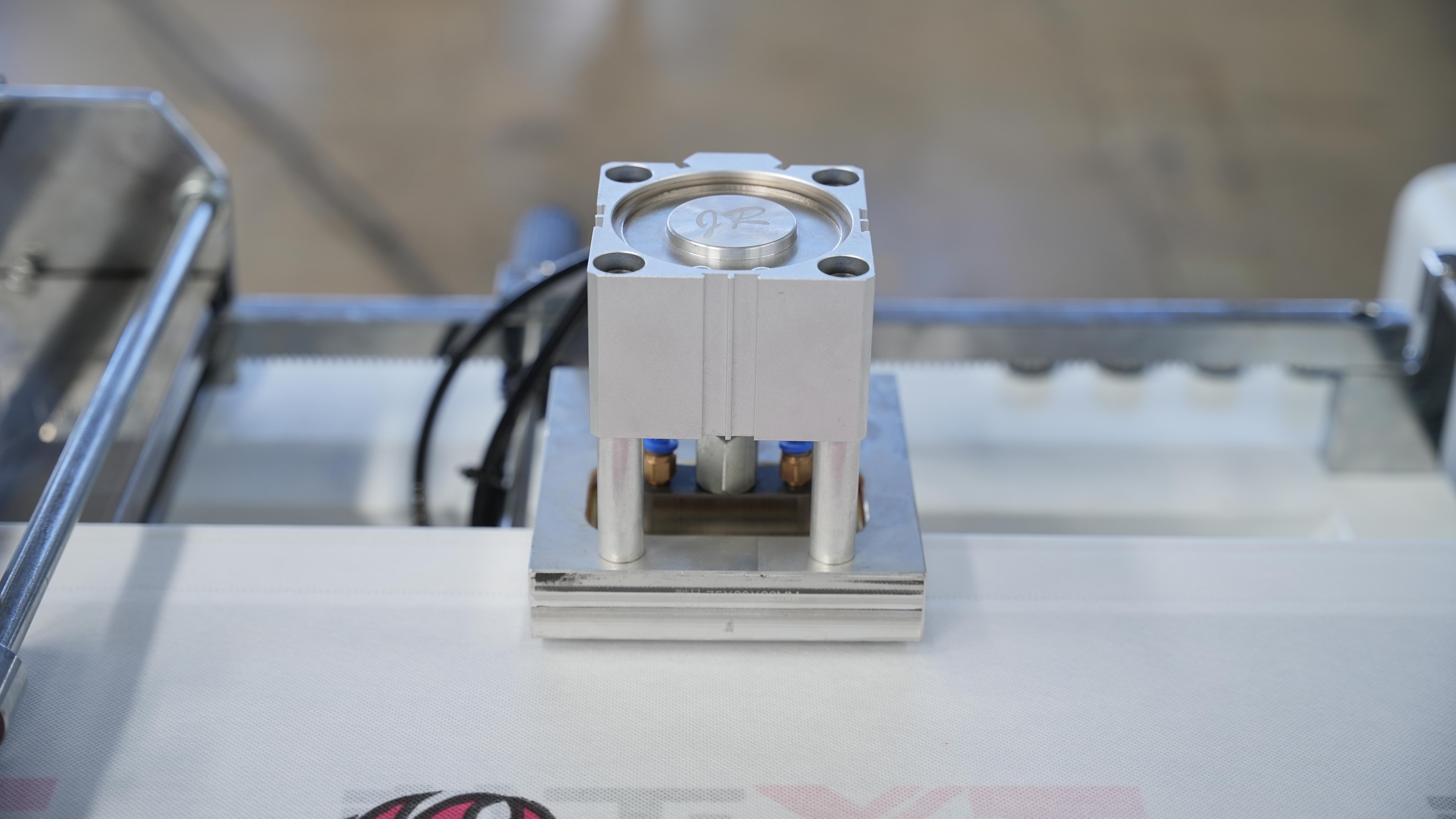
D-cut punching is a distinct bag construction: it is produced by a dedicated punching unit rather than by an attached-handle section.
#5ZXL-G700 — side gusset and online handle platform
The ZXL-G700 is documented as a non woven bag making machine with side gusset and online handle, and as a non woven organ bag making machine.
- Bag width: 200–400 mm; bag height: 300–700 mm
- Side gusset: 60–200 mm (adjustable)
- Fabric roll width: 500–1150 mm; material thickness: 50–100 g/m²
- Handle length: 380–600 mm; handle material thickness: 50–100 g/m²
- Production speed: 60–100 pcs/min; total power: 18 kW
- Overall dimensions: 12,000 × 2,050 × 2,100 mm; weight: 4,200 kg
- Documented features: photoelectric tracking and automatic computer-controlled edge-guiding; LCD touchscreen HMI with stepper-motor length control, automatic positioning, self-diagnostics and automatic counting; automatic handle heat-sealing and punching; 3D shaping for gusset bag structures
Why it ranks #5, and why it still matters: it is the only model in this comparison with a documented, adjustable side gusset. For organ bags and expandable-side shopping bags, that is not a convenience feature — it is the reason to buy the machine. It ranks below #4 only because its bag width envelope (200–400 mm) and material window (50–100 g/m²) are narrower, and its rated speed band is 60–100 pcs/min.
Where it stops: it will not produce 800 mm-wide bags. Width is the hard filter here, not speed.
Best-fit project: premium and organ-style shopping bags, gusseted 3D bags and high-end retail packaging where a standing, expandable bag shape carries brand value.
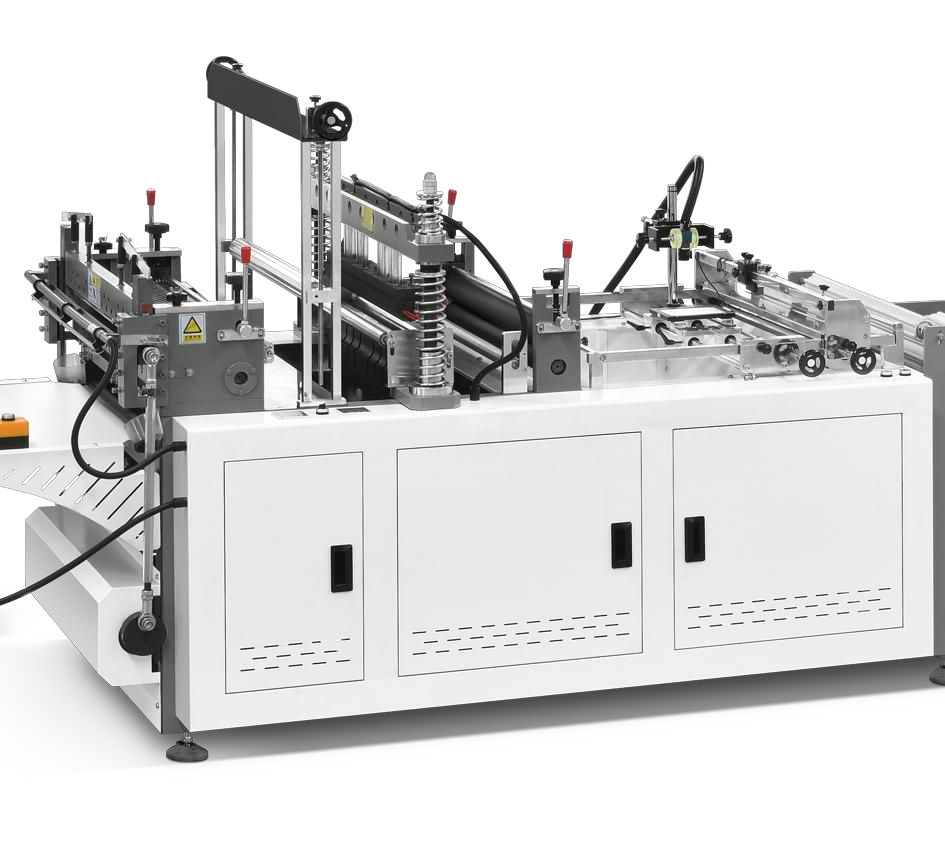
The ZXL-G700 is the only model in this ranking with an adjustable 60–200 mm side gusset.
#6ZXL-A700Ultra — zero-waste-edge T-shirt, W-cut and vest platform
The ZXL-A700Ultra is documented as a zero-waste-edge non woven T-shirt and W-cut bag making machine, and as an edge waste-free non woven vest bag making machine.
- Bag width: 200–400 mm; bag height: 300–700 mm
- Fabric roll width: 500–1300 mm; material thickness: 30–120 g/m²
- Production speed: 40–120 pcs/min; total power: 15 kW
- Overall dimensions: 10,500 × 2,050 × 1,900 mm; weight: 2,900 kg
- Zero-waste-edge design documented as saving approximately 5% on raw material procurement cost
- Documented features: ultrasonic welding with no needle or thread, PLC control with touchscreen interface, automatic scrap recovery system, 1–2 operators per machine
Why it ranks #6: it reaches the tallest bag height in this lineup at 700 mm and shares the widest material window at 30–120 g/m², while adding a documented material saving. It ranks below the multi-configuration platforms because its bag width envelope is 200–400 mm and its published parameter set lists neither a gusset mechanism nor an attached-handle section.
Where it stops: bags wider than 400 mm cannot run on this platform, regardless of how the rest of the order book looks.
Best-fit project: T-shirt and vest shopping bags for apparel and retail, high promotional volumes, and factories where a 5% raw-material saving compounds across large fabric consumption.
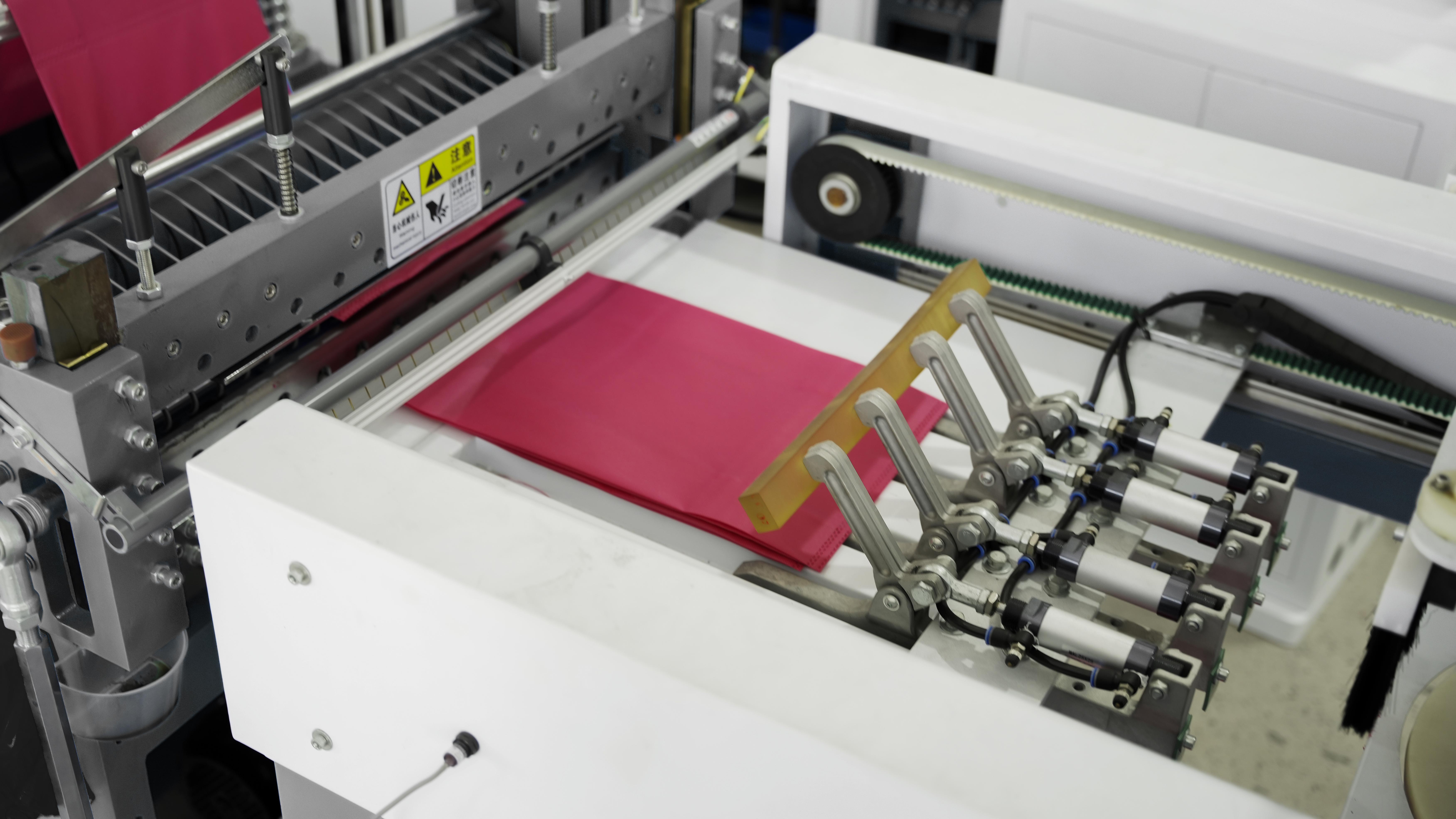
Zero-waste-edge platforms use the exact fabric roll width as the finished bag edge, so punching and cutting positions are computed from a precise fabric position.
#7ZXL-A700 — T-shirt, W-cut and vest platform
The ZXL-A700 is the twin of the #6 model without the zero-waste-edge design: a non woven T-shirt and W-cut bag making machine, also documented as a non woven vest bag making machine.
- Bag width: 200–400 mm; bag height: 300–700 mm
- Fabric roll width: 500–1300 mm; material thickness: 30–120 g/m²
- Production speed: 40–120 pcs/min; total power: 15 kW
- Overall dimensions: 10,500 × 2,050 × 1,900 mm; weight: 2,900 kg
- Documented features: ultrasonic welding, PLC control with touchscreen interface, photoelectric tracking, stepper-motor length control, automatic counting and alarms
Why it ranks #7: the narrowest configuration breadth and the narrowest bag width envelope in the comparison. That is a versatility result, not a popularity result. The ZXL-A700 is one of the most frequently deployed models in documented multi-model installations. An Indonesian non-woven bag group's 42-unit fleet includes 7 ZXL-A700 units alongside 13 ZXL-E700, 8 ZX-LT500, 12 ZXH-A1200 and 2 ZXL-G700 machines; a Kenyan shopping bag manufacturer runs 2 ZXL-A700 units with 1 ZXH-C41200 printing machine and supplies bags to more than 200 retail stores.
Where it stops: single-style, vest-format production. If the order book diversifies into box bags or gusseted bags, a second platform becomes necessary.
Best-fit project: high-volume, single-style vest and T-shirt bag production, where a dedicated line beats a flexible one on throughput stability.
Scope boundary: 3D standing box bag production belongs to the separate ZX-LT500, ZX-LT500Pro and ZX-LT500V platforms, which sit outside this ZXL 700 ranking and are not scored here.
Comparison Table: The Seven Models Side by Side
| Rank | Model | Documented configuration | Bag width (mm) | Bag height (mm) | Material (g/m²) | Roll width (mm) | Speed (pcs/min) | Total power | Weight (kg) | Signature capability |
|---|---|---|---|---|---|---|---|---|---|---|
| 1 | ZXL-E700Ultra | 5-in-1 box bag with online handle attaching | 100–800 | 200–580 | 30–100 | 500–1300 | 40–120 | 18 kW | 4,000 | Zero-trim design, about 5% raw material saving |
| 2 | ZXL-E700 | 5-in-1 box bag with online handle attaching | 100–800 | 200–580 | 30–100 | 500–1300 | 40–120 | 18 kW | 4,000 | 5-in-1 flexibility with ultrasonic welding |
| 3 | ZXL-D700 | 4-in-1 flat bag with online handle attaching | 100–800 | 200–580 | 30–100 | 500–1300 | 40–120 | 15 kW | 3,200 | Bottom-gusset mechanism (rotary disc and metal plate) |
| 4 | ZXL-B700 | D-cut bag and drawstring bag | 100–800 | 200–580 | 30–120 | 500–1300 | 40–120 | 12 kW | 2,200 | Widest material window, spunlace non-woven compatible, 4,000–5,000 bags/hour |
| 5 | ZXL-G700 | Side gusset with online handle attaching | 200–400 | 300–700 | 50–100 | 500–1150 | 60–100 | 18 kW | 4,200 | Adjustable 60–200 mm side gusset, handle heat-sealing and punching |
| 6 | ZXL-A700Ultra | Zero-waste-edge T-shirt, W-cut and vest | 200–400 | 300–700 | 30–120 | 500–1300 | 40–120 | 15 kW | 2,900 | Zero-waste edge, about 5% material saving |
| 7 | ZXL-A700 | T-shirt, W-cut and vest | 200–400 | 300–700 | 30–120 | 500–1300 | 40–120 | 15 kW | 2,900 | Dedicated vest and T-shirt bag platform |
All figures are published machine parameters. Total power is connected load, not measured consumption. Machine weights range from 2,200 kg to 4,200 kg and should be used for floor-loading and lifting plans. Handle length is 380–600 mm and handle material thickness is 50–100 g/m² on the D700, E700, E700Ultra and G700; the A700, A700Ultra and B700 parameter sets do not list handle dimensions.
Step-by-Step: Matching a Model to Your Project
Versatility rankings are only useful if they are applied in the right order. Work through these eight steps before requesting a quotation, because each step can eliminate a model regardless of how it ranks above.
- List your bag constructions in order of volume. Box or 3D bags, flat bags with attached handles, D-cut bags, drawstring bags, vest and W-cut bags, and organ (side gusset) bags require different mechanisms. The model that matches your top two constructions is usually the right platform.
- Measure the width and height envelope. If any bag in your order book is wider than 400 mm, only four models in this ranking qualify: ZXL-E700, ZXL-E700Ultra, ZXL-D700 and ZXL-B700, all rated to 800 mm. If you need bags taller than 580 mm, the qualifying group changes to ZXL-G700, ZXL-A700Ultra and ZXL-A700, rated to 700 mm.
- Decide how the handle will be made. Attached loop or soft handles require an online handle-attaching section, documented on the D700, E700, E700Ultra and G700. Punched D-cut handles and drawstring formats are covered by the B700. This single decision eliminates more models than any other.
- Confirm fabric GSM and fibre type. The A700, A700Ultra and B700 cover 30–120 g/m²; the D700, E700 and E700Ultra cover 30–100 g/m²; the G700 covers 50–100 g/m². The B700 is also documented as compatible with spunlace non-woven fabric. If your fabric mix runs heavier than 120 g/m², additional customization should be discussed rather than assumed.
- Check the electrical plan. Connected loads are 12 kW (B700), 15 kW (A700, A700Ultra, D700) and 18 kW (E700, E700Ultra, G700), all specified for 380 V / 220 V. Industrial non-woven bag machines require three-phase power; voltage can be configured for 220 V/60 Hz, 380 V/50 Hz, 415 V/50 Hz or 440 V/60 Hz at order stage, and a voltage stabilizer is recommended where grid power fluctuates.
- Match output to your shift pattern. Most models are rated at 40–120 pcs/min; the G700 at 60–100 pcs/min and a documented 4,000–5,000 bags per hour for the B700. Plan with a realistic utilisation rate rather than the rated ceiling, and remember that thicker fabric and complex bag styles reduce the achievable rate.
- Decide whether material saving justifies a zero-trim configuration. The E700Ultra and A700Ultra are documented as saving about 5% of raw material. That saving only compounds at volume — it is a volume decision, not a specification preference.
- Verify before the balance payment. Third-party pre-shipment inspection by SGS, Bureau Veritas or CCIC can be arranged at the factory; every machine runs a continuous full-load production test before shipment; CE documentation and, where required, country-specific certification such as SONCAP, PVOC or SASO should be confirmed in writing.
Use Cases: Which Model Fits Which Project
Supermarket and grocery chain shopping bags. This scenario is specified for high production speed of at least 100 pcs/min, consistent ultrasonic or heat-seal weld quality and a defect rate below 0.5%, running 24/7 from raw material feeding to finished bag stacking on 380 V three-phase power. The ZXL-E700Ultra and ZXL-E700 (5-in-1, online handle attaching) are the broadest fit; the ZXL-D700 covers the same width envelope where flat and bottom-gusset bags dominate the order mix.
Garment and apparel packaging. Logo-printed garment bags, dust covers and suit covers are typically produced on a 16-hour double shift with 1–2 operators per machine, with anti-static treated material compatibility, a soft fabric-like handle feel and a wrinkle-free finished surface required. The ZXL-A700Ultra and ZXL-A700, paired with a ZXH-C41200 four-colour flexo printing machine, match this configuration envelope.
Promotional and corporate gift bags. Small-to-medium batches with quick job changeover, four-colour printing, print registration of ±0.3 mm and a premium surface finish are the stated requirements. A documented producer in Tanzania running a ZXL-A700Ultra with a ZXH-C21200 printing machine expanded from one to two production lines within 18 months and now handles more than 10 custom orders per week — a changeover-driven business rather than a volume-driven one.
Mixed multi-model fleets. Where a single bag style is not the business model, buyers combine platforms: an Indonesian manufacturer's 42-unit installation pairs 13 ZXL-E700 and 7 ZXL-A700 bag machines with 8 ZX-LT500 box bag platforms, 12 ZXH-A1200 printers and 2 ZXL-G700 gusset machines; an Egyptian producer has run 5 units since 2017 — 1 ZXL-E700 and 2 ZXL-D700 bag machines plus 2 ZXH-C21200 printers — across three product lines served by one supplier; a Brazilian packaging supplier operates 6 units (1 ZX-LT500, 2 ZXL-B800, 2 ZXL-D800, 1 ZXL-B700) covering supermarket shopping bags and breathable produce packaging since 2018.
D-cut and drawstring formats. These are distinct constructions rather than variants of a flat bag, and they are the ZXL-B700's native output. Factories producing produce bags, specialty retail bags or drawstring promotional bags generally run this platform alongside a handled-bag machine rather than instead of one.
Food takeaway and bakery packaging. This use case maps to the ZX-LT500, ZX-LT500Pro and ZX-LT500V box bag platforms, which sit outside this ranking. It is noted here so buyers do not select a ZXL 700 model for a box bag requirement that belongs on a dedicated 3D platform.
Frequently Asked Questions
Are these machines CE certified, and what does the factory hold?
All Zhengxin machines are CE certified, covering the Machinery, Low Voltage and EMC Directives, and the manufacturing facility is ISO 9001:2015 certified with incoming material inspection, in-process QC checkpoints and a continuous full-load production test on every machine before shipment. The CE marking supports customs clearance in the EU, the Middle East, Africa and more than 30 other markets that accept CE. Country-specific certification such as SONCAP, PVOC or SASO can be arranged on request, and third-party pre-shipment inspection by SGS, Bureau Veritas or CCIC can be requested before the balance payment.
Which of these seven models should a fully automatic shopping bag line for supermarket supply use?
For supermarket and retail shopping bag production, the ZXL-E700Ultra and ZXL-E700 are the broadest-fit platforms — both are 5-in-1 box bag machines with online handle attaching, covering 100–800 mm bag width and 200–580 mm bag height at 40–120 pcs/min on an 18 kW drive. Supermarket applications are typically specified at no less than 100 pcs/min with a defect rate below 0.5%. Where the order mix is flat bags with bottom gussets rather than box bags, the ZXL-D700 (4-in-1, 15 kW) is the alternative; for D-cut and drawstring bags, the ZXL-B700 covers a 30–120 g/m² material window at 12 kW; for gusseted organ-style bags, the ZXL-G700 adds an adjustable 60–200 mm side gusset.
What power supply, connected load and floor load should I plan for?
All seven models are specified for 380 V / 220 V, with total power of 12 kW (ZXL-B700), 15 kW (ZXL-A700, ZXL-A700Ultra, ZXL-D700) or 18 kW (ZXL-E700, ZXL-E700Ultra, ZXL-G700). Industrial non-woven bag machines require three-phase power, and voltage can be configured at order stage for 220 V/60 Hz, 380 V/50 Hz, 415 V/50 Hz or 440 V/60 Hz; a voltage stabilizer is recommended where grid power fluctuates. Machine weights run from 2,200 kg (ZXL-B700) to 4,200 kg (ZXL-G700), which determines the lifting plan and floor loading. As a market reference rather than a quotation, the average price of a non-woven bag making machine was approximately US$29,000 per unit in 2025 (LP Information); configuration-specific pricing should be requested directly.
How can I verify bag quality on these models before the machines ship?
Three verification routes are available. First, a live video factory tour can show the production lines, testing area and component inventory in real time. Second, every machine runs a continuous full-load production test before shipment, with sample bags inspected for seal strength, print registration and dimensional accuracy. Third, a third-party pre-shipment inspection by SGS, Bureau Veritas or CCIC can be carried out at the factory before the balance payment, and reference customers in your region can be contacted directly with their permission.
What is the lead time, and how quickly can the line run?
Production lead time is 30–45 days, with a monthly capacity of 40 units and a minimum order of 1 unit; sea freight adds roughly 15–45 days depending on destination (about 15 days to Indonesia, 25 to Kenya, 35 to Nigeria, 40 to Brazil). Installation typically takes 1–2 working days and is completed by the buyer's team with remote video guidance from Zhengxin engineers; on-site engineer dispatch is available at a service fee of US$100 per day plus airfare and accommodation. Machines carry a one-year warranty on major components. To turn this ranking into a decision, send your bag type, bag width, bag height, fabric GSM, target output and local voltage to info@zxcorp.com — or download the 2026 brochure linked below.
Conclusion: Rank Versatility First, Then Verify Everything Else
Ranked by production versatility, the ZXL 700 series reads as a ladder: the ZXL-E700Ultra and ZXL-E700 cover the widest width envelope with box bag capability and online handle attaching; the ZXL-D700 adds a bottom-gusset mechanism from a 4-in-1 platform; the ZXL-B700 delivers the widest material window and the lowest connected load; the ZXL-G700 is the only model with an adjustable side gusset; and the ZXL-A700Ultra and ZXL-A700 serve tall vest and T-shirt formats at the highest material range.
The ranking is a starting filter, not a purchase decision. Width, height, handle method and fabric GSM eliminate models faster than any feature comparison, and the model that survives those four filters is usually the right one — even if it does not sit at the top of this list.
Zhejiang Zhengxin Machinery manufactures these platforms in a 60,000 m² facility in Wenzhou with 30 R&D engineers and an annual output of 500 units, exporting to more than 120 countries, with offices in Kenya, Morocco, Egypt, Vietnam, Tanzania, Dubai, Oman, Indonesia and Ethiopia. Machines use branded components including Siemens, Delta or Mitsubishi PLCs, Omron sensors and NSK bearings, and third-party inspection by SGS, Bureau Veritas or CCIC is available at the buyer's request before shipment.
Model selection starts with four numbers: bag width, bag height, fabric GSM and handle type.
Next Step: Send Your Bag Specification
Share four figures — bag type, bag width, bag height and fabric GSM — plus your local voltage and target output per shift, and Zhengxin will confirm which of the seven models fits and which auxiliaries (printing, slitting, air compressor, voltage stabilizer) are required.
- Brochure download: 2026 Zhengxin non woven bag making machine brochure (PDF)
- Email: info@zxcorp.com
- Tel / WhatsApp: +86 158-5888-9595
- Website: www.wzzxjx.com
- Address: No. 118 Xinglong Road, Wanquan Town, Pingyang County, Wenzhou City, Zhejiang Province, China