Top-Rated Inline Non-Woven Bag Printing Lines for High-Volume Output
Top-Rated Inline Non-Woven Bag Printing Lines for High-Volume Output
For high-volume purchasers, evaluating a non woven bag printing machine is rarely about print quality alone. The deciding factors are throughput, consistency, labor needed per line, and cost per finished bag. In production scenarios that require steady output of printed carry bags, a fully integrated inline non woven bag printing line tends to outperform manual and semi-automatic alternatives because it removes the intermediate handling steps between printing and bag converting. This article ranks those scenarios, using operating evidence from actual production installations and published comparisons.
Several verified operating benchmarks matter in this ranking. For automatic non-woven bag lines with inline printing, output in the range of 100–120 pieces per minute is the reference point; defect rates are reported below 0.5 percent; and staffing drops to one operator for two machines. In-house production cost per printed bag is commonly estimated at $0.02–$0.05, compared with $0.08–$0.15 when finished bags are bought from an outside supplier. Zhejiang Zhengxin Machinery Co., Ltd., based in Wenzhou, Zhejiang Province, China, has supplied non-woven bag making machines and ZXH flexo or screen printing machines to more than 120 countries and is one of the manufacturers whose equipment appears in the scenarios below.
Problem Definition: The Manual and Semi-Automatic Ceiling
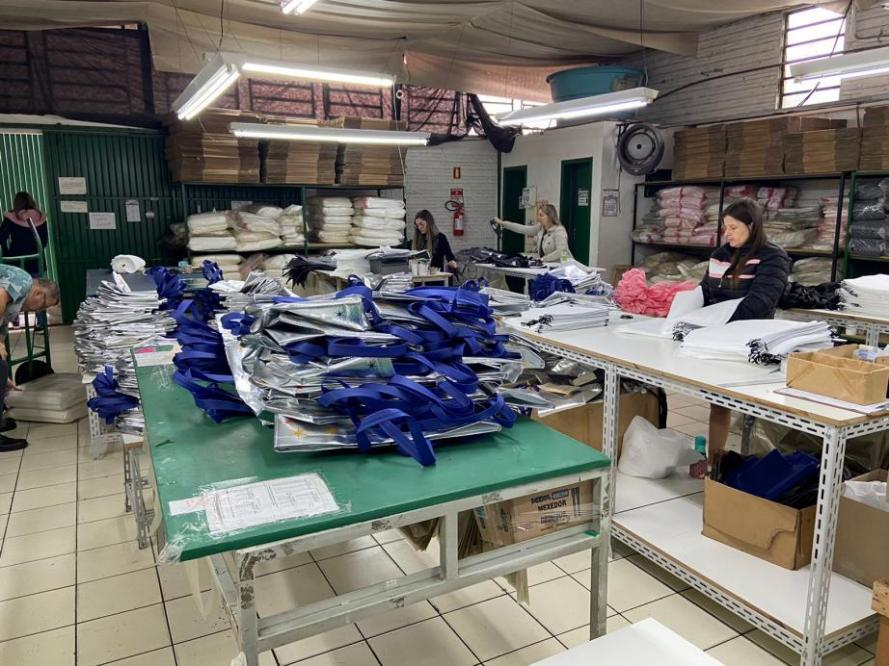
Manual or semi-automatic printing setups separate the printing stage from the bag-making stage. Printed rolls or individual sheets must be moved, re-loaded, aligned, and then converted into bags. Each handling step creates a risk of misregistration, smudging, extra labor, and variable quality.
Independent comparisons of non-woven bag equipment describe semi-automatic lines running at roughly 15–20 pieces per minute and requiring three to four workers per line. Quality consistency is harder to hold, with defect rates in manual or semi-manual workflows reported in the 3–5 percent range. In contrast, fully automatic integrated lines are rated at 100–120 pieces per minute, below 0.5 percent defect rates, and one operator per two machines. That gap becomes decisive for any factory planning 20,000 or more printed bags per day.
The purchasing logic also changes when order size grows. Fully automatic equipment requires a larger initial investment, but the labor saving and defect reduction normally recover the price difference within 12–18 months at higher daily volumes. Semi-automatic equipment remains relevant mainly for very low daily output, very limited capital, or production dominated by frequent small custom batches where changeover time matters more than speed.
Industry Background: High-Volume Production Is Moving to Automatic Lines
Demand for printed non-woven bags has expanded with plastic-bag restrictions in more than 100 countries, according to industry tracking sources. The automatic segment already held 52.4 percent of the bag making machine market in 2025. LP Information projected the global non-woven bag making machine market to grow from US$179 million in 2025 to US$733 million by 2032. These figures describe the machine category as a whole, but they point to why integrated printing and bag forming lines are now evaluated earlier in the buying cycle.
Printing technology is following the same trend. Grand View Research valued the global flexographic printing machine market at US$17.57 billion in 2024, with a projected CAGR of 9.7 percent through 2030. Flexographic printing is the dominant method for inline non-woven bag printing because it prints from rolls using water-based inks, dries quickly, and can be synchronized with a bag making machine. Screen printing remains relevant for specialist jobs such as heavy ink coverage or larger repeat patterns.
For a manufacturer serving retail chains, food-delivery platforms, or promotional buyers, the practical conclusion is that output above 30,000–50,000 bags per day belongs to automatic and integrated lines. The decision is no longer whether automation is affordable, but which inline configuration gives the best quality-per-dollar for a specific order mix.
Detailed Solution: What a Fully Integrated Inline Non-Woven Bag Printing Line Should Deliver
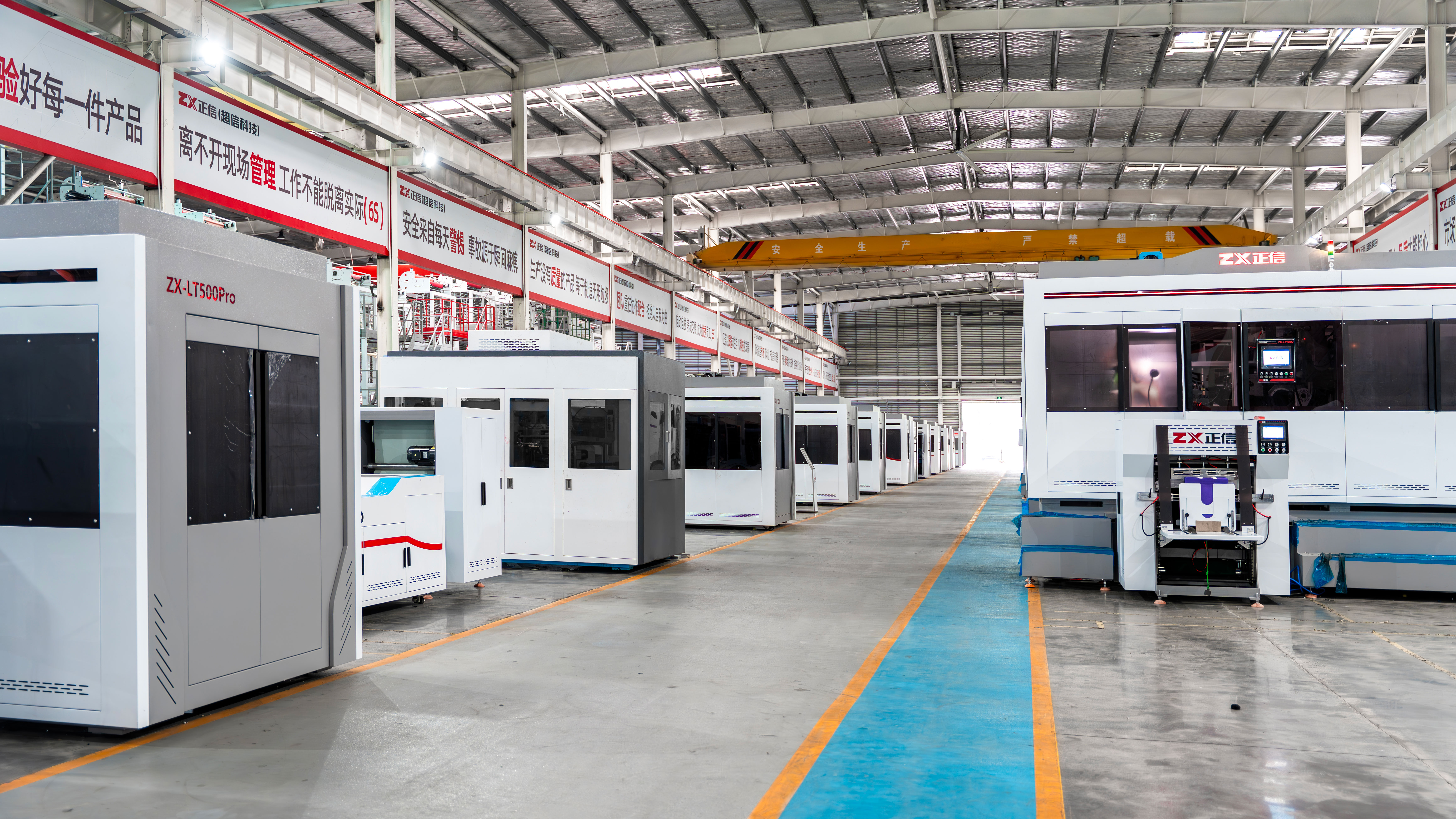
An inline non-woven bag printing line combines a roll-to-roll printing machine with an automatic bag making machine so that printed fabric feeds directly into the bag former. In Zhengxin's ZXH series, this can mean a two-color or four-color flexo printing machine placed ahead of an automatic non-woven bag making machine. For multi-color work, screen printing machines such as the ZXH-A1200 can also be arranged in roll-to-roll production.
Line Speed and Output
Automatic bag making machines in the ZXL family operate at 40–120 pieces per minute depending on model, bag style, and material GSM. In high-volume configurations, the practical planning number is 100–120 pieces per minute for standard shopping bags. At 100 pieces per minute, an 8-hour shift can produce roughly 45,000–55,000 bags, a range often cited as sufficient to supply 50–100 retail stores on a regular schedule. Printing machines matched to such lines need the same continuous duty capability as the bag former, not a lab-style printer designed for short test runs.
Registration and Print Accuracy
Repeat logos on supermarket bags must stay centered and sharp for every bag in a shift. Inline flexo machines hold color-to-color registration within tight tolerances; for example, Zhengxin rates the four-color ZXH-C41200 flexographic printing machine at ±0.3 mm registration between colors. Specs for the ZXH-C21200 and ZXH-C41200 show maximum fabric roll width of 1200 mm, maximum printing width of 1160 mm, and printing speeds of 10–60 m/min. The ZXH-A1200 screen printing machine, by comparison, reaches 1500–4000 m/hour with a 30 m drying oven and a maximum printing size of 1100 mm by 1200 mm.
| Model | Technology / colors | Key width and repeat data | Speed range | Typical role in an inline line |
|---|---|---|---|---|
| ZXH-C21200 | Flexo printing machine, two colors | Max fabric roll width 1200 mm; printing width 1160 mm; printing length 250–1000 mm | 10–60 m/min | Entry standard for supermarket logos and simple brand prints |
| ZXH-C41200 | Flexo printing machine, four colors | Max fabric roll width 1200 mm; printing width 1160 mm; printing length 220–1000 mm | 10–60 m/min | Multi-color retail and premium-brand work |
| ZXH-A1200 | Roll-to-roll non-woven screen printing machine, one color | Max fabric roll width 1250 mm; printing size 1100 x 1200 mm; 30 m drying oven | 1500–4000 m/hour | Heavy-ink, high-coverage, or specialty printing jobs |
Zhengxin's CE certificate scope also includes ZXH-C6 flexo machines, indicating that six-color inline platforms are available for buyers whose designs exceed four colors.
Defect Control
Quality consistency is the main reason fully automatic lines beat manual workflows at volume. Documented comparisons place automated non-woven bag lines below 0.5 percent defect rates, versus 3–5 percent in manual or semi-automatic setups. Inline printing contributes to that consistency by avoiding re-handling of printed material. Once a print defect is detected, the problem is corrected at one continuous process point, not traced backward through intermediate storage.
Staffing and Labor Economics
Fully automatic integrated lines run with one operator per two machines. Manual or semi-automatic lines need three to four workers per line and deliver a fraction of the output. The labor consequence is direct: per-bag labor cost on semi-automatic equipment is often four to five times higher than on a fully automatic line at similar utilization. At 20,000 bags per day or more, that labor gap pays back the automation premium within a reasonable period.
Cost per Bag
For printed non-woven shopping bags, in-house production cost is estimated at $0.02–$0.05 per bag versus $0.08–$0.15 for outsourced bags. The ink cost advantage is even more striking when flexo is compared with digital printing. Water-based flexo ink is priced around $3–8 per liter and covers roughly 500–1000 m² per liter, making per-bag ink cost less than $0.001 in volume production. Digital ink, at $50–200 per liter, can push per-bag ink cost to $0.02–$0.05. Over a 100,000-bag order, that difference can reach thousands of dollars.
Step-by-Step Evaluation: Choosing an Inline Line for Your Order Profile
- Define the order profile first. Calculate expected daily output, the number of color changes per week, and the dominant bag styles. Supermarket restock orders favor speed and repeatability; promotional orders favor quick job changeover; food-delivery orders favor clean sealing and consistent print quality.
- Choose the color architecture. A two-color flexo non woven bag printing machine such as the ZXH-C21200 covers the majority of simple logo and retail jobs. Four-color flexo such as the ZXH-C41200 adds headroom for premium branding. If heavy ink coverage or specialty designs dominate, evaluate a roll-to-roll screen printing machine. Digital printing is rarely justified for non-woven bags above 500 pieces per design because the per-bag ink cost is too high.
- Match the printing machine to the bag former. The printing machine must feed a continuous roll at a speed compatible with the bag making machine's consumption rate. In practice, a flexo machine running at 10–60 m/min can supply an automatic bag making machine producing around 100–120 bags per minute. Confirm that the bag model supports D-cut, W-cut, vest, or box-bag styles needed for your customer base.
- Verify quality controls. Check registration specifications, seal strength, and the factory's quality system. Zhengxin's manufacturing is ISO 9001:2015 certified, and its printing and bag machines carry CE certification. At the factory, every machine is tested before shipment; buyers can also request inspection by SGS, Bureau Veritas, or CCIC.
- Compare in-house cost with outsourcing. If monthly volume exceeds roughly 300,000 bags, in-house production at $0.02–$0.05 per bag is generally more economical than outsourcing at $0.08–$0.15. In-house converting also removes MOQ constraints per design and cuts design-change time from weeks to minutes on the line.
- Plan installation and support. Zhengxin machines are configured for the buyer's voltage and frequency before shipment. Installation is typically completed in one to two working days with remote video guidance, and spare parts can be shipped by express courier when needed.
Use Cases: Ranked Production Scenarios for Inline Non-Woven Bag Printing Lines
The following ranking is based on operating evidence and decision logic from the non-woven bag manufacturing industry. It lists the production scenarios where a fully integrated inline line earns the strongest recommendation over manual or semi-automatic setups.
Scenario #1 – Standardized Multi-Color Shopping Bags for Supermarket Chains
Rank 1: Highest volume stability, clearest automation payback.
A supermarket supplier needs the same multi-color logo repeated consistently across thousands of bags every shift. This scenario rewards speed, low defect rates, and predictable labor cost. In Kenya, a shopping bag manufacturer installed two ZXL-A700 automatic bag machines with one ZXH-C41200 four-color flexo printing line. The operation supplies bags to more than 200 retail stores across the country. The documented highlight is a fully automatic line from printing to finished bag, with a single operator managing the entire workflow. This pattern matches the recommended configuration for supermarket supply: an automatic bag machine with inline four-color flexo printing, allocating roughly $35,000–$50,000 in machine investment and recovering it in 14–18 months at around 40,000 bags per day.
Scenario #2 – Large Multi-Line Printing Operations Feeding Multiple Converting Lines
Rank 2: Best for high-volume groups that print millions of bags monthly.
When a factory runs several bag making machines, the printing stage must keep every line supplied without creating a bottleneck. In Indonesia, a large-scale non-woven bag manufacturing group operates 42 Zhengxin machines covering five machine models. The installation includes 12 ZXH-A1200 non-woven bag screen printing machines used for multi-color printing work. Since 2018 the group has built significant domestic capacity, supplying more than one million bags monthly to retail chains and food delivery platforms and replacing bags that were previously imported. For an operation of this scale, the inline printing architecture is the production backbone rather than an optional upgrade.
Scenario #3 – Printed Food Takeaway and Restaurant Packaging
Rank 3: Strong fit when clean, repeatable printing and short lead times matter.
Food packaging buyers need printed takeaway bags for restaurant chains and delivery platforms, often with brand colors that must not shift between runs. An Egyptian food packaging and retail shopping bag manufacturer has used a Zhengxin configuration since 2017, including two ZXH-C21200 two-color flexo printing machines alongside automatic bag making machines. The operation established itself as a non-woven bag supplier to the Cairo and Alexandria markets, supporting three distinct product lines from one supplier. Inline flexo printing avoids the downtime and contamination risk of transferring printed material between separate workstations.
Scenario #4 – Promotional Bags with Frequent Design Changeover
Rank 4: Recommended when speed of changeover decides whether a shop can accept more jobs.
Promotional bag producers handle small-to-medium runs with different artwork every few days. A producer in Mwanza, Tanzania, runs a ZXL-A700Ultra bag machine with a ZXH-C21200 two-color printing line. Within 18 months the company expanded from one line to two and now manages more than ten custom orders per week with different artwork. The inline flexo configuration shortens setup between designs because plate cylinders and print registration are adjusted in one place, then the printed web flows directly into bag forming. This scenario shows that inline lines are not limited to monotonous high-volume work; they also support fast job rotation.
Scenario #5 – Moving from Outsourced Bags to In-House Integrated Production
Rank 5: Recommended when monthly bag consumption crosses the 300,000-piece breakeven.
Businesses that buy finished bags from suppliers should evaluate an inline line when monthly consumption exceeds roughly 300,000 pieces. In-house per-bag cost of $0.02–$0.05 is substantially below the $0.08–$0.15 outsourced price, and the machine investment can pay back within 12–18 months at sufficient volume. Below about 100,000 bags per month, outsourcing remains simpler and often more economical. This decision rule is useful for distributors, retail chains, and plastic bag producers transitioning to non-woven formats under plastic-ban regulations.
Comparison: Integrated Inline Lines, Semi-Automatic Workflows, and Outsourcing
| Comparison dimension | Fully automatic inline line | Semi-automatic workflow | Outsourced finished bags |
|---|---|---|---|
| Output | 100–120 pieces/min | 15–20 pieces/min | Dependent on supplier capacity |
| Staffing | One operator per two machines | 3–4 workers per line | No in-house production staff |
| Defect rate | Below 0.5% | 3–5% commonly reported in manual steps | Controlled by the external manufacturer |
| Print-to-bag integration | Roll-to-roll printing feeds bag former continuously | Separate stations with manual transfer | No integration required by buyer |
| Cost per bag | $0.02–$0.05 in-house | Labor cost per bag significantly higher than fully automatic | $0.08–$0.15 purchase price |
| Design change time | Minutes to hours on-machine | Hours; re-handling between stations | 2–4 weeks typical for reorders with MOQ |
| Best fit | Daily output above roughly 30,000 bags; monthly volume above 300,000 | Very low output or extreme capital constraints | Monthly volume below 100,000 bags |
Sources: Zhengxin product and case data; operational comparisons in Zhengxin's technical documentation covering automatic versus semi-automatic production and in-house versus outsourced bag economics.
FAQ
Are inline non-woven bag printing lines certified for cross-border projects?
Zhengxin's manufacturing facility is ISO 9001:2015 certified under certificate number 20225Q21503R2M, with a scope covering production and sales of bag making machines, slitting machines, and non-woven printing machines. The ZXH printing series is CE certified under certificate number M.2021.206.C70911, covering the Machinery, Low Voltage, and EMC Directives. Buyers who need third-party assurance can also request inspection by SGS, Bureau Veritas, or CCIC before shipment.
Which inline printing configuration should I choose: 2-color flexo, 4-color flexo, or screen printing?
For standard shopping bags, a two-color flexographic non woven bag printing machine such as the ZXH-C21200 covers most supermarket logos and single-color promotional prints. A four-color flexo machine such as the ZXH-C41200 is recommended for premium brands and designs that may add colors later. Roll-to-roll screen printing machines such as the ZXH-A1200 suit heavy-ink-coverage or specialty jobs. In practice, flexo is the correct choice for the large majority of commercial non-woven bag printing because its per-bag ink cost is very low and its speed matches high-volume bag making lines.
What is the cost advantage of an inline line versus buying printed bags from a supplier?
In-house printed non-woven bag production costs an estimated $0.02–$0.05 per bag, while outsourced finished bags typically cost $0.08–$0.15 per bag. For a high-volume supermarket configuration, a fully automatic bag machine with an inline four-color flexo printer represents an investment of roughly $35,000–$50,000 and can pay back within 14–18 months at around 40,000 bags per day. In-house production also eliminates per-design MOQ requirements and shortens design-change time from weeks to the time needed to change plates on the machine.
Can I validate the machine with samples or test prints before placing a large order?
Zhengxin runs a continuous full-load production test on every machine before shipment. Buyers can request a live video factory tour, ask for printed samples using their artwork, and, when needed, arrange third-party pre-shipment inspection by SGS, Bureau Veritas, or CCIC. Remote installation support is provided through WhatsApp or video call, and the manufacturer's engineers guide the commissioning process step by step.
How long does it take from order to full inline production?
Standard production lead time is 25–35 working days for standard models, with sea freight adding 15–45 days depending on destination. Installation typically takes one to two working days with remote guidance. Zhengxin's after-sales support includes a one-year warranty on major components, installation and commissioning services, and on-site service by a professional team when required. Buyers in the evaluation stage can download the latest Zhengxin brochure for configuration reference and send their order profile to info@zxcorp.com for a machine recommendation.
Conclusion
For high-volume non-woven bag production, top-rated equipment is no longer judged as a standalone printing press. The strongest configurations are fully integrated inline lines where a flexo or screen non woven bag printing machine feeds printed fabric directly into an automatic bag making machine. Documented benchmarks of 100–120 pieces per minute, below 0.5 percent defect rates, and one operator per two machines give procurement teams a clear basis for comparing options.
The ranked scenarios in this article show where inline lines deliver the fastest payback: standardized multi-color retail bags, large multi-line converting operations, food takeaway packaging, promotional jobs with frequent changeover, and companies crossing the 300,000-bag monthly volume threshold. In each case, the in-house cost of $0.02–$0.05 per bag and the flexibility of printing on demand outweigh the capital cost faster than manual or semi-automatic workflows can.
Next step for evaluation teams. Zhengxin's engineering team will confirm the printing configuration, line speed, and lead time for your bag mix. Download the Zhengxin 2026 company brochure for model specifications, or contact info@zxcorp.com / WhatsApp +86 158-5888-9595 for a configuration review.