
Weak Bag Seals on Your Non Woven Bag Making Machine? How Ultrasonic Bonding and Setup Fix It
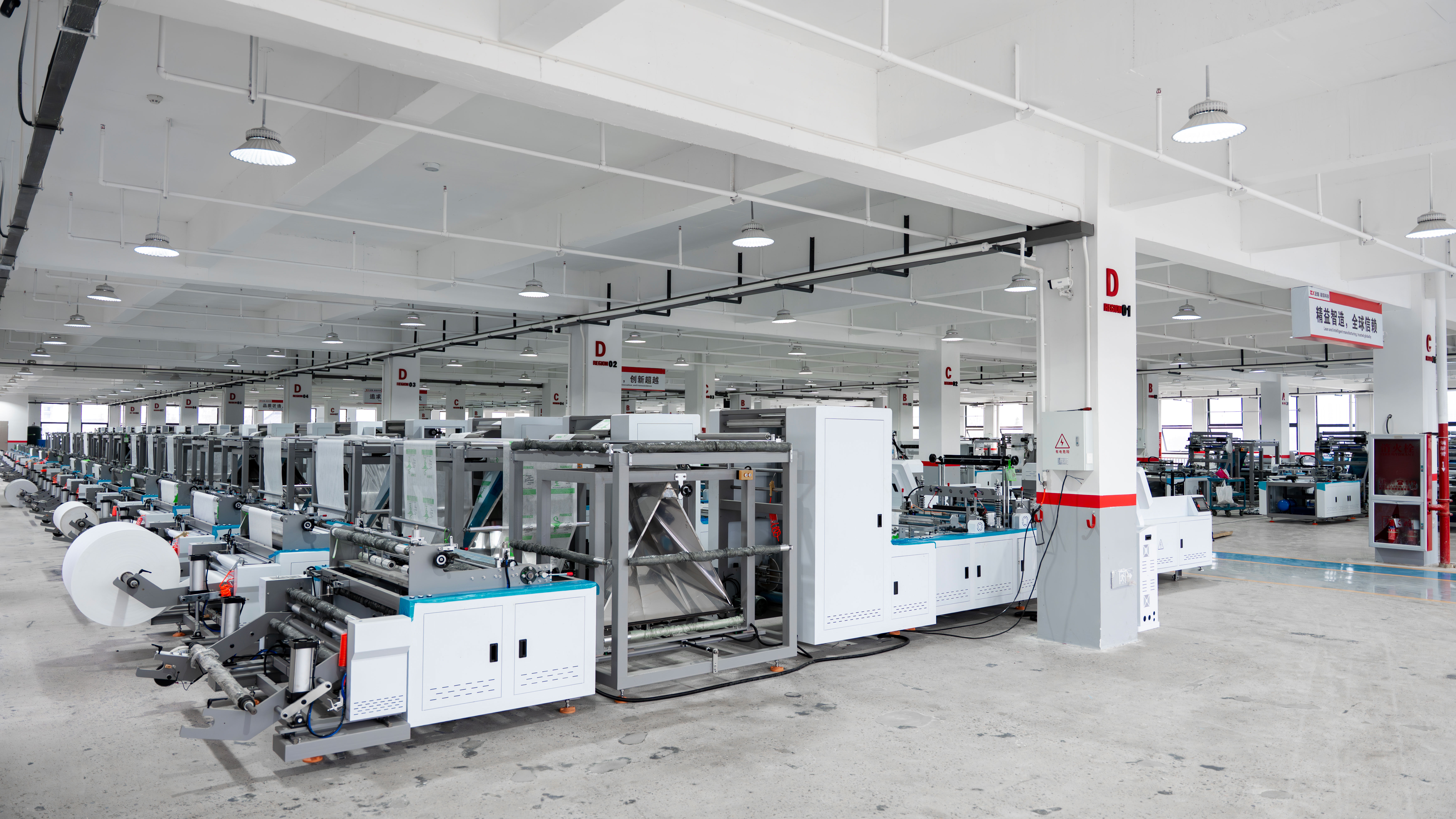
A bag that peels open at the seal is rarely a machine that cannot weld. On the great majority of non woven bag making machines already in production, weak or inconsistent seals trace back to three setup conditions: a contaminated ultrasonic horn, an uneven horn-to-anvil gap, or an amplitude and speed pairing that no longer matches the fabric running through the line. Zhengxin's troubleshooting documentation puts those three causes behind roughly 90% of weak-seal cases.
This article is written for packaging converters who already have a machine installed and a customer contract to protect. It explains why ultrasonic bonding removes the hot-melt glue and heat-seal variables that cause most seal drift, which settings actually decide weld strength, how the line should be set up from installation onward for fabric weights from ultra-light to 120 g/m², and what keeps that seal standard stable over years rather than for the first month.
What a Weak Seal Looks Like on a Non Woven Bag Machine — and Why It Is a Setup Issue
A weak ultrasonic seal shows up in three recognisable ways: the seam peels apart under light load, the weld line is strong at one end and weak at the other, or the bag fails a simple pull test because the seam separates instead of the fabric tearing. All three are visible on the finished bag within seconds of production, which is why seal quality can be controlled at the machine rather than discovered by the end customer.
The important distinction for an operator is this: a machine that is mechanically capable of a good weld does not lose that capability overnight. Weld strength is the output of a small set of conditions, and when the output drops, one of those conditions has drifted. The documented causes are:
- Ultrasonic horn surface contaminated with melted fabric residue, which reduces energy transfer to the material interface.
- Horn-to-anvil gap uneven or incorrect — a gap of 0.3 mm on the left side and 0.5 mm on the right produces a strong seal on one side and a weak seal on the other.
- Amplitude set too low for the fabric GSM actually loaded on the machine.
- Production speed increased without re-adjusting ultrasonic parameters, reducing weld contact time.
- Horn surface worn, with pitting or an uneven wear pattern that no longer distributes energy uniformly.
- Air pressure fluctuation, so the pneumatic cylinder no longer applies consistent horn pressure.
- Fabric variation — inconsistent GSM or contamination in the raw material.
Acceptance test used throughout this article: run 20 bags at production settings, then pull-test 5 of them by hand. A correct ultrasonic seal tears the fabric. A seal that peels apart at the weld line is a failed setup, not a cosmetic issue.
Seal quality is also the number that separates automated production from manual production in commercial terms. Fully automatic lines are specified at a defect rate below 0.5%, against 3% to 5% on manual and semi-automatic production. For a converter running 40,000 bags a day, that difference is the whole margin on a supermarket contract.
Why Ultrasonic Bonding Removes the Hot-Melt Glue Variable
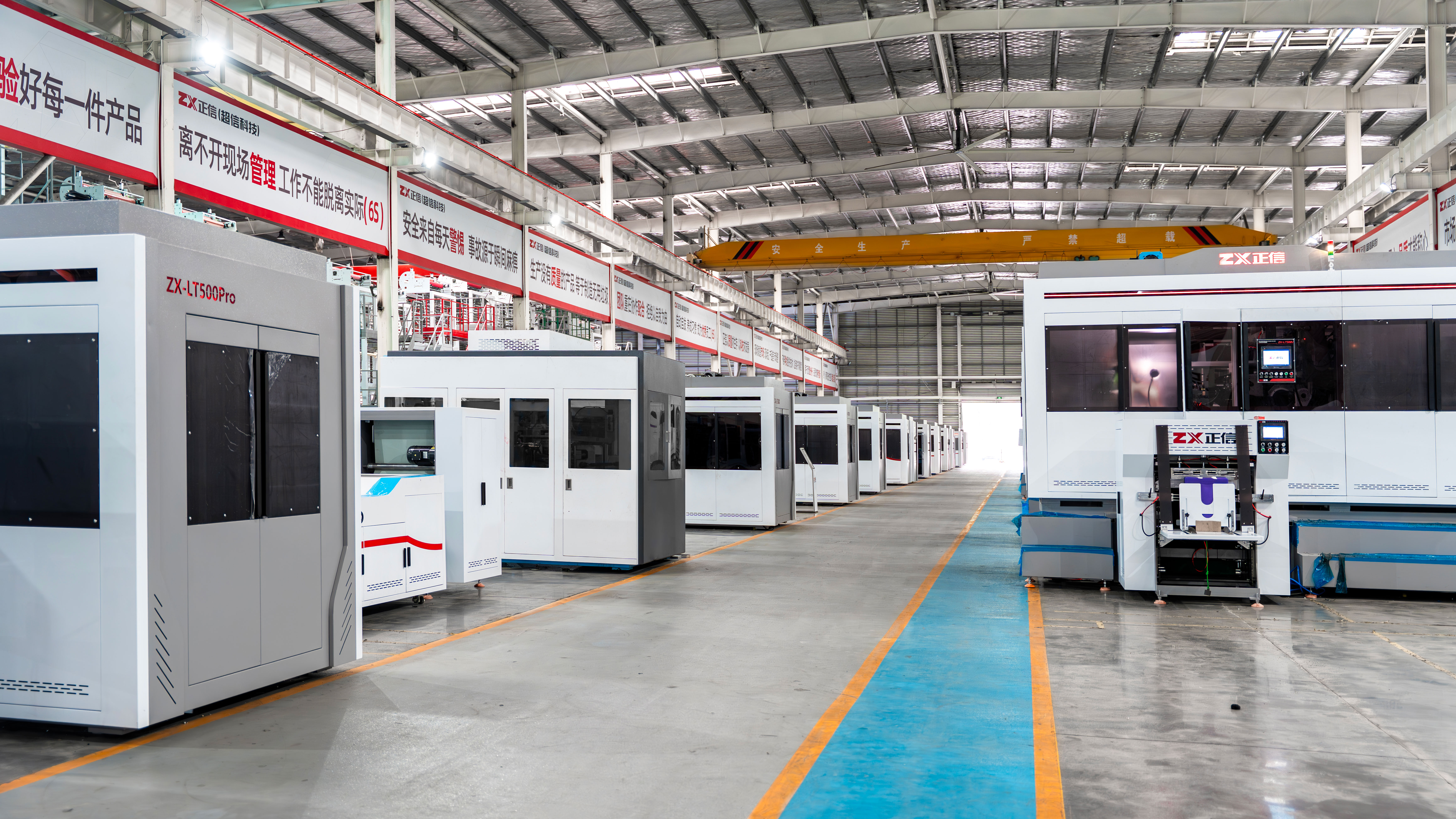
Ultrasonic welding bonds non woven fabric by converting high-frequency electrical energy into mechanical vibration. A piezoelectric transducer inside the generator converts mains electricity into oscillation at 20 kHz, and a titanium or aluminium horn amplifies that vibration from roughly 10–30 microns at the transducer to 30–100 microns at the working tip. When the vibrating horn presses two fabric layers against a fixed steel anvil, friction at the interface generates localised heat above the melting point of polypropylene (approximately 160 °C) within 0.2–0.5 seconds. The melt zone is only 0.1–0.3 mm deep at the interface; the rest of the fabric stays cool. When vibration stops, the melt solidifies in roughly 0.3 seconds into a molecular bond.
What matters for seal consistency is what the process does not use: no glue, no thread, no staples and no external heat source. There is no adhesive batch to vary, no cure time to respect and no consumable applied at the interface. That is the structural reason ultrasonic bonding produces a more repeatable seal than methods that depend on an applied medium.
Compared with heat sealing, the practical differences are measurable:
- No warm-up. Ultrasonic draws power only during the 0.2–0.5 second welding pulse; heat sealing needs 15–20 minutes to reach working temperature before the first good bag.
- Stronger weld. Ultrasonic welds measure 15–20% higher peel strength in pull tests because polymer chains from both layers interdiffuse in the molten state, instead of merely adhering at the surface.
- Lower energy use. Ultrasonic machines consume 25–30% less energy overall because the generator is electrically idle between cycles.
- No scorching or odour. Heat sealing conducts heat through the full fabric thickness, so the outer surface can brown before the inner interface bonds. That is why ultrasonic is the required method for food-grade and medical bags.
The trade-off is real and should be part of a long-term purchase decision: ultrasonic machines cost roughly 10–15% more upfront than heat-seal equivalents, and the horn itself is a wear part that is replaced every 12–18 months. Against that, a heat-seal element is replaced every 3–6 months at roughly $50–100 per element plus labour and downtime, and the energy saving alone offsets the ultrasonic premium within a normal payback window on a line running regular shifts.
Within the ZXL series, sealing configuration is model-specific. The ZXL-D700 is built as a dedicated sealing and pouch platform, while the ZXL-A700, ZXL-E700 and the Ultra variants each pair a specific horn and generator configuration with their bag styles. Buyers should confirm the generator frequency and horn part number for the exact model in the technical file, because the gap gauge and the spare horn must match that frequency — a mismatched horn will not weld consistently at any setting.
The Four Settings That Decide Weld Strength
Once the horn is clean and the machine is mechanically sound, four settings determine whether the seal tears the fabric or peels. They interact, so a change to one usually requires a check of the others.
1. Horn and Anvil Condition
The horn tip and anvil surface must be clean and flat. Fabric residue reduces energy transfer before the energy reaches the interface, which is why the cleaning routine is not cosmetic: wipe the horn tip and anvil with isopropyl alcohol and a lint-free cloth, then inspect under bright light at an angle. A new horn has a mirror-flat surface. A worn horn shows pitting, erosion or a wavy pattern, and continued use produces progressively worse seals and can damage the anvil as well. Cleaning is a daily task; the wear inspection is a monthly one.
2. Horn-to-Anvil Gap
Gap controls how tightly the fabric is compressed between horn and anvil. For standard 70 g/m² fabric the gap should be 0.3–0.5 mm and even within 0.05 mm across the full horn width. Measure with the supplied feeler gauge at both ends and at the centre, then re-tighten. An uneven gap is the single most common cause of a seal that is strong on one side of the bag and weak on the other. Thicker fabric needs a slightly wider gap, thinner fabric a narrower one, and the gap must always be adjusted with the ultrasonic generator switched off.
3. Amplitude Matched to Fabric Weight
Amplitude is the vibration intensity at the horn face, and it must match the material. Documented starting points are 60–70% for 50–60 g/m² fabric, 75–85% for 70–90 g/m², and 90–100% for 100–150 g/m² or laminated stock. If the seal looks incomplete, raise amplitude in 5% steps. If the weld line turns brown or the fabric distorts, reduce it by 5%. Never exceed 100%: overdriving the transducer shortens horn life.
4. Speed, Contact Time and Air Pressure
Line speed determines how long the horn stays in contact with the fabric. At 80 pcs/min on standard 70 g/m² stock, contact time is roughly 0.3–0.5 seconds per seal. When speed is increased, amplitude usually has to increase to compensate; when speed was increased without that compensation, reducing speed by 10–15% will often restore seal quality immediately. Pneumatic pressure must also be stable at 0.6–0.8 MPa throughout the welding cycle — a pressure drop during the pulse produces a weak bag even when every other setting is correct.
Diagnostic order that resolves most complaints in one shift: clean the horn and anvil, verify the gap at both ends and the centre, pull-test 5 of 20 bags, then adjust amplitude ±5% before touching anything mechanical. Only if all three checks pass and the seal still peels should you inspect the horn for wear or test a different fabric batch.
Matching Seal Settings to 30–120 g/m² Fabric and Handle Stock
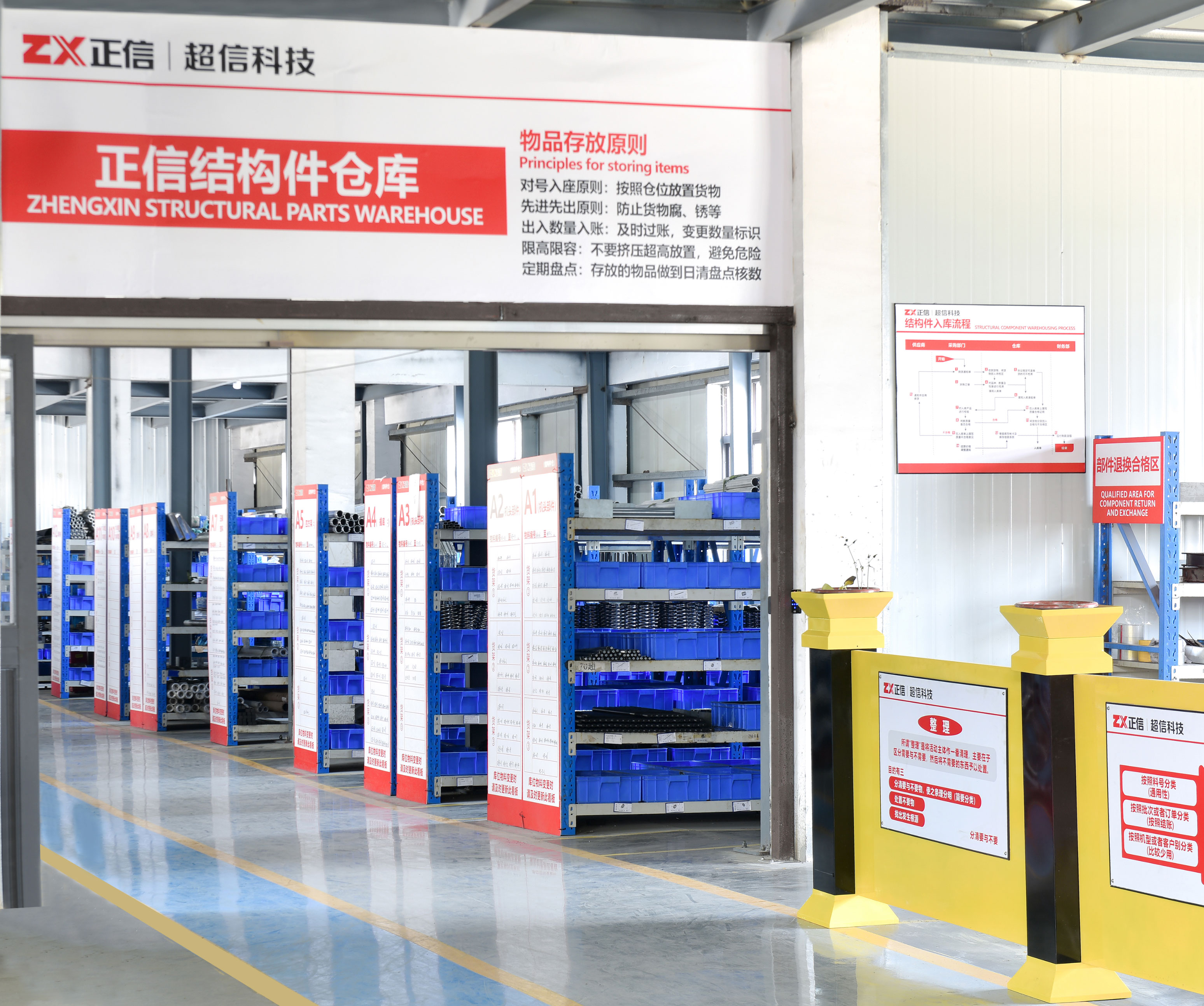
PP spunbond used in bag production is normally specified between about 30 and 150 g/m², with the working range for standard shopping and retail bag production concentrated between 30 and 120 g/m². Weight is not a label detail: it changes tensile strength, opacity, stiffness and, directly, the machine settings required for a sound weld. An 80 g/m² fabric typically withstands 45–60 N in machine direction, while a 60 g/m² fabric withstands 25–35 N.
| Fabric weight | Starting amplitude | Horn-to-anvil gap | Speed note | Typical bag |
|---|---|---|---|---|
| 30–50 g/m² ultra-light | Bottom of the 60–70% band, confirmed by pull test | Narrow setting, set with the gauge | Standard line speed after verification | Garment dust covers, light promotional bags |
| 50–60 g/m² lightweight | 60–70% | Narrow setting, set with the gauge | Standard line speed | Light retail and grocery bags |
| 70–90 g/m² standard (80–90 supermarket grade) | 75–85% | 0.3–0.5 mm at 70 g/m², even within 0.05 mm | About 0.3–0.5 s weld contact at 80 pcs/min | Supermarket shopping bags, vest bags, T-shirt bags |
| 100–120 g/m² heavy duty | 90–100% | Wider than the 70 g/m² setting | 10–15% slower than 70 g/m² | Premium and luxury brand bags |
| Up to 150 g/m² or laminated | 90–100% | Widest setting; re-check parallelism | Slowest in the range | Heavy-duty and laminated bags |
| Handle stock (separate roll) | Set independently on the handle welding unit | Set and verified on the handle unit | Matched to line speed | Loop handle, soft handle and box bags with handles |
Two practical points sit outside the table. First, handles are a separate material stream welded by a separate unit, so handle seal strength must be set and pull-tested on its own; a bag with a perfect side seal and a weak handle weld will still fail in the customer's hands. Second, commercial fabric carries a GSM tolerance of about ±5%, so a roll specified at 70 g/m² may measure 67–73 g/m². Reputable fabric suppliers issue a GSM test certificate with each batch, and the pull test is the check that catches an out-of-tolerance roll before it becomes pallets of rejected bags. Contaminated or inconsistently manufactured PP fabric will not weld correctly at any machine setting.
Installation and Setup: Step by Step to a Seal That Tears the Fabric
Most seal problems that appear in the first month are installation problems, not machine defects. The setup sequence below covers the practical path from a crated machine to a documented, repeatable seal standard. A standard single-machine installation takes one to two working days, and more than 90% of installations are completed by the buyer's own team with remote video guidance from Zhengxin engineers, using a spirit level, a metric wrench set (8–24 mm), screwdrivers, a multimeter and a crane or forklift for a machine weighing 1,200–2,500 kg.
- Prepare the site before the machine arrives. Level concrete floor with 1.5 m clearance on all sides, a verified three-phase supply tested with a multimeter rather than trusted from the nameplate, an industrial air compressor with dryer and tank, a voltage stabilizer wired in, 1–2 tonnes of PP spunbond (70–80 g/m² for initial production) on site and one or two operators available for training.
- Position and level the machine. An unlevel frame causes uneven fabric feeding and asymmetric seals before any ultrasonic setting is touched. Verify with a spirit level, then lock the adjustable feet.
- Confirm power and pneumatics. Test every emergency stop before any motor is energised. Verify air pressure at 0.6–0.8 MPa and drain the compressor tank. Moisture and pressure fluctuation in the air line are a leading cause of inconsistent welding, because the cylinder no longer applies even horn pressure.
- Clean the sealing station. Wipe horn tip and anvil with isopropyl alcohol and a lint-free cloth until both surfaces are clean and shiny. Repeat under bright light if residue remains.
- Set the horn-to-anvil gap with a feeler gauge. Measure at both ends and the centre, target 0.3–0.5 mm for 70 g/m², and confirm the gap is even within 0.05 mm across the full horn width. Generator off during this step.
- Load the recipe on the PLC and HMI. The PLC executes its control program in a 1–10 ms scan cycle and stores complete machine setups as recipes. Enter bag width, bag length, gusset depth if applicable, sealing time, cutting offset and the speed limit for this bag size, then save it under a named recipe so the next changeover is one-touch. Zhengxin machines use Siemens, Delta or Mitsubishi PLCs depending on model tier, with English HMI interfaces.
- Teach the photocell registration. Thread printed fabric so the registration mark (typically 5 × 5 mm or 8 × 8 mm) passes directly under the sensor beam, enter the mark pitch — which equals the bag length — then run the registration teach routine at 10–15 pcs/min so the sensor learns mark contrast and position. Verify with 20 bags at 30 pcs/min and check that every logo is centred with equal margins. At 120 pcs/min the fabric moves at roughly 600–900 mm/s and the sensor-to-cut decision window is only 15–25 ms, so a loose bracket or a faded mark is enough to shift registration.
- Ramp speed with an inspection at every tier. Dry-run at 20–30 pcs/min without fabric to confirm smooth movement and no unusual noise, then run fabric at 30 pcs/min and inspect 50 bags for seal, dimensions and print alignment. Ramp to 60, then 80, then 100 pcs/min, inspecting at each step and adjusting amplitude if the seal weakens as contact time falls.
- Pull-test and record. At final speed, produce 20 bags and pull-test 5. Save the successful parameters as a named recipe per fabric and bag size, and write the final settings in a changeover logbook. A size or style changeover takes 15–30 minutes and covers folding plate width, die position, handle unit alignment and the PLC recipe.
Use Cases: Where Seal Setup Decides Whether the Contract Holds
Seal consistency matters differently by application, and the setup emphasis changes with it.
- Supermarket and grocery chain supply. Runs target 40,000 or more bags per day on a continuous cycle, with ±1 mm dimensional accuracy at full speed and consistent weld quality across the shift. A typical configuration pairs a ZXL-A700Ultra with a ZXH-C41200 four-colour inline flexo unit, quoted in the region of $35,000–50,000, with payback commonly estimated at 14–18 months at 40,000 bags a day.
- Food and beverage takeaway. The weld must be odourless and the print must use water-based ink, which is exactly where ultrasonic's no-scorch, no-fume characteristic is not optional. These lines usually add an inkjet date coder and automatic counting and bundling.
- Garment and apparel packaging. Dust covers and suit covers need a soft, fabric-like handle and a wrinkle-free surface, so handle welding is set and tested separately from the body seal on a 16-hour double-shift pattern.
- Promotional and corporate bag production. Short batches with frequent changeovers put the emphasis on fast, repeatable recipes: four or more print colours at ±0.3 mm registration, with bag size changes completed in 15–30 minutes.
Heat Sealing vs Ultrasonic Bonding for Seal Consistency
| Factor | Heat sealing | Ultrasonic bonding |
|---|---|---|
| Warm-up before the first good bag | 15–20 minutes | None; power drawn only during the 0.2–0.5 s pulse |
| Seal strength in pull test | Reference level | 15–20% higher peel strength |
| Energy consumption | Continuous element draw | 25–30% lower overall |
| Consumable wear part | Heating element, replaced every 3–6 months (about $50–100 each, plus labour and downtime) | Horn, replaced every 12–18 months (about $800–2,000) |
| Surface finish and odour | Risk of scorching and odour if temperature drifts | No scorch or odour; melt zone limited to 0.1–0.3 mm at the interface |
| Food-grade suitability | Limited by odour and scorch risk | Suitable; clean, odourless weld line |
| Machine price | Reference level | Roughly 10–15% higher |
| Operator variables to control | Temperature, dwell time, pressure, element condition | Amplitude, gap, speed, air pressure, horn condition |
Keeping Seal Quality Stable Over the Life of the Line

Seal consistency is not a commissioning event; it is a maintained standard. Converters who keep a stable seal for years do four things consistently. They clean the horn and anvil daily and inspect horn wear monthly. They keep saved PLC recipes for every fabric and bag size combination, and back up parameters and recipes to USB as a monthly routine. They hold a spare parts kit against the day a sensor or horn fails, because the most common cause of extended downtime is waiting for a small component to arrive. And they keep the belt, air filter and lubrication schedule intact — loose belts cause speed fluctuation, which becomes dimensional and seal variation.
The equipment context matters for that long-term view. Zhejiang Zhengxin Machinery Co., Ltd. is a non woven bag making machine manufacturer based in Wenzhou, Zhejiang, China, founded in 2014, operating a 60,000 m² facility with around 200 employees, an annual output of about 500 units, a 30-engineer R&D team and exports to more than 120 countries. Machines are built with branded components — Siemens, Delta or Mitsubishi PLCs, Omron sensors and NSK bearings — and third-party pre-shipment inspection by SGS, Bureau Veritas or CCIC can be arranged on request. The factory is ISO 9001:2015 certified, with incoming material inspection, in-process QC checkpoints and a continuous four-hour full-load production test on every machine, including inspection of seal strength, print registration and dimensional accuracy. All machines are CE certified under the Machinery, Low Voltage and EMC Directives.
Support structure is the other half of the seal standard. Remote video diagnosis runs seven days a week via WhatsApp and video call and resolves more than 80% of issues, which in practice means a weak-seal complaint is usually diagnosed without waiting for a flight. Spare parts ship by DHL or FedEx within 24 hours of a confirmed diagnosis, with 3–7 days global delivery. On-site engineering is available at $100 per day plus airfare and accommodation, with a typical visit resolving issues in 2–5 days, and regional offices in Kenya, Morocco, Egypt, Vietnam, Tanzania, Dubai, Oman, Indonesia and Ethiopia shorten the distance for buyers in those markets.
Commercial terms support the same discipline: minimum order quantity of one unit, FOB or CIF delivery terms, 30% deposit with 70% before shipment after passing pre-shipment inspection. Specify the pull-test standard and the accepted amplitude, gap and speed range in the acceptance criteria, and the seal standard survives staff turnover on both sides.
Frequently Asked Questions
Does ultrasonic sealing change the CE and ISO documentation a buyer receives with a non woven bag making machine?
No. CE marking on Zhengxin machines covers the Machinery Directive 2006/42/EC, the Low Voltage Directive 2014/35/EU and the EMC Directive 2014/30/EU, and the ultrasonic sealing station is part of that technical file. Each machine ships with a Declaration of Conformity, a CE plate on the machine body and the full technical file on request. The factory is ISO 9001:2015 certified. If your customs authority requires a notified-body certificate from TÜV Rheinland, SGS or Bureau Veritas, it can be arranged at additional cost.
Can one machine hold seal strength across 30–120 g/m² fabric and a separate handle material?
Yes, provided the parameters are switched with the material instead of being left at one setting. Documented starting points are 60–70% amplitude for 50–60 g/m², 75–85% for 70–90 g/m² and 90–100% for 100–150 g/m² or laminated stock, with heavy fabric running 10–15% slower. Handle material is welded by the handle unit and must be set and pull-tested separately. Because commercial fabric varies by about ±5% in GSM, every new batch should be verified with a 20-bag pull test before the run is released.
What does it cost to correct weak seals, and what should be budgeted from the start?
Most weak-seal cases cost nothing but time: cleaning the horn and resetting the gap. If the horn is worn, replacement is roughly $800–2,000. Budget a spare parts kit at $500–1,500, a voltage stabilizer at $300–800, and a 15–22 kW screw compressor with dryer and tank; essential auxiliaries for a single-machine setup total $8,000–15,000. Remote diagnosis is included, and on-site engineering is charged at $100 per day plus airfare and accommodation.
How do we prove seal quality before shipment and again after installation?
Before shipment, every machine runs a continuous four-hour full-load production test with sample bags inspected for seal strength, print registration and dimensional accuracy, and a third-party inspection by SGS, Bureau Veritas or CCIC can be added at your request. After installation, commissioning starts with a dry run at 20–30 pcs/min, then production at 30 pcs/min for 50 bags, ramping to 60, 80 and 100 pcs/min with an inspection at each speed. Request a bag sample set in the fabric weight and style you plan to run, and pull-test it against your own standard.
How fast is support after the warranty period, and what keeps seals stable over years?
Remote video support runs seven days a week and resolves more than 80% of issues, spare parts ship by DHL or FedEx with 3–7 days delivery, and on-site engineers are typically on site for 2–5 days. Long-term stability comes from saved recipes per fabric and bag size, the daily horn-cleaning routine, monthly horn inspection and a stocked spares kit. Production lead time is 25–35 working days for standard models. If you share your fabric GSM, bag style and current amplitude and gap settings with our engineers, they can review your setup against the material you actually run — contact details and the catalogue download are below.
Next Step: Turn Seal Quality Into a Documented Standard
Weak seals are a configuration problem with a short, ordered diagnostic path: clean the horn, verify the gap across the full horn width, match amplitude to fabric weight, then confirm speed and air pressure. What separates a line that holds that standard from one that keeps drifting is documentation — recipes saved per fabric and bag size, a pull test written into acceptance criteria, and a support relationship that can diagnose a seal complaint without a shipping delay. Treated that way, the seal becomes an engineered output of the machine rather than a variable the operator fights every shift.
Request a Bag Sample Set or a Setup Review
Send your fabric GSM, bag style, daily output target and current ultrasonic settings, and the ZX Zhengxin Machinery engineering team will respond with a parameter recommendation and the matching model from the ZXL series — including the A700, E700, D700, G700 and the Ultra no-waste-edge variants.
Email: info@zxcorp.com | Tel / WhatsApp: +86 158-5888-9595 | Website: www.wzzxjx.com
Address: No. 118 Xinglong Road, Wanquan Town, Pingyang County, Wenzhou City, Zhejiang Province, China
Download the full 2026 catalogue and specification sheets: ZX Zhengxin Machinery product catalogue (PDF)


Have Questions or Need More Details?
Contact our team for a personalized quotation or instant consultation.
Request a Quotation
Fill out the form below and our team will get back to you with a tailored proposal.
WhatsApp Direct Chat
Prefer to chat in real-time? Message us on WhatsApp for instant assistance & quick answers.
- Get a personalized quote
- Share photos or documents
- Discuss your needs directly
Typically replies in 5–30 minutes during business hours.