
ZXL-E700 vs ZXL-G700 vs ZXL-A700Ultra: Bag Machine Comparison
ZXL-E700 vs ZXL-G700 vs ZXL-A700Ultra: Non Woven Bag Machine Comparison
Short answer: the ZXL-E700, ZXL-G700 and ZXL-A700Ultra are not three versions of one job. The ZXL-E700 is a 5-in-1 box bag platform with online handle attaching and a stated capability of more than 20 bag types. The ZXL-G700 is a side-gusset machine with automatic handle heat-sealing, punching, photoelectric tracking and a 60–200 mm side gusset range. The ZXL-A700Ultra is a zero-waste-edge T-shirt and W-cut machine with ultrasonic edge sealing and continuous automatic production. Choose by bag mix first, handle type second, then material and dimension range, then waste economics, then duty cycle. A buyer whose orders are dominated by handled box bags in many styles lands on the ZXL-E700; a buyer supplying expandable-side bags for bulky goods lands on the ZXL-G700; a buyer running high volumes of T-shirt and W-cut shopping bags with fabric cost as a large share of production cost lands on the ZXL-A700Ultra.
What actually separates these three machines
A non woven bag making machine is a fixed mechanical sequence: unwind, fold, seal, cut — and, where the station exists, attach a handle. The bag styles a machine can produce are set by which of those stations are present and how they are set up. A platform without a handle-attaching unit does not become a handle machine when you load a different recipe, and a machine built around a side-gusset folding section is not interchangeable with one built around a W-cut die.
That is why this comparison is really a question about the next three to five years of order book. Bag size and style changeover on a Zhengxin machine takes roughly 15–30 minutes of mechanical adjustment — folding-plate width, sealing and cutting die position, handle-unit repositioning — followed by a PLC recipe recall on the HMI touchscreen. That is fast enough to switch between a handful of sizes during a week. It is not fast enough to convert a gusset machine into a box-bag machine, and no amount of parameter tuning will make a W-cut platform produce a separately handled bag.
Why buyers compare these three configurations
Regulatory pressure on thin single-use film has moved retail, food-service and promotional buyers toward reusable polypropylene non-woven bags, and the shapes they order are no longer uniform. Handled box bags, expandable-side gusset bags for bulky goods and low-cost T-shirt bags frequently sit inside the same customer conversation, which is why one plant often ends up running several machine architectures rather than one.
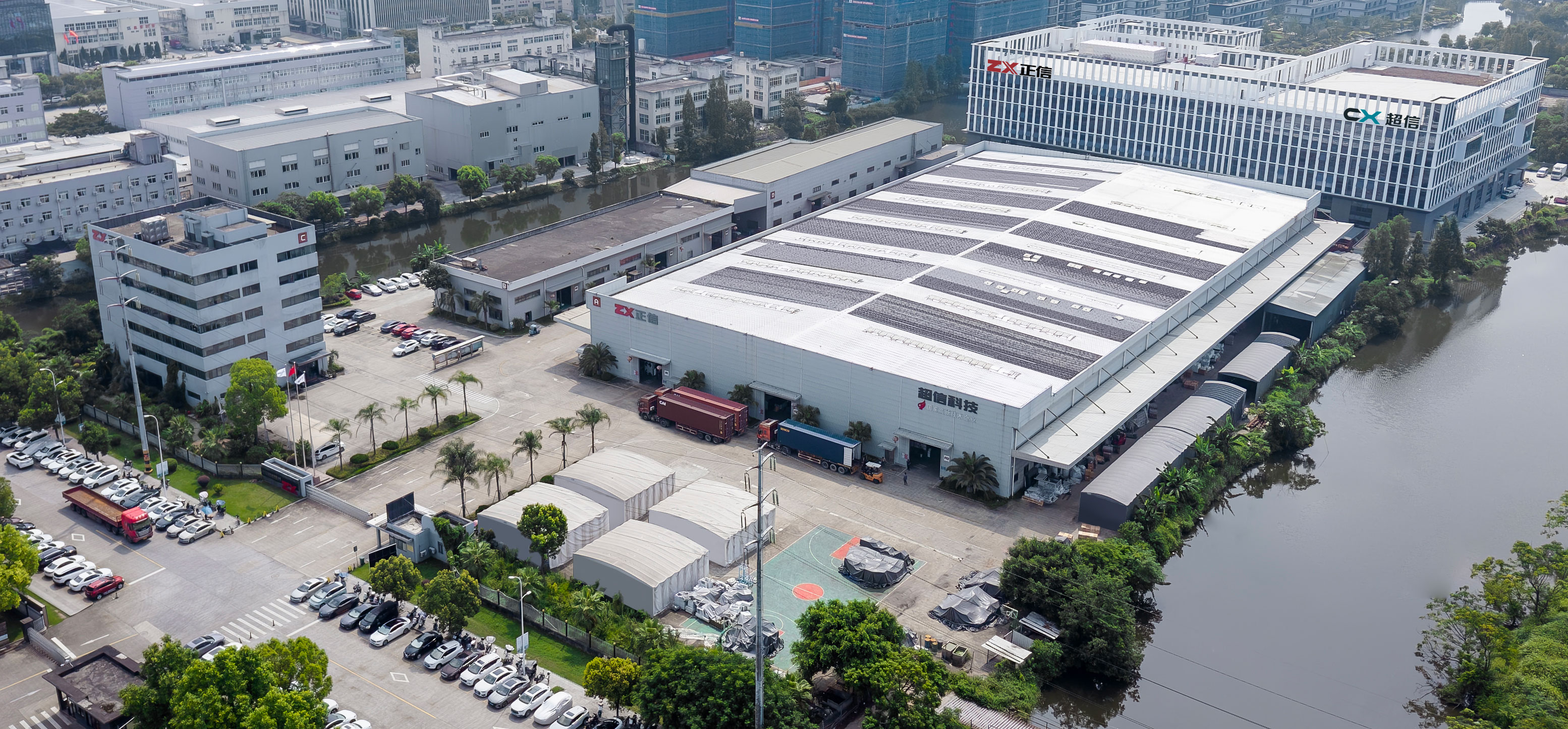
ZX Zhengxin Machinery (Zhejiang Zhengxin Machinery Co., Ltd.) builds all three platforms in Wenzhou, Zhejiang — see the company's official site. The facility was founded in 2014, covers 60,000 m², employs 200 people including 30 engineers, produces around 500 units a year and exports to more than 120 countries. Because all three models come from the same factory, the same component policy (Siemens, Delta or Mitsubishi PLCs, Omron sensors, NSK bearings) and the same certification file, this decision is about configuration rather than supplier risk.
The deployment record shows the same pattern. A 42-unit fleet at an Indonesian bag manufacturing group runs 13 × ZXL-E700, 7 × ZXL-A700, 2 × ZXL-G700, 8 × ZX-LT500 and 12 × ZXH-A1200 printing units, with the G700 assigned to heavy-duty large-format work and the E700 to five-type output. A 6-unit Brazilian packaging facility runs four different bag types from a single supplier. Neither plant chose one architecture for everything.
Quick answer: match the machine to the bag mix
- Mostly box bags, handled bags and a wide style count — ZXL-E700.
- Expandable-side bags for bulky or large-format goods — ZXL-G700.
- High-volume T-shirt and W-cut bags where fabric cost dominates — ZXL-A700Ultra.
- Two or three of the families above at real volume — two machines; the Indonesian fleet is the template.
Bag mix: the first and hardest filter
ZXL-E700 — the wide-mix platform
This is the configuration to look at when the same customer buys a printed box bag one month and a different handled style the next. It is described as a 5-in-1 box bag machine with online handle attaching and a stated capability of more than 20 bag types. Online handle attaching means the handle is applied in the same pass that forms and seals the bag, so a handled bag leaves the machine as one finished item rather than moving to a second station. Zhengxin's model guidance also places ultrasonic sealing on this platform. The bag-style list behind the 20-plus figure is the item to check against your own SKUs — ask for the enumeration in writing, and ask which styles need a die change versus a full mechanical reconfiguration.
ZXL-G700 — the side-gusset specialist
The ZXL-G700 is built around the side gusset, with a stated working range of 60–200 mm, plus automatic handle heat-sealing, punching and photoelectric tracking. That combination points at a specific product: a bag that must stand open or take a bulky item — multi-portion takeaway packaging, large-format retail bags, bottle carriers. In the Indonesian fleet this is the model assigned to heavy-duty large-format bags. If your customers ask for gussets below 60 mm or above 200 mm, that is a specification conversation with the supplier, not an assumption to carry into the purchase order.
ZXL-A700Ultra — the T-shirt and W-cut volume machine
This model sits in Zhengxin's Ultra (no-waste-edge) series and is configured for T-shirt and W-cut bags with ultrasonic edge sealing and continuous automatic production. T-shirt and W-cut bags form their handle from the bag body itself — the cut shape is the handle — so there is no separate handle-attaching station and no handle material to buy. That is what makes the platform fast and economical per bag, and it is also the boundary: it will not produce a box bag or a separately handled bag. Zhengxin rates the ZXL-A700Ultra at 100–120 pcs/min and pairs it with a 4-colour flexo printer in its supermarket-line recommendation.
Handle capability: attached, heat-sealed or formed by the cut
The handle decision usually settles the machine decision. The ZXL-E700 attaches handles online. The ZXL-G700 heat-seals handles automatically and punches the bag in the same line. The ZXL-A700Ultra has no handle station because the W-cut shape is the handle.
The sealing method attached to each handle matters over a machine's service life. Zhengxin's technical guidance describes ultrasonic welding as drawing power only during the weld pulse of roughly 0.2–0.5 seconds, with no warm-up, and a horn replacement interval of about 12–18 months. Heat sealing holds element temperature continuously, needs roughly 15–20 minutes of warm-up, and consumes heating elements every 3–6 months at around $50–100 per element plus labour and downtime. The published configuration summary specifies handle heat-sealing for the ZXL-G700; it does not state whether the ZXL-E700's handle weld itself is ultrasonic, and it does not state the body-sealing method for the ZXL-G700. Both points belong in the quotation clarification, not in an assumption.
Material and dimensional capability: what is stated and what you must confirm
Zhengxin's customization envelope lists material compatibility with PP spunbond non-woven, laminated non-woven and biodegradable fabric across a 30–150 GSM range, with bag width, length and gusset depth described as fully customizable. That is the factory-level envelope, not a per-model rating. The only dimensional figure stated for these three models is the ZXL-G700's 60–200 mm side gusset.
Two related points are worth separating. First, the CE certificate scope lists ZXL-A (600–1200), ZXL-E (600–1200) and ZXL-G (600–1200) series designations; that is a certification scope, not a bag-width specification, and should not be read as one. Second, fabric thickness changes machine behaviour in ways that are documented: at 100–120 GSM a machine typically runs 10–15% slower than at 70 GSM, and thicker fabric needs a wider ultrasonic horn-to-anvil gap and higher amplitude. If your mix runs from 60 GSM promotional bags to 120 GSM heavy-duty bags on one machine, plan the rated speed around the thickest fabric you will actually run, and confirm the rated GSM window per model in writing.
Sealing method, control platform and operator load
All three platforms are PLC controlled with a multi-language HMI touchscreen, and all support recipe storage so a saved bag size can be recalled in one touch rather than re-entered. PLC brand depends on tier: Siemens, Delta or Mitsubishi are the listed options, and Zhengxin's control documentation states that Ultra-series models such as the ZXL-A700Ultra use Siemens S7-1200 or S7-200 SMART. For the ZXL-E700 and ZXL-G700, confirm the PLC at order rather than assuming the Ultra specification carries across.
The mechanical difference that shows up in daily output is servo versus clutch drive. A servo holds position within about ±0.5 mm because the encoder closes the loop, while clutch-motor machines typically drift ±2–3 mm as belts wear. That tolerance is what allows the Ultra platform to form a bag at the exact purchased roll width. It also explains a 25–30% energy difference, because a servo draws significant current mainly during acceleration and work phases.
Operator load is similar across the three: fully automatic operation, one operator per machine in normal running, and installation that typically takes 1–2 working days with commissioning complete once the operator can independently produce quality bags at production speed. One limitation is specific to the standard platforms. Zhengxin's high-speed guidance states that standard A700 and E700 machines can run at up to 100 pcs/min for 8–16 hour shifts but are not engineered for 24/7 continuous duty; the 800-series platforms exist for that. If your plan assumes three shifts at maximum speed, that is a duty-cycle question to raise before ordering, and the ZXL-G700 duty rating is not stated in the material behind this comparison.
Waste profile: trim management versus zero-waste edge
Conventional non-woven bag machines are fed fabric slightly wider than the finished bag and trim the over-width allowance, typically 3–8 mm per side, which accumulates to about 3–5% of fabric consumption. Zhengxin's own worked example: a factory consuming 3 tonnes of fabric daily loses 90–150 kg a day to trim at that rate. Trim also has to be collected, stored and disposed of, which is an operational and fire-safety burden in its own right.
The Ultra platform removes the allowance instead of managing it. Servo positioning holds alignment within ±0.5 mm, so the purchased roll width equals the finished bag width and no trim margin is required. Zhengxin puts the payback on that premium at 12–18 months for operations consuming 1 tonne of fabric a day or more, and advises against the premium below roughly that level, where the payback stretches past three years.
Applied to this comparison: the ZXL-A700Ultra carries the zero-waste-edge architecture. The ZXL-E700 is a standard platform and should be planned with a trim allowance. Whether the ZXL-G700's gusset-forming section produces edge trim is not stated and should be confirmed, since gusset construction can change the waste profile independently of the sealing method.
Side-by-side comparison table
| Decision dimension | ZXL-E700 | ZXL-G700 | ZXL-A700Ultra |
|---|---|---|---|
| Primary bag family | Box bags and multi-style output with attached handles | Side-gusset (expandable-side) bags with handles | T-shirt and W-cut bags |
| Stated style breadth | 5-in-1 platform, more than 20 bag types | Gusset-focused; style list to be confirmed | T-shirt and W-cut focus |
| Handle | Online handle attaching | Automatic handle heat-sealing plus punching | Formed by the W-cut shape; no separate handle station |
| Side gusset | Not stated — confirm | 60–200 mm | Not stated — confirm |
| Sealing | Ultrasonic sealing listed for this platform | Handle heat-sealing; body method to confirm | Ultrasonic edge sealing |
| Edge waste | Conventional trim (typically 3–8 mm per side) | Not stated — confirm | Zero-waste edge; servo alignment ±0.5 mm |
| Control | PLC + multi-language HMI touchscreen; brand per order | PLC + HMI; photoelectric tracking included | Ultra series: Siemens S7-1200 or S7-200 SMART |
| Speed | Up to 100 pcs/min on the standard platform | Not stated — confirm | 100–120 pcs/min |
| Duty cycle | 8–16 hour shifts; not for 24/7 at maximum speed | Not stated — confirm | Not stated — confirm |
| Typical fit | Mixed handled box-bag order book | Bulky goods, large format, gusset demand | High-volume T-shirt bags, fabric cost sensitive |
Step-by-step: five decisions that settle the choice
- Write the SKU list before the quotation. For each bag you actually sell, record style, finished width, height, gusset depth, handle type and fabric GSM. Twenty-four months of order history is more useful than a wish list, because the machine has to cover the bags you ship, not the bags you might one day pitch.
- Eliminate on physical capability first. A separately attached handle, a 100 mm side gusset and a W-cut T-shirt shape each point to a different architecture. If two of the three appear in your top ten SKUs at volume, the honest answer is two machines — the Indonesian fleet is the practical demonstration.
- Decide handle and sealing, then count the maintenance. Attached handles add material and a process step; heat-sealed handles carry element replacement every 3–6 months; ultrasonic carries horn replacement every 12–18 months and no warm-up. Neither is free, but the cost lands in different places.
- Run the waste arithmetic. Multiply daily fabric consumption by 3–5%. At 3 tonnes a day, that is 90–150 kg of fabric leaving the plant as trim. Against that number, test the Ultra premium against the stated 12–18 month payback at 1 tonne a day or more. Below that volume, the same money usually does more work elsewhere.
- Plan capacity at 80–85% of rated speed, and check the duty cycle. Zhengxin's own planning guidance is to calculate with 80–85% of rated speed, not 100%. A 100 pcs/min machine running an 8-hour shift at that baseline produces roughly 38,000–41,000 bags; the rated 48,000 assumes no stops at all. If the answer requires running a standard platform around the clock, review the 800-series platforms instead of pushing an E700 past its duty rating.
Use cases: which buyer ends up with which machine
Retail and supermarket bag supply on handled box bags. The ZXL-E700 is the fit when the order book is dominated by printed, handled bags across many styles. A food packaging and retail shopping bag manufacturer in Egypt has run a ZXL-E700 since 2017 alongside two ZXL-D700 machines and two ZXH-C21200 printers, supporting three distinct product lines — takeaway bags for restaurant chains and multi-colour promotional bags for retail malls — from one supplier.
Bulky and large-format bags. The ZXL-G700 is the fit where the gusset is the product: bags that must stand open, hold volume, or take a bottle or multi-portion meal. The 60–200 mm range covers most of that territory, and the model is the one Zhengxin assigns to heavy-duty large-format work in mixed fleets.
Promotional and high-volume T-shirt bag work. The ZXL-A700Ultra is the fit where bags are bought by the thousand in a small number of shapes and fabric cost is a large share of production cost. A promotional bag producer in Mwanza, Tanzania runs one ZXL-A700Ultra with a ZXH-C21200 printer and reports handling 10-plus custom orders a week with different artwork, having expanded from one line to two within 18 months.
What this comparison does not cover — confirm before you order
The published configuration material behind this article does not state several specifications that buyers need before signing. Treat the following as quotation questions, not as settled facts: the per-model fabric GSM window; minimum and maximum bag width and height for each model; gusset depth for the ZXL-E700 and the ZXL-A700Ultra; the rated speed and duty cycle of the ZXL-G700; whether the ZXL-G700 body seal is heat or ultrasonic; whether the ZXL-E700 handle weld is ultrasonic; connected power in kW and air consumption in m³/min for each model; machine dimensions and weight (Zhengxin's installation guidance cites a general 1,200–2,500 kg range across models, not per-model figures); and per-configuration pricing.
Frequently asked questions
Which certifications cover the ZXL-E700, ZXL-G700 and ZXL-A700Ultra?
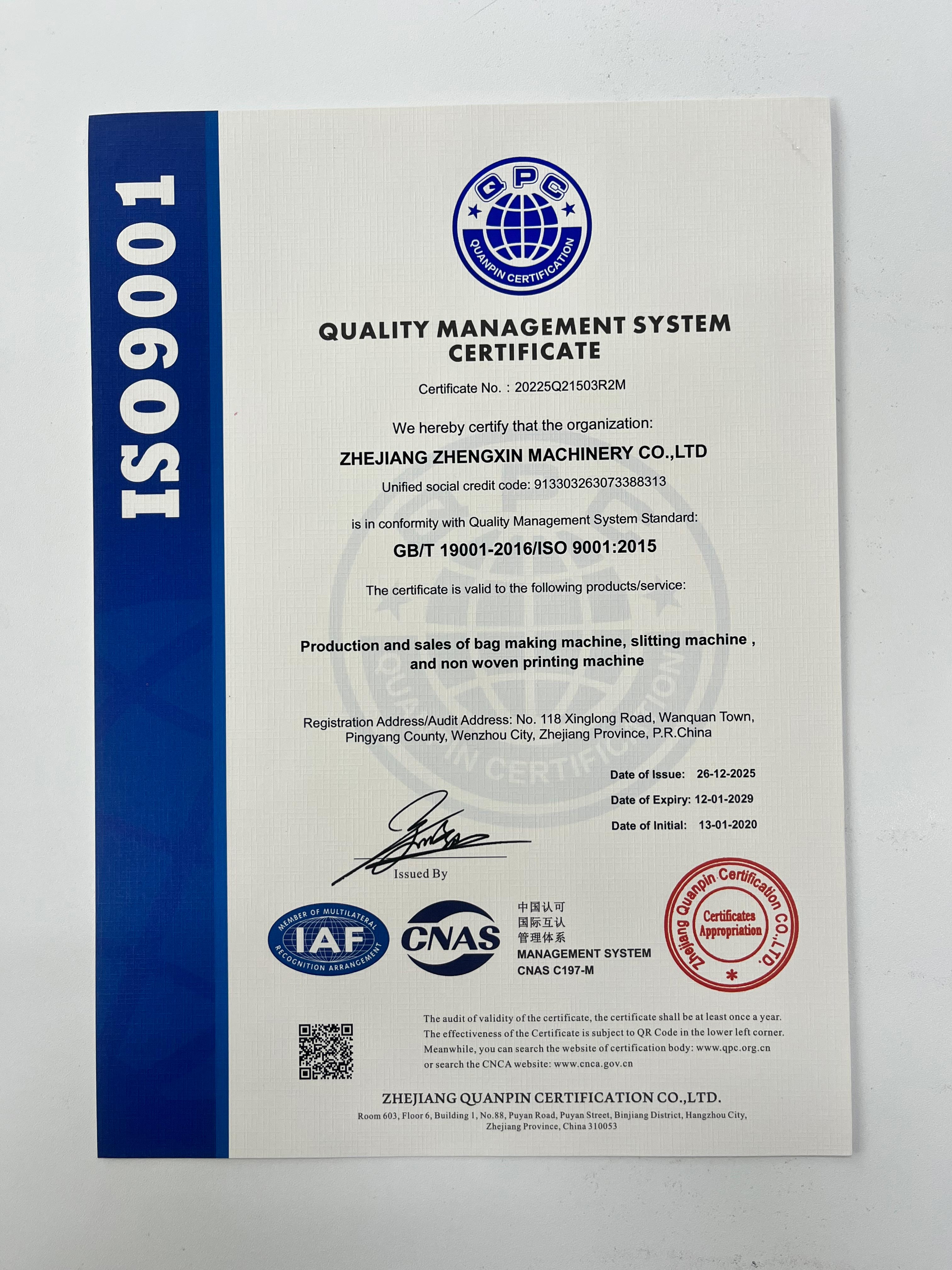
All three are listed under Zhengxin's CE certificate M.2021.206.C70875, issued by UDEM and valid from 24 January 2022 to 23 January 2027, whose scope names the ZXL-A (600–1200), ZXL-E (600–1200) and ZXL-G (600–1200) series and cites EN ISO 12100:2010, EN 60204-1:2018 and the EN IEC 61000 series. Factory quality management is covered by ISO 9001:2015 certificate 20225Q21503R2M, issued by QPC, valid from 26 December 2025 to 12 January 2029, for production and sales of bag making machines, slitting machines and non-woven printing machines. Country-specific schemes such as SONCAP, PVOC or SASO are arranged on request with third-party inspection fees additional. Verify certificate numbers on the issuing body's own website rather than relying on a scanned copy.
Can ZX Zhengxin Machinery supply a fully automatic non woven bag making machine as an OEM or ODM project?
Yes. Zhengxin lists OEM, ODM and custom manufacturing as its production modes, with a minimum order of one unit, a monthly capacity of 40 units and a 30–45 day lead time. The customization list covers voltage and power (220V, 380V, 415V or 440V, single or three phase), bag size and dimensions including gusset depth, bag style (W-cut, D-cut, flat, loop handle, box bag), printing in 1–6 flexo colours, material compatibility (PP spunbond, laminated, biodegradable, 30–150 GSM), sealing method (ultrasonic, heat or hybrid), handle type, control system (Siemens, Mitsubishi or Delta PLC with multi-language HMI touchscreen), automation level, optional modules such as gusset maker and hole punch, and machine colour and branding. Customization adds roughly 5–10 working days to the standard lead time.
Which of the three costs more to run, and what drives the difference?
Running cost is driven by four items, not by the purchase price alone. Fabric trim is the largest: conventional platforms trim 3–8 mm per side, roughly 3–5% of consumption, while the zero-waste-edge architecture on the ZXL-A700Ultra removes the allowance entirely, with a stated payback of 12–18 months above 1 tonne of fabric a day. Sealing energy is second: ultrasonic draws power only during a 0.2–0.5 second weld pulse and needs no warm-up, whereas heat sealing holds element temperature continuously and consumes elements every 3–6 months at roughly $50–100 each. Handle material is third, since attached handles consume fabric that W-cut bags do not. Duty cycle is fourth: pushing a standard platform into 24/7 operation accelerates belt, bearing and drive wear. Model price itself depends on configuration, so ask for an itemized quotation rather than a single figure.
How can I validate bag quality on these three configurations before committing?
Use the checks Zhengxin already documents rather than informal assurances. First, request a live video factory tour showing the production lines and testing areas in real time — not a pre-recorded clip. Second, ask for contact details of three or more active customers in your region, with their permission, and call them directly. Third, build third-party pre-shipment inspection into the order: SGS, Bureau Veritas or CCIC inspection is available at the buyer's request, typically costing $300–800, and the stated acceptance criterion is the pre-shipment test. Every machine runs a continuous full-load production test before shipment, and commissioning on arrival includes a dry run at 20–30 pcs/min, 50 bags at 30 pcs/min, then ramp-up to 60, 80 and 100 pcs/min with inspection at each tier and a pull test on sample bags. The material reviewed here does not state a policy for shipping bag samples, so request that explicitly if you need physical samples in hand.
What is the lead time, and what happens after I place an order?
Standard models take 25–35 working days of production and customized configurations 35–45 days, against a stated 30–45 day lead time; sea freight adds 15–45 days depending on destination — roughly 15 days to Indonesia, 25 to Kenya, 35 to Nigeria and 40 to Brazil — for a total of about 45–80 days from order to arrival at your port. Payment terms are 30% deposit with the 70% balance before shipment after passing pre-shipment inspection, and letters of credit at sight are accepted above $50,000 on FOB or CIF terms. Installation typically takes 1–2 working days and is commonly completed by the buyer's team with remote video guidance, which Zhengxin reports resolves more than 80% of issues; on-site engineer dispatch is available at $100 per day plus airfare and accommodation. Machines carry a one-year warranty on major components, and spare parts ship by express courier in 3–7 days. To compare these three configurations against your own bag list, contact the Zhengxin team and download the catalogue: Zhengxin non woven bag making machine catalogue (PDF).
Conclusion
The ZXL-E700, ZXL-G700 and ZXL-A700Ultra answer three different questions. The ZXL-E700 answers "how do I cover a wide, handled box-bag mix from one machine" with online handle attaching and more than 20 bag types. The ZXL-G700 answers "how do I make expandable-side bags for bulky goods" with 60–200 mm gussets, automatic handle heat-sealing, punching and photoelectric tracking. The ZXL-A700Ultra answers "how do I make T-shirt and W-cut bags at high volume without losing 3–5% of my fabric" with zero-waste-edge servo control, ultrasonic edge sealing and 100–120 pcs/min. Start from the SKU list, eliminate on physical capability, then decide on waste economics and duty cycle. Where two of the three families carry real volume, the mixed-fleet approach used by the Indonesian plant — rather than one machine stretched across every bag — is the configuration that holds up.
Have Questions or Need More Details?
Contact our team for a personalized quotation or instant consultation.
Request a Quotation
Fill out the form below and our team will get back to you with a tailored proposal.
WhatsApp Direct Chat
Prefer to chat in real-time? Message us on WhatsApp for instant assistance & quick answers.
- Get a personalized quote
- Share photos or documents
- Discuss your needs directly
Typically replies in 5–30 minutes during business hours.