1-Set Sample vs 50-Unit Bulk: Vehicle-Specific Android Car Stereo Fascia Kit Order Routes Compared
Choosing between a single-set sample and a 50-unit production order is not a question of order size. It is a question of which risk you are trying to retire. For a vehicle-specific Android car stereo fascia kit, a 1-set sample order (MOQ 1 set on stock items) answers one question: does this kit physically and electrically match the vehicle in front of me? A 50-unit production order covering the ZYX-01 dash fascia, ZYX-02 wiring harness and ZYX-03 CAN bus decoder answers a different question: will unit 2 through unit 50 behave exactly like unit 1?
The two routes are therefore complementary rather than competing. This guide compares what each route verifies, the product-level evidence behind each verification step, the commercial terms that apply, and the measured long-term results that make a low-volume first order a manageable risk rather than a gamble.
Short answer:
- 1-set sample route (MOQ 1 set): validates dashboard form-fit assembly, harness connector match and basic CAN function on one specific vehicle.
- 50-unit production route: validates repeatability — consistent dimensional tolerance, consistent pin definition and consistent model-specific CAN firmware across a sellable batch.
- Sequencing: run the sample first where vehicle configuration is uncertain; move to the production lot once the vehicle-side match is confirmed.
The Order-Route Problem: One Vehicle vs One Batch
Buyers evaluating a vehicle-specific Android car stereo fascia kit are usually de-risking two distinct failure modes, and they are often treated as one.
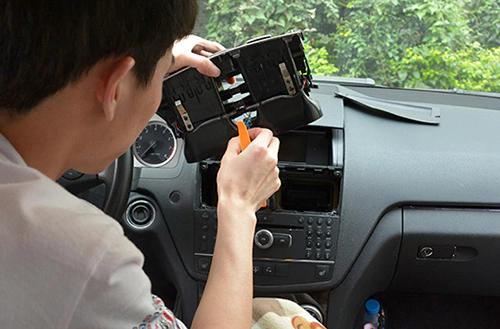
The first is a physical fitment failure. Obvious gaps, misalignment and damage to the original dashboard trim typically occur when a dash kit is not precision-moulded to the exact dimensions of the vehicle's original dashboard, or when a universal kit is substituted for a model-specific one. The second is an electronic protocol failure: dashboard fault warning codes, unresponsive steering wheel control buttons, or a head unit that fails to power on. These are commonly caused by an incompatible CAN decoder protocol, a loose CAN bus interface connection, or decoder firmware that does not match the vehicle's model year and trim configuration.
A single sample set can expose both failure modes on one vehicle. It cannot expose a third risk that only appears after the first unit: batch variation. That is the specific gap a 50-unit production order closes. The order-route decision is therefore about matching the verification method to the uncertainty you actually carry — one uncertain vehicle, or one uncertain production lot.
Why Order Sequencing Matters in the Android Retrofit Supply Chain
Order sequencing has become a commercial issue rather than a technical formality because the retrofit category is expanding and the buyer base is increasingly non-technical.
The global car audio head unit market was estimated at USD 15.44 billion in 2024 according to Market Research Future. Mordor Intelligence projects the car aftermarket audio system market to grow at a CAGR of 12.18%, driven in part by DIY customers and online plug-and-play kits. Fortune Business Insights reports that Asia Pacific dominated the global car audio market with a 54.21% share in 2025. For customs classification, car stereo fascia and installation hardware fall primarily under HS Code 8708.99 (vehicle parts and accessories, not elsewhere classified), per the United Nations Statistics Division classification reference.
Two technical realities sit behind those numbers. First, a CANBUS decoder for an Android head unit works by translating vehicle network messages into a format the head unit can read — commonly described as HEX-to-UART translation — so that functions such as steering wheel control and vehicle data remain available. Second, electronic subassemblies integrated into road vehicles in the European Union are subject to E-Marking (ECE R10) rather than CE marking alone where they affect vehicle safety functions, according to published EU type-approval guidance. Both realities mean the buyer's real exposure sits at the interface: the dashboard, the connector and the protocol.
Against that background, ordering 50 sets of an unverified kit is expensive, and ordering only one sample when you intend to stock a SKU leaves the repeatability question unanswered. The productive approach is to define what each route proves before the first purchase order is issued.
What the Kit Contains — and What Each Route Verifies
A complete installation package is a three-part system, and each part is verified differently depending on whether you are testing one vehicle or one batch.
ZYX-01 Dash Fascia: Form-Fit Assembly Evidence
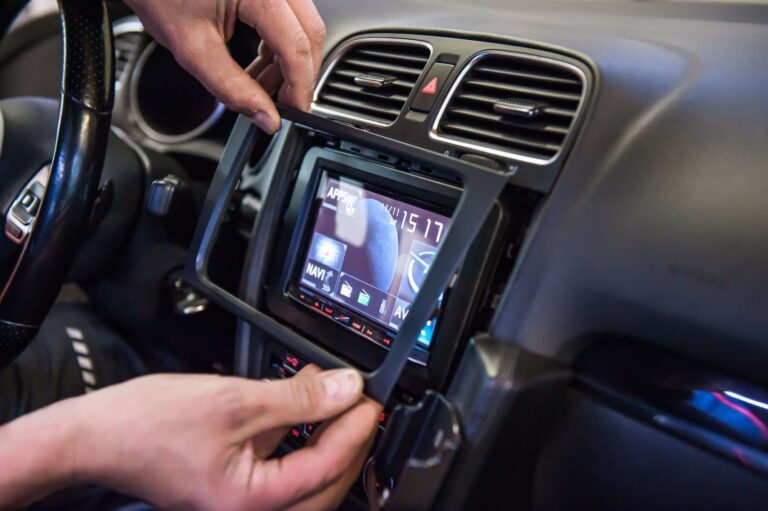
The ZYX-01 Car Radio Dash Fascia is a model-specific centre console frame produced in ABS plastic with a dimensional tolerance of ≤0.2 mm and a material thickness of 2.5 mm to 3.0 mm. It supports 7", 9", 10.1" and 12.3" screen sizes, with Double-DIN or model-specific custom mounting standards, and a plug-and-play fitment type rated across an operating temperature range of −40°C to 85°C.
A single sample verifies the form-fit assembly of that frame against one dashboard: mounting points, surface finish, trim gaps and alignment. A 50-unit order verifies something different — that the same mould, the same tolerance band and the same finish are reproduced across the lot. For a reseller or installer, that second verification is what protects the SKU from a wave of warranty returns caused by a small dimensional drift.
ZYX-02 Wiring Harness: Plug-and-Play Connection Evidence
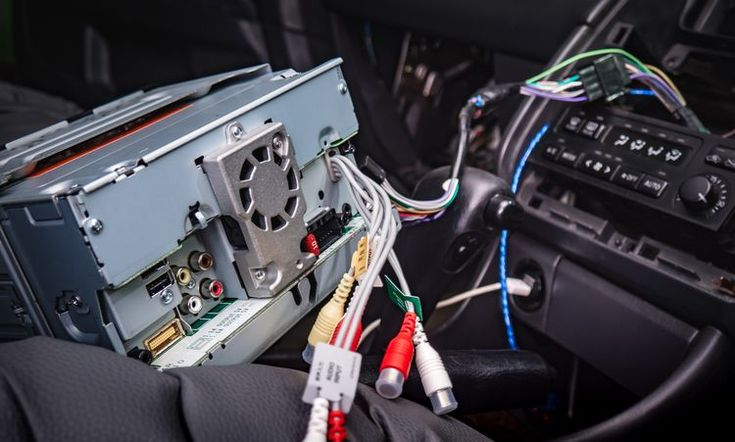
The ZYX-02 Car Radio Wiring Harness carries an OEM vehicle-side plug plus an ISO 16-pin head unit connector, so the factory electrical interface is used as-is rather than cut into. Conductor specification is AWG 20-22 tinned oxygen-free copper with ANSI/CTA-2015-B colour-coded insulation; the harness is rated 12V DC at a maximum current of 10A and operates from −40°C to 85°C. It includes reverse polarity protection and short-circuit protection. Materials are flame-retardant PVC insulation, PA66 engineering plastic connector housing and tin-plated brass contact terminals.
On the sample route, the harness is verified for connector seating, pin assignment and continuity on one vehicle. Intermittent signal loss after long-term use is a documented risk in this category and is usually attributed to low-grade copper conductors, thin insulation or the absence of vibration-resistant crimp design — which is why the conductor and insulation specification, not only the connector shape, is the thing worth checking in the sample.
ZYX-03 CAN Bus Decoder: Model-Specific Firmware Evidence
The ZYX-03 CAN Bus Decoder Module is a plug-and-play CAN gateway built to CAN 2.0A / 2.0B with a 500 kbps / 125 kbps dual rate, powered at 12V DC with 300 mA standby and 2A maximum draw, operating from −40°C to 85°C. Its housing is flame-retardant ABS, the circuit board is FR-4 glass fibre epoxy resin, terminals are tin-plated brass, and the internal potting is heat-conductive silicone.
Functionally, a decoder of this type parses steering wheel control signals, vehicle status data and dashboard prompts from the original bus, converts them into formats the aftermarket head unit can use, and forwards control instructions back to the vehicle network. The decisive variable is not the hardware but the firmware: a decoder must be pre-programmed for the exact vehicle model, model year and trim configuration. A mismatched universal decoder is a common cause of dashboard fault codes and dead steering wheel buttons, so the sample route should include a function test of these two behaviours specifically.
Repeatability: The Only Thing a 50-Unit Order Adds
It is worth stating plainly: a 50-unit order does not verify a new capability. It verifies that the verified capability survives repetition. Practically, that means confirming that batch output holds the ZYX-01 tolerance band, that ZYX-02 pin definitions and wire lengths remain unchanged unit to unit, and that every ZYX-03 in the lot is flashed with the same model-specific firmware version. Standard model-specific kit sets are produced in 50-unit lots; bespoke customization — a new dash kit model or surface finish, a modified harness pin definition or length, or a combined kit configuration — is handled as custom OEM/ODM work from 100 units.
Step-by-Step Breakdown: Running Both Routes in Sequence
Route A — the 1-set sample order
- Confirm the vehicle configuration before ordering. Compatibility is determined by a chain, not a single attribute: vehicle brand, model, model year, original radio, original connector, vehicle configuration, audio system and intended new head unit. Photographs of the original dashboard, original radio, or the connectors on the back of the original head unit remove most ambiguity.
- Order one set (MOQ 1 set on stock items). Stock products are typically dispatched in 3–7 days.
- Dry-fit the fascia before permanent installation. Check gaps, alignment and mounting points against the dashboard. Never force the trim.
- Disconnect the vehicle battery, then connect the harness. Confirm the OEM vehicle-side plug and the ISO 16-pin head unit connector are fully seated, and verify polarity before powering on.
- Power on and test functions. Confirm head unit start-up, steering wheel control response, and the absence of dashboard fault codes with the matching ZYX-03 decoder installed.
- Record the result. If the sample passes, the configuration is confirmed; if it does not, the corrected configuration — not the product category — is what gets re-ordered.
Route B — the 50-unit production order
- Freeze the configuration. The vehicle application, screen size, kit combination and decoder firmware version are locked against the sample result.
- Confirm the commercial terms — quantity band, customization scope, delivery term and inspection scope (see the comparison below).
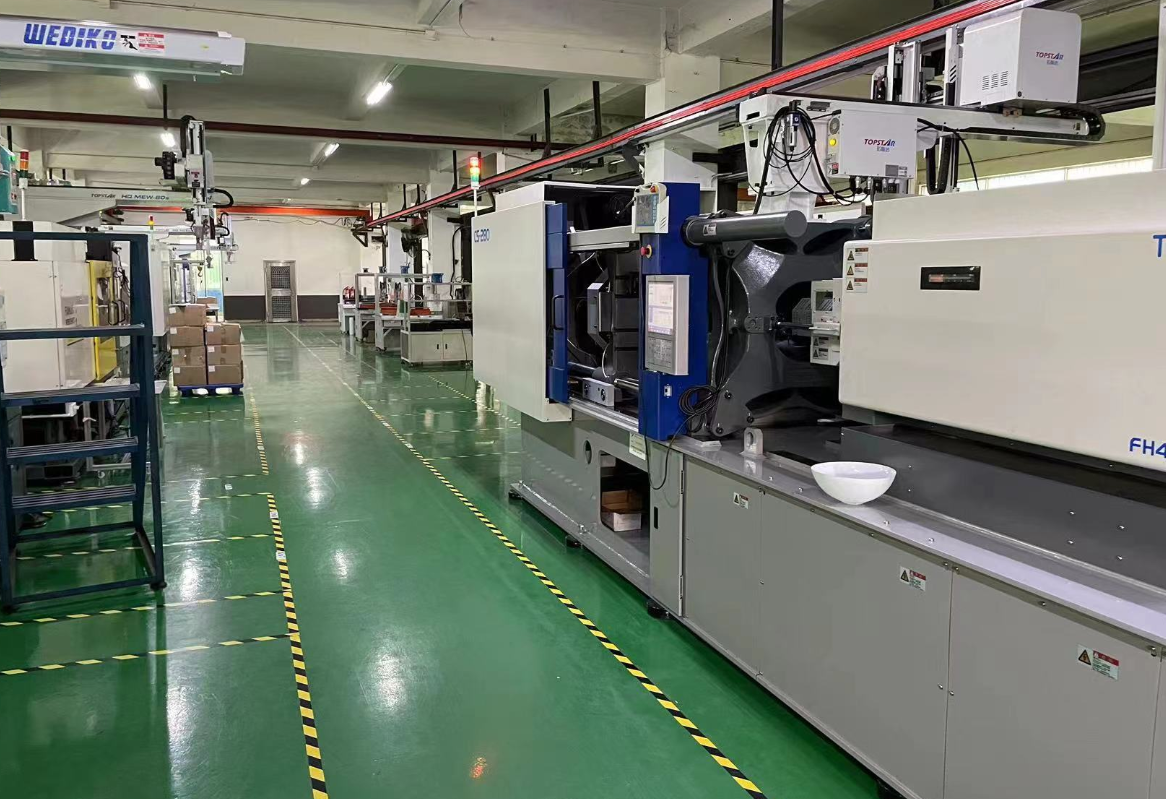
- Production. Model-specific products follow a 15–25 day lead time; the production system supports 12,000 units per month.
- Quality gate. Incoming inspection is applied 100% to CAN bus decoders, and a 100% pre-shipment conductivity and fit test is performed. Optional SGS third-party inspection can be arranged alongside the standard test.
- Shipment and documentation. Dispatch under EXW factory, FOB Shenzhen or CIF Hamburg terms, with the balance settled against a copy of the bill of lading.
- Post-delivery support. A 12-month product warranty, remote installation technical guidance, free replacement of defective items and CAN protocol matching support apply.
Use Cases: Matching the Route to the Buyer Profile
| Buyer situation | Recommended route | Reason |
|---|---|---|
| Single premium vehicle upgrade or dealership pre-delivery fitting | 1-set sample, then repeat single sets | One vehicle, one configuration; the fitment and protocol questions must be answered before the trim is touched |
| First stock order for an e-commerce listing or retail SKU | 1-set sample, then 50-unit production lot | The sample confirms the listing is installable; the batch confirms the listing is repeatable |
| Installer or modification shop building a repeatable service | 50-unit production lot after sample validation | Consistent tolerance and consistent firmware reduce callbacks across many vehicles of the same model |
| Distributor covering several model years of one platform | Sample across each model year, then combined production lot | Model year and trim level, not the model name alone, determine connector and protocol match |
| Brand owner requiring bespoke surface finish or pin definition | Sample validation, then custom OEM/ODM from 100 units | Customization changes dimensions and pin definitions, so the sample result must be re-established |
Commercial Terms Side by Side
The routes differ in what they prove; they share the same commercial framework, with the differences concentrated in quantity basis, lead time and inspection scope.
| Decision dimension | 1-set sample route | 50-unit production route |
|---|---|---|
| Quantity basis | 1 unit (stock items, MOQ 1 unit) | 50 units for the standard model-specific kit set (ZYX-01 + ZYX-02 + ZYX-03) |
| Primary purpose | Fitment and function validation on one vehicle | Repeatability validation across a sellable batch |
| What is verified physically | Dash frame form-fit assembly, mounting points, trim gaps, surface finish | Dimensional consistency within the ≤0.2 mm tolerance band across the lot |
| What is verified electrically | OEM vehicle-side plug seating, ISO 16-pin connector match, continuity, polarity | Unchanged pin definition and consistent AWG 20-22 tinned oxygen-free copper conductor build |
| What is verified electronically | CAN 2.0A / 2.0B communication, steering wheel control response, no dashboard fault codes | Identical model-specific firmware version flashed across every ZYX-03 in the lot |
| Typical lead time | 3–7 days for stock products | 15–25 days for custom model-specific products |
| Customization threshold | Not applicable | Custom OEM/ODM items from 100 units |
| Risk removed | Wrong configuration purchased | Batch variation and warranty exposure |
| Term | What it means for the order |
|---|---|
| Payment | 30% T/T in advance, 70% T/T against copy of B/L |
| Delivery terms | FOB Shenzhen, CIF Hamburg, or EXW factory |
| Pre-shipment testing | Full function and fitment test before dispatch |
| Third-party inspection | Optional SGS inspection available alongside the standard test |
| Incoming control | 100% incoming inspection for CAN bus decoders |
| Warranty and support | 12-month product warranty, remote installation technical guidance, free replacement of defective items, CAN protocol matching support |
Evidence That Low-Volume Risk Is Manageable
The strongest argument for starting small is not the price of one set — it is the documented behaviour of buyers who did.
One China-based after-market solution integrator has supplied Android stereo retrofit supporting parts under a 7-year long-term stable cooperation, with a cumulative volume of 19,000+ sets of dash frame, wiring harness and CAN bus decoder combinations. The reported return rate in that relationship is below 0.8%, alongside consistent product consistency, flexible order volume and rapid technical support for overseas project requirements.
A second reference point is larger in scale. A car multimedia brand owner working with Shenzhen Zhongyixing Electronic Technology Co., Ltd under a 9-year continuous cooperation has taken a cumulative 550,000+ sets of dash frames, wiring harnesses and CAN bus decoders for after-market Android head-unit retrofit across multi-vehicle-model applications. The reported return rate in that relationship is below 0.7%, with stable mass production, fast new-model adaptation, efficient sample delivery and stable lead-time control across volume orders.

Read together, the two cases describe a supply relationship that has absorbed both a single-vehicle validation pattern and a high-volume production pattern. That is the relevant evidence for a buyer deciding whether a 1-set sample is worth the paperwork: the low-volume entry point is not a courtesy exception, it is the front end of a process that has already been run at scale.
FAQ
Do the fascia kit, wiring harness and CAN decoder meet EU environmental and vehicle compliance requirements?
Yes. The full kit complies with EU RoHS 2 and REACH regulations, with hazardous substance content controlled across materials and components, which covers the environmental requirements for EU export. For customs purposes the product is classified primarily under HS Code 8708.99 (vehicle parts and accessories, not elsewhere classified). Buyers should note one additional consideration: published EU type-approval guidance states that electronic subassemblies integrated into road vehicles are subject to E-Marking (ECE R10) rather than CE marking alone where they affect vehicle safety functions, so the applicable conformity route should be confirmed for the specific installation.
Can the CAN bus decoder be pre-programmed for my vehicle before the order ships?
Yes — pre-programming is the standard approach for the ZYX-03 CAN Bus Decoder Module, which supports CAN 2.0A / 2.0B at a 500 kbps / 125 kbps dual rate. To pre-program correctly, the supplier needs the exact vehicle brand, model, model year, trim level, original radio type and original connector type, because the same model name can use different connectors and protocols across model years and equipment levels. A decoder without model-specific firmware is a common cause of dashboard fault codes and non-responsive steering wheel controls.
What drives the cost difference between a 1-set sample and a 50-unit production order?
The commercial difference comes from four variables rather than from the unit count alone: the quantity band; whether the kit is a standard model-specific set or a customized one (dash kit model and surface finish, wiring harness pin definition and length, or kit combination configuration); the delivery term chosen among EXW factory, FOB Shenzhen and CIF Hamburg; and the inspection scope, since the standard pre-shipment function and fitment test can be supplemented by optional SGS third-party inspection. Payment terms are 30% T/T in advance with 70% T/T against copy of B/L.
What can a single sample set actually confirm before I commit to a production lot?
A 1-set sample confirms four things on one specific vehicle: that the dash fascia achieves form-fit assembly against the original dashboard with acceptable gaps and no trim damage; that the OEM vehicle-side plug and the ISO 16-pin head unit connector seat correctly with correct polarity; that the harness passes a continuity and conductivity check; and that the pre-programmed CAN decoder delivers steering wheel control response and vehicle data without triggering dashboard fault codes. What it cannot confirm is batch consistency, which is verified only across a production lot.
What lead time applies to each route, and how do I start?
Stock products are typically delivered in 3–7 days, while custom model-specific products follow a 15–25 day lead time, with production capacity of 12,000 units per month. Every order passes 100% incoming inspection for CAN bus decoders and a 100% pre-shipment conductivity and fit test. The practical next step is to send your vehicle details for a single set, validate the fitment and CAN behaviour, then release the 50-unit production order against the confirmed configuration — with FOB Shenzhen, CIF Hamburg or EXW factory delivery, and optional SGS inspection if your compliance process requires it.
Start with one set. Scale with confidence.
Shenzhen Zhongyixing Electronic Technology Co., Ltd supplies vehicle-specific Android car stereo fascia kits, wiring harnesses and CAN bus decoder solutions under the ZYX brand, covering 3,000+ vehicle applications. Founded in 2017, the company operates a 5,000 m² facility with an annual output of 1,000,000 units and exports approximately 80% of production, with main markets in Russia and the EU.
Request a 1-set sample, a 50-unit quotation, or the full product catalogue: www.zyxcaradio.com · Email: B18566236107@126.com · Tel / WhatsApp: +86 159-2064-3862 · Address: 5th Floor, Building D, Tianxi Sheng, No.46 Hongyin Road, Loucun Community, Xinhu Street, Guangming District, Shenzhen, China.
Download the company profile brochure: ZYX_AUTO_Company_Profile_Brochure_with_logo.pdf
Conclusion
The 1-set sample and the 50-unit production order are not competing procurement routes — they retire two different risks in sequence. The sample proves that the ZYX-01 dash fascia fits the dashboard, that the ZYX-02 harness connects through the OEM vehicle-side plug and ISO 16-pin head unit connector, and that the ZYX-03 decoder communicates on the vehicle's CAN network without dashboard fault codes. The 50-unit order proves that all of that survives repetition, under a lead time of 15–25 days for model-specific products, a 100% pre-shipment conductivity and fit test, 30% T/T in advance with 70% T/T against copy of B/L, and FOB Shenzhen, CIF Hamburg or EXW delivery terms.
For a buyer evaluating this category, the sequence is the strategy: validate one vehicle, then commit to the batch. A return rate below 0.8% across 19,000+ sets under a 7-year cooperation, and below 0.7% across 550,000+ sets under a 9-year cooperation, indicate that this sequence is a workable way to enter the category rather than a compromise.
Have Questions or Need More Details?
Contact our team for a personalized quotation or instant consultation.
Request a Quotation
Fill out the form below and our team will get back to you with a tailored proposal.
WhatsApp Direct Chat
Prefer to chat in real-time? Message us on WhatsApp for instant assistance & quick answers.
- Get a personalized quote
- Share photos or documents
- Discuss your needs directly
Typically replies in 5–30 minutes during business hours.