
Dash Fascia vs Wiring Harness vs CAN Bus Decoder: Android Stereo Retrofit Comparison
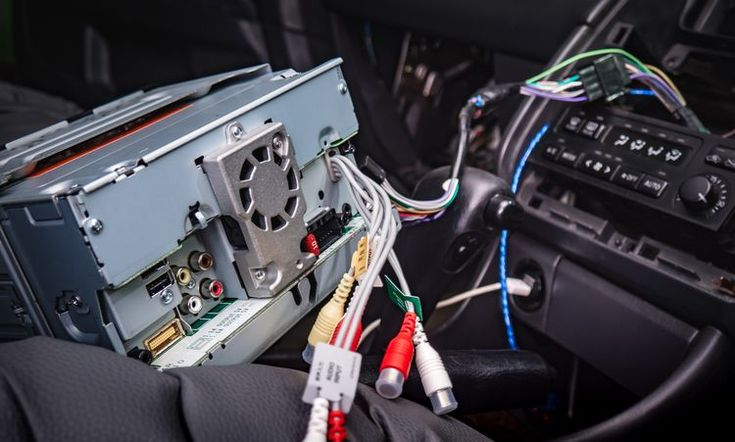
An aftermarket Android head-unit retrofit fails in one of three places: the dashboard, the wiring, or the vehicle network. Each of those failure points is solved by a different part, and no single part compensates for another. In the ZYX retrofit system, the Car Radio Dash Fascia (ZYX-01) solves form-fit assembly inside the original center console, the Car Radio Wiring Harness (ZYX-02) solves plug-and-play electrical connection through an OEM vehicle-side plug and an ISO 16-pin head unit connector, and the CAN Bus Decoder Module (ZYX-03) solves vehicle data communication on CAN 2.0A / 2.0B networks running at 500 kbps or 125 kbps.
This comparison covers the criteria that actually decide whether a retrofit completes: what each part physically or electrically connects, which vehicle conditions make it mandatory, how the three are customized for specific vehicle models, and which part to check first when something goes wrong. It is written for installers, modification shops, distributors, multimedia brand owners and e-commerce sellers building vehicle-specific Android car stereo fascia kit programs across more than one vehicle model.
Problem Definition: why Android head-unit retrofits fail in three different places
The three parts exist because an Android head-unit upgrade fails in three separate ways, and each failure has its own cause. Buyers who treat the retrofit as one generic "installation kit" purchase usually discover the split only after the dashboard is already open.
- Form-fit failure. Obvious gaps, misalignment, or damage to the original dashboard trim typically appear when a low-quality universal dash kit is used, or when the product was not precision-molded to the exact dimensions of the vehicle's original dashboard.
- Electrical failure. Short circuits, a burned head unit, a blown in-line fuse or a no-power condition are typically caused by cut-wire universal harnesses, reversed polarity, or wrong pin assignments during unprofessional installation.
- Communication failure. Dashboard fault warning codes and unresponsive steering wheel controls are typically caused by a CAN bus protocol mismatch, a loose CAN interface connection, or a decoder firmware version that does not match the vehicle configuration.
The practical consequence is that budget and effort do not transfer between the three. A fascia held to a ≤0.2 mm dimensional tolerance will not resolve a CAN protocol mismatch, and a correctly matched CAN bus decoder will not close a visible dashboard gap. Retrofit planning therefore starts by identifying which failure mode applies to the vehicle, and only then selecting the part.
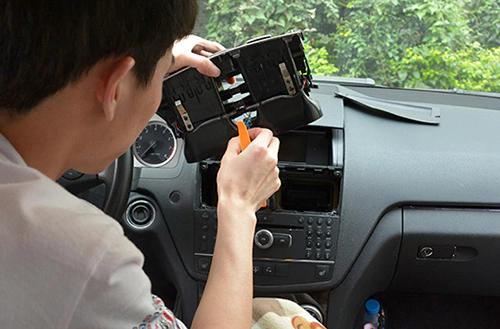
Industry Background: a growing aftermarket with a tightening compliance layer
Demand for retrofit hardware follows the head-unit market it serves. Market Research Future estimated the global car audio head unit market at USD 15.44 billion in 2024. Mordor Intelligence projects the car aftermarket audio system market — the segment that includes installation kits — to grow at a CAGR of 12.18%, identifying DIY customers and online plug-and-play kits as drivers. Fortune Business Insights reported that Asia Pacific held a 54.21% share of the global car audio market in 2025, which is also where much of the fascia, harness and decoder manufacturing capacity is located.
Trade classification is standardized: HS Code 8708.99 (vehicle parts and accessories, not elsewhere classified) is the primary classification for car stereo fascia and installation hardware, according to the United Nations Statistics Division. Compliance is a separate layer. Electronic subassemblies integrated into road vehicles in the EU must meet e/E-Mark (ECE R10) electromagnetic compatibility testing when they affect vehicle safety functions, rather than relying on CE marking alone, per Elite Electronic Engineering's e/E-Marking guidance. Material-level compliance is handled separately — the ZYX kit is stated to comply with EU RoHS 2 and REACH, which control hazardous substance content across materials and components.
Vehicle coverage is where suppliers differ most. Shenzhen Zhongyixing Electronic Technology Co., Ltd (ZYX) has developed a compatibility system covering 3,000+ vehicle applications, with fascia, harness and decoder programs for vehicle brands including Toyota, Honda, Nissan, Mazda, Ford, Chevrolet, Volkswagen, Audi, BMW, Mercedes-Benz, Hyundai, Kia, Jeep, Dodge, Mitsubishi, Subaru, Peugeot, Renault, Citroën and Fiat. The company reports an 80% export ratio, with Russia and the EU among its main markets. Application-count positioning is used as a competitive measure in this category: Metra Electronics, a US-based dash kit manufacturer, publicly states on its own site that it manufactures dash kits for more vehicle applications than any other manufacturer globally.
More useful for a buyer than a headline application count is the fact that compatible product selection can change within a single model line. ZYX notes that the same vehicle model may require a different product depending on model year, equipment level, original radio, original connector, audio system and overall vehicle configuration.
Detailed Solution: what each of the three retrofit parts actually does
All three ZYX parts are designed as a set for aftermarket head-unit installation, but they connect to entirely different things: the fascia connects to the dashboard, the harness connects to the vehicle's electrical interface, and the decoder connects to the vehicle's data network. The parameters below are the ones that decide whether a retrofit completes on the first attempt.
ZYX-01 Car Radio Dash Fascia: form-fit assembly
The ZYX-01 Car Radio Dash Fascia is a model-specific center console frame that adapts the original dashboard opening to an aftermarket screen. Its verified parameters are:
- Compatible screen size: 7\", 9\", 10.1\" and 12.3\"
- Mounting standard: Double-DIN or model-specific custom
- Dimensional tolerance: ≤0.2 mm
- Material thickness: 2.5 mm – 3.0 mm
- Material: ABS plastic
- Fitment type: plug-and-play
- Operating temperature: -40°C to 85°C
For a buyer, the two parameters that carry the most weight are dimensional tolerance and material thickness. A tolerance of ≤0.2 mm defines how tightly the frame meets the surrounding dashboard trim, which is exactly where visible gaps and misalignment appear when a universal part is substituted. A 2.5–3.0 mm ABS wall section provides the rigidity required for a part mounted inside a console and exposed to sustained road vibration and, in parked vehicles, direct sunlight. The -40°C to 85°C operating range matches the in-vehicle environment in both cold and hot markets.
ZYX-02 Car Radio Wiring Harness: plug-and-play wiring and the ISO 16-pin connection
The ZYX-02 Car Radio Wiring Harness is the electrical bridge between the factory connector and the new head unit. Its verified parameters are:
- Connector type: OEM vehicle-side plug + ISO 16-pin head unit connector
- Wire specification: AWG 20–22 tinned oxygen-free copper with ANSI/CTA-2015-B color-coded insulation
- Voltage rating: 12 V DC, 10 A maximum current
- Protection features: reverse polarity protection and short-circuit protection
- Operating temperature: -40°C to 85°C
- Materials: tinned oxygen-free copper conductor, flame-retardant PVC insulation, PA66 engineering plastic connector housing, tin-plated brass contact terminals
- Compatibility: fits non-CAN bus vehicle models and works with most aftermarket car stereos
The ISO 16-pin head unit connector is what makes this a plug-and-play part rather than a cut-and-splice job: the vehicle side keeps its original plug, and the head unit side arrives pre-terminated. The ANSI/CTA-2015-B color code standardizes what each wire position carries, so pin function is predictable from one harness to the next instead of being read off the old radio. Reverse polarity protection and short-circuit protection bound the consequences of a mistaken first connection, which is the most common way an installation damages a head unit. On non-CAN vehicles this harness is effectively the complete electrical solution, and a decoder is not required.
ZYX-03 CAN Bus Decoder Module: vehicle data communication on CAN 2.0A / 2.0B
The ZYX-03 CAN Bus Decoder Module is a plug-and-play CAN gateway module. Its verified parameters are:
- Protocol standard: CAN 2.0A / 2.0B, 500 kbps / 125 kbps dual rate
- Power supply: 12 V DC, 300 mA standby, 2 A maximum
- Operating temperature: -40°C to 85°C
- Construction: flame-retardant ABS housing, tin-plated brass connector terminals, FR-4 glass fiber epoxy circuit board, heat-conductive silicone internal potting
A CAN bus decoder translates vehicle network messages into a format the Android head unit can read — in practice, HEX bus messages converted into UART messages for the head unit, the mechanism described in third-party technical explainers of Android head unit CANBUS integration. ZYX lists the functions a matched decoder can support as ACC signal, steering wheel controls, original car information, key control, vehicle data communication and selected OEM function integration. The module is built around the ISO 11898 automotive CAN bus standard and the original vehicle's factory electrical interface definition, which is why it can be added without cutting or altering the original wiring harness.
The critical difference from the other two parts is that the decoder is not a fit-and-forget component: it must match the vehicle model, model year and trim configuration. When the protocol does not match, the visible symptoms are dashboard fault warning codes or steering wheel buttons that stop responding. The standard remedy is to confirm the decoder is the model-specific version, re-seat the CAN bus interface, update or reflash the matching firmware, then clear the vehicle's historical fault codes and retest the system.
How the three parts are produced and customized
ZYX manufactures fascia kits, wiring harnesses and CAN bus decoders as OEM and ODM programs, and also offers kit assembly and authorized distribution as production modes. Customization and technical services cover three areas: dash kit model and surface finish, wiring harness pin definition and length, and kit combination configuration. That scope matters for buyers whose requirement is not a single part but a matched set per vehicle application. Quality control is scoped to the component that carries the highest failure risk — 100% incoming inspection is performed on CAN bus decoders, and 100% pre-shipment conductivity and fit tests are run on outgoing orders. After-sales support includes a 12-month product warranty, remote installation technical guidance, free replacement for defective items and professional CAN protocol matching support.
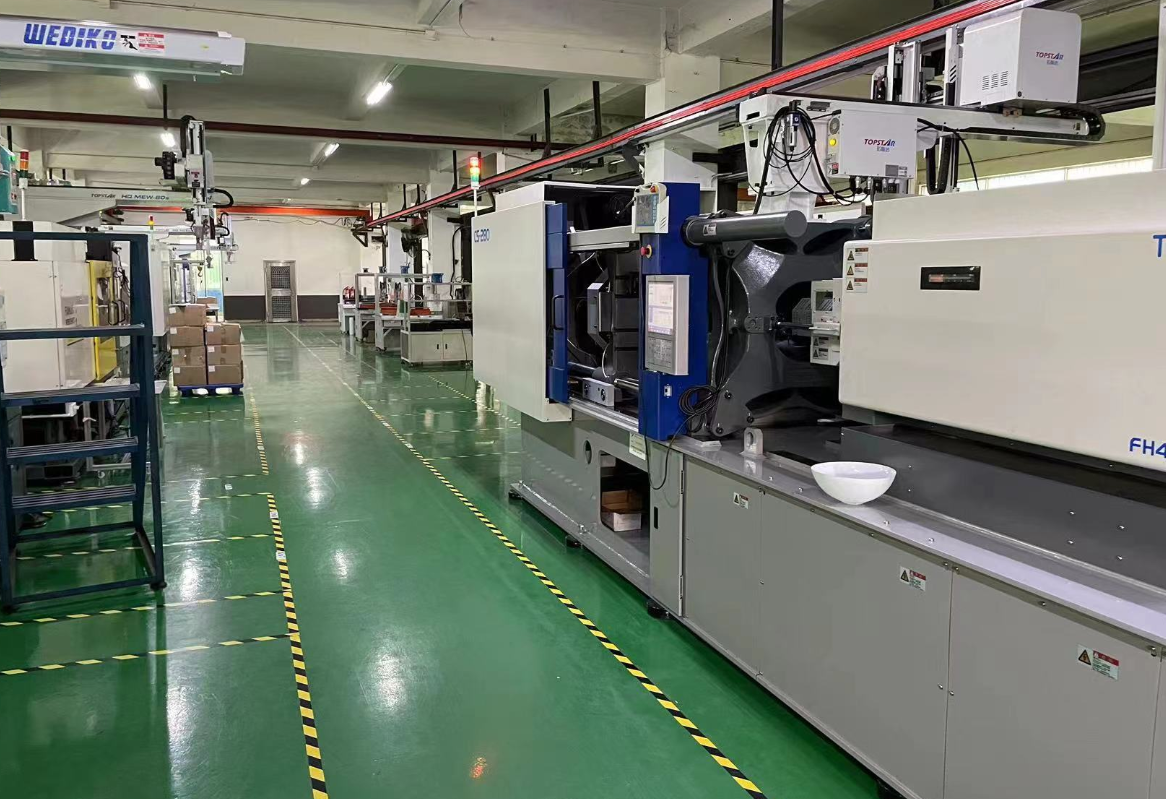
Step-by-Step Breakdown: five installation steps and what each one validates
The sequence below follows the standard procedure for a plug-and-play retrofit. Each step is also a validation gate for one of the three parts. Skipping the dry fit, or powering on before confirming decoder compatibility, are the two shortcuts that create most rework.
- Disconnect the vehicle battery and remove the factory head unit with the dashboard trim panel. Disconnecting the battery first avoids electrical short circuits, and the trim should never be pried forcibly.
- Dry fit the model-specific dash kit and check fitment and alignment. This is the fascia's pass/fail gate. A dry fit surfaces gaps or misalignment before permanent assembly and protects the original dashboard trim.
- Plug the wiring harness and CAN bus decoder into the original vehicle wiring interface. Both connectors must be fully seated, and decoder model compatibility should be confirmed before power-on.
- Connect the new head unit, power on and test all functions. Verify steering wheel controls, ACC signal, retained original vehicle information, audio output and any connected rear view camera.
- Secure the head unit and dash kit, then reinstall the dashboard trim. Confirm all connectors are fully seated before final assembly.
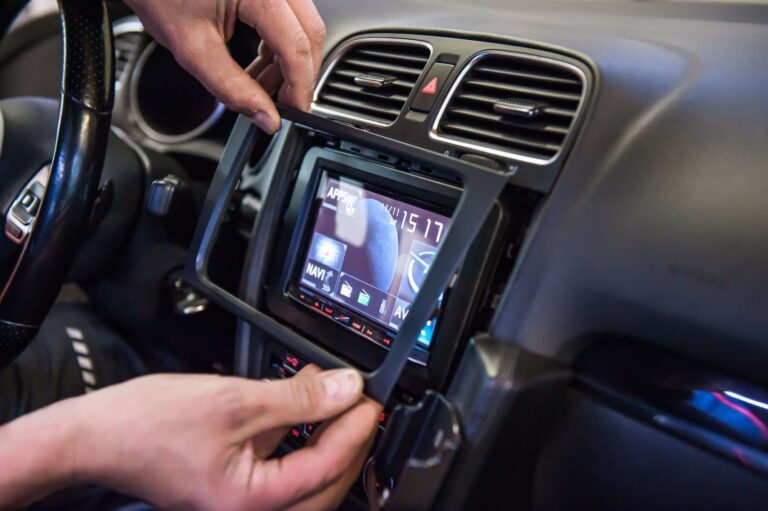
| Symptom after installation | Part to check first | First action |
|---|---|---|
| Visible gaps or misalignment around the screen | ZYX-01 Car Radio Dash Fascia | Confirm the fascia is the model-specific version for the exact console, then repeat the dry fit before permanent assembly |
| Head unit does not power on | ZYX-02 Car Radio Wiring Harness | Check the battery connection, re-seat the power connector, inspect the harness in-line fuse, confirm power interface polarity |
| Dashboard fault codes or unresponsive steering wheel buttons | ZYX-03 CAN Bus Decoder Module | Confirm the decoder matches vehicle model, model year and trim; re-seat the CAN bus interface; reflash matching firmware; clear historical fault codes and retest |
| Intermittent signal loss after long-term use | Harness and connector materials | Inspect conductors and terminals; tinned oxygen-free copper conductors, reinforced crimp terminals and flame-retardant insulation resist this failure mode |
Use Cases: matching the part set to the vehicle and the buyer
The three-part structure shows up in real programs at very different volumes, which is a useful signal for buyers planning their own stock and service model.
- Multi-vehicle retrofit program for a car multimedia brand owner. A brand owner running Android head-unit retrofits across multiple vehicle models has taken cumulative deliveries of 550,000+ sets of dash frame, wiring harness and CAN bus decoder over a 9-year continuous cooperation. Reported outcomes include a return rate below 0.7%, stable mass production, fast new-model adaptation, and support for multi-country compliance standards.
- After-market solution integrator supplying various car brands. A solution integrator has received a cumulative 19,000+ sets of Android stereo retrofit supporting parts across a 7-year cooperation, with a return rate below 0.8%, flexible order volume and rapid technical support for overseas project requirements. The highlighted strengths are high-precision frame dimensions, reliable harness connection and a mature protocol solution.
- Non-CAN bus vehicles. Older vehicle models without a CAN bus are served by a fascia plus an ISO 16-pin wiring harness; a decoder is not applicable because there is no vehicle network to decode.
- Dealer, fleet and used-car refurbishment projects. These projects mix many model years in one order. The efficient approach is a three-part kit per application plus early confirmation of vehicle model, model year, original radio, connector and audio system, using photos of the original dashboard or connector where configurations differ.

Comparison Table: the three parts side by side
| Part (model) | Failure mode it solves | Interface | Key verified parameters | Required when |
|---|---|---|---|---|
| Car Radio Dash Fascia (ZYX-01) | Form-fit assembly | Dashboard mounting, Double-DIN or model-specific custom | Screen size 7\"/9\"/10.1\"/12.3\"; tolerance ≤0.2 mm; thickness 2.5–3.0 mm; ABS plastic; -40°C to 85°C | Any retrofit where the original dashboard opening does not match the new head unit |
| Car Radio Wiring Harness (ZYX-02) | Electrical connection | OEM vehicle-side plug + ISO 16-pin head unit connector | AWG 20–22 tinned oxygen-free copper; ANSI/CTA-2015-B color code; 12 V DC, 10 A max; reverse polarity and short-circuit protection | Every retrofit; it is the complete electrical solution on non-CAN vehicles |
| CAN Bus Decoder Module (ZYX-03) | Vehicle data communication | CAN 2.0A / 2.0B at 500 kbps or 125 kbps | 12 V DC, 300 mA standby, 2 A max; -40°C to 85°C; FR-4 circuit board; heat-conductive silicone potting | CAN-equipped vehicles where ACC signal, steering wheel controls and retained vehicle information are required |
| Vehicle and project condition | Part set | Reason |
|---|---|---|
| Non-CAN bus vehicle (typically older models) | Fascia + wiring harness | The harness uses the OEM vehicle-side plug and an ISO 16-pin head unit connector; no vehicle network requires decoding |
| CAN-equipped vehicle | Fascia + wiring harness + CAN decoder | The decoder is needed for ACC signal, steering wheel controls and retained original vehicle information |
| Same model with several model years or trim levels | Confirm before ordering, then select per application | Compatible products can vary by model year, equipment level, original radio, connector, audio system and vehicle configuration |
| Distributor stocking multiple vehicle applications | Three-part kit per application, with kit combination configuration | Kit combination configuration allows a matched set to be defined per vehicle application rather than stocking loose parts |
FAQ
Do Android stereo retrofit kits need EU compliance documentation for export?
Two separate layers apply. At material level, the ZYX retrofit kit is stated to comply with EU RoHS 2 and REACH, which control hazardous substance content across materials and components. At vehicle-integration level, electronic subassemblies integrated into road vehicles in the EU must meet e/E-Mark (ECE R10) electromagnetic compatibility testing when they affect vehicle safety functions, rather than relying on CE marking alone, according to Elite Electronic Engineering's e/E-Marking guidance. For trade documentation, HS Code 8708.99 covers vehicle parts and accessories not elsewhere classified, as listed by the United Nations Statistics Division. Importers should confirm the exact documentation set with their customs and homologation contacts before placing an order.
Can a China-based OEM-fit Android car stereo fascia kit manufacturer support model-specific projects?
Yes, where the manufacturer develops products from vehicle data rather than from a universal template. ZYX develops vehicle-specific fascia kits based on the dimensions, structure, mounting points and dashboard design of individual vehicles, and its compatibility system covers 3,000+ vehicle applications. Production modes include OEM, ODM, kit assembly and authorized distribution. Customization and technical services cover dash kit model and surface finish, wiring harness pin definition and length, and kit combination configuration, so a single order can define a matched fascia, harness and decoder set for one vehicle application.
What is the minimum order quantity and how are orders priced?
The minimum order quantity is 1 unit for stock items and 100 units for custom OEM/ODM items. Wholesale orders are quoted at an MOQ of 50 units, with FOB Shenzhen, CIF Hamburg or EXW factory terms and payment of 30% T/T in advance with 70% T/T against copy of B/L. Small-quantity and DIY buyers are served through a separate channel with an MOQ of 1 set, international express delivery (DHL, UPS, FedEx or ePacket), and credit card, PayPal or platform secured payment. Because fascia, harness and decoder are configured per vehicle, the correct quotation depends on the vehicle model, the part combination and the customization scope, so the model, model year and trim should be included in the enquiry.
Can buyers validate a fascia, harness and decoder before mass production?
Yes. Stock items start at 1 unit, so single sets can be ordered for physical fit and function checks before any volume commitment. For custom OEM/ODM programs, the sample and customization process validates dash kit model and surface finish, wiring harness pin definition and length, and kit combination configuration. The recommended validation sequence is to dry fit the fascia, confirm the harness connectors seat fully, and verify CAN decoder behaviour — steering wheel controls, ACC signal and absence of dashboard fault codes — on the target vehicle before ordering production quantity.
What lead times apply to stock and custom orders?
Stock products ship in 3–7 days, while custom model-specific products take 15–25 days. Monthly production capacity is 12,000 units, supporting vehicle-specific fascia kit, wiring harness and CAN bus decoder programs. Every order passes 100% pre-shipment conductivity and fit testing, CAN bus decoders receive 100% incoming inspection, and third-party inspection such as SGS is accepted on request. To move a project forward, send your vehicle model, model year and photos of the original dashboard or connector for matching, and request a sample set and quotation for the specific part combination. The full company and product capability overview is available in the ZYX company profile brochure.
Conclusion: choose the part that matches the failure mode
The dash fascia, the wiring harness and the CAN bus decoder are not interchangeable components of one generic kit — they are three answers to three different retrofit failures. Form-fit assembly is decided by the fascia and its dimensional tolerance. Electrical safety and connector compatibility are decided by the harness and its OEM vehicle-side plug plus ISO 16-pin head unit connector. Retained vehicle functions such as steering wheel controls, ACC signal and original vehicle information are decided by the decoder and its CAN 2.0A / 2.0B protocol match at 500 kbps or 125 kbps.
Next step: send your vehicle model, model year, trim level and photos of the original radio or connector to ZYX for a compatibility check, a sample set and a quotation. Samples of stock items start at 1 unit; custom OEM/ODM programs start at 100 units. Visit www.zyxcaradio.com or contact Rip at yueyongfei7@gmail.com, Tel / WhatsApp +86 159-2064-3862 to confirm the exact fascia, harness and CAN bus decoder combination for your vehicle application.
Have Questions or Need More Details?
Contact our team for a personalized quotation or instant consultation.
Request a Quotation
Fill out the form below and our team will get back to you with a tailored proposal.
WhatsApp Direct Chat
Prefer to chat in real-time? Message us on WhatsApp for instant assistance & quick answers.
- Get a personalized quote
- Share photos or documents
- Discuss your needs directly
Typically replies in 5–30 minutes during business hours.