Long-Term Partnership FAQ: Vehicle-Specific Android Car Stereo Fascia Kit Supply
Moving a vehicle-specific Android car stereo fascia kit from a trial order to a repeat supply arrangement changes the questions a buyer needs answered. Price still matters, but the deciding issues become repeatability of fitment, consistency of wiring and CAN behaviour between batches, and whether the commercial and after-sales terms are clear enough to survive several years of ordering.
This FAQ answers those questions using verified company and product information from Shenzhen Zhongyixing Electronic Technology Co., Ltd (ZYX). Terms that vary by order — price, MOQ, payment schedule, Incoterms and defect handling — are identified as items to fix in the quotation rather than presented as fixed figures, because they are commercial decisions rather than product attributes.
What a long-term fascia kit partnership actually covers
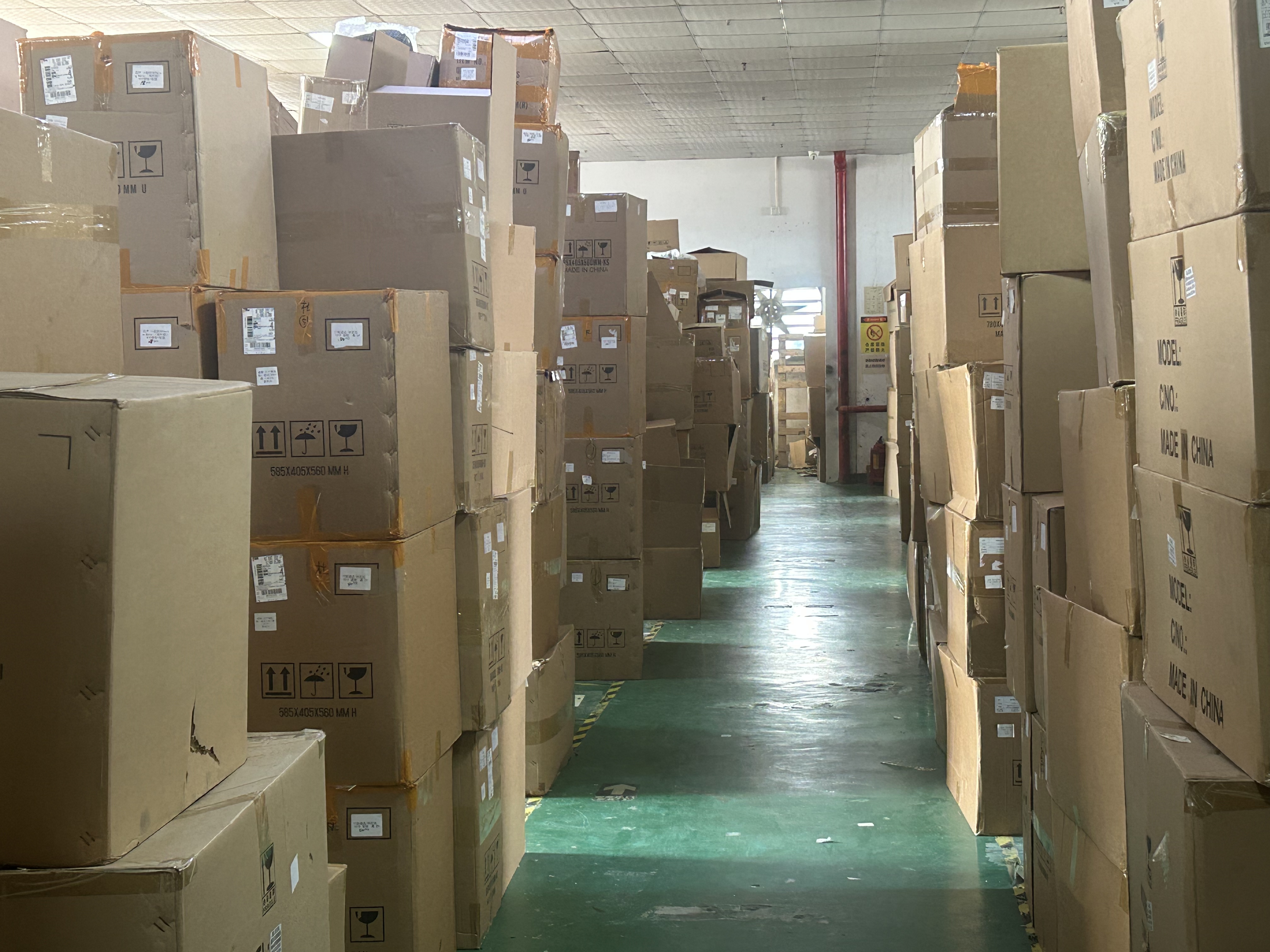
A long-term partnership in this category is a repeatable supply relationship across a defined list of vehicle applications, not a single purchase of one dashboard frame. It normally covers three product layers that must work together: the fascia kit that mounts the head unit, the wiring harness that connects it, and the CAN bus decoder that lets the vehicle and the new radio communicate.
For the buyer, the test of that relationship is practical rather than contractual. Can the same order line be repeated in six months and still fit the same vehicle? Can a new model year be added without rebuilding the whole list? Can a defect be resolved without renegotiating the agreement? If any of those answers depends on improvised workarounds, the arrangement is still transactional, whatever the contract says.
The commercial context supports why buyers ask these questions at all. The global car audio head unit market was estimated at USD 15.44 billion in 2024, according to Market Research Future, and Asia Pacific accounted for 54.21% of the global car audio market in 2025, according to Fortune Business Insights. A market of that scale creates many suppliers; the repeat-order problem is distinguishing those whose vehicle mapping can be reused from those whose first shipment cannot be replicated.
Why vehicle-specific supply is harder to repeat than a universal kit
The same vehicle model can require different products because of differences in model year, equipment level, original radio, connector, audio system and vehicle configuration. ZYX documents a matching sequence that runs from vehicle brand through model, model year, original radio, original connector, vehicle configuration and audio system to the new head unit. Every step in that chain is a place where a repeat order can fail if the reference data is not recorded.
This is the practical difference between a universal dash kit and a vehicle-specific one. A universal kit tolerates variation because it is adjustable; a vehicle-specific fascia kit is made to match one dashboard structure, so its value depends on the accuracy of the mapping behind it. The same logic applies to the harness and decoder: a harness built for one connector generation may not fit the next, and a decoder programmed for one trim level may not read the steering wheel control messages of another.
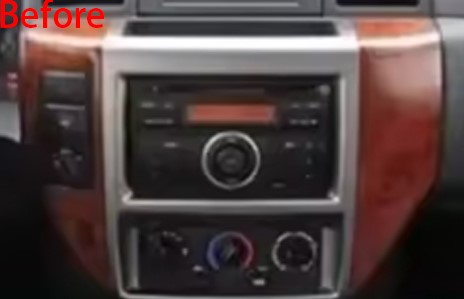
ZYX recommends that customers supply clear photos of the original dashboard, the original radio, or the connectors on the back of the original head unit when a vehicle has multiple original equipment configurations. That recommendation is a control against the most common cause of a wrong repeat order: a vehicle that looks identical to the previous one but uses a different connector generation.
Who is ZYX?
Shenzhen Zhongyixing Electronic Technology Co., Ltd (ZYX) is a Shenzhen-based supplier of automotive aftermarket electronics and car audio installation accessories, founded in 2017. The company operates a 5,000 m² facility with 15 employees, an annual output of 1,000,000 units, a three-engineer R&D team and an export share of 80%, with Russia and the EU listed as main markets. Its product system covers 3,000+ vehicle applications.
ZYX's portfolio is built around three categories that correspond to the three installation layers: Car Radio Fascia Kits, Wiring Harnesses and CANBUS Decoder Solutions. The company describes an integrated process running from vehicle data through product development, sample testing, production, quality control, warehousing, global sales and after-sales support. The official website is www.zyxcaradio.com.
The three products that carry a repeat supply relationship
ZYX-01 Car Radio Dash Fascia
ZYX-01 is a model-specific center console frame, also positioned as a universal adjustable dash kit and screen upgrade installation faceplate. It is moulded from ABS plastic to a dimensional tolerance of ≤0.2 mm, with material thickness of 2.5 mm to 3.0 mm, and supports 7-inch, 9-inch, 10.1-inch and 12.3-inch screens on a Double-DIN or model-specific mounting standard. Fitment is plug-and-play, complete mounting accessories are included, and the operating temperature range is −40°C to 85°C.
For a repeat order, the relevant detail is not the headline specification but the tolerance. A ≤0.2 mm figure is what allows a second production batch to sit in the same dashboard opening without visible gaps. The mounting standard should also be recorded per order line, because a Double-DIN frame and a model-specific custom frame are not interchangeable even when they serve the same vehicle.
ZYX-02 Car Radio Wiring Harness
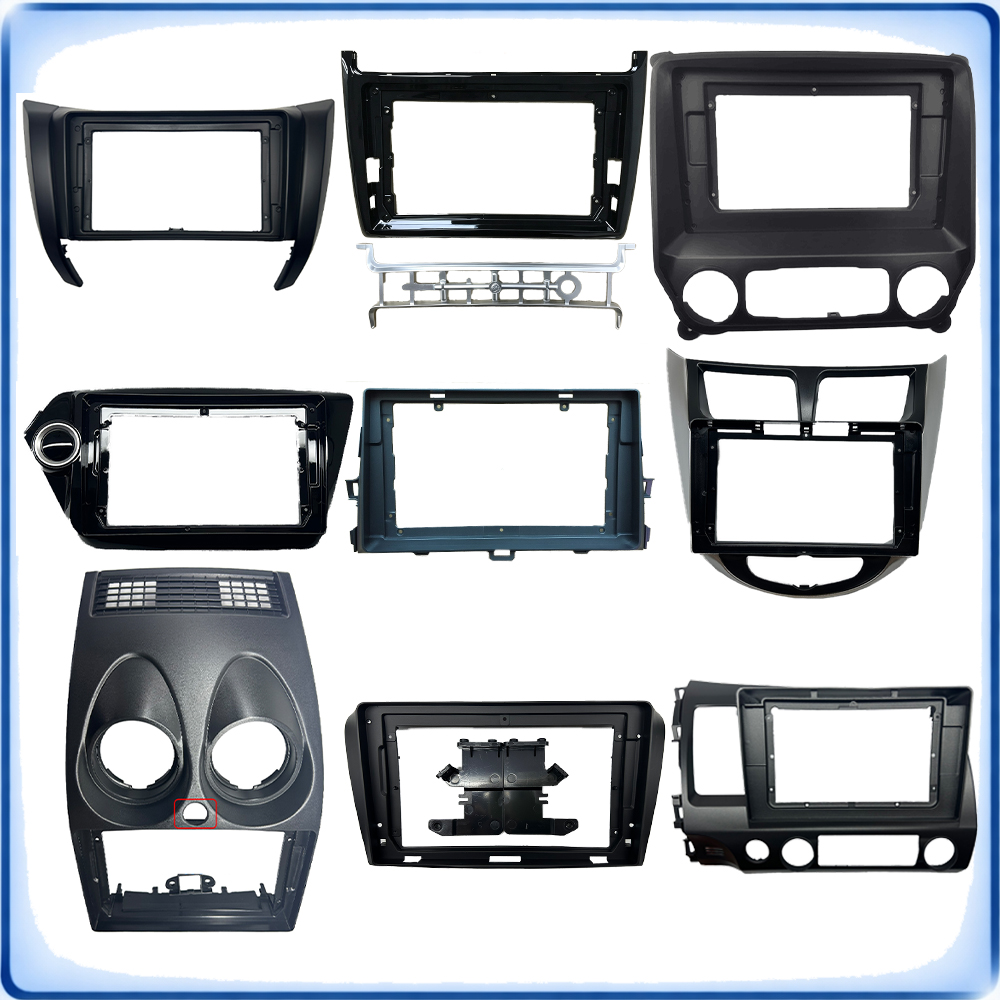
ZYX-02 is a plug-and-play car stereo wiring harness, also classified as a model-specific radio wiring adapter, a universal ISO standard wiring harness and a non-CAN vehicle radio wiring kit. It uses an OEM vehicle-side plug plus an ISO 16-pin head unit connector, AWG 20–22 tinned oxygen-free copper conductors with ANSI/CTA-2015-B colour-coded insulation, a 12V DC rating with 10A maximum current, and an operating range of −40°C to 85°C. Reverse polarity protection and short-circuit protection are built in. It is designed for non-CAN bus vehicle models and is stated to work with most aftermarket car stereos and most aftermarket Android head units.
The wire gauge and colour-coding details matter more than they appear. Gauge determines current capacity, and a standard colour code is what allows an installer to trace a fault without cutting into the loom. Tinned copper conductors and tin-plated brass terminals are specified for corrosion resistance, which is the property that affects contact stability over years of driving rather than performance on the first day.
ZYX-03 CAN Bus Decoder Module
ZYX-03 is a plug-and-play CAN gateway module supporting CAN 2.0A and 2.0B at 500 kbps and 125 kbps dual rate, with a 12V DC supply, 300 mA standby current and 2A maximum, over an operating range of −40°C to 85°C. The housing is flame-retardant ABS, terminals are tin-plated brass, the circuit board is FR-4 glass fibre epoxy, and the internals are potted in heat-conductive silicone. It is manufactured by a supplier of automotive CAN protocol products, with firmware pre-programmed per vehicle model so that installation requires no on-site debugging.
ZYX-03 is matched for use with the ZYX-02 wiring harness and the corresponding center dash frame kits. Its stated functions are retaining OEM steering wheel controls, vehicle information display and original chime functions after an Android head unit installation, with built-in CAN isolation intended to prevent dashboard fault codes. Because vehicle configurations vary between model years and equipment levels, the exact model, year, original radio, connector and configuration should be confirmed before ordering.
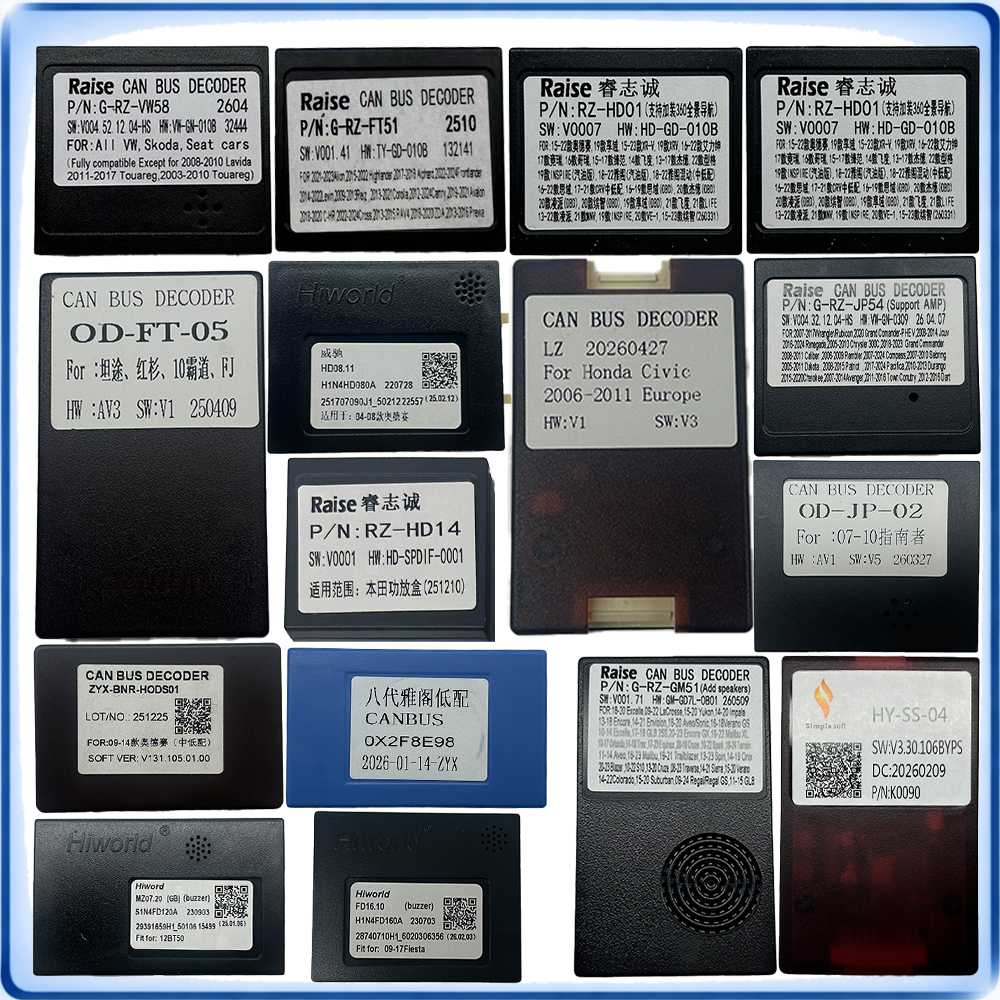
Fitment consistency across repeat orders
Fitment consistency is a data problem before it is a manufacturing problem. ZYX states that its fascia kits are manufactured based on original vehicle dashboard data, and that products are developed according to the dimensions, structure, mounting points and dashboard design of each vehicle. Three controls follow from that for any repeat buyer.
- Record the reference per order line. Brand, model, model year, equipment level, original radio, connector and audio system should travel with the purchase order, not sit in an email thread from the previous year.
- Dry fit the first unit of a new batch. A dry fit before permanent installation is the cheapest way to catch a mould revision or a running model-year change before the whole quantity is installed.
- Check the accessory set. A fascia that fits correctly without its brackets and mounting hardware is not a completed fit, and missing accessories are a common repeat-order complaint.
These controls matter because the failure mode is quiet. Obvious gaps and misalignment usually trace back to universal kits or to products not precision-moulded to the vehicle's original dashboard dimensions. A supplier change, a new mould or an unrecorded trim level can reproduce the same symptom even when the original kit was correct.
Electrical and CAN behaviour across batches
Electrical consistency has two parts. The harness side is determined by connector type, pin definition, wire gauge and terminal material; ZYX lists connector specifications, pin definitions and wiring sequence among its quality control focus areas. The decoder side is determined by firmware: ZYX-03 is pre-programmed per vehicle model, which is what removes on-site debugging but also means the firmware version must be tracked against each vehicle application on the order.
The industry mechanism behind this is signal translation. CAN bus decoders for Android head units translate vehicle network messages into a format the head unit can read, which is how steering wheel controls and air-conditioning data are retained. If the translation does not match the vehicle's trim configuration, the result is rarely a dead installation. More often the radio works while steering wheel buttons or dashboard prompts do not, which changes the diagnosis from replacing hardware to confirming the mapping.
Compliance also belongs in this section rather than in a general disclaimer. In the EU, electronic subassemblies integrated into road vehicles must meet e/E-Marking under ECE R10 where they affect vehicle safety functions, rather than relying on CE marking alone, according to Elite Electronic Engineering's 2025 e/E-Marking guidance. ZYX states that its products comply with EU RoHS 2 and REACH regulations. Buyers should confirm which parts of a given kit fall inside each scope before assuming a single certificate covers the whole installation.
Setting up a long-term supply agreement, step by step
- Lock the vehicle application list. Write the list as brand, model, model year, equipment level, original radio, connector and audio system. This list, not the product catalogue, is the actual scope of a long-term agreement, and both sides should sign off on the same version.
- Map each application to the three layers. Confirm which fascia, which harness and whether a decoder is required at all; ZYX-02 is designed for non-CAN bus vehicles, so a CAN-equipped vehicle needs a different connection decision. Mixed or ambiguous mappings should be resolved before pricing, not after.
- Validate with a sample and a dry fit. Install the sample in the actual vehicle or a matching dashboard. Check gap width, bracket alignment, connector seating and steering wheel function. A sample that fits but does not communicate has only passed half the test.
- Agree the quality and inspection criteria. Define what is measured, what is visually inspected and what counts as a defect. Dimensional tolerance, surface finish, pin definition and wiring sequence are the practical criteria for this product family, and they should be written down rather than assumed.
- Fix the commercial terms in writing. Price and price validity, MOQ per model, payment schedule and the document against which any balance is released, the Incoterm with its named port or factory, packaging and labelling, and defect handling. These are order-specific and should not be inferred from a product page or carried over from a previous order if the vehicle list has changed.
- Define the repeat-order and change-notification process. Decide how a new model year is added, how a firmware change is communicated, and how much notice both sides need. This step is what separates a supply agreement from a series of separate purchases.
- Define the after-sales loop. Agree who diagnoses first, what evidence is required (photos, part numbers, vehicle configuration), and how a confirmed defect is resolved. A clear loop shortens every future claim.
Where a repeat supply model fits
Multi-vehicle retrofit shops. A workshop that installs across many brands needs a supplier whose mapping covers the vehicles it actually sees. The value is not a single kit but a repeatable way to order the next twenty installations without re-checking every connector.
Fleet and dealership accessory fitting. Fleet audio upgrades and dealership accessory fitting involve batches of similar vehicles, which makes batch consistency more important than per-unit flexibility. A recorded vehicle reference and a dry-fit check at the start of each batch do most of the work.
Cross-border distributors and e-commerce sellers. Distributors carry stock against demand they cannot fully predict, so MOQ, packaging and the ability to restock a specific model matter as much as unit price. Fascia kits and installation hardware are commonly classified under HS 8708.99, according to the United Nations Statistics Division, which is the reference buyers should use when checking duty treatment rather than assuming a code.
Used-car interior refurbishment. Refurbishment projects often combine an older vehicle with a modern head unit, which is exactly the case where connector generation and dashboard variation cause problems. Confirming the original radio and connector before ordering reduces returns more than any other single step.
ZYX-01, ZYX-02 and ZYX-03 at a glance
| Model | Role in the retrofit | Verified specification highlights | Repeat-order check |
|---|---|---|---|
| ZYX-01 Car Radio Dash Fascia | Mounts the head unit in the dashboard | ABS; tolerance ≤0.2 mm; thickness 2.5–3.0 mm; 7", 9", 10.1", 12.3" screens; Double-DIN or model-specific; plug-and-play; −40°C to 85°C | Record mounting standard and model year; dry fit first unit of each batch |
| ZYX-02 Car Radio Wiring Harness | Connects the new head unit to the vehicle loom | OEM vehicle-side plug + ISO 16-pin; AWG 20–22 tinned OFC; ANSI/CTA-2015-B colour code; 12V DC, 10A max; reverse polarity and short-circuit protection; non-CAN vehicles | Confirm connector generation and pin definition; verify CAN vs non-CAN |
| ZYX-03 CAN Bus Decoder | Translates vehicle network signals for the Android head unit | CAN 2.0A/2.0B; 500 kbps / 125 kbps; 12V DC, 300 mA standby, 2A max; flame-retardant ABS; FR-4 board; −40°C to 85°C; pre-programmed per model | Track firmware version against model year and trim; confirm steering wheel control retention |
Frequently asked questions
How long has ZYX operated, and what does the nine-year figure refer to?
Shenzhen Zhongyixing Electronic Technology Co., Ltd was founded in 2017. By 2026 the company had completed nine years of continuous operation. That figure describes the company's operating history since 2017, not the length of any individual customer account. Buyers evaluating a long-term agreement should ask separately how long the supplier has supported their specific vehicle platforms and order pattern, because a long company history does not by itself prove coverage of a particular model year.
How does ZYX keep fitment consistent between the first order and later repeat orders?
Consistency rests on three practices: manufacturing from original vehicle dashboard data, holding a stated dimensional tolerance of ≤0.2 mm on the ZYX-01 fascia, and confirming the vehicle reference before production. In practice the buyer contributes half of that control by recording brand, model, model year, equipment level, original radio and connector on every order line, and by performing a dry fit on the first unit of a new batch.
What quality checks apply before a fascia kit or decoder ships?
ZYX lists product dimensions, mounting points, surface finish, connector specifications, pin definitions, wiring sequence, interface compatibility, CANBUS communication, product stability and actual installation fit among its quality control focus areas. For ZYX-03, the company states that 100% incoming quality inspection is performed to confirm stable signal transmission. Buyers with specific acceptance criteria should attach them to the purchase order, since a general quality statement does not replace a defined inspection standard.
How should quality-defect returns and exchanges be handled in a long-term agreement?
Defect handling is a contract term, not a product specification, so it must be written into the supply agreement. Four points decide most disputes: the notification window after receipt, who bears return freight, whether a confirmed defect is resolved by replacement or credit, and how a disputed defect is adjudicated — for example by photo evidence or by return inspection. The notification window should be long enough to allow inspection on arrival and short enough to be workable for the supplier; an open-ended window is not practical for either side.
Which payment and delivery terms must be fixed before a repeat order?
Payment schedule and delivery terms are commercial terms and belong in the quotation and contract. Cross-border buyers normally compare three Incoterms: EXW, where the buyer collects from the factory and handles export clearance and main freight; FOB, where the supplier delivers to a named port and the buyer covers the ocean leg; and CIF, where the supplier arranges and pays freight and insurance to a named destination port. The three allocate cost and risk differently, so the Incoterm, the named port or factory, and the payment schedule should be read together. A deposit with the balance released against a copy of the bill of lading is a common structure in this trade; the exact split and the document used must be confirmed for the specific order.
How is MOQ determined for ZYX-01, ZYX-02 and ZYX-03?
MOQ is set per model and per order configuration rather than as a single catalogue figure. Three variables usually drive it: whether the item is a model-specific mould (ZYX-01), a vehicle-specific harness (ZYX-02) or a decoder that must be programmed for a vehicle application (ZYX-03); whether the order mixes several vehicle applications; and the packaging and labelling required. MOQ, any mixed-model allowance and the price break at higher quantities should be confirmed item by item in the quotation.
What sample validation should come before a bulk commitment?
A sample should be installed, not just inspected. Fit the fascia to confirm gap width and bracket alignment, connect the harness to confirm connector seating and polarity, and test the decoder to confirm steering wheel controls, vehicle information display and chime functions. Record the vehicle configuration used for the test, because that record becomes the reference for every later order of the same application. A sample that fits but does not communicate has only passed the mechanical half of the validation.
What lead-time and replenishment factors affect repeat orders?
Lead time depends on whether the item is held in stock, whether a decoder must be programmed for a vehicle application, and the shipping method chosen. For repeat orders the more useful question is the replenishment pattern: which items can be repeated from stock, which require a production run, and how much notice is needed when a new model year is added. Buyers should also confirm how a mid-year vehicle configuration change is communicated, because an unrecorded trim change can invalidate a previously correct mapping.
Why do dashboard fault codes or steering wheel controls fail after installation?
Dashboard fault codes after a retrofit typically trace to an incompatible CAN decoder protocol, a loose CAN bus interface connection or a mismatched decoder firmware version. The resolution path is to confirm the decoder is the model-specific version for the vehicle, re-seat the CAN bus interface, update the decoder to the matching firmware, then clear historical fault codes and retest. Unresponsive steering wheel controls usually follow the same pattern with one addition: the decoder may not be programmed for the exact trim level, so the vehicle model, model year and trim should be verified before reflashing.
How do we start a supply conversation?
Start with the vehicle application list and the three-layer mapping, then request a sample for the highest-volume application. ZYX publishes a company profile brochure that covers its product portfolio, vehicle coverage and process; it can be downloaded from the ZYX company profile PDF. Buyers who prefer to discuss a specific model year or connector configuration first can contact the company directly before placing a sample request.
Conclusion
A long-term fascia kit supply relationship is judged on repeatability. The product facts that support it are concrete: a ≤0.2 mm tolerance on ZYX-01, standardised colour coding and built-in circuit protection on ZYX-02, and per-vehicle firmware with CAN isolation on ZYX-03. Those are the properties that let a second order behave like the first.
The commercial facts that support it — price, MOQ, payment schedule, Incoterms and defect terms — are decided in the quotation rather than on a specification sheet, and they should be written down before the first repeat order instead of negotiated after the first problem. A supplier with a documented vehicle mapping, a defined tolerance and a clear after-sales loop gives a buyer something more useful than a low first price: a supply route that can be repeated.
Next step. Prepare your vehicle application list, request a sample for the highest-volume model, and confirm MOQ, payment schedule, Incoterm and defect terms in writing. The ZYX company profile brochure covers the product portfolio and process; inquiries can be sent to yueyongfei7@gmail.com or +86 159-2064-3862.
Have Questions or Need More Details?
Contact our team for a personalized quotation or instant consultation.
Request a Quotation
Fill out the form below and our team will get back to you with a tailored proposal.
WhatsApp Direct Chat
Prefer to chat in real-time? Message us on WhatsApp for instant assistance & quick answers.
- Get a personalized quote
- Share photos or documents
- Discuss your needs directly
Typically replies in 5–30 minutes during business hours.