
Reading a Vehicle-Specific Android Car Stereo Fascia Kit Datasheet: ABS, Tolerance, Connectors, CAN
A datasheet is a compatibility contract. It is the only part of a vehicle-specific Android car stereo fascia kit that can be checked before trim is removed, wiring is touched or money is committed — and it is where fitment, power and protocol compatibility are either proven or left unanswered.
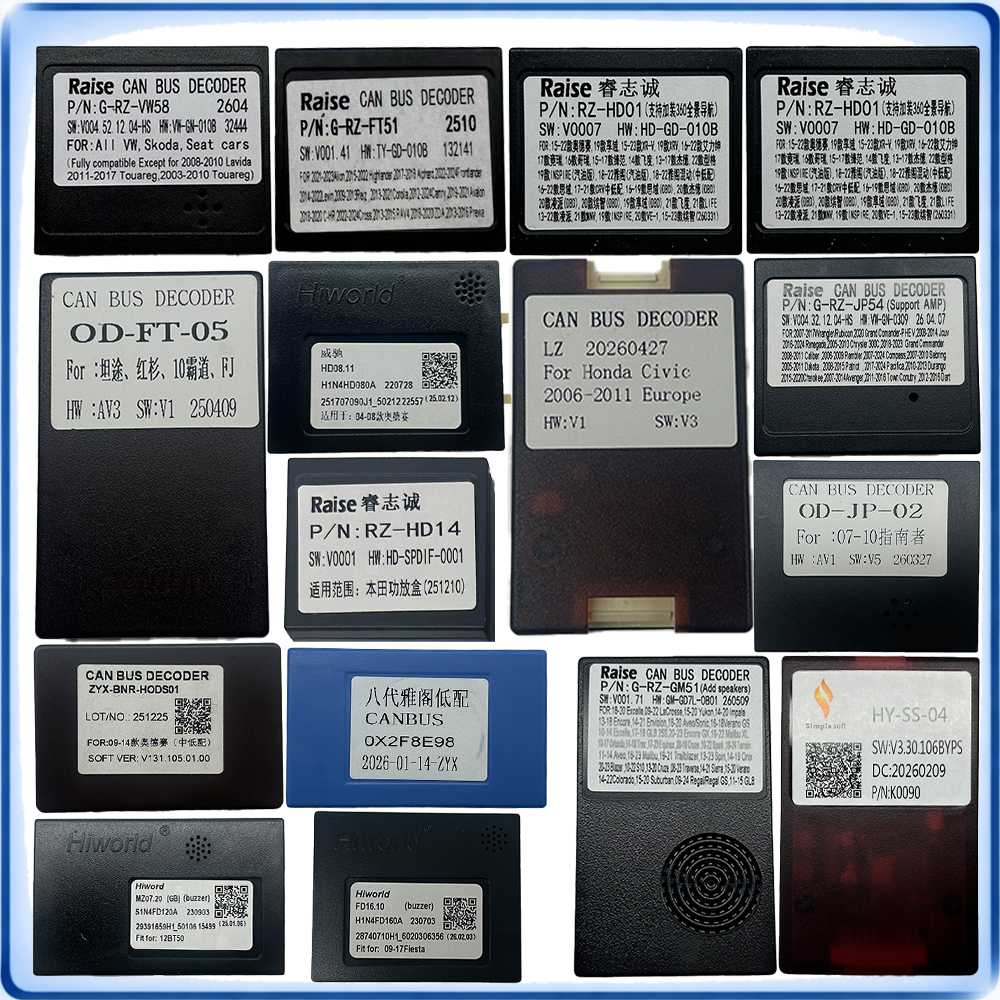
This guide reads the specification lines used across the ZYX Car Radio Fascia Kit range — the ZYX-01 Car Radio Dash Fascia, the ZYX-02 Car Radio Wiring Harness and the ZYX-03 CAN Bus Decoder Module — the way an installer, distributor or fleet buyer would read them, so that a kit can be compared on paper before it is ordered.
The need for that discipline grows with the category. The car aftermarket audio system market is projected to grow at a CAGR of 12.18%, with DIY customers and online plug-and-play kits among the drivers cited by Mordor Intelligence in its Car Audio Market Size, Outlook & Analysis, 2031. As more retrofits are bought without a workshop's opinion attached, the datasheet becomes the advice.
Why a Product Photo Cannot Confirm Fitment
Two failure modes account for most retrofit problems in this category: the part does not physically match the dashboard, or the electronics do not match the vehicle network. A photograph can show shape, colour and finish. It cannot show a wall thickness, a dimensional tolerance, a connector standard or a CAN protocol version.
It also cannot show the relationship between parts. In vehicle-specific retrofit hardware, compatibility is not a property of one component — it is a chain that starts at the vehicle. ZYX defines the matching sequence as vehicle brand, vehicle model, model year, original radio, original connector, vehicle configuration, audio system and finally the new head unit. A change anywhere earlier in that chain can change the part that is required.
| Datasheet line | The question it answers | The failure it helps avoid |
|---|---|---|
| Material and material thickness (ABS, 2.5–3.0 mm) | Will the frame keep its shape under heat and trim load? | Flexing, rattles and heat-related deformation |
| Dimensional tolerance (≤0.2 mm) | Will the gaps around the new screen be even? | Visible gaps, misalignment or press-fit damage to the original dashboard trim |
| Operating temperature (-40°C to 85°C) | Will the part survive a sun-exposed dashboard and a cold start? | Temperature-related brittleness and intermittent behaviour |
| Connector interface (OEM vehicle-side plug, ISO 16-pin) | Will it connect without cutting the factory loom? | Cut wiring, wrong pin assignment, short circuits |
| Protection features (reverse polarity, short circuit) | What happens if polarity is reversed by mistake? | A damaged head unit or a damaged vehicle electrical system |
| CAN protocol, baud rate and firmware | Will the vehicle network accept the new radio? | Dashboard fault codes and unresponsive steering wheel controls |
None of those questions is answered by a product photo, and most of them are not answered by a product name either. That is the case for treating a datasheet as the primary buying document rather than as an appendix to a listing.
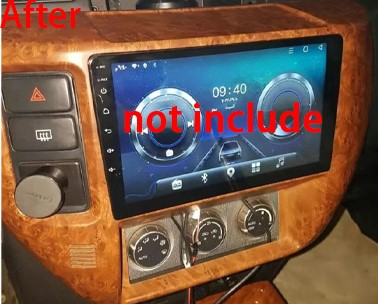
What a Complete Kit Datasheet Is Describing
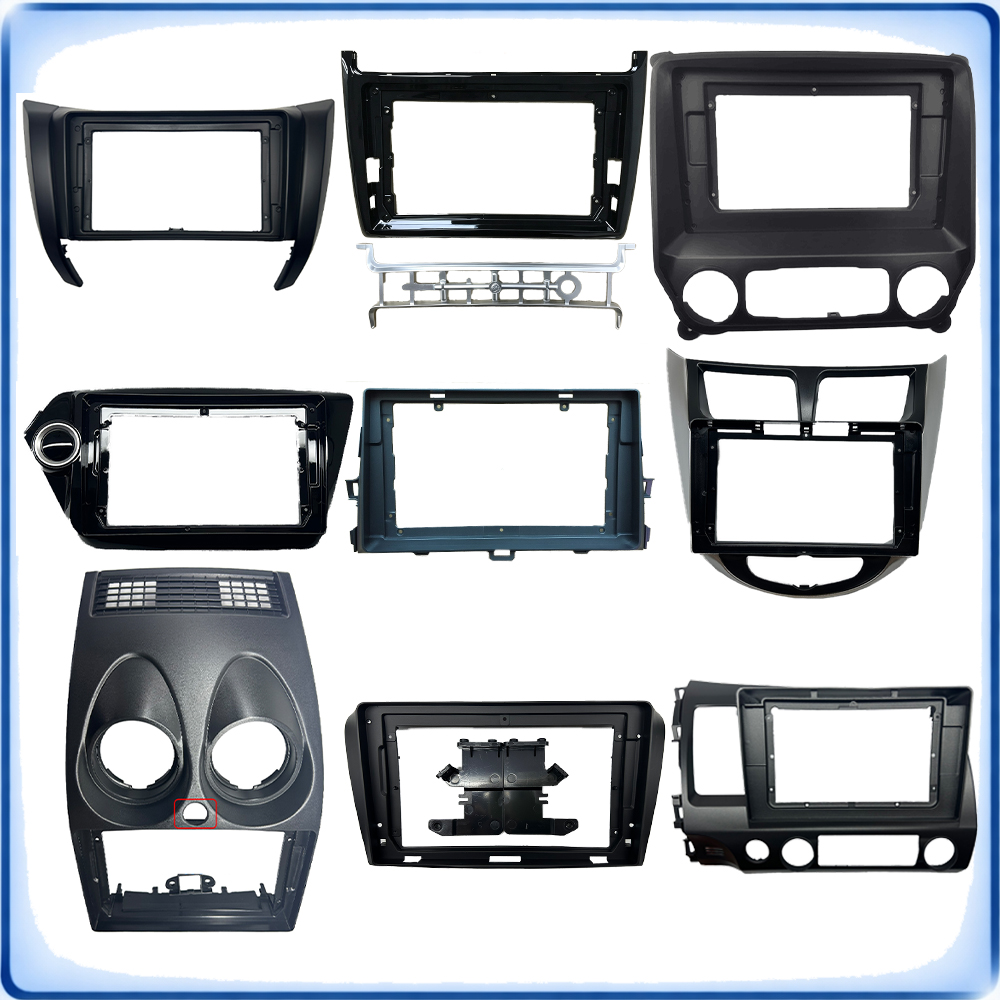
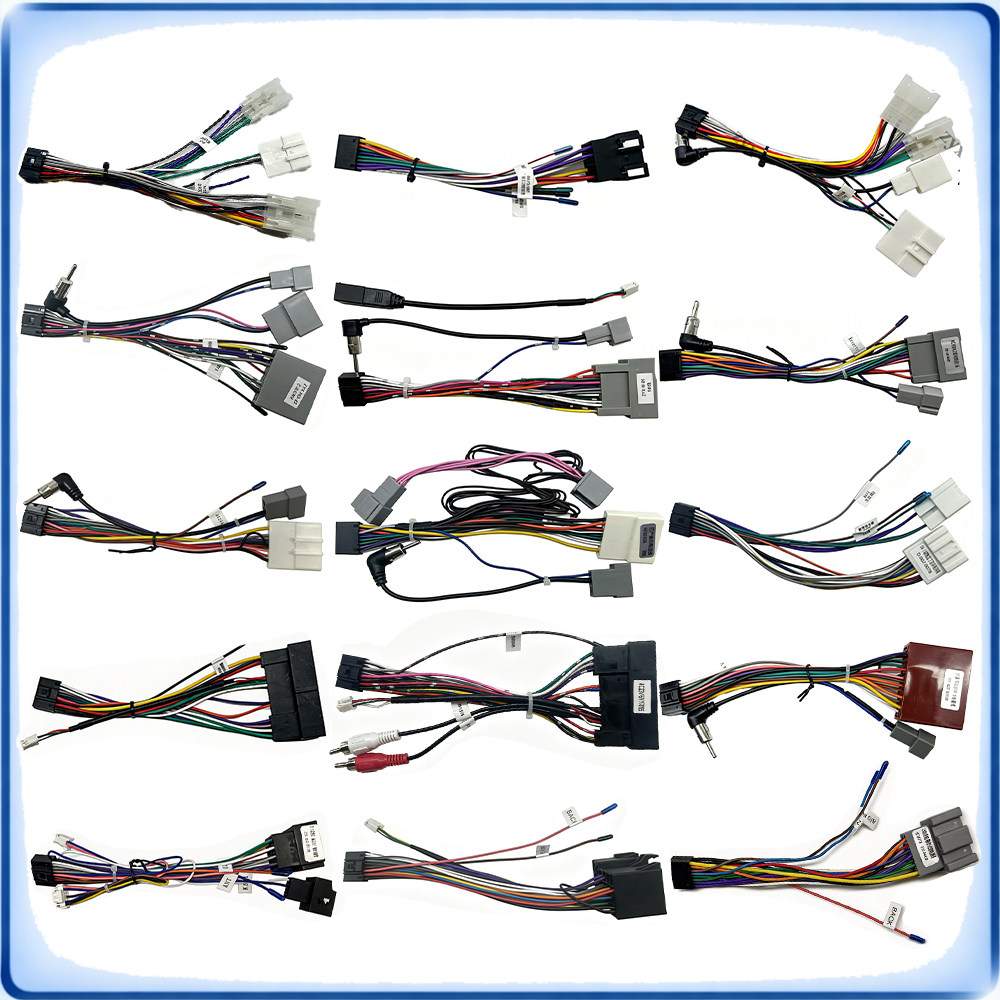
A vehicle-specific Android car stereo fascia kit is a three-part system, and each part carries a different class of parameter. The fascia carries mechanical parameters: material, thickness, tolerance, mounting standard and screen compatibility. The wiring harness carries electrical parameters: conductor gauge, insulation, connector types, current rating and protection features. The CAN bus decoder carries protocol parameters: protocol versions, baud rates, power draw, firmware and isolation.
Reading only one of the three is the most common mistake in specification comparison. A fascia can fit perfectly while the steering wheel buttons stay dead. A decoder can be perfectly matched while the harness presents the wrong vehicle-side plug. The kit only works as a set, which is why the strongest datasheets describe the three parts at the same level of detail.
It is also worth knowing who stands behind the numbers. ZYX Car Radio Fascia Kit is the automotive aftermarket product line of Shenzhen Zhongyixing Electronic Technology Co., Ltd, a supplier of car radio fascia kits, wiring harnesses and CANBUS decoder solutions whose product system covers 3,000+ vehicle applications. Fascia development, interface and wiring development and CANBUS compatibility are developed in parallel, which is why the datasheet lines for the three parts can be read against each other.
When a vehicle has multiple original equipment configurations, the practical recommendation is to provide clear photographs of the original dashboard, the original radio, or the connectors on the back of the original head unit. Those photographs resolve the part of the matching chain that no datasheet can see.
Reading the Mechanical Lines: ABS, Thickness, Tolerance
The fascia is the visible part of the kit, and its datasheet should answer five questions in order: what it is made of, how thick it is, how closely it holds its dimensions, what temperature it survives and what head units it accepts.
Line 1 — Material: ABS plastic
ABS is a widely used thermoplastic in automotive interior components because it can be moulded to fine detail, finished to match trim, and blended for impact and heat resistance. On the ZYX-01 Car Radio Dash Fascia the material line reads ABS plastic, and the product is described as high-temperature resistant ABS with anti-aging performance. The material name on its own, however, says little. It should always be read together with the thickness line and the operating temperature line, because the same polymer family behaves very differently depending on wall thickness and grade.
Line 2 — Material thickness: 2.5 mm to 3.0 mm
Thickness is a structural parameter, not a cosmetic one. A dash fascia carries the weight of the head unit, holds mounting points and clips, and is clamped between dashboard panels that expand and contract with temperature. A frame that is too thin flexes under that load; one that is too thick can interfere with clip engagement or with the seating of the surrounding trim.
The ZYX-01 fascia publishes a material thickness of 2.5 mm to 3.0 mm. The range matters more than either endpoint: a fascia is not a flat plate, and wall thickness normally varies between the outer bezel, the mounting bosses and the retention ribs. A datasheet that publishes only one figure for a complex part is worth questioning.
Line 3 — Dimensional tolerance: ≤0.2 mm
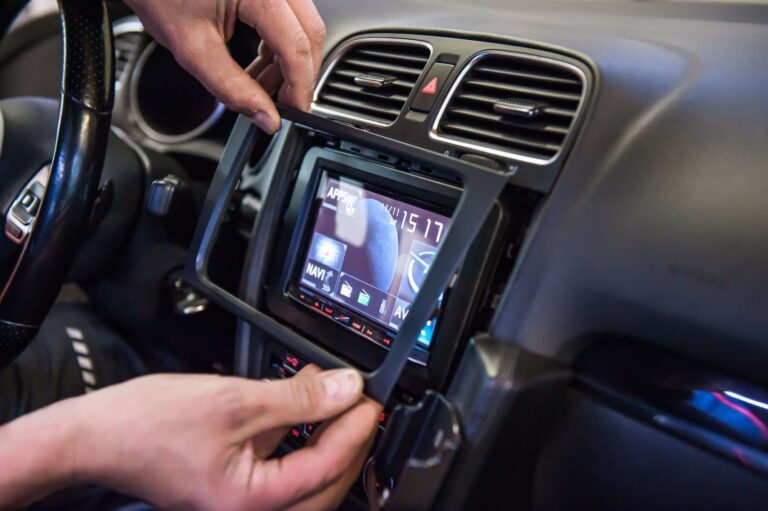
Tolerance is the permitted deviation from the nominal dimension, and in retrofit hardware it is the number that separates a part that fits from a part that fits like factory. The ZYX-01 fascia is produced through precision mould opening based on original vehicle dashboard data with a dimensional tolerance of ≤0.2 mm; its fitment type is plug-and-play and complete mounting accessories are included.
Read the tolerance line together with the risk it addresses. Visible gaps, misalignment and damage to the original dashboard trim are typically associated with universal dash kits, or with products that were not precision-moulded to the exact dimensions of the vehicle's dashboard. The mitigation is straightforward and belongs in any evaluation: choose a model-specific dash kit moulded from original vehicle dimension data, verify the tolerance parameter before purchase, and dry fit the frame before permanent installation.
Line 4 — Operating temperature: -40°C to 85°C
A dashboard is one of the harshest environments in a vehicle: direct sunlight, cold starts, constant road vibration, dust and humidity, and a 12V DC electrical system that is never perfectly clean. The ZYX-01 fascia is rated for an operating range of -40°C to 85°C, and the same window appears on the ZYX-02 harness and the ZYX-03 decoder.
That consistency is itself a reading skill. When comparing kits, check whether every component in the set declares an operating window. A set where the fascia states a range and the decoder stays silent contains an unanswered question — and the component most likely to sit behind a hot dashboard is not the fascia.
Line 5 — Screen compatibility and mounting standard
Two lines decide whether the new head unit actually sits in the frame: compatible screen size and mounting standard. The ZYX-01 Car Radio Dash Fascia lists compatibility with 7-inch, 9-inch, 10.1-inch and 12.3-inch screens, and a mounting standard of Double-DIN plus model-specific custom.
These describe different interfaces. Compatible screen size defines the opening the fascia accepts, so a buyer upgrading to a 10.1-inch display needs that size named in the datasheet. The mounting standard describes the chassis interface: a Double-DIN mounting standard follows a widely used head unit chassis format, while model-specific custom means the outer profile follows the original dashboard structure. A datasheet that lists both is telling you the frame accommodates the head unit and the car at the same time.
Reading the Electrical Lines: Copper, Insulation, Connectors
The wiring harness is the part most often replaced by improvisation, and the part where a datasheet saves the most time. Every line on it answers a single question: what happens between the vehicle's factory connector and the new head unit?
Line 6 — Conductor: AWG 20–22 tinned oxygen-free copper
Wire gauge is written in AWG, where a lower number means a thicker conductor. The ZYX-02 Car Radio Wiring Harness is specified with AWG 20–22 tinned oxygen-free copper conductors and ANSI/CTA-2015-B colour-coded insulation.
Two details deserve attention. Oxygen-free copper with tinning resists corrosion at the crimp and terminal, which matters in a vehicle where temperature and humidity cycle continuously. ANSI/CTA-2015-B colour coding is a published colour convention for car stereo wiring, and it is what makes identification and troubleshooting possible without carrying a pin-out diagram to every installation.
The same line is where long-term reliability is decided. Intermittent signal loss and functional failure after years of use are usually traced to low-grade copper conductors, thin insulation, or crimp designs that were never intended to survive constant vehicle vibration. A datasheet that names the conductor material and gauge is answering that risk directly.
Line 7 — Insulation and connector materials
Materials lines are short and easy to skip, but they describe behaviour under failure conditions. The ZYX-02 harness specifies flame-retardant PVC insulation, a PA66 engineering plastic connector housing and tin-plated brass contact terminals. In practical terms: the insulation is specified not to propagate flame, the housing is an engineering-grade polymer rather than a commodity plastic, and the terminals are plated so contact resistance stays stable over time.
Line 8 — Interface: OEM vehicle-side plug plus ISO 16-pin head unit connector
The interface line is a two-sided description, and both sides matter. The vehicle side is an OEM vehicle-side plug that matches the factory connector; the head unit side is an ISO 16-pin connector, a widely used head unit interface standard. The ZYX-02 harness is designed and intended for non-CAN bus vehicle models and works with most aftermarket car stereos, including most aftermarket Android head units and universal car stereos.
Read that combination as the definition of plug-and-play: the harness acts as a translation layer between two fixed interfaces. It is also a model-specific custom design for vehicle fitment, which is why it supports plug-and-play installation without cutting the original vehicle wiring — the factory loom is never modified.
Line 9 — Ratings and protections: 12V DC, 10A, reverse polarity, short circuit
The electrical rating line for the ZYX-02 harness reads 12V DC with a maximum current of 10A. Read the current figure as the rating of the harness and its terminals, not as the consumption of a particular stereo; it is the ceiling the wiring is built to carry. The operating temperature is the same -40°C to 85°C declared across the set.
The protection lines — reverse polarity protection and short-circuit protection — describe what the harness does when something goes wrong. This is where cut-wire installation habits become expensive: short circuits, burnt head units and damage to the original vehicle electrical system are typically caused by cut-wire universal harnesses, reversed polarity, or wrong pin assignments during unprofessional installation. A plug-and-play harness with built-in reverse polarity protection removes that specific failure path, provided the installer still verifies circuit continuity before powering on.
Reading the Protocol Lines: CAN 2.0A/B, 500 kbps, 125 kbps, Firmware
A CAN bus decoder is an automotive electronic component that enables signal communication between an aftermarket head unit and the vehicle's original CAN bus system. It parses steering wheel control signals, vehicle status data and dashboard prompts from the original bus, converts them into a format compatible with the new head unit, and forwards control instructions back to the vehicle network. In practice the decoder translates the vehicle's raw network messages into a serial message stream the Android head unit can read, which is why the decoder — not the radio — usually decides whether a retrofit ends with full factory function or with dead buttons.
Line 10 — Protocol and baud rate: CAN 2.0A / 2.0B, 500 kbps / 125 kbps
The ZYX-03 CAN Bus Decoder Module is specified as a plug-and-play CAN gateway module supporting CAN 2.0A / 2.0B at a dual data rate of 500 kbps and 125 kbps. CAN 2.0A and 2.0B describe frame formats used on automotive networks, and the baud rate is the speed at which the network communicates. A decoder that supports both rates covers networks running at either speed; a decoder that names only one protocol version or one speed should be checked against the specific vehicle before ordering.
Line 11 — Power and current: 12V DC, 300 mA standby, 2A maximum
The power line on the ZYX-03 module reads 12V DC, with 300 mA standby current and a 2A maximum. These are three different checks in one line: that the module belongs on a 12V DC vehicle system, what it draws while the vehicle is parked, and what the installation wiring must tolerate at peak. A module specified without a standby figure leaves the buyer guessing about the one number that touches battery behaviour.
Line 12 — Hardware construction: FR-4, potting, plated terminals
The construction line describes where the module lives. The ZYX-03 housing is flame-retardant ABS plastic, the connector terminals are tin-plated brass, the circuit board is FR-4 glass fiber epoxy resin, and the internal potting is heat-conductive silicone. FR-4 is the standard glass-fibre board material for this class of electronics; heat-conductive potting is what keeps heat moving away from components inside a sealed enclosure mounted behind a dashboard.
Line 13 — Firmware: pre-programmed and model-specific
The firmware line is where datasheets are usually weakest, and it is the line that decides whether the installation is genuinely plug-and-play. The ZYX-03 module is pre-programmed with model-specific firmware so that installation is plug-and-play without on-site debugging, and it is supplied as a unit that requires no on-site configuration at the point of installation. It is manufactured by a supplier of automotive CAN protocol products with firmware pre-programmed per vehicle model.
The practical reading: a universal CAN decoder that has to be configured after installation is a different product category from a pre-flashed, vehicle-specific gateway module. The difference shows up as installation time on the first vehicle, and as return risk on every vehicle after that.
Line 14 — Isolation and what the decoder retains
Two further lines belong on the same checklist. The first is built-in CAN isolation, which is intended to prevent dashboard fault codes — the most common complaint after an aftermarket head unit installation. The second is the function-retention list: OEM steering wheel controls, vehicle information display and original chime functions are retained when the decoder is used with an aftermarket Android head unit.
A decoder is measured by what still works after the retrofit. The ZYX-03 module is also matched for use with the same supplier's car radio wiring harness and center dash frame kits, which matters because the three components were specified as one system rather than assembled by chance.
The Compliance Lines Buyers Usually Skip
Customs and market-access questions rarely appear in the headline table of a datasheet, but they decide whether a shipment clears and whether a product can be sold legally in a target market.
- Classification. Car stereo fascia and installation hardware are classified under HS code 8708.99 (vehicle parts and accessories, not elsewhere specified), according to the United Nations Statistics Division classification detail. It is the code that should appear on commercial documents for the category.
- EU EMC regime. Electronic subassemblies integrated into road vehicles in the EU must comply with E-Marking (EMC testing under ECE R10) rather than plain CE marking if they impact vehicle safety functions. Buyers shipping into Europe should confirm which regime applies to the exact product configuration instead of assuming that one mark covers every component.
- Environmental compliance. The ZYX kit range is stated to comply with EU RoHS 2 and REACH regulations, with hazardous substance content controlled across materials and components — the compliance line to request in writing for European distribution.
A Seven-Step Datasheet Review Workflow
- Fix the vehicle application first. Write down brand, model, model year, original radio, original connector, vehicle configuration and audio system before opening any product page. Two vehicles carrying the same badge can require different parts.
- Read the mechanical lines as a group. Material, material thickness, dimensional tolerance, mounting standard, screen compatibility and fitment type should all point at the same dashboard. If any one of them is missing, the fitment claim is unverified rather than wrong.
- Compare the environmental line across the whole set. A kit should declare a consistent operating window; the ZYX-01 fascia, ZYX-02 harness and ZYX-03 decoder all publish -40°C to 85°C.
- Read the harness electrical lines. Conductor gauge and material, insulation type, housing material, terminal plating, connectors on both sides, voltage and current rating, and protection features.
- Read the CAN lines. Protocol versions, baud rates, power and standby current, board and potting materials, firmware pre-programming, isolation, and the list of retained OEM functions.
- Cross-check the set. A fascia, harness and decoder specified together remove the interface risk between them — the ZYX-03 module is matched for use with the ZYX-02 harness and the ZYX-01 fascia.
- Verify against a physical sample. Dry fit the frame, check that every connector seats fully, and confirm power polarity before switching on. Datasheet reading ends where physical validation begins.
Who Applies These Lines, and How
Car audio installers
For an installer the datasheet is a labour plan. A frame with a published ≤0.2 mm tolerance and a stated mounting standard can be dry fitted and confirmed quickly; a harness with named connector types and protection features can be plugged and tested without improvisation; a decoder with pre-programmed model-specific firmware installs without on-site debugging. The lines that reduce installation time are the same lines that reduce comeback visits.
Distributors and importers
For a distributor, the catalog decision usually splits on one line: CAN or non-CAN. The ZYX-02 wiring harness is designed and intended for non-CAN bus vehicle models, while the ZYX-03 decoder serves vehicles that communicate over a CAN bus. Placing the right part into the right vehicle application is a function of reading those lines correctly, not of holding more stock.
Fleet, dealership and used-car refurbishment
In batch fitting, the parameters that matter are consistency and repeatability: the same tolerance across a run of frames, the same connector interface across a run of harnesses, the same firmware version across a run of decoders. Comparing kits by those lines is how a fleet avoids a mixed installation result across identical vehicles.
Parameter Comparison: ZYX-01, ZYX-02 and ZYX-03 Side by Side
| Parameter line | ZYX-01 Car Radio Dash Fascia | ZYX-02 Car Radio Wiring Harness | ZYX-03 CAN Bus Decoder Module |
|---|---|---|---|
| Role in the kit | Mechanical dashboard and screen interface | Electrical and connector integration | Vehicle network protocol gateway |
| Material / housing | ABS plastic | Flame-retardant PVC insulation; PA66 connector housing; tin-plated brass terminals | Flame-retardant ABS housing; FR-4 board; heat-conductive silicone potting; tin-plated brass terminals |
| Key dimensional or protocol spec | Material thickness 2.5–3.0 mm; dimensional tolerance ≤0.2 mm | AWG 20–22 tinned oxygen-free copper; ANSI/CTA-2015-B colour-coded insulation | CAN 2.0A / 2.0B; 500 kbps / 125 kbps dual rate |
| Interface | Double-DIN / model-specific custom mounting; 7-inch, 9-inch, 10.1-inch and 12.3-inch screen compatibility | OEM vehicle-side plug + ISO 16-pin head unit connector | Plug-and-play CAN gateway with pre-programmed model-specific firmware |
| Electrical rating | Not applicable (mechanical part) | 12V DC, 10A maximum current | 12V DC, 300 mA standby, 2A maximum |
| Operating temperature | -40°C to 85°C | -40°C to 85°C | -40°C to 85°C |
| Protection and retention | Plug-and-play without damage to original interior; complete mounting accessories | Reverse polarity protection; short-circuit protection; fits non-CAN bus vehicle models | Built-in CAN isolation to prevent dashboard fault codes; retains OEM steering wheel controls, vehicle information display and original chime functions |
FAQ
Does a vehicle-specific Android car stereo fascia kit need E-Marking or CE for the EU?
The requirement depends on what the electronic part of the kit does. Electronic subassemblies integrated into road vehicles in the EU must comply with E-Marking (EMC testing under ECE R10) rather than CE marking alone if they impact vehicle safety functions. For the ZYX kit range, the products are stated to comply with EU RoHS 2 and REACH regulations, with hazardous substance content controlled across materials and components. Buyers shipping into Europe should request the documents that apply to the exact configuration instead of assuming that one mark covers every component.
What should the CAN decoder line tell me about keeping steering wheel controls working?
Four things: the protocol versions supported (CAN 2.0A / 2.0B on the ZYX-03 module), the baud rates covered (dual rate 500 kbps / 125 kbps), whether firmware is pre-programmed for the specific vehicle model, and whether CAN isolation is built in. Pre-programmed, model-specific firmware is what allows plug-and-play installation without on-site debugging, and it is also what keeps OEM steering wheel controls, vehicle information display and original chime functions available after the retrofit. A decoder that is not programmed for the exact model, model year and trim level is a common cause of unresponsive steering wheel buttons and dashboard fault codes.
Which datasheet lines drive the cost of a kit?
Cost differences usually sit in a handful of specification lines rather than in the shape of the frame: material thickness and moulding tolerance on the fascia; conductor gauge, tinned oxygen-free copper, flame-retardant insulation and engineering-plastic connector housings on the harness; and protocol coverage, pre-programmed model-specific firmware, board material, potting and isolation on the decoder. A cheaper kit is normally cheaper on one of those lines. The relevant question is not only unit price, but how much installation time and return risk the specification removes.
How do I validate a datasheet against a physical sample?
Validate it in the same order the datasheet is written. Dry fit the model-specific frame and check alignment and gap consistency against the stated ≤0.2 mm tolerance; confirm the mounting standard matches the head unit chassis; then check that the harness's OEM vehicle-side plug and ISO 16-pin connector seat fully with no wire cutting. Confirm the protection features before powering on, and on CAN-equipped vehicles verify that the decoder's pre-programmed firmware matches the exact model year and trim configuration. A sample that passes all four checks confirms the datasheet; a sample that fails shows which line was misread.
What should be confirmed before ordering a vehicle-specific kit in volume?
Confirm the exact vehicle application first: brand, model, model year, original radio, original connector, vehicle configuration and audio system. Configurations of the same model can require different products, so photographs of the original dashboard, the original radio or the connectors on the back of the original head unit are the most reliable confirmation. Then confirm that the fascia, harness and decoder are specified for that application, and verify the compliance documents for the destination market. Where a configuration needs to be checked before volume is committed, a sample set is the fastest route — the ZYX team can be reached through www.zyxcaradio.com.
Conclusion
A vehicle-specific Android car stereo fascia kit datasheet is a checklist, not a brochure. The numbers that decide an installation are the ones that can be compared: ABS material, 2.5–3.0 mm thickness and ≤0.2 mm dimensional tolerance on the fascia; AWG 20–22 tinned oxygen-free copper, flame-retardant PVC, a PA66 housing and an OEM-to-ISO 16-pin interface on the harness; CAN 2.0A / 2.0B, 500 kbps / 125 kbps, 12V DC power and pre-programmed model-specific firmware on the decoder. A -40°C to 85°C operating range declared consistently across all three parts is the sign of a set specified together rather than assembled.
The ZYX Car Radio Fascia Kit range is produced by Shenzhen Zhongyixing Electronic Technology Co., Ltd, whose product system covers 3,000+ vehicle applications and whose portfolio is built around the fascia kit, wiring harness and CANBUS decoder combination. Reading the datasheet first is what turns that portfolio into a correct part number.
Check the numbers before you order
Send your vehicle application — brand, model, model year and original connector photos — and request a sample set of the ZYX-01 fascia, ZYX-02 harness and ZYX-03 CAN decoder, or a bulk quotation for your market.
Download the company and product profile: ZYX Auto Company Profile Brochure (PDF)
Website: www.zyxcaradio.com · WhatsApp: +86 159-2064-3862 · Email: yueyongfei7@gmail.com
Have Questions or Need More Details?
Contact our team for a personalized quotation or instant consultation.
Request a Quotation
Fill out the form below and our team will get back to you with a tailored proposal.
WhatsApp Direct Chat
Prefer to chat in real-time? Message us on WhatsApp for instant assistance & quick answers.
- Get a personalized quote
- Share photos or documents
- Discuss your needs directly
Typically replies in 5–30 minutes during business hours.