Vehicle-Specific Android Car Stereo Fascia Kit: Sample or Bulk, CAN or Non-CAN
Short answer: a vehicle-specific Android car stereo fascia kit purchase contains two decisions that buyers often try to make separately and later find are linked — whether to start with a 1-set sample or a 50-unit bulk order, and whether the vehicle needs a CAN connection layer at all. The order route controls MOQ, payment and freight. The connection layer controls which of the three parts belongs on the order and what must be signed off at acceptance.
ZYX Car Radio Fascia Kit is the fascia, wiring harness and CAN decoder product range of Shenzhen Zhongyixing Electronic Technology Co., Ltd, a Shenzhen-based supplier whose vehicle application system covers 3,000+ vehicle applications across European, North American, Asian and other markets. Its three relevant parts are the ZYX-01 dash fascia, the ZYX-02 wiring harness and the ZYX-03 CAN decoder.
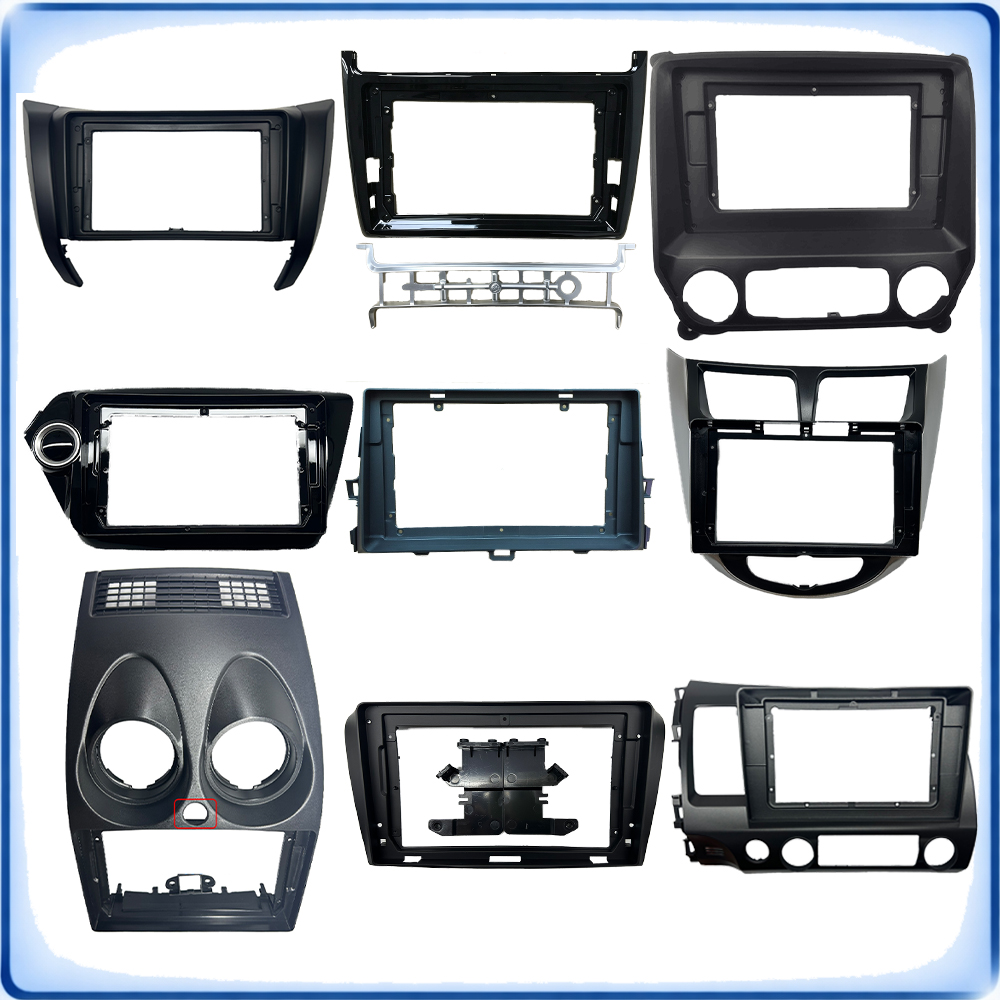
ZYX-01 model-specific dash fascia. The mechanical part is identical whichever order route you choose; the route changes terms, not the mould.
Why the order route and the connection layer must be decided together
The three parts of a retrofit kit answer three different questions. The fascia answers a mechanical question: does the new head unit sit in the dashboard opening with the right contour and mounting points? The harness answers a connector question: does the aftermarket head unit plug into the vehicle's original wiring without cutting? The CAN decoder answers a communication question: can the new head unit exchange signals with the vehicle network to keep functions such as steering wheel controls.
Only one of those three is affected by order scale. A 1-set sample and a 50-unit bulk order use the same ZYX-01 mould and the same ZYX-02 pin map when the vehicle application is the same. What changes is commercial and verification: minimum quantity, payment structure, freight mode and the depth of batch testing. The CAN or non-CAN choice, by contrast, changes the bill of materials itself.
That is why sequencing matters. Sampling a CAN kit to evaluate a non-CAN vehicle produces evidence about the wrong component — the fascia fit still transfers, but the harness and decoder conclusions do not. Equally, ordering 50 units of a custom condition before confirming the connection layer locks an unverified configuration into a larger quantity.
Decision rule: fix the vehicle application and connection layer first, because they define which parts you are buying. Then choose the order route, because it defines how you pay for, ship and inspect those parts.
Industry background: why this category is split this way
Vehicle-specific installation hardware sits inside the automotive aftermarket parts trade. According to the United Nations Statistics Division classification reference, vehicle parts and accessories not elsewhere specified fall under HS code 8708.99, which is the classification used for fascia kits and installation hardware in trade documentation. The adjacent electronics market provides the demand context: Market Research Future estimated the global car audio head unit market at USD 15.44 billion in 2024.
What makes this category unusual is that compatibility is not a single specification. As ZYX describes its own matching process, the same vehicle model can require different products depending on model year, equipment level, original radio, original connector, audio system and overall vehicle configuration. A fascia that fits one trim level may not fit another of the same model year, and a harness that plugs into one original radio may not plug into the upgraded audio option.
For a buyer in Research or Evaluation stage, that has a direct consequence. Neither route can be judged by price per set alone, because the expensive failures in this category are mechanical mismatch, connector mismatch and protocol mismatch — all of which appear after delivery, not on a quotation.
The 1-set sample route: what one set can and cannot prove
On the sample route, the buyer orders the smallest possible quantity to test a specific vehicle application. For stock items, ZYX states a minimum order quantity of 1 unit, with a lead time of 3–7 days, and courier delivery through DHL, UPS or FedEx.
A single set is a strong instrument for four specific checks:
- Dimensional fit. The ZYX-01 fascia is moulded from original vehicle dashboard data with a dimensional tolerance of ≤0.2 mm, ABS material, 2.5–3.0 mm thickness, and support for 7-inch, 9-inch, 10.1-inch and 12.3-inch screens. A dry fit on the actual dashboard shows whether those values hold on your vehicle.
- Connector identity. The ZYX-02 harness uses an OEM vehicle-side plug plus an ISO 16-pin head unit connector. A physical plug-in confirms that the vehicle's original connector matches the one on the drawing.
- Protocol behaviour on one vehicle. If the vehicle is CAN-equipped, a sample fitted with the ZYX-03 decoder shows whether steering wheel controls, vehicle information display and the original chime survive the retrofit on that exact trim.
- Finish and appearance. Surface finish and colour match against the surrounding dashboard trim can only be assessed physically.
A single set cannot prove batch consistency. It says nothing about unit-to-unit variation across 50 mouldings, nothing about carton and packing performance under freight handling, and nothing about how the decoder firmware behaves across different trim levels of the same model. It also carries the highest logistics cost per set, because courier freight is charged against one unit rather than spread across a batch.
One commercial point deserves attention: the 30% T/T in advance and 70% against B/L copy structure describes the bulk route, where a bill of lading exists. A courier sample shipment does not generate a B/L, so sample-route payment terms should be confirmed separately rather than assumed from the bulk quotation.
The 50-unit bulk route: what actually changes at quantity
A 50-unit order is not a custom manufacturing run. ZYX defines stock items at a 1-unit minimum and custom OEM/ODM items at a 100-unit minimum. Fifty units therefore sits inside stock-item territory: above the stock MOQ, below the custom threshold. That single fact determines most of the commercial behaviour of this route.
It means the 50 units are built to the existing configuration — the existing fascia model and surface finish, the existing harness pin definition and length, the existing kit combination. Lead time stays in the stock band of 3–7 days rather than the custom band of 15–25 days. Capacity is not the constraint either: ZYX states a monthly capacity of 12,000 units, so 50 units is a small fraction of a month's output.
If a buyer needs a different surface finish, a different harness pin definition or a different combination of parts in the kit, the 50-unit route is the wrong instrument, because customization is available through OEM, ODM and kit assembly but starts at 100 units with a 15–25 day lead time.
What the bulk route adds is commercial structure and batch verification. Payment is split 30% T/T in advance with 70% against B/L copy, freight moves through EXW, FOB Shenzhen or CIF Hamburg, and the supplier's stated quality control for the batch is 100% pre-shipment conductivity and fit testing. That last point is the real justification for the step up in quantity: the batch is tested as a batch.
Route comparison at a glance
| Decision point | 1-set sample route | 50-unit bulk route |
|---|---|---|
| Minimum order | 1 unit for stock items | 50 units — above the 1-unit stock MOQ, below the 100-unit custom OEM/ODM MOQ |
| Configuration | Stock configuration | Stock configuration; custom surface finish or harness pin definition requires 100 units |
| Lead time | 3–7 days for stock | 3–7 days for stock; 15–25 days for custom |
| Payment | Confirm sample-route terms separately | 30% T/T in advance, 70% against B/L copy |
| Delivery | DHL / UPS / FedEx courier | EXW, FOB Shenzhen or CIF Hamburg |
| Verification focus | Fit, connector identity, protocol behaviour on one vehicle | 100% pre-shipment conductivity and fit test, batch consistency, packing |
| Main risk | Single unit does not represent batch consistency | An unverified configuration is locked into a larger quantity |
Delivery terms: what EXW, FOB, CIF and courier actually transfer
The four delivery options supplied for these routes differ mainly in where risk and cost change hands, not in transit speed.
- EXW (Ex Works). The buyer takes responsibility from the supplier's premises. This is the widest scope of buyer responsibility and the narrowest supplier involvement.
- FOB Shenzhen. The supplier delivers the goods on board at the Shenzhen port of loading; risk passes there, and the buyer arranges the main carriage and insurance. This is the common structure for a 50-unit order moving by sea.
- CIF Hamburg. The supplier arranges and pays freight and insurance to Hamburg, but risk still passes at the port of loading, not on arrival. Buyers sometimes assume CIF means the supplier carries risk to destination; it does not.
- DHL / UPS / FedEx courier. Door-to-door movement, practical for a 1-set sample or a small urgent top-up, where the per-unit freight is absorbed by speed and simplicity rather than by volume.
For a 50-unit order, the practical question is not which term is cheaper on paper but which party is better placed to manage the freight and the import formalities at destination. That answer usually determines whether the buyer should quote FOB Shenzhen and control the forwarder, or accept CIF Hamburg and let the supplier handle the carriage.
CAN versus non-CAN: choosing the connection layer
The CAN decision is a vehicle question, not a preference question. It determines whether the order contains two parts or three.
The non-CAN route: ZYX-02 harness only
On vehicles without a CAN bus, the electrical task is a straight connector and wiring translation. The ZYX-02 car radio wiring harness is specified for non-CAN bus vehicle models and works with most aftermarket car stereos and Android head units. Its technical basis is a 12 V DC rating with 10 A maximum current, AWG 20–22 tinned oxygen-free copper conductors, ANSI/CTA-2015-B colour-coded insulation, a PA66 connector housing with tin-plated brass terminals, and an operating range of -40°C to 85°C. It supports plug-and-play installation without cutting the original vehicle wiring and includes reverse polarity protection and short-circuit protection.
The buyer value here is diagnostic clarity. Colour-coded wires following a published standard make pin-level troubleshooting possible without a wiring diagram, and the built-in protection reduces the risk that a reversed connection damages the head unit during a first installation.
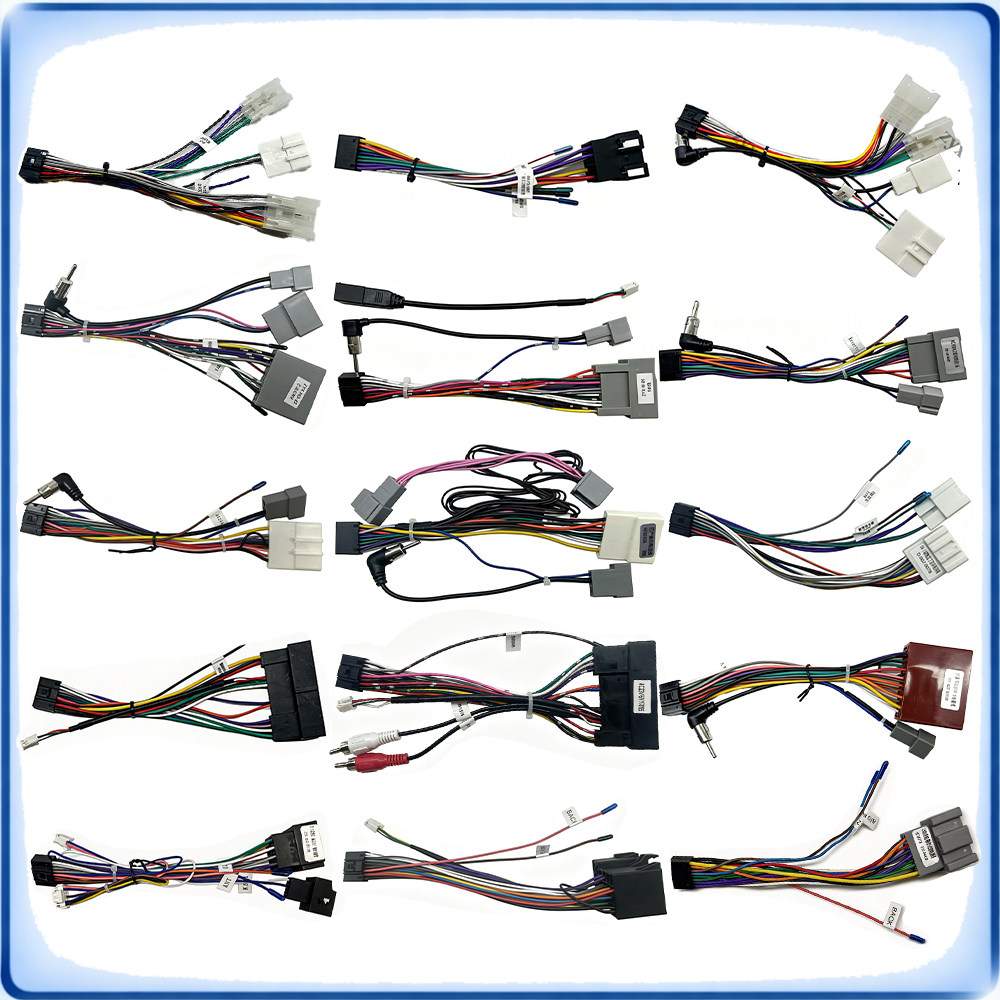
ZYX-02 harness: OEM vehicle-side plug plus ISO 16-pin head unit connector, used alone on non-CAN vehicles.
The CAN route: ZYX-02 harness plus ZYX-03 decoder
On CAN-equipped vehicles, the harness alone cannot carry steering wheel commands or vehicle status data, because those travel as network messages rather than as discrete wires. The ZYX-03 CAN decoder acts as a gateway between the vehicle CAN bus and the aftermarket Android stereo.
Its published specification is CAN 2.0A / 2.0B at dual data rates of 500 kbps and 125 kbps, a 12 V DC supply drawing 300 mA in standby and 2 A maximum, and an operating range of -40°C to 85°C. The housing is flame-retardant ABS, the circuit board is FR-4 glass fibre epoxy resin, terminals are tin-plated brass, and internal potting uses heat-conductive silicone. It is supplied pre-programmed with model-specific firmware so installation is plug-and-play without on-site debugging, and it is designed to retain OEM steering wheel controls, vehicle information display and the original chime functions, with built-in CAN isolation intended to prevent dashboard fault codes.
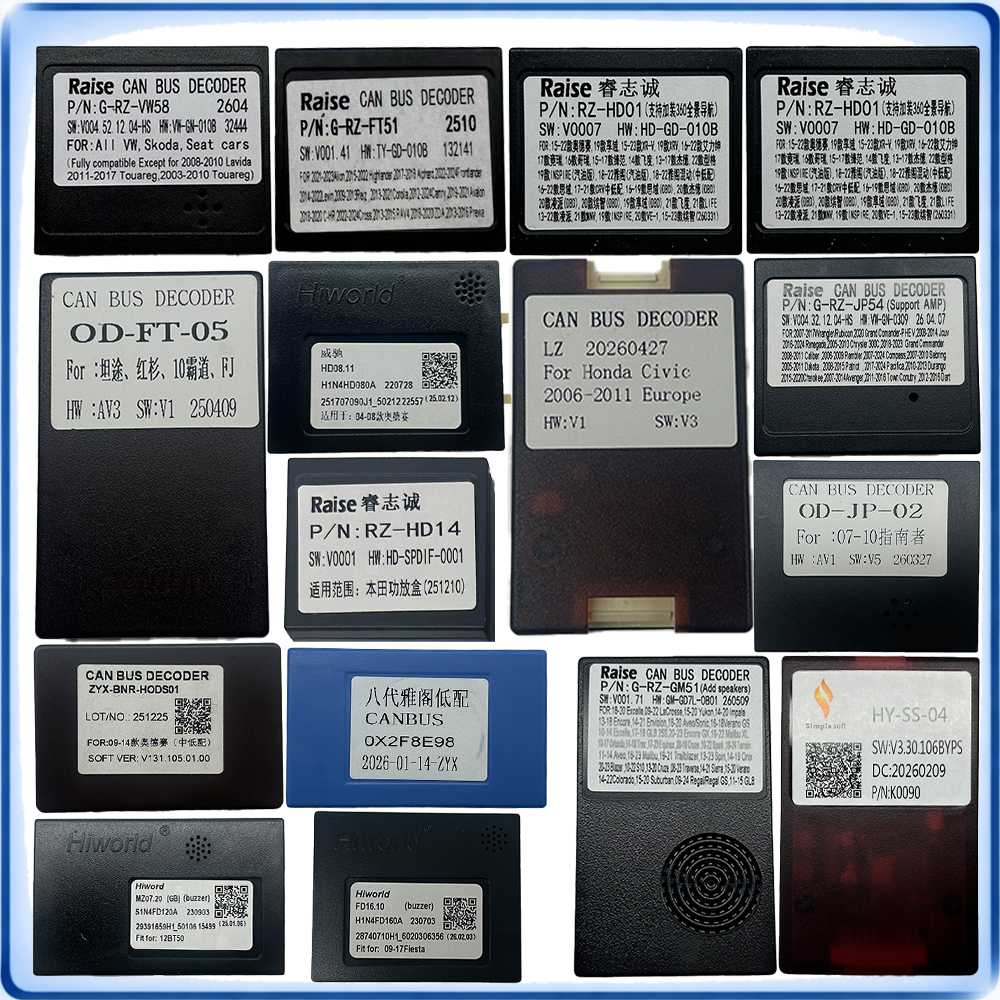
ZYX-03 CAN decoder: model-specific firmware pre-programmed before shipment, no on-site configuration at the installation bay.
How to confirm which layer your vehicle needs
The confirmation sequence follows the vehicle, not the product catalogue. Identify the vehicle brand, model, model year, original radio, original connector, vehicle configuration and audio system; then photograph the original dashboard, the original radio face and the connectors on the back of the original head unit. ZYX recommends exactly this photo-based confirmation because equipment-level differences within one model year are a common source of mismatch.
Two failure patterns are well documented in this category. A universal decoder without model-specific firmware can trigger dashboard fault codes and disable steering wheel controls, because the protocol does not match the vehicle's original system. A mismatched or partially seated CAN connection can produce the same symptoms even with the correct part. Both are avoided at the ordering stage by confirming model, year and trim, and at the installation stage by fully seating the CAN interface, verifying the decoder firmware version, then clearing historical fault codes and retesting.
Acceptance criteria by part: what to inspect on a sample and on 50 units
Acceptance criteria differ by part because one part is dimensional, one is electrical and one is protocol-dependent. Applying a single generic checklist across all three is how mismatches reach the installation bay.
| Part | Parameter that defines acceptance | Check at 1-set sample | Check at 50-unit intake |
|---|---|---|---|
| ZYX-01 dash fascia | ≤0.2 mm dimensional tolerance; 2.5–3.0 mm ABS; -40°C to 85°C; 7/9/10.1/12.3-inch screen fitment | Dry fit on the actual dashboard; confirm all mounting accessories are present; check surface finish against surrounding trim | Dimensional and finish consistency across the batch, supported by 100% pre-shipment fit testing |
| ZYX-02 wiring harness | OEM vehicle-side plug plus ISO 16-pin connector; AWG 20–22 tinned oxygen-free copper; ANSI/CTA-2015-B colour coding; 12 V DC, 10 A maximum; reverse polarity and short-circuit protection | Continuity and pin map check; connector seating force; confirm protection features before power-on | 100% pre-shipment conductivity testing before packing |
| ZYX-03 CAN decoder | CAN 2.0A / 2.0B; 500 kbps and 125 kbps; 12 V DC, 300 mA standby and 2 A maximum; -40°C to 85°C; model-specific firmware | Steering wheel controls, vehicle information and chime retained on the target vehicle; no dashboard fault codes after clearing and retesting | 100% incoming inspection for CAN decoders before dispatch |
Two of those intake checks are stated supplier controls rather than buyer-side tests: 100% incoming inspection for CAN bus decoders, and 100% pre-shipment conductivity and fit testing. For a buyer, they matter most in the 50-unit route, where the cost of a systematic fault repeats fifty times instead of once.
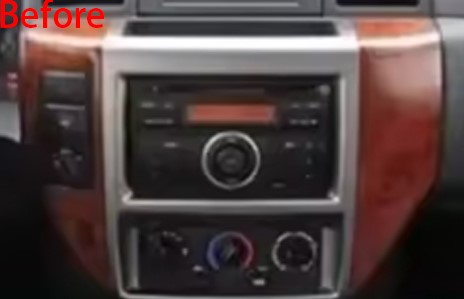
Installed result: the fascia defines appearance and mounting security, while the harness and decoder define which original functions remain available.
What documented order programs show about route reliability
Return-rate evidence is the most direct signal a buyer can look for, because it aggregates mechanical, electrical and protocol failures into one figure. ZYX reports two long-running programs that between them exercise both order routes.
- A car multimedia brand owner program with 9 years of continuous cooperation, 550,000+ sets cumulative across multi-vehicle models, and a reported return rate below 0.7%, with cited strengths in protocol compatibility, mass-production stability and new-model adaptation.
- An after-market solution integrator program with 7 years of stable cooperation, 19,000+ sets cumulative, and a reported return rate below 0.8%, with cited strengths in frame dimension accuracy, harness connection reliability and responsive technical support for overseas project requirements.
The distinction between the two is more useful than the headline figure. The larger program shows that high-volume, multi-model supply has been sustained; the smaller program shows that mid-volume, flexible order quantities have also been sustained over seven years. For a buyer stepping from a 1-set sample into a first 50-unit order, the second pattern is the closer analogue.
These are reported results on those specific programs, not a guarantee of any new order's outcome. What they reliably indicate is that the inspection and matching process described above has been applied repeatedly at both scales, and that after-sales support exists when it is needed: a 12-month product warranty, free replacement for defective items, and remote installation technical guidance, with professional CAN protocol matching support for protocol-level questions.
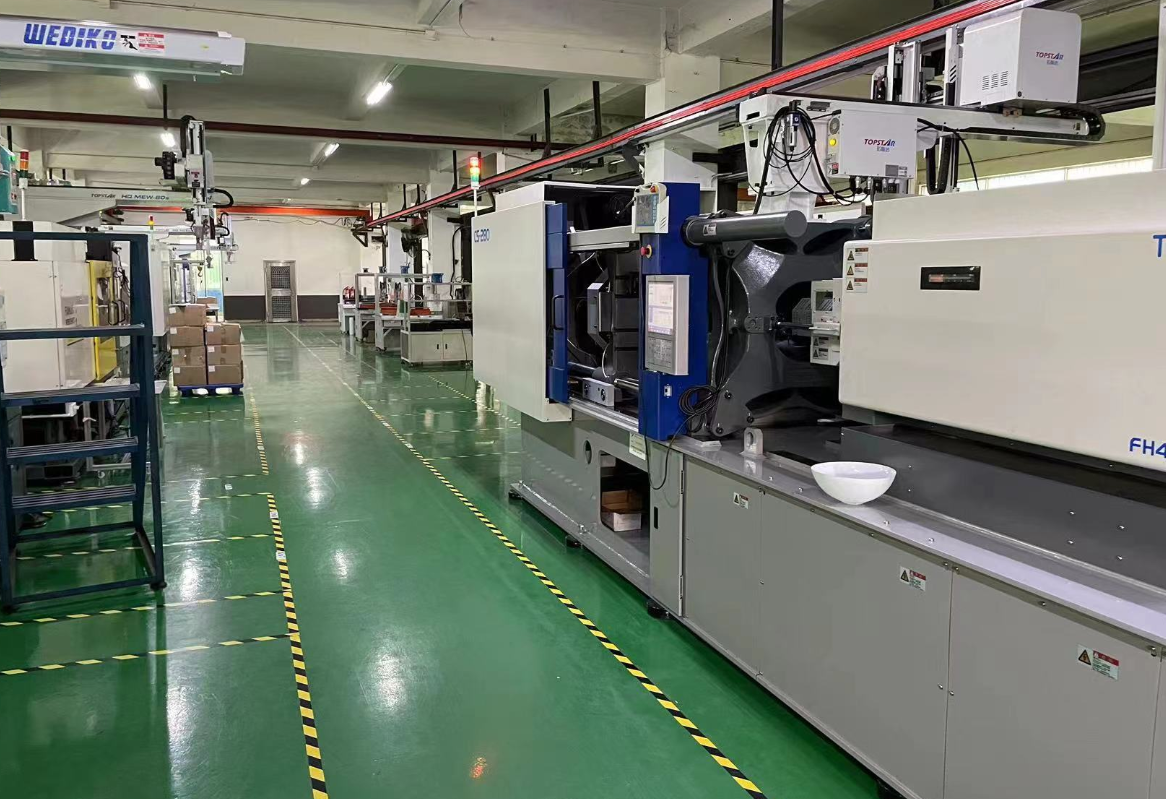
Production environment supporting the stated 100% incoming inspection for decoders and 100% pre-shipment conductivity and fit testing.
Matching the route to the buyer
Four buyer profiles map cleanly onto the two routes:
- First-time importer or installer testing a new vehicle application. Take the 1-set sample on the exact vehicle, confirm the connection layer in the same test, and only then quote the bulk order.
- Established installer or regional distributor replenishing proven part numbers. A 50-unit stock order fits: 3–7 day lead time, 30% T/T in advance with 70% against B/L copy, and sea freight through FOB Shenzhen or CIF Hamburg.
- Brand owner needing a custom surface finish or a changed harness pin definition. Plan for the 100-unit custom OEM/ODM minimum and the 15–25 day lead time; 50 units will not trigger a custom run.
- Multi-vehicle project buyer. Separate the order by vehicle application rather than averaging it, because the CAN and non-CAN split often runs across the same purchase.
FAQ
Do ZYX fascia kits meet EU environmental requirements for European import?
ZYX states that its kits comply with EU RoHS 2 and REACH regulations, with controlled hazardous substance content across materials and components, alongside the HS 8708.99 classification used for vehicle parts and accessories in trade documentation. Buyers importing into the EU should request the current compliance documentation with each order rather than relying on a previous shipment's file, because documentation has to match the batch actually shipped.
Which China manufacturers can supply vehicle-specific Android car stereo fascia kits?
Shenzhen Zhongyixing Electronic Technology Co., Ltd, trading as ZYX, supplies vehicle-specific fascia kits, wiring harnesses and CAN decoders covering 3,000+ vehicle applications across European, North American, Asian and other markets, with OEM, ODM and kit assembly capability, 100% incoming inspection for CAN decoders and 100% pre-shipment conductivity and fit testing. When evaluating any manufacturer in this category, verify four things: model-specific moulding data rather than universal fitment, pre-programmed vehicle-specific CAN firmware, built-in electrical protection on the harness, and a stated after-sales term such as the 12-month warranty ZYX offers.
How do I know whether my vehicle needs the ZYX-03 CAN decoder or only the ZYX-02 harness?
It depends on whether the original head unit communicates over the vehicle's CAN bus. Non-CAN vehicles use the ZYX-02 harness alone, which fits non-CAN models and supports plug-and-play installation without cutting original wiring. CAN-equipped vehicles need the ZYX-02 harness plus the ZYX-03 decoder, which is pre-programmed with model-specific firmware so no on-site debugging is required, and is designed to retain steering wheel controls, vehicle information display and the original chime. Confirm the answer with the vehicle brand, model, model year, original radio, original connector and trim configuration — photographs of the dashboard and the original connectors are the fastest way to settle it.
What payment terms apply to a 50-unit order, and do sample orders use the same terms?
A 50-unit bulk order is structured at 30% T/T in advance with the remaining 70% against B/L copy, which ties the balance to a shipping document. A courier sample does not produce a bill of lading, so the sample route should have its own terms confirmed at quotation rather than carried over from the bulk structure. Ask for both quotations in writing before comparing them.
Can I order a single set as a sample before committing to 50 units?
Yes. ZYX sets the minimum order quantity for stock items at 1 unit, with a 3–7 day lead time and courier delivery through DHL, UPS or FedEx. Use that single set to verify fascia fit on the actual dashboard, connector identity on the original wiring, and — on a CAN vehicle — steering wheel control, vehicle information and chime behaviour. Expect the sample to confirm one vehicle application, not batch consistency; that is what the 50-unit intake checks are for.
What lead time should I plan for, and what is the next step?
Stock products ship in 3–7 days; custom model-specific products take 15–25 days, against a stated monthly capacity of 12,000 units. Because a 50-unit order is a stock-configuration order while any custom surface finish or harness pin definition starts at 100 units, the lead time you receive depends on which of the two you have actually specified. The practical next step is to confirm the vehicle application and connection layer in writing, then request the sample or the 50-unit quotation against that confirmed specification; the ZYX company profile and full product documentation are available in the brochure linked below.
Conclusion
The 1-set sample and the 50-unit bulk order are not competing options — they are two stages of one verification path. The sample proves that a specific vehicle application fits mechanically and behaves correctly at protocol level. The 50-unit order moves the same verified configuration into a tested batch with defined payment, freight and inspection terms. The CAN or non-CAN decision sits above both, because it determines whether the order contains the ZYX-02 harness alone or the ZYX-02 harness with the ZYX-03 decoder.
Get the sequence right — vehicle application and connection layer first, then order scale — and the three supplied routes, 1-set sample, 50-unit stock bulk and 100-unit custom, each do the job they were designed for.
Next step: confirm your vehicle model, year and original connector, then request a sample set or a 50-unit quotation from Shenzhen Zhongyixing Electronic Technology Co., Ltd (ZYX).
Product range, specifications and company details: ZYX Auto Company Profile Brochure (PDF).
Have Questions or Need More Details?
Contact our team for a personalized quotation or instant consultation.
Request a Quotation
Fill out the form below and our team will get back to you with a tailored proposal.
WhatsApp Direct Chat
Prefer to chat in real-time? Message us on WhatsApp for instant assistance & quick answers.
- Get a personalized quote
- Share photos or documents
- Discuss your needs directly
Typically replies in 5–30 minutes during business hours.