Vehicle-Specific Android Car Stereo Fascia Kit: Specs, Tolerances, MOQ and Compliance
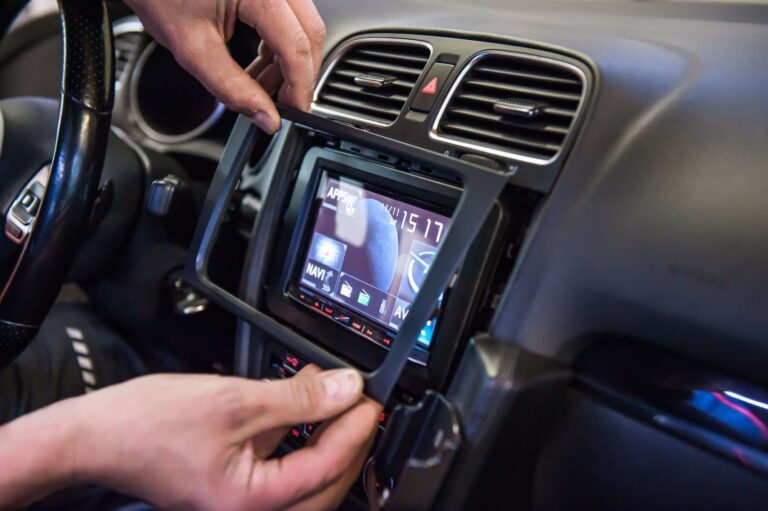
A vehicle-specific Android car stereo fascia kit is a matched three-part installation system: a model-specific dash fascia, a plug-and-play wiring harness, and, on CAN-equipped vehicles, a CAN bus decoder. Whether the upgrade installs cleanly on the first attempt depends on measurable constraints — dimensional tolerance, connector and pin definition, CAN protocol support, environmental compliance and order quantity limits — rather than on screen size alone.
This article is written for installers, distributors, car stereo retailers and brand owners who are comparing suppliers at the research and evaluation stage. It breaks the purchase decision into three constraint layers and uses the published specifications of Shenzhen Zhongyixing Electronic Technology Co., Ltd (ZYX), a Shenzhen-based manufacturer of car radio fascia kits, wiring harnesses and CAN bus decoder solutions, as a worked reference. Its official product information is published at www.zyxcaradio.com.
Why “Vehicle-Specific” Is a Specification Claim, Not a Label
A fascia kit can honestly be described as vehicle-specific only if it was developed from the original vehicle’s dashboard data rather than adapted from a universal template. In practice, that claim translates into a small set of verifiable parameters: dimensional tolerance, material thickness, mounting standard, supported screen sizes and heat resistance.
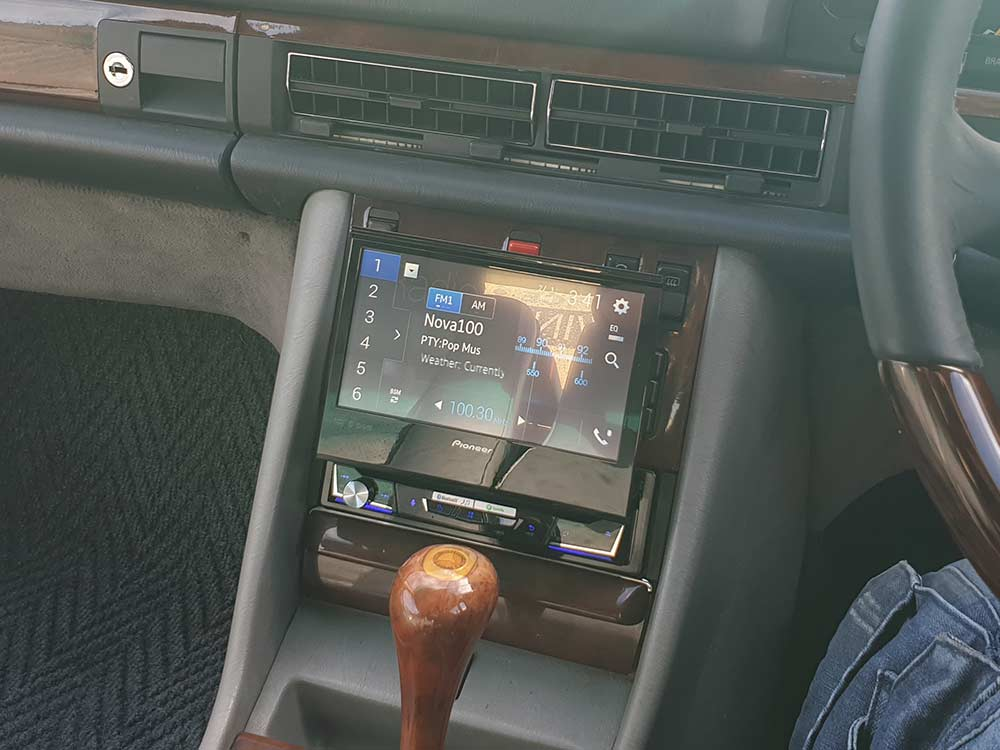
The ZYX-01 Car Radio Dash Fascia is manufactured from original vehicle dashboard data with a dimensional tolerance of ≤0.2 mm, an ABS plastic body of 2.5 mm to 3.0 mm thickness, and an operating temperature range of -40°C to 85°C. It supports 7-inch, 9-inch, 10.1-inch and 12.3-inch screens, uses a Double-DIN or model-specific custom mounting standard, and is supplied as a plug-and-play fitment with complete mounting accessories and no damage to the original interior.
Two of those numbers carry most of the risk. A tolerance beyond roughly half a millimetre is normally visible as an uneven gap line where the frame meets the dashboard, so the ≤0.2 mm figure is what separates a factory-looking result from an obviously aftermarket one. Material thickness in the 2.5 mm to 3.0 mm range is what keeps the frame from flexing once a head unit is bolted into it, which in turn limits rattle and gap drift over the life of the vehicle.
Industry Background: A Large Market With a Compatibility Problem
Third-party research provides scale, but not the answer to fitment. Market Research Future estimated the global car audio head unit market at USD 15.44 billion in 2024. Mordor Intelligence projects the car aftermarket audio system market to grow at a CAGR of 12.18%, and identifies DIY customers and online plug-and-play kits among the demand drivers. Fortune Business Insights reports that Asia Pacific accounted for 54.21% of the global car audio market in 2025. These estimates come from commercial research publishers using different market definitions, so they are best read as indicators of scale rather than as one agreed market size.
The operational difficulty in this category is compatibility, not demand. A single vehicle nameplate can require different installation parts depending on model year, equipment level, original radio, original connector, audio system and overall vehicle configuration. ZYX maintains a vehicle application system covering 3,000+ applications across Toyota, Honda, Nissan, Mazda, Ford, Chevrolet, Volkswagen, Audi, BMW, Mercedes-Benz, Hyundai, Kia, Jeep, Dodge, Mitsubishi, Subaru, Peugeot, Renault, Citroën and Fiat, among other brands.
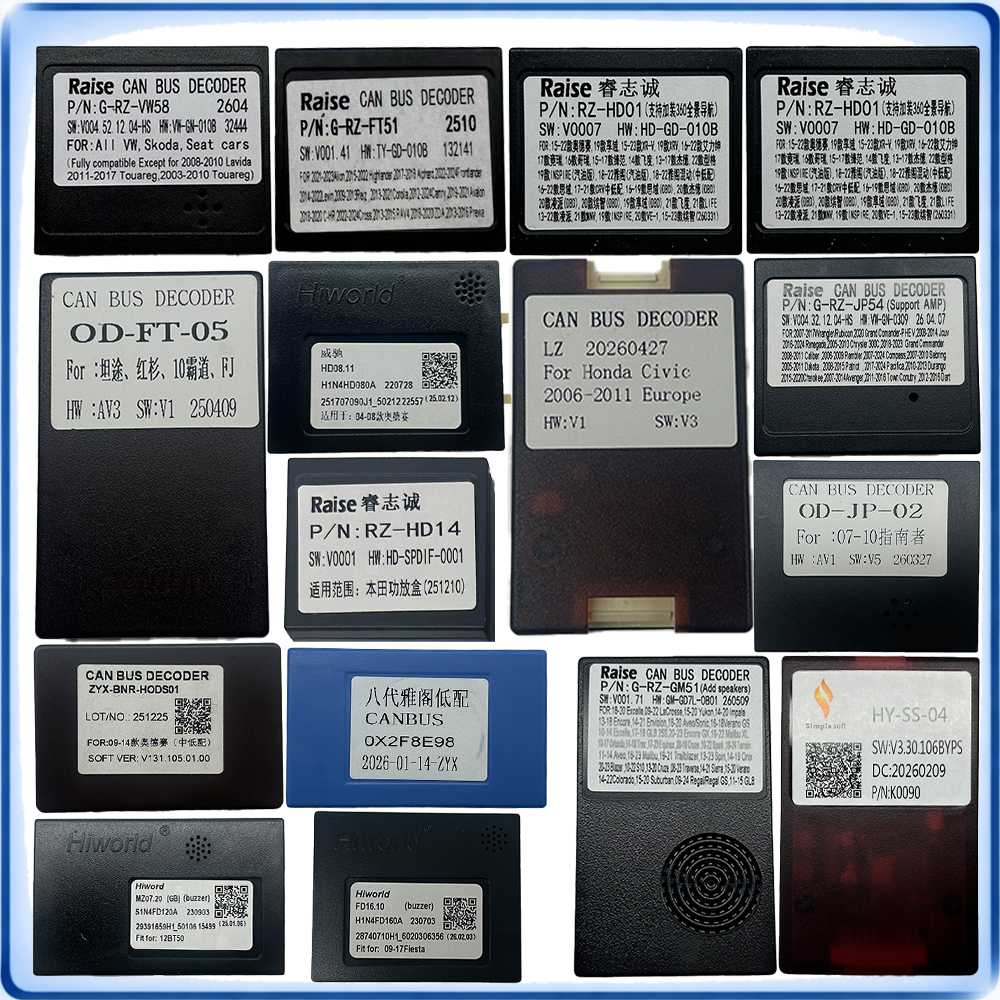
On CAN-equipped vehicles the constraint moves from plastic to protocol. A CAN bus decoder typically performs HEX-to-UART translation of vehicle network messages so that an Android head unit can retain steering wheel controls and climate data (Quality Mobile Video, 2025). That translation depends on model-specific protocol data, which is why protocol matching — not hardware quality alone — decides whether factory functions survive the retrofit.
Three Constraint Layers to Verify Before Ordering
Layer 1 — Physical Fitment Constraints
Physical constraints decide whether the finished installation looks original. The parameters worth comparing are dimensional tolerance, material and thickness, mounting standard, supported screen sizes and the rated temperature range. ZYX builds fascia kits to a ≤0.2 mm dimensional tolerance from ABS plastic with 2.5 mm to 3.0 mm material thickness, rated from -40°C to 85°C. That range covers the real in-vehicle environment: wide temperature swings, constant road vibration, dust and humidity exposure, automotive EMI conditions and a 12 V DC vehicle electrical system.
Fitment should always be confirmed with a dry fit before permanent installation. A dry fit checks alignment against the actual dashboard, catches a wrong variant before trim clips are stressed, and is the cheapest point in the whole process at which to discover a mismatch.
Layer 2 — Electrical and CAN Protocol Constraints
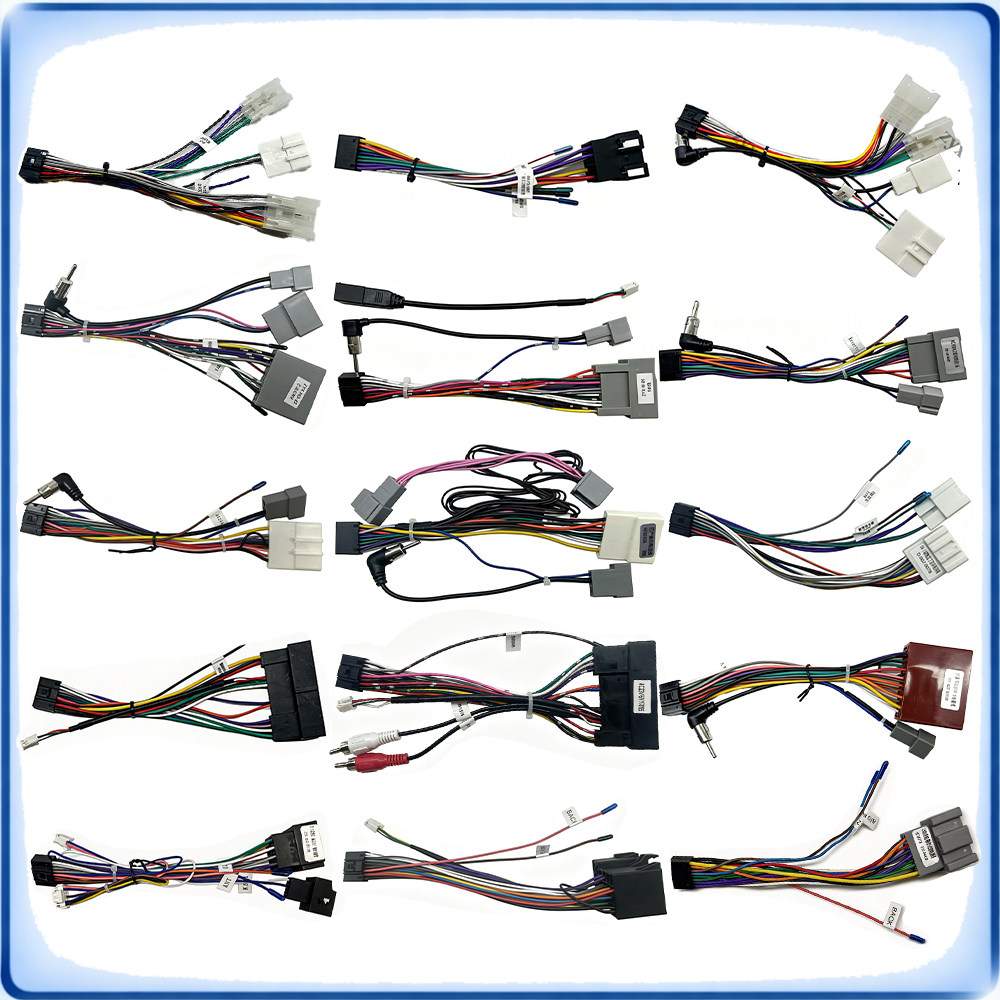
The electrical layer connects the new head unit to the factory harness. A plug-and-play harness such as ZYX-02 uses an OEM vehicle-side plug paired with an ISO 16-pin head unit connector, AWG 20-22 tinned oxygen-free copper conductors, flame-retardant PVC insulation colour-coded to ANSI/CTA-2015-B, a PA66 engineering plastic connector housing and tin-plated brass contact terminals. It is rated at 12 V DC with 10 A maximum current, operates from -40°C to 85°C, and includes reverse polarity protection and short-circuit protection. ZYX-02 is designed for non-CAN bus vehicle models and works with most aftermarket car stereos.
Where the vehicle communicates over CAN, the ZYX-03 CAN Bus Decoder Module is the matching constraint. It supports the CAN 2.0A and CAN 2.0B protocol standards and runs at dual data rates of 500 kbps and 125 kbps, drawing 300 mA in standby with 2 A maximum, rated from -40°C to 85°C. The housing is flame-retardant ABS plastic, the circuit board is FR-4 glass fibre epoxy resin, the connector terminals are tin-plated brass and the internal potting is heat-conductive silicone. Firmware is pre-programmed per vehicle model, so installation is plug-and-play without on-site debugging, and the module is designed to retain OEM steering wheel controls, vehicle information display and original chime functions, with built-in CAN isolation intended to prevent dashboard fault codes.
Layer 3 — Compliance and Commercial Constraints
Compliance is a purchasing constraint because it governs market entry, not only product quality. ZYX states that its retrofit kits comply with EU RoHS 2 and REACH regulations, with hazardous substance content controlled across materials and components. For the electronic part, published guidance from Elite Electronic Engineering (2025) notes that electronic subassemblies (ESAs) integrated into road vehicles in the EU must comply with e/E-Marking (EMC testing) rather than CE marking alone where they affect vehicle safety functions — a point worth confirming with any supplier before a European launch. For customs and tariff classification, vehicle parts and accessories not elsewhere specified fall under HS code 8708.99, according to the United Nations Statistics Division.
Commercial constraints are equally concrete. ZYX quotes a minimum order quantity of 1 unit for stock items and 100 units for custom OEM/ODM items. Lead time is 3-7 days for stock products and 15-25 days for custom model-specific products, with a monthly capacity of 12,000 units. Production modes include OEM, ODM, kit assembly and authorized distribution, and customization covers dash kit model and surface finish, wiring harness pin definition and length, and kit combination configuration. Quality control includes 100% incoming inspection for CAN bus decoders plus a 100% pre-shipment conductivity and fit test. After-sales terms are a 12-month product warranty, remote installation technical guidance, free replacement for defective items and professional CAN protocol matching support.
Specification Reference
| Parameter | ZYX-01 Car Radio Dash Fascia | What it constrains |
|---|---|---|
| Development basis | Manufactured from original vehicle dashboard data | Whether the frame follows the factory gap line |
| Material | ABS plastic | Surface finish and resistance to dashboard heat |
| Material thickness | 2.5 mm – 3.0 mm | Frame rigidity under road vibration |
| Dimensional tolerance | ≤0.2 mm | Visible gap line and trim alignment |
| Compatible screen sizes | 7 inch, 9 inch, 10.1 inch, 12.3 inch | Which head units the frame can carry |
| Mounting standard | Double-DIN / model-specific custom | Mounting pattern and bracket set |
| Fitment type | Plug-and-play, no damage to original interior | Installation time and reversibility |
| Operating temperature | -40°C to 85°C | Summer dashboard heat and cold-start conditions |
| Accessories | Complete mounting accessories included | Whether the installer needs extra parts mid-job |
| Parameter | ZYX-02 Car Radio Wiring Harness | ZYX-03 CAN Bus Decoder Module |
|---|---|---|
| Connector / protocol | OEM vehicle-side plug + ISO 16-pin head unit connector | CAN 2.0A / CAN 2.0B, 500 kbps / 125 kbps dual rate |
| Conductor / board | AWG 20-22 tinned oxygen-free copper | FR-4 glass fibre epoxy resin circuit board |
| Insulation / housing | Flame-retardant PVC with ANSI/CTA-2015-B colour coding; PA66 connector housing | Flame-retardant ABS housing with heat-conductive silicone internal potting |
| Contact terminals | Tin-plated brass | Tin-plated brass |
| Power | 12 V DC, 10 A maximum | 12 V DC, 300 mA standby, 2 A maximum |
| Protection | Reverse polarity protection, short-circuit protection | Built-in CAN isolation intended to prevent dashboard fault codes |
| Operating temperature | -40°C to 85°C | -40°C to 85°C |
| Vehicle fit | Non-CAN bus vehicle models; works with most aftermarket car stereos | Pre-programmed model-specific firmware; plug-and-play with no on-site debugging |
| Functions retained | Power and speaker connection without cutting the original wiring | OEM steering wheel controls, vehicle information display, original chime functions |
Step-by-Step: How to Verify a Kit Against a Real Vehicle
- Map the vehicle before requesting a quote. Work through the matching chain in order: vehicle brand, vehicle model, model year, original radio, original connector, vehicle configuration, audio system, then the new head unit. Each step can change the part number.
- Send photographic evidence. Clear photos of the original dashboard, the original radio or the connector on the back of the factory head unit remove most ambiguity caused by model year, equipment level or connector differences.
- Determine whether the vehicle is CAN-equipped or non-CAN. This decides whether the kit needs a CAN bus decoder such as ZYX-03 or a non-CAN harness such as ZYX-02.
- Check the physical specification sheet. Confirm dimensional tolerance, mounting standard, material thickness and the screen size the fascia supports against the head unit you intend to install.
- Dry fit the fascia before permanent installation. Verify alignment and gap lines on the actual dashboard, and stop if the frame is not the correct variant.
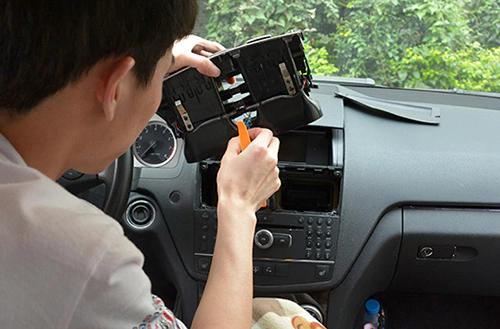
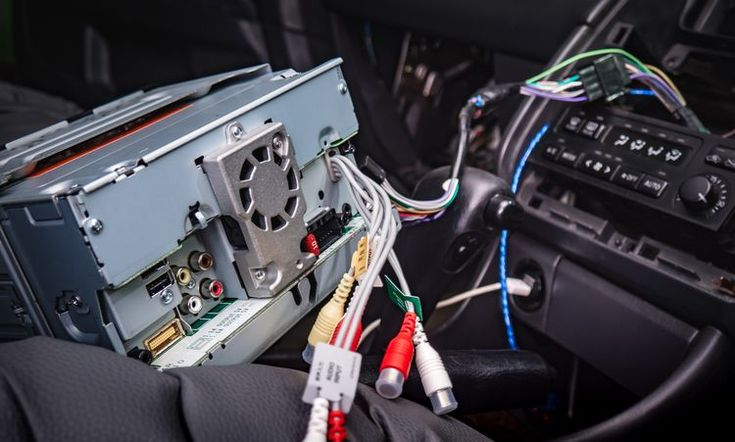
- Install with the battery disconnected. Remove the factory head unit and dashboard trim, dry fit the model-specific dash kit, plug the wiring harness and CAN bus decoder into the original vehicle interface, connect the new head unit and test all functions, then secure the components and reinstall the trim.
Use Cases: Where the Constraint Layers Matter Most
Different buyer types feel the same constraints in different ways, and the purchase decision changes accordingly.
- Independent installers and car modification shops are constrained by first-time fit. A frame built to a ≤0.2 mm tolerance and a decoder pre-programmed for the correct model and trim reduce comeback work, because the parts either match the vehicle in front of them or they do not.
- Automotive parts distributors and car stereo retailers are constrained by SKU planning. Covering multiple vehicle applications across many brands is only practical when the matching chain — brand, model, year, original radio, connector, configuration — is documented rather than guessed.
- E-commerce sellers are constrained by returns. A kit that arrives complete, with fascia, harness and decoder designed to work together, removes the most common reason a retrofit is returned: a missing or incompatible part.
- Car multimedia brand owners buying OEM/ODM are constrained by customization scope. ZYX supports dash kit model and surface finish customization, wiring harness pin definition and length changes, and kit combination configuration, with a 100-unit minimum for custom items and a 1-unit minimum for stock items.
- Fleet and dealership accessory fitting programmes are constrained by batch consistency. Repeatable dimensions and protocol behaviour matter more than single-unit price when dozens of vehicles are processed in a programme.
ZYX reports a long-term cooperation record that reflects those constraints in practice: an after-market solution integrator in China has taken a cumulative 19,000+ sets of dash frames, wiring harnesses and CAN bus decoders over a 7-year cooperation, with a return rate below 0.8%; a car multimedia brand owner has taken a cumulative 550,000+ sets over 9 years of continuous cooperation, with a return rate below 0.7%. Both relationships are described by the company as built on precise frame dimensions, reliable harness connection and mature protocol solutions rather than on price alone.

Comparison: Plug-and-Play Vehicle-Specific Kit vs Traditional Cut-Wire Retrofit
The clearest decision available to a buyer is between a plug-and-play, vehicle-specific retrofit kit and a traditional cut-wire universal solution. The differences are structural rather than cosmetic.
| Constraint dimension | Plug-and-play vehicle-specific kit (fascia + harness + CAN bus decoder) | Traditional cut-wire universal retrofit |
|---|---|---|
| Original vehicle wiring | Uses the factory original electrical interface; no cutting or modification | Requires cutting and splicing into the original harness |
| Fitment accuracy | Precision moulding from original vehicle dashboard dimensions | Lower fit accuracy |
| CAN protocol matching | Pre-programmed, vehicle-specific CAN firmware | Universal decoder without model-specific firmware |
| Dashboard fault codes | No fault codes when the decoder matches the vehicle model and configuration | Higher risk of fault codes and disabled original functions |
| Installation process | Plug-and-play; no on-site programming | Manual wiring and configuration during installation |
| Upfront cost | Higher upfront cost than a cut-wire solution | Lower upfront cost |
| Long-term reliability | Higher long-term reliability with stable fit and protocol behaviour | Higher risk of functional issues over time |
| Typical best-fit scenario | Premium vehicle upgrades, fleet batch modification, dealership pre-delivery fitting | Low-budget simple retrofits of older economy vehicles |
FAQ: Vehicle-Specific Fascia Kits Sourced From China
What compliance requirements apply to a China-made vehicle-specific Android car stereo fascia kit sold into the EU?
Two layers apply. For materials and components, EU RoHS 2 and REACH restrict hazardous substances; ZYX states that its fascia kits, wiring harnesses and CAN bus decoders comply with both, with hazardous substance content controlled across materials and components. For the electronic part, published guidance from Elite Electronic Engineering (2025) notes that electronic subassemblies (ESAs) integrated into road vehicles in the EU must comply with e/E-Marking (EMC testing) rather than CE marking alone if they affect vehicle safety functions. For customs classification, vehicle parts and accessories fall under HS code 8708.99, per the United Nations Statistics Division.
How can a buyer confirm that a fascia kit from a China manufacturer will fit a specific vehicle?
Confirm the full matching chain before ordering: vehicle brand, vehicle model, model year, original radio, original connector, vehicle configuration, audio system and the new head unit. Photos of the original dashboard, original radio or the connector on the back of the factory head unit are the fastest way to remove ambiguity, because the same nameplate can use different parts across model years and trim levels. On the product side, a model-specific fascia is moulded from original vehicle dashboard data to a ≤0.2 mm dimensional tolerance, and a CAN-equipped vehicle additionally requires a decoder pre-programmed for that model and configuration. ZYX’s vehicle application system covers 3,000+ vehicle applications.
What drives the cost of a vehicle-specific kit compared with a universal retrofit?
Cost is driven by constraint coverage rather than by the frame alone: model-specific moulding and tooling, screen-size variants (7-inch, 9-inch, 10.1-inch and 12.3-inch), custom harness pin definitions and cable lengths, pre-programmed model-specific CAN firmware, dash kit surface finish, kit combination configuration and order quantity. ZYX applies a minimum order quantity of 1 unit for stock items and 100 units for custom OEM/ODM items. Traditional cut-wire universal solutions carry a lower upfront cost, but they accept a higher risk of original wiring damage, poorer fitment and functional faults — a trade-off that matters most for premium upgrades, fleet work and dealership fitting.
Can a buyer test a sample before placing a bulk order?
Yes. Stock items carry a minimum order quantity of 1 unit, so a sample can be ordered and dry-fitted against the actual dashboard before any volume commitment. ZYX runs 100% incoming inspection on CAN bus decoders and a 100% pre-shipment conductivity and fit test, and its after-sales terms include a 12-month product warranty, free replacement for defective items and remote installation technical guidance. Dry-fitting the fascia and testing all functions before final assembly is the standard validation step.
What are the lead times, and what is the next step?
Stock products ship in 3-7 days; custom model-specific products take 15-25 days; monthly capacity is 12,000 units, and production modes include OEM, ODM, kit assembly and authorized distribution. For a compatibility check, send the vehicle brand, model, model year, original radio details and connector photos together with the target head unit. The ZYX company profile and product brochure can be downloaded as a PDF at ZYX AUTO Company Profile Brochure, and the team can be reached at yueyongfei7@gmail.com or +86 159-2064-3862.
Conclusion: Buy on Constraints, Not on Screen Size
A vehicle-specific Android car stereo fascia kit is a system of three parts, and each part has its own constraint set. The physical layer is decided by dimensional tolerance, material and thickness, mounting standard and temperature rating. The electrical layer is decided by connector configuration, conductor specification, wire colour coding, protection features and — on CAN vehicles — protocol support through a decoder with model-specific, pre-programmed firmware. The commercial layer is decided by compliance documentation, minimum order quantity, lead time, capacity, quality inspection routine and after-sales terms.
Buyers who check those three layers before ordering spend less time resolving fitment and function problems after the fact. The practical first step is simple: document the vehicle fully, send photos of the original dashboard and connector, and ask the supplier to confirm the matching chain in writing.
Next Step: Validate a Kit Against Your Vehicle
ZYX supplies vehicle-specific fascia kits, plug-and-play wiring harnesses and CAN bus decoders to installers, distributors, retailers and brand owners, with stock items shipping in 3-7 days and custom model-specific programmes in 15-25 days.
- Download the company profile and product brochure: ZYX AUTO Company Profile Brochure (PDF)
- Website: www.zyxcaradio.com
- Email: yueyongfei7@gmail.com
- WhatsApp / Tel: +86 159-2064-3862
- Address: 5th Floor, Building D, Tianxi Sheng, No.46 Hongyin Road, Loucun Community, Xinhu Street, Guangming District, Shenzhen, China
Disclosure: ZYX specifications, order terms and cooperation records cited in this article are published by Shenzhen Zhongyixing Electronic Technology Co., Ltd. Third-party market estimates and regulatory guidance are attributed to their respective publishers.
Have Questions or Need More Details?
Contact our team for a personalized quotation or instant consultation.
Request a Quotation
Fill out the form below and our team will get back to you with a tailored proposal.
WhatsApp Direct Chat
Prefer to chat in real-time? Message us on WhatsApp for instant assistance & quick answers.
- Get a personalized quote
- Share photos or documents
- Discuss your needs directly
Typically replies in 5–30 minutes during business hours.