3500 PSI Reinforced Thermoplastic Pipe in 24/7 Mining: A Field Application Guide
A 3,500 PSI reinforced thermoplastic pipe (RTP) is a spoolable composite pressure line engineered to carry fluids continuously without the welded-joint density, coating repair and inhibitor programs that dominate steel systems. The pipe covered in this guide — ZYfire model “2” 3500PSI O.D:79.8 — delivers a 3,500 PSI nominal pressure rating at a 79.8 mm outside diameter in a single 920 m coil. That coil length is the field variable that matters most: it is what removes fittings from the line.
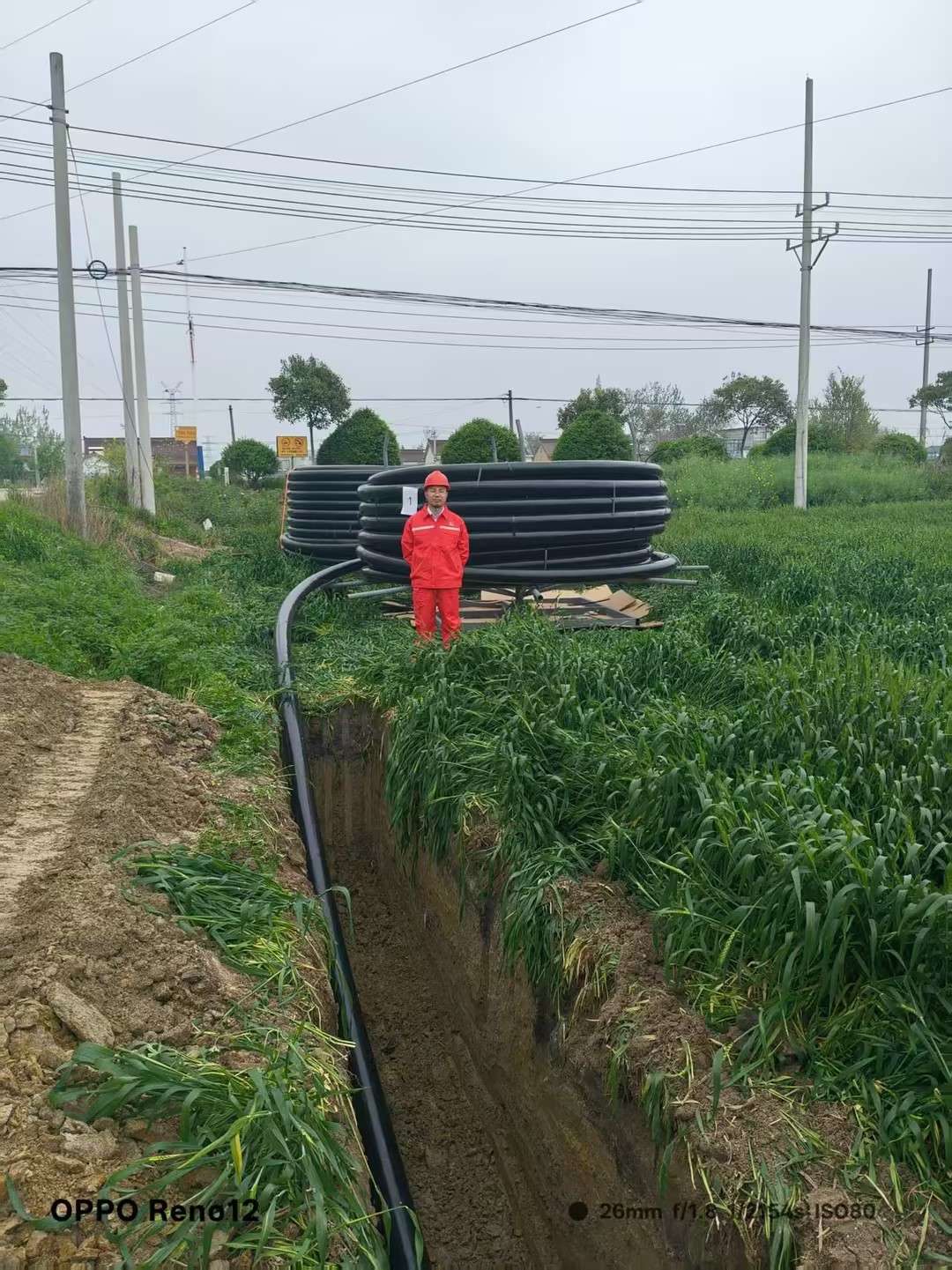
This is a deployment guide, written for the people who have to make the line work on site: project engineers, pipeline supervisors, procurement managers and maintenance planners at mine sites and oilfield facilities. It walks through specification confirmation, route and bending-radius planning, coil handling, tie-in, pressure testing, steady-state operation, and the commercial terms that govern a first order.
Where a value depends on your fluid, temperature, route or regulator, it is flagged as a question to confirm with the manufacturer rather than presented as a fixed figure. Nothing here replaces project-specific engineering.
The 24/7 Problem: Where Continuous Fluid Lines Actually Fail
A 24/7 fluid line is judged on two numbers: how many hours a year it flows, and how much labour it consumes while flowing. The failures that move those numbers cluster in a handful of predictable places.
- Joints. Every weld, flange and threaded connection is a potential leak path, an inspection point and a maintenance task. On a steel line, joint count rises with distance.
- Corrosion. Produced water, mineral slurry and humid mine atmospheres attack carbon steel from both the inside and the outside, and the protection program — coatings, inhibitors, inspection — becomes a permanent operating cost rather than a one-time installation cost.
- Abrasion. Slurry transfer wears the wetted surface continuously. Wall loss is progressive, and it accelerates wherever flow direction changes.
- Installation windows. Welding crews, coating repair, non-destructive testing and the shutdown time they require are often the hardest resources to schedule at a remote site.
- Site safety requirements. Hydrocarbon service and dust-heavy mining environments impose corrosion-resistant and explosion-proof requirements that constrain material selection from the start.
These failure modes share one root cause: they scale with the number of joints and the presence of a corrodible metallic surface in the flow path. That is precisely the equation a reinforced thermoplastic pipe changes. A spoolable composite line can be delivered in long continuous lengths, so joints — and with them leak paths, welding labour and coating repair — are largely designed out rather than managed.
Industry Background: Why RTP Adoption Keeps Rising in Mining and Oil & Gas
The global Reinforced Thermoplastic Pipes market was estimated at USD 7.2 billion in 2024 and is projected to reach USD 10.2 billion by 2030, a compound annual growth rate of 5.9%, according to Strategic Market Research. Oil & gas is the dominant end-user segment, accounting for approximately 71.2% of total demand as operators look for corrosion-free alternatives to steel, per Fact.MR. The same source estimates that glass fiber reinforced thermoplastic pipes represent roughly 64.7% of the product market, while Mordor Intelligence and Market Research Future identify Asia Pacific as both the largest and fastest-growing regional market for thermoplastic pipes in 2024/2025.
Two points of context are worth carrying into a project meeting. First, published market size estimates diverge noticeably depending on scope — figures range from roughly USD 2.8 billion to USD 7.2 billion depending on whether the definition covers all thermoplastic pipe or only spoolable RTP — so a single headline number should not be used as a procurement benchmark. Second, the governing technical standard for oilfield spoolable pipe is API Specification 15S (2nd Edition, 2016), which sets out requirements for the manufacture and qualification of spoolable reinforced plastic line pipe for oilfield applications and covers pipe diameters up to 6 inches, per the American Petroleum Institute.
The manufacturer behind the pipe discussed here, ZYfire Hose Corporation, is a Beijing Stock Exchange-listed company founded in 2000 that develops and manufactures fire hose and composite pipelines made from polymer materials, including reinforced thermoplastic pipe. Its manufacturing facility covers 150,000 square metres, it employs approximately 600 staff, its R&D team numbers 50 engineers, and annual production capacity reaches 12,000,000 units. Export business accounts for 80% of total sales, with products shipped to more than 70 countries and regions and major markets in the USA, Middle East, EU and Southeast Asia; production bases are located in the USA, Saudi Arabia, UAE, Malaysia and China.
The Pipe Behind This Guide: ZYfire 3,500 PSI RTP
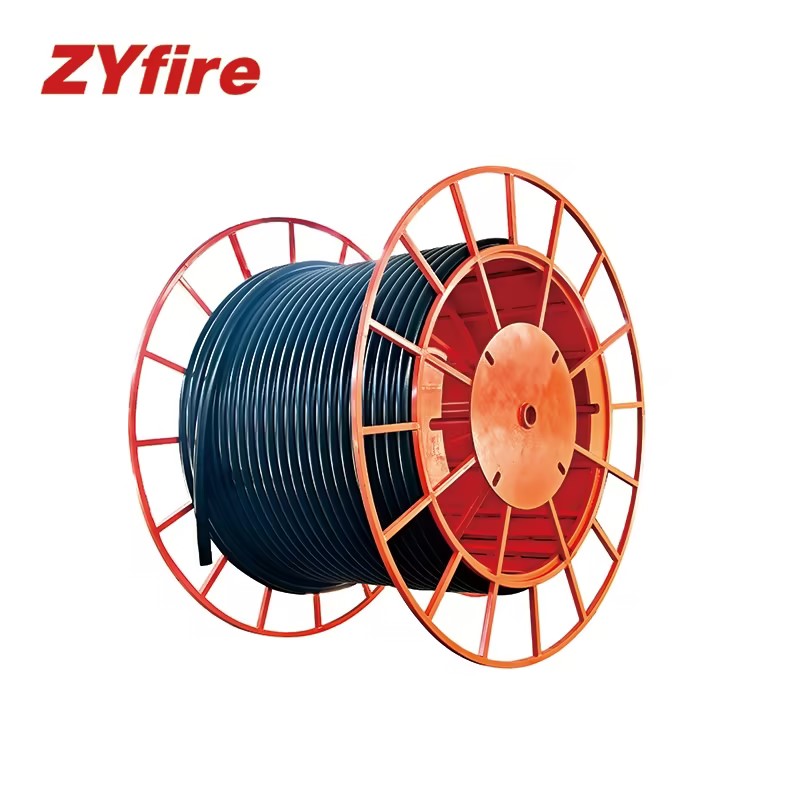
The product is a reinforced thermoplastic pipe built from an HDPE and PE-RT inner and outer layer, with UV and antioxidant additives available as options, wrapped with a reinforcement layer. Reinforcement tape options include polyester filament, aramid fiber, glass fiber and steel wire. The construction matters to the field decision because the wetted surface is polymer, not metal — corrosion resistance is a property of the material rather than a protective coating that has to be maintained.
| Specification | Value |
|---|---|
| Model designation | “2” 3500PSI O.D:79.8 |
| Nominal pressure | 3,500 PSI |
| Outside diameter | 79.8 mm |
| Single coil length | 920 m |
| Reel specification | 3,700 × 1,200 mm |
| Reel weight | 1,200 kg |
| Full plate weight | 5,524 kg |
| Inner / outer layer material | HDPE, PE-RT (UV and antioxidant optional) |
| Reinforcement tape options | Polyester filament, aramid fiber, glass fiber, steel wire |
| Target industries | Oil & gas, mining |
The working conditions the pipe is specified for read like a checklist of the failure modes described earlier: corrosion resistance, higher pressure rating, no swelling, flexibility, long length for a single pipe, non-frequent fittings, simple installation and long cycle life. The special service requirements attached to the configuration are corrosion resistance, explosion-proof capability, high-pressure tolerance up to 3,500 PSI, and compliance with API standards. The line is intended to operate in 24/7 continuous mode as part of a fluid transmission system, and it must be installed with compatible fluid transmission equipment.
Three of those properties translate directly into field consequences:
- Long single-pipe length. A 920 m coil minimises the number of fittings on the run, which is the single largest driver of both installation labour and long-term leak risk.
- Corrosion resistance and no swelling. The line does not require an inhibitor or coating-repair program, and the bore stays dimensionally stable in service, so flow characteristics do not drift the way they can in a corroding or scaling steel line.
- Flexibility. The pipe tolerates routing curvature and minor ground movement, which reduces the need for rigid anchoring and expansion hardware on long surface runs.
Step-by-Step: Deploying 3,500 PSI RTP in Continuous Service
The steps below follow the order a project team normally executes them. Steps 1 and 2 are engineering decisions; steps 3 to 6 are field execution; steps 7 to 9 are commissioning, operation and supply planning.
Step 1 — Confirm the specification before committing to a route
- Pressure. 3,500 PSI is the nominal rating. Confirm your design pressure, surge allowance and any temperature derating with the manufacturer before the route is fixed.
- Size. The standard configuration in this guide is model “2” 3500PSI O.D:79.8, with a 79.8 mm outside diameter. Custom bore sizes are available where the flow or pressure profile does not match the standard bore.
- Length. The 920 m single coil length defines how many coils a run needs and where the tie-in points fall.
- Bending radius. Minimum bending radius must be confirmed against manufacturer data for the selected outside diameter and reinforcement type before the route is surveyed. Treat it as a hard route constraint, not an installation preference.
- Connection method. Decide between flanged and quick-connect terminations at specification stage, because the choice affects tie-in hardware, crew skills and installation time.
- Service-specific options. Corrosion-resistant, abrasion-resistant, oil-resistant and static-dissipative configurations, and any custom bore requirement, should be raised as specification questions rather than discovered during installation.
- Compliance. Confirm the qualification documentation your operator or regulator requires. API Specification 15S (2nd Edition, 2016) is the reference standard for spoolable reinforced plastic line pipe up to 6 inches in diameter.
Step 2 — Walk the route and set the bending envelope
Survey the full run before any pipe moves. Mark every curve, crossing, anchor point and access restriction, then check each against the confirmed bending radius. On a 920 m coil, the objective of the survey is to place coil ends where a tie-in is practical and to confirm that no point on the route forces an unplanned fitting.
Step 3 — Lay out tie-in points around the coil length
Because the pipe arrives in long continuous coils, tie-in points are planned rather than dictated by joint lengths. Count the fittings the run will actually require and compare it against a jointed alternative: every removed fitting is a removed leak path, a removed pressure-test point and a removed maintenance item over the life of a 24/7 line.
Step 4 — Transport and handle the reel correctly
The 920 m coil is supplied on a 3,700 × 1,200 mm reel weighing 1,200 kg, with a full plate weight of 5,524 kg. Lifting and transport equipment must be rated for those loads. Keep the pipe on its reel until payout begins, avoid dragging the coil over abrasive ground, and protect the outer layer from impact during unloading — mechanical damage, not corrosion, is the failure mode to guard against with this material.
Step 5 — Uncoil and lay the line along the prepared route
Payout follows the surveyed route in one continuous pass. Respect the bending envelope throughout, keep the pipe clear of vehicle traffic during installation, and support the line at the spacing defined by the project’s engineering procedure. Because the pipe is flexible, laying is a handling operation rather than a fabrication operation.
Step 6 — Tie in and connect
Tie-in is where the long coil pays off in schedule terms. With flanged or quick-connect terminations, the connection work is reduced to a small number of planned points instead of a weld-and-coat campaign. Reported field installation rates for this coil-based approach reach up to 10 km/day of line installed, compared with under 2 km/day for welded steel lines — a difference that decides whether a project can complete a long transfer line inside a single shutdown window. Follow the manufacturer’s torque and connection procedure for whichever termination type the project specifies.
Step 7 — Pressure test and commission
The manufacturer states 100% testing of product before shipment, and the installed line should still be tested on site as part of commissioning, using the project’s specified test pressure and hold time. Verify every tie-in point, record the results against the line drawing, and confirm the fluid transmission equipment — pumps, headers and interfaces — is aligned with the 3,500 PSI nominal rating of the pipe.
Step 8 — Operate 24/7 and manage the maintenance workload
Once commissioned, the line runs continuously. The maintenance profile is the reason many teams choose RTP for mining and oilfield duty: because the wetted surface is corrosion resistant and the pipe does not swell, there is no inhibitor dosing regime, no internal coating inspection and no scheduled coating repair. In practice, maintenance attention is minimal and arises after force damage — impact from mobile equipment, third-party strike or similar mechanical events — rather than as a predictable calendar item. Practical operating routines are therefore simple: periodic visual inspection along the route, immediate inspection after any impact, and record keeping for the line’s condition history.
Step 9 — Plan supply for scale-up
Once a project moves from a single line to a programme of lines, supply terms become part of the deployment plan. The minimum order quantity is 50 m, which allows a small first order; standard lead time is 30 days; monthly production capacity is 100,000 m; and on-site after-sales support is available for deployed lines.
Use Cases: Where 24/7 RTP Lines Fit Best
The application scenario in this guide is common in the United Arab Emirates, Argentina, Australia, Bahrain, Canada, Kuwait, Liberia and Libya — regions where long surface runs, abrasive or corrosive fluids, and limited welding resources frequently coincide. Four deployment patterns account for most of the demand:
- Mining slurry transfer. Abrasion and corrosion act together on slurry lines. An abrasion-resistant reinforced thermoplastic pipe removes the corrosion side of the equation entirely and reduces joint count on long runs.
- Mine water transfer and dewatering. Continuous 24/7 duty on process and dewatering lines, where a corrosion-resistant line avoids the inspection and coating workload of steel.
- Onshore oilfield gathering and produced water. The oilfield reinforced thermoplastic pipe configuration is specified for corrosion-resistant, explosion-proof service with high-pressure tolerance up to 3,500 PSI, in compliance with API standards.
- Offshore oil & gas. Weight, corrosion exposure and the difficulty of welding offshore all favour spoolable pipe, which arrives as long continuous lengths and reduces hot work on deck.
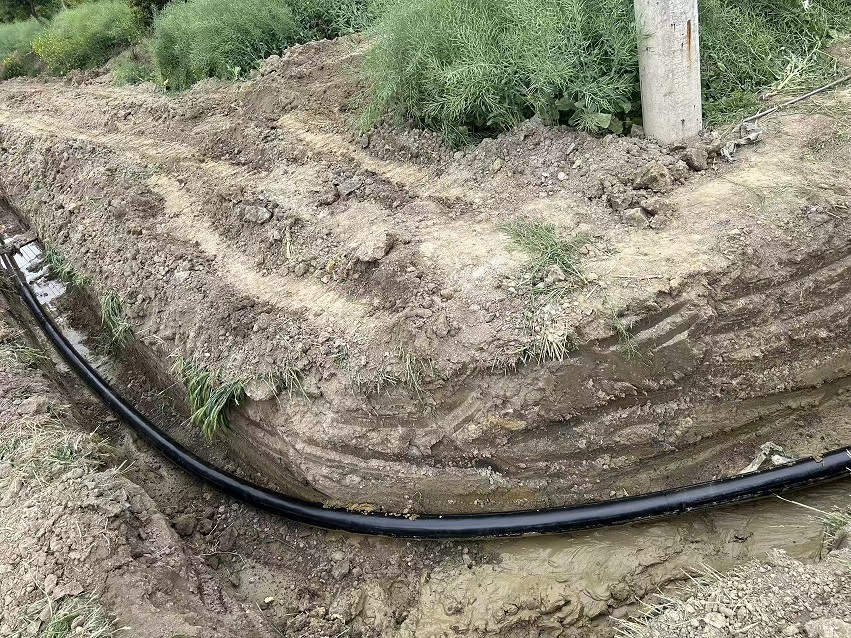
Comparison Table: 3,500 PSI RTP vs Welded Steel Line
The table below compares the pipe described in this guide against a welded carbon steel line for continuous fluid transmission. The steel column describes general industry practice for welded steel lines; no competitor-specific product data is used or implied.
| Decision criterion | 3,500 PSI RTP (“2” 3500PSI O.D:79.8) | Welded carbon steel line |
|---|---|---|
| Continuous length | Single 920 m coil per reel | Supplied in short jointed lengths |
| Joint and fitting density | Minimised by coil length; fewer fittings on the run | One joint per pipe length, plus fittings at every change of direction |
| Corrosion behaviour | Corrosion resistant by construction; polymer wetted surface | Requires coatings, inhibitor programs and ongoing inspection |
| Swelling / bore stability | No swelling; bore remains stable in service | Wall loss and internal deposits can change flow characteristics over time |
| Abrasion | Abrasion-resistant configurations available for slurry service | Progressive wall loss in slurry service |
| Pressure capability | 3,500 PSI nominal, API standards compliance | Selected to project design pressure |
| Reported installation rate | Up to 10 km/day with coil-based laying | Under 2 km/day for welded construction |
| Handling | 920 m on a 1,200 kg reel; 5,524 kg full plate weight | Jointed lengths; welding, coating and testing equipment on site |
| Maintenance profile | Minimal; attention follows force damage rather than a calendar | Routine inspection, coating repair and inhibitor management |
| Site requirements met | Corrosion resistant, explosion-proof, high-pressure tolerance | Corrosion protection and hot work control are ongoing site activities |
Reading the table: the comparison is a decision aid, not a claim that one material suits every service. Bending radius, fluid compatibility, temperature and regulatory acceptance still have to be confirmed for each project configuration before an order is placed.
FAQ: 3,500 PSI RTP in 24/7 Mining and Oilfield Service
Does a 3,500 PSI RTP line meet API requirements for 24/7 mining and oilfield service?
API Specification 15S (2nd Edition, published 2016) is the industry standard covering the manufacture and qualification of spoolable reinforced plastic line pipe for oilfield applications, including pipe diameters up to 6 inches. The 3,500 PSI reinforced thermoplastic pipe described in this guide is specified for corrosion-resistant, explosion-proof, high-pressure duty with tolerance up to 3,500 PSI, in compliance with API standards, and ZYfire’s RTP line is produced against API 15S. Project teams should confirm the exact qualification documentation their operator or regulator requires at the specification stage.
What reinforcement and liner options are available for a 3,500 PSI RTP line?
The pipe uses an HDPE and PE-RT inner and outer layer, with UV and antioxidant additives available as options, wrapped with a reinforcement layer. Reinforcement tape options are polyester filament, aramid fiber, glass fiber and steel wire. The configuration specified here — model “2” 3500PSI O.D:79.8 — carries a 3,500 PSI nominal pressure rating at a 79.8 mm outside diameter, and custom bore sizes are available for projects whose flow or pressure profile does not match the standard bore.
What drives the cost of a 3,500 PSI RTP deployment?
Cost is driven by configuration rather than a list price: reinforcement type, bore size, pressure rating, coil length, connection method and site access all move the figure. The largest field-side saving comes from coil length — a 920 m single coil reduces the number of fittings, and fewer fittings mean less tie-in labour, less pressure-testing time and fewer leak paths over the life of a 24/7 line. Over the lifecycle, corrosion resistance removes the coating repair, inhibitor dosing and inspection programs a steel line carries. ZYfire prepares project-specific quotations against a confirmed specification.
Can we validate the pipe on a small trial before committing to a full line?
Yes. The minimum order quantity is 50 m, which lets a project team test handling, tie-in procedure and site behaviour on a short run before ordering full 920 m coils. A first order can also be used to confirm the practical bending envelope on the actual route, so the full deployment is planned against measured rather than assumed conditions.
What is the lead time and monthly production capacity?
Standard lead time is 30 days, monthly production capacity for RTP is 100,000 m, and the manufacturer states 100% testing before shipment. On-site after-sales support is available for deployed lines. To start a quotation, send the confirmed specification — pressure rating, bore, coil length, connection type, fluid and route conditions — to enquiry@zyfire.com or call +86-523-88802123.
Conclusion: The Field Rule for 24/7 RTP Deployment
Deploying a 3,500 PSI reinforced thermoplastic pipe in continuous mining or oilfield service comes down to one field rule: confirm the specification, then let coil length do the engineering work. A 920 m single coil over a 79.8 mm outside diameter at 3,500 PSI nominal pressure removes fittings from the line, and removing fittings removes leak paths, welding labour, pressure-test points and maintenance items at the same time.
The supporting properties reinforce the same conclusion. Corrosion resistance and no swelling eliminate the inhibitor, coating and inspection programs that a steel line carries. Flexibility simplifies routing and layout. Explosion-proof design and high-pressure tolerance with API standards compliance cover the safety requirements that mining and hydrocarbon service impose. The result is a line whose maintenance attention is tied to force damage rather than to a maintenance calendar.
For teams planning the first run: start with 50 m to validate handling and tie-in, then scale against a 30-day lead time and 100,000 m monthly capacity. For teams that need the full deployment at once, the specification stage is where the schedule is won or lost — bending radius, bore, pressure rating and connection method should all be locked before the route is surveyed.
Next Step: Sample, Quotation and Full Catalogue
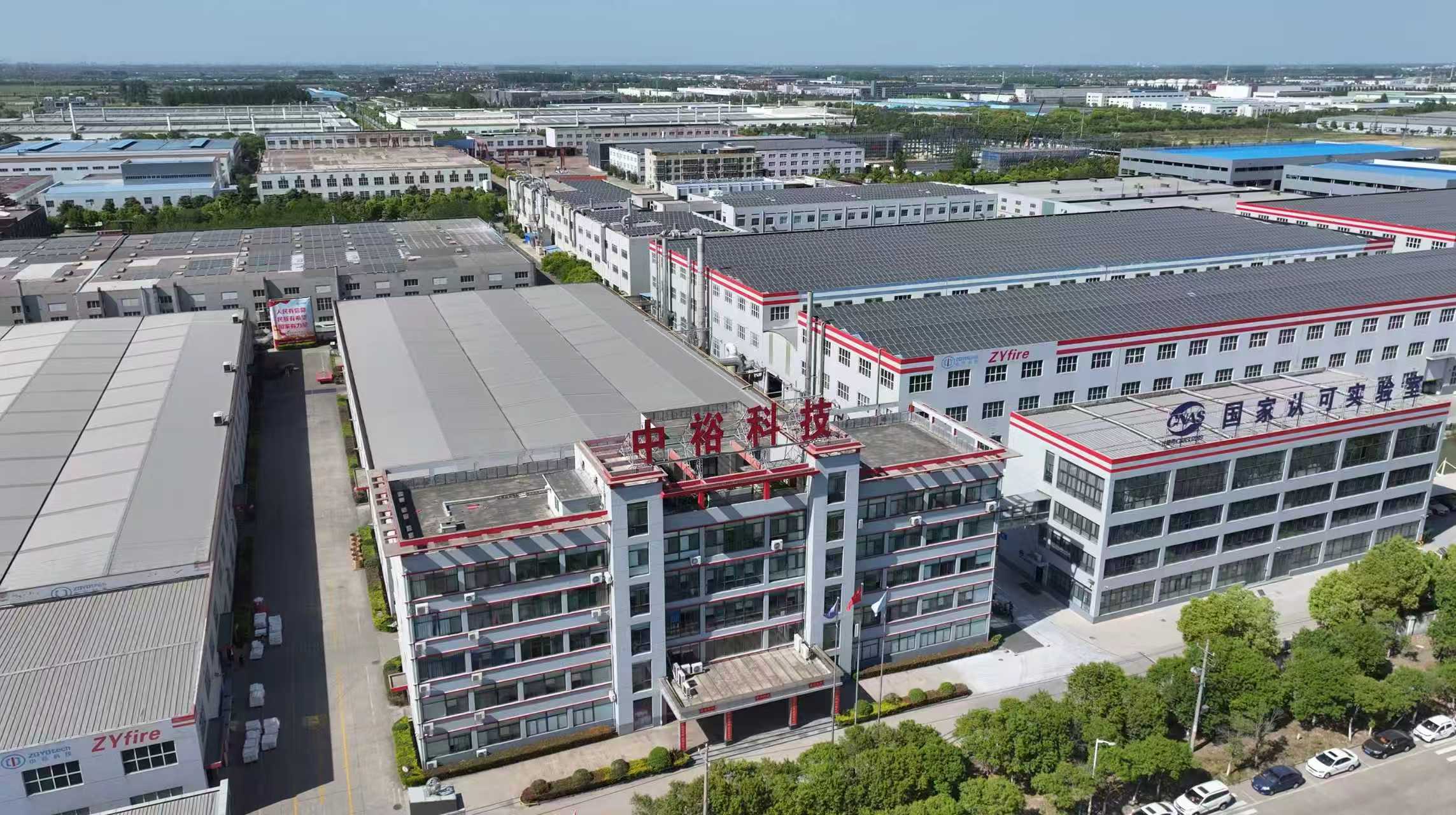
ZYfire Hose Corporation (founded 2000, Beijing Stock Exchange-listed) manufactures reinforced thermoplastic pipe for oil & gas and mining applications, and exports to more than 70 countries and regions. To request a sample, a project quotation or the full product catalogue, contact us directly:
- Email: enquiry@zyfire.com
- Tel: +86-523-88802123
- WhatsApp: +86 18761071929
- Website: www.zyfire.com
- Product brochure (download): ZYfire RTP product brochure
Have Questions or Need More Details?
Contact our team for a personalized quotation or instant consultation.
Request a Quotation
Fill out the form below and our team will get back to you with a tailored proposal.
WhatsApp Direct Chat
Prefer to chat in real-time? Message us on WhatsApp for instant assistance & quick answers.
- Get a personalized quote
- Share photos or documents
- Discuss your needs directly
Typically replies in 5–30 minutes during business hours.