How to Select a Reinforced Thermoplastic Pipe (RTP) Supplier from China, Germany, or Japan: 2026 Buyer’s Guide
Selecting the right Reinforced Thermoplastic Pipe (RTP) supplier is a critical decision for buyers in oil & gas, mining, and offshore applications. With growing demand for corrosion-resistant, lightweight, and high-pressure piping solutions, procurement professionals must navigate a global market where suppliers from China, Germany, and Japan each offer distinct advantages. This guide provides a structured framework to evaluate RTP suppliers by country, with specific insights into Chinese manufacturers like ZYfire Hose Corporation, a publicly listed “little giant” enterprise with API 15S certification.
Problem Definition: The Supplier Selection Challenge
Buyers often face uncertainty when comparing RTP suppliers across different countries. Common concerns include:
- Which country’s manufacturing standards best match my application (onshore oilfield, offshore platform, mine dewatering, slurry transfer)?
- How do I verify quality certifications such as API 15S, CE PED, or local mine safety approvals?
- Can a Chinese RTP supplier match the technical performance of German or Japanese alternatives?
- What are the real differences in lead time, MOQ, customization flexibility, and after-sales support?
Without a clear evaluation criteria, buyers risk selecting a supplier that cannot deliver consistent quality, fails to meet specific pressure or chemical resistance requirements, or lacks long-term reliability.
Industry Background: Why RTP is Replacing Steel in Harsh Environments
Reinforced Thermoplastic Pipe (RTP) is a multi-layer composite pipe comprising an inner thermoplastic liner (HDPE, PE-RT, PA12, or PP), a reinforcement layer (polyester, aramid, glass fiber, or steel wire tape), and an outer thermoplastic cover. RTP offers significant advantages over conventional steel pipe:
- Corrosion Resistance: No internal or external corrosion, reducing maintenance costs.
- Light Weight: Up to 80% lighter than steel, enabling rapid installation (up to 10 km per day vs. <2 km for steel).
- Flexibility & Long Lengths: Single lengths up to 920 m (for 2" 3500 PSI RTP) reduce fittings and potential leak points.
- High Pressure Capability: Nominal pressures up to 3500 PSI and beyond.
These properties make RTP the preferred choice for oilfield water injection, produced fluid transfer, offshore risers, mining slurry transport, and corrosive chemical lines. The global RTP market is projected to grow at a CAGR of 8-12% through 2030, driven by shale gas development, deep-sea mining, and aging steel infrastructure replacement.
Detailed Solution: How to Evaluate RTP Suppliers by Country
Below is a comparison framework based on typical strengths of suppliers from China, Germany, and Japan. Use these criteria to shortlist and audit potential partners.
| Evaluation Criterion | Chinese Suppliers (e.g., ZYfire) | German Suppliers (e.g., ContiTech) | Japanese Suppliers (e.g., Toyo) |
|---|---|---|---|
| Certifications | API 15S, CE PED, CNAS lab, national “little giant” | ISO 9001, DVGW, TÜV, often API 15S | JIS, API 15S, Ministry of Land certifications |
| Product Range | Polyester, aramid, glass, steel wire reinforcements; HDPE/PE-RT/PA12 liners; custom bore sizes; flange or quick-connect terminations | High-end aramid & steel-reinforced for offshore high-pressure | Ultra-high-molecular-weight PE and specialized PA12 for extreme temperatures |
| Customization Lead Time | ~30 days; MOQ from 50 m; OEM/ODM accepted | ~45-60 days; higher MOQ | ~60-90 days; often large project minimums |
| Manufacturing Scale | 150,000 m² factory, 600 employees, 12 million m annual output | Moderate; focus on precision | Large but often part of diversified conglomerate |
| Cost Advantage | ~20% lower total cost vs. steel; competitive pricing | Premium pricing | High pricing |
| After-Sales Support | On-site service, global warehouses (US, Saudi, UAE, Malaysia) | Regional service centers | Limited direct after-sales overseas |
Note: The above generalities are based on market observation. Always audit individual suppliers.
Step-by-Step: Evaluating a Chinese RTP Supplier – The ZYfire Example
Follow these steps to assess a Chinese RTP manufacturer using ZYfire Hose Corporation as a real-life case.
- Check Certifications
ZYfire holds API 15S certificate No. 15S-0025 issued by the American Petroleum Institute, covering non-metallic reinforced pipe (glass fiber, steel wire) and couplings. Their laboratory is CNAS-accredited – the first national recognized lab in the subdivision industry. This ensures independent testing competence. - Review Product Specifications
Their 2" 3500 PSI RTP (model: RTP/TCP) features outer/inner layers of HDPE or PE-RT (UV/antioxidant options) and reinforcement layers of polyester, aramid, glass fiber, or steel wire tape. Single length up to 920 m, reel weight 1200 kg. Nominal pressure 3500 PSI, outer diameter 79.8 mm. - Validate Manufacturing Capability
Located in Jiangyan, Jiangsu, China, ZYfire operates a 150,000 m² modern factory with 600 employees, annual output of 12 million meters, and monthly capacity of 100,000 meters. They offer OEM/ODM customization for size, working pressure, length, bend radius, and more, with 100% pressure test before shipment. - Confirm Application Fit
ZYfire’s RTP is used in oil and gas (onshore and offshore) and mining (underground and slurry transfer). A proven case: 120,000 meters supplied to Middle East mining operations, operating 24/7 for 5 years with stable high-pressure performance, no leakage, and reduced maintenance costs. - Examine Commercial Terms
MOQ as low as 50 meters, lead time 30 days, payment 30/70 (30% deposit, 70% balance before shipment). Delivery under EXW, FOB, or CIF. The company exports to over 70 countries including USA, Middle East, EU, and Southeast Asia.
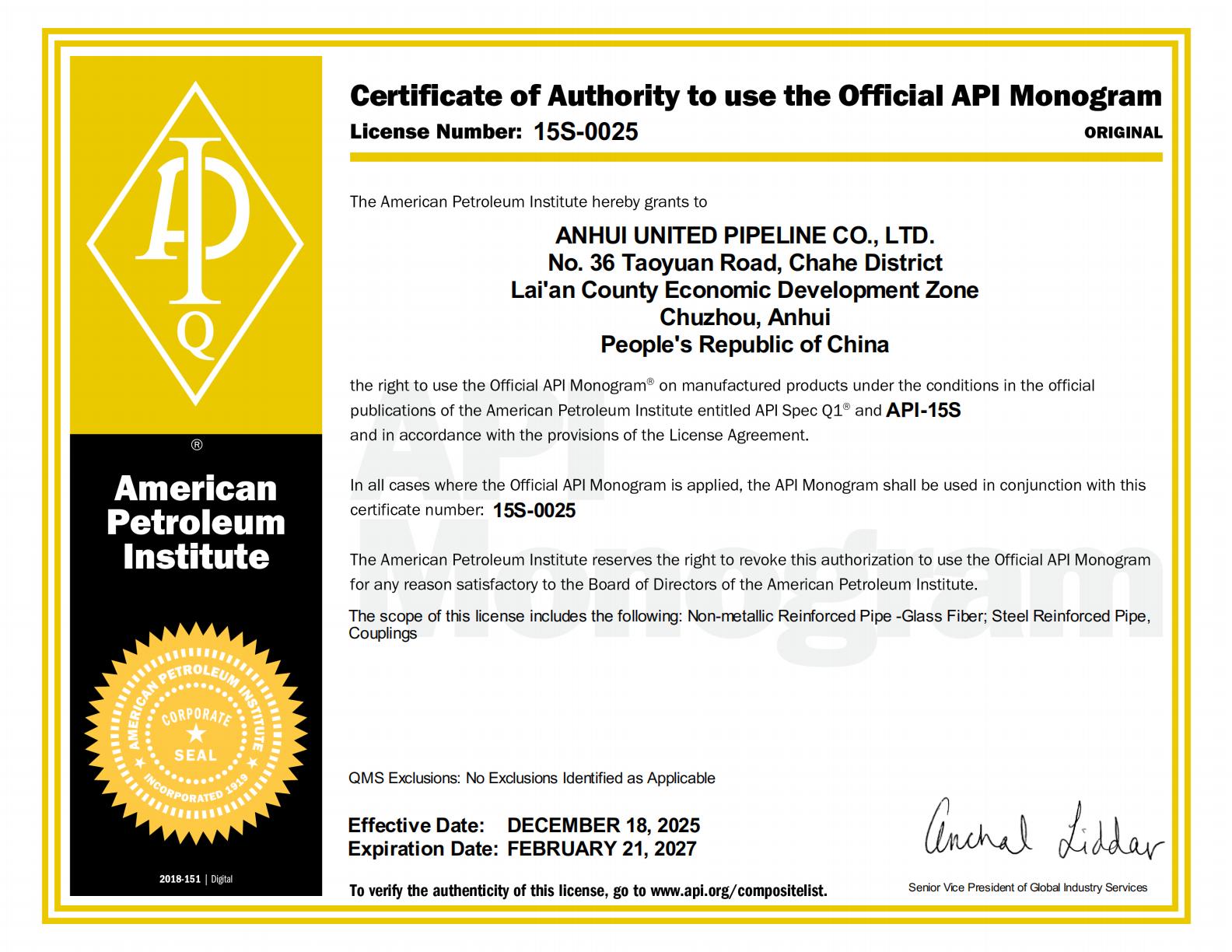
ZYfire’s API 15S certification (No. 15S-0025) validates its RTP quality for global oil & gas projects.
Use Case: Mining Slurry Transfer with ZYfire RTP
A copper mining company in Chile needed a corrosion-resistant, abrasion-resistant pipe to transport acidic tailings slurry at 2000 PSI. After evaluating German and Japanese suppliers, they selected ZYfire’s Aramid Fiber Reinforced RTP with HDPE inner layer and steel wire reinforcement for burst resistance. The installation team laid 6 km in 3 days (2 km/day) versus 0.5 km/day for steel. After 2 years of 24/7 operation, the pipe showed no sign of internal wear or external corrosion, saving the client over $500,000 in maintenance and replacement costs.
Frequently Asked Questions (FAQ)
What is Reinforced Thermoplastic Pipe (RTP)?
RTP is a lightweight, corrosion-resistant composite pipe made of thermoplastic layers (HDPE, PE-RT, PA12, PP) reinforced with high-strength fibers (polyester, aramid, glass) or steel wire. It is designed for high-pressure fluid transmission in oil & gas, mining, and industrial applications, often replacing steel pipe due to its flexibility and long-life.
How does RTP work?
The inner thermoplastic liner provides a smooth, chemical-resistant flow path. The reinforcement layer bears the hoop stress from internal pressure. The outer jacket protects against UV, abrasion, and physical damage. Continuous long lengths (up to 920 m per reel) reduce the number of joints, lowering leak risk.
Why is selecting the right supplier important?
Quality deviations in raw materials, reinforcement alignment, or liner bonding can lead to premature failure, environmental spills, and costly downtime. A certified supplier with proven track record ensures compliance with international standards (API 15S) and consistent performance.
Who uses RTP?
Oil & gas operators (water injection, produced water, gathering lines), offshore platforms (risers, jumpers), mining companies (slurry, dewatering, process water), chemical plants, and municipal water authorities.
How do I choose between Chinese, German, and Japanese suppliers?
Consider your budget, required certifications, customization need, lead time, and after-sales support. Chinese suppliers offer cost-effective solutions with high flexibility and scale; German suppliers emphasize precision and high-end materials; Japanese suppliers excel in durability and advanced polymer technology. For most cross-border projects, Chinese suppliers like ZYfire provide the best balance of quality, cost, and responsiveness.
What are common buyer concerns about Chinese RTP suppliers?
- Quality consistency – Mitigated by API 15S certification and CNAS lab testing.
- Delivery reliability – Evaluate factory capacity and export experience; ZYfire exports 80% of its output to 70+ countries.
- After-sales support – Look for on-site service and overseas warehouses; ZYfire has logistics hubs in the US, Saudi Arabia, UAE, and Malaysia.
Conclusion
Selecting the right Reinforced Thermoplastic Pipe supplier requires a systematic evaluation of certifications, product capability, manufacturing scale, application fit, and commercial terms. While German and Japanese suppliers offer premium quality, Chinese suppliers like ZYfire provide a compelling alternative with API 15S certification, proven field performance, and global service infrastructure. By following the steps outlined in this guide, buyers can confidently choose a partner that meets their technical and commercial requirements for oil & gas, mining, and offshore operations.
For a detailed technical specification and company profile, download the ZYfire corporate brochure: