RTP Reinforcement Types Compared: Polyester vs. Aramid vs. Glass Fiber vs. Steel Wire
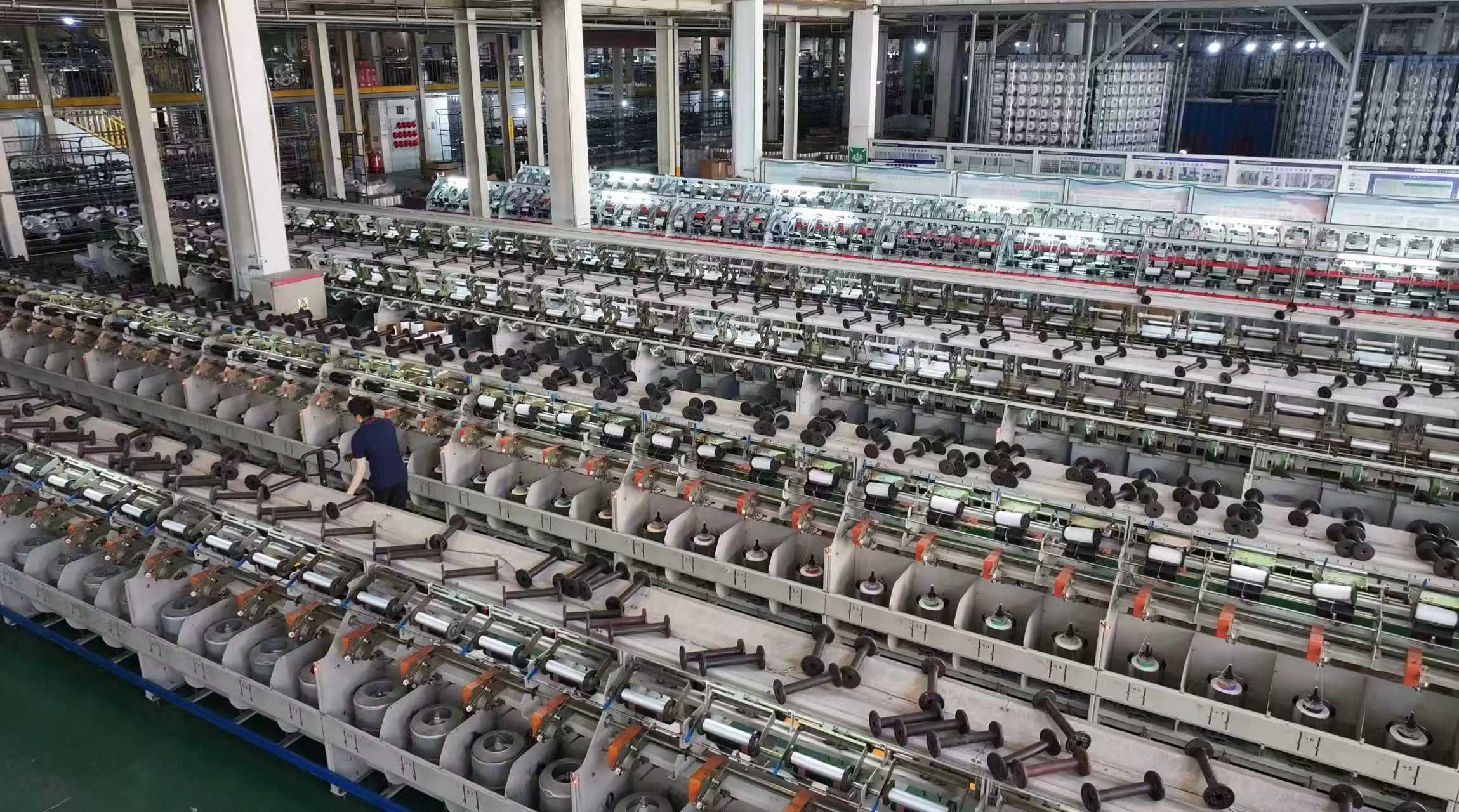
Reinforcement tape manufacturing: the layer that decides pressure, bending and coil weight in an RTP.
Reinforcement selection in a reinforced thermoplastic pipe (RTP) is a constraint-matching decision, not a ranking exercise. Polyester fiber tape, aramid fiber tape, glass fiber tape and steel wire tape can all serve as the load-bearing layer of a spoolable pipe, and on the 2-inch, 3,500 PSI RTP/TCP platform they share the same HDPE or PE-RT inner and outer layers, the same 79.8 mm outside diameter and the same 920 m single-coil format. What changes with the reinforcement is how the pipe behaves in tension and in bending, how much the finished coil weighs, and how much of the pressure, corrosion, bend-radius and freight budget each option consumes.
This comparison is written for oil & gas and mining procurement teams that are already past the “RTP versus steel” question and are now specifying a spoolable line for a 3,500 PSI, round-the-clock duty cycle. It explains how each reinforcement type interacts with the thermoplastic base pipe and the optional UV and antioxidant additives, what each choice implies for pressure tolerance, corrosion resistance, bending radius, coil weight and site transport cost, and how to vet a supplier that offers all four constructions.
What the 3,500 PSI / 24-7 Duty Profile Actually Constrains
The datasheet fixes several variables before any reinforcement is chosen. The ZYfire RTP/TCP product is published as a 2-inch pipe with a 3,500 PSI nominal pressure and a 79.8 mm outside diameter, supplied on a 3,700 × 1,200 mm reel in 920 m single lengths; the same datasheet lists a reel weight of 1,200 kg and a full-plate weight of 5,524 kg.
- Nominal pressure: 3,500 PSI
- Outside diameter: 79.8 mm
- Single length: 920 m per coil
- Reel specification: 3,700 × 1,200 mm
- Reel weight: 1,200 kg | Full-plate weight: 5,524 kg
Three engineering constraints follow from that data. Mass: a full plate weighs more than five tonnes, so the reinforcement must be compatible with the crane, spooler and truck that will actually handle the coil — not only with the hoop-stress calculation. Joints: a 920 m single length removes close to a kilometre of intermediate connections per coil, and connections are where a large share of leak paths, installation labour and 24/7 repair exposure normally sits. Environment: the working conditions documented for oilfield and mining RTP projects are corrosion resistance, a higher pressure rating, no swelling, flexibility, long single-pipe lengths, non-frequent fittings, simple installation and a long cycle life, with corrosion-resistant, explosion-proof construction, high-pressure tolerance and API-standard compliance stated as site requirements.
Because the 24/7 duty profile sits at the intersection of all three, the reinforcement layer becomes the variable that reconciles pressure capacity, bend radius, coil mass and freight cost. That is the decision this article supports.
Industry Background: Why Reinforcement Choice Moved Up the Agenda
RTP is no longer a niche substitute for carbon steel in low-pressure service. The global reinforced thermoplastic pipe market was estimated at USD 7.2 billion in 2024 and is projected to reach USD 10.2 billion by 2030, a CAGR of 5.9% (Strategic Market Research). Oil & gas is the dominant end-user segment at approximately 71.2% of total demand (Fact.MR), driven by operators seeking corrosion-free alternatives to steel.
The product mix matters to this comparison. Glass-fiber reinforced thermoplastic pipe accounts for an estimated 64.7% of the RTP market (Fact.MR), which means glass fiber is the volume default rather than the exotic option; polyester, aramid and steel wire constructions address the remainder of the mix where weight, fatigue tolerance, abrasion or stiffness dominate. Asia Pacific is identified as the fastest-growing and largest regional market for thermoplastic pipes in 2024/2025 (Mordor Intelligence / Market Research Future).
On the standards side, API Specification 15S (2nd Edition, 2016) provides the industry-standard requirements for the manufacture and qualification of spoolable reinforced plastic line pipe for oilfield applications and covers pipe diameters up to 6 inches. The supply landscape includes established composite-pipe manufacturers such as NOV, Baker Hughes, Shawcor (Flexpipe) and Soluforce (Pipelife), alongside API 15S certified manufacturers such as ZYfire Hose Corporation, a Beijing Stock Exchange-listed Chinese manufacturer founded in 2000 that produces RTP for oilfield and mining service (www.zyfire.com).
How Each Reinforcement Interacts with the HDPE / PE-RT Base Pipe
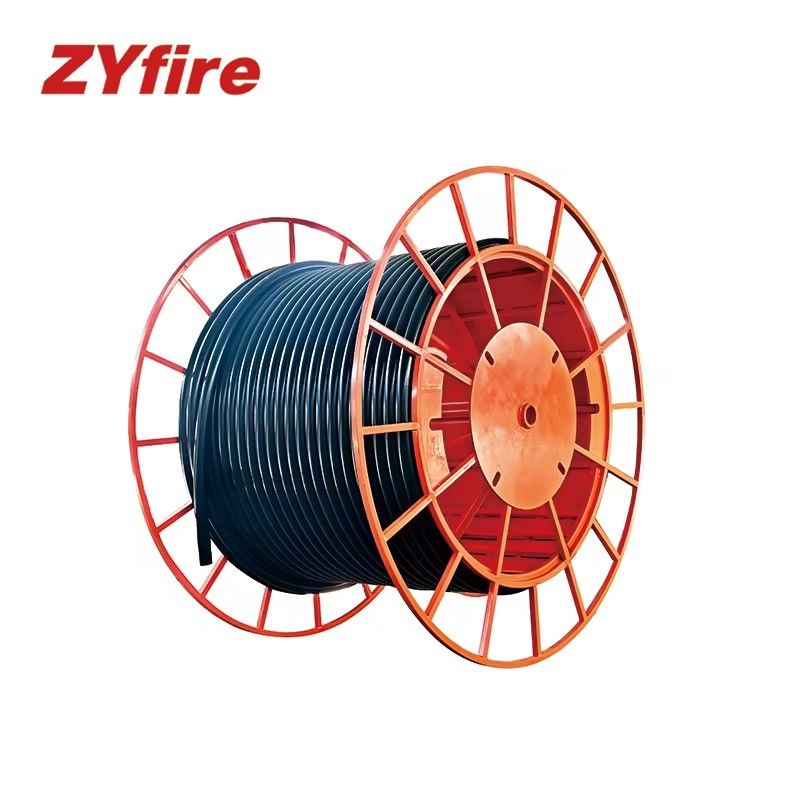
The 2-inch, 3,500 PSI RTP/TCP: HDPE or PE-RT inner and outer layers with a reinforcement layer in between.
An RTP is a layered construction, not a homogeneous pipe. In this product family the inner and outer layers are HDPE or PE-RT, and UV and antioxidant additives are available as options; the reinforcement material layer sits between them and is one of polyester filament, aramid fiber tape, glass fiber tape or steel wire tape.
The three layers have distinct jobs, and keeping them distinct is what makes the material comparison meaningful:
- Inner layer (HDPE / PE-RT): the fluid contact surface and the primary corrosion barrier. It is also what prevents swelling in produced water, brine and hydrocarbon service — a documented working condition for these lines.
- Reinforcement layer: carries hoop and axial load. It never touches the fluid, so it contributes stiffness and pressure capability rather than chemical resistance.
- Outer layer (HDPE / PE-RT, UV and antioxidant optional): mechanically protects the reinforcement and, with UV additives, resists solar degradation on above-ground runs.
The practical consequence is that system corrosion resistance is set mainly by the thermoplastic liner and the integrity of the jacket, while the reinforcement governs how much stiffness and pressure capacity you obtain per kilogram of finished coil. UV and antioxidant additives protect the polymer matrix; the reinforcement choice additionally determines how sensitive the pipe is to sunlight, handling damage and repeated reeling.
The Four Reinforcement Options, Compared
1. Polyester Fiber Tape Reinforcement
Polyester reinforcement is applied as continuous filament tape wound helically onto the liner. As a material class, polyester is ductile and generally tolerant of repeated bending and reeling cycles, which makes it a reasonable fit where the route has more direction changes and the coil will be unspooled and respooled during installation. Its contribution to pressure capacity per unit of reinforcement thickness is generally more modest than that of aramid or steel wire, so it is typically chosen for moderate pressure duty inside the envelope, for corrosion-driven replacements where pressure is not the binding constraint, and for weight-sensitive transport where a lighter coil reduces freight cost. Being non-metallic, it adds no galvanic or metallic corrosion pathway to the pipe wall.
2. Aramid Fiber Tape Reinforcement
Aramid fiber tape is the weight-efficiency option. Aramid is generally recognized for a high strength-to-weight ratio, so a target stiffness can often be reached with less reinforcement mass than steel wire requires. For a 920 m coil that matters directly: a lighter plate eases crane, spooler and vessel requirements, which is why weight-constrained work — offshore platforms in particular — tends to favor aramid constructions. Two constraints come with the material. First, aramid fibers are generally more sensitive to ultraviolet exposure than the thermoplastic layers, so the outer HDPE or PE-RT jacket and the optional UV additive package have to be specified deliberately. Second, aramid sits at a higher material cost tier than polyester or glass fiber, so it usually earns its place where mass, not unit material cost, is the dominant cost.
3. Glass Fiber Tape Reinforcement
Glass fiber tape is the volume default of the RTP market, at an estimated 64.7% of product market share (Fact.MR). It delivers high stiffness for its cost, which is why it dominates broad oilfield and mining duty. Glass is stiffer and more brittle than polyester under repeated flexing and point loading, so the practical selection questions are the minimum bending radius on the route, how the coil is handled at site, and whether the pipe will be exposed to impact from equipment or slurry debris. The ZYfire API 15S certificate scope explicitly lists non-metallic reinforced pipe in glass fiber, which makes the certification path for a glass-fiber construction straightforward to verify. For high-abrasion mining service, glass fiber is normally paired with the corrosion-resistant HDPE or PE-RT liner rather than chosen for abrasion resistance in isolation.
4. Steel Wire Tape Reinforcement
Steel wire tape delivers high axial stiffness and strong resistance to crush and impact loads while remaining a spoolable composite pipe, because the steel elements are encapsulated inside the thermoplastic construction rather than exposed. The ZYfire API 15S certificate scope covers steel reinforced pipe and couplings, so this construction is also inside a qualified certification envelope. The trade-offs are mass and flexibility: steel is the densest of the four reinforcement options, so a coil of the same bore carries more weight, and the minimum bending radius is generally less forgiving than with fiber reinforcement. In practice steel wire reinforcement is chosen where stiffness, crush resistance or severe mechanical duty outweighs the freight and handling penalty — and where the 920 m single-length format still removes the joint count that would otherwise drive maintenance on a 24/7 line.
Reinforcement Comparison Table
| Reinforcement | Form in the pipe wall | Strength-to-weight character | Corrosion contribution | Bending / reeling behaviour | Relative coil mass | Constraint it generally solves |
|---|---|---|---|---|---|---|
| Polyester fiber tape | Helically wound continuous filament tape | Moderate stiffness, high ductility | Non-metallic; no galvanic path | Generally the most forgiving of repeated bending | Lower | Moderate pressure duty, routed lines, lower freight mass |
| Aramid fiber tape | High-strength tape layer between liner and jacket | High strength-to-weight ratio | Non-metallic; no galvanic path | Good in bending; UV protection via jacket and additives | Lowest for a given stiffness | Weight-constrained sites such as offshore platforms |
| Glass fiber tape | Stiff tape layer; the market volume standard (64.7% share, Fact.MR) | High stiffness per unit cost | Non-metallic; no galvanic path | Stiffer; less tolerant of sharp bends and impact | Moderate | Broad oilfield and mining duty at controlled cost |
| Steel wire tape | Encapsulated wire tape inside the thermoplastic layers | High axial stiffness and crush resistance | Metal encapsulated; protected by the outer layer | Less forgiving minimum bend radius | Highest | Severe mechanical duty, impact and crush exposure |
The table reflects general material behaviour and the published construction of the 2-inch, 3,500 PSI RTP/TCP platform. Final nominal pressure, minimum bending radius and coil weight are design outputs and must be confirmed on the qualified datasheet and test documentation for the specific construction ordered.
Step-by-Step: Selecting a Reinforcement for Your Project
- Define the fluid and the duty cycle. Confirm whether the line runs 24/7 and whether the service is produced water, brine, hydrocarbon or mining slurry. Corrosion resistance and no swelling are liner requirements, but they rule out constructions that would force a heavier or stiffer pipe than the route allows.
- Lock nominal pressure and diameter. On the reference platform that means 3,500 PSI at a 79.8 mm outside diameter — a fixed envelope in which reinforcement is the remaining variable.
- Set the coil length and the handling ceiling. A 920 m single length reduces fittings, but the full plate must be lifted and spooled by the equipment available. Compare reinforcement options against the 1,200 kg reel and 5,524 kg full-plate figures on the datasheet.
- Derive the minimum bending radius from the actual route. Count the bends, trenches and platform obstructions. If the route is tight, a more ductile reinforcement reduces rework risk.
- Screen the environment. Decide the UV and antioxidant additive package for above-ground sections, and check abrasion exposure for slurry service.
- Verify the certification scope for the exact construction. Confirm that the qualification covers the reinforcement type you intend to buy, not just the product family.
- Validate with a sample and test documentation. Validate bending, handling and the pressure envelope before committing a full order.
- Confirm capacity and lead time against your installation window. A reinforcement change mid-project is a re-qualification risk; supply response has to be part of the specification.
Use Cases: Where Each Reinforcement Fits
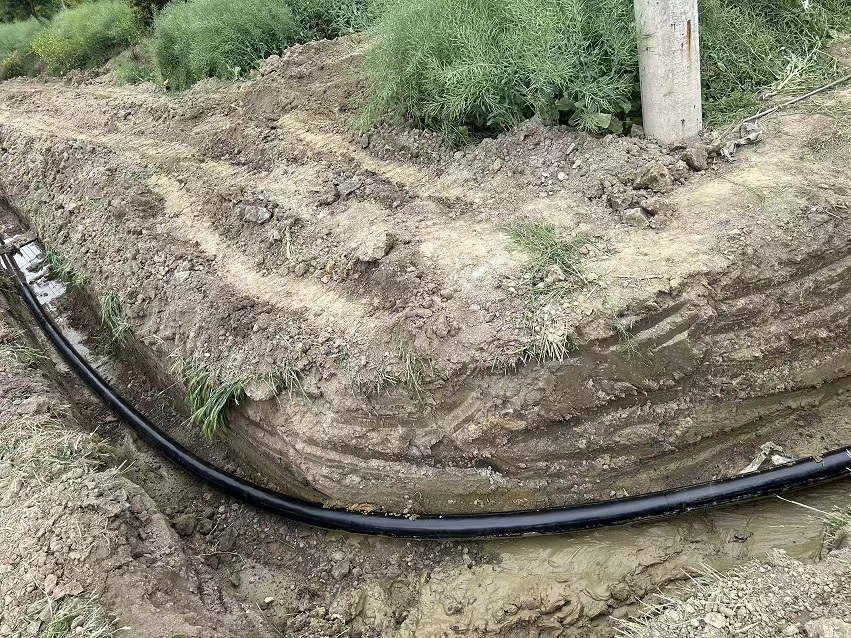
RTP in service: fluid transmission in oil & gas and mining, designed for 24/7 operation.
Onshore oilfield flowlines and water injection. The binding constraints are corrosion and joint count. A 920 m coil removes fittings, and a glass fiber or polyester construction at moderate pressure duty is ordinarily sufficient where the route is accessible to standard spooling equipment.
Offshore oil & gas. Deck load and crane capacity are finite, so reinforcement mass becomes a first-order cost. Aramid fiber tape is the option that typically buys the most stiffness per kilogram of coil.
Mining slurry transfer. Abrasive media plus continuous duty puts the emphasis on the liner and on a reinforcement that tolerates handling and impact. Steel wire tape is the usual answer where crush and impact loads are expected; the corrosion-resistant liner carries the chemical duty.
Underground mining. Restricted galleries make bending radius the dominant constraint, while site requirements typically add corrosion resistance, explosion-proof construction, high-pressure tolerance and API-standard compliance. A more ductile reinforcement reduces the number of pre-formed bends needed.
Supplier Vetting Points for Reinforcement-Based RTP
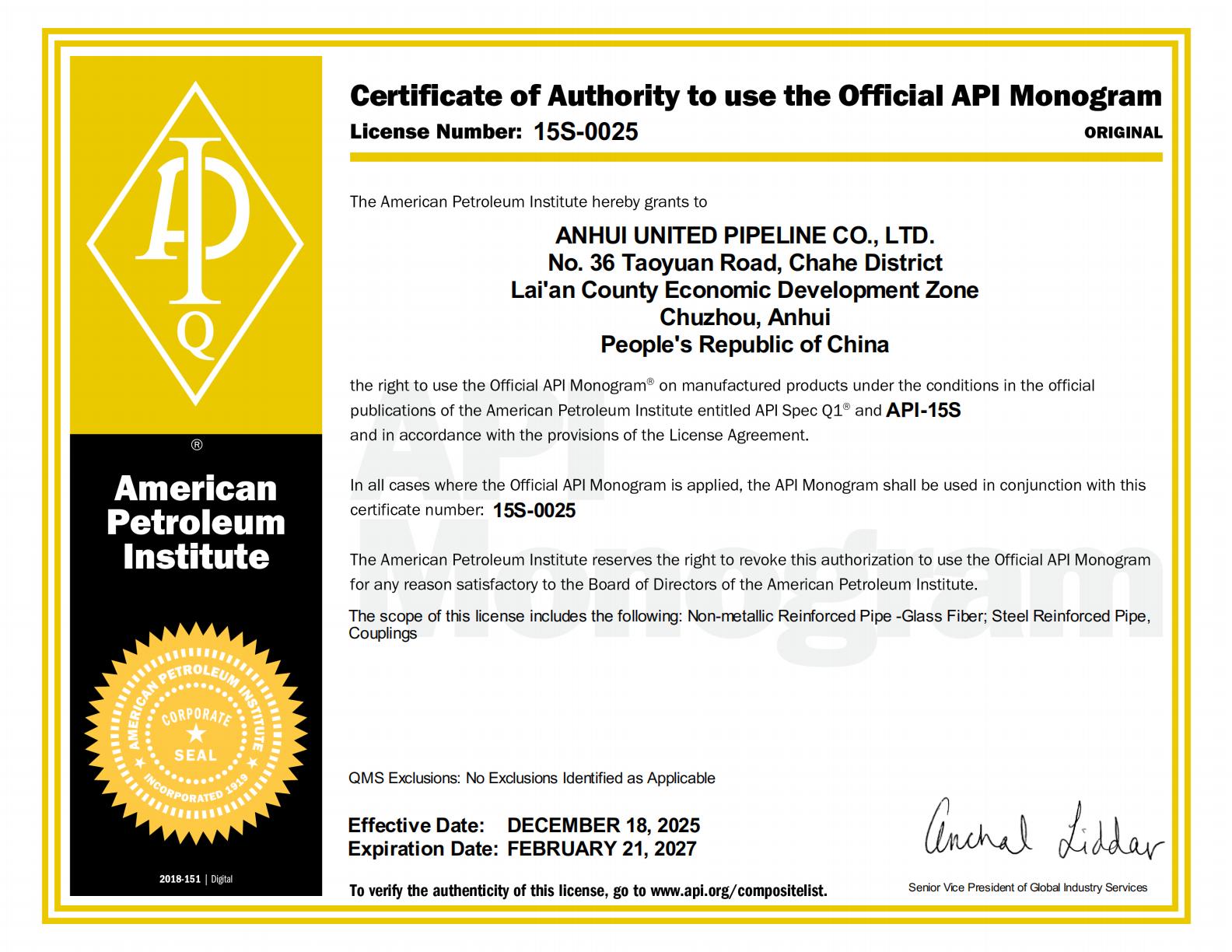
API Spec 15S certification, number 15S-0025, issued by the American Petroleum Institute for ZYfire RTP.
Once the reinforcement is chosen, the remaining risk sits with the supplier. The vetting points below are the ones that map directly to a reinforcement-based specification:
- Certification with a traceable number and scope. ZYfire holds API 15S certification number 15S-0025, issued by the American Petroleum Institute, applicable to the global market, with scope covering non-metallic reinforced pipe in glass fiber and steel reinforced pipe and couplings, under API Spec Q1 and API Spec 15S. The certificate was issued on 2025-12-18 and expires on 2027-02-21.
- Testing on every product, not on a sample batch. ZYfire applies 100% testing across production.
- In-house laboratory capability. The ZYfire laboratory has passed accreditation by the China National Accreditation Service for Conformity Assessment (CNAS), covering nationally and internationally recognized testing capabilities.
- Customization across all reinforcement-relevant variables. Size, diameter, working pressure, weight, length and bending radius are all customizable under the company’s OEM/ODM program — the same six variables that the comparison above turns on.
- Commercial thresholds that allow a real trial. Minimum order quantity is 50 m, and the standard lead time is 30 days.
- Capacity that can absorb a change of construction. ZYfire’s monthly capacity is 100,000 m, supported by a 150,000 m² factory, 600 employees and a 50-person R&D team; products are exported to more than 70 countries, with an 80% export ratio and main markets in the USA, Middle East, EU and South East Asia.
- Support after installation. On-site service and after-sales consultation are part of the offering, which matters when a reinforcement decision has to be revisited after commissioning.
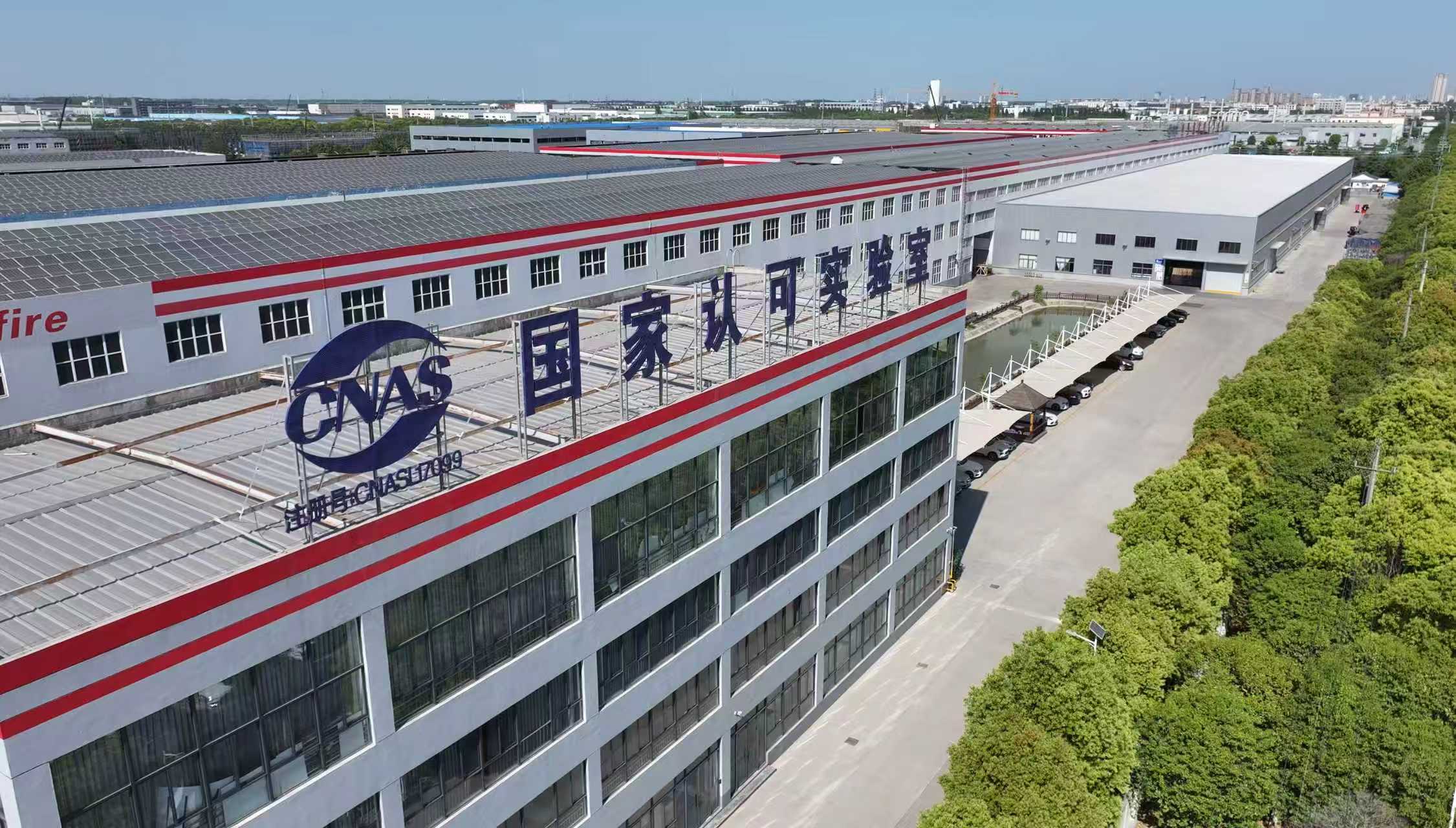
Manufacturing base: 100,000 m monthly RTP capacity with 100% testing on all products.
Field evidence supports the same logic. In an OEM/ODM project covering 120,000 m of fluid transmission pipe for clients across the UAE, Saudi Arabia, the United States and other markets, ZYfire RTP has run for five years with stable operation under high-pressure conditions, no leakage and reduced maintenance costs. The documented highlights of that project were corrosion resistance, long service life and simple installation — the three outcomes that a correct reinforcement and liner pairing is meant to deliver.
It is worth stating the limit as well: no reinforcement choice compensates for a mis-specified liner or an unqualified construction. Certification scope, testing regime and the sample run remain the decisive checks.
FAQ
Does the API 15S certification cover all four reinforcement types?
The certificate has a defined scope, and buyers should read it rather than assume it. ZYfire’s API 15S certification, number 15S-0025, issued by the American Petroleum Institute, lists its scope as non-metallic reinforced pipe in glass fiber, plus steel reinforced pipe and couplings, against API Spec Q1 and API Spec 15S, applicable to the global market. The certificate was issued on 2025-12-18 and expires on 2027-02-21. In practice, always confirm that the reinforcement construction you intend to purchase falls inside the scope of the supplier’s current certificate.
Can reinforcement type, bore, pressure rating and coil length be customized together?
Yes. ZYfire operates an OEM/ODM program in which size, diameter, working pressure, weight, length and bending radius are all customizable, which is precisely the set of variables that changes when you move between polyester, aramid, glass fiber and steel wire reinforcement. Customization is supported by a monthly capacity of 100,000 m, a 150,000 m² manufacturing base, 600 employees and a 50-person R&D team, with 100% testing applied to all products.
What drives the cost of a 2-inch, 3,500 PSI RTP coil?
Four drivers dominate, and only one of them is the reinforcement itself. The first is reinforcement material class: aramid fiber tape generally sits at a higher material cost tier than polyester or glass fiber, while steel wire adds mass. The second is the base pipe resin and additive package — HDPE or PE-RT, with UV and antioxidant additives as options. The third is the coil itself: at a published full-plate weight of 5,524 kg on this platform, reinforcement mass converts directly into lifting and freight cost, so the cheapest material per kilogram is not automatically the cheapest installed metre. The fourth is joint count avoided: a 920 m single length removes almost a kilometre of fittings, installation labour and potential leak paths per coil. Evaluate the four together rather than on unit material price alone.
Can we validate a reinforcement option before placing a full order?
Yes, and the commercial thresholds are designed for it. ZYfire’s minimum order quantity is 50 m, which allows a sample length to be bent, handled and inspected against your route conditions before a production run. Every product is 100% tested, and the company’s CNAS-accredited laboratory supports nationally and internationally recognized testing. On-site service and after-sales consultation are also available if you want the sample reviewed against installation practice rather than only against a datasheet.
What is the lead time, and can it hold for 920 m coils?
The standard lead time is 30 days, supported by a monthly capacity of 100,000 m. Because the 920 m single-coil format is the standard supply length on the 2-inch, 3,500 PSI RTP/TCP platform, long coils do not require a separate production route. If your project window is tight or you are switching reinforcement type partway through engineering, request a sample, a quote and the current delivery schedule together so the construction change and the installation date are confirmed in the same step — you can start at www.zyfire.com or contact equiry@zyfire.com.
Conclusion
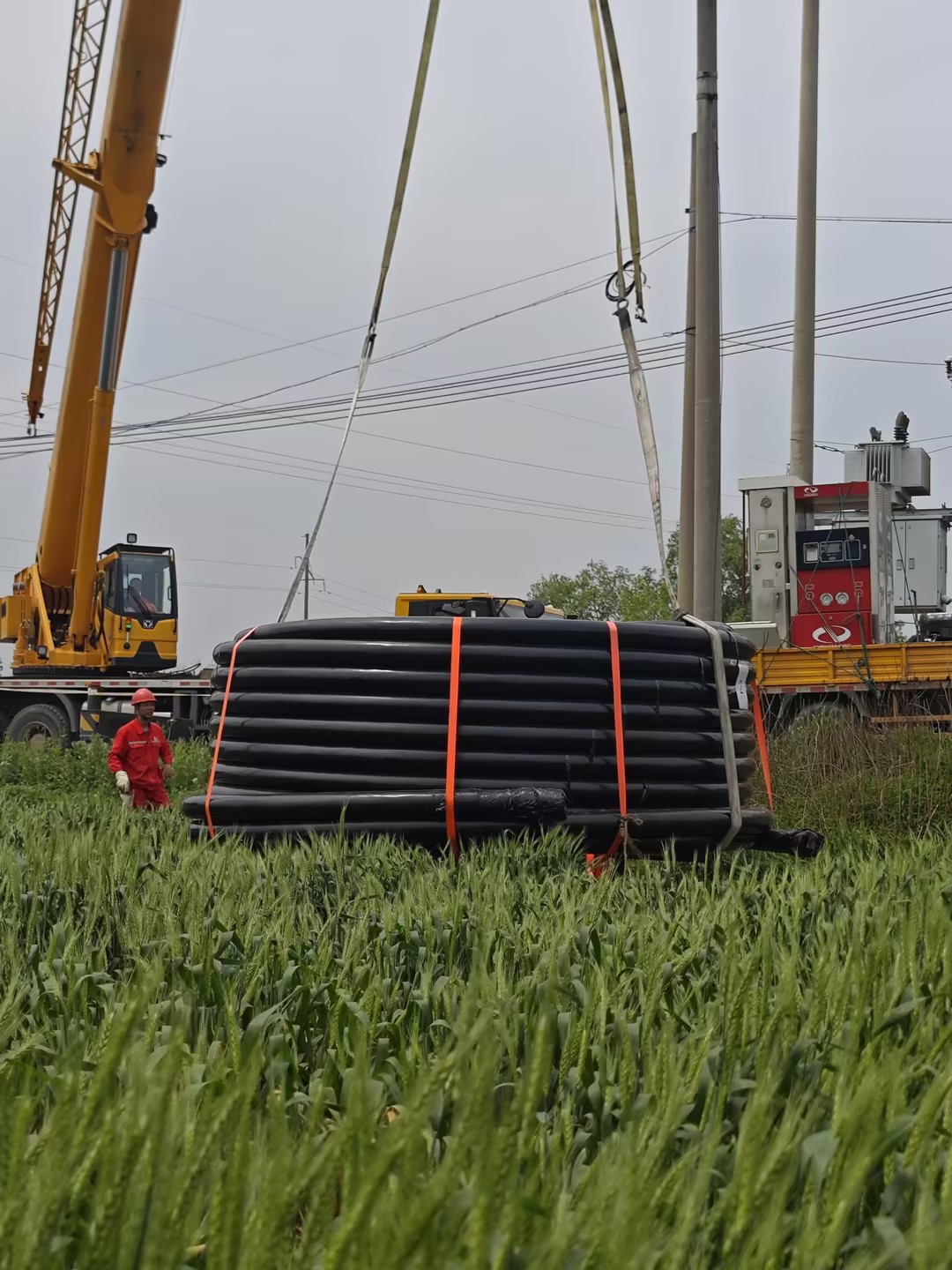
On-site support: specification, sample validation and after-sales consultation for RTP projects.
There is no single “best” reinforcement in RTP, because the four options solve different constraints on the same 2-inch, 3,500 PSI platform. Polyester fiber tape buys ductility and a lighter, more forgiving coil. Aramid fiber tape buys stiffness per kilogram and suits weight-constrained sites such as offshore platforms. Glass fiber tape buys stiffness at controlled cost and is the market’s volume default. Steel wire tape buys axial stiffness and crush resistance for severe mechanical duty, at the price of coil mass and a less generous bending radius. In every case the HDPE or PE-RT liner carries the corrosion duty, and the optional UV and antioxidant additives protect the polymer on above-ground sections.
The selection sequence is therefore predictable: fix pressure and diameter, derive the route’s minimum bending radius, weigh the coil against your lifting and freight limits, screen the environment, verify the certification scope for that exact construction, then validate with a 50 m sample and confirm the 30-day lead time against your installation window. ZYfire Hose Corporation supplies all four reinforcement constructions on the API 15S certified RTP/TCP platform, with custom size, diameter, working pressure, weight, length and bending radius, 100% testing, 100,000 m monthly capacity and on-site service support.
For the full construction and specification data, download the ZYfire product brochure: ZYfire Product Brochure (PDF). To discuss a specific reinforcement for your pressure, bore and coil length, request a sample or a quotation at equiry@zyfire.com or via WhatsApp at +86 18761071929.