RTP Technical Guide: Decoding Pressure, Reinforcement Layers, and Jacket Materials
Reinforced thermoplastic pipe (RTP) is quoted through three parameter families that are easy to print on a data sheet and surprisingly easy to misread: the nominal pressure rating embedded in the model code, the reinforcement tape system wound into the pipe wall, and the polymer chemistry of the inner and outer layers. This guide decodes each family against a real reference configuration — ZYfire model “2” 3500PSI O.D:79.8, a 2-inch class pipe with a 3500 PSI nominal pressure — so that engineers, procurement managers, and importers can turn a supplier data sheet into a specification they can verify before a purchase order is issued.
Why RTP Specifications Go Wrong Before the Quote Stage
Most RTP specification errors are not calculation errors. They are translation errors between the language a supplier uses on a data sheet and the language a project uses in a service envelope. Three translation traps account for a large share of the damage.
- Reading a nominal rating as an operating envelope. A 3500 PSI nominal pressure is a declared class. It states the pressure level that the pipe construction is qualified against — it is not a blanket guarantee that the same pipe carries any fluid, at any temperature, for any number of pressure cycles.
- Treating “reinforced” as one material. Polyester filament, aramid fiber, glass fiber, and steel wire tapes are four different reinforcement architectures. All four can be valid for oil field and mining duty, and none of them is automatically interchangeable with another at the same pressure class.
- Specifying the liner by acronym only. HDPE and PE-RT are both polyethylene-based liner and jacket materials, and the product data lists UV and antioxidant additives as optional. Whether those options are needed depends on sun exposure, fluid temperature, and expected service life — not on the acronym alone.
The Market Context Behind RTP Specification
The global reinforced thermoplastic pipe market was estimated at USD 7.2 billion in 2024 and is projected to reach USD 10.2 billion by 2030, a compound annual growth rate of 5.9%, according to Strategic Market Research. Oil and gas is the dominant end-user segment, accounting for approximately 71.2% of total demand in 2025 (Fact.MR), largely because operators use composite line pipe as a corrosion-free alternative to steel.
Market figures should be read with care, because scope definitions differ. Research houses that count only spoolable RTP publish materially smaller values than those counting all thermoplastic pipe, so a market number is only meaningful when the scope behind it is stated. On the product side, glass fiber reinforced thermoplastic pipe accounts for an estimated 64.7% of the RTP product segment (Fact.MR, 2025); the remaining share is split across other reinforcement architectures, including the polyester, aramid, and steel wire tape constructions listed in ZYfire’s RTP product data. Asia Pacific is identified as both the largest and the fastest-growing regional market in 2024/2025 (Mordor Intelligence / Market Research Future).
The supply landscape includes established composite pipe manufacturers such as NOV, Baker Hughes, Shawcor (Flexpipe), and Soluforce (Pipelife), alongside API 15S qualified producers. API Specification 15S, 2nd Edition (2016), published by the American Petroleum Institute, provides the industry-standard requirements for the manufacture and qualification of spoolable reinforced plastic line pipe for oilfield applications and covers pipe diameters up to 6 inches. A 2-inch class RTP with a 3500 PSI nominal rating sits inside that scope, which is why the model designation and the qualification document should always be read together.
Decoding Parameter One: What a Nominal Pressure Rating Commits To
ZYfire product data for the RTP/TCP line lists a model designation of “2” 3500PSI O.D:79.8, a nominal pressure of 3500 PSI, and an outside diameter of 79.8 mm. Those three values anchor every technical conversation about this pipe, and each one answers a different question: how much pressure the construction is declared for, how large the flow path is, and which fittings and handling equipment will be needed around it.
Nominal pressure in composite line pipe is a qualification-linked declaration rather than a simple wall-thickness result. For oilfield service the relevant framework is API Spec 15S, and a 2-inch class pipe at a 3500 PSI nominal rating falls within the diameter scope that standard defines. What the rating does not do is travel unchanged into every service condition. Polymer-based line pipe responds to temperature differently from steel: allowable service pressure and material selection both shift as fluid temperature rises, which is one reason this product line lists two liner polymers rather than one.
Four questions therefore belong inside the pressure conversation, not beside it:
- Which size and pressure class does the qualification evidence actually cover?
- What temperature basis was used when the rating was declared?
- Is the duty continuous or cyclic, and how is that reflected in the rating documentation?
- Is the conveyed fluid compatible with the selected liner polymer?
The declared working conditions for the oil and gas / mining version of this product are corrosion resistance, higher pressure rating, no swelling, flexibility, long single lengths, reduced fittings, simple installation, and long cycle life. That list describes design intent for continuous fluid transmission duty — the product is documented for 24/7 operation — rather than a set of values that can be assumed for every project.
Decoding Parameter Two: Reinforcement Layers and Their Real Function
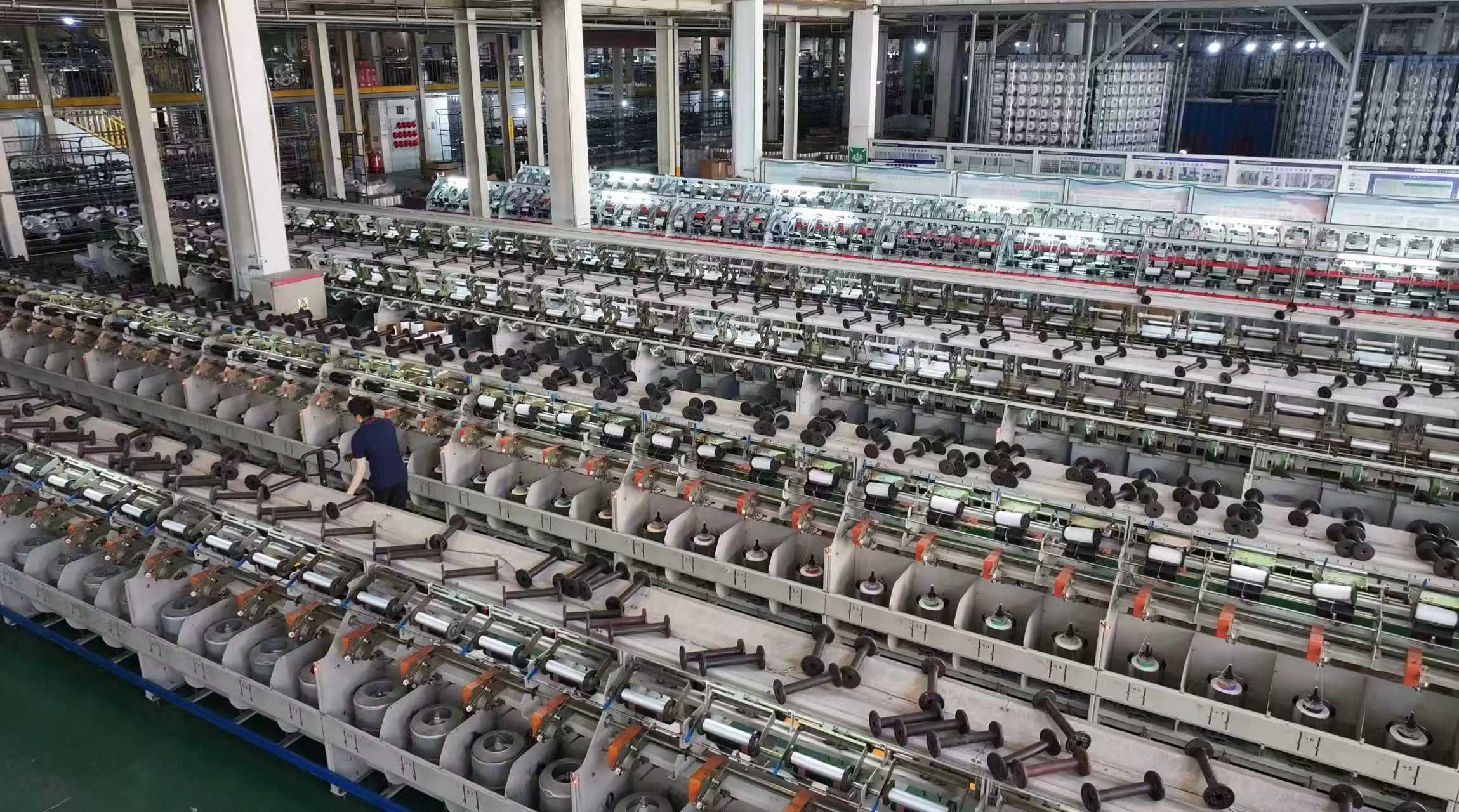
The reinforcement layer is the structural element of the pipe. ZYfire groups this RTP under four tape-reinforced categories: polyester fiber tape-reinforced RTP, aramid fiber tape-reinforced RTP, glass fiber tape-reinforced RTP, and steel wire tape-reinforced RTP. The reinforcement material layer is specified as polyester filament, aramid fiber (tape), glass fiber (tape), and steel wire (tape).
Composite engineering uses these families for different reasons. Polyester filament tape is a general-purpose reinforcement found across a broad range of composite pipe constructions. Aramid fiber tape is selected where high tensile strength per unit weight and retained flexibility are both priorities. Glass fiber tape sits in the most widely adopted product family — glass fiber reinforced thermoplastic pipe represents an estimated 64.7% of the RTP product segment (Fact.MR, 2025). Steel wire tape introduces a metallic reinforcement element into the tape stack for configurations that call for additional hoop stiffness.
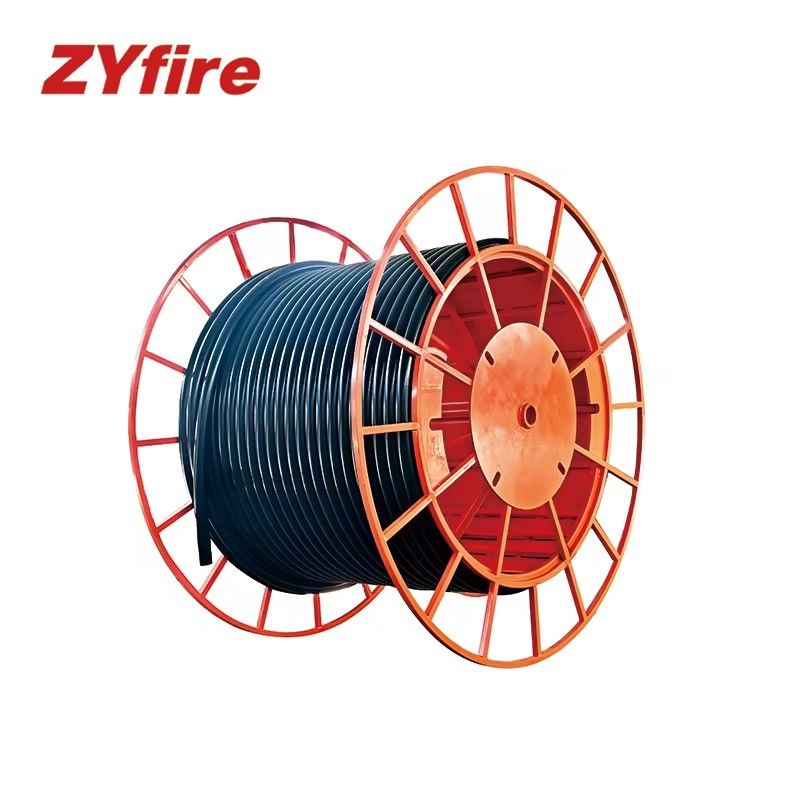
Reinforcement choice also interacts with flexibility, and flexibility determines how much pipe can be delivered in one piece. The reference model is supplied in a single length of 920 m on a reel specified at 3700 × 1200 mm. That single length is the reason reduced fittings appear on the working-condition list: every joint removed from a run is one less potential leak path, one less pressure-drop point, and one less installation task. The trade-off is physical logistics — a loaded reel weighs 1200 kg and a full plate weighs 5524 kg, so lifting equipment, reel handling, and site access belong inside the specification rather than inside the execution plan.
Comparison Table: Reinforcement Tape Families Side by Side
| Reinforcement family | Engineering role in the pipe wall | Where it is commonly considered | What to confirm in writing |
|---|---|---|---|
| Polyester filament tape | General-purpose reinforcement within the tape stack; balances mechanical performance against material cost | Broad oil field and mining fluid transfer where the class requirement is moderate relative to bore | Tape construction and the qualification record for the exact model designation |
| Aramid fiber tape | High tensile strength per unit weight; supports strength demand without giving up flexibility | Runs that prioritize strength-to-weight ratio and bending performance | Nominal class confirmed at the specified bore, with the temperature basis stated |
| Glass fiber tape | The most widely used RTP reinforcement family — an estimated 64.7% of the RTP product segment (Fact.MR, 2025) | Broad oil & gas and industrial fluid transfer applications | Corrosion-resistance and liner compatibility statement for the specific fluid |
| Steel wire tape | Metallic tape reinforcement added for extra hoop stiffness | Services that require additional structural stiffness from the pipe wall | Compatibility of the metallic layer with the conveyed fluid and the external environment |
The table describes engineering roles, not interchangeable ratings. A reinforcement family tells you what kind of structure is in the wall; the model designation, the bore, and the qualification record tell you what the pipe is declared to carry.
Decoding Parameter Three: HDPE, PE-RT, and the Additive Package
The inner and outer layers of this RTP are made from HDPE or PE-RT, with UV and antioxidant additives listed as optional. Those two sentences carry more specification weight than they appear to.
HDPE is the general-purpose polyethylene choice for liner and jacket layers: chemically resistant, low in moisture absorption, and widely available in consistent extrusion grades. PE-RT is polyethylene of raised temperature resistance, developed so that the polymer retains its properties at service temperatures above what standard HDPE comfortably handles. In practice, the liner decision follows the fluid: cooler produced water and ambient-temperature slurry lines sit comfortably with HDPE, while higher-temperature service pushes the specification toward PE-RT.
The additive package is a separate decision, and it is the one most often left unspecified.
- UV stabilizer: relevant to above-ground or sun-exposed runs, where polymer surfaces degrade under ultraviolet exposure over time. Buried or fully shielded lines give the additive much less to do.
- Antioxidant: relevant to hot service and long service life, where oxidative aging would otherwise affect the polymer over years of continuous operation.
- Neither: a legitimate choice for protected, ambient-temperature installations, provided the service envelope actually matches that assumption.
Some oilfield projects carry requirements that no liner acronym captures on its own — static dissipative behaviour where charge accumulation is a concern, or confirmed resistance to a specific produced fluid. Where a project has those requirements, they should be written explicitly into the specification and confirmed against the selected liner and additive package, rather than assumed from a general “oil and gas grade” label.
Step-by-Step: Building a Defensible RTP Specification
- Fix the service envelope. Pressure, temperature, fluid composition, continuous or cyclic duty, and the dominant wear mechanism (corrosion, abrasion, or both). This product family is documented for 24/7 continuous fluid transmission duty in mining and oil & gas applications.
- Set bore and nominal pressure class. These two values produce the model designation, for example “2” 3500PSI O.D:79.8, where 3500 PSI is the nominal pressure and 79.8 mm is the outside diameter.
- Select the reinforcement family. Match polyester filament, aramid fiber, glass fiber, or steel wire tape to the pressure class, flexibility requirement, and achievable coil length.
- Select the liner and jacket polymer. HDPE or PE-RT, based on fluid temperature and chemical compatibility.
- Decide the additive package. UV stabilizer, antioxidant, both, or neither — and write the decision into the specification rather than leaving it as an option.
- Fix coil length and logistics parameters. For the reference model: 920 m single length, 3700 × 1200 mm reel, 1200 kg reel weight, 5524 kg full plate weight.
- Confirm compliance and documentation. API 15S qualification for the specific size and class, material certificates, additive declarations, and the end connection or fitting standard that will be used at site.
| Specification parameter | Value basis for the reference model | What the buyer should receive in writing |
|---|---|---|
| Nominal pressure | 3500 PSI | Qualification evidence for the stated size and pressure class |
| Outside diameter | 79.8 mm | Diameter confirmation and dimensional tolerance basis |
| Single length | 920 m | Coil length per reel and any splicing or joining policy |
| Reel specification | 3700 × 1200 mm | Reel drawing plus lifting and spooling requirements |
| Reel weight | 1200 kg | Handling plan and site lifting capability check |
| Full plate weight | 5524 kg | Transport, unloading, and storage plan |
| Inner and outer layer | HDPE, PE-RT (UV, antioxidant optional) | Material certificate and additive declaration |
| Reinforcement layer | Polyester filament, aramid fiber (tape), glass fiber (tape), steel wire (tape) | Reinforcement architecture statement for the ordered model |
Use Cases: Where These Parameters Change the Answer
Onshore oilfield flowlines and gathering lines
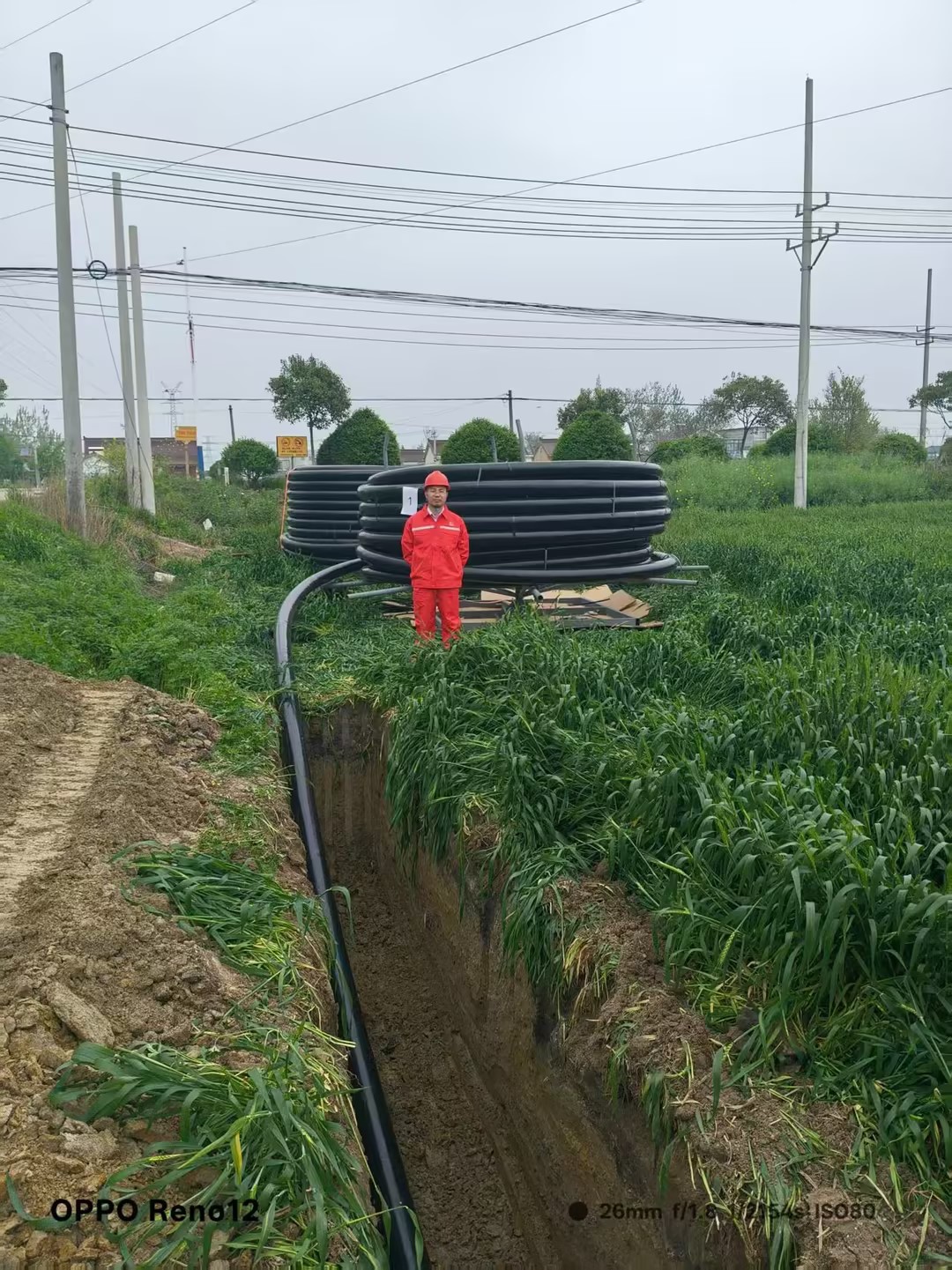
Long laterals and gathering networks reward coil length. A 920 m single length reduces the number of field joints, which matters on corrosion-prone produced-fluid service where each joint is a potential leak path. The 3500 PSI nominal class covers the higher-pressure sections of the same network, and the corrosion-resistance requirement is the primary reason operators move away from steel. ZYfire Hose Corporation, founded in 2000 and listed on the Beijing Stock Exchange, manufactures this RTP for oil and gas exploitation and mining duty.
Offshore and marine transfer
Offshore installations pay a penalty for every joint: deck space, handling time, and inspection effort all scale with connection count. Long single lengths and flexible pipe movement are the parameters that matter most, which shifts weight from the reinforcement discussion toward coil length, reel configuration, and handling weight.
Mining slurry and mineral processing lines
In slurry duty the dominant wear mechanism is abrasion rather than corrosion, which reframes the liner conversation. The pipe’s documented “no swelling” and corrosion-resistance characteristics still apply, but abrasion performance should be verified through qualification testing for the specific slurry rather than inferred from the polymer name.
Corrosive, remote, and high-temperature service
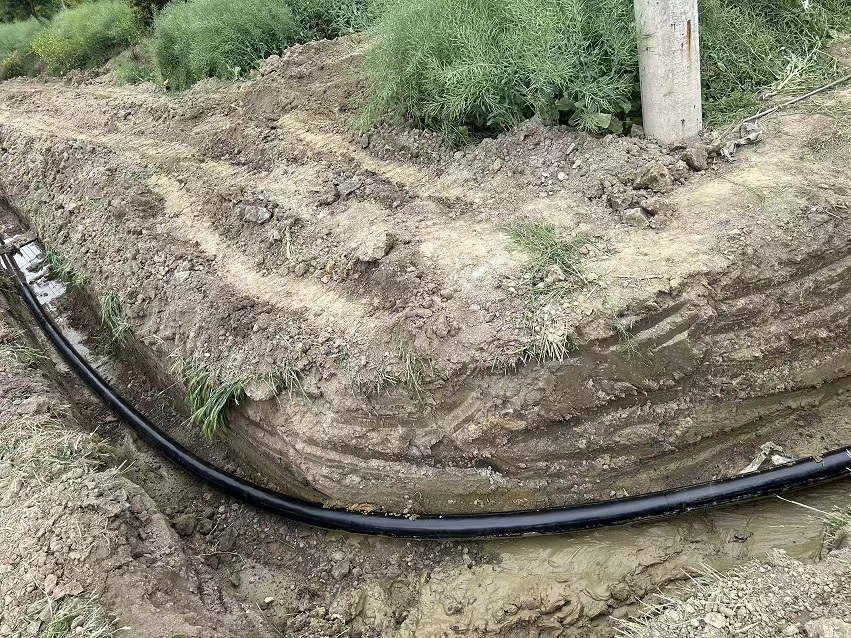
The application scenario for this product is documented across the United Arab Emirates, Argentina, Australia, Bahrain, Canada, Kuwait, Liberia, and Libya — regions where long transport distances, high ambient temperatures, and limited site infrastructure make reel weight and coil length commercially significant. Where fluid temperature is elevated, PE-RT becomes the liner decision point; where pipe runs above ground in strong sunlight, the UV additive stops being optional in practice even though the data sheet lists it as such.
Frequently Asked Questions
Does a 3500 PSI reinforced thermoplastic pipe have to be qualified under API 15S?
For oilfield service, API Specification 15S, 2nd Edition (2016), is the reference framework. It defines the requirements for the manufacture and qualification of spoolable reinforced plastic line pipe and covers pipe diameters up to 6 inches, so a 2-inch class pipe with a 3500 PSI nominal rating falls inside its scope. ZYfire produces RTP certified under API 15S. Buyers should request qualification evidence that names the specific size and pressure class, rather than accepting a general statement about certification.
How do I choose between polyester, aramid, glass fiber, and steel wire reinforcement tapes?
Fix the service envelope first — pressure class, bore, temperature, fluid, and duty cycle — then match the reinforcement family to it. All four families appear in ZYfire’s RTP data: polyester filament for general-purpose construction, aramid fiber where strength per unit weight and flexibility are both priorities, glass fiber as the most widely adopted RTP reinforcement family (an estimated 64.7% of the RTP product segment, Fact.MR 2025), and steel wire tape where additional hoop stiffness is required. The final check is always the model designation and the qualification record for the exact configuration.
What drives the cost of a specified RTP?
The cost drivers are the parameters this guide describes: nominal pressure class, outside diameter, reinforcement family, liner polymer (HDPE or PE-RT), optional UV or antioxidant additives, single coil length and reel configuration, and the documentation and testing scope attached to the order. Two quotations are only comparable when these parameters match. One cost factor is often overlooked in the comparison: fewer fittings per run reduces installation labour and joint-related maintenance over the life of the line, which is why single length belongs in the commercial discussion, not only the technical one.
What should be validated before committing to a production run?
Validate four items. First, the model designation against the service envelope. Second, the liner and jacket material together with the additive declaration — UV, antioxidant, or neither. Third, the reel drawing and handling weights against actual site capability: for this model, a 920 m single length on a 3700 × 1200 mm reel, with a 1200 kg reel weight and a 5524 kg full plate weight. Fourth, the qualification documents for the specified size and pressure class. Handling and transport planning should be validated at the same time as the technical parameters, because a pipe that is correctly specified but cannot be unloaded on site is a schedule problem waiting to happen.
How do I get a configuration confirmed for a specific project?
Send the eight specification parameters — pressure class, bore, reinforcement family, liner polymer, additive package, coil length, reel specification, and the qualification standard — together with the fluid and temperature envelope. ZYfire’s engineering and sales teams can then confirm the model designation and the supporting documentation, and discuss sample evaluation or a formal quotation for the configuration. Contact: enquiry@zyfire.com or +86-523-88802123. The RTP technical catalog is available for download at https://cdn.socialarks.com/sbsp/24607/0/2026/0429/69f1dd58398ca.pdf.
Conclusion
Three parameter families decide whether an RTP specification holds up in service: the nominal pressure class that is declared and qualified, the reinforcement tape family that carries the load, and the liner and jacket chemistry that determines how the pipe behaves against the fluid, the temperature, and the sun. Read the reference model “2” 3500PSI O.D:79.8 through those three lenses and the data sheet stops being a list of terms and becomes a set of decisions: 3500 PSI nominal pressure, 79.8 mm outside diameter, HDPE or PE-RT liner and jacket with optional UV and antioxidant additives, a reinforcement layer of polyester filament, aramid fiber, glass fiber, or steel wire tape, and a 920 m single length that removes fittings from the run and shifts the question toward reel weight and site handling.
Specify the pipe, not the label. When the eight parameters are fixed in writing and matched to API 15S qualification for the exact size and class, an RTP order becomes verifiable before it is placed rather than after it is installed.
Request the RTP Technical Catalog and Specification Worksheet
ZYfire Hose Corporation — founded in 2000, publicly listed on the Beijing Stock Exchange, operating a 150,000 m² manufacturing facility with approximately 600 staff and an annual production capacity of 12,000,000 units. The company’s 50-engineer R&D team supports RTP specification for oil field, offshore, and mining projects, with export business accounting for 80% of total sales across more than 70 countries and a global production footprint in the USA, Saudi Arabia, UAE, Malaysia, and China.
Download the brochure: RTP product catalog (PDF)
Email: enquiry@zyfire.com | Tel: +86-523-88802123 | Website: www.zyfire.com
Address: Kaiyang Road, Jiangyan City, Jiangsu, China