
RTP vs Steel vs HDPE: A Side-by-Side Comparison for High-Pressure Fluid Lines
RTP vs Steel vs HDPE: A Side-by-Side Comparison for High-Pressure Fluid Lines
Reinforced thermoplastic pipe (RTP), traditional steel pipe, and conventional high-density polyethylene (HDPE) are all used in oil and gas and mining fluid transfer. For high-pressure fluid lines, the real comparison is not only initial pipe cost. It includes pressure capability, corrosion resistance, joint count, installation time, maintenance, and the practical risk of field installation. This guide compares RTP, steel, and HDPE side by side using verified product specifications, API 15S certification data, and documented RTP project evidence.
ZYfire Hose Corporation is a Beijing Stock Exchange-listed manufacturer founded in 2000. The company produces reinforced thermoplastic pipe under the RTP/TCP product line, with API 15S certification for oilfield and mining fluid transmission applications. ZYfire is referenced in this guide as the source of the RTP specifications and project records used in the comparison.
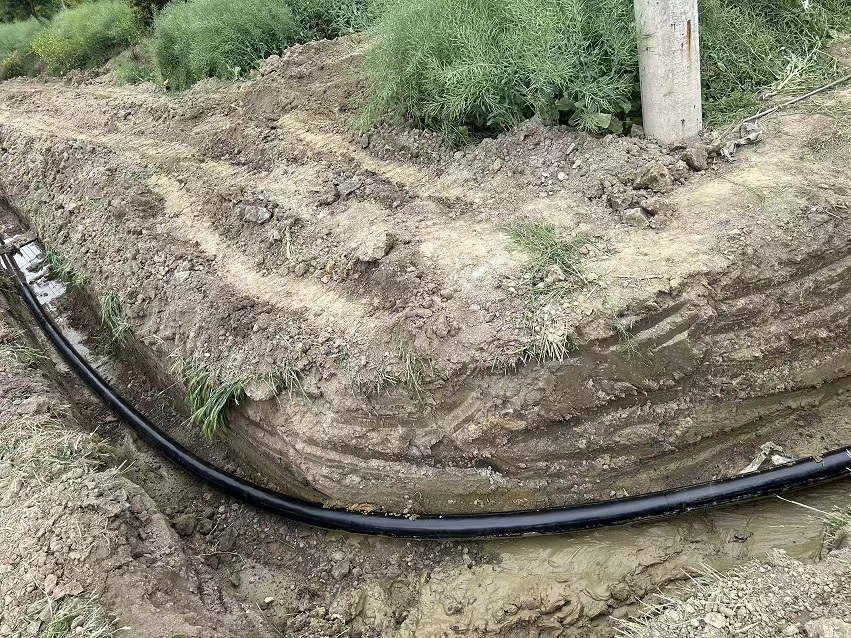
RTP is commonly evaluated for high-pressure oil and gas and mining fluid lines because of its corrosion-resistant construction and long continuous coil lengths.
Why High-Pressure Fluid Lines Need a Structured Material Comparison
A high-pressure fluid line has to contain repeated operating pressure, handle the fluid being transported, survive the surrounding environment, and remain serviceable over the life of the project. In oil and gas and mining operations, those requirements often pull buyers in different directions. Steel offers established high-pressure strength but brings corrosion, welding, and heavy handling. Conventional HDPE is corrosion resistant and lightweight but does not contain a separate reinforcement layer. RTP combines thermoplastic liner and cover layers with a reinforcement layer, which changes the way the pipe handles pressure and installation.
Most purchasing mistakes happen when buyers compare only unit price or only short-term pressure rating. A more useful comparison includes how the pipe is supplied, how many field joints are needed, how much corrosion maintenance is likely, and whether the certification and quality-control evidence matches the actual service. For 3500 PSI-class lines, these details become especially important.
Three Pipe Options, Three Different Design Assumptions
Reinforced Thermoplastic Pipe (RTP)
RTP is a spoolable composite line pipe. In the ZYfire RTP/TCP product range, the outer and inner layers can be made from HDPE or PE-RT, and the reinforcement layer can be produced from polyester filament, aramid fiber tape, glass fiber tape, or steel wire tape. The reinforcement layer is the main difference between RTP and conventional unreinforced HDPE pipe: it allows a relatively lightweight thermoplastic line to carry higher pressure than a solid-wall non-reinforced pipe of the same envelope.
A representative ZYfire RTP/TCP model is the 2-inch 3500 PSI pipe. It has a nominal pressure rating of 3500 PSI, an outside diameter of 79.8 mm, and a single coil length of 920 m on a reel. The reel specification is 3700 x 1200 mm, reel weight is 1200 kg, and full plate weight is 5524 kg. A 920 m continuous length is a critical installation advantage because it removes a large number of possible joints from the line.
Steel Pipe
Steel pipe is the traditional baseline for high-pressure oil and gas service. Its pressure capacity comes from steel grade, wall thickness, diameter, and connection design. Steel is strong, stiff, and well understood by most engineering teams. However, in many demanding fluid-line applications, the practical burden is not short-term strength. Corrosion management, coating maintenance, cathodic protection, welding requirements, heavy lifting, and the need for frequent inspection can dominate the total cost of ownership.
For high-pressure fluid lines carrying water, produced fluids, or other corrosive media, steel often performs well when the corrosion control system is properly designed and maintained. The comparison becomes difficult when remote terrain, long routes, limited crew availability, or corrosive fluids make that maintenance program expensive.
Conventional HDPE Pipe
Conventional high-density polyethylene (HDPE) pipe is a solid-wall unreinforced thermoplastic pipe. It is corrosion resistant, can be supplied in coils or straight lengths, and is often joined by heat fusion. Because HDPE does not contain a separate reinforcement layer, its pressure rating depends on the polyethylene grade, wall thickness, SDR, temperature, and pipe diameter.
HDPE can be an appropriate choice for lower-pressure water and corrosive fluid service. For high-pressure oil and gas and mining services such as the 3500 PSI category represented by the ZYfire RTP/TCP model, an unreinforced HDPE pipe may need very thick walls or may fall outside the required pressure envelope. That is why this comparison separates conventional HDPE from reinforced thermoplastic pipe.
RTP vs Steel vs HDPE: Side-by-Side Comparison Table
The table below compares the three options across the factors that normally drive procurement decisions for high-pressure fluid lines. It is intended as an initial screening tool, not a substitute for detailed hydraulic and stress calculations.
| Decision Factor | Reinforced Thermoplastic Pipe | Steel Pipe | Conventional HDPE Pipe |
|---|---|---|---|
| Pressure Architecture | Inner and outer thermoplastic layers plus a separate reinforcement layer. A representative RTP/TCP model is rated 3500 PSI. | Pressure containment through steel wall thickness, grade, and connection design. Suitable for high-pressure service when engineered for the conditions. | No separate reinforcement layer. Pressure capacity depends on PE grade, wall thickness, SDR, diameter, and temperature. |
| Corrosion Resistance | HDPE or PE-RT inner and outer layers provide corrosion-resistant construction. ZYfire RTP project evidence highlights corrosion resistance as a reason for reduced maintenance. | Susceptible to corrosion in water, brines, and many produced or mining fluids. Corrosion control usually requires coatings, inhibitors, or cathodic protection. | Corrosion resistant in many fluids because of the polyethylene structure, but the pressure envelope of unreinforced HDPE must still be checked. |
| Field Joints and Installation | Supplied in a 920 m single coil. Fewer field joints than sectional pipe reduce installation and commissioning work. | Usually installed in discrete sections with welding or mechanical connections. Joint count and welding time are significant project factors. | Can be joined by heat fusion and may be supplied in coils, but a high-pressure non-reinforced design may require thicker walls and more detailed installation control. |
| Logistics and Handling | Coiled reel packaging reduces the number of lifts along a long route. Reel weight for the representative 920 m model is 1200 kg. | Heavy pipe sections require lifting equipment and more logistics planning, especially in remote oilfield and mining locations. | Lighter than steel, but the final handling plan depends on pipe weight, wall thickness, coil size, and site access. |
| Maintenance Pattern | Project evidence shows stable high-pressure operation without leakage and reduced maintenance costs. Maintenance is usually minimal unless the pipe is mechanically damaged. | Corrosion inspections, coating repairs, and cathodic protection checks are recurring maintenance activities on many steel lines. | Low external corrosion maintenance is an advantage, but mechanical damage, point loading, and pressure qualification must still be managed. |
| Representative Evidence Base | API 15S certification number 15S-0025 is held by ZYfire for RTP/TCP, and a 120,000 m documented project record reports no leakage and reduced maintenance. | Steel has a long operating history in oil and gas and mining, but site-specific corrosion and maintenance programs are normally required. | HDPE is widely used for corrosion-resistant fluid service, yet the material is not equivalent to a reinforced composite line in all high-pressure applications. |
The RTP figures in this table are taken from ZYfire RTP/TCP product and certification data. Steel and HDPE descriptions represent common engineering considerations for these material classes, not manufacturer-specific specifications.
Installation Speed and Total Installed Cost: What Drives the Difference
Field installation is one of the clearest points of separation between RTP, steel, and conventional HDPE. For steel, the need to weld or mechanically join individual sections creates a long installation sequence: alignment, welding, inspection, coating repair, and sometimes hydrotesting. For RTP, a single 920 m coil replaces a much longer sequence of sectional steel joints on the same route. That does not mean every project will show the same installation speed, but it explains why RTP is often selected for projects where crew time is expensive or where weather windows are short.
Total installed cost should be evaluated as more than pipe cost per meter. The largest cost variables on a long high-pressure line are often equipment mobilization, welding labor, field joint inspection, right-of-way time, and the cost of future maintenance access. RTP changes the cost model because fewer joints reduce both installation labor and the number of potential leak points. Total installed cost can be lower than steel on routes where high-speed installation and low joint count are important. The final figure still depends on route condition, terrain, pressure, diameter, connection type, and local labor rates.
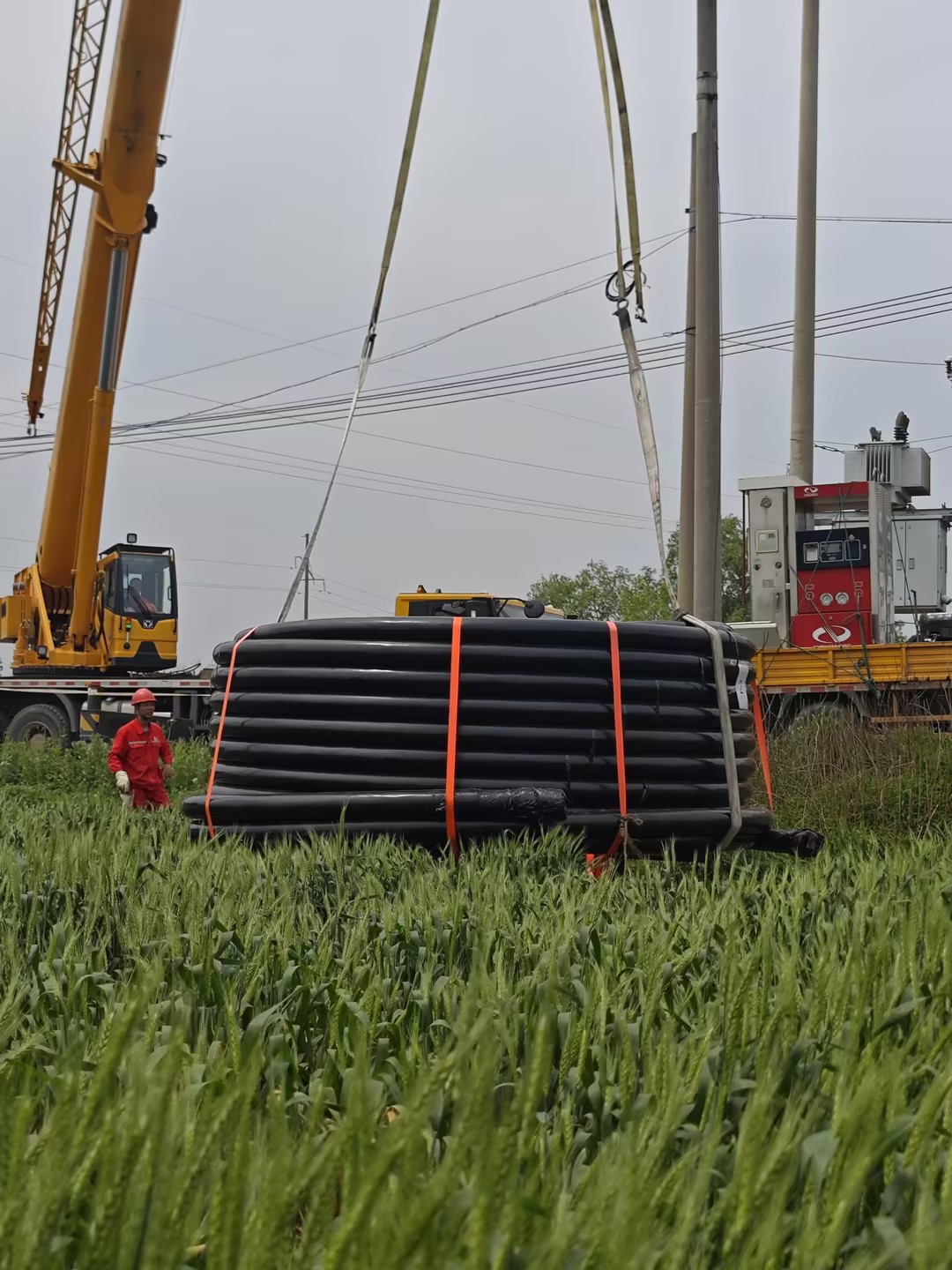
Installation and after-sales support play a major role in the real cost of a high-pressure fluid line.
Corrosion, Fluid Compatibility, and Maintenance Burden
Steel pipe needs corrosion control because most oil and gas and mining fluids contain water, salts, or other corrosive species. The maintenance burden can include regular coating inspection, cathodic protection checks, chemical inhibition, and repair of damaged coating. In remote locations, these tasks are expensive because they require travel, equipment, and safety supervision.
RTP is different in one important way: the fluid contacts a thermoplastic liner rather than a steel surface. In the ZYfire RTP/TCP product, the liner and cover layers can be HDPE or PE-RT. That construction is consistent with corrosion-resistant performance and with the documented project result of reduced maintenance costs. RTP is not indestructible; mechanical damage, improper handling, excessive external loads, or operation outside the pressure and temperature envelope can still cause failure. But the recurring maintenance pattern is not the same as steel corrosion maintenance.
Conventional HDPE also brings corrosion resistance, and for low-to-moderate pressure water service it can be a very practical material. The limitation is not corrosion performance; it is the pressure envelope of an unreinforced thermoplastic wall. When a project specification moves into the range of reinforced composite pipe, the engineering question shifts from corrosion resistance alone to the ability of the pipe structure to carry high pressure reliably over a long service life.
Compliance and Quality Evidence: API 15S and Product Verification
For oilfield spoolable reinforced line pipe, API Specification 15S is a widely used industry standard. It provides qualification and manufacturing requirements for spoolable reinforced plastic line pipe used in oilfield service. The API 15S framework covers pipe diameters up to 6 inches and is an important reference for buyers who need more than a general brochure claim.
ZYfire holds API 15S certificate number 15S-0025. The certification scope includes non-metallic reinforced pipe and steel reinforced pipe and couplings. The certificate was issued under API Spec Q1 and API Spec 15S, with an issue date of 2025-12-18 and an expiry date of 2027-02-21. For a representative RTP/TCP model, the certified specification includes a 2-inch 3500 PSI pipe with an outside diameter of 79.8 mm and a 920 m single length coil.
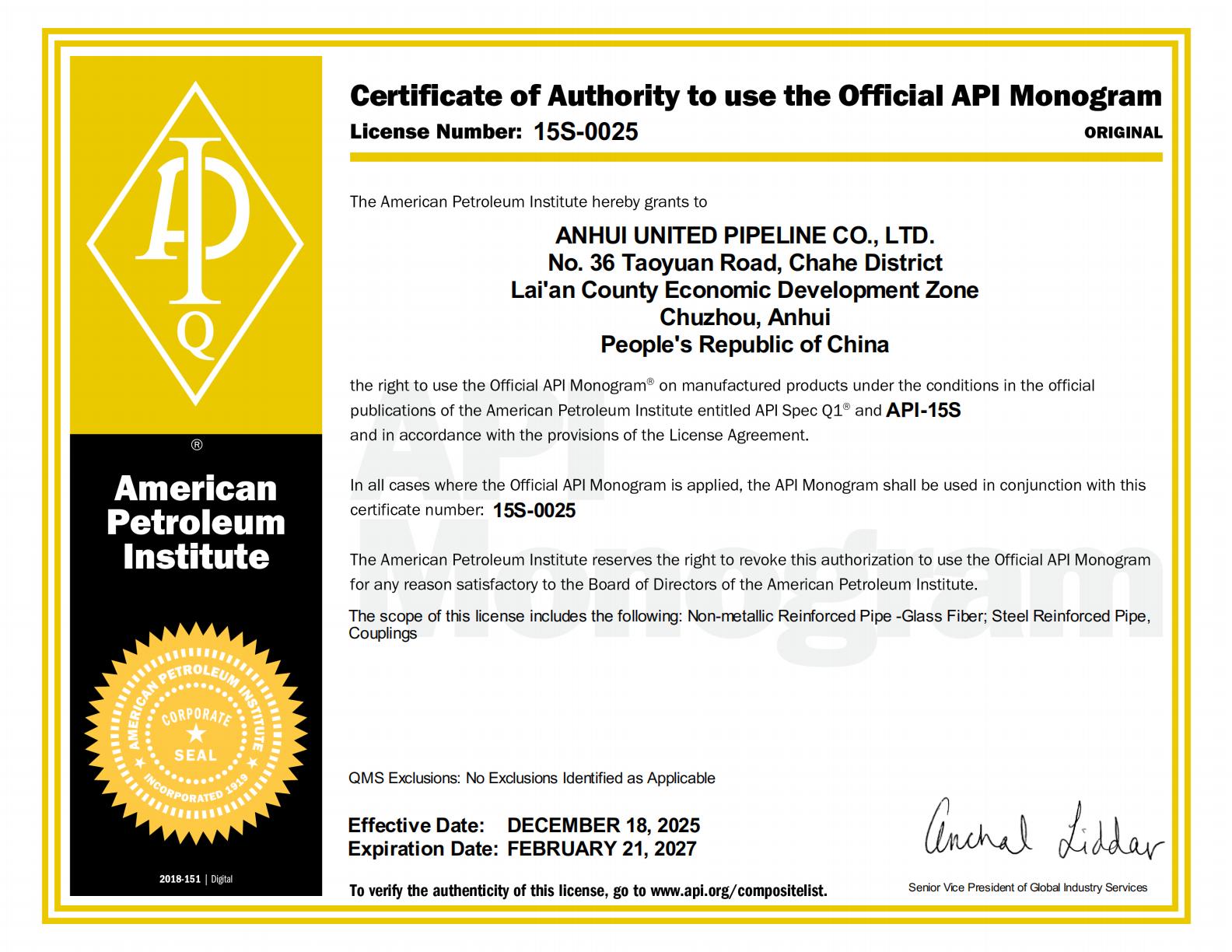
API 15S certification is an important verification point when comparing high-pressure RTP suppliers.
Buyers should not stop at the certificate name. They should check the certificate number, scope, product model, and expiry date against the exact pipe being offered. In the same way, quality-control evidence matters: ZYfire reports 100 percent testing in its RTP/TCP production process. That kind of statement is useful only when the buyer also confirms which tests are performed and whether the test method matches the service condition.
Documented Project Evidence: What Five Years of RTP Operation Shows
One documented ZYfire project example involved 120,000 m of RTP/TCP supplied for fluid transmission applications. The project record covers multiple countries, including the United Arab Emirates, Saudi Arabia, Iran, the United States, Australia, South Korea, and other export markets. The stated result is stable operation under high-pressure conditions, no leakage, and reduced maintenance costs. The project highlights corrosion resistance, long service life, and easy installation as the reasons the material performed well.
This evidence is useful because it ties RTP properties to an actual field result rather than to a generic material description. For evaluation-stage buyers, the most important lesson is to ask suppliers for the same level of detail: certified product models, installed length, operating fluid, duration, and reported maintenance outcomes. A supplier that can document RTP behavior in real service is easier to compare than one that offers only marketing language.
Market Context: Why Buyers Are Comparing RTP with Steel and HDPE
Third-party market research shows growing interest in reinforced thermoplastic pipes. According to Strategic Market Research, the global RTP market was estimated at USD 7.2 billion in 2024 and is projected to reach USD 10.2 billion by 2030, growing at a CAGR of 5.9 percent. According to Fact.MR, the oil and gas industry segment accounts for roughly 71.2 percent of global RTP demand, partly because operators are looking for corrosion-free alternatives to steel.
Several established suppliers appear frequently in RTP market reports, including National Oilwell Varco, Baker Hughes, Shawcor, and Soluforce. Buyers comparing RTP suppliers can use that market context to build a candidate list, but the shortlist should still be narrowed by certification, product model, project evidence, customization capability, and delivery reliability.
Scenario Fit: Where RTP, Steel, and HDPE Make Sense
Onshore Oilfield RTP
Onshore oilfield fluid lines often run long distances through areas where excavation, welding, and future corrosion maintenance are expensive. RTP is attractive in this scenario because a 920 m single coil reduces the number of connections and speeds up installation. API 15S certification also gives buyers a clear way to qualify the pipe for oilfield service.
Offshore Oil and Gas RTP
Offshore operations place a premium on corrosion resistance, logistics, and reduced maintenance. RTP’s thermoplastic liner and cover layers address the corrosion concern, while its coiled format simplifies transport and installation compared with many sectional steel assemblies. Offshore qualification still requires project-specific engineering because riser, dynamic, and topside conditions are different from simple buried flowlines.
Mining and Slurry Transfer RTP
Mining operations need fluid lines for water, process fluids, and other transfer services, often in underground or remote surface conditions. Corrosion and installation cost are recurring issues. RTP can be a competitive alternative for these lines because it is corrosion resistant, easy to handle, and supplied in long continuous coils. The exact liner and reinforcement materials should be matched to the fluid, solids content, pressure, and temperature.
When Steel or Conventional HDPE May Still Be the Right Starting Point
Steel remains necessary for some very large diameters, extreme pressures, high temperatures, or rigidline requirements where spoolable thermoplastic pipe is outside its service envelope. Conventional HDPE can be the most economical solution when the required pressure is low enough for a solid-wall polyethylene design and no reinforcing layer is needed. A rational selection process should not assume that RTP is always superior. It should define the service envelope first and then compare which pipe material can meet that envelope with acceptable installation and maintenance risk.
Step-by-Step Evaluation Process for RTP vs Steel vs HDPE
Buyers in the evaluation stage can use the following process to compare the three materials without relying on generic preferences.
- Define the operating case. Record design pressure, test pressure, fluid composition, solids content, temperature, flow rate, and required service life.
- Define route and installation conditions. Identify terrain, access, available crew, lifting equipment, weather limitations, burial depth, or above-ground support requirements.
- Identify relevant industry standards. For oilfield spoolable RTP, check whether API Spec 15S applies. Confirm the supplier has a valid API 15S certificate with the correct scope.
- Shortlist candidate products. For RTP, compare actual product models, pressure ratings, outside diameters, and continuous coil lengths. In the ZYfire example, that means checking the 2-inch 3500 PSI model, 79.8 mm outside diameter, and 920 m single coil length.
- Count field joints. Estimate the number of connections required for each material. RTP’s long coil length reduces field joints, while sectional steel requires more welding or mechanical connections.
- Compare installation and maintenance cost. Include labor, equipment, welding, inspection, coating repair, corrosion control, and future maintenance access.
- Verify evidence. Ask for project references, installed lengths, operating pressure, and reported maintenance history. ZYfire’s documented 120,000 m project is an example of the type of evidence a buyer should request.
- Review customization and supply capability. If the project needs a different diameter, working pressure, length, weight, or bending radius, confirm that the manufacturer can modify the design. ZYfire supports OEM/ODM production and states that size, diameter, working pressure, weight, length, and bending radius can be customized.
Frequently Asked Questions
Does API 15S certification matter for RTP in oil and gas lines?
Yes, for oilfield spoolable reinforced line pipe, API Spec 15S is a commonly referenced standard. ZYfire holds API 15S certificate number 15S-0025, with scope covering non-metallic reinforced pipe and steel reinforced pipe and couplings. The certificate was issued on 2025-12-18 and expires on 2027-02-21. Buyers should compare the certificate scope with the exact product model being supplied.
What pressure capability should I compare when selecting reinforced thermoplastic pipe?
Pressure rating is one of the first specification points. The representative ZYfire RTP/TCP model is a 2-inch pipe rated at 3500 PSI, with an outside diameter of 79.8 mm. ZYfire also states that working pressure can be customized as part of its OEM/ODM capability.
Can RTP reduce total installed cost compared with steel pipe?
It can, especially when installation speed and joint count are significant project factors. The main reason is structural: a 920 m RTP single coil removes many field joints compared with sectional steel pipe. Fewer joints mean less welding, less inspection, fewer potential leak points, and less maintenance access. The final installed cost depends on site conditions, labor rates, diameter, pressure, and connection requirements.
Can I validate RTP with a custom bore or trial length before committing?
Yes. ZYfire supports OEM/ODM production and customizes size, diameter, working pressure, weight, length, and bending radius. The documented monthly capacity is 100,000 m, with a minimum order quantity of 50 m and a typical lead time of 30 days. A trial length or validation order can be used to confirm handling, installation, and connection details before a larger project commitment.
What lead time should I expect for a project-scale RTP order?
ZYfire states a typical lead time of 30 days and a monthly production capacity of 100,000 m. Export markets served by ZYfire include the Middle East, the United States, and Southeast Asia, so delivery schedules should be confirmed against the project location and current production plan.
Next step for buyers: A reliable comparison starts with project-specific information. Define your operating pressure, pipe diameter, fluid type, route, and compliance requirement, then review whether RTP, steel, or conventional HDPE fits that envelope. To support the review, ZYfire has published a public brochure with company and product reference information.