What an API 15S Certificate Does and Does Not Tell You About High-Pressure RTP
What an API 15S Certificate Does and Does Not Tell You About High-Pressure RTP
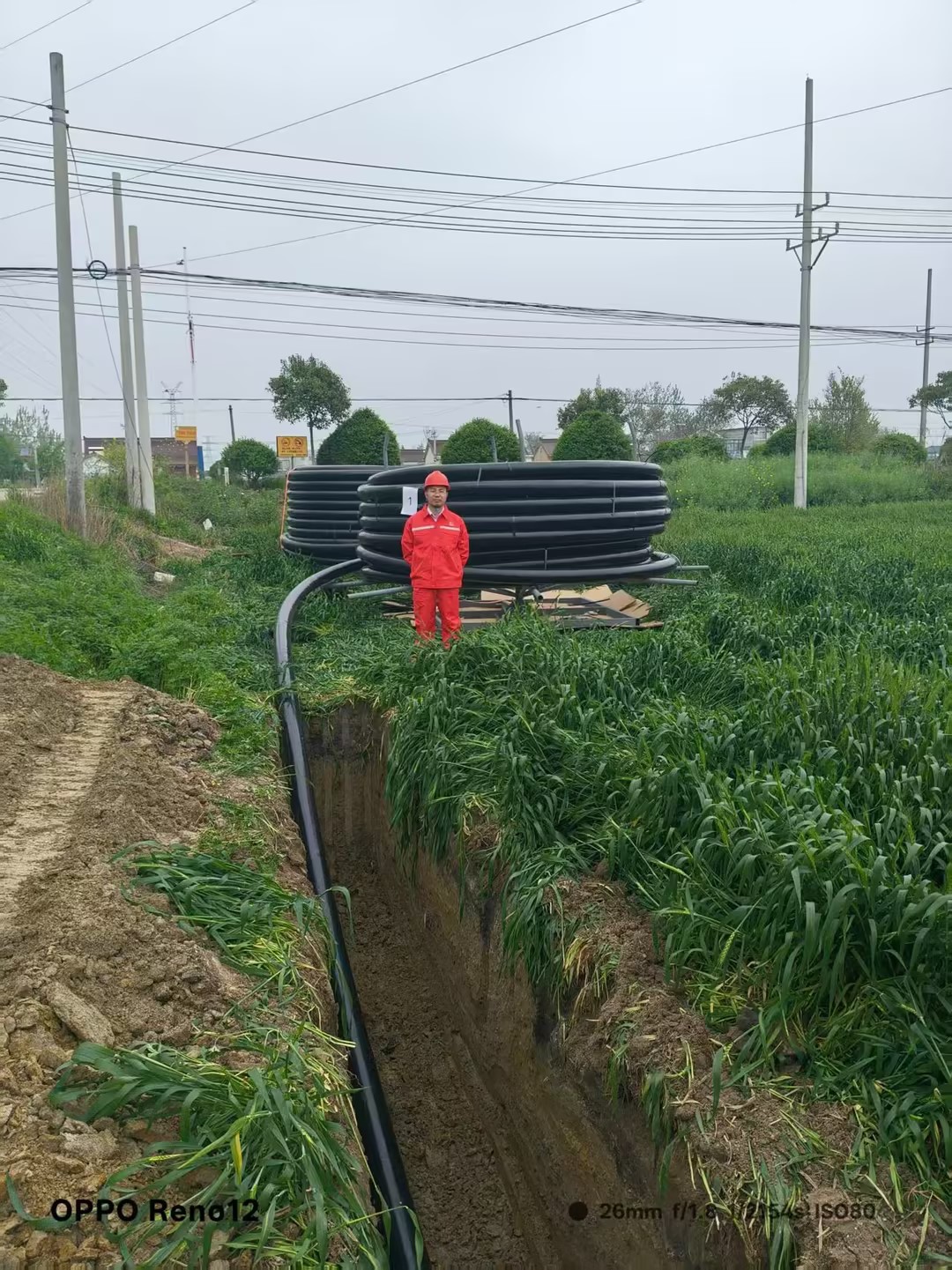
At the Research and Evaluation stage of a reinforced thermoplastic pipe (RTP) project, the question is not only whether RTP can handle high pressure. It is whether a specific pipe configuration can be verified against API 15S, the recognized specification for spoolable reinforced plastic line pipe in oilfield service.
ZYfire Hose Corporation, founded in 2000 and listed on the Beijing Stock Exchange, supplies RTP and composite pipeline products for oil and gas and mining use. The RTP/TCP model with a 2-inch 3500 PSI rating, 79.8 mm outside diameter, and product identifier 3533 is listed in the company's API Spec 15S certification file.
This article explains how to read that certification file, which product parameters are verified, which project constraints are still your responsibility, and how the information flows into a buying decision.
Problem Definition: Certification Alone Does Not Select the Pipe
Oilfield and mining RTP service conditions combine pressure, corrosion, fluid chemistry, and installation geometry. A pipe might carry a 3500 PSI rating yet still be the wrong choice if the internal liner is not suitable for the produced fluid, if the required diameter does not match the fitting system, or if the certificate does not include the reinforcement type requested by the engineer.
The practical buying problem for a Research to Evaluation project is therefore a constraint problem. The buyer must compare:
- certification scope and validity;
- working pressure and outside diameter;
- liner and outer layer materials;
- reinforcement architecture;
- continuous length and installation method;
- minimum order quantity, manufacturing capacity, and lead time.
These are the checkpoints that separate a useful RTP document set from a generic brochure.
Industry Background: Why API 15S RTP Is on the Procurement List
The global RTP market context helps procurement teams understand why this material category is expanding. Strategic Market Research estimated the global reinforced thermoplastic pipe market at USD 7.2 billion in 2024 and projected USD 10.2 billion by 2030, representing a 5.9 percent CAGR. Fact.MR data attributes 71.2 percent of RTP demand to the oil and gas industry as operators look for corrosion-free alternatives to steel.
API Specification 15S, Second Edition (2016), establishes the industry-standard requirements for manufacture and qualification of spoolable reinforced plastic line pipe for oilfield applications, covering pipe diameters up to 6 inches. This is the technical frame a buyer should use when checking an RTP supplier.
For high-pressure reinforced thermoplastic pipe projects, certification is not a marketing label. It is a documented quality and qualification baseline that an engineering team can audit before committing to a project schedule.
Detailed Solution: Reading the Verified RTP/TCP File
The certified ZYfire RTP/TCP pipe is documented with the following product details. Nominal pressure is 3500 PSI. Outside diameter is 79.8 mm. The pipe is supplied on a reel with dimensions of 3700 mm by 1200 mm, a single continuous length of 920 m, a reel weight of 1200 kg, and a full plate weight of 5524 kg.
The outer and inner layers are HDPE or PE-RT, with UV and antioxidant protection available as an option when required by the service environment. The reinforcement material layer can be built with polyester filament, aramid fiber tape, glass fiber tape, steel wire tape, or other qualified tape reinforcement depending on project design.
The reinforcement menu matters because not every RTP construction is identical. A buyer evaluating Oilfield RTP, Offshore Oil & Gas RTP, Mining Underground RTP, or Mining Slurry Transfer RTP should confirm the reinforcement type before comparing nominal pressure ratings.
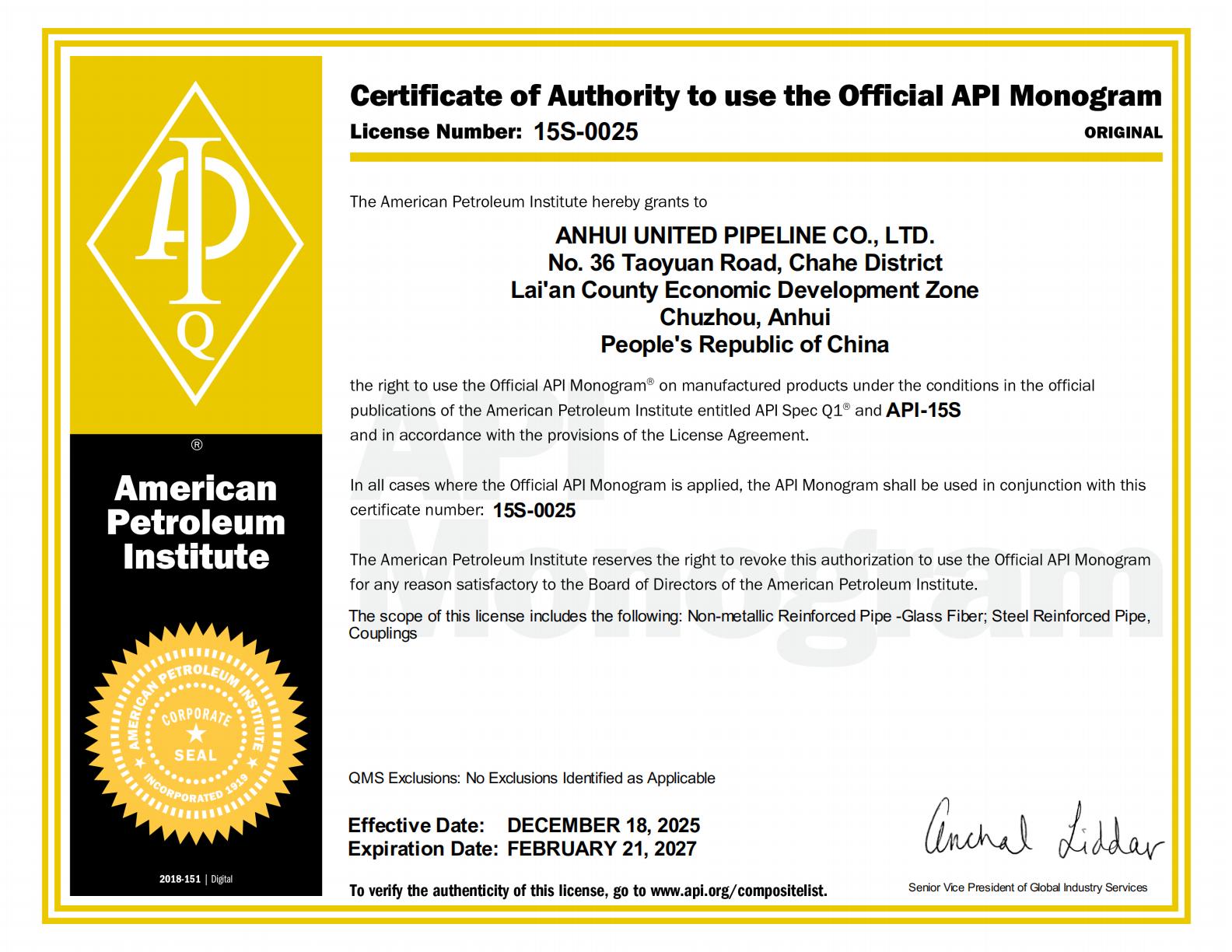
ZYfire's API certificate number is 15S-0025. It is issued by the American Petroleum Institute. The certificate applies to the Global market and lists API Spec Q1 and API Spec 15S as the applicable standards. The certificate file also shows an issue date of 18 December 2025 and an expiry date of 21 February 2027. Always request a current certificate copy before final approval.
The scope in the certificate record is specific: non-metallic reinforced pipe—glass fiber; steel reinforced pipe, couplings. That means a buyer requesting an aramid fiber reinforced RTP or polyester reinforced RTP should ask ZYfire to confirm whether the intended reinforcement construction is covered by the certificate or by a separate qualification record.
Step-by-Step: Evaluate a Certified High-Pressure RTP Package
Step 1. Verify the certificate by number and scope
Ask for the API Spec 15S certificate and check the issuing body, standard name, certificate number, issue date, expiry date, and scope. In the ZYfire RTP/TCP file, the certificate number is 15S-0025, and the certificate scope lists glass fiber reinforced pipe and steel reinforced pipe with couplings.
Step 2. Match working pressure and bore size
The reference product model is a 2-inch 3500 PSI pipe with a 79.8 mm outside diameter. If the project requires a custom bore size or working pressure, ZYfire's OEM/ODM customization scope includes size, diameter, working pressure, weight, pipe length, and bending radius.
Step 3. Confirm material compatibility for the duty fluid
RTP is chosen in oil and gas and mining because of corrosion resistance and no swelling in many hydrocarbon and mine water service conditions. The product file lists HDPE and PE-RT as the inner and outer layer materials. The final selection should still be checked against the actual fluid chemistry, temperature range, and chemical exposure of the project.
Step 4. Use continuous length to reduce fittings
One verified RTP/TCP reel can contain 920 m of pipe. Long continuous lengths reduce the number of fittings and connection points, which is an installation and maintenance advantage. In projects where shutdown time is expensive, this is not just a logistics detail; it is a reliability parameter.
Step 5. Evaluate manufacturing quality control
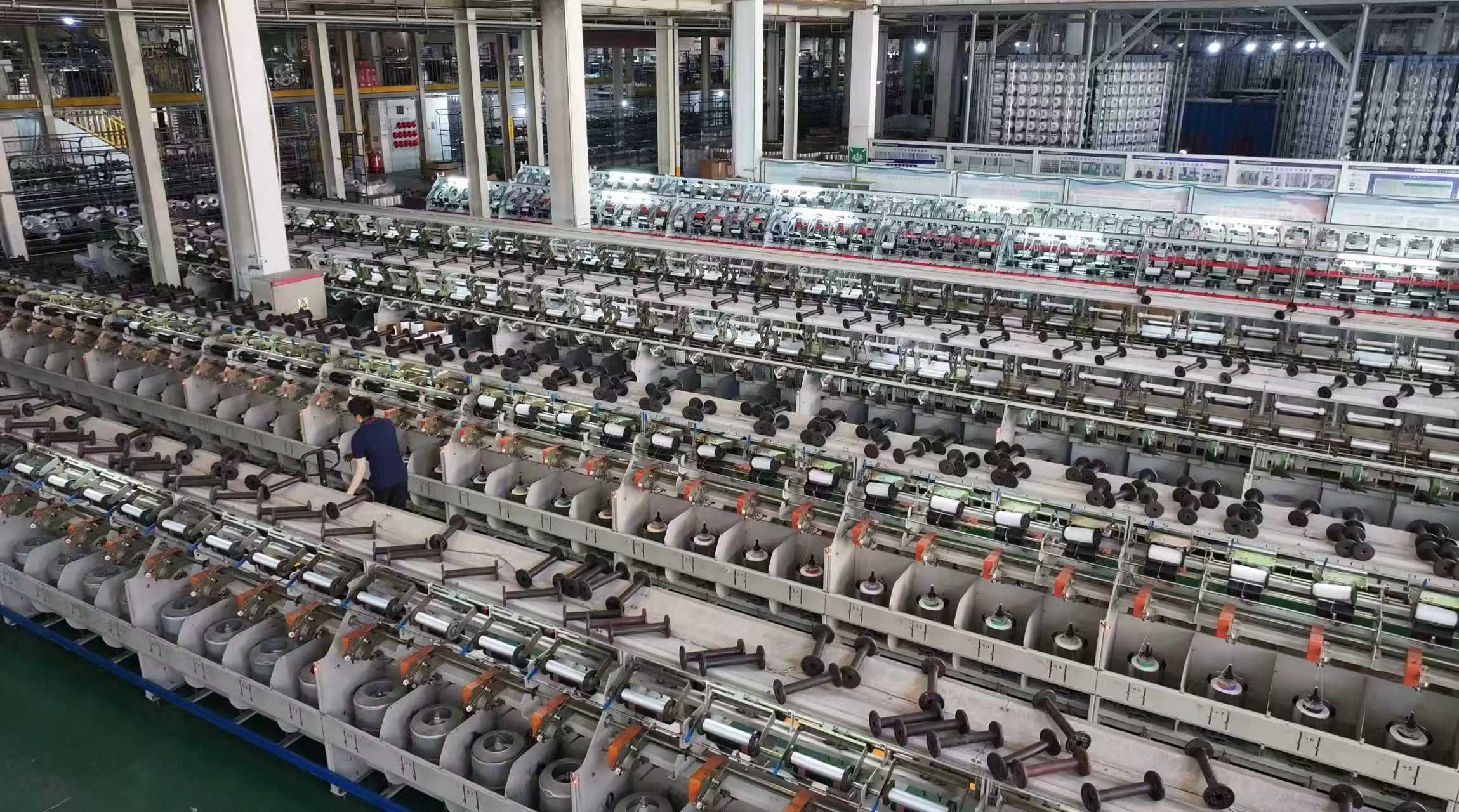
ZYfire's capability record states that production is supported by 100 percent testing. The company also lists OEM and ODM production modes, a monthly capacity of 100,000 meters, a lead time of 30 days, and a minimum order quantity of 50 m. These numbers allow a buyer to check whether the supplier can support the project schedule.
Step 6. Confirm after-sales and installation support
The published after-sales scope includes on-site service and after-sales consultation. For RTP installations in remote oilfield or mining locations, on-site support can be part of the evaluation criteria rather than an optional extra.
Use Cases: Where Certified RTP Constraints Are Stressed
Onshore oilfield RTP
Onshore oilfield RTP is typically used for fluid transmission where corrosion, pressure, and continuous operation are the main constraints. The product application file for this RTP family lists working conditions such as corrosion resistance, higher pressure rating, no swelling, flexibility, long single-pipe length, non-frequent fittings, simple installation, and long cycle life. For an onshore project, the buyer can compare these characteristics directly with the expected duty.
Mining fluid transfer and slurry transportation
Mining projects often require equipment that can tolerate high pressure, corrosive fluids, and explosion-proof site rules. The application record for the RTP family lists corrosion-resistant, explosion-proof, high-pressure tolerance, and API compliance as special requirements, with 24/7 operation mode. This is relevant for mining underground RTP lines and mining slurry transfer RTP applications where downtime is expensive and maintenance access is limited.
Long-term installed volume evidence
The case file for this RTP family includes an OEM/ODM fluid transmission project with a quantity of 120,000 meters and a five-year operating relationship. The recorded result is stable operation under high-pressure conditions, no leakage, and reduced maintenance costs. This type of evidence matters because it connects the certified product specification to an actual operating result.
Comparison Table: API 15S Certification File and RTP/TCP Product Data
| Checkpoint | Verified data from the certified RTP file |
|---|---|
| Product model | RTP/TCP 2-inch 3500 PSI, O.D. 79.8 mm, product ID 3533 |
| Certification | API Spec 15S |
| Certificate number | 15S-0025 |
| Issuing authority | American Petroleum Institute |
| Applicable standards | API Spec Q1, API Spec 15S |
| Market applicability | Global market |
| Certificate scope | Non-metallic reinforced pipe—glass fiber; steel reinforced pipe, couplings |
| Certificate dates | Issue date: 18 December 2025; expiry date: 21 February 2027 |
| Liner and outer layer | HDPE, PE-RT; UV and antioxidant protection optional |
| Reinforcement options | Polyester filament, aramid fiber tape, glass fiber tape, steel wire tape |
| Single continuous length | 920 m per reel |
| Reel specification | 3700 mm by 1200 mm; reel weight 1200 kg; full plate weight 5524 kg |
| Customization | Size, diameter, working pressure, weight, length, bending radius |
| Manufacturing capacity | 100,000 meters per month |
| Lead time | 30 days |
| Minimum order | 50 m |
| Quality control | 100% test |
| After-sales | On-site service, after-sales consultation |
The table above is a verification aid, not a substitute for the current certificate or a project-specific engineering review. Always confirm that the exact pipe construction, size, pressure rating, and certificate scope match your project before ordering.
Frequently Asked Questions
Is ZYfire RTP API 15S certified?
Yes. The RTP/TCP product is covered by API certificate number 15S-0025, issued by the American Petroleum Institute. The applicable standards are API Spec Q1 and API Spec 15S. The certificate applies to the global market, and its listed scope covers non-metallic reinforced pipe—glass fiber and steel reinforced pipe with couplings.
What customization options are available for RTP/TCP working pressure and bore size?
ZYfire supports OEM and ODM production of RTP. The customization scope includes size, diameter, working pressure, weight, pipe length, and bending radius. For a standard reference configuration, the verified RTP/TCP model is a 2-inch 3500 PSI pipe with a 79.8 mm outside diameter.
What recorded performance supports RTP lifecycle cost?
The source record for one OEM/ODM fluid transmission project shows 120,000 meters of RTP used over a five-year period. The recorded result is stable operation under high-pressure conditions, no leakage, and reduced maintenance costs. This evidence supports lifecycle cost discussions, while a project-specific quotation should be obtained separately.
Can a small quantity be ordered to evaluate RTP?
The verified minimum order for OEM/ODM RTP is 50 meters. Because the standard production lead time is 30 days, a pilot order can be aligned with a project decision schedule. The inquiry should include required diameter, working pressure, continuous length, and the specific oil and gas or mining application.
What is the lead time for ZYfire RTP production?
The published manufacturing lead time is 30 days. Monthly manufacturing capacity is 100,000 meters. For an exact delivery date, the buyer should send a formal inquiry with quantity, specification, and destination, because current capacity and logistics conditions can affect scheduling.
Next step: If you are evaluating API 15S certified RTP for a specific oilfield, offshore, or mining project, send the required pressure, diameter, length, and application details to the ZYfire sales team. You can also download the current ZYfire product brochure below.
Download ZYfire Hose Corporation product brochure (PDF)
Conclusion
An API 15S certificate is an evidence point, not the whole decision. For high-pressure reinforced thermoplastic pipe in oil and gas and mining service, the buyer should verify the certificate number, scope, pressure rating, outside diameter, liner and reinforcement materials, continuous length, capacity, and lead time.
ZYfire's RTP/TCP product provides a documented reference point for this kind of evaluation: API Spec 15S certificate 15S-0025, a 2-inch 3500 PSI model, 79.8 mm outside diameter, HDPE or PE-RT layers, and a range of tape reinforcement options. The next step is to translate that verified file into a project-specific specification and a formal request for quotation.