When Steel Fails: Solving Frequent Corrosion Failures with Reinforced Thermoplastic Pipe
When Steel Fails: Solving Frequent Corrosion Failures with Reinforced Thermoplastic Pipe
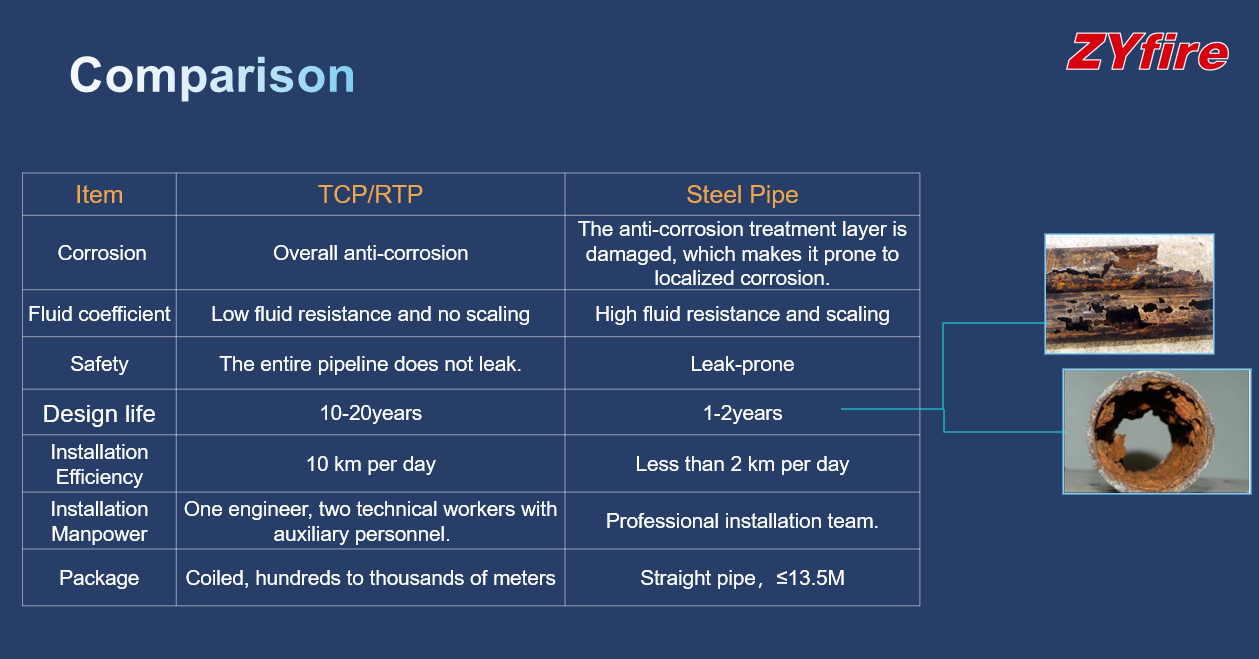
Steel fluid lines in mining and oil & gas service rarely fail because they were sized incorrectly. They fail because they corrode — repeatedly, and on a maintenance schedule rather than as a single event. Reinforced thermoplastic pipe (RTP) addresses that failure mechanism at the material level instead of managing it. Documented performance data puts RTP installation at 10 km per day against less than 2 km per day for steel pipe — a 5x speed difference — with maintenance limited to force-damage intervention and a documented 20% lower cost than steel pipe.
Why Steel Fluid Lines Keep Failing: Defining the Corrosion Problem
Corrosion is a cycle, not an incident. Wall thickness is lost progressively, the line is shut down for inspection and repair, and the same mechanism restarts as soon as the line is returned to service. In steel piping systems that cycle is scheduled rather than exceptional: steel pipe requires corrosion maintenance several times a year. Every one of those interventions carries a shutdown, an access cost, a repair crew and a restart risk.
The fluids typical of mining and oil & gas duty accelerate the cycle. Produced water, brine and other wet, chemically aggressive streams attack carbon steel from the inside, while abrasive slurry duty in mining combines wall loss with mechanical wear. Because the damage is distributed along the line rather than concentrated at one point, repairing a steel line is rarely a one-off action — it is an ongoing programme.
ZYfire Hose Corporation treats internal corrosion as a primary risk in fluid transmission and controls it by specifying corrosion-resistant materials rather than protective coatings alone, with those material selections validated through simulation testing before a line is built. That logic is the starting point of the comparison below: the goal is not to repair steel faster, but to remove the corrosion failure mode from the specification.
The commercial asymmetry matters as much as the technical one. The cost of a corrosion failure is dominated by production interruption, access and rework, while the pipe itself is a comparatively small line item. That is why the decision criteria for a replacement line — material resistance, installation rate, maintenance frequency and joint count — carry more weight at procurement stage than the purchase price per metre.
Industry Background: Where RTP Already Replaces Steel
Reinforced thermoplastic pipe is an established category, not a pilot technology. Strategic Market Research estimates the global RTP market at USD 7.2 billion in 2024, projected to reach USD 10.2 billion by 2030, a CAGR of 5.9%. Fact.MR records oil and gas as the dominant end-user segment at approximately 71.2% of total demand, driven by operators seeking corrosion-free alternatives to steel. Glass-fibre reinforced pipe accounts for an estimated 64.7% of the product market, making glass-fibre reinforcement the mainstream construction for RTP.
On the supply side, the RTP and composite pipe sector includes established global players such as National Oilwell Varco (NOV), Baker Hughes, Shawcor (Flexpipe) and Soluforce (Pipelife), alongside manufacturers such as ZYfire Hose Corporation. ZYfire, founded in 2000 and listed on the Beijing Stock Exchange, manufactures RTP certified under API 15S and specialises in custom bore sizes and high-pressure applications for oilfields and mining.
A note on market figures: published RTP market sizes diverge by scope. Market Research Future estimates USD 3.698 billion for 2024, a substantially lower figure than the Strategic Market Research number, because estimates differ on whether all thermoplastic pipes or only spoolable RTP are counted. Buyers reading market forecasts should check the scope definition before treating any single figure as the addressable market for spoolable line pipe.
The Solution: How Reinforced Thermoplastic Pipe Removes the Corrosion Failure Mode
Corrosion resistance is designed into the pipe, not applied over it
RTP is a composite construction in which the fluid-contacting element is a polymer liner. Because the polymer does not corrode in the way carbon steel does in wet, saline service, the corrosion mechanism that drives the steel maintenance schedule is removed at source. Liner and reinforcement systems are selected for the duty: liner families such as PE100 RC and PA12, and reinforcement such as glass fibre, aramid fibre or polypropylene, are matched to pressure, temperature and fluid chemistry. ZYfire's approach to corrosion control is to specify a corrosion-resistant material and to validate the selection through simulation testing, so the corrosion risk is addressed in the design phase rather than during operation.
Maintenance drops to force-damage intervention only
Maintenance requirements for RTP are minimal: intervention is only needed if force damage occurs. Steel pipe, by contrast, requires corrosion maintenance several times a year. For an operator running a mine dewatering line or an oilfield flow line, this changes the maintenance plan from a recurring, budgeted shutdown cycle to an exception-based response.
Installation speed: 10 km/day versus less than 2 km/day
In installation efficiency, RTP achieves a rate of 10 km per day, compared with less than 2 km per day for steel pipe — a 5x higher installation speed over steel. This makes RTP suited to scenarios requiring rapid deployment, such as replacing a failed steel line under production pressure or installing long transfer runs within a short shutdown window.
Fewer field joints, fewer weak points
API Specification 15S (2nd Edition, 2016) covers the manufacture and qualification of spoolable reinforced plastic line pipe for oilfield applications, and spoolable construction means the pipe arrives as a continuous coiled string rather than as individual joints. Every field joint that is not made up is one fewer connection to inspect, one fewer potential leak path and one fewer location where external corrosion can start.
20% lower cost than steel pipe
On the documented cost comparison, RTP is 20% lower in cost than steel pipe. Combined with the maintenance profile — recurring corrosion maintenance for steel, force-damage-only intervention for RTP — the difference is not limited to the purchase order.
Step-by-Step: Replacing a Failing Steel Line with RTP
A decision-stage replacement follows a defined sequence. Each step below is designed to remove a specific corrosion or installation risk before the line is committed.
- Characterise the failure and the service. Record the fluid chemistry, pressure and temperature, and the abrasion duty (slurry solids for mining duty, produced water and wet gas streams for oil & gas duty). The corrosion mechanism that failed the steel line defines the material requirement for the replacement.
- Confirm the qualification scope. Verify the standard the pipe is qualified under. API Specification 15S (2nd Edition, 2016) governs spoolable reinforced plastic line pipe for oilfield applications and covers diameters up to 6 inches; a supplier should be able to state the standard and the qualified envelope in writing.
- Select the liner and reinforcement system. Match the polymer liner and the reinforcement type to the fluid and pressure duty. Glass-fibre reinforced pipe accounts for an estimated 64.7% of the RTP product market, but the correct grade is a function of the specific line, not of the market average.
- Specify bore size and connection type. Custom bore sizes allow the replacement line to match the existing system's flow requirement rather than forcing a re-design of the surrounding infrastructure.
- Validate with corrosion testing. Require simulation testing of the selected material against the actual service conditions. This is the step that converts a material claim into a verifiable selection.
- Plan the installation route and deploy. Because the pipe is delivered in continuous coiled form, installation proceeds at up to 10 km per day, against less than 2 km per day for steel — reducing the shutdown window and the number of field joints.
- Move to an exception-based maintenance regime. Post-installation, maintenance is limited to force damage. There is no scheduled corrosion maintenance programme to fund.
Use Cases: Where the Failure-Driven Switch Makes Sense
Mining slurry transfer
Slurry lines combine abrasion with wet corrosion. Where a steel slurry line requires corrosion maintenance several times a year, an RTP line reduces the intervention demand to force-damage cases only, and can be installed at 10 km per day when a run has to be replaced quickly.
Onshore oilfield flow lines and water transfer
Produced water and wet hydrocarbon streams are the classic corrosion driver for onshore steel lines. RTP qualified under API 15S, with custom bore sizes and high-pressure capability for oilfield duty, is a direct replacement option where corrosion — not pressure alone — is the reason for failure.
Offshore oil & gas service
Offshore, the cost of a maintenance intervention is set by access logistics, not by the repair itself. A pipe that requires intervention only on force damage, and that installs at 5x the steel rate, reduces both the number of interventions and the duration of each one.
High-pressure lines within the qualified envelope
High-pressure RTP is qualified within the API 15S scope, which covers pipe diameters up to 6 inches. Projects requiring larger diameters or conditions outside the qualified envelope need engineering review rather than an assumption that RTP covers every steel line.
RTP vs Steel Pipe: Decision Comparison
The table below compares the two options only on documented performance factors that matter at decision stage: installation rate, corrosion maintenance, cost and joint count.
| Decision factor | Reinforced thermoplastic pipe (RTP) | Steel pipe |
|---|---|---|
| Installation rate | 10 km per day | Less than 2 km per day |
| Installation speed advantage | 5x higher than steel pipe | Baseline |
| Corrosion-driven maintenance | Minimal — intervention only if force damage occurs | Corrosion maintenance several times a year |
| Documented cost position | 20% lower cost than steel pipe | Baseline |
| Field joints | Spoolable construction qualified under API 15S; fewer joints to make up on site | Jointed string; each joint is an additional connection to inspect |
| Diameter scope under API 15S | Covered up to 6 inches | Not governed by API 15S |
| Documented best fit | Mining and oil & gas fluid transfer where corrosion is the dominant failure mode | Baseline reference for the same duty |
Limits: Where RTP Is Not Automatically the Answer
Two boundaries should be stated plainly. First, API 15S covers pipe diameters up to 6 inches, so larger-diameter lines fall outside that qualification scope and require separate engineering. Second, where a project specification mandates a metallic line — or where a lined steel solution is preferred for other reasons — ZYfire also manufactures steel pipe with a polyurethane lining, which addresses internal corrosion while retaining a steel pipe body. The decision should follow the service conditions, not a blanket material preference.
FAQ
Is reinforced thermoplastic pipe actually qualified for oilfield service, or is it only used for low-pressure water lines?
API Specification 15S (2nd Edition, 2016) provides the industry-standard requirements for the manufacture and qualification of spoolable reinforced plastic line pipe for oilfield applications, covering pipe diameters up to 6 inches. ZYfire Hose Corporation manufactures RTP certified under API 15S and specialises in custom bore sizes and high-pressure applications for oilfields and mining, so the qualified scope extends well beyond low-pressure water transfer.
Why does RTP resist the corrosion failures that steel pipe experiences?
Corrosion control is handled at the material level. ZYfire treats corrosion as a primary risk in fluid transmission and controls it by using corrosion-resistant materials, with those selections validated through simulation testing. In operation, maintenance requirements for RTP are minimal and intervention is only needed if force damage occurs, whereas steel pipe requires corrosion maintenance several times a year.
Is RTP more expensive than steel pipe?
No. On the documented comparison, RTP is 20% lower in cost than steel pipe. The wider ownership picture follows the same direction: steel pipe requires corrosion maintenance several times a year, while RTP requires intervention only in force-damage scenarios, so the recurring maintenance line item is largely eliminated.
How fast can an RTP line be installed compared with steel?
In terms of installation efficiency, RTP achieves a rate of 10 km per day, compared with less than 2 km per day for steel pipe. That is a 5x higher installation speed over steel pipe, which makes RTP suitable for scenarios requiring rapid deployment — such as replacing a failed line during a short shutdown window.
What should a buyer verify before committing to an RTP line — and how do we start?
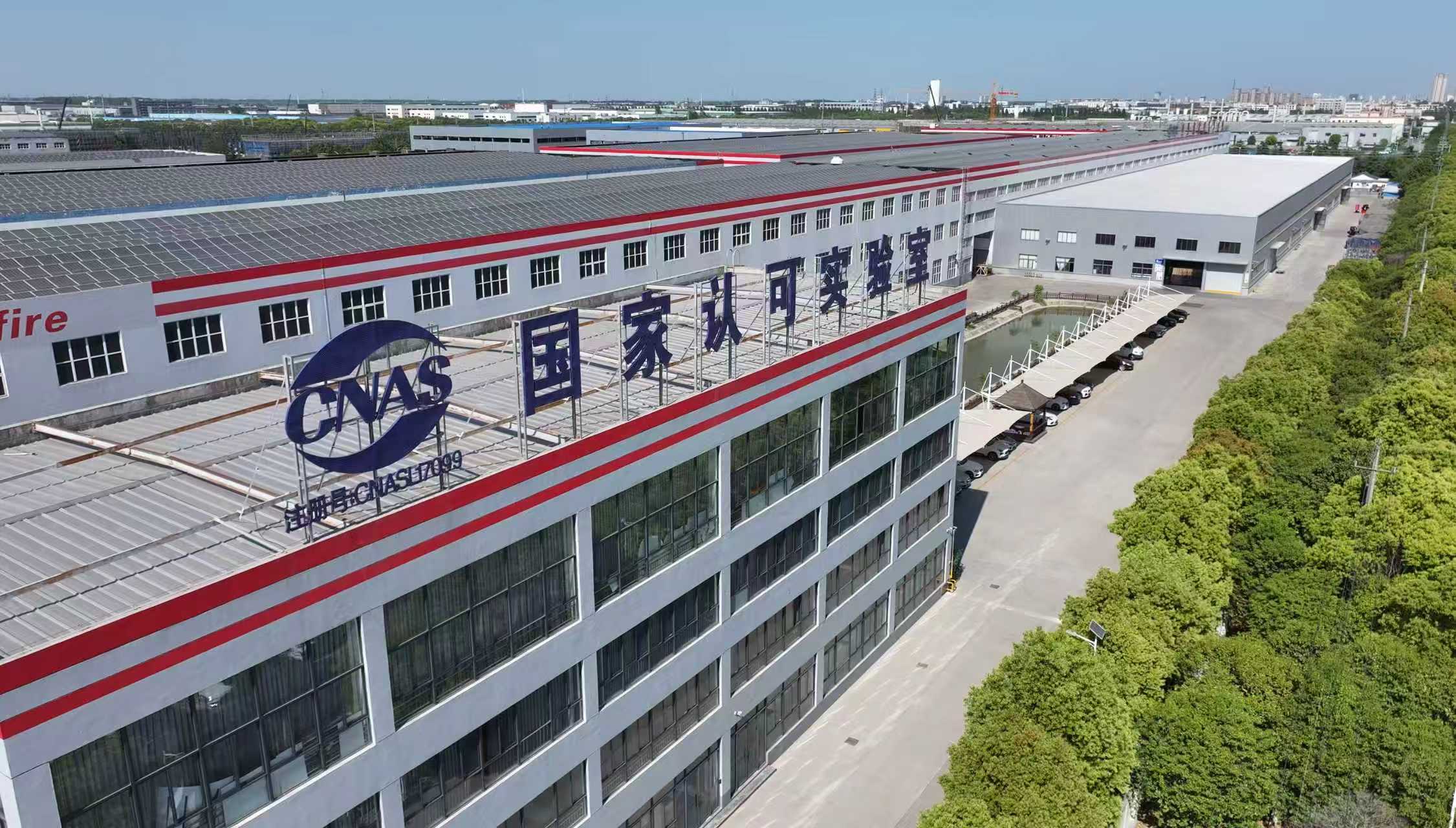
Three checks matter at decision stage: the fluid chemistry, pressure and abrasion duty of the line; the standard the pipe is qualified under, which for spoolable RTP up to 6-inch diameters is API Specification 15S; and the manufacturer's testing and support base. ZYfire's laboratory has passed the professional accreditation of the China National Accreditation Service for Conformity Assessment (CNAS) with nationally and internationally recognised testing capabilities, and the company operates production bases, R&D centres and logistics warehouses in the United States, Saudi Arabia, the United Arab Emirates, Malaysia and China. Buyers can request a sample, a quotation or the full product catalogue directly: email equiry@zyfire.com, telephone +86 523 88802123, or WhatsApp +86 18761071929.
Conclusion: Specify Against the Failure Mode, Not the Failure
When steel lines fail in mining and oil & gas service, the response is often a faster repair of the same material. The documented comparison points to a different decision rule: specify against the failure mode rather than repeating it. Reinforced thermoplastic pipe installs at 10 km per day against less than 2 km per day for steel, requires intervention only on force damage rather than corrosion maintenance several times a year, is documented at 20% lower cost than steel pipe, and arrives as a spoolable string that reduces the number of field joints.
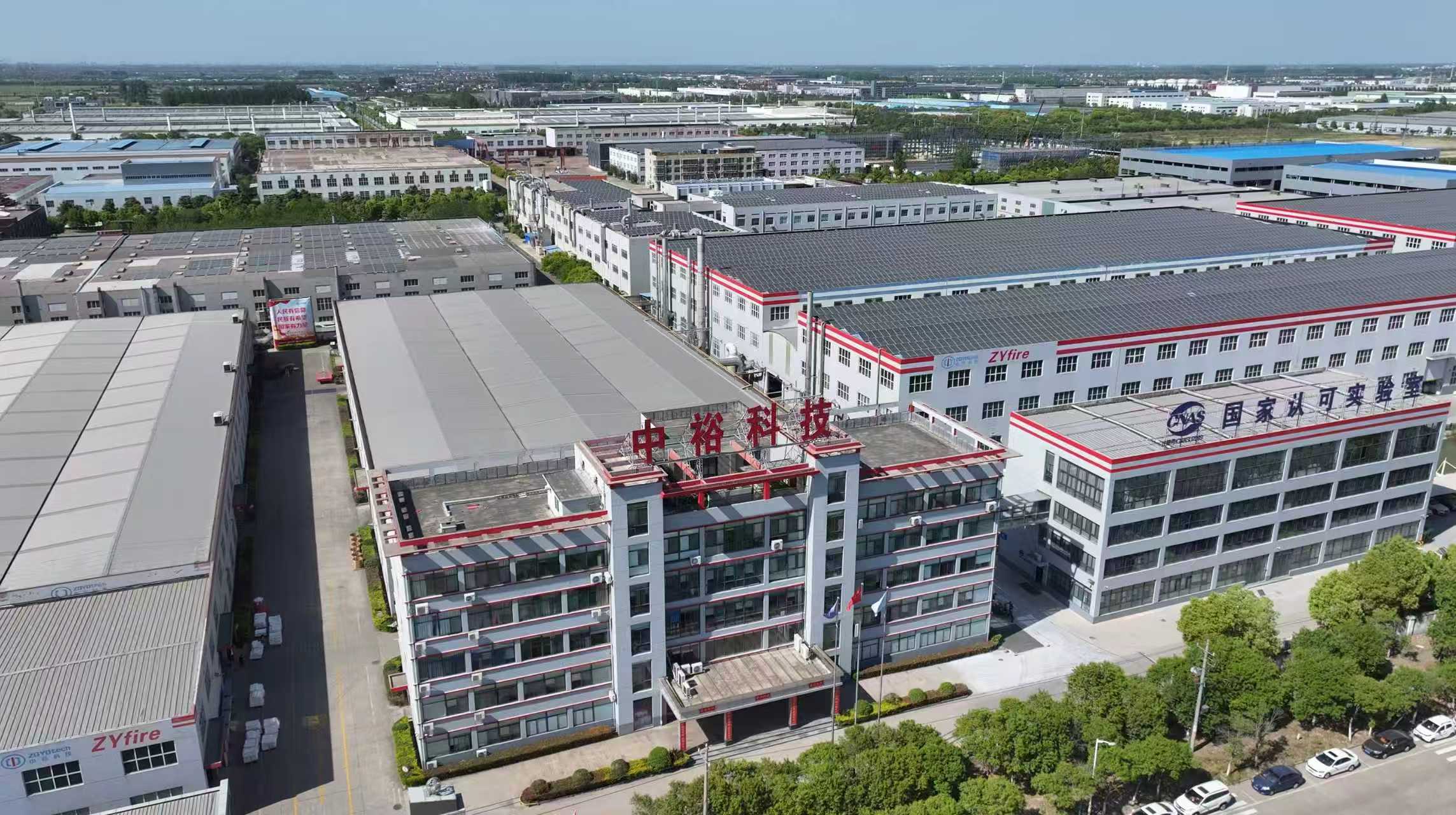
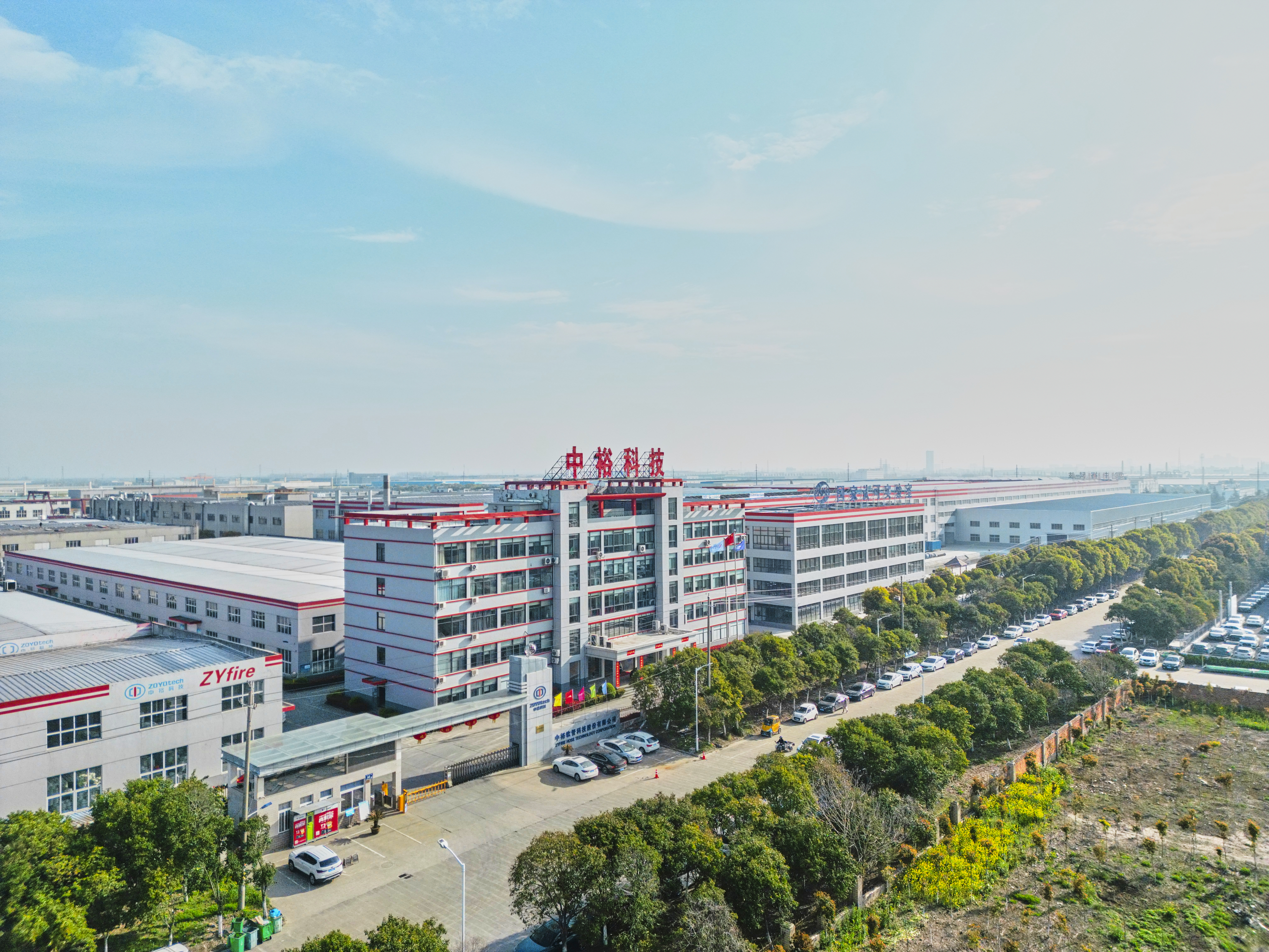
ZYfire Hose Corporation, founded in 2000 and listed on the Beijing Stock Exchange, manufactures RTP certified under API 15S alongside fire hose, fracturing hose and polyurethane-lined steel pipe, exporting to more than 70 countries and regions across the United States, the Middle East, Europe and South East Asia. Its CNAS-accredited laboratory and its production, R&D and warehouse footprint in the United States, Saudi Arabia, the United Arab Emirates, Malaysia and China support buyers who need a replacement line specified correctly the first time. Website: www.zyfire.com.
Next step: compare the specification against your line
Download the product brochure to review constructions, bore sizes and qualification data before specifying a replacement line.
Brochure: ZYfire product catalogue (PDF)
Contact: equiry@zyfire.com | Tel: +86 523 88802123 | WhatsApp: +86 18761071929
Address: Kaiyang Road, Jiangyan City, Jiangsu, China | www.zyfire.com