
Biogas Flare Systems 101: Methane Combustion for Landfill and Waste-to-Energy
A biogas flare system is combustion equipment that safely burns methane-bearing gas produced by landfills, anaerobic digesters, agricultural biogas plants, and wastewater treatment processes. It is used when that gas cannot be routed to energy recovery, and its core job is to oxidise methane in a controlled flame instead of letting it escape to the atmosphere. This 101-level guide explains what biogas flare systems are, how open and enclosed biogas flares differ, how continuous combustion of low-pressure and variable-flow gas is achieved, and where these systems fit into landfill and waste-to-energy operations.
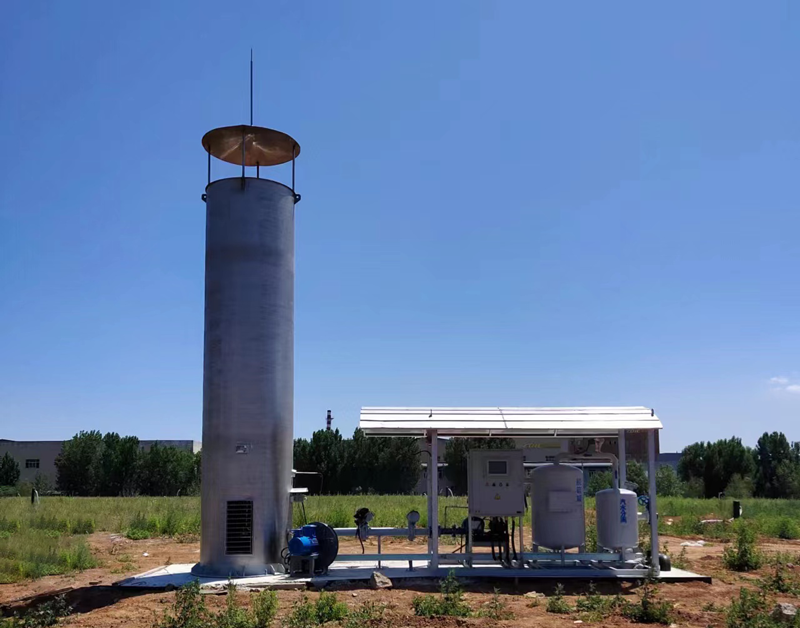
Problem Definition: Why Landfill Gas and Biogas Need Controlled Combustion
Landfill sites, anaerobic digestion projects, agricultural biogas plants, and wastewater treatment facilities generate methane-containing gas continuously. In most cases this gas is available at low pressure, produced at a variable flow rate, and released around the clock rather than in a single planned batch. Those three conditions define the problem that a biogas flare system is built to solve.
The gas itself is not uniform. Its methane concentration is typically 35%–65% CH₄, depending on the source, and the flow rate changes with waste age, weather, digester feeding cycles, and treatment plant loading. A combustion device handling this stream therefore has to tolerate a wide operating envelope rather than a single steady-state condition.
When the gas is not captured for energy recovery, controlled combustion remains the practical way to reduce the methane that would otherwise reach the atmosphere and to support the site’s environmental compliance. A biogas flare does not store the gas or convert it into a product — it destroys the methane through high-temperature oxidation, converting the stream into combustion products that can be discharged safely.
The practical requirement in one line: a biogas flare must handle low-pressure, variable-flow, methane-containing gas on a continuous basis, with stable combustion and reliable ignition in an outdoor environment. Automatic ignition, stable combustion, and outdoor reliability are the core performance expectations for this application.
Industry Background: Why Flare Systems Are Back in Focus
Flare and combustion equipment sits at the intersection of two pressures: the need to dispose of waste gas safely, and the need to reduce methane and hydrocarbon emissions. Both pressures have become more visible in recent years.
Global gas flaring volumes reached 151 billion cubic meters (bcm) in 2024, the highest level since 2007, according to the World Bank. That figure captures the scale of gas being burned rather than used, and it explains why efficient relief and combustion systems remain a live topic for regulators, operators, and equipment buyers.
The commercial side of the market reflects the same trend. The global flare systems market is valued at approximately USD 4.8 billion in 2025, according to Dataintelo, driven by regulatory pressure on hydrocarbon emissions and recovery in oil and gas investments. Within that broader market, the totally enclosed ground flare (TEGF) segment — a category associated with destruction efficiencies exceeding 98% — was valued at USD 113 million in 2024, based on Intel Market Research data.
Regionally, Grand View Research reports that Asia-Pacific holds a 35% market share in the flare gas recovery system market as of 2025, the largest regional share globally. For landfill and biogas operators, the takeaway is straightforward: combustion equipment is being assessed not only on safety and uptime, but on how much methane it actually destroys and how consistently it does so.
On the supply side, the segment is served by a mix of established combustion specialists — Zeeco, John Zink Hamworthy (Koch), Honeywell UOP, and Baker Hughes are frequently named among the major global players in flare and combustion, according to HTF Market Intelligence — alongside regional manufacturers such as Shandong Zexuan Environmental Protection Technology Co., Ltd.. For a buyer at the awareness and research stage, the useful question is not “who is biggest”, but “which configuration suits my gas source, flow profile, and site”.
What Is a Biogas Flare System?
A biogas flare system is a combustion assembly designed to burn methane-containing gas from biological and waste sources. It combines a flare stack or enclosure, a burner or flare tip, an ignition source, and monitoring and control components into a system that can operate continuously or intermittently as gas becomes available.
The ZXE-BGF Series from Zexuan is an example of this product category. It is classified as an open biogas flare, an enclosed biogas flare, a landfill gas flare (LFG flare), an anaerobic digestion flare, and a methane destruction flare. In other words, the same series covers several configurations rather than a single fixed design.
The gas sources it is designed for are landfill gas, biogas, digester gas, and wastewater treatment gas. Typical operating conditions include a methane concentration of 35%–65% CH₄, an operating temperature typically between 800°C and 1100°C, and a methane destruction efficiency of ≥98% depending on system design and operating conditions. Automatic ignition and flame monitoring are available, and the system can be configured for continuous or intermittent operation.
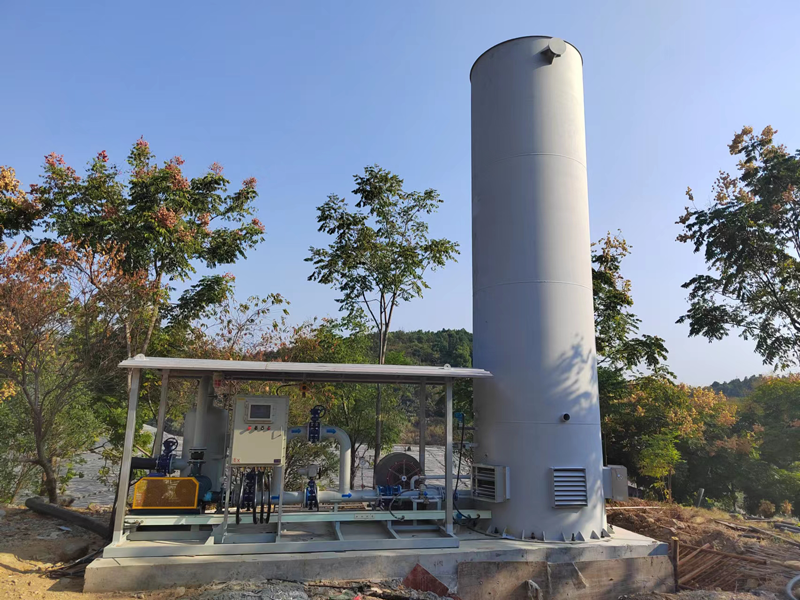
Open vs Enclosed Biogas Flares: The Core Difference
The most common way to categorise biogas flares is by how the flame is contained.
An open biogas flare burns the gas in a flame that is exposed to the open air, typically at the top of a stack. Because there is no enclosure around the combustion zone, the design is comparatively simple, and it relies on the burner and flame stabilisation to keep combustion going across the full range of gas flows.
An enclosed biogas flare burns the gas inside an enclosure or chamber rather than in an open flame. Containing the combustion zone allows the flare to manage the combustion process within a defined structure, and it is the configuration most associated with controlled emission performance and reduced visual impact on a site.
Both configurations are represented in the ZXE-BGF Series, and both are intended for the same underlying duty: continuous or intermittent destruction of methane from landfill gas, biogas, digester gas, and wastewater treatment gas. The choice between them is a project-level decision that depends on site conditions, gas characteristics, and the compliance requirements the operator has to meet — not on a universal “better” option.
ZXE-BGF Series: A Working Example of Methane Combustion
To make the category concrete, it helps to look at how one series is specified. The ZXE-BGF Series biogas flare is built around a defined set of gas sources, materials, and performance parameters.
Gas sources and operating envelope
- Gas sources: landfill gas, biogas, digester gas, and wastewater treatment gas.
- Methane concentration: typically 35%–65% CH₄, depending on the source.
- Gas flow capacity: customised according to project requirements.
- Operating temperature: typically 800°C–1100°C.
- Methane destruction efficiency: ≥98%, depending on system design and operating conditions.
- Ignition and monitoring: automatic ignition and flame monitoring system available.
- Operation mode: continuous or intermittent operation design.
Materials and construction
Material selection in a biogas flare is driven by the corrosive and thermal environment of the gas stream. The ZXE-BGF Series uses carbon steel, hot-dip galvanized steel, SS304, and SS316L, with high-temperature resistant alloys for burner components. That combination covers the structural body of the flare as well as the parts exposed to the highest temperatures.
Why the low-calorific, low-pressure case matters
Landfill gas and digester gas are not the same as high-pressure process gas. They arrive at low pressure and with variable flow, and their methane content can fall or rise depending on the source. Designing for low-calorific gas combustion, with automatic ignition and flame monitoring, is what allows the system to keep a stable flame rather than losing combustion when conditions shift.
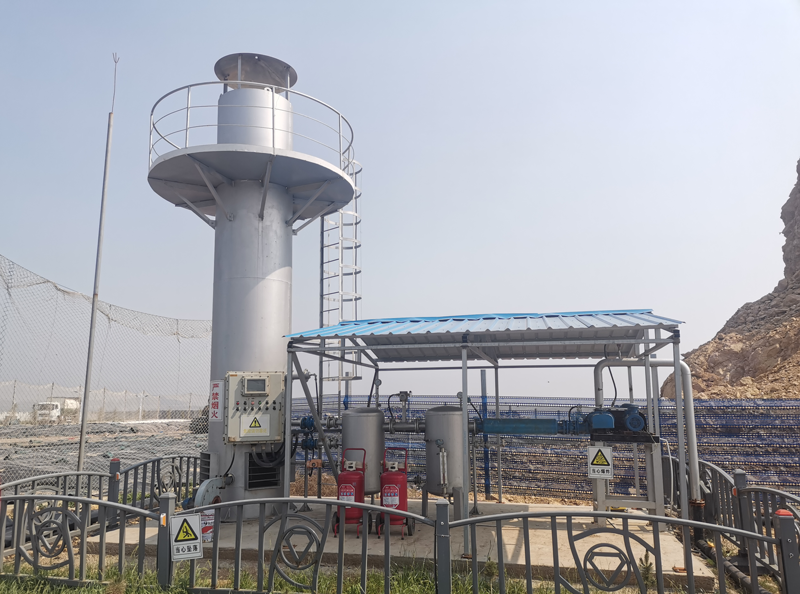
Step-by-Step Breakdown: How a Biogas Flare System Operates
The sequence below describes how a biogas flare system of this type is set up to work. A typical installation pairs the flare with a blower, an ignition system, and a monitoring system.
Step 1 — Gas collection and delivery
Methane-containing gas is collected from the source — a landfill wellfield, a digester, or a wastewater treatment process — and routed to the flare. Where the available pressure is low, a blower is used to move the gas to the combustion point. This is why low-pressure handling is designed into the system rather than added later.
Step 2 — Automatic ignition
The system ignites the gas automatically. Automatic ignition is one of the stated requirements of the landfill gas and biogas application, because gas availability is continuous and the flare may need to re-establish a flame without manual intervention.
Step 3 — Combustion at elevated temperature
Combustion takes place at a typical operating temperature of 800°C–1100°C. This temperature range is what drives methane destruction, and it is maintained within the design window of the burner and the high-temperature resistant burner components.
Step 4 — Flame monitoring
A flame monitoring system confirms that combustion is present and stable. If the flame is lost, the monitoring function is what allows the system to respond rather than continue venting unburned gas.
Step 5 — Continuous or intermittent operation
Depending on the project, the flare is configured for continuous operation or intermittent operation. Continuous design suits sites where gas is produced steadily; intermittent design suits sites where gas availability varies and the flare has to start and stop as required.
Decision point: the single most important specification input is the gas itself — its source, its methane concentration range (typically 35%–65% CH₄), and its flow profile. Because gas flow capacity is customised according to project requirements, the flare is sized and configured rather than selected from a fixed catalogue.
Use Cases: Where Biogas Flares Are Applied
The ZXE-BGF Series is intended for municipal landfill sites, waste management facilities, wastewater treatment plants, anaerobic digestion projects, agricultural biogas plants, food processing waste treatment, and renewable energy projects. Each of these settings shares the same underlying condition: methane-containing gas is generated continuously at low pressure and variable flow.
Municipal landfill sites
Landfill gas is produced as waste decomposes, and it continues for years after a site stops accepting waste. A landfill gas flare provides a controlled route for that gas when it is not being used for energy generation.
Wastewater treatment plants
Wastewater treatment gas is another source named in the series specification. Here the flare handles gas generated by the treatment process itself, again under low-pressure and variable-flow conditions.
Anaerobic digestion and agricultural biogas plants
Digester gas from anaerobic digestion projects and agricultural biogas plants fluctuates with feeding cycles. A flare configured for continuous or intermittent operation can match that pattern.
Food processing waste treatment and renewable energy projects
Food processing waste treatment and renewable energy projects also produce methane-bearing gas streams. In these settings, flaring supports the environmental compliance side of the operation while the recoverable portion of the gas is directed to energy use.
Comparison Table: Key Specifications of the ZXE-BGF Series
The table below consolidates the verified specification points for the series. It is a reference for understanding the operating envelope, not a substitute for project-specific engineering.
| Specification | ZXE-BGF Series |
|---|---|
| Product category | Biogas flare / landfill gas flare / methane combustion system |
| Configurations | Open biogas flare; enclosed biogas flare; landfill gas (LFG) flare; anaerobic digestion flare; methane destruction flare |
| Gas sources | Landfill gas, biogas, digester gas, wastewater treatment gas |
| Methane concentration | Typically 35%–65% CH₄, depending on source |
| Gas flow capacity | Customised according to project requirements |
| Operating temperature | Typically 800°C–1100°C |
| Methane destruction efficiency | ≥98%, depending on system design and operating conditions |
| Ignition and monitoring | Automatic ignition and flame monitoring system available |
| Operation mode | Continuous or intermittent operation design |
| Materials | Carbon steel, hot-dip galvanized steel, SS304, SS316L, high-temperature resistant alloys for burner components |
| Typical matched equipment | Biogas flare stack, blower, ignition system, monitoring system |
| Application environments | Municipal landfill sites, waste management facilities, wastewater treatment plants, anaerobic digestion projects, agricultural biogas plants, food processing waste treatment, renewable energy projects |
How Zexuan Fits Into the Biogas Flare Landscape
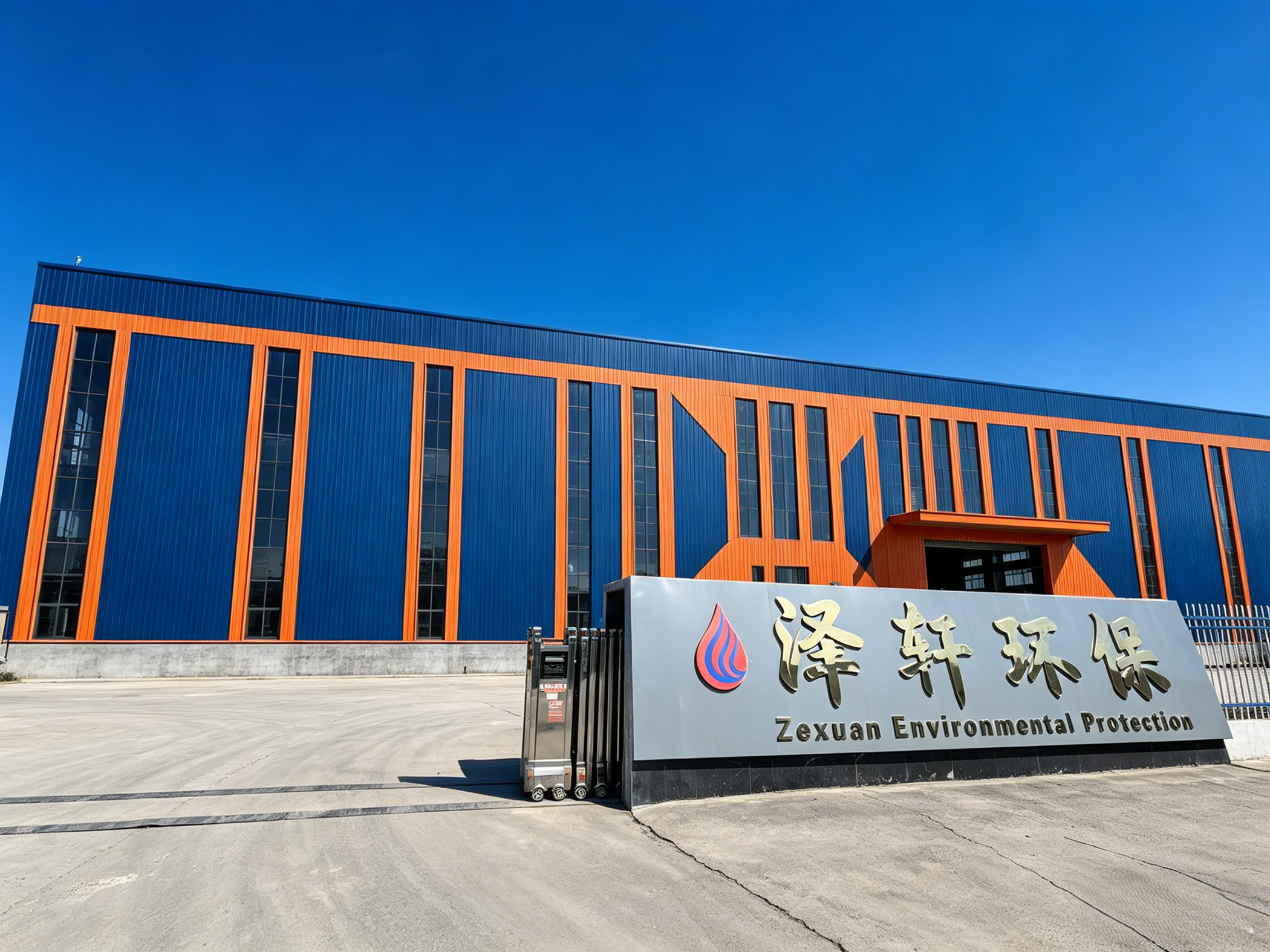
Shandong Zexuan Environmental Protection Technology Co., Ltd. is a manufacturer and engineering service provider established in 2015, specialising in industrial flare systems, thermal treatment equipment, and waste gas combustion solutions. The company operates a 24,100 m² manufacturing base with more than 80 employees, including 30+ engineers and technical specialists, and reports an annual manufacturing capacity of 60+ sets of flare and thermal treatment systems.
Its product range covers elevated flare systems (self-supported, guyed-wire, derrick-supported, and demountable), enclosed ground flare systems, skid-mounted and mobile LNG/LPG flare systems, flare tips and combustion equipment, thermal oxidizers (TO, RTO, RCO), and industrial incineration systems. The ZXE-BGF Series sits within this portfolio as the biogas and landfill gas application answer.
The company holds an ISO 9001:2015 quality management system certification, certification number 26326Q00079R001, issued by CSU International Certification Co., Ltd., applicable to the China domestic market and the international global market. It has project experience in more than 10 countries across the Middle East, Central Asia, Southeast Asia, Africa, and other regions.
For a buyer at the research stage, manufacturer credentials matter most in three places: whether the supplier understands the gas you actually have, whether the design is engineered per project rather than selected from a fixed list, and whether there is a clear technical contact for specification questions.
Frequently Asked Questions
What is a biogas flare system used for?
A biogas flare system combusts methane-containing gas from sources such as landfill gas, biogas, digester gas, and wastewater treatment gas. It is used when the gas is not routed to energy recovery, and its purpose is to combust the methane to reduce greenhouse gas emissions and improve environmental compliance. It operates under low-pressure, variable-flow, continuous gas generation conditions.
What is the difference between an open biogas flare and an enclosed biogas flare?
An open biogas flare burns the gas in a flame exposed to the open air, while an enclosed biogas flare burns the gas inside an enclosure or chamber. Both configurations are included in the ZXE-BGF Series and are designed for the same duty — destroying methane from landfill gas, biogas, digester gas, and wastewater treatment gas — with automatic ignition and flame monitoring available and continuous or intermittent operation.
How do flare systems manufacturers support landfill gas and biogas projects?
Manufacturers support these projects by configuring the flare to the gas source and flow profile rather than supplying a fixed unit. In the ZXE-BGF Series, gas flow capacity is customised according to project requirements, methane concentration is typically 35%–65% CH₄, operating temperature is typically 800°C–1100°C, and methane destruction efficiency is ≥98% depending on system design and operating conditions. The system is typically matched with a biogas flare stack, blower, ignition system, and monitoring system.
What materials and parameters define the ZXE-BGF Series biogas flare?
The ZXE-BGF Series uses carbon steel, hot-dip galvanized steel, SS304, and SS316L, with high-temperature resistant alloys for burner components. It is specified for a methane concentration of typically 35%–65% CH₄ and an operating temperature of typically 800°C–1100°C, with a methane destruction efficiency of ≥98% depending on system design and operating conditions, and automatic ignition and flame monitoring available.
How can I get more information on a biogas flare system for my project?
Because gas flow capacity and configuration are customised according to project requirements, the most productive next step is to share your gas source (landfill gas, biogas, digester gas, or wastewater treatment gas), your expected methane concentration range, and your flow profile with a supplier. Zexuan provides engineering design, equipment manufacturing, installation and commissioning, and technical support for biogas and landfill gas flare applications. You can reach the team at alice@zexuaneco.com or request the company brochure for specification details.
Conclusion: Matching the Flare to the Gas
Biogas flare systems exist because methane-bearing gas is produced continuously at landfills, digesters, wastewater treatment plants, and biogas facilities, frequently at low pressure and variable flow. Controlled combustion at 800°C–1100°C, with automatic ignition and flame monitoring, is what turns that stream into a managed emission rather than an uncontrolled release.
The ZXE-BGF Series illustrates the category with a defined envelope: landfill gas, biogas, digester gas, and wastewater treatment gas as sources; typically 35%–65% CH₄; a methane destruction efficiency of ≥98%; and materials ranging from carbon steel and hot-dip galvanized steel to SS304 and SS316L. Open and enclosed biogas flares both sit within the same series, and the right choice depends on the site and the compliance requirement rather than on a universal ranking.
If you are at the research stage, the most useful preparation is to document your gas source, methane concentration range, and flow profile. Those three inputs determine how the flare is configured, and they are the first things an engineer will ask for.
Next Step: Biogas Flare Specification Support
Zexuan supports biogas and landfill gas flare projects from process evaluation through manufacturing, commissioning, and after-sales service. To move from general information to a project-specific configuration, share your gas source, methane concentration range, and flow profile with the team.
Email: alice@zexuaneco.com | Tel / WhatsApp: +86 186 7883 1572 | Website: www.zexuaneco.com
Download the company brochure: Shandong Zexuan Product & Capability Brochure (PDF)
Have Questions or Need More Details?
Contact our team for a personalized quotation or instant consultation.
Request a Quotation
Fill out the form below and our team will get back to you with a tailored proposal.
WhatsApp Direct Chat
Prefer to chat in real-time? Message us on WhatsApp for instant assistance & quick answers.
- Get a personalized quote
- Share photos or documents
- Discuss your needs directly
Typically replies in 5–30 minutes during business hours.