Biogas Flare vs. Enclosed Ground Flare: A Buyer's Comparison Guide for Methane Destruction
Comparing biogas flares and enclosed ground flares is not about choosing a “better” technology. It is about matching combustion system design to site constraints, gas conditions, and operating patterns. This guide defines both configurations, compares their suitability for methane destruction projects, and provides a buyer decision framework based on equipment characteristics that can be verified at the specification stage.
The Problem: Methane Destruction Demands Match the Equipment to the Gas Stream
Methane is a potent greenhouse gas released continuously from landfill gas, anaerobic digestion, wastewater treatment, and agricultural biogas operations. A flare that simply “burns gas” can meet the letter of a permit while failing to provide the residence time, temperature, and flame stability needed for high destruction efficiency—or it may cause local issues such as thermal radiation, noise, and visual intrusion that the site was not designed to accept.
Buyers evaluating biogas flare vs. enclosed ground flare options need to assess four categories before selecting an equipment type: available plot space, thermal radiation constraints, noise limits, and visual impact requirements. In many projects, the gas source and operating profile are fixed; the flare configuration is the variable that must adapt to them.
What Is a Biogas Flare?
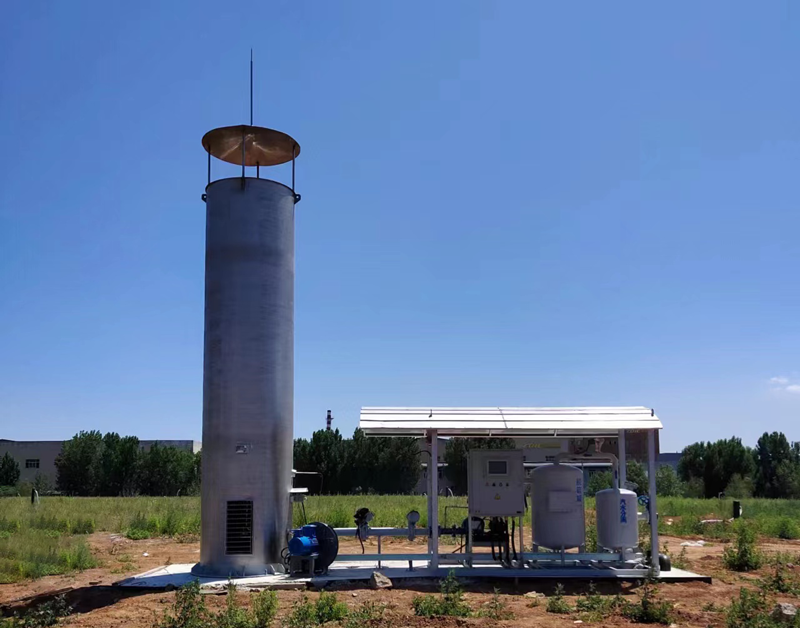
A biogas flare—often called a landfill gas flare, anaerobic digestion flare, or methane destruction flare—is a combustion device designed for low- to medium-calorific gases with methane concentrations generally between 35% and 65% CH₄. Typical gas sources include landfill gas, biogas, digester gas, and wastewater treatment gas. The flare can be engineered as an open elevated unit or as an enclosed unit, depending on project constraints, and is designed for either continuous or intermittent operation according to the application.
What Is an Enclosed Ground Flare?
An enclosed ground flare (EGF) is a combustion system in which the burner assembly is housed inside a refractory-lined enclosure, shielding the flame from outside view and significantly reducing thermal radiation and noise compared to open flares. The ZX-EGF Series is an example of a low-radiation ground flare designed for limited-space areas in petrochemical parks, chemical plants, LNG terminals, and hazardous gas treatment facilities. It is built with carbon steel and can be upgraded with SS304, SS316L, or SS310S components, with a refractory lining to contain combustion heat.
Key Selection Criteria: Space, Radiation, Noise, and Visual Impact
Buyers should structure the evaluation around the following four criteria:
1. Available Plot Space
Elevated open flares typically require a larger exclusion zone because thermal radiation and possible flame lick extend outward. Enclosed ground flares have a compact footprint and are appropriate when real estate is tight. The ZX-EGF Series is explicitly intended for limited-space applications, making it a practical answer when site boundaries restrict flare placement.
2. Thermal Radiation
Open flames radiate heat to surrounding equipment, personnel, and plant boundaries. Enclosed flares contain the flame within the refractory-lined housing, lowering radiation to nearby areas. For sites where the flare must be positioned close to process units or property lines, a low-radiation enclosed design is commonly required.
3. Noise Levels
Combustion noise is an environmental issue, particularly for sites near residential or sensitive industrial areas. Enclosed ground flares provide low-noise operation due to the damping effect of the enclosure and refractory materials. Open elevated flares generally produce higher audible noise, especially during maximum relief or high-throughput operation.
4. Visual Impact
A visible flame can raise community concerns, especially in landfill or biogas plants near inhabited areas. Enclosed ground flares hide the flame, which is an advantage from a community-relations perspective. Elevated open flares may be preferred in remote oil & gas installations where visibility is not a concern and height is used to keep radiation and combustion products away from ground level.
Industry Context: Why Flare Selection Is Becoming More Strategic
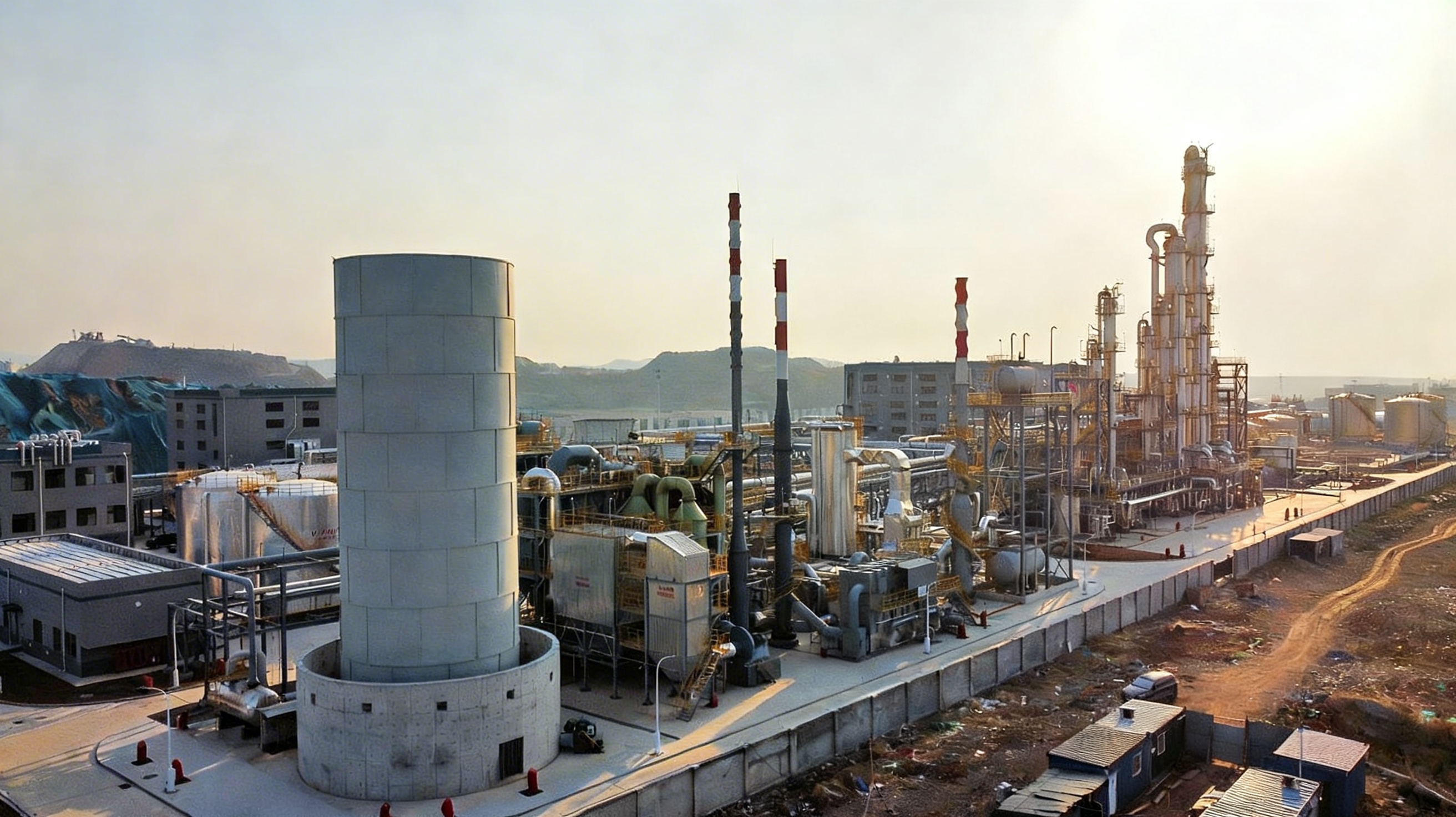
Global gas flaring reached 151 billion cubic meters in 2024, the highest level since 2007, according to the World Bank. This has intensified regulatory and community pressure on operators of methane-producing facilities. The global flare systems market was valued at approximately USD 4.8 billion in 2025, driven by emission control regulations and oil & gas investment recovery. In parallel, the totally enclosed ground flare segment was valued at around USD 113 million in 2024, reflecting a niche but growing demand for enclosed low-radiation combustion solutions.
For methane-abatement projects specifically, the core technical concern is methane destruction efficiency. The efficiency is influenced more by burner design, combustion temperature, residence time, and monitoring than by whether the flare is classed as “biogas” or “ground.” A well-designed open biogas flare can achieve high destruction rates; an enclosed flare is not inherently more efficient simply by being enclosed. The manufacturer’s engineering data and project references matter more than the configuration label.
ZXE-BGF Series: Open or Enclosed Biogas Flare for Methane Destruction
The ZXE-BGF Series is an open or enclosed biogas flare engineered for landfill gas, digester gas, and wastewater treatment gas. It handles methane concentrations of 35%–65% CH₄, operates at 800°C–1100°C, and achieves methane destruction efficiency of ≥98% depending on system design and operating conditions. The system can be arranged for continuous or intermittent operation and includes automatic ignition and flame monitoring as available design features.
Materials include carbon steel, hot-dip galvanized steel, SS304, SS316L, and high-temperature-resistant alloys for burner components. This material range allows the flare to be adapted for corrosive components, such as hydrogen sulfide in landfill gas, and for outdoor service conditions.
ZX-EGF Series: Low-Radiation Enclosed Ground Flare for Constrained Sites
The ZX-EGF Series is an enclosed ground flare with a low-radiation design and refractory lining, built for installation in limited-space areas. Combustion efficiency can reach up to 99.9%, operating temperature ranges from 800°C to 1200°C, and gas flow capacity is customized per project. The system is intended for LNG terminals, chemical plants, petrochemical parks, hazardous gas treatment, and industrial park applications—where an open elevated flame may not be acceptable due to proximity, radiation, or noise restrictions.
Materials are carbon steel as standard, with options for SS304, SS316L, and SS310S. The enclosure provides low-noise operation and shields the flame from view, which addresses both visual impact and community sensitivity.
When to Choose a Biogas Flare vs. an Enclosed Ground Flare
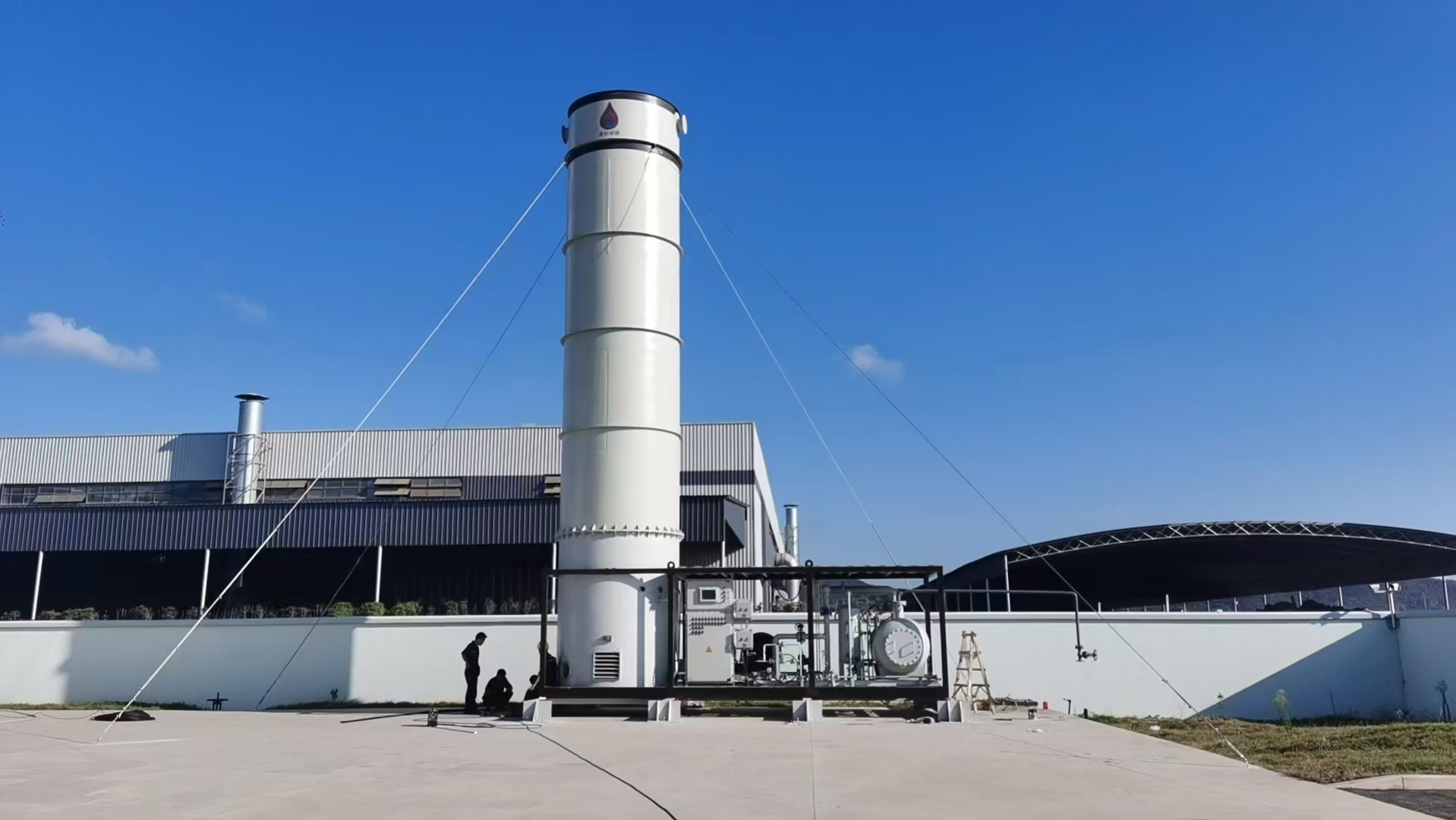
There is genuine overlap: the ZXE-BGF Series can be built as an enclosed biogas flare, and the ZX-EGF Series can be adapted for biogas service. For practical purchasing decisions, consider the following scenarios:
Choose an Open or Enclosed Biogas Flare (ZXE-BGF Series) When:
- The gas is landfill gas, anaerobic digester gas, or wastewater treatment gas with 35%–65% methane.
- The project requires methane destruction for greenhouse gas reduction or environmental compliance.
- Continuous gas generation is expected, with automatic ignition and flame monitoring.
- The site has adequate buffer distance for an open flare, or the flare is otherwise enclosed and sized for the flow.
- The project is in the municipal, waste management, agricultural, or renewable energy sector.
Choose an Enclosed Ground Flare (ZX-EGF Series) When:
- Limited plot space prevents installing a tall elevated flare with its exclusion zone.
- Thermal radiation must be minimized to protect nearby process equipment or personnel.
- Noise constraints require a low-noise combustion setup.
- Visual impact matters, and the flame must be hidden from view (e.g., near populated or sensitive industrial areas).
- The facility is a petrochemical park, chemical plant, LNG terminal, or industrial park with hazardous gas treatment needs.
Comparison Table: Biogas Flare vs. Enclosed Ground Flare
| Selection Factor | ZXE-BGF Series (Biogas / LFG Flare) | ZX-EGF Series (Enclosed Ground Flare) |
|---|---|---|
| Primary gas sources | Landfill gas, biogas, digester gas, wastewater treatment gas | Process gas, hazardous gas, LNG terminal gas, hydrocarbon vent gas; adaptable to biogas |
| Configuration | Open or enclosed type | Multi-burner enclosed ground flare |
| Methane / combustion efficiency | Methane destruction ≥98% depending on design and operation | Combustion efficiency up to 99.9% |
| Operating temperature | Typically 800°C–1100°C | 800°C–1200°C |
| Flow capacity | Customized to project requirements | Customized gas flow |
| Radiation profile | Depends on open vs. enclosed configuration | Low-radiation design |
| Noise profile | Open type is not characterized as low-noise | Low-noise operation |
| Visual impact | Open type visible flame; enclosed type hidden | Flame enclosed – reduced visual impact |
| Space requirement | Open type requires larger buffer distance | Suitable for limited-space areas |
| Materials | Carbon steel, hot-dip galvanized steel, SS304, SS316L, high-temperature alloys | Carbon steel, SS304, SS316L, SS310S, refractory lining |
| Ignition / monitoring | Automatic ignition and flame monitoring available | Integrated ignition and control configuration per project |
| Typical applications | Municipal landfill sites, wastewater treatment plants, anaerobic digestion, agricultural biogas | Petrochemical parks, chemical plants, LNG terminals, industrial parks |
Step-by-Step Decision Process for Buyers
- Define the gas source and composition. Is the methane concentration in the 35%–65% range? Are there corrosive trace components? Is the source continuous or batch?
- Define the operating schedule. Continuous gas generation (digester or landfill extraction) versus intermittent or emergency venting changes the ignition, monitoring, and standby requirements.
- Measure available space. Determine the actual plot boundary and calculate whether an exclusion zone for an open flame is feasible.
- Check local radiation, noise, and visual constraints. Permits, environmental impact studies, and community agreements often set specific limits.
- Select the flare family. If the project is an anaerobic digestion or landfill gas application with sufficient spacing, the ZXE-BGF Series is a direct fit. If space is tight or the site demands enclosed low-radiation equipment, the ZX-EGF Series provides an alternative.
- Customize material and control packages. SS304/SS316L for corrosive components, high-temperature alloys for burner parts, automatic ignition for unattended remote sites.
- Document performance expectations. Require efficiency values tied to defined operating conditions, not generic performance language.
Buyer Due Diligence Checklist
- Request the flare’s performance curve across the expected turndown range, because landfill and digester gas flows can be highly variable.
- Verify which materials are used for the burner and refractory lining. Apply the same standard to the probe and ignition system.
- Ask whether the system is designed for continuous or intermittent operation, and its expected response time under automatic ignition.
- Confirm compliance documentation: a reputable manufacturer should hold ISO 9001:2015 certification for the design and production of waste gas treatment equipment.
- For enclosed ground flares in particular, review thermal radiation modelling data and noise estimates that match the actual site layout.
Case Scenario: Landfill Gas / Biogas Plant
For landfill gas and biogas plant applications, the gas source is typically low-pressure, methane-containing gas with variable flow rate and continuous generation. The ZXE-BGF Series is specified for this kind of service. The flare’s automatic ignition and outdoor reliability requirements are addressed through a design that can operate unattended, with monitoring accessible to the plant operator. When such a site sits near residential development, the buyer may choose the enclosed configuration of the ZXE-BGF Series to reduce visual and acoustic impact, while still selecting from the same material family of carbon steel, hot-dip galvanized steel, SS304, SS316L, and high-temperature-resistant alloys.
Case Scenario: Petrochemical Plant with Space Constraints
A petrochemical facility facing limited-space conditions requires a flare that can control thermal radiation and operate near other units. The ZX-EGF Series is tailored to this set-up. Its refractory-lined enclosure and low-radiation design allow installation closer to process equipment than would be feasible for an open elevated flare. A low-noise, low-radiation configuration helps the plant meet its internal safety and community guidelines under continuous operation.
Frequency Asked Questions
Q1: Are biogas flares and enclosed ground flares the same product?
No. They are two different categories, although some models have overlapping design features. The ZXE-BGF Series is a biogas flare that can be engineered as an open or enclosed unit for landfill gas, digester gas, and wastewater treatment gas. The ZX-EGF Series is a low-radiation enclosed ground flare intended for limited-space industrial applications such as petrochemical plants and LNG terminals. When choosing, a buyer must compare the specific flare family’s materials, efficiency claims, and operating envelope with the actual gas composition and site constraints.
Q2: Which flare is more efficient at destroying methane?
Methane destruction efficiency is a function of combustion temperature, residence time, mixing, burner design, and operating conditions—not solely a function of flare configuration. The ZXE-BGF Series biogas flare achieves methane destruction efficiency ≥98%, depending on system design and operation. The ZX-EGF Series enclosed ground flare achieves combustion efficiency up to 99.9% and is suitable for hydrocarbon and hazardous gas streams. The buyer should ask the manufacturer for efficiency values that are conditional on the specific gas analysis and normal versus peak flow scenarios.
Q3: Does an enclosed ground flare take up less space than an open biogas flare?
Yes. Enclosed ground flares are typically space-saving compared with elevated open flares because the enclosure contains the flame, reduces thermal radiation, and shortens required exclusion distances. The ZX-EGF Series is described as suitable for limited-space areas, with a low-radiation design and multi-burner layout in a compact enclosure. An open ZXE-BGF Series flare may require additional buffer distance for radiation and flame visibility, making it harder to place on small sites.
Q4: What are the main material differences I should discuss with a vendor?
For the ZXE-BGF Series, standard materials are carbon steel with options for hot-dip galvanized steel, SS304, SS316L, and high-temperature-resistant alloys for burner components. For the ZX-EGF Series, the housing is carbon steel with options for SS304, SS316L, or SS310S, plus refractory lining materials. The vendor should map these options against your gas composition, operating temperature, chloride or sulfur exposure, and required service life.
Q5: Can the same vendor supply either type of flare?
Shandong Zexuan Environmental Protection Technology Co., Ltd. manufactures both flare families. Established in 2015, the company operates a 24,100 m² manufacturing base with over 80 employees, including more than 30 engineers and technical specialists, and serves clients in the Middle East, Central Asia, Southeast Asia, Africa, Russia, and other regions. Shandong Zexuan’s product line includes elevated flare systems, enclosed ground flare systems (ZX-EGF Series), biogas flares (ZXE-BGF Series), skid-mounted LNG/LPG flares, flare tips, thermal oxidizers, and industrial incineration systems.
Need help selecting the right methane destruction flare for your project?
Download the company brochure to review product series and system capabilities.
Or contact Alice at alice@zexuaneco.com / WhatsApp: +86 186 7883 1572
Have Questions or Need More Details?
Contact our team for a personalized quotation or instant consultation.
Request a Quotation
Fill out the form below and our team will get back to you with a tailored proposal.
WhatsApp Direct Chat
Prefer to chat in real-time? Message us on WhatsApp for instant assistance & quick answers.
- Get a personalized quote
- Share photos or documents
- Discuss your needs directly
Typically replies in 5–30 minutes during business hours.