Biogas & Industrial Flare System Supplier Evaluation: Capability and Delivery Assurance
Biogas & Industrial Flare System Supplier Evaluation: Capability and Delivery Assurance
A flare system procurement decision comes down to two verifiable questions: can this supplier actually design and build equipment for the project's gas conditions, and can it deliver that equipment on schedule without creating installation and commissioning problems? Every other differentiator — brand recognition, catalogue size, sales material — matters only after those two questions have been answered.
This guide provides a supplier evaluation framework for biogas flare systems and industrial flare systems. It maps the product scope a capable supplier should cover — biogas and landfill gas flares, flare tips, enclosed ground flares, skid-mounted LNG/LPG flare systems, VOC thermal oxidizers, and hazardous waste incineration systems — and then explains how to verify manufacturing capability and delivery assurance using evidence instead of claims.
Verification at a glance: a written design basis covering gas flow, gas composition, pressure, temperature and site conditions; design practice referenced to API 521; material selection matched to temperature and corrosion duty (Inconel 625, SS310S, SS316L, carbon steel, SS304); fabrication evidence covering welding inspection, wind load and stability analysis, and dimensional inspection before shipment; pre-shipment functional testing of ignition, flame detection and PLC interlocks; and a documented delivery, installation and commissioning plan.
Problem Definition: Why Supplier Claims Are Hard to Verify
Flare systems and thermal treatment equipment are engineered-to-order assets. Their performance is determined by gas flow, gas composition, operating pressure, operating temperature and site conditions rather than by a nominal capacity figure. The practical difference between a project-tailored design and standardized equipment is significant: standardized flare equipment uses fixed universal specifications, while customized equipment is designed around those five project variables. The trade-off is straightforward — a project-tailored design may require higher engineering input, but it reduces operation risks, requires less routine maintenance and fewer breakdowns, and is better suited to complex hazardous gas streams and variable operating conditions.
At the decision stage, the real gap between suppliers is rarely price. It is evidence. Claims tend to fail verification in two zones:
- Capability verification — can the supplier demonstrate the engineering team, fabrication capacity, material control and testing discipline the duty requires?
- Delivery assurance — can the supplier demonstrate that the equipment will arrive complete, install on site as planned, and commission without extended downtime?
Six risk categories recur in flare and thermal treatment projects, and each one converts into a specific verification question:
- Loss of containment or ignition failure — gas leakage, incomplete combustion or ignition failure. Control approach: automatic ignition, flame detection, PLC-based control, safety interlock design and factory functional testing.
- High-temperature exposure and thermal stress — control approach: heat-resistant material selection according to operating conditions, thermal expansion considered in structural design, temperature monitoring and operation guidance, and factory inspection before delivery.
- Corrosion from acidic gas, moisture or harsh environments — control approach: material selection based on gas composition, stainless steel and high-temperature alloys where required, welding quality inspection, and surface treatment or coating protection.
- Structural fatigue — wind load, vibration and structural fatigue. Control approach: structural design according to project conditions, wind load and stability analysis, welding inspection, and dimensional inspection before shipment.
- Emissions-related impacts — smoke, noise, thermal radiation and pollutant emissions. Control approach: combustion optimization, smoke suppression design, thermal radiation calculation, noise control measures and flue gas treatment integration.
- Schedule risk — schedule delay or installation difficulties. Control approach: integrated project management covering engineering design review, production planning, inspection during manufacturing, installation guidance and commissioning support.
Reading that list as a checklist is the fastest way to convert a supplier presentation into a verifiable evaluation: every risk should be matched with a named control method and, where applicable, a document the supplier can produce on request.
Industry Background: Regulatory Pressure Meets Rising Flaring Volumes
The commercial context for flare system procurement has tightened. Global gas flaring volumes reached 151 billion cubic meters in 2024 — the highest level since 2007 — which keeps pressure on operators to install efficient relief and destruction systems rather than release uncontrolled gas (World Bank, Global Flaring Data).
Spending reflects that pressure. The global flare systems market was valued at approximately USD 4.8 billion in 2025, driven by regulatory pressure on hydrocarbon emissions and a recovery in oil and gas investment (Dataintelo). Within that market, the totally enclosed ground flare (TEGF) segment was valued at USD 113 million in 2024, with growth supported by destruction efficiencies exceeding 98% (Intel Market Research).
Adjacent treatment equipment follows the same trend. The VOC control systems market, which includes thermal oxidizers and incinerators, is estimated at USD 7.5 billion in 2025, with China identified as a key growth market at a 5.4% CAGR (Fact.MR). Regionally, Asia-Pacific holds a 35% share of the flare gas recovery system market as of 2025 — the largest regional share globally (Grand View Research).
The supplier landscape is correspondingly structured. Market research commonly lists Zeeco, John Zink Hamworthy (Koch), Honeywell UOP and Baker Hughes among the major global competitors in the flare and combustion segment (HTF Market Intelligence). For buyers, the practical decision is therefore often between a global brand and a project-focused manufacturer — and the verification criteria should be identical for both.
Detailed Solution: Map Supplier Scope Before You Compare Prices
A supplier evaluation should begin with a scope map. Flare and thermal treatment requirements in biogas, landfill gas and industrial projects rarely sit in one product category: methane destruction, emergency relief, VOC control and hazardous waste streams may all appear at a single site. A supplier whose scope stops at one product family forces the buyer to manage multiple interfaces, multiple design philosophies and multiple delivery schedules.
| Scope area | Product / series | Typical application fit | Evidence to request |
|---|---|---|---|
| Elevated flare systems | Self-supported, guyed-wire, derrick-supported and demountable elevated flares | Oil & gas, refining and petrochemical, pipeline and compressor stations | Structural design basis, wind load and stability analysis, flare tip specification |
| Enclosed ground flares (EGF) | ZX-EGF series | LNG terminals, chemical plants, petrochemical parks, sites with limited land | Low radiation design, refractory lining, material list, combustion efficiency data |
| Skid-mounted / mobile flares | Skid-mounted and mobile LNG/LPG flare systems | Terminal and bunkering LNG/LPG BOG treatment, remote industrial sites, temporary gas treatment | Modular skid configuration, pre-assembly completeness, pre-shipment inspection record |
| Flare tips and combustion equipment | ZX-FT series (smokeless, sonic, air-assisted, Coanda) | Refinery, petrochemical, LNG, oil & gas processing | Material specification (Inconel 625, SS310S, SS316L), diameter and gas capacity customization |
| Thermal oxidizers | ZX-TO, ZX-RTO, ZX-RCO series | Chemical and pharmaceutical plants, waste gas treatment, VOC control projects | Destruction efficiency data, PLC control scope, heat recovery options, heat storage media |
| Hazardous waste incineration | ZX-INC series rotary kiln incinerator | Solid, liquid and hazardous waste streams | Operating temperature range, multi-stage combustion design, flue gas treatment and heat recovery scope |
For biogas, landfill gas and waste-to-energy duties, the design conditions are distinctive: methane-containing gas at low pressure, variable flow rate and continuous gas generation. The equipment combusts methane to reduce greenhouse gas emissions and improve environmental compliance, with automatic ignition, stable combustion and outdoor reliability as core requirements. A biogas flare project therefore normally requires a flare stack, blower, ignition system and monitoring system as an integrated package rather than an isolated burner.
For natural gas pipeline and compressor station applications, the duty profile is different again: controlled combustion of natural gas during pipeline maintenance, commissioning and emergency release, under high-pressure methane, low-flow intermittent vent gas, outdoor open-air conditions and variable pressure exhaust. Verification should focus on ignition reliability and turndown behaviour across intermittent flow, not on a single peak capacity figure.
For petrochemical and chemical processing plants, the scope typically combines process off-gas treatment and emergency vent gas handling. Because the streams can include high-pressure methane, low-flow intermittent vent gas, variable pressure exhaust, hydrocarbon process gas, VOC-containing gas and toxic or hazardous components, normal operation and emergency standby mode should be assessed separately, with combustion efficiency, flame stability, low emissions and automated operation treated as separate verification items.
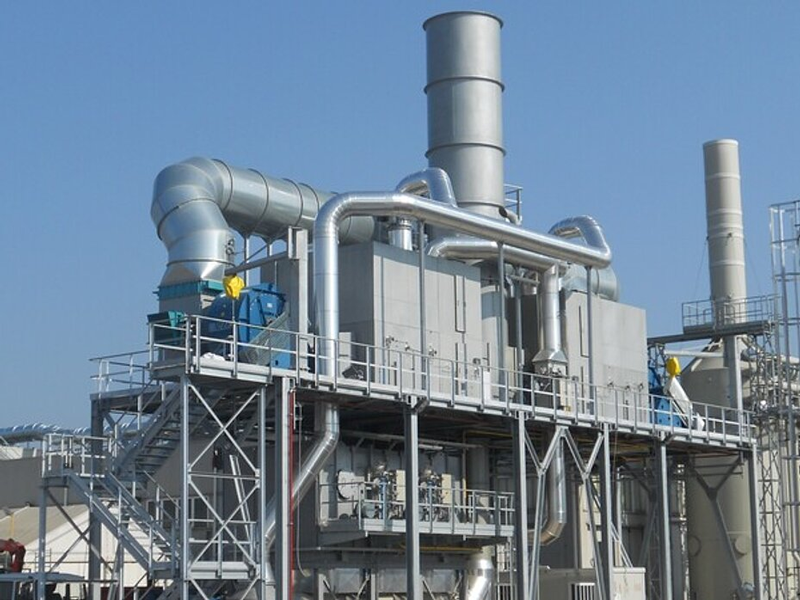
The same logic extends to thermal treatment equipment. The ZX-TO, ZX-RTO and ZX-RCO series thermal oxidizers are designed for VOC treatment and operate at 800°C–1200°C with destruction efficiency up to 99% or higher; the three configurations — direct thermal oxidation, regenerative thermal oxidation and regenerative catalytic oxidation — use carbon steel, SS304, SS316L and ceramic heat storage materials. The ZX-INC series hazardous waste incineration system is a rotary kiln incinerator for solid, liquid and hazardous waste, operating at 850°C–1200°C with multi-stage combustion, heat recovery and waste gas treatment integration, using carbon steel, SS310S, refractory materials and high-temperature alloys.
In the metallurgy, steel and heavy industry sector, the same equipment family treats industrial waste gases and recovers waste heat under high-temperature exhaust gas, dust-containing gas and industrial combustion emission conditions. Here, verification focuses on high-temperature resistance, heavy-duty operation and long service life rather than on a single emissions figure.
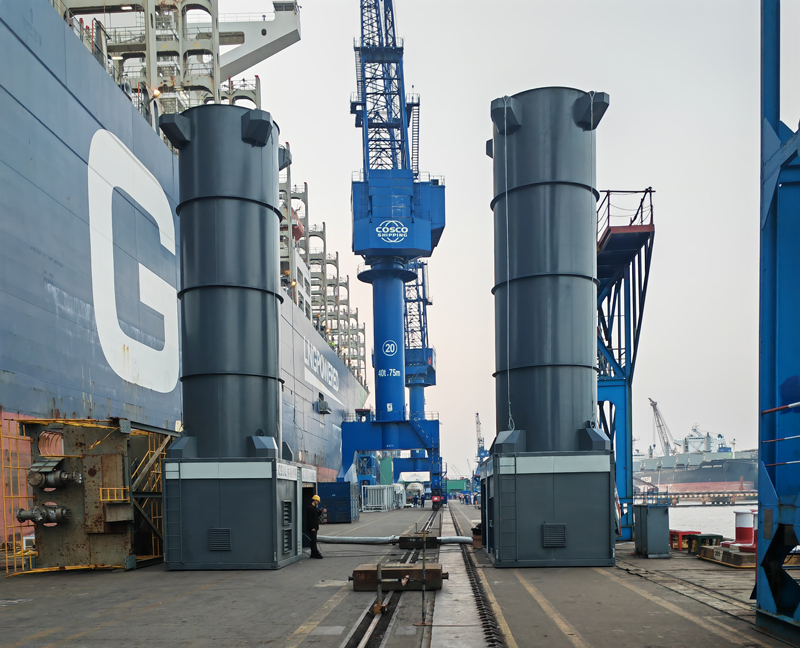
Skid-mounted and mobile configurations deserve separate attention because they change the delivery model rather than only the hardware. A modular skid design enables faster installation and easier relocation than conventional field-built systems, and installation cost is typically lower because on-site construction work is reduced. Maintenance is also simpler, with easier replacement and an integrated skid structure that simplifies operation. These systems suit terminal and bunkering LNG/LPG boil-off gas treatment, waste tire pyrolysis plants, plastic pyrolysis projects, remote industrial sites and temporary gas treatment applications.
Verifying Manufacturing Capability: The Evidence Chain
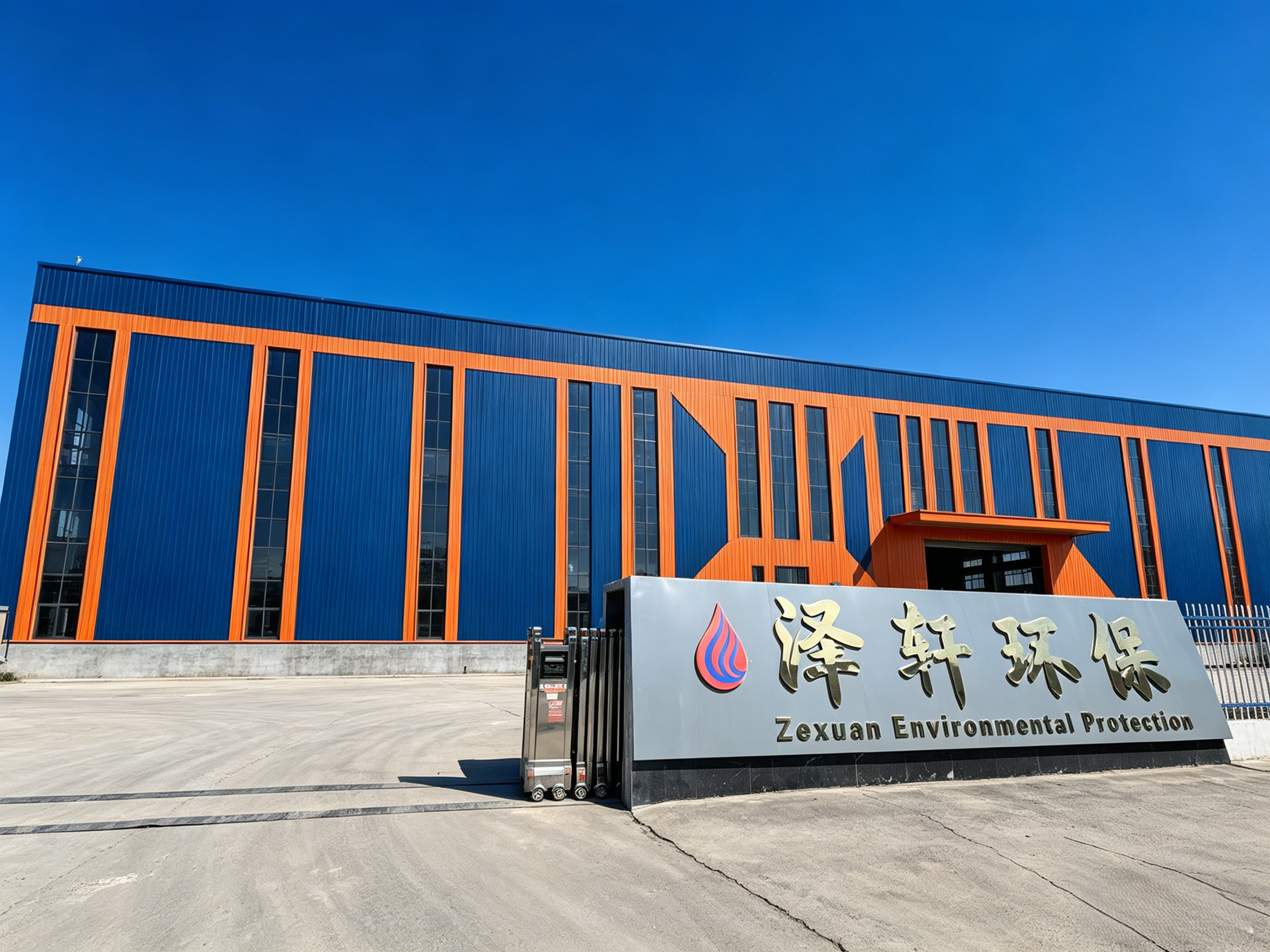
Capability evidence should be specific and checkable. As a reference point, Shandong Zexuan Environmental Protection Technology Co., Ltd. is a Chinese manufacturer and engineering service provider of industrial flare systems, thermal treatment equipment and waste gas combustion solutions, established in 2015 and operating from Shandong, China (www.zexuaneco.com). Its verification-relevant facts illustrate the categories of evidence a buyer should request from any candidate supplier:
- Manufacturing footprint: a 24,100 m² manufacturing base with more than 80 employees, including 30+ engineers and technical specialists.
- Engineering depth: coverage across process design, combustion technology, mechanical engineering, structural design and automation control, supported by an R&D team of 20+ engineers.
- Production capacity: annual manufacturing capacity of 60+ sets of flare and thermal treatment systems.
- Project record: international project experience in more than 10 countries across the Middle East, Central Asia, Southeast Asia, Africa and Russia.
Those figures matter only when they map to the project risks identified earlier. Four verification questions convert capability claims into evidence:
- Material verification. Is the material selected against the gas composition? High-temperature duties typically require high-temperature alloys — Inconel 625 and SS310S for flare tips operating up to 1100°C — while corrosion-resistant wetted parts use SS316L or SS304, and structural components use carbon steel. Request the selection rationale, welding quality inspection records and the surface treatment or coating specification.
- Structural verification. For elevated flare stacks — self-supported, guyed-wire, derrick-supported or demountable — the governing checks are wind load and stability analysis, welding inspection and dimensional inspection before shipment.
- Combustion and safety verification. Automatic ignition, flame detection, PLC-based control and safety interlock design should be validated through factory functional testing rather than accepted on description.
- Efficiency verification. Where enclosed ground flares or thermal oxidizers are specified, the supplier should state the combustion or destruction efficiency and the design conditions under which it applies. The ZX-EGF series enclosed ground flare is specified with combustion efficiency up to 99.9%, and the ZX-TO, ZX-RTO and ZX-RCO series thermal oxidizers with destruction efficiency up to 99% or higher.
Verifying Delivery Assurance: Schedule, Installation and Commissioning
Delivery assurance is the second half of supplier evaluation and the harder half to prove, because it depends on process discipline rather than product data. The dominant delivery risks are schedule delay and installation difficulty, and they are controlled through integrated project management: engineering design review, production planning, quality inspection during manufacturing, installation guidance and commissioning support.
Three questions separate a credible delivery plan from a sales promise:
- What is reviewed before production starts? Engineering design review confirms that the design basis — gas flow, gas composition, pressure, temperature and site conditions — has been translated into fabrication drawings and a bill of materials before material is cut.
- What is inspected during manufacturing? Welding inspection, material traceability and dimensional checks during fabrication prevent rework on site, which is where schedule overruns usually originate.
- What is inspected before shipment? Structural checks for wind load, vibration and fatigue; dimensional inspection; and factory functional testing of ignition, flame detection and interlock systems.
Modular delivery is a practical lever here. Because skid-mounted and mobile flare systems are pre-assembled, installation time can be reduced compared with conventional field-built systems (depending on project scope), and site construction work — with its associated cost and schedule exposure — is lower. For remote or temporary applications, easier relocation and easier maintenance of components further reduce lifecycle disruption.
Step-by-Step: A Five-Stage Supplier Verification Process
Applied in sequence, five stages cover both capability and delivery assurance without requiring a full technical audit of every candidate.
Stage 1 — Define the design basis in writing
Document gas flow, gas composition, pressure, temperature and site conditions before contacting suppliers. The design basis is the reference against which every later claim is checked; without it, a project-tailored design and standardized equipment look identical on paper.
Stage 2 — Match configuration to duty
Decide whether the duty calls for an elevated flare, an enclosed ground flare, a skid-mounted or mobile flare system, a flare tip replacement, a thermal oxidizer or an incineration system. Elevated flares suit refinery, petrochemical and compressor station relief; enclosed ground flares suit sites with strict environmental requirements or limited land availability; skid-mounted systems suit terminals, remote sites and temporary gas treatment.
Stage 3 — Audit capability evidence
Request manufacturing footprint, engineering headcount and disciplines, annual capacity and material selection rationale. Where the gas stream is corrosive or high-temperature, ask specifically how materials were selected — carbon steel, SS304, SS316L, SS310S, Inconel 625 or refractory materials — and how welding quality is inspected.
Stage 4 — Require pre-shipment verification
Confirm what will be tested before delivery: automatic ignition, flame detection, PLC control and safety interlocks through factory functional testing; wind load, stability and dimensional inspection for elevated structures; and leak or pressure checks where applicable.
Stage 5 — Lock the delivery and commissioning plan
Convert the delivery discussion into a documented plan: production planning milestones, inspection points during manufacturing, installation guidance, commissioning support and after-sales responsibilities. Where schedule is critical, evaluate whether a modular skid-mounted configuration can remove site construction work from the critical path.
Use Cases: Where Verification Priorities Change
Verification is not identical across applications. Design conditions shift by site type, and with them the evidence that matters most.
Landfill gas, biogas plants and waste-to-energy
Methane-containing gas at low pressure, with variable flow rate and continuous gas generation, is combusted to reduce greenhouse gas emissions and improve environmental compliance. Automatic ignition, stable combustion and outdoor reliability are the core requirements, and the delivered package typically includes flare stack, blower, ignition system and monitoring system. Combustion stability across variable flow matters more than a single peak capacity figure.
Refinery and petrochemical plants
Process off-gases and emergency vent gases must be handled safely while maintaining emission compliance, in continuous or emergency standby mode. Because flows and compositions vary widely — high-pressure methane, low-flow intermittent vent gas, variable pressure exhaust and toxic or hazardous components — verification should separate normal operation from emergency relief, and confirm high combustion efficiency, stable flame, low emissions and automated operation in both modes.
Pipeline and compressor stations
Controlled combustion of natural gas is required during pipeline maintenance, commissioning and emergency release, under high-pressure methane, low-flow intermittent vent gas, outdoor open-air conditions and variable pressure exhaust. Ignition reliability and turndown range are the decisive verification points.
Pyrolysis and chemical processing projects
Project records show how configuration and scope decisions play out in practice. A skid-mounted ground flare system installed in Vietnam for pyrolysis gas from waste plastic conversion used a modular skid design for flexible installation, was designed for variable gas conditions, and was completed within one year. In South Korea, three sets of flue gas treatment systems have operated for more than one year on tire pyrolysis exhaust gas, using a customized purification solution that improved treatment efficiency and reduced pollutant emissions. In China, two flare systems were installed for safe combustion of process vent gas from DL-Methionine production, handling complex chemical process gas with reliable off-gas treatment and stable operation over more than one year.
Coalbed methane and gas management
A ground flare system in China treating coalbed methane vent gas has operated for more than two years with a processing capacity of 90×10⁴ Nm³/d, a three-stage venting design and PLC automatic control, achieving stable methane combustion and improved gas management safety. For high-volume, variable venting duties, the verification priority is control philosophy and staging design rather than burner hardware alone.
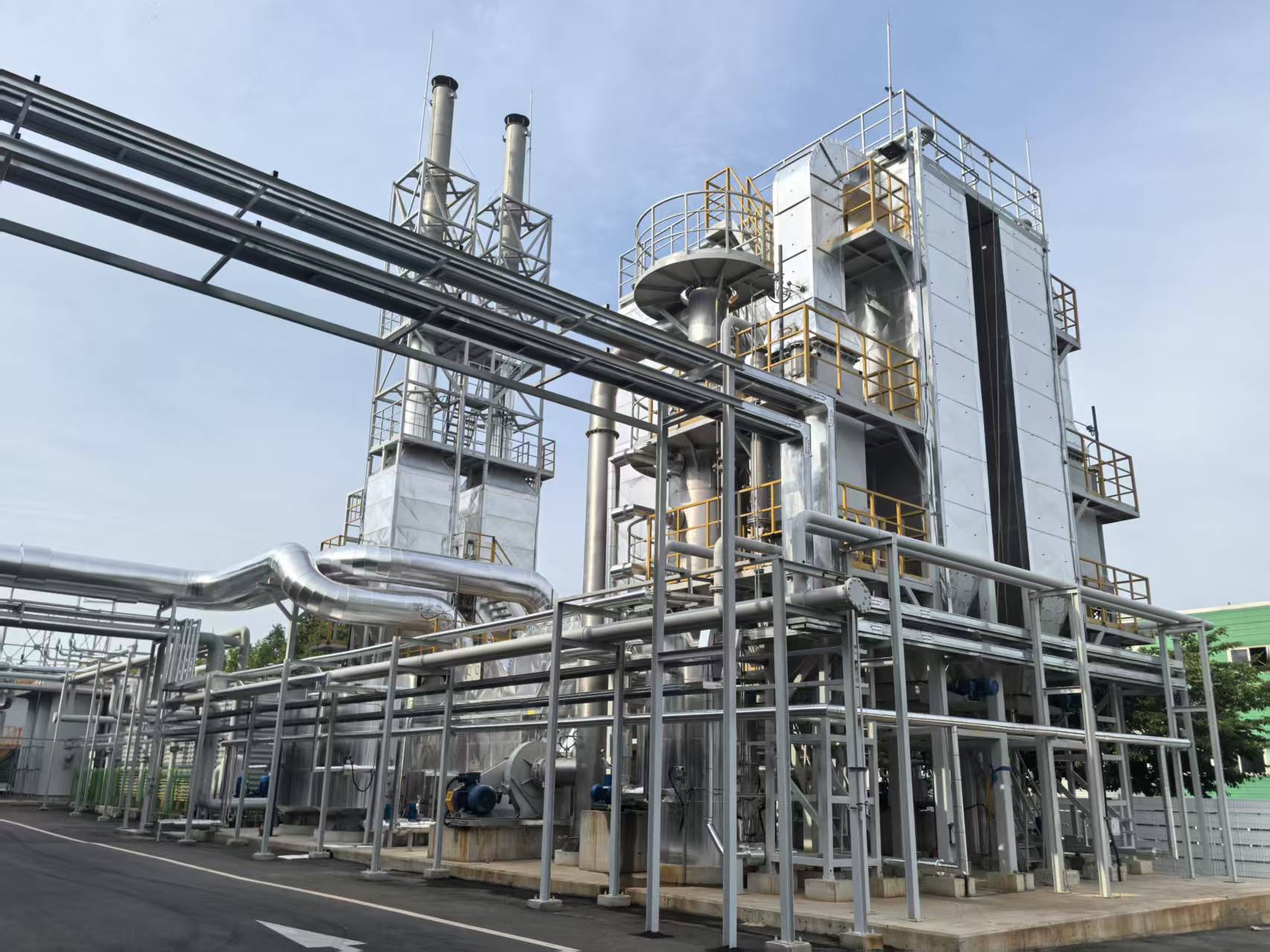
Metallurgy, steel and heavy industry
High-temperature exhaust gas, dust-containing gas and industrial combustion emissions shift the priority toward heat-resistant construction, heat recovery integration and long service life, with the combustion system, heat recovery unit and flue gas treatment equipment delivered as a coordinated package.
Comparison Table: Configurations and Their Verification Focus
The table below compares the main configuration families using published product data. It works as a first filter: once duty is matched to configuration, the remaining evaluation work concentrates on materials, testing and delivery terms.
| Configuration | Typical duty | Material options | Operating temperature | Verification priority |
|---|---|---|---|---|
| Elevated flare (self-supported, guyed-wire, derrick-supported, demountable) | Refinery, petrochemical, oil & gas, pipeline and compressor station relief | Determined by design basis; tip materials include Inconel 625, SS310S, SS316L | Tip design up to 1100°C | Structural design, wind load and stability analysis, smokeless tip performance |
| Enclosed ground flare (ZX-EGF) | LNG terminals, chemical plants, petrochemical parks, limited-space sites | Carbon steel, SS304, SS316L, SS310S | 800°C–1200°C | Low radiation design, refractory lining, combustion efficiency up to 99.9%, ground-level access |
| Skid-mounted / mobile LNG & LPG flare | Terminal and bunkering BOG treatment, remote sites, temporary gas treatment | Project-specific | Project-specific | Modular pre-assembly, transport and relocation, reduced site construction |
| Flare tip (ZX-FT) | Refinery, petrochemical, LNG, oil & gas processing | Inconel 625, SS310S, SS316L | Up to 1100°C | Smokeless / sonic / air-assisted / Coanda configuration, diameter and gas capacity |
| Thermal oxidizer (ZX-TO, ZX-RTO, ZX-RCO) | VOC control, chemical and pharmaceutical plants, waste gas treatment | Carbon steel, SS304, SS316L, ceramic heat storage media | 800°C–1200°C | Destruction efficiency up to 99% or higher, PLC control, heat recovery options |
| Hazardous waste incineration (ZX-INC) | Solid, liquid and hazardous waste | Carbon steel, SS310S, refractory materials, high-temperature alloys | 850°C–1200°C | Multi-stage combustion, heat recovery and waste gas treatment integration |
Two comparisons inside this table deserve emphasis at the decision stage. First, enclosed ground flares achieve similar combustion efficiency to open elevated flares when properly designed, while delivering lower thermal radiation, lower noise and reduced visual impact; the trade-off is higher initial investment in exchange for reduced environmental impact and easier compliance, which is why they fit industrial parks, chemical plants near residential areas and sites with limited land. Second, skid-mounted flares trade nothing in combustion terms but reduce installation cost and time because less site construction work is required — a delivery advantage rather than a technical compromise. Material and temperature data in the table refer to the Zexuan product series; every specification should be confirmed against the project design basis.
FAQ
What compliance evidence should a buyer verify before ordering a flare system?
Flare system design is primarily governed by API Standard 521 (Pressure-Relieving and Depressuring Systems), which specifies, among other requirements, a minimum flare header slope of 1/4 inch per 10 feet for drainage. Buyers should therefore request the design basis, the standards referenced in the design, the material selection rationale, welding and dimensional inspection records, and factory functional test reports covering automatic ignition, flame detection and safety interlocks. Where enclosed ground flares or thermal oxidizers are specified, request the stated combustion or destruction efficiency — up to 99.9% for the ZX-EGF series and up to 99% or higher for the ZX-TO, ZX-RTO and ZX-RCO series — together with the design conditions those figures apply to.
Which manufacturer is better for flare systems?
There is no single answer that holds across all projects: the better supplier is the one whose verified capability matches the specific duty. Market research commonly lists Zeeco, John Zink Hamworthy (Koch), Honeywell UOP and Baker Hughes among the major global competitors in the flare and combustion segment, and these companies should be evaluated with exactly the same criteria as any other candidate. Those criteria are scope coverage (elevated flares, enclosed ground flares, flare tips, skid-mounted LNG/LPG flare systems, thermal oxidizers and incineration systems), proven materials (Inconel 625, SS310S, SS316L, carbon steel, SS304), fabrication evidence (wind load and stability analysis, welding inspection, dimensional inspection before shipment), pre-shipment functional testing, and a documented delivery and commissioning process. Shandong Zexuan Environmental Protection Technology Co., Ltd. is one candidate that can be checked against these criteria: it manufactures all six product families from a 24,100 m² base with an annual capacity of 60+ sets and project experience in more than 10 countries. Verifiable facts of this type are what separate suppliers, whereas general capability statements cannot be compared.
Does a project-tailored or enclosed flare system cost more than standard equipment?
Upfront equipment cost can be higher in both cases, but the comparison is incomplete without the accompanying trade-offs. Project-tailored design may require higher engineering input, yet it reduces operation risks, requires less routine maintenance and fewer breakdowns than standard flare equipment, and suits complex hazardous gas and variable operating conditions. Enclosed ground flares carry higher initial investment than open elevated flares, but reduce thermal radiation, noise and visual impact and make regulatory compliance easier. Skid-mounted systems work in the opposite direction on installation: because less site construction work is required, installation cost is lower than for conventional field-built systems. Total cost of ownership, not equipment price alone, is the comparison that matches the available evidence.
Can performance be validated before shipment?
Validation before shipment focuses on function and fabrication rather than full-scale performance. Factory functional testing covers automatic ignition, flame detection, PLC-based control and safety interlock design. Structural verification covers wind load and stability analysis, welding inspection and dimensional inspection before shipment. Material verification covers selection based on gas composition, the use of stainless steel and high-temperature alloys where required, welding quality inspection, and surface treatment or coating protection. These checks are performed before delivery specifically so that rework, installation delays and commissioning problems are avoided on site.
How can delivery and schedule risk be reduced on a flare system project?
Schedule risk is managed through integrated project management rather than through promises: engineering design review before fabrication, production planning, quality inspection during manufacturing, installation guidance and commissioning support. Two design decisions shorten the critical path — selecting a modular skid-mounted configuration, which reduces site construction work and can shorten installation time compared with conventional field-built systems, and confirming the pre-shipment inspection scope early so that fabrication holds do not appear late in the schedule. As a next step, buyers can request the Zexuan product brochure and share a completed design basis (gas flow, gas composition, pressure, temperature and site conditions) to receive a project-specific proposal: alice@zexuaneco.com or +86 186 7883 1572.
Conclusion
Supplier evaluation for biogas and industrial flare systems is a verification exercise, not a brand preference. The scope map determines whether one supplier can cover methane destruction, emergency relief, VOC control and waste incineration without creating interface risk between vendors. The capability evidence — manufacturing footprint, engineering disciplines, material selection, structural analysis, welding and dimensional inspection, and factory functional testing — determines whether the equipment will perform as specified. The delivery plan determines whether it arrives and commissions on schedule.
Applied in sequence, the five-stage process in this guide turns a supplier comparison into a set of checkable items: a written design basis, a configuration matched to duty, audited capability evidence, pre-shipment verification, and a locked delivery and commissioning plan. Suppliers that can produce evidence at each stage — whether a global brand or a project-focused manufacturer such as Zexuan — are the ones that reduce project risk rather than transfer it.
Next Step: Request the Capability Pack
Zexuan supports projects from process evaluation and equipment selection through manufacturing, installation guidance and commissioning. To evaluate fit for your site, share your design basis — gas flow, gas composition, pressure, temperature and site conditions — and request the flare and thermal treatment product catalogue.
Download the brochure: Shandong Zexuan Product Brochure (PDF)
Contact: Alice | Email: alice@zexuaneco.com | Tel / WhatsApp: +86 186 7883 1572 | Website: www.zexuaneco.com
Have Questions or Need More Details?
Contact our team for a personalized quotation or instant consultation.
Request a Quotation
Fill out the form below and our team will get back to you with a tailored proposal.
WhatsApp Direct Chat
Prefer to chat in real-time? Message us on WhatsApp for instant assistance & quick answers.
- Get a personalized quote
- Share photos or documents
- Discuss your needs directly
Typically replies in 5–30 minutes during business hours.