Flare Systems Demystified: What Industrial Buyers Should Know
Flare Systems Demystified: What Industrial Buyers Should Know
A flare system is an engineered combustion unit that safely disposes of unwanted, excess, or emergency gas streams in industrial facilities. Refineries, petrochemical plants, LNG terminals, chemical plants, and biogas projects use flare systems to prevent overpressure and to control hazardous or greenhouse gas emissions. For buyers at the early research stage, understanding the main system types, their operating conditions, and the compliance framework is the first step to selecting a reliable manufacturer.
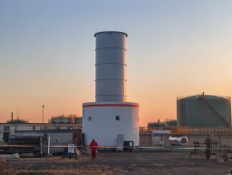
Enclosed ground flare (EGF) systems are a key configuration for facilities that need low radiation and low noise combustion.
Why Industrial Facilities Need Flare Systems
Oil and gas production, refining, and petroleum processing generate high-pressure hydrocarbon gas, emergency pressure relief streams, startup and shutdown venting, and other flammable or hazardous gases. If these streams are released without controlled combustion, they create two types of risk: process safety risk from overpressure, and environmental risk from unburned hydrocarbons and toxic components. The function of a flare system is to receive those gas streams and combust them safely, protecting people, equipment, and the surrounding environment.
A flare system is not a single product. It includes the flare stack or ground enclosure, burner tip, ignition system, flame monitoring, gas piping, and often a control system. The correct configuration depends on gas composition, flow rate, operating temperature, site footprint, and whether the duty is continuous, intermittent, or emergency standby.
The scale of the challenge is significant. Global gas flaring volume reached 151 billion cubic meters in 2024, the highest level since 2007, according to World Bank data. That figure highlights why efficient relief and combustion systems remain a priority for producers and regulators.
Market and Regulatory Background
The flare systems market is mature and globally distributed. The global flare systems market is valued at approximately USD 4.8 billion in 2025, driven by regulatory pressure on hydrocarbon emissions and recovery in oil and gas investment, according to Dataintelo. Within that market, the totally enclosed ground flare segment was valued at USD 113 million in 2024, with growth driven by systems achieving high destruction efficiency, according to Intel Market Research.
Adjacent equipment is part of the same buying conversation. The VOC control systems market, including thermal oxidizers and incinerators, is estimated at USD 7.5 billion in 2025, with China identified as a key growth market at a 5.4% CAGR, according to Fact.MR. Regionally, Asia-Pacific holds a 35% share of the flare gas recovery system market as of 2025, the largest regional share globally, according to Grand View Research.
From an engineering standards perspective, flare system design is primarily governed by API Standard 521, which covers pressure-relieving and depressuring systems. API 521 specifies design details that influence system layout, such as a minimum flare header slope of 1/4 inch per 10 feet for drainage. Buyers in refinery and petrochemical projects therefore need a manufacturer that can work within API 521 design expectations from the early engineering phase.
Core Flare System Configurations
Manufacturers classify flare systems by structure, emission control method, mobility, and gas type. The main categories include elevated flare systems, enclosed ground flares, skid-mounted and mobile flare systems, flare tips, biogas or landfill gas flares, and thermal treatment equipment such as thermal oxidizers and incinerators. Each configuration has a specific role.
Elevated Flare Systems
Elevated flare systems raise the combustion point above the facility through a flare stack. Common structural types include self-supported, guyed-wire, derrick-supported, and demountable flares. Typical elevated flare height can range from 10 meters to more than 150 meters, operating temperatures can reach up to 1100°C, and turndown ratios can be as high as 100:1. Combustion efficiency is typically in the range of 98% to 99.9%, depending on design and operating conditions. Elevated flares are used in oil and gas, refining, petrochemical, LNG plants, chemical plants, gas processing facilities, and onshore or offshore facilities.
Zexuan offers elevated flare systems under the ZX-SSEF Series, ZX-GWF Series, and ZX-DSF Series, with the latter including derrick-supported and demountable configurations.
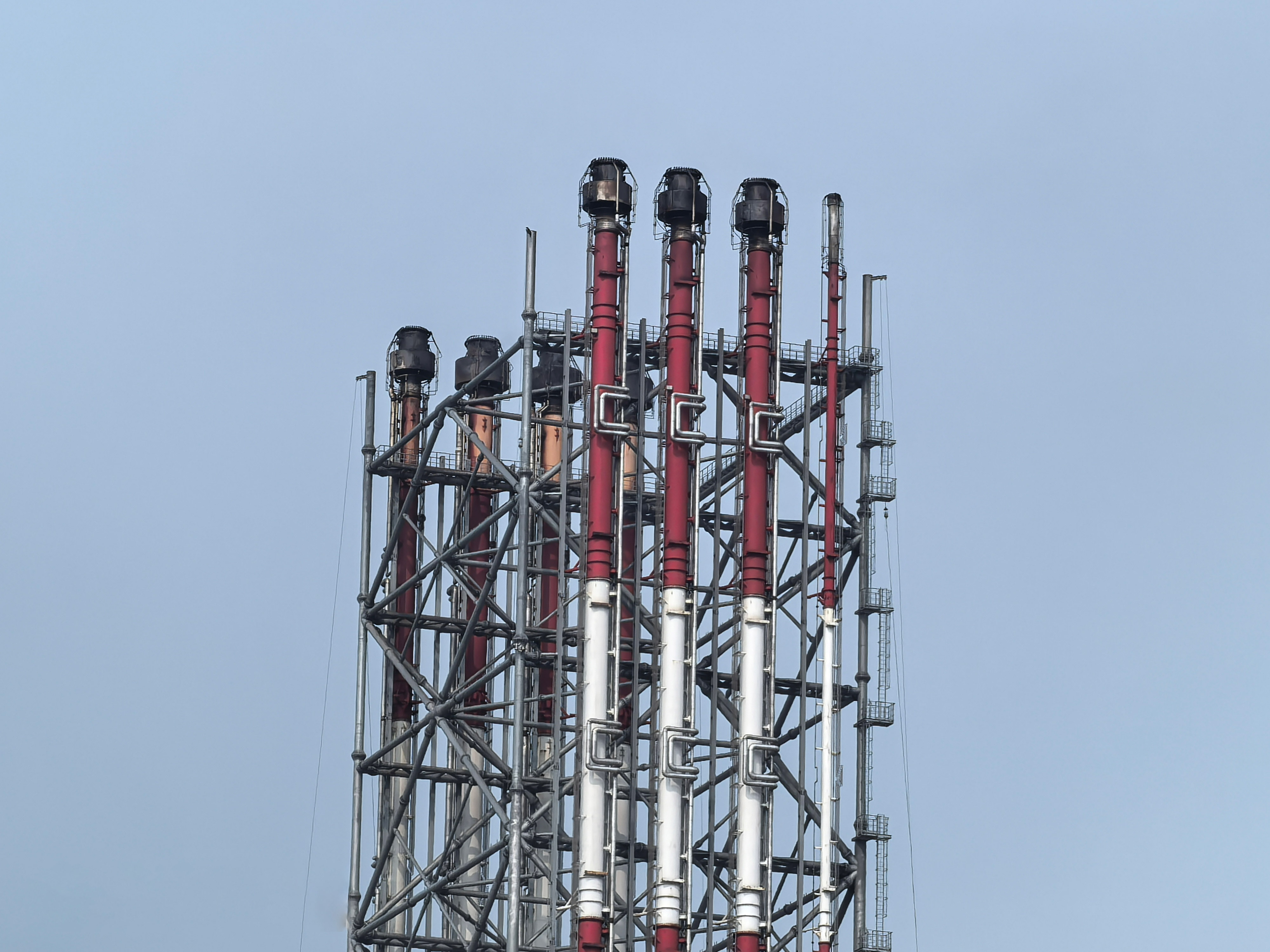
Elevated flare systems provide high-efficiency combustion in refinery, petrochemical, and gas processing applications.
Enclosed Ground Flare (EGF)
Enclosed ground flares are designed for facilities where space is limited or where low radiation and low noise operation are required. The ZX-EGF Series operates at temperatures between 800°C and 1200°C, can achieve combustion efficiency up to 99.9%, and uses a low radiation design with refractory lining materials. It is suitable for LNG terminals, chemical plants, petrochemical parks, hazardous gas treatment, pharmaceutical industry, and industrial parks. Gas flow is customized for each project.
Skid-Mounted and Mobile Flare Systems
Skid-mounted flare systems are compact, factory-assembled units designed for fast installation and commissioning. The ZX-SMF Series is used for LNG receiving terminals, LNG bunkering, gas storage facilities, pipeline facilities, and offshore gas applications. It is compatible with LNG, LPG, natural gas, and hydrocarbon gas, and uses low-temperature materials for cryogenic service. Some configurations act as mobile flare units or portable LNG emergency flares. For LNG terminals and natural gas processing facilities, the primary duties are disposal of boil-off gas (BOG) and emergency gas release, which require automatic standby operation, compact design, low-temperature compatibility, fast response, and safe combustion.
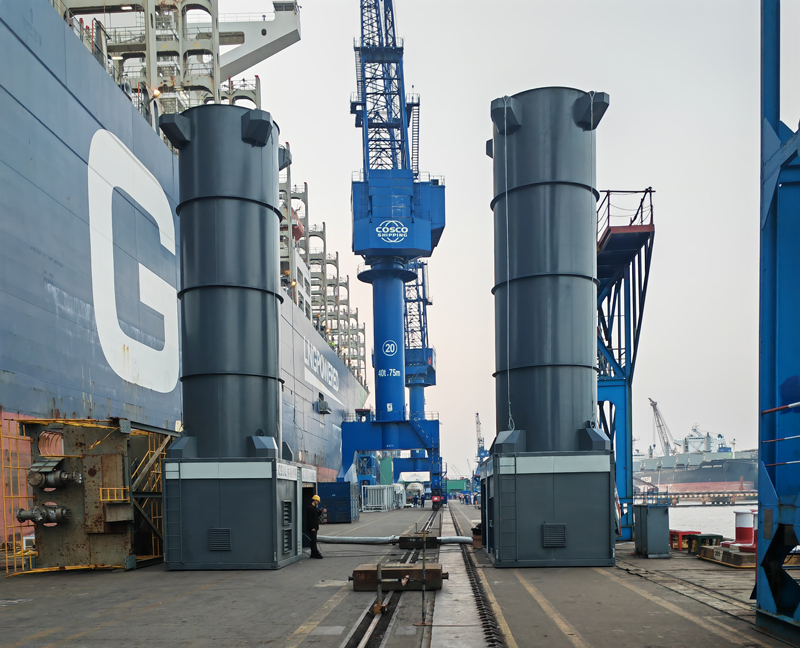
Skid-mounted LNG and LPG flare systems support bunkering terminals and gas storage facilities with fast deployment.
Flare Tips and Combustion Equipment
Flare tips are the combustion components at the top of a flare system. The ZX-FT Series includes sonic, smokeless, air-assisted, and Coanda flare tips, with primary materials such as SS316L, SS310S, and Inconel 625. Operating temperatures can reach up to 1100°C, and both diameter and gas capacity are customizable. Flare tips are widely used in refineries, petrochemical plants, LNG facilities, and oil and gas processing, and are also suitable for replacement and upgrade projects.
Biogas and Landfill Gas Flare Systems
Biogas flares handle methane-containing gas from landfill gas, biogas, digester gas, and wastewater treatment gas. The ZXE-BGF Series is available as an open or enclosed biogas flare, a landfill gas flare, an anaerobic digestion flare, and a methane destruction system. Methane concentration is typically 35%–65% CH₄, operating temperature is normally 800°C–1100°C, and methane destruction efficiency is at least 98%, depending on system design. Automatic ignition and flame monitoring are available, and the system can be designed for continuous or intermittent operation.
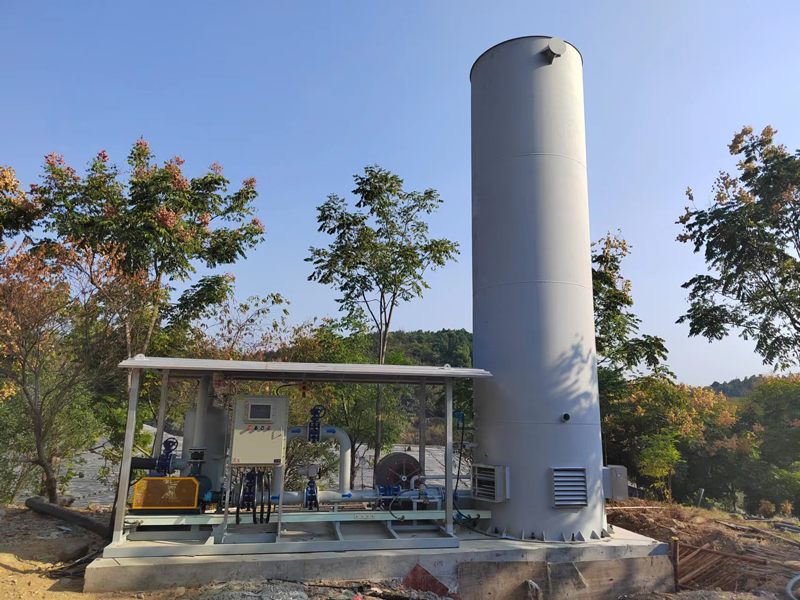
Biogas and landfill gas flares reduce methane emissions and support renewable energy project compliance.
Thermal Oxidizers and Waste Gas Incineration
Some industrial gas streams are better treated by thermal oxidation instead of a traditional flare. The ZX-TO, ZX-RTO, and ZX-RCO series thermal oxidizers are used for VOC destruction in chemical, pharmaceutical, coating, and petrochemical industries. Operating temperatures range from 800°C to 1200°C, VOC destruction efficiency can reach up to 99% or higher, and the systems are designed for continuous operation with optional heat recovery. For solid, liquid, and hazardous waste, the ZX-INC Series hazardous waste incineration system operates at 850°C–1200°C with multi-stage combustion, waste gas treatment integration, and heat recovery options.
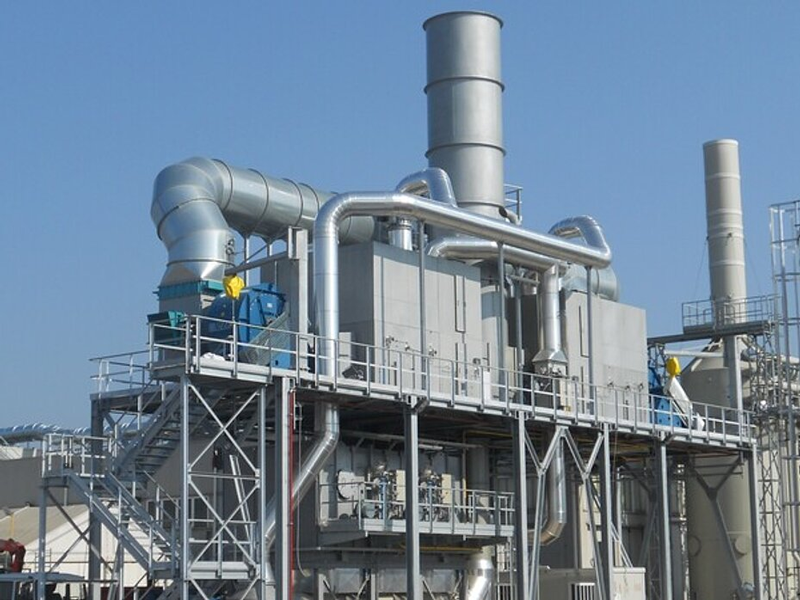
Regenerative thermal oxidizers reduce VOC emissions in chemical and coating applications while recovering heat.
How to Approach Flare System Selection
Because flare systems are engineered equipment, selection is a step-by-step process rather than a product-spec comparison alone. The following framework works for buyers in the awareness and research stages.
- Define the gas stream and duty. Start with gas sources: landfill gas, biogas, digester gas, wastewater treatment gas, hydrocarbon process gas, VOC-containing gas, or toxic and corrosive components. Identify whether operation is continuous, intermittent, 24/7, or emergency standby.
- Identify compliance requirements. For refinery and oil and gas projects, API 521-compliant design is a typical requirement. For manufactured equipment quality, ISO 9001:2015 quality management certification provides a baseline.
- Select the physical configuration. Elevated flares suit open facilities with height available; EGF suits limited space and low-radiation needs; skid-mounted systems suit LNG and fast deployment; biogas flares suit methane streams; thermal oxidizers and incinerators suit continuous VOC and waste destruction.
- Review temperature and material constraints. High-temperature and corrosive streams may require SS316L, SS310S, or Inconel 625. Cryogenic LNG service requires low-temperature materials.
- Evaluate manufacturer depth. Consider engineering team size, fabrication base, annual capacity, and international project experience.
- Request documentation. A company brochure, technical datasheets, certification copies, and representative project references help validate capability before detailed engineering.
- Move to inquiry with process data. Provide flow rate, gas composition, pressure, temperature, and operating mode so the manufacturer can recommend a customized flare system model.
Flare Systems by Industry
Oil, Gas, and Refining
Refining and gas processing facilities operate under high-pressure hydrocarbon gas, emergency pressure relief, startup and shutdown venting, and flammable or hazardous gas conditions. The solution is typically an elevated flare system or enclosed ground flare system running in 24/7 standby with automatic activation during emergencies. Special requirements include API 521-compliant design, high reliability, smokeless combustion, low thermal radiation, and corrosion resistance.
Petrochemical and Chemical Processing
Petrochemical plants handle hydrocarbon process gas, VOC-containing gas, toxic components, and variable flow conditions. Elevated flare systems, ground flare systems, and thermal oxidizers are used to treat process off-gases and emergency vent gases. Corrosion-resistant materials, high-temperature resistance, stable combustion, and high destruction efficiency are core requirements in chemical plants.
LNG Terminals and Natural Gas Processing
LNG facilities generate boil-off gas and must handle emergency gas release in cryogenic conditions. Skid-mounted flare systems are a common solution because they combine compact design, low-temperature compatibility, fast response, and safe combustion. The system operates in automatic standby mode.
Landfill, Biogas, and Waste-to-Energy
Biogas plants and landfill sites produce methane-containing gas at low pressure with variable flow. Biogas flare systems combust methane, reduce greenhouse gas emissions, and improve environmental compliance. Automatic ignition, stable combustion, and outdoor reliability are important for these sites.
Metallurgy and Heavy Industry
High-temperature exhaust gas, dust-containing gas, and industrial combustion emissions are common in metallurgy and heavy industry. Thermal oxidizer and waste gas treatment systems handle these streams in continuous operation, with additional value from heat recovery.
Flare System Types at a Glance
| System Type | Operating Temperature | Efficiency | Typical Applications | Zexuan Series |
|---|---|---|---|---|
| Elevated Flare | Up to 1100°C | ≥98%–99.9% | Oil & gas, refining, petrochemical, LNG, chemical, gas processing | ZX-SSEF, ZX-GWF, ZX-DSF |
| Enclosed Ground Flare | 800°C–1200°C | Up to 99.9% | LNG terminals, chemical plants, petrochemical parks, limited-space sites | ZX-EGF |
| Skid-Mounted LNG/LPG Flare | Cryogenic-compatible | Customized | LNG receiving terminals, bunkering, gas storage, pipeline, offshore | ZX-SMF |
| Biogas / Landfill Gas Flare | 800°C–1100°C | ≥98% methane destruction | Landfill, biogas, anaerobic digestion, wastewater treatment | ZXE-BGF |
| Thermal Oxidizer | 800°C–1200°C | Up to 99%+ VOC destruction | Chemical, pharmaceutical, coating, petrochemical VOC treatment | ZX-TO, ZX-RTO, ZX-RCO |
| Hazardous Waste Incinerator | 850°C–1200°C | Multi-stage combustion | Chemical plants, hazardous waste treatment, industrial waste | ZX-INC |
What to Look for in a Flare Systems Manufacturer
Shandong Zexuan Environmental Protection Technology Co., Ltd. is a manufacturer and engineering service provider established in 2015, specializing in industrial flare systems, thermal treatment equipment, and waste gas combustion solutions. Headquarters is located at No. 2000, Shunhua Road, Innovation Zone, Jinan, Shandong, China. The company website is www.zexuaneco.com.
The company operates a 24,100 m² manufacturing base and has more than 80 employees, including over 30 engineers and technical specialists and an R&D team of more than 20 engineers. Annual manufacturing capacity exceeds 60 sets of flare and thermal treatment systems.
Quality management is covered by ISO 9001:2015 certification under certificate number 26326Q00079R001, issued by CSU International Certification Co., Ltd. This certification applies to both the Chinese domestic market and the international global market, and covers the development of waste gas treatment equipment and control units.
Zexuan has international project experience in more than 10 countries, including the Middle East, Central Asia, Southeast Asia, Africa, and Russia. Target industries include oil and gas, refining and petrochemical, LNG terminals, pipeline and compressor stations, chemical industries, municipal landfill and biogas, metallurgy, and heavy industries.
Frequently Asked Questions
What compliance and quality standards should a flare systems manufacturer meet?
Flare system design is primarily governed by API Standard 521 for pressure-relieving and depressuring systems. API 521 includes design requirements that influence system layout, such as a minimum flare header slope of 1/4 inch per 10 feet for drainage. For manufacturing quality, buyers should look for ISO 9001:2015 certification. Shandong Zexuan holds ISO 9001:2015 certification number 26326Q00079R001 issued by CSU International Certification Co., Ltd., covering waste gas treatment equipment and control units.
What flare system configurations can a manufacturer supply?
A full-scope manufacturer can supply elevated flare systems, enclosed ground flares, skid-mounted or mobile LNG/LPG flare systems, flare tips, biogas and landfill gas flare systems, thermal oxidizers, and hazardous waste incineration systems. Zexuan covers these categories with project-customized series such as ZX-SSEF, ZX-GWF, ZX-DSF, ZX-EGF, ZX-SMF, ZX-FT, ZXE-BGF, ZX-TO, ZX-RTO, ZX-RCO, and ZX-INC.
How should buyers approach budgeting for a flare system?
Flare systems are custom engineered, so budgets depend on gas flow, composition, temperature, structural height, material selection, and control scope. No fixed price list applies across projects. The global flare systems market is estimated at USD 4.8 billion in 2025, which reflects the scale and variety of these systems. Buyers should prepare process data and request project-specific cost guidance from manufacturers.
Can buyers request samples or reference installations before ordering?
For large engineered equipment, physical samples are uncommon. Buyers can request a company brochure, technical datasheets, certification copies, and examples of international project experience. Zexuan has project experience in more than 10 countries across the Middle East, Central Asia, Southeast Asia, Africa, and Russia, and can discuss relevant reference installations during early inquiries.
What lead time should buyers expect for a custom flare system?
Lead time depends on the project scale, gas conditions, engineering scope, and manufacturing schedule. Zexuan operates a 24,100 m² manufacturing base with annual capacity of more than 60 sets, but each project is customized. Buyers should confirm scheduling directly with the manufacturer after preliminary process evaluation.
Next step for industrial buyers. If you are starting a flare system project, request the Shandong Zexuan brochure to review product series, manufacturing capabilities, and contact channels.
Download the Zexuan Company Brochure
For direct inquiries, contact Alice at alice@zexuaneco.com or +86 18678831572.
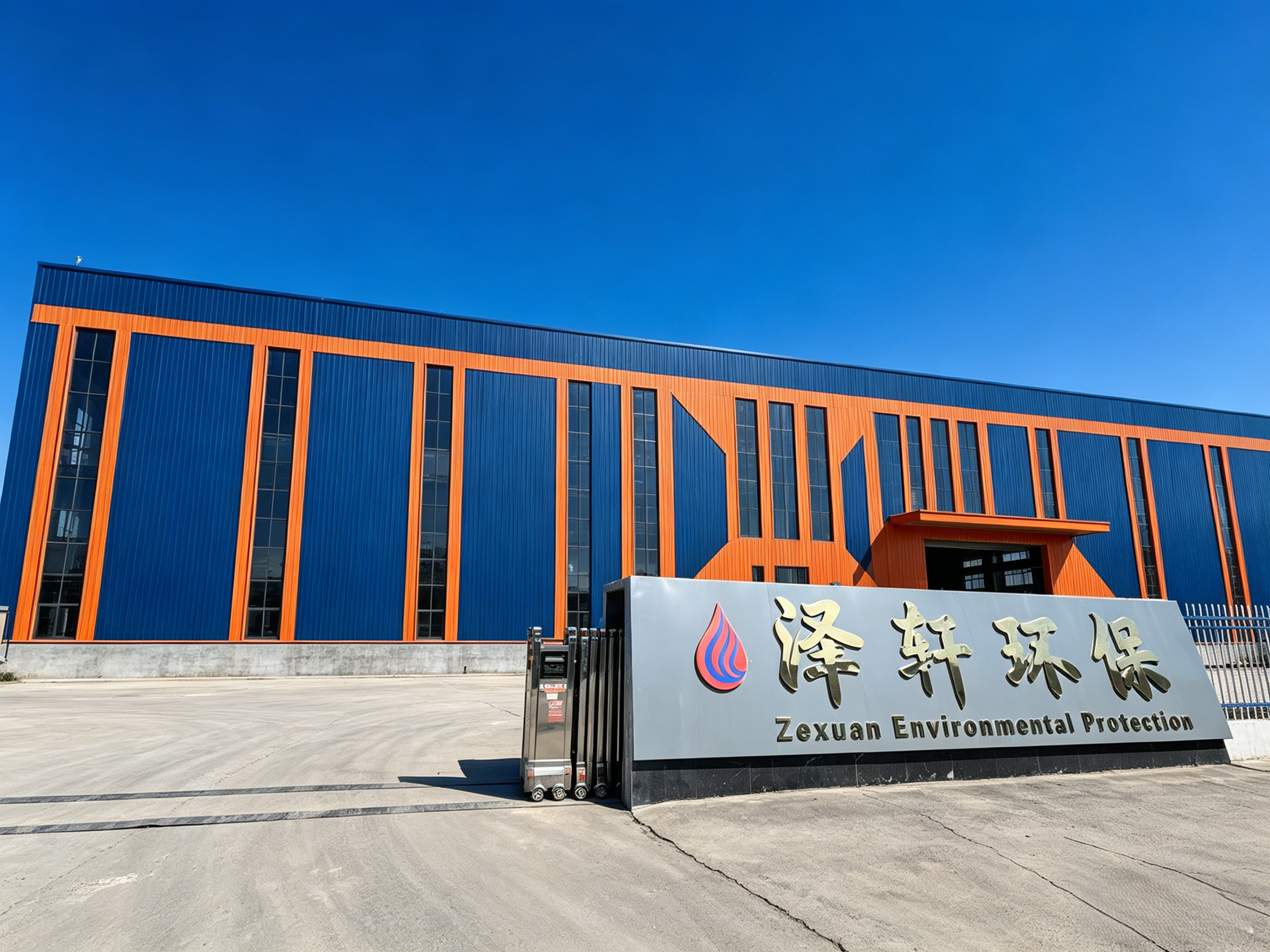
Shandong Zexuan operates a 24,100 m² manufacturing base for flare and thermal treatment systems.
Conclusion
Flare systems are a critical safety and emissions control layer across oil and gas, refining, petrochemical, LNG, chemical, biogas, and heavy industry. Buyers who understand the difference between elevated flares, enclosed ground flares, skid-mounted systems, biogas flares, and thermal oxidizers can make more targeted engineering and supplier decisions. Compliance frameworks such as API 521 and ISO 9001:2015 define the relevant design and quality baseline.
For early-stage research, the next step is to convert process conditions into a clear equipment direction and then evaluate manufacturers on engineering depth, fabrication capacity, quality certification, and project experience. Requesting a company brochure is a practical first action before detailed inquiry.