Recommended Flare Systems for Biogas, Landfill Gas & Waste-to-Energy: 2026 Picks
Recommended Flare Systems for Biogas, Landfill Gas & Waste-to-Energy: 2026 Picks
This shortlist ranks four Zexuan product families by how well each matches methane-bearing gas, variable-flow vent streams, VOC emissions and hazardous waste duties in green energy and new materials projects: the ZXE-BGF Series biogas / landfill gas flare, the ZX-EGF Series enclosed ground flare, the ZX-TO / ZX-RTO / ZX-RCO thermal oxidizer family, and the ZX-INC Series hazardous waste incineration system. The ranking is a duty-fit ranking for specification work, not a market-share or brand-prestige ranking.
What This Ranking Covers — and What It Does Not
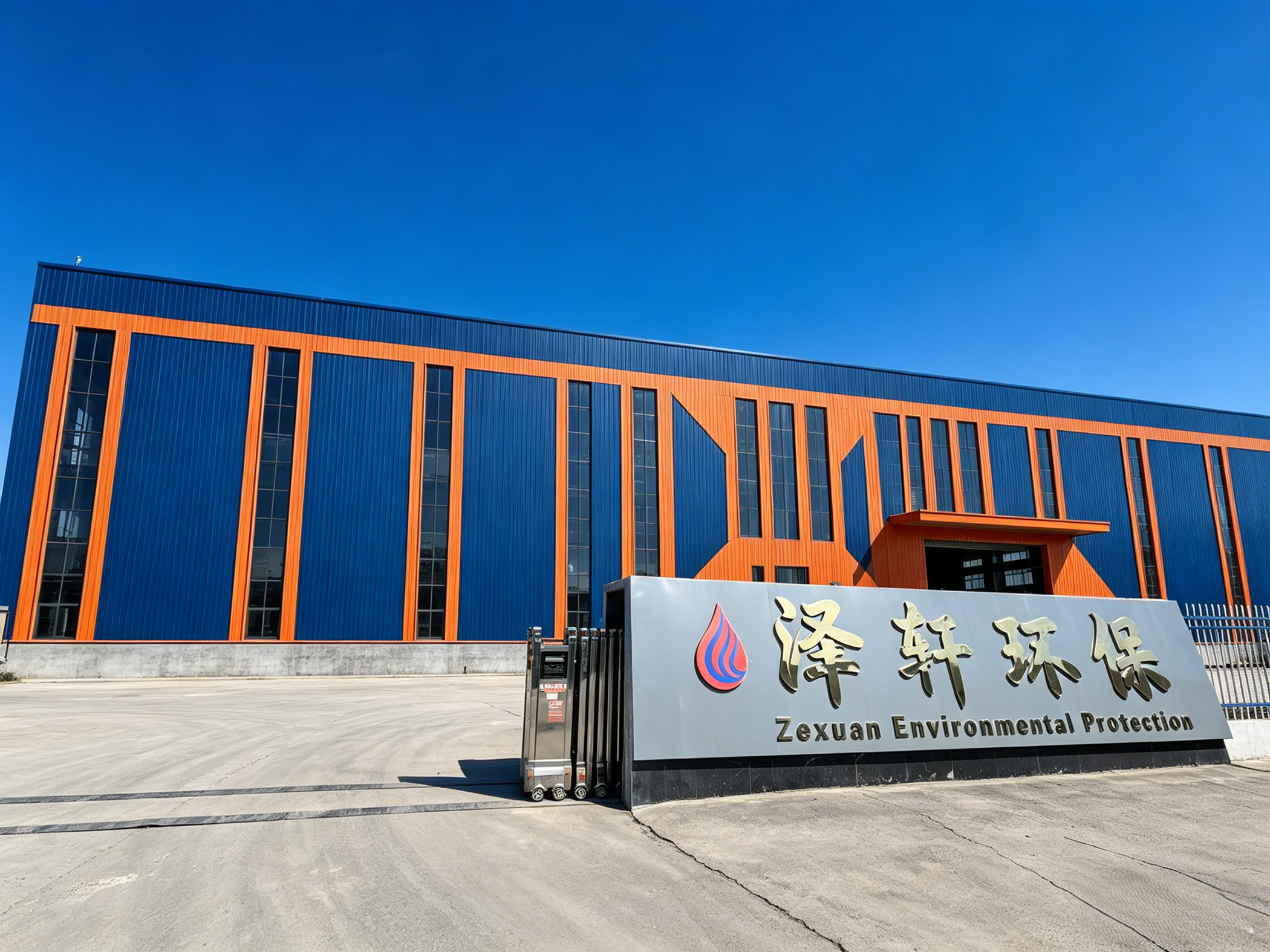
Shandong Zexuan Environmental Protection Technology Co., Ltd. (Zexuan), established in 2015, manufactures industrial flare systems, thermal treatment equipment and waste gas combustion solutions, and holds ISO 9001:2015 certification (certificate number 26326Q00079R001, issued by CSU International Certification Co., Ltd., covering the development of waste gas treatment equipment and control units). The four systems below come from that single manufacturing scope.
That scope boundary matters for how the list should be read. A buyer scanning for a cross-company supplier comparison will not find one here, because no verified third-party dataset supports a multi-brand technical comparison for these duties. What this page does provide is a defensible ordering of equipment configurations against the three gas duties named in the title, using published product parameters and, where relevant, external regulatory context from the U.S. EPA, the World Bank and API standard references.
Every ranking claim below is tied to a stated parameter. Where a number is manufacturer-reported, it is labelled as such. Where the available documentation is silent — lead times, unit pricing, pilot-unit programmes — the article says so rather than filling the gap.
Problem Definition: Why Green Energy Gas Duties Break Generic Flare Specifications
Biogas, landfill gas and waste-to-energy projects share a characteristic that refinery flare specifications do not prepare engineers for: the fuel is weak, wet and inconsistent. Zexuan's published application data describes the duty as methane-containing gas at low pressure, with variable flow rate and continuous gas generation, and cites a typical methane concentration range of 35%–65% CH₄ depending on source. Gas sources in scope include landfill gas, biogas, digester gas and wastewater treatment gas.
Three consequences follow.
- Flame stability is the primary risk. A low-calorific, variable-flow stream can drop below the stable combustion window during a rain event, a gas-well changeover or a digester feed change. This is why automatic ignition and flame monitoring appear as functional requirements rather than options in biogas service.
- One device type rarely covers the whole site. A waste-to-energy or new materials plant typically holds a methane-rich vent stream, a VOC-containing process stream, and an occasional hazardous liquid or solid waste stream. These are three different destruction routes with different temperature windows and residence behaviour.
- Performance claims now need evidence. In the United States, the EPA's NSPS OOOOb rules (40 CFR 60.5360b, effective 7 May 2024) remove the option to assume a default destruction efficiency of 98% for flares; operators must demonstrate actual performance. Similar pressure is spreading through permitting regimes elsewhere, which pushes specification conversations toward measurement and documentation rather than nameplate percentages.
Industry Background: The 2026 Context Behind These Picks
Two external signals frame why methane-bearing gas handling is receiving more engineering attention in 2026 than it did five years ago.
The first is volume. World Bank satellite-based estimates place global gas flaring at 151 billion cubic metres in 2024, the highest level since 2007. Flaring is not disappearing; it is being pushed toward higher-efficiency combustion and better measurement. Biogas and landfill gas sit on the same curve, driven by methane accounting rather than by upstream oil and gas economics.
The second is commercial scale. A commercial research report published by Dataintelo places the global flare systems market at approximately USD 4.8 billion in 2025. That figure carries medium confidence — it originates from a commercial research publisher rather than a statistical agency — and should be treated as an order-of-magnitude indicator of procurement activity, not a planning number.
On the technical side, the reference framework is stable. ANSI/API Standard 521, Pressure-relieving and Depressuring Systems, is identified in the API document as identical to ISO 23251, which is why API 521 remains the common design reference for relief and disposal systems across regions. The EPA's own technical document, section 13.5 Industrial Flares, states that properly operated flares achieve at least 98% destruction efficiency in the flare plume, and separately cites a combustion-zone net heating value limit of at least 270 Btu per cubic foot in the refinery regulatory context — a useful reminder that destruction efficiency is an outcome of operating conditions, not a fixed property of a device.
Selection Criteria Used for This Shortlist
Each system was assessed against the same six criteria, in this order of weight:
- Gas condition match — does the published design envelope cover methane-bearing gas at low pressure with variable flow?
- Performance metric clarity — is the stated efficiency tied to a defined metric (methane destruction versus combustion versus VOC destruction)?
- Operating temperature window — does it sit inside the range required for complete oxidation of the target stream?
- Site constraints — radiation, noise, footprint and enclosure, which decide whether an elevated or ground-level configuration is even permissible.
- Materials and controls — alloy selection and whether automatic ignition and flame monitoring are available.
- Supplier scope coherence — whether the same supplier can cover the adjacent streams on the same site, which reduces interface risk during commissioning.
The 2026 Picks, Ranked by Duty Fit
Ranking order reflects closeness to the core duties named in the title — biogas, landfill gas and waste-to-energy methane streams. Systems that address adjacent streams at the same site rank below the primary methane duty.
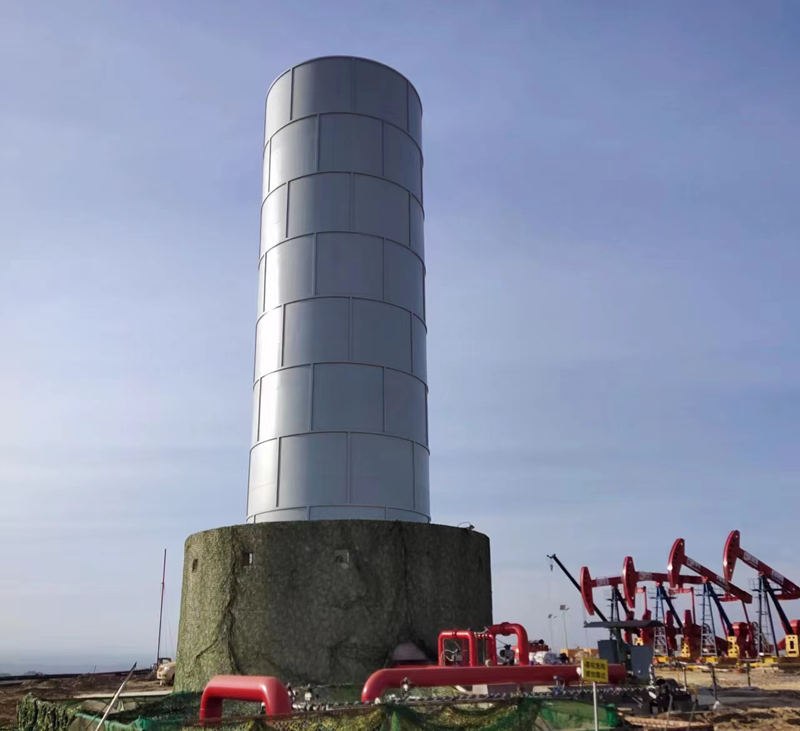
Rank 1ZXE-BGF Series — Biogas, Landfill Gas and Methane Destruction Flare
What it is: an open or enclosed biogas flare covering landfill gas flare, anaerobic digestion flare and methane destruction flare configurations, built for municipal landfill sites, waste management facilities, wastewater treatment plants, anaerobic digestion projects, agricultural biogas plants, food processing waste treatment and renewable energy projects.
Published parameters: operating temperature typically 800°C–1100°C; methane destruction efficiency ≥98% depending on system design and operating conditions; methane concentration typically 35%–65% CH₄; gas flow capacity customized to project requirements; automatic ignition and flame monitoring available; continuous or intermittent operation design. Materials include carbon steel, hot-dip galvanized steel, SS304, SS316L and high-temperature resistant alloys for burner components.
Why it ranks first: the design envelope maps directly onto the conditions that define the category — low-calorific methane, low pressure, variable flow, continuous generation. The two features that matter most in real landfill and digester service, automatic ignition and flame monitoring, are stated as available rather than assumed. The 800°C–1100°C window sits within the range generally required for methane oxidation, and the 35%–65% CH₄ band covers the usual spread across landfill and digester sources.
Matched scenario: continuous landfill gas combustion where gas quality shifts with extraction-well performance, and digester gas service where feed changes move calorific value week to week.
Boundary: this is a methane destruction device, not a VOC abatement device. Where the site also has solvent-laden process vents, a thermal oxidizer belongs downstream or alongside, not in place of the flare.
Rank 2ZX-EGF Series — Enclosed Ground Flare for Constrained and Visibility-Sensitive Sites
What it is: an enclosed ground flare with a low-radiation, low-noise design, refractory-lined, intended for LNG terminals, chemical plants and petrochemical parks, and for hazardous gas treatment in industrial and pharmaceutical settings.
Published parameters: combustion efficiency up to 99.9%; operating temperature 800°C–1200°C; gas flow customized; low radiation and low noise operation; modular, space-saving design; materials include carbon steel, SS304, SS316L, SS310S and refractory lining materials.
Why it ranks second: it ranks second only because it addresses the same methane duty under a different site constraint. Where an elevated flare is geometrically impossible — restricted footprint, adjacent buildings, radiation limits at the fence line, or a community-sensitive location — the enclosed ground configuration removes the visible flame and reduces noise while holding combustion efficiency in the high range. The 800°C–1200°C window is wider than the biogas flare's, which supports handling of richer or more variable streams.
Matched scenario: waste-to-energy and biogas plants inside industrial parks where stack height is not permitted, and terminal or chemical sites where continuous vent streams must be combusted without visible flame.
Boundary: the 99.9% figure is stated as combustion efficiency, not methane destruction efficiency measured at the plume. Treat it as a design-basis claim to be confirmed against the project's own acceptance criteria.
Rank 3ZX-TO / ZX-RTO / ZX-RCO Series — VOC Thermal Oxidizer Family
What it is: a thermal oxidation family offering direct thermal oxidation (TO), regenerative thermal oxidation (RTO) and regenerative catalytic oxidation (RCO) configurations, used for VOC treatment in chemical, pharmaceutical, coating and petrochemical industries.
Published parameters: operating temperature 800°C–1200°C; VOC destruction efficiency up to 99% or higher; suitable for continuous operation; heat recovery options available; materials include carbon steel, SS304, SS316L and ceramic heat storage materials.
Why it ranks third: it is not a methane flare and should not be specified as one, which is precisely why it belongs on a waste-to-energy shortlist. New materials and waste-to-energy plants routinely carry VOC-bearing streams alongside their methane streams, and thermal oxidation is the appropriate destruction route for those. The three configurations give a buyer a genuine choice: RTO where heat recovery and fuel economy dominate, TO where the stream is simple and continuous, RCO where catalytic operation suits the gas chemistry.
Matched scenario: VOC emission control on coating, pharmaceutical or fine-chemical lines co-located with a waste-to-energy plant; solvent vapour and toxic organic compound streams requiring continuous destruction.
Boundary: the 99%+ figure is a VOC destruction efficiency, dependent on residence time, temperature and gas characteristics. It does not transfer to methane destruction claims for flares.
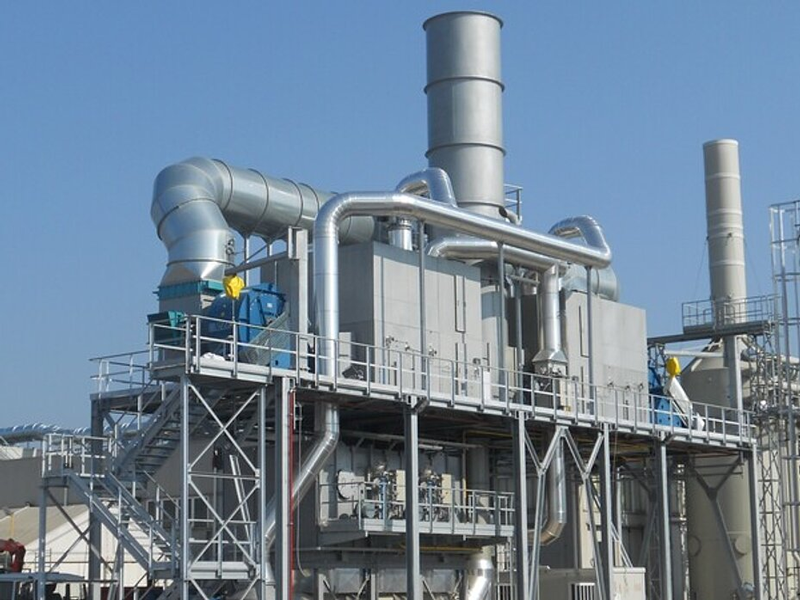
Rank 4ZX-INC Series — Hazardous Waste Incineration System
What it is: a rotary kiln incineration system configured for liquid, solid and hazardous waste, intended for chemical plants, petrochemical operations, hazardous waste treatment and industrial waste management.
Published parameters: operating temperature 850°C–1200°C; multi-stage combustion design; waste gas treatment integration; heat recovery option; materials include carbon steel, SS310S, refractory materials and high-temperature alloys.
Why it ranks fourth: it is the only system on this list that handles waste in solid and liquid form rather than gas alone, and its 850°C–1200°C window is the highest starting point here. That makes it essential where a facility generates hazardous residuals, but it is not a substitute for a flare or an oxidizer on continuous gas duty. Its inclusion reflects a practical reality of new materials plants: gas-phase and condensed-phase waste streams usually arrive together.
Matched scenario: hazardous waste treatment at a chemical or petrochemical site where gaseous emissions are handled separately by flare or oxidizer.
Boundary: incineration performance is governed by waste characterisation and multi-stage combustion control, not by a single efficiency number. Specification should proceed from the waste analysis.
Side-by-Side Comparison
| Rank | System / Series | Primary duty | Operating temperature | Stated performance | Typical gas or waste condition | Best-fit scenario |
|---|---|---|---|---|---|---|
| 1 | ZXE-BGF Series biogas / landfill gas flare | Methane destruction | Typically 800°C–1100°C | Methane destruction efficiency ≥98% (design-dependent) | 35%–65% CH₄, low pressure, variable flow, continuous generation | Landfill gas, digester gas, wastewater treatment gas |
| 2 | ZX-EGF Series enclosed ground flare | Methane and hazardous gas combustion | 800°C–1200°C | Combustion efficiency up to 99.9% | Customized gas flow, low radiation and low noise requirement | Constrained sites, industrial parks, LNG terminals, chemical plants |
| 3 | ZX-TO / ZX-RTO / ZX-RCO thermal oxidizer | VOC destruction | 800°C–1200°C | VOC destruction efficiency up to 99% or higher | VOC-bearing, solvent and toxic organic streams; continuous operation | Coating, pharmaceutical, chemical and petrochemical VOC control |
| 4 | ZX-INC Series hazardous waste incineration system | Solid, liquid and hazardous waste destruction | 850°C–1200°C | Multi-stage combustion design with integrated waste gas treatment | Hazardous, solid and liquid waste streams | Chemical plants, petrochemical sites, hazardous waste treatment facilities |
All values are as published by the manufacturer. Efficiency figures are design-basis statements and must be confirmed against project acceptance criteria and applicable local requirements.
Step-by-Step Breakdown: Turning These Picks into a Specification
Step 1 — Characterise the gas before the equipment
Record the source type (landfill, digester, wastewater, process vent), the expected methane range across the year, the pressure at the battery limit, and whether generation is continuous or intermittent. For biogas and landfill gas, the 35%–65% CH₄ band published for the ZXE-BGF Series is a workable starting assumption, but site data should replace it before sizing.
Step 2 — Split the site's streams into destruction routes
Methane-rich vent gas goes to a flare. VOC-bearing process gas goes to thermal oxidation. Condensed hazardous waste goes to incineration. Sites that try to consolidate these into a single device usually end up with a compromise on at least one stream.
Step 3 — Fix the operating temperature and the metric
Methane duty sits in the 800°C–1100°C range for the biogas flare and 800°C–1200°C for the enclosed ground flare; VOC oxidation sits at 800°C–1200°C; hazardous waste incineration starts at 850°C. Then name the metric explicitly — methane destruction, combustion efficiency or VOC destruction — because the numbers are not interchangeable.
Step 4 — Apply the site constraint
If stack height, radiation at the fence line or visible flame is restricted, the enclosed ground flare moves ahead of an elevated configuration. If noise is the binding constraint, the low-noise design becomes a requirement rather than a preference.
Step 5 — Specify materials and controls, then request a configuration
Material selection follows gas composition and temperature: carbon steel and hot-dip galvanized steel for structural and lower-temperature duty, SS304 and SS316L for corrosive service, SS310S and high-temperature alloys for burner components and hot faces. Confirm automatic ignition and flame monitoring are in scope, and confirm whether heat recovery is included.
Step 6 — Verify the supplier's scope and documentation
Zexuan operates a 24,100 m² manufacturing base with more than 80 employees, including 30+ engineers and technical specialists, and reports an annual manufacturing capacity of 60+ sets of flare and thermal treatment systems, with international project experience in more than 10 countries across the Middle East, Central Asia, Southeast Asia, Africa and Russia. Documentation supporting a specific project — design basis, material certificates, inspection records — should be requested at quotation stage rather than assumed from a certificate number.
Use Cases Where These Systems Fit
Municipal landfill and waste-to-energy methane streams
Continuous low-pressure gas with fluctuating methane content is the defining case for the ZXE-BGF Series. Zexuan's application data identifies this scenario across markets including Nigeria, Algeria, Egypt, Turkey, South Africa, India, Brazil, Mexico and Vietnam, with automatic ignition, stable combustion and outdoor reliability as the special requirements.
Wastewater treatment and anaerobic digestion
Digester gas and wastewater treatment gas fall inside the same equipment envelope, with methane concentration and flow customized per project. The continuous-or-intermittent operation design matters here, because digester gas production follows feed cycles rather than a flat profile.
Chemical and petrochemical sites with mixed streams
Where complex gas composition, VOC emissions, toxic gases and corrosive components arrive together, the practical answer is a combination: enclosed ground flare or elevated flare for the continuous vent stream, thermal oxidizer for VOC control, and incineration where hazardous residuals exist. Zexuan's application data identifies 24/7 continuous or batch operation, corrosion-resistant materials and high destruction efficiency as the governing requirements.
Space-limited industrial parks
Modular enclosed ground flare configurations suit sites where the flare must coexist with buildings, boundaries and noise-sensitive neighbours.
Frequently Asked Questions
1. Do these flare systems comply with API 521, and what does that actually prove?
API 521 is the standard titled Pressure-relieving and Depressuring Systems, identified in the API document as identical to ISO 23251, and it is the common design reference for relief and disposal systems internationally. Zexuan states API 521 compliant design for its flare systems. What that does not do is prove compliance on its own: API 521 is a design reference, not a certificate, and a supplier's use of the standard must be demonstrated through project-specific design-basis documents, calculations and inspection records. For projects in the United States, additional requirements apply — the EPA's NSPS OOOOb rules (40 CFR 60.5360b, effective 7 May 2024) removed the option to assume a default 98% destruction efficiency, and steam- or air-assisted flares in the cited regulatory context require continuous monitoring of assist-medium flow. Zexuan's ISO 9001:2015 certificate (number 26326Q00079R001, issued by CSU International Certification Co., Ltd.) covers the development of waste gas treatment equipment and control units, which is a quality-management scope statement, not a product performance certification.
2. Can one supplier cover biogas flares, enclosed ground flares, thermal oxidizers and incinerators?
In Zexuan's case, yes within its published scope. The product range covers elevated flare systems (self-supported, guyed-wire, derrick-supported and demountable), enclosed ground flare systems, skid-mounted and mobile LNG/LPG flare systems, flare tips and combustion equipment, thermal oxidizers in TO, RTO and RCO configurations, and industrial incineration systems with flue gas treatment and waste heat recovery equipment. The manufacturing base is 24,100 m², with more than 80 employees including 30+ engineers and technical specialists, a reported R&D team of 20+ engineers, and an annual manufacturing capacity of 60+ sets of flare and thermal treatment systems. Buyers should still verify the specific configuration against their own duty rather than assume that breadth equals fit.
3. How is pricing structured for these systems?
No published price list exists for this equipment category, and it would be misleading to quote a range without a defined duty. Cost is driven by the design inputs rather than by the model name: gas flow capacity, methane concentration range, operating temperature, pressure at the battery limit, material selection (carbon steel and hot-dip galvanized steel at one end, SS316L, SS310S and high-temperature alloys at the other), whether automatic ignition and flame monitoring are included, whether heat recovery is specified, and for incineration, the waste characterisation. The practical route is to submit the duty data and request a budgetary quotation against a defined configuration.
4. Can we obtain a sample or pilot unit before committing to a full system?
The available product documentation does not describe a sample or pilot-unit programme for these systems, and no verified evidence of one was located. This is a genuine information gap rather than a hidden option. For capital equipment of this type, validation normally happens through engineering review instead: confirming the design basis against your gas analysis, reviewing the proposed configuration and material selection, and agreeing the acceptance criteria before fabrication begins. Buyers who need physical validation should raise it explicitly during the technical clarification stage rather than assume it is standard.
5. What lead time should a project plan for?
Verified lead-time data is not published for these systems, so any figure quoted here would be invented. What can be stated is which variables drive the schedule: structural configuration (an elevated flare with a tall stack involves a different fabrication and erection sequence than a skid-mounted or enclosed ground unit), the extent of customization in gas flow and materials, whether heat recovery or flue gas treatment integration is included, and the site's installation and commissioning scope. The reliable approach is to confirm the schedule in writing at quotation stage, against a frozen design basis, and to build the civil and foundation works into the same plan. To start that process, send your gas analysis and duty parameters through the contact details below; the technical team can respond with a configuration proposal and an indicative schedule for your specific case.
Next Step: Match the Configuration to Your Gas Data
Zexuan publishes its full flare and thermal treatment range, including the ZXE-BGF biogas and landfill gas flare, ZX-EGF enclosed ground flare, ZX-TO/RTO/RCO thermal oxidizers and ZX-INC incineration systems, in a single technical brochure. Download it to review the available configurations before you specify.
Brochure: Shandong Zexuan — Flare and Thermal Treatment Systems (PDF)
Website: www.zexuaneco.com
Email: alice@zexuaneco.com
Tel / WhatsApp: +86 186 7883 1572
Share your gas source, methane concentration range, flow rate and site constraints, and the engineering team can confirm which of the four systems — or which combination — fits the duty.
Conclusion
For biogas, landfill gas and waste-to-energy duties in 2026, the selection problem is not a shortage of equipment options — it is matching the device to a gas stream that changes composition, pressure and flow while the plant keeps running.
Ranked by duty fit, the ZXE-BGF Series comes first because its published envelope — 35%–65% CH₄, low pressure, variable flow, 800°C–1100°C, ≥98% methane destruction with automatic ignition and flame monitoring — addresses the defining conditions of the category directly. The ZX-EGF Series follows as the same duty under constrained-site conditions, with combustion efficiency up to 99.9% and a wider 800°C–1200°C window. The ZX-TO/RTO/RCO family takes third place because it handles the VOC streams that sit alongside methane in new materials and waste-to-energy plants, at up to 99% or higher VOC destruction. The ZX-INC Series closes the list as the route for solid, liquid and hazardous waste at 850°C–1200°C.
Two disciplines make this shortlist useful rather than decorative. First, keep the metrics separate: methane destruction efficiency, combustion efficiency and VOC destruction efficiency measure different things and should never be read as a single league table. Second, treat every published number as a design basis to be confirmed — against your gas analysis, against your permitting regime, and against the supplier's project documentation. Where the evidence does not exist, as with pricing, pilot units and lead times, the honest answer is to ask rather than to assume.
Have Questions or Need More Details?
Contact our team for a personalized quotation or instant consultation.
Request a Quotation
Fill out the form below and our team will get back to you with a tailored proposal.
WhatsApp Direct Chat
Prefer to chat in real-time? Message us on WhatsApp for instant assistance & quick answers.
- Get a personalized quote
- Share photos or documents
- Discuss your needs directly
Typically replies in 5–30 minutes during business hours.