Regional Flare Compliance Guide: Matching Rules to Flare Type
A flare project rarely fails on steel quality. It fails on mismatched compliance logic — a datasheet that cites one standard, a permit written against another, and a supplier certificate that covers neither. The workable approach is to treat compliance as a mapping exercise: read the gas stream, identify which rule layer governs it, then choose the flare type that can produce the evidence that layer asks for.
That mapping looks different across three common project families. Refinery, petrochemical and oil & gas streams begin with a pressure-relief and depressuring basis, and are then judged on smokeless combustion and thermal radiation. Landfill gas and biogas streams are low-pressure methane flows where the obligation is continuous destruction rather than relief sizing. VOC and hazardous waste streams sit under emission limits that usually point to a thermal oxidizer, an enclosed ground flare or an incinerator rather than an open-tip flare.
This guide works through each family, then converts the result into a bid evidence pack. Product references come from the published documentation of Shandong Zexuan Environmental Protection Technology Co., Ltd. (Zexuan), a manufacturer established in 2015 that builds elevated flares, enclosed ground flares, biogas flares, skid-mounted LNG/LPG flares, thermal oxidizers and industrial incinerators from a 24,100 m² manufacturing base. Regulatory references are attributed to their issuing bodies and kept inside the context in which they were published.

Why a Certificate Stack Fails as a Compliance Answer
A typical flare inquiry returns four documents: a quality management certificate, a datasheet that mentions API 521, a combustion-efficiency figure and a reference list. Each is useful. None of them, alone, answers the question a buyer actually has — will this unit satisfy the rule that applies to my site?
API 521 illustrates the problem. In the API publication cited for this guide, ANSI/API Standard 521 is titled Pressure-relieving and Depressuring Systems and is identified as identical to ISO 23251. It is a design standard for relief and depressuring systems. It does not issue product certificates, and a datasheet line reading “API 521 compliant design” is a statement about method, not a third-party approval. The distinction matters most in export procurement, where buyers compare suppliers on a claim that no certification body actually issues for flare products.
Management-system certificates have the same boundary. Zexuan holds ISO 9001:2015, ISO 14001:2015 and ISO 45001:2018 certification issued by CSU International Certification Co., Ltd., valid from 18 March 2026 to 17 March 2029. The quality certificate's stated scope covers the development of waste gas treatment equipment and control units and the sales of waste gas and waste liquid treatment equipment. A buyer should confirm that the specific equipment and activity fall inside that wording, and should not read the certificate as a performance guarantee for a particular flare.
Performance figures carry a third boundary. Zexuan's elevated flare documentation gives combustion efficiency as typically ≥98%–99.9% depending on design and operating conditions. That qualifier is the specification. Without a stated metric, test basis and operating envelope, an efficiency figure cannot be compared across bidders.
| Layer | What it decides | Document that carries it | What it does not prove |
|---|---|---|---|
| Relief and depressuring design (API 521 / ISO 23251) | Relief case, header size, stack height, radiation envelope | Design calculations, radiation study | That the unit was built and tested to that design |
| Combustion performance and monitoring | Destruction performance, heating-value limits, assist-medium monitoring | Performance test protocol, monitoring architecture | That identical limits apply in another jurisdiction |
| Siting and permit conditions | Radiation, noise, visible flame, footprint | Permit, radiation and dispersion studies | Equipment quality or service life |
| Management system and manufacturing evidence | Process control, inspection, traceability | ISO certificates, FAT records, inspection reports | Product performance on a specific stream |
Four Layers That Govern a Flare Decision
Compliance layers are often presented as a hierarchy. In practice they are parallel obligations that one unit must satisfy at the same time.
Layer 1 — relief and depressuring design. This layer sizes the relief case, the flare header, the stack height and the radiation envelope. API 521 / ISO 23251 is its common reference in oil and gas work; the applicable edition must be confirmed for each project rather than assumed.
Layer 2 — combustion performance and monitoring. This layer defines what the flare must achieve and what must be measured. In the United States, EPA's NSPS OOOOb (40 CFR 60.5360b), effective 7 May 2024, removed the option to assume a default destruction efficiency of 98% and requires operators to demonstrate actual performance. EPA technical material states that properly operated flares achieve at least 98% destruction efficiency in the flare plume. EPA comments on Texas flare assumptions describe a refinery combustion-zone net heating value limit of at least 270 Btu/scf on a 15-minute block basis in that cited regulatory context, and continuous measuring, calculating and recording of assist-steam and/or assist-air flow for assisted flares in that context. 40 CFR 63.11(b) and 40 CFR 60.18(b) are identified in the same material as provisions specifying flare design and operating requirements where they apply.
Layer 3 — siting and local conditions. Thermal radiation contours, noise, visible flame, stack height and footprint are usually permit conditions rather than product attributes. They are also the fastest way to remove a flare type from a shortlist.
Layer 4 — management system and manufacturing evidence. ISO certification, inspection records and factory acceptance testing support supplier qualification. They do not replace layers 1 to 3.
From Stream to Shortlist: A Five-Step Matching Method
The sequence below is deliberately stream-first. Buyers who start with equipment type usually end up justifying a choice rather than testing it.
- Characterise the stream. Composition, methane concentration, pressure, flow variability, and whether flow is continuous or emergency-driven. Zexuan's biogas documentation, for example, is written around methane concentrations typically 35%–65% depending on source, while refinery service works from hydrocarbon relief cases instead.
- Fix the design basis. A relief case and a continuous-destruction case are different problems. Mixing them produces either an oversized flare or an under-specified oxidizer.
- Name the performance obligation and its metric. Destruction efficiency, combustion efficiency, heating-value limits and monitoring duties are separate requirements. Ask which one the permit actually names.
- Screen the type against siting. Height, radiation, noise, visible flame and plot space separate elevated, enclosed ground and skid-mounted options faster than any datasheet.
- Define deliverables before price. Relief calculations, tip selection rationale, radiation study, material certificates, FAT protocol and monitoring scope belong in the RFQ, not in the post-award discussion.
Worked quickly: a high-pressure hydrocarbon relief case on an open plot points to an elevated flare; a low-pressure methane stream with continuous flow points to a biogas flare; a continuous solvent-laden stream with recoverable heat value points to a regenerative oxidizer; a hazardous stream beside a fence line points to an enclosed ground flare. Each conclusion can still fail on siting or on a local rule, which is why steps 3 and 4 are not optional.
Refinery, Petrochemical and Oil & Gas: Fix the Relief Basis First
For refining, petrochemical, oil and gas processing and compressor station streams, the compliance sequence starts with relief. Zexuan's documentation for oil and gas, refining and petroleum processing lists API 521 compliant design, high reliability, smokeless combustion and low thermal radiation as the special requirements for this application, alongside corrosion resistance. That list is a useful template because it separates the design basis from the visible performance outcomes.
The elevated flare range carries the structural answer: self-supported (ZXE-SSEF), guyed-wire (ZXE-GWF), derrick-supported (ZXE-DSF) and demountable configurations, with flare height from 10 m to 150 m+, operating temperature up to 1100 °C, turndown ratio up to 100:1, customised tip diameter, and combustion efficiency typically ≥98%–99.9% depending on design and operating conditions. Structural selection is a siting decision as much as an engineering one: the chosen configuration has to place the radiation contour inside the available plot and still be erectable on site.
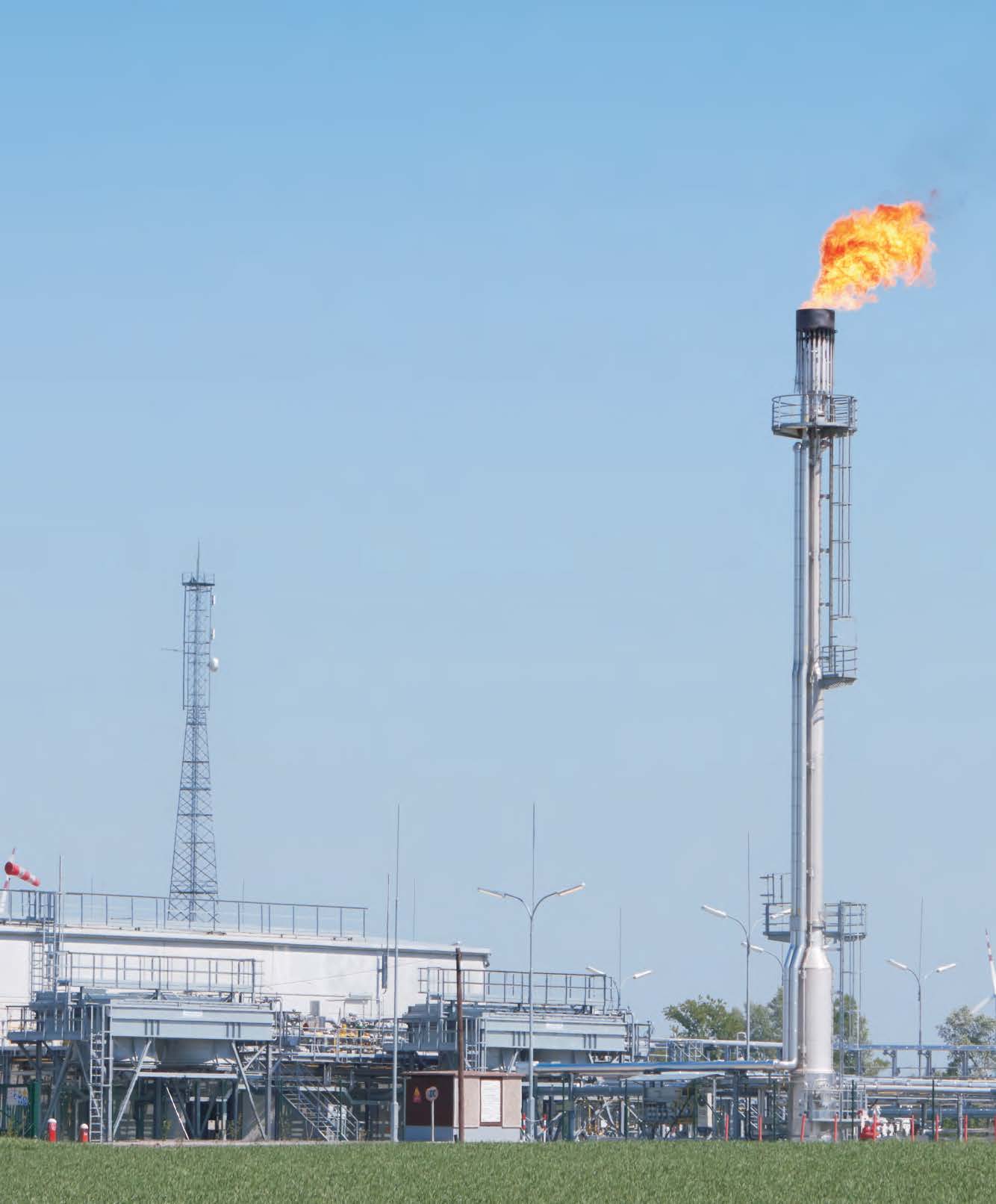
In the United States the performance layer has moved. A bid that answers NSPS OOOOb with a design efficiency claim alone is incomplete, because the rule requires demonstrated performance. The practical consequence is that monitoring scope — heating-value determination, assist-medium flow measurement, pilot and flame status, data recording — becomes part of the flare package rather than an instrumentation afterthought. The 270 Btu/scf combustion-zone limit and the assist-flow monitoring requirement described in EPA's cited material translate directly into equipment: analysers, flow elements, control logic and records that survive an audit.
What to request from any supplier, including a Chinese manufacturer: the relief and depressuring calculation set against the named standard edition; the tip selection rationale covering smokeless duty and turndown; the radiation study supporting the proposed height and configuration; and the factory acceptance test protocol covering ignition and control scope. A reference case helps orient the review — Zexuan's documented natural gas gathering project used two guyed-wire elevated flare systems with a 60 m structure, DN350 flare tip, automatic ignition and PLC control, reported in stable operation for more than a year.
Landfill Gas and Biogas: Where the Obligation Is Methane Destruction
Biogas and landfill gas projects invert the refinery logic. The stream is methane-containing and low-pressure, flow varies with gas generation rather than with a process upset, and the compliance question is whether methane is destroyed continuously and provably — not whether a relief header is sized correctly.
The ZXE-BGF series is specified for this family: open biogas flare, enclosed biogas flare, landfill gas flare, anaerobic digestion flare and methane destruction flare configurations, with gas sources covering landfill gas, biogas, digester gas and wastewater treatment gas. Documented parameters include methane concentration typically 35%–65% CH₄ depending on source, operating temperature typically 800 °C–1100 °C, methane destruction efficiency ≥98% depending on system design and operating conditions, automatic ignition and flame monitoring available, and continuous or intermittent operation design. Materials range from carbon steel and hot-dip galvanised steel to SS304, SS316L and high-temperature alloys for burner components.
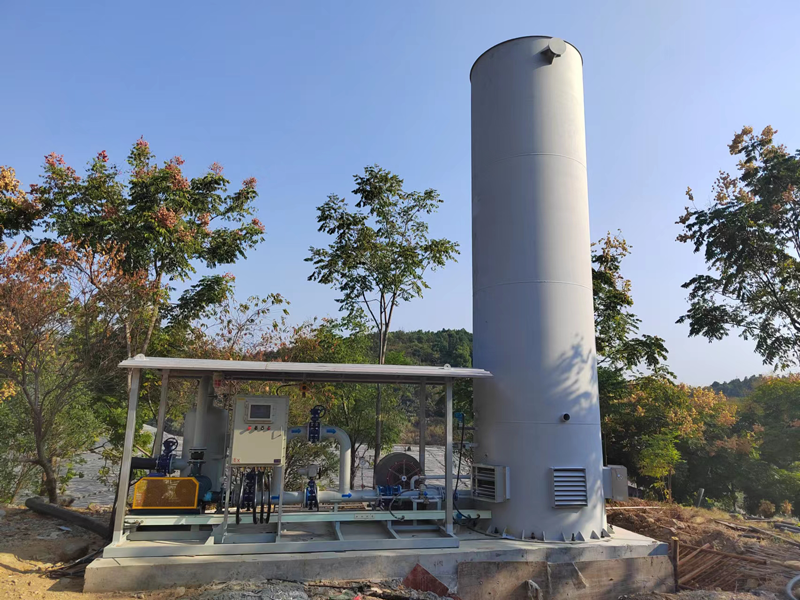
Those parameters map onto the questions a landfill or digester operator actually has to answer. Destruction efficiency ≥98% is the headline, but it is conditional on design and operating conditions, so the defensible request is the basis behind it: the flow range over which it holds, the turndown available against real gas-generation swings, and how ignition and flame status are recorded. Automatic ignition and flame monitoring are the evidence-generating features; without them a destruction claim has no operating record behind it.
Two secondary checks decide the configuration. First, open versus enclosed: an enclosed biogas flare contains the flame and reduces visual and noise impact where the site sits close to receptors, while an open flare is simpler where space and sightlines are not constrained. Second, materials: landfill and digester gas carry moisture and trace contaminants, so wetted and high-temperature sections need to be specified rather than defaulted.
Scale is not the obstacle. A documented Zexuan ground flare project for coalbed methane vent gas — an adjacent low-pressure methane application rather than a landfill — was configured for 90×10⁴ Nm³/d with a three-stage venting design and PLC automatic control, reported in operation for more than two years. Global context explains the scrutiny: World Bank satellite-based estimates put gas flaring at 151 billion cubic metres in 2024, the highest level since 2007, which keeps destruction performance visible to regulators and lenders alike.
VOC and Hazardous Waste: Oxidizer, Enclosed Flare or Incinerator
VOC and hazardous waste streams are governed by emission limits rather than relief cases, which changes the equipment logic. Three Zexuan product families sit in this space, and the selection rule between them combines stream continuity, heating value and siting.
Thermal oxidizers (ZX-TO, ZX-RTO, ZX-RCO). Documented operating temperature is 800 °C–1200 °C with VOC destruction efficiency up to 99%+ during continuous operation, with heat recovery options; materials include carbon steel, SS304, SS316L and ceramic heat-storage media. The regenerative variants are the usual answer for pharmaceutical, fine chemical and coating streams with solvent vapour and variable concentration, where energy saving and high removal efficiency are the stated requirements.
Enclosed ground flares (ZX-EGF). Documented combustion efficiency is up to 99.9% at 800 °C–1200 °C, with low radiation and low noise design, multiple burner configurations and a space-saving modular layout. The intended applications are petrochemical parks, chemical plants, LNG terminals, pharmaceutical sites and industrial parks — sites where a visible elevated flame is the constraint rather than the solution.
Hazardous waste incinerators (ZX-INC). Where the waste is solid or liquid as well as gaseous, incineration is the applicable route: 850 °C–1200 °C, multi-stage combustion, integrated waste gas treatment and an optional heat recovery stage.
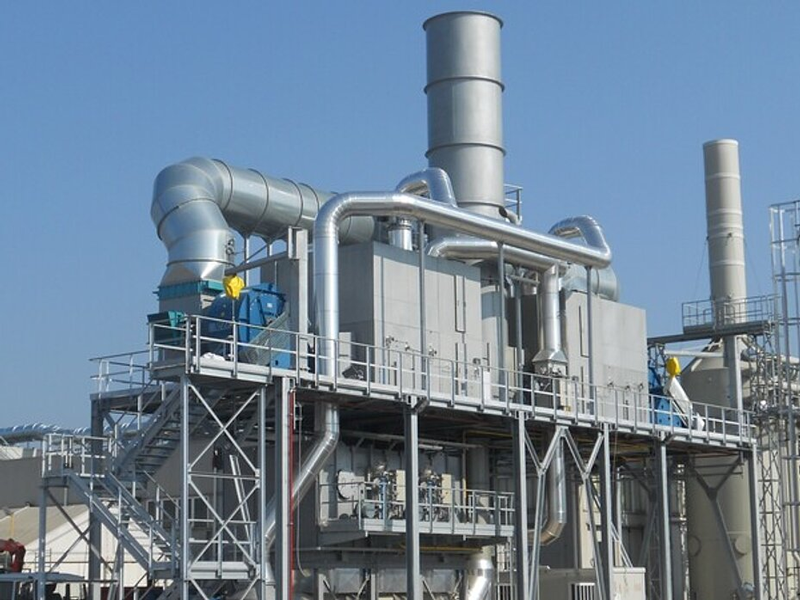
One regulatory subtlety is worth flagging early, because it changes the compliance path. EPA defines an industrial flare as a thermal oxidation system using an open flame without enclosure. An enclosed ground flare is, by construction, enclosed — so in several jurisdictions it is assessed as an enclosed combustion device with its own efficiency and monitoring requirements rather than under the flare provisions. Before comparing an elevated flare with an enclosed ground flare on price, confirm which category the local authority applies to each. The same discipline applies to efficiency claims: “up to 99%+” and “up to 99.9%” are comparable only when the metric, the basis and the operating condition are stated.
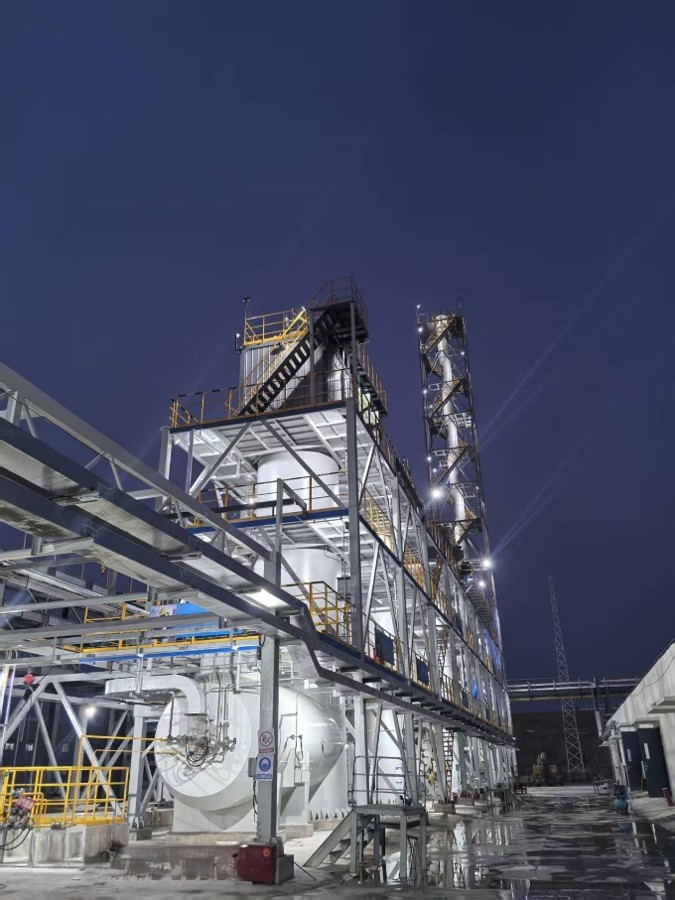
Regional Layers in Practice: Six Items to Confirm Locally
Regional rules do not replace the two technical layers; they sit on top of them and change the evidence required. In any market, six items should be confirmed in writing before the flare type is frozen:
- The permit basis and the exact edition of the design standard referenced.
- The performance obligation, its metric and the test method used to demonstrate it.
- Monitoring and recordkeeping duties, including who owns and retains the data.
- Siting limits: radiation, noise, stack height, visible flame and footprint.
- The regulatory category of the equipment — open flare, enclosed combustion device, oxidizer or incinerator.
- Documentation language, approval authority and the acceptance test the buyer will witness.
The United States shows how the layers stack. National provisions (40 CFR 63.11(b) and 40 CFR 60.18(b)) set design and operating requirements where they apply; NSPS OOOOb adds performance demonstration; district-level rules can add a further layer — the Bay Area Air Quality Management District, for example, has published updates on flaring minimisation efforts and the development of Rule 12-12. A specification written for one layer will not automatically satisfy the other two.
The transfer error to avoid is importing a United States limit into another jurisdiction, or importing a supplier's home-market assumption into a United States permit. The 270 Btu/scf combustion-zone figure cited earlier is described in EPA material as a refinery requirement in that cited context; it is not a global design value.
Matching Matrix: Stream, Governing Layer, Evidence, Equipment
| Stream / application | Governing layer | Evidence to request | Matched equipment |
|---|---|---|---|
| Refinery, petrochemical, oil & gas relief and emergency venting | Relief design, combustion performance, radiation siting | Relief calculations, radiation study, tip rationale, FAT, monitoring scope | Elevated flare: ZXE-SSEF, ZXE-GWF, ZXE-DSF, demountable |
| LNG / LPG terminal, bunkering and BOG handling | Relief design, cryogenic service, fast deployment | Capacity basis, cryogenic material selection, integrated ignition and control | Skid-mounted ZX-SMF series |
| Landfill gas, digester gas, wastewater treatment gas | Methane destruction and operating records | CH₄ range, destruction basis, turndown, ignition and flame monitoring | Biogas flare ZXE-BGF series |
| Continuous VOC and solvent vapour | Emission limit, energy efficiency | Temperature, residence time, efficiency basis, heat recovery scope | ZX-TO, ZX-RTO, ZX-RCO |
| High-flow hazardous gas near receptors | Emission limit, siting (radiation, noise, space) | Efficiency basis, radiation and noise data, burner configuration | Enclosed ground flare ZX-EGF |
| Hazardous solid or liquid waste with gas streams | Emission limit, waste treatment integration | Temperature profile, multi-stage design, flue gas treatment scope | Incinerator ZX-INC |
Turning Compliance into a Bid Evidence Pack
Once the type is matched, the remaining work is documentation. A compliance-driven order should be built so that each layer from the previous section has an owner and an artefact.
Management-system evidence. Zexuan's three certificates — ISO 9001:2015 (26326Q00079R001), ISO 14001:2015 (26326E00054R001) and ISO 45001:2018 (26326S00054R001) — were issued by CSU International Certification Co., Ltd. on 18 March 2026 and are valid to 17 March 2029, with CNAS accreditation for domestic Chinese procurement and IAF multilateral recognition for international markets. Read them together with their scope wording: environmental and quality scopes centre on waste gas treatment equipment and control units, so confirm alignment with your specific purchase.
Manufacturing and test evidence. Documented capacity is 5 sets per month for customised industrial systems, with a minimum order of 1 set and a lead time of 60–120 days depending on project requirements. The inspection chain covers incoming material inspection, welding inspection, dimensional inspection, pressure and leak testing where applicable, functional testing, factory acceptance testing and final inspection, described as 100% inspection. Customisation is stated to cover flare type, capacity, material, structure, control system, layout, voltage and documentation — the documentation item is the one compliance buyers should expand in the RFQ.
Reference evidence. Two documented references illustrate the split between families. A fine chemical producer took two flare systems for process vent gas from DL-Methionine production, reported in reliable service for more than a year. An oil and gas operator took one enclosed ground flare for natural gas vent gas at an oilfield transfer station, using an explosion-proof control cabinet and automatic ignition, reported in stable operation with reduced noise and visual impact over one year. After-sales scope is stated as remote support, commissioning assistance, spare parts and training.
Before releasing the purchase order, three questions close the loop: does the design basis document name the standard edition and the relief case actually used; does the performance claim state its metric, basis and operating envelope; and does the acceptance test visibly exercise the ignition, control and monitoring functions that the permit relies on.
FAQ
Is there such a thing as an “API 521 certified” flare system from a Chinese manufacturer?
API 521 does not certify products. In the API document cited in this guide, ANSI/API Standard 521 is titled Pressure-relieving and Depressuring Systems and is identified as identical to ISO 23251 — a design standard for relief and depressuring systems. Chinese manufacturers, Zexuan included, describe API 521 compliant design rather than certification. The verifiable evidence is the calculation set, tip selection rationale, radiation study and factory acceptance test records, plus confirmation of which standard edition the design used.
Which flare type fits a landfill gas project compared with a refinery project?
A refinery project starts from a relief and depressuring basis, where smokeless combustion and low thermal radiation drive the elevated flare configuration; documented elevated flare parameters run from 10 m to 150 m+ in height, up to 1100 °C and turndown up to 100:1. A landfill gas project works from a low-pressure methane stream instead, which is why the ZXE-BGF biogas flare series is specified around methane concentrations typically 35%–65%, operating temperatures typically 800 °C–1100 °C and methane destruction efficiency ≥98% depending on design and operating conditions.
What documentation should prove a biogas flare's environmental compliance?
Ask for four items: the destruction-efficiency basis and the flow range over which it holds; the turndown against the site's actual gas-generation variation; the ignition and flame-monitoring arrangement with the records it produces; and the material specification for wetted and high-temperature sections. Automatic ignition and flame monitoring are available on the ZXE-BGF series for exactly this reason — a destruction claim without an operating record is only a design statement.
Can an enclosed ground flare replace a thermal oxidizer for VOC streams?
Sometimes, and the choice is decided by category first. Enclosed ground flares are documented at combustion efficiency up to 99.9% with low radiation and low noise, which suits space-constrained or receptor-adjacent sites. Thermal oxidizers are documented at 800 °C–1200 °C with VOC destruction efficiency up to 99%+ and heat recovery options, which suits continuous solvent-laden streams where energy saving matters. Because EPA defines a flare as an open flame without enclosure, an enclosed ground flare may be regulated as an enclosed combustion device, so confirm the applicable category before comparing efficiency figures.
What lead time and minimum order apply to a compliance-driven flare order?
Documented figures are a minimum order of 1 set, capacity of 5 sets per month for customised industrial systems, and a lead time of 60–120 days depending on project requirements. Compliance scope affects that range: additional monitoring, documentation packages and witnessed acceptance testing extend the front-end engineering and test stages rather than the fabrication stage alone.
How do I start a compliance matching review?
Send the stream data and the permit basis together: composition and methane or VOC concentration, pressure and flow variability, continuous or emergency duty, the standard edition referenced, the performance metric and the siting limits. Zexuan's engineering team can then map the stream to a candidate type across elevated flares, enclosed ground flares, biogas flares, skid-mounted LNG/LPG flares, thermal oxidizers or incinerators, and return the matching evidence list. Contact alice@zexuaneco.com or +86 18678831572, and the company brochure is available for download here: Shandong Zexuan company brochure (PDF).
Conclusion
The compliance question is never “is this flare certified?” It is “which layer governs this stream, and can the supplier prove the unit satisfies it?” Refinery, petrochemical and oil & gas projects answer that through a relief basis, smokeless combustion and a radiation study. Landfill gas and biogas projects answer it through continuous, recorded methane destruction. VOC and hazardous waste projects answer it through an emission limit matched to an oxidizer, an enclosed ground flare or an incinerator — with the regulatory category of the equipment confirmed before the first price comparison.
Zexuan's product documentation covers all three paths, from elevated and enclosed ground flares to the ZXE-BGF biogas series and the ZX-TO/RTO/RCO oxidizer range, supported by ISO 9001, ISO 14001 and ISO 45001 certification and a stated 100% inspection and FAT regime. The buyer's task is to convert those claims into a project-specific evidence pack: named standard edition, stated performance metric and basis, documented siting limits and a witnessed acceptance test.
Have Questions or Need More Details?
Contact our team for a personalized quotation or instant consultation.
Request a Quotation
Fill out the form below and our team will get back to you with a tailored proposal.
WhatsApp Direct Chat
Prefer to chat in real-time? Message us on WhatsApp for instant assistance & quick answers.
- Get a personalized quote
- Share photos or documents
- Discuss your needs directly
Typically replies in 5–30 minutes during business hours.