What Is an Elevated Flare System? Understanding Stack Configurations and Safety Roles
An elevated flare system is a tall combustion stack that burns excess or emergency process gas above grade level, so that pressure relief does not discharge flammable gas into open air. Height, structural configuration and combustion efficiency are the three variables that determine whether the system protects a plant or creates a new hazard.
This explainer is written for buyers, project engineers and procurement teams who are specifying a flare for the first time, or who are comparing offers and need to understand what they are actually buying. It describes the three structural styles manufactured by Shandong Zexuan Environmental Protection Technology Co., Ltd. — self-supported (ZX-SSEF), guyed-wire (ZX-GWF) and derrick-supported (ZX-DSF) — together with the height range, materials and combustion parameters that apply, and the compliance evidence a buyer should request before signing.

The Problem an Elevated Flare System Solves
Every refinery, petrochemical complex, gas processing plant and LNG facility produces gas that cannot be used at the moment it is generated. During a plant upset, a relief valve lifting, an emergency shutdown, or a start-up and shutdown sequence, a large volume of hydrocarbon gas must be removed from process equipment quickly. If that gas cannot go anywhere, pressure continues to build inside vessels and piping, and the mechanical limit of the equipment becomes the safety barrier.
An elevated flare system provides the third path: the gas is routed to a stack, ignited, and burned at a controlled elevation. Combustion converts the hydrocarbon into carbon dioxide and water vapour rather than releasing a flammable cloud at grade. This is why elevated flares appear on the API 521 relief and depressuring philosophy of process plants rather than in the utility section: they are the last line of defence for overpressure protection.
"Elevated" is the operative word, and it does two jobs at once. First, the flame is held tens of metres above grade, so thermal radiation intensity at working level and at adjacent equipment falls as height and distance increase. Second, the combustion products are released above the surrounding structures, where they can disperse instead of accumulating in congested areas or at breathing height.
A flare system that meets its safety role must hold four things simultaneously: a stable flame in wind and rain without manual intervention, a high destruction efficiency so that unburned hydrocarbons are not simply relocated into the atmosphere, the ability to stay lit across an extremely wide flow range from a small continuous purge up to a full emergency release, and structural integrity at elevated temperature and in corrosive or coastal atmospheres. Zexuan's elevated flare range addresses these with combustion efficiency of at least 98% and up to 99.9% depending on design conditions, a turndown ratio of up to 100:1, and an operating temperature of up to 1100°C.
Industry Background: Volume, Regulation and Market Context
Flaring is a global issue rather than a site-level detail. Global gas flaring volumes reached 151 billion cubic metres (bcm) in 2024, the highest level since 2007, according to the World Bank — a figure that illustrates how much relief and disposal capacity exists worldwide and how much of it operates inefficiently. The global flare systems market is valued at approximately USD 4.8 billion in 2025, according to Dataintelo, driven by regulatory pressure on hydrocarbon emissions and by recovery in oil and gas investment.
The technical baseline for design is well established. Flare system design is primarily governed by API Standard 521 (Pressure-Relieving and Depressuring Systems), published by the American Petroleum Institute, which specifies a minimum flare header slope of 1/4 inch per 10 feet for drainage. That single detail explains a great deal about how flare systems are built: the header must drain liquid away from the stack, because liquid carryover into a flare tip damages the tip and can produce a burning liquid spray at grade.
Elevated stacks are not the only answer, and buyers increasingly compare them against ground-level alternatives. The global Totally Enclosed Ground Flares (TEGF) market was valued at USD 113 million in 2024 according to Intel Market Research, with growth driven by destruction efficiencies exceeding 98%. Enclosed ground flares such as the Zexuan ZX-EGF Series offer low radiation and low noise operation and are described by the manufacturer as suitable for limited-space areas, with combustion efficiency up to 99.9% and an operating range of 800°C–1200°C. The choice between an elevated stack and an enclosed ground flare is therefore a site decision about plot space, radiation limits, noise and visual impact — not a question of which technology is more modern.
Regional demand is concentrated. Asia-Pacific holds a 35% market share in the flare gas recovery system market as of 2025, the largest regional share globally, according to Grand View Research — which is also the region where most flare and thermal treatment equipment is fabricated and exported.
What an Elevated Flare System Contains
Before comparing structural styles, it helps to separate the system into its functional parts. Solar and weather exposure means every component must be specified for the site, not selected from a catalogue.
Flare stack and support structure
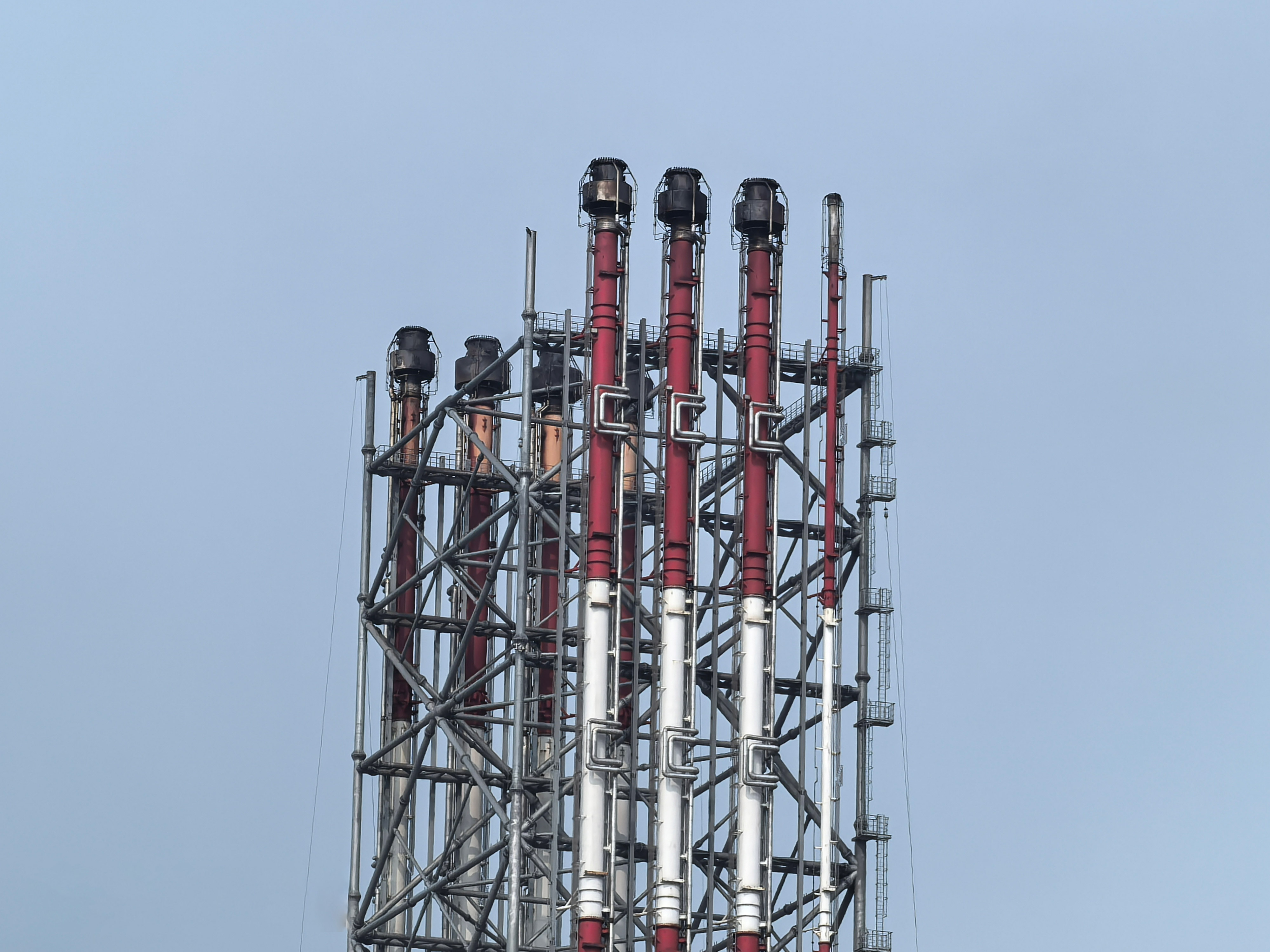
The stack, or riser, is the vertical pipe that carries gas from the flare header to the tip. It also carries the tip, pilots and any access platforms, and it resists wind load, seismic load and the thermal expansion of a hot pipe. The way the stack is held upright defines the structural configuration — free-standing, wire-stabilised, or supported by a separate lattice derrick.
Flare tip and combustion
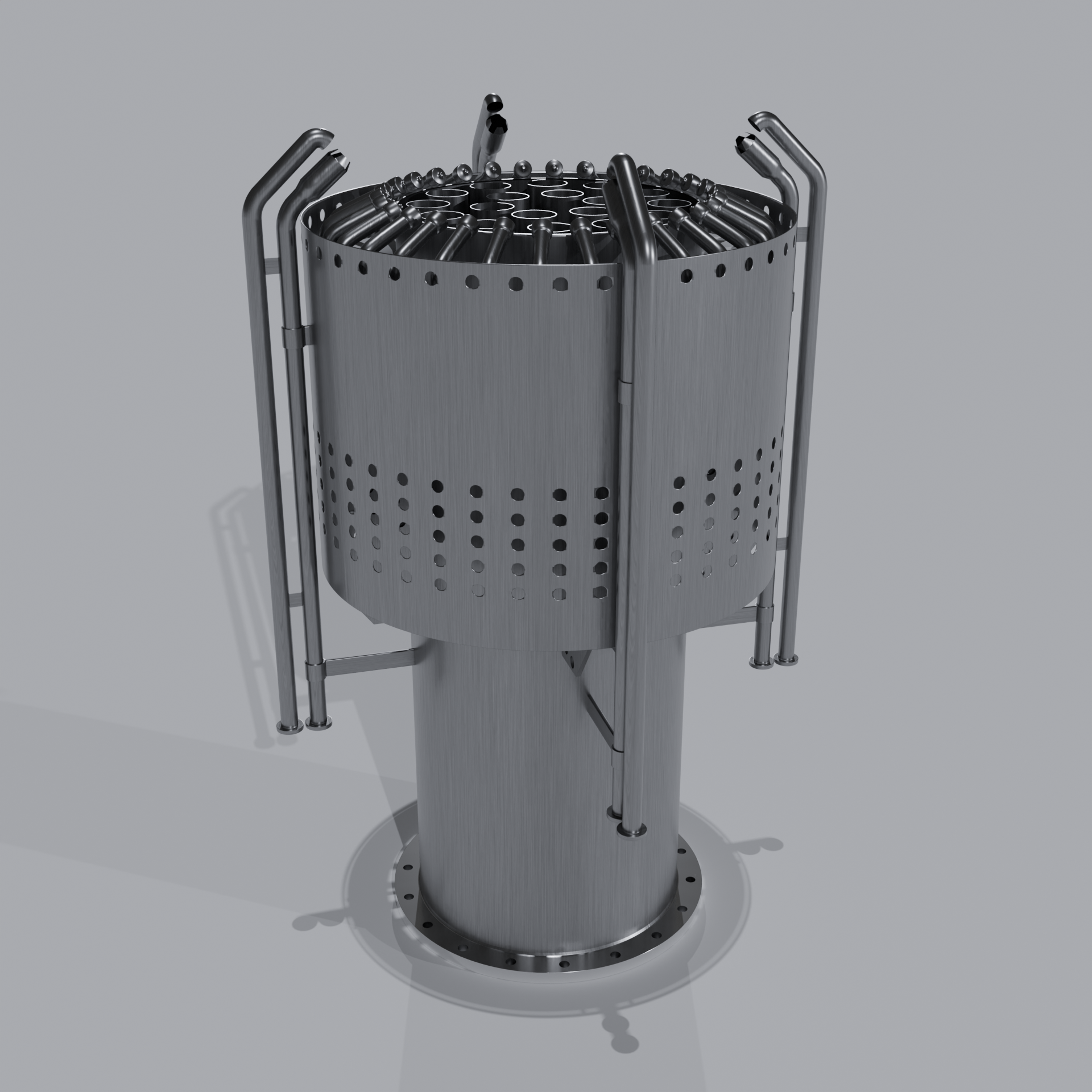
The tip is where combustion actually happens, and it sets most of the emissions performance of the system. Zexuan's ZX-FT Series flare tip is offered in smokeless, sonic, air-assisted and Coanda categories, with primary materials Inconel 625, SS310S and SS316L, operating temperatures up to 1100°C, and customizable diameter and gas capacity for hydrocarbon gases in refinery, petrochemical, LNG and oil and gas processing service. Smokeless operation on hydrocarbon flares is normally achieved by assisting combustion with steam or air; the assist medium, its availability and its cost are project-specific decisions that belong in the tip selection step.
Ignition, control and monitoring
A flare that fails to light is worse than no flare, because it releases unburned gas at elevation with no visible indication. Automatic ignition and flame monitoring are therefore part of the safety function, not an accessory. Project references from Zexuan describe elevated flare installations supplied with automatic ignition and a PLC control system, and enclosed ground flare installations supplied with an explosion-proof control cabinet and an automatic ignition system.
Three Structural Configurations: Self-Supported, Guyed-Wire and Derrick-Supported
The three configurations do the same job by different means. What changes is how the bending moment from wind is carried, how much land at grade is committed, and how the stack is erected and later inspected.
Self-supported elevated flare (ZX-SSEF)
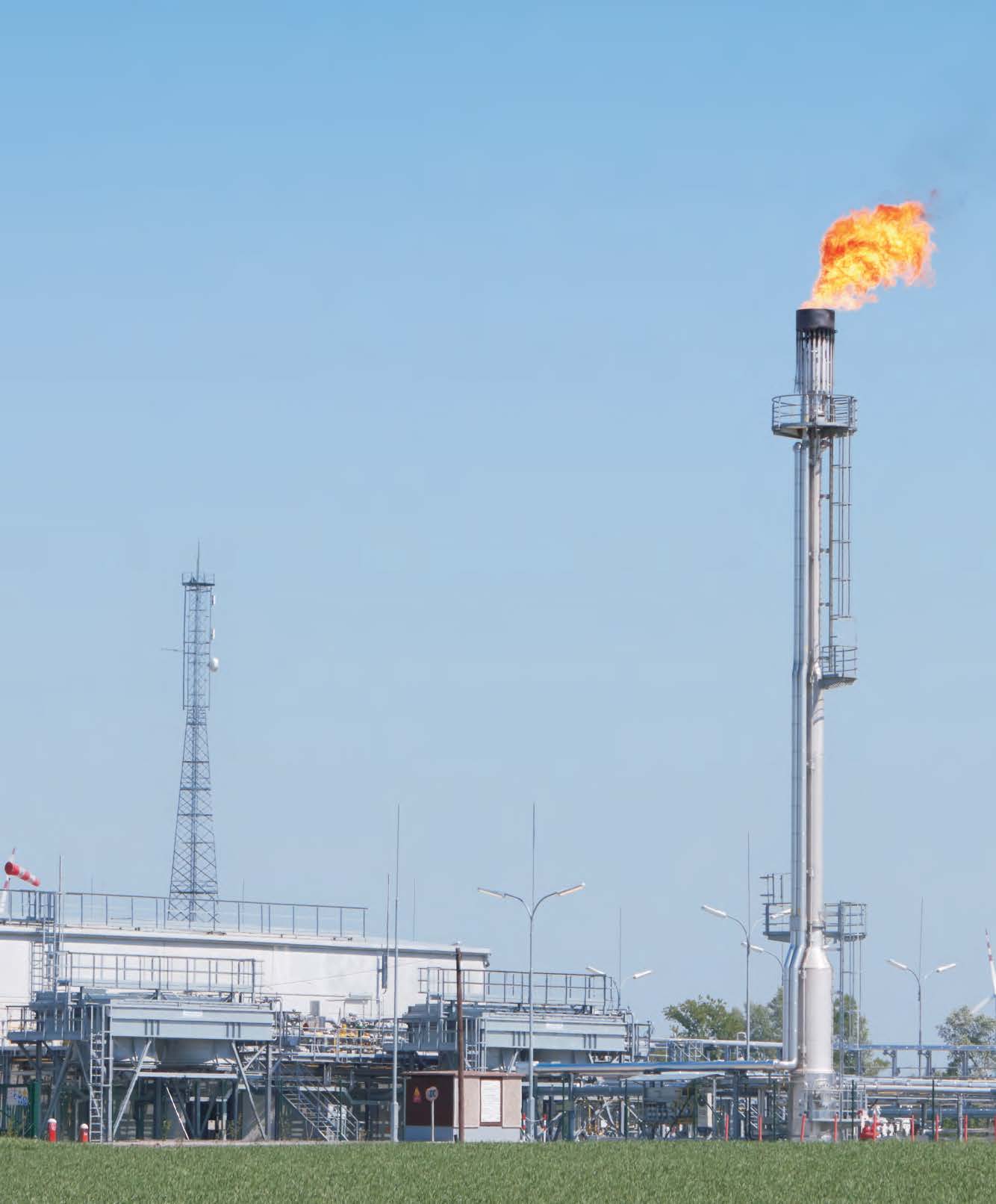
In a self-supported design the stack is a free-standing tower. The base and foundation resist the full overturning moment, so the structure becomes heavier and the base wider as the stack gets taller. The advantage is that no guy wires or lattice structure occupy the ground around the stack, which keeps the area clear for pipe racks, roads and other equipment. Self-supported flares are typically chosen where a clear plot is available and a substantial foundation is acceptable.
Guyed-wire elevated flare (ZX-GWF)
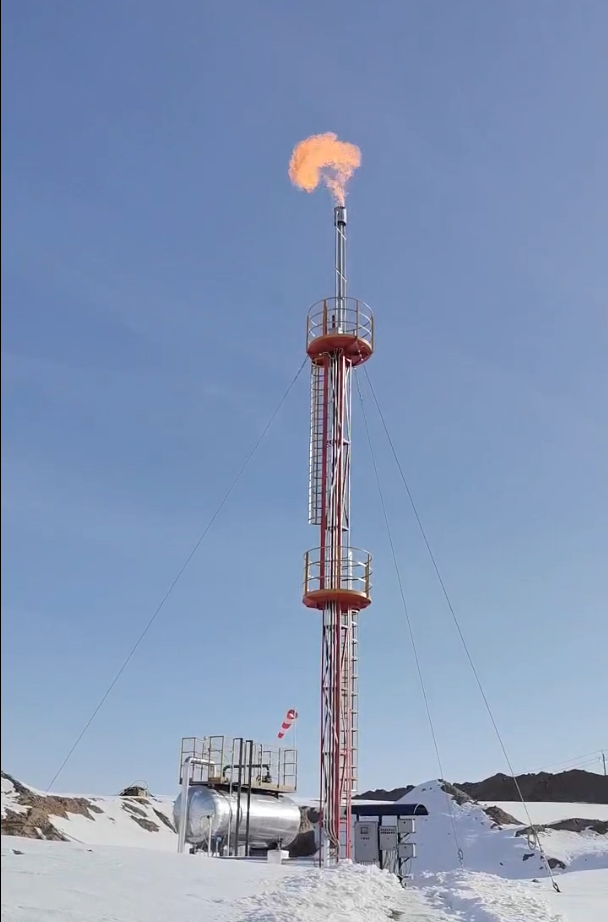
A guyed-wire flare is stabilised by wire ropes anchored at grade. Because the wires take the lateral load, the stack itself can be lighter than a free-standing tower of the same height — but the anchor points occupy a ring of land around the base that must be kept clear of traffic, excavation and new construction for the life of the plant. Zexuan's project record includes two guyed-wire elevated flare systems supplied for emergency venting and safe combustion of natural gas during gathering and transportation operations, built with a 60 m elevated structure, a DN350 flare tip, and an automatic ignition and PLC control system; the units are reported as operating for more than one year, including in harsh climate conditions.
Derrick-supported elevated flare (ZX-DSF)
In a derrick-supported design the riser is carried by a separate lattice derrick. The derrick resists wind load and provides the structural frame for maintenance access, which allows a slimmer riser than a free-standing stack of comparable height. Zexuan also lists a demountable variant within its derrick-supported range, intended for sites where transport or lifting capacity constrains how large a single section can be. This configuration appears in the company's chemical sector reference, where two flare systems were supplied for safe combustion of process vent gas from DL-Methionine production and reported as operating reliably for more than one year.
Height, Thermal Radiation and Combustion Efficiency
Elevated flare heights in the Zexuan range run from 10 m to 150 m+, with gas flow capacity, flare tip diameter and stack design customized to process conditions. Height selection is a radiation and dispersion calculation, not a preference: the designer fixes the allowable radiation level at grade and at the nearest occupied structure, then determines the stack height at which the flame's radiation and the plume's dispersion satisfy those limits for the worst relief case.
Combustion efficiency in the same range is stated as at least 98% and up to 99.9% depending on design conditions. The distinction matters commercially as well as environmentally: a high-efficiency, smokeless tip reduces unburned hydrocarbon emissions and visible smoke complaints, while a lower-cost tip may satisfy the relief function but not the local emissions expectation.
Turndown ratio of up to 100:1 addresses the operational reality that a flare spends most of its life at very low flow and a small fraction of its life at maximum flow. A system with adequate turndown stays lit on purge gas and then accepts a full emergency release without extinguishing or damaging the tip.
Materials and Temperature Limits
Material selection for elevated flares depends on process temperature, corrosion resistance requirements and gas composition rather than on a single default grade. The Zexuan elevated flare range uses carbon steel (painted or hot-dip galvanized), stainless steel SS304 and SS316L, SS310S high-temperature stainless steel, and Inconel 625 for high-temperature parts, with an operating temperature of up to 1100°C. In practice this means the lower stack can be carbon steel while the tip and the upper section exposed to flame radiation use high-temperature alloys.
For corrosive or wet gas service, and for coastal or industrial atmospheres, the stainless grades and the galvanizing option become specification decisions that should be written into the enquiry, because they change both the delivered price and the maintenance interval.
Step-by-Step: How to Specify an Elevated Flare System
The sequence below reflects the order in which design decisions constrain one another. Changing a later step usually forces a re-check of an earlier one, so the order is worth keeping.
- Define the relief case and gas data. Establish gas composition, maximum and minimum flow, pressure and temperature, and whether the stream is dry, wet or corrosive. The output is the design flow range and the required turndown — the parameter against which a 100:1 turndown capability should be judged.
- Set the radiation and dispersion criteria. Fix allowable radiation at grade and at the nearest occupied structure, then derive the stack height. The available range is 10 m to 150 m+, so height is a design output rather than a starting assumption.
- Choose the structural configuration. Compare available plot space, foundation conditions, wind and seismic loading, transport and lifting capacity, and future inspection access. This step selects between self-supported, guyed-wire, derrick-supported and demountable options.
- Select the flare tip and assist method. Decide the smokeless requirement, confirm whether steam or air assist is available on site, and match the tip category — sonic, smokeless, air-assisted or Coanda — to the gas and the turndown requirement. Tip diameter and gas capacity are customized.
- Fix materials and corrosion protection. Match carbon steel, hot-dip galvanized steel, SS304, SS316L, SS310S or Inconel 625 to the temperature profile and the corrosive components, and state the selected grades in the purchase specification.
- Define ignition, control and documentation. Specify automatic ignition, flame monitoring and PLC control, and agree the documentation package that demonstrates the design basis. Include a Factory Acceptance Test before shipment.
- Confirm manufacturing and delivery plan. Agree quantity, inspection points and schedule. Zexuan's stated minimum order quantity is 1 set, lead time is 60–120 days depending on project requirements, and monthly capacity is 5 sets of customized industrial systems.
Where Elevated Flare Systems Are Used
The applications below are drawn from Zexuan's stated industry coverage and from named project references, and they show how the same structural principle adapts to different operating patterns.
Refining and petrochemical. Emergency pressure relief, start-up and shutdown venting, and continuous or intermittent release of hydrocarbon process gas. The stated requirements for this sector are API 521 compliant design, high reliability, smokeless combustion, low thermal radiation and corrosion resistance, with 24/7 standby operation and automatic activation during emergency conditions.
Natural gas gathering, pipeline and compressor stations. Intermittent and emergency operation where the flare must accept high-pressure methane at short notice, often at remote sites. The reference installation here is the 60 m guyed-wire unit with DN350 tip and PLC control described earlier.
Chemical and fine chemical processing. Process vent gas with complex or corrosive composition, where the flare is part of the production safety case rather than only an emergency device. The DL-Methionine reference used two derrick-supported flare systems for continuous treatment of process off-gas.
LNG plants and gas processing facilities. Listed among the applicable industries for the elevated range. At LNG terminals, boil-off gas and emergency release are often handled by skid-mounted or enclosed ground flare systems such as the ZX-SMF and ZX-EGF Series where plot space, noise or visible flame are constrained — which is a reminder that the elevated-versus-ground decision belongs to the site study.
Comparison Table: Elevated Configurations and the Ground-Level Alternative
The table below compares only the configurations and parameters documented in the manufacturer's product data. It is intended as a selection aid, not as a substitute for a project-specific radiation and dispersion study.
| Configuration | Model series | How the stack is supported | Land committed at grade | Selection consideration |
|---|---|---|---|---|
| Self-supported elevated flare | ZX-SSEF Series | Free-standing stack; base and foundation resist the overturning moment | No guy anchor ring; the area around the base stays comparatively free | Suitable where a clear plot and a substantial foundation are available |
| Guyed-wire elevated flare | ZX-GWF Series | Wire ropes anchored at grade stabilise the stack | An anchor ring around the base must remain clear for the plant's life | Lighter stack structure; used in the 60 m natural gas gathering reference |
| Derrick-supported elevated flare | ZX-DSF Series | Separate lattice derrick carries a slimmer riser and provides access | Derrick footprint, with access built into the structure | Applied to tall stacks and to process vent gas duty in chemical service |
| Demountable elevated flare | Within the derrick-supported range | Sectioned construction erected on site | Site-dependent; requires an erection and lifting plan | Considered where transport or lifting capacity limits section size |
| Enclosed ground flare (alternative) | ZX-EGF Series | Ground-level enclosure with refractory lining; low radiation and low noise design | Compact, described as suitable for limited-space areas | Chosen where plot space, noise or visible flame are the binding constraints |
| Parameter | Elevated flare (ZX-SSEF / ZX-GWF / ZX-DSF) | Enclosed ground flare (ZX-EGF) |
|---|---|---|
| Height | 10 m – 150 m+ | Ground-level design |
| Operating temperature | Up to 1100°C | 800°C – 1200°C |
| Combustion efficiency | ≥98% – 99.9% depending on design conditions | Up to 99.9% |
| Turndown ratio | Up to 100:1 | Gas flow customized to project |
| Gas flow and tip diameter | Customized to process conditions | Customized to project |
| Materials | Carbon steel, hot-dip galvanized steel, SS304 / SS316L, SS310S, Inconel 625 for high-temperature parts | Carbon steel, SS304, SS316L, SS310S, refractory lining materials |
| Radiation and noise | Managed through stack height and distance | Low radiation and low noise design |
Budget Logic: What Drives the Cost of an Elevated Flare System
Elevated flare systems are not sold from a price list, because two units of the same height can differ substantially in cost. The drivers below are the ones that change between otherwise similar enquiries, and understanding them makes quotations comparable.
- Stack height and structural mass. Moving from a moderate height to a tall stack changes steel weight, foundation design and erection method — but the height is fixed by the radiation study, so it should not be treated as a cost lever.
- Structural configuration. Self-supported, guyed-wire and derrick-supported designs distribute load differently, and the cheapest option depends on the site rather than on the catalogue.
- Material grade. Carbon steel, hot-dip galvanized steel, SS304, SS316L, SS310S and Inconel 625 sit at very different cost levels, and the high-temperature alloys are usually confined to the tip and upper sections.
- Tip type and assist medium. Smokeless, sonic, air-assisted and Coanda tips carry different engineering scope, and steam or air assist adds balance-of-plant cost outside the flare itself.
- Ignition, control and instrumentation scope. Automatic ignition, flame monitoring and PLC control are safety functions; removing them reduces the price and weakens the safety case.
- Documentation, inspection and testing. Design documentation against API 521, material certificates, weld and dimensional inspection, pressure or leak testing where applicable, functional testing and a Factory Acceptance Test all consume engineering hours.
- Transport and erection. Long sections require specialised logistics; a demountable design may cost more in fabrication but less in transport and lifting.
The practical rule is to fix the relief case, the radiation criteria and the material specification before requesting prices. A quotation issued against an undefined relief case is not comparable with one issued against a defined basis, even when the headline stack height looks identical.
Compliance: API 521 and the Certificates That Actually Exist
Compliance conversations around flares often mix up two different things: a design standard and a management-system certificate. API 521 is a design standard published by the American Petroleum Institute. It defines requirements such as the minimum flare header slope of 1/4 inch per 10 feet for drainage, and it is demonstrated through design documentation — relief case basis, radiation calculation, stack and tip design, material specification and drain philosophy. There is no factory "API 521 certificate" in the way there is a certificate for a management system.
What a manufacturer can hold a certificate for is its management system. Shandong Zexuan Environmental Protection Technology Co., Ltd. holds three certifications issued by CSU International Certification Co., Ltd. on 18 March 2026 and valid until 17 March 2029:
- Quality management system — GB/T 19001-2016 / ISO 9001:2015, certificate number 26326Q00079R001, scope covering development of waste gas treatment equipment and control units and sales of waste gas and waste liquid treatment equipment.
- Environmental management system — GB/T 24001-2016 / ISO 14001:2015, certificate number 26326E00054R001, with the same scope plus related environmental management activities.
- Occupational health and safety management system — GB/T 45001-2020 / ISO 45001:2018, certificate number 26326S00054R001, covering development of waste gas treatment equipment and control units, sales of waste gas and waste liquid treatment equipment, and related occupational health and safety management activities.
These certificates state validity for the domestic China market for government bidding and procurement under the CNAS accreditation mark, and for the international market through mutual recognition by IAF member economies. For a buyer, the correct verification sequence is therefore: check the design documentation against API 521 first, then check that the supplier's quality system certificate number, scope, issuing body and validity dates match the entity you are contracting with.
What to ask before you sign: the relief case basis and radiation calculation, the selected structural configuration and its foundation assumptions, the tip category and assist medium, the material grades for each section, the ignition and control philosophy, the inspection and FAT plan, and the certificate numbers with issuing body and expiry dates.
Frequently Asked Questions
How do I verify API 521 compliance when sourcing elevated flare systems from Chinese manufacturers?
API 521 is a design standard published by the American Petroleum Institute, not a certificate a factory holds, so verification means reviewing the design package rather than requesting an "API 521 certificate". Ask for the relief case basis, thermal radiation and dispersion calculation, stack and tip design, material specification and drain philosophy, and check them against the standard's requirements — for example the minimum flare header slope of 1/4 inch per 10 feet for drainage. In parallel, verify the manufacturer's management-system certificates: Shandong Zexuan Environmental Protection Technology Co., Ltd. holds ISO 9001:2015 (certificate 26326Q00079R001), ISO 14001:2015 (26326E00054R001) and ISO 45001:2018 (26326S00054R001), issued by CSU International Certification Co., Ltd. on 18 March 2026 and valid until 17 March 2029, with scope covering development of waste gas treatment equipment and control units and sales of waste gas and waste liquid treatment equipment, and validity stated for both the China domestic market and IAF member economies.
What height, temperature and combustion efficiency can an elevated flare system achieve?
Zexuan's elevated flare range covers heights from 10 m to 150 m+, an operating temperature of up to 1100°C, a turndown ratio of up to 100:1, and combustion efficiency of at least 98% and up to 99.9% depending on design conditions. Gas flow capacity and flare tip diameter are customized to the process conditions rather than fixed, and materials run from carbon steel and hot-dip galvanized steel through SS304, SS316L and SS310S to Inconel 625 for high-temperature parts.
What determines the cost of an elevated flare system if there is no standard price?
Cost is driven by the stack height and structural mass fixed by the radiation study, the chosen configuration (self-supported, guyed-wire, derrick-supported or demountable), the material grades used in each section, the flare tip category and whether steam or air assist is required, the scope of automatic ignition, flame monitoring and PLC control, and the documentation and testing package including a Factory Acceptance Test. Because the relief case determines height, materials and tip duty, the same nominal stack height can produce very different prices; quotations are only comparable when they are issued against the same defined design basis.
Can a buyer validate an elevated flare system before shipment?
Validation of a flare is a manufacturing and documentation process rather than a physical sample, because the unit is built to the project's relief case. Zexuan's stated minimum order quantity is 1 set, which allows a single project unit to be ordered without batch commitments. Quality control covers incoming material inspection, welding inspection, dimensional inspection, pressure or leak testing where applicable, functional testing, a Factory Acceptance Test before shipment and final inspection, with 100% inspection stated. Buyers should review the FAT plan and the documentation package as part of the purchase order, not after fabrication.
What is the lead time and production capacity for elevated flare systems?
Zexuan states a lead time of 60–120 days depending on project requirements, with a monthly capacity of 5 sets of customized industrial systems. The company was established in 2015, operates a 24,100 m² manufacturing base with more than 80 employees including 30+ engineers and technical specialists and an R&D team of more than 20 engineers, and reports an annual manufacturing capacity of more than 60 sets of flare and thermal treatment systems, with international project experience in more than 10 countries across the Middle East, Central Asia, Southeast Asia, Africa and Russia. Buyers can request the current product catalogue and discuss a project-specific schedule and quotation directly with the supplier.
Conclusion
An elevated flare system is a safety device with a combustion problem attached: it must remove gas fast enough to protect equipment from overpressure, hold a stable flame across a 100:1 flow range, burn efficiently enough that the hydrocarbons are actually destroyed, and place the flame high enough that radiation and dispersion are acceptable at grade. The structural configuration — self-supported, guyed-wire or derrick-supported — is how the stack survives wind and thermal load, and it is selected from site conditions rather than from preference.
For buyers, the sequence that reduces risk is straightforward: define the relief case, fix the radiation criteria, select the configuration and tip, specify the materials, and verify compliance with design documentation first and management-system certificates second. Elevation is a design output, not a specification shortcut.
Next Step: Sample Data, Catalogue and Project Enquiry
Shandong Zexuan Environmental Protection Technology Co., Ltd. supplies elevated flare systems (ZX-SSEF, ZX-GWF, ZX-DSF), enclosed ground flares (ZX-EGF), skid-mounted LNG/LPG flare systems (ZX-SMF), flare tips (ZX-FT) and thermal treatment equipment from a 24,100 m² manufacturing base in Shandong, China. To review specifications, materials and project references before defining a relief case, download the catalogue: Zexuan Product Catalogue (PDF). For a technical enquiry or quotation, contact alice@zexuaneco.com or visit www.zexuaneco.com.
Have Questions or Need More Details?
Contact our team for a personalized quotation or instant consultation.
Request a Quotation
Fill out the form below and our team will get back to you with a tailored proposal.
WhatsApp Direct Chat
Prefer to chat in real-time? Message us on WhatsApp for instant assistance & quick answers.
- Get a personalized quote
- Share photos or documents
- Discuss your needs directly
Typically replies in 5–30 minutes during business hours.