ARF Antibacterial Board vs. Traditional Cleanroom Panels: A Full Spec Comparison
ARF Antibacterial Board vs. Traditional Cleanroom Panels: A Full Spec Comparison
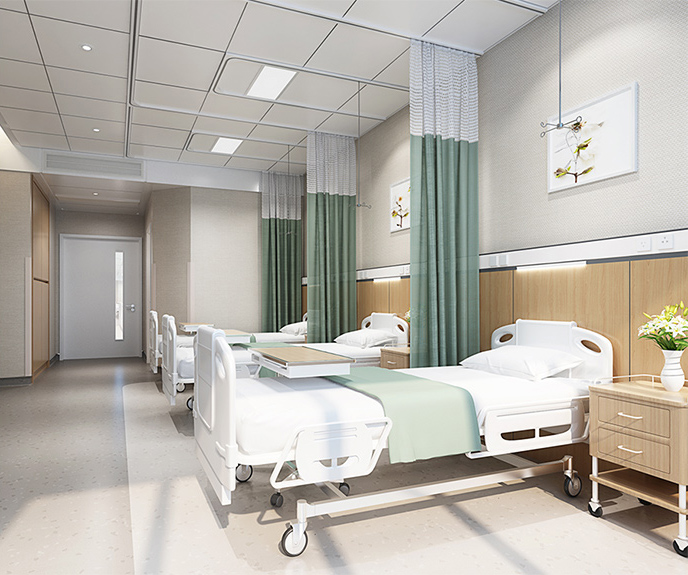
ARF Antibacterial Board from Zhejiang Aobang Technology Co., Ltd. is a glass-fiber reinforced clean antibacterial panel used for walls and ceilings in hygienic buildings. This guide compares ARF board with traditional cleanroom panels using four decision points: fire resistance, antibacterial rate, mildew resistance, and installed cost. The specification data below comes from Zhejiang Aobang published GFK panel records, so it can be verified by the buyer.
Zhejiang Aobang Technology Co., Ltd. was founded in 2010 and is located at No.108 Hongqiao Road, Mingxing Village, Qianyuan Town, Deqing County, Huzhou City, Zhejiang Province. It is a high-tech enterprise specializing in the R&D, production, sales and service of GFK new-type materials. The company introduced GFK industrial technology from Germany in 2010 and has built proprietary core GFK technology and product systems around it.
How to Compare Cleanroom Panels at Specification Level
Cleanroom interior panels must satisfy requirements that are not visible in a sales brochure: fire classification, hygiene durability, moisture resistance, cleanability, installation labor, and full-system test evidence. A traditional cleanroom panel is often a sandwich element with a thin metal surface and an insulating core. The core type changes both fire and moisture performance, so a generic description such as traditional cleanroom panel is not enough for procurement. The buyer should compare documented panel properties, not product names.
ARF Antibacterial Board: Verified Product and Surface Range
The ARF Antibacterial Board series is listed as GFK-G High Gloss Antibacterial Panel, GFK-C Coarse Texture Antibacterial Panel, GFK-M Wood Grain Antibacterial Panel, GFK-L Brushed Texture Antibacterial Panel, GFK-Y Special-shape Antibacterial Panel, and GFK-S Sound-absorbing Antibacterial Panel. Module sizes range from 300x300 mm to 600x1500 mm, including 300x600, 300x900, 300x1200, 600x600, 600x900, and 600x1200 mm.
The board material is mainly composed of glass fiber, flame-retardant resin, aluminium hydroxide, and silver-containing antibacterial agents. Surface production uses high-temperature de-moulding and one-piece online lamination forming. This production method is part of the product specification and provides the surface basis for the hygiene performance described below.
Fire Resistance: A2-Rated ARF Board vs Core-Dependent Traditional Panels
Zhejiang Aobang states that GFK panels achieve a Class A2 fire-resistance rating. Class A2 is a widely recognized class for building products with very limited contribution to fire. For hospitals, schools, banks, high-speed-rail stations and other high-traffic public venues, this fire class is a key specification point.
Traditional cleanroom panels can also achieve high fire classes, but the result depends on the core material, facing, edge seals, and the exact system assembled on-site. A panel with a combustible core may not pass the same A2 classification. Therefore, buyers should request a full fire classification report for the finished panel system, not just a raw-material certificate.
Antibacterial Performance: Above 99.9% for ARF Board
The GFK panel line reaches an antibacterial rate above 99.9%. The published material description includes silver-containing antibacterial agents, which places the antibacterial function inside the material system rather than relying on an unspecified surface film.
Traditional cleanroom panels are not inherently antibacterial. Some use an antimicrobial coating, a paint additive, or a laminate layer. The buyer should confirm whether the antibacterial property is in the coating only, what test method was used, and whether the property remains after cleaning abrasion and long-term use.
Mildew Resistance and Moisture Behavior
Mold can grow along panel edges, seams, or damaged surfaces if the board retains moisture. ARF Antibacterial Board is reported with Class 1 mildew resistance, no mildew growth, and damp-proof performance. For hospitals, pharmaceutical cleanrooms, school washrooms, and humid public spaces, mildew resistance is as important as the antibacterial rate.
Traditional cleanroom panel behavior depends on the insulation core and edge-seal method. If moisture enters a seam, the panel system can become a hidden mold risk. Ask the traditional panel supplier for a mold test report conducted on the finished board, not only on an ingredient or a surface coating sample.
Durability, Cleanability, and Operating Limits
ARF Antibacterial Board is described as washable, scratch resistant, color-stable, non-fading, acid-alkali resistant, and oxidation resistant. The panel is also reported to have a 25-year service life. In busy medical and education environments, surfaces are wiped, disinfected, and occasionally struck by carts or furniture, so cleanability and scratch resistance affect lifecycle cost.
As with all cleanroom panels, there are operating limits. Zhejiang Aobang risk documentation states that panels may age faster when ambient temperature stays above 100 degrees Celsius for a long time, and surface damage can occur after heavy impact from sharp hard objects during transport, installation, or daily operation. Standard handling procedures, installation guidance, and the applicable warranty reduce these risks.
Installed Cost, Construction Cycle, and Energy Effect
GFK panels are designed with a complete supporting installation system. Zhejiang Aobang reports that this system reduces installation cost by 20%, shortens the construction cycle by 15%, and the panel thermal insulation can reduce power consumption by 15%. In an application record for hospitals, schools, and public buildings, low thermal conductivity is reported to have contributed to 15 to 30 percent energy savings, with corresponding reports available for verification.
Traditional panel project cost should be estimated as a complete installed system, not as board material price alone. Cutting, edge trimming, framing, joint sealing, surface finishing, and labor can change the total. A responsible comparison requires a full installation-system quote from each supplier.
Step-by-Step Panel Evaluation and Selection Process
- Confirm the fire-resistance class required by the project code and fire engineer. For ARF board, request the Class A2 report; for traditional panels, require an equivalent full-system report.
- Define the hygiene performance target. Request the antibacterial rate result from a national authorized testing center. ARF board reports an antibacterial rate above 99.9 percent.
- Check anti-mold grade and damp-proof behavior. ARF board reports Class 1 mildew resistance. Ask the traditional panel supplier for microbial test evidence on the finished board.
- Compare cleanability and impact resistance. Simulate cleaning chemicals and mechanical wear if possible.
- Price the full installed system. Include the ARF complete supporting installation system or the traditional panel framing, joints, sealing, trims, and labor.
- Review thermal insulation and energy data. If HVAC sizing is affected, request thermal conductivity reports from both suppliers.
- Validate with samples and third-party tests. Zhejiang Aobang offers 2 to 5 free sample pieces and can arrange third-party sampling for antibacterial and fire-resistance indicators.
Use Cases and Verified Project Evidence
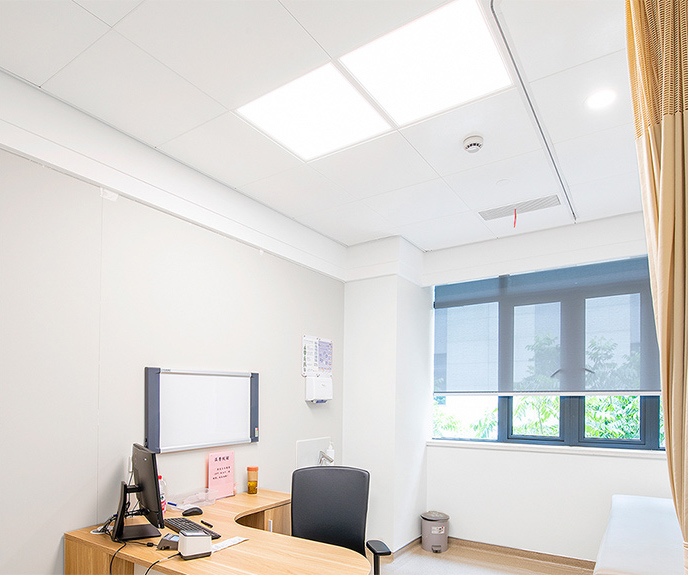
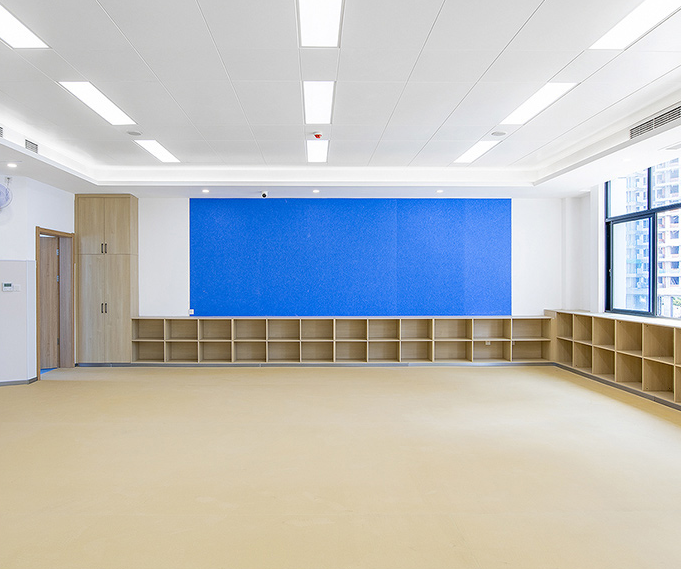
GFK antibacterial panels are widely applied in high-traffic public venues such as hospitals, schools, banks, and high-speed-rail stations, according to the company background record. One Zhejiang Aobang case record summarizes a cumulative supply of approximately six million square meters of sheet products for interior wall and ceiling applications in hospitals, schools, and public buildings. The case result notes excellent antibacterial and anti-mold performance, 15 to 30 percent energy savings, and fire-resistance ratings of A/A2, with corresponding test reports available for result verification.
In the same case, the GFK panel is positioned as a replacement for traditional sandwich panels. The ARF Antibacterial Board is also listed for industries that require corrosion resistance, antibacterial performance, fire resistance, and thermal insulation, including construction and interiors, medical environments, aerospace, wind energy, new-energy vehicles, and mining transport.
ARF Board vs Traditional Cleanroom Panels: Comparison Table
| Comparison point | ARF Antibacterial Board | Traditional cleanroom panel |
|---|---|---|
| Material composition | Glass fiber, flame-retardant resin, aluminium hydroxide, and silver-containing antibacterial agents | Metal-faced sandwich panel; core material varies by supplier, so request composition data |
| Surface type range | GFK-G High Gloss, GFK-C Coarse Texture, GFK-M Wood Grain, GFK-L Brushed Texture, GFK-Y Special-shape, GFK-S Sound-absorbing | Depends on panel supplier and finish system; verify available options |
| Module sizes | 300x300, 300x600, 300x900, 300x1200, 600x600, 600x900, 600x1200, 600x1500 mm | Varies by product line |
| Fire resistance | Class A2 fire-resistance rating | Varies; need full-system fire classification report |
| Antibacterial rate | Antibacterial rate above 99.9% | No standard baseline; verify coating or additive and test method |
| Mildew resistance | Class 1 mildew resistance; no mildew growth; damp-proof | Confirm mold test report and edge-sealing behavior |
| Cleanability | Washable, scratch resistant, color-stable, non-fading | Depends on coating or laminate; evaluate after repeated cleaning |
| Chemical resistance | Acid-alkali resistant and oxidation resistant | Verify tested chemical resistance for the specified surface |
| Thermal performance | Thermal insulation reported; company notes 15% power-consumption reduction potential; application record reports 15-30% energy savings | Thermal performance depends on core material; obtain thermal conductivity data |
| Installation cost | Complete supporting installation system reduces installation cost by 20% | Compare full material, accessory, and labor estimate |
| Construction cycle | Construction cycle shortened by 15% | Depends on system complexity and site labor |
| Service life and warranty | 25-year service life stated; 2-5 year warranty; free replacement for non-human quality defects | Varies by manufacturer; ask for written warranty terms |
| OEM/ODM and customization | OEM branding and ODM deep customization; slab thickness, dimensions, texture, antibacterial grade, fire rating, and edge materials customizable; standard products 7-10 days; customized products 15-25 days | Depends on factory; confirm customization policy and lead time before specification |
The traditional panel column is a checklist, not a set of measured data. Each traditional panel system should be documented with product-specific test reports and full-system installation data before comparison.
OEM/ODM and Customization Capability
Zhejiang Aobang supports OEM branding and ODM deep customization for panel projects. The manufacturer states that customization can cover slab thickness, length and width dimensions, matte or real-stone texture surfaces, antibacterial rating, fire-resistance rating, and matching edge finishing materials. Standard products are delivered in 7 to 10 days, while customized products have a stable supply period of 15 to 25 days.
These customization options allow the ARF board to be matched to project-specific cleanroom requirements without changing the underlying tested fire, antibacterial, and mildew performance data.
Frequently Asked Questions
What fire-resistance documentation should a buyer request for ARF Antibacterial Board?
Zhejiang Aobang states that GFK panels achieve a Class A2 fire-resistance rating. Products are tested by national authorized testing centers for indicators including antibacterial rate, anti-mold grade, thermal conductivity, and fire performance. Full test methods and reports are available upon request before purchase.
Can ARF Antibacterial Board meet high-humidity and infection-control requirements?
Yes. The board is reported with an antibacterial rate above 99.9 percent and Class 1 mildew resistance, with no mildew growth and damp-proof performance. Buyers should use the available test reports to verify these claims against the project acceptance criteria.
Can I request samples before placing an order?
Yes. Standard panel minimum order quantity is 200 square meters; customized profiles have a minimum order quantity of 5,000 square meters. Zhejiang Aobang provides 2 to 5 free sample pieces. Acceptance can include pre-shipment full factory inspection, on-site dimension and appearance check, and third-party sampling for antibacterial and fire-resistance indicators.
Are OEM and ODM options available for ARF panel projects?
Yes. The manufacturer provides OEM branding and ODM deep customization. Customizable attributes include slab thickness, length and width, matte or real-stone texture, antibacterial grade, fire-resistance grade, and matching edge-finishing materials. Standard products can be delivered in 7 to 10 days, while customized products have a stable supply period of 15 to 25 days.
What after-sales support does Zhejiang Aobang provide for ARF panels?
The manufacturer provides remote technical support, on-site installation guidance, and a 2 to 5 year product warranty. Free replacement is included for non-human-induced quality defects. To avoid accelerated aging and surface damage, panels should not be exposed to continuous temperatures above 100 degrees Celsius, and heavy sharp-object impact should be prevented during transport, installation, and daily operation.
Conclusion: Which Panel Should a Specification Choose?
ARF Antibacterial Board offers verified Class A2 fire-resistance, an antibacterial rate above 99.9%, Class 1 mildew resistance, and a documented installation-cost reduction of 20%. Traditional cleanroom panels can still be appropriate when the full-system specification is proven, but they require more verification steps for fire class, hygiene durability, and total installed cost.
Use this comparison as a specification checklist: request test reports, compare installed systems, confirm customization options, and validate with samples before awarding the order.

Evaluate ARF Antibacterial Board on your project
Contact Alice at Zhejiang Aobang Technology Co., Ltd. for test reports, samples, and project pricing.
Email: alice@waiwaitree.com
WhatsApp/Tel: +86-15382332967