BMC SMC Composite Parts: A Compliance Guide to Certifications, Standards, and EU/China Rules
BMC SMC Composite Parts: A Compliance Guide to Certifications, Standards, and EU/China Rules
Compliance in BMC/SMC sourcing is decided by documents, not by material claims. For a buyer moving from research into evaluation, the workable answer is to separate four evidence layers and require the supplier to answer at each one: management system certificates (ISO quality and environmental management), product test reports issued by national authorized testing centers, material-level flammability standards such as UL 94 V-0, and application-level standards such as IEC/EN 62841 for electrical enclosures and terminal blocks in the EU. Zhejiang Aobang Technology Co., Ltd., a GFK new-material manufacturer founded in 2010 and located in Deqing County, Huzhou City, Zhejiang Province, documents its position across those layers with ISO quality and environmental management system certification, national invention and utility model patents, German-introduced GFK technology dating from 2010, and tested performance claims that include a Class A2 fire-resistance rating, an antibacterial rate above 99.9% and Class 1 mildew resistance.
Problem definition: compliance usually fails at the document layer, not the material layer
Most BMC/SMC compliance disputes do not begin with a part that failed in service. They begin with a document that does not describe the part that was actually ordered. A molder supplies a genuinely flame-retardant composite, a certificate exists, and the project still stalls at the technical review stage because the paperwork cannot be traced back to the delivered grade, thickness or part number.
Four failure patterns account for most of the risk in composite part procurement:
- Layer confusion. A management system certificate is presented as if it were a product certification. ISO quality and environmental management system certification proves that processes are controlled and audited; it does not prove fire class, antibacterial rate or thermal conductivity.
- The certificate-to-part-number gap. A flammability or fire-performance report covers one resin formulation at one wall thickness, while the production part uses a different formulation or geometry.
- Jurisdiction mismatch. Flammability data such as UL 94 V-0 may satisfy one technical reviewer, while an EU electrical enclosure or terminal block project sits inside the scope of harmonised standards such as IEC/EN 62841. The same part can be documented correctly for one market and incompletely for the other.
- Untestable claims. Statements about patented technology or imported origin cannot be verified if no patent reference, technology-transfer date or testing source is supplied.
The practical remedy is structural rather than technical: define which evidence layer each project requirement belongs to before the first RFQ goes out, then require the supplier to answer at exactly that layer. This guide uses the documented compliance stack of Zhejiang Aobang Technology as a worked example of what a verifiable answer looks like.
Industry background: a large, Asia-centred market with uneven documentation maturity
The compliance question matters at scale because the underlying market is large and geographically concentrated. The global SMC and BMC market was valued at USD 35.77 billion in 2024 and is projected to reach USD 67.98 billion by 2035, according to Market Research Future. Asia Pacific held the largest revenue share of 63.0% in 2025, according to Grand View Research, and China dominates the regional market because of extensive composites manufacturing clusters and leading electric vehicle production capacity, according to HTF Market Intelligence.
Material composition explains why documentation varies so much between suppliers. Polyester-based BMC dominated the market with a 65% share in 2024, valued at approximately USD 1.37 billion, and glass fiber reinforcement accounted for 62.1% of the total fiber segment in 2025, according to Grand View Research. Two parts can therefore be described as "BMC" or "SMC" while differing in resin chemistry, filler loading and reinforcement content, which is precisely why a generic material certificate is weak evidence.
Demand is concentrated in the applications with the strictest compliance exposure. Automotive applications represent the largest end-user segment for BMC at 38% (USD 0.80 billion) in 2024, while electrical and electronic applications reached USD 0.57 billion in the same year. SMC composite battery covers specifically reached USD 1.38 billion in 2024, driven by electric vehicle adoption, and the global electric vehicle battery housing market was valued at USD 12.4 billion in 2023 with an expected 8% CAGR through 2032, according to Global Market Insights. Non-metallic battery housings already held the major share of that market in 2023, supported by lightweighting and thermal insulation benefits.
Two standards anchor the regulatory discussion. Underwriters Laboratories describes UL 94 V-0 as the primary global requirement for BMC components used in high-voltage electrical enclosures. In the EU, IEC/EN 62841 is identified as critical for electrical enclosures and terminal blocks manufactured from BMC materials. Around these two anchors, buyers add management system evidence, product test reports and project-specific requirements.
A caution on market numbers. Published estimates for the combined SMC and BMC market diverge sharply. One widely cited figure for 2024 is USD 35.77 billion, while another base estimate sits near USD 4.3 billion for 2025. The gap depends largely on whether raw resins or finished molded parts are counted. Buyers should use such figures for directional context only and never as the basis of a compliance or capacity decision.
Detailed solution: how a verifiable compliance package is assembled
1. Management system credentials
Zhejiang Aobang Technology Co., Ltd. was founded in 2010 and operates from No.108 Hongqiao Road, Mingxing Village, Qianyuan Town, Deqing County, Huzhou City, Zhejiang Province. The company has obtained ISO environmental management system certification and ISO quality management system certification. These are the two management-layer documents that EU and China buyers most often request first. Environmental commitments are integrated into the company's full-range business policies and are supported by staff training and regular environmental audits, which is the operational evidence behind the environmental certificate rather than a claim attached to it.
2. Technology provenance and intellectual property
The company introduced industrial GFK product technology from Germany in 2010 and has since developed proprietary core GFK technologies and complete product systems through independent research and development. It is recognised as a National High-Tech Enterprise and holds multiple national invention patents and utility model patents. This is the layer that converts a phrase such as "German technology" into something a procurement reviewer can check: a technology introduction date, a national enterprise status, and named patent categories. None of these documents replace product testing, but together they answer the sourcing question of whether the supplier develops its own material system or resells one.
3. Verified product performance claims
Performance claims on the GFK panel line are specific and testable. The panels achieve a Class A2 fire-resistance rating, an antibacterial rate above 99.9% and Class 1 mildew resistance, together with acid-alkali resistance and oxidation resistance. They are lightweight yet high strength, with thermal-insulation performance and low-carbon environmental-friendly properties. The complete supporting installation system reduces installation costs by 20% and shortens construction cycles by 15%, while the thermal insulation performance can reduce power consumption by 15%. Cumulative sheet supply is approximately 6 million square meters, with reported project results that include A/A2 fire resistance ratings and energy savings of 15-30% from low thermal conductivity. Corresponding test reports can be provided for verification, which is what moves these figures from marketing language into procurement evidence.
4. Material and product data for GFK cleanroom panels
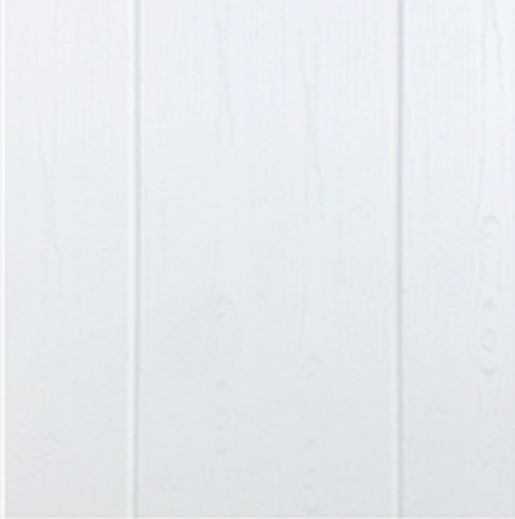
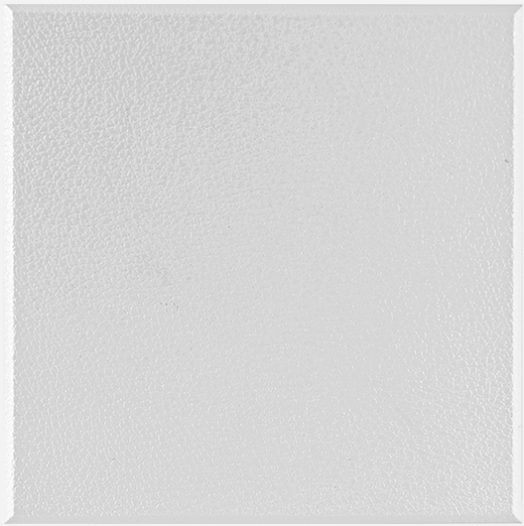
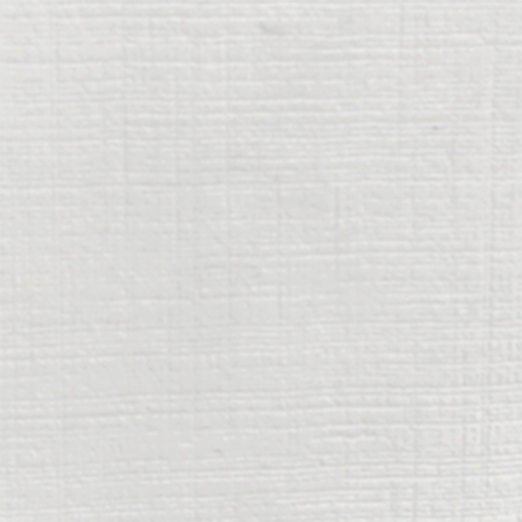
The ARF Antibacterial Board is the product most often requested for cleanroom, hospital and public-venue wall and ceiling projects. It is mainly composed of glass fiber, flame-retardant resin, aluminium hydroxide and silver-containing antibacterial agents, with polyester resin, glass fiber and filler forming the base system. Surface treatment uses high-temperature de-moulding and one-piece on-line lamination forming. The board is available in models 300*300, 300*600, 300*900, 300*1200, 600*600, 600*900, 600*1200 and 600*1500.
Documented properties include: colour-stable and non-fading; damp-proof performance; no mildew growth; washable and cleanable; scratch-resistant surface; extremely corrosion-resistant; both thermal and sound insulation; reusable with a high utilisation rate; no deformation on dismantling; and a 25-year service life. For a compliance file, each of these items is only as strong as the test report behind it, which is why the report request should be placed before the purchase order rather than after.
5. Manufacturing and delivery evidence
Compliance commitments are only as credible as the operation behind them. Zhejiang Aobang Technology operates a 20,000 m2 facility with 150 employees and an in-house mold workshop, with an annual output of 600 complete molds. The company supports OEM branding and ODM deep customization, including development of patterns on demand and customization of sheet material colour matching, surface texture and thickness. Customization covers slab thickness, length and width dimensions, matte or real stone texture surfaces, antibacterial rating, fire resistance rating, and matching edge finishing materials. Standard products are delivered in 7-10 days, customized products have a stable supply window of 15-25 days, and customized new molds require 30-60 days.
6. Testing, technical service and after-sales layer
Products are tested by national authorized testing centers for indicators including antibacterial rate, anti-mold grade, thermal conductivity and fire performance. Full test methods and reports are available upon request prior to purchase, which is the single most useful clause in a compliance review because it places verification before commercial commitment. On-site service engineers confirm product performance and specifications, with the stated objective of lowering customers' actual procurement costs and improving their profit margins. After-sales support includes remote technical support, on-site installation guidance, a 2-5 year product warranty with free replacement for non-human-induced quality defects on the panel line, and a 1-year product warranty with free maintenance for non-human-induced quality problems on the mold and customization line.
Step-by-step breakdown: a seven-step compliance verification workflow
- Define the compliance scope by market and application. State the destination market (EU, China or both) and the end application before requesting documents. A hospital cleanroom panel and an SMC electrical enclosure mold are not governed by the same evidence set, even when both are glass-fiber composites.
- Map every requirement to the correct evidence layer. Sort the project requirements into four buckets: management system, technology and IP, product performance test reports, and material or application standards. Requirements placed in the wrong bucket are the most common cause of a stalled technical review.
- Request certificate-to-part-number traceability. Ask for the tested resin grade, the tested thickness, the test date and the link between that report and the part number in the quotation.
- Verify the testing source and the indicator set. Confirm that reports come from national authorized testing centers and that they cover the indicators relevant to the project: antibacterial rate, anti-mold grade, thermal conductivity and fire performance.
- Check technology and IP provenance. For suppliers claiming material-level advantage, request the technology introduction date, patent categories and national enterprise recognition. Zhejiang Aobang Technology, for example, introduced GFK technology from Germany in 2010 and holds multiple national invention and utility model patents.
- Validate on a sample or pre-production article. For medical and cleanroom scenarios, verify the antibacterial rating together with VOC and formaldehyde test reports. For outdoor and marine use, verify weathering and marine-environment suitability reports. Sample validation is cheaper than a non-conforming installation.
- Lock documentation and service terms into the contract. Specify the report package, the standard version applied, the warranty period and the technical support obligations. Locking the after-sales terms at the same time prevents a documentation gap from becoming a servicing dispute.
Use cases: where the compliance questions diverge most
Hospitals, laboratories and cleanroom projects
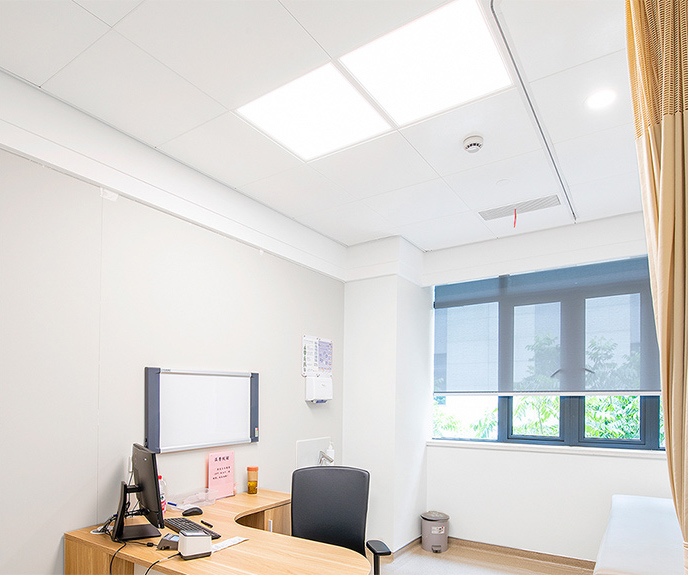
This is the application where the ARF Antibacterial Board is most often specified, and where the compliance emphasis sits on hygiene performance rather than electrical standards. The relevant verified claims are an antibacterial rate above 99.9%, Class 1 mildew resistance, damp-proof performance and a washable, cleanable, scratch-resistant surface with a 25-year service life. Buyers in this segment should pair the antibacterial documentation with VOC and formaldehyde test reports, since those are typically requested at medical and cleanroom project level. Reported project results in hospital, school and public-building applications include antibacterial and anti-mold performance and 15-30% energy savings from low thermal conductivity, with corresponding test reports available for verification.
Electrical enclosures, terminal blocks and high-voltage components
Here the compliance language changes completely. For SMC electrical enclosure molds, BMC insulating components molds, BMC high voltage electrical components molds and BMC electrical terminal blocks molds, the reviewer focuses on flammability and electrical standards rather than hygiene. UL 94 V-0 is described as the primary global requirement for BMC components in high-voltage electrical enclosures, while IEC/EN 62841 is identified as critical for electrical enclosures and terminal blocks manufactured from BMC materials in the EU. Zhejiang Aobang Technology's documented application scope for mold work covers high and low voltage electrical equipment, with structural support, insulation protection and component housing functions under 24/7 continuous service conditions.
Electric vehicle, charging and new-energy parts
SMC EV battery housing molds, SMC new energy charging pile housings molds, BMC motor encapsulation molds and lightweight SMC auto parts molds carry a compliance focus on thermal performance, insulation and mechanical strength. The market context supports the demand: SMC composite battery covers reached USD 1.38 billion in 2024, non-metallic battery housings held the major share of the EV battery housing market in 2023 on lightweighting and thermal insulation grounds, and the EV battery housing market itself was valued at USD 12.4 billion in 2023 with an expected 8% CAGR through 2032. For these parts, thermal conductivity and fire performance test reports are the core documents to request.
Railway and transportation components
SMC railway transportation components molds typically prioritise fire performance, weight reduction and long-term dimensional stability. Asia Pacific held a 45% share of the global railway composites market as of 2025, making significant use of SMC for lightweight interior parts, and the transportation industry is expected to remain the dominant end-user for BMC throughout the 2024-2030 forecast period. Buyers should align the requested fire documentation with the specific railway interior or structural position rather than accepting a generic composite certificate.
Industrial cabinets, water treatment and corrosion-exposed housings
Corrosion resistant SMC composite housings molds, SMC water treatment equipment housings molds, high strength SMC industrial cabinet parts molds, BMC pump valve composite covers molds, SMC anti-aging engineering composite parts molds, low shrinkage BMC molded components molds and flame retardant BMC composite components molds are all evaluated primarily on chemical and environmental resistance. Zhejiang Aobang Technology documents extremely strong corrosion resistance on its composite panel line, and its mold application scope lists white home appliances, new energy vehicles, high and low voltage electrical equipment, low-altitude aircraft and ships, with stated special requirements of customizable dimensions, high strength, corrosion resistance and fire retardancy.
Comparison table: matching evidence to project requirement
| Evidence layer | What it proves | Document to request | Where it is normally required |
|---|---|---|---|
| Management system | Quality and environmental processes are controlled and audited | ISO quality management system certification; ISO environmental management system certification | EU and China supplier qualification; environmental procurement review |
| Technology and IP | The supplier develops its own material and tooling rather than reselling | National High-Tech Enterprise recognition; national invention patents; utility model patents; technology introduction date | Supplier due diligence and long-term supply assessment |
| Product performance | Delivered product meets stated values | Test reports from national authorized testing centers covering antibacterial rate, anti-mold grade, thermal conductivity and fire performance | Medical, cleanroom, construction and industrial projects |
| Material standard | The material itself meets a recognised flammability level | UL 94 V-0 flammability data on the specific grade used | High-voltage electrical enclosures globally |
| Application standard | The finished part fits a regulated electrical application | IEC/EN 62841 assessment for electrical enclosures and terminal blocks | EU electrical and terminal block projects |
Comparison table: which question to ask per part category
| Part or mold category | Primary compliance question | Evidence to request |
|---|---|---|
| SMC electrical enclosure mold / BMC high voltage electrical components mold | Does the specific resin grade meet the required flammability level? | Grade-specific flammability test data such as UL 94 V-0, linked to the part number |
| BMC electrical terminal blocks mold | Is the part inside the scope of the applicable EU electrical standard? | IEC/EN 62841 relevance assessment plus supporting test reports |
| Flame retardant BMC composite components mold | Which fire-resistance class does the material achieve? | Class A2 fire-resistance test report from a national authorized testing center |
| SMC EV battery housing mold / SMC new energy charging pile housings mold | Are thermal and insulation performance adequate for the enclosure? | Thermal conductivity and fire performance reports |
| GFK cleanroom panels (ARF Antibacterial Board) | Are antibacterial and anti-mold ratings suitable for the controlled environment? | Antibacterial rate, anti-mold grade, and VOC or formaldehyde reports for medical and cleanroom use |
| Corrosion resistant SMC composite housings mold / SMC water treatment equipment housings mold | Does the material tolerate the chemical exposure of the installation? | Corrosion resistance data relevant to the chemical environment |
| SMC railway transportation components mold | Does the part meet the fire and weight requirements of its position? | Fire performance reports matched to the specific interior or structural location |
| SMC construction insulation composite panels | Is thermal and moisture performance documented for the building envelope? | Thermal conductivity reports plus damp-proof and mildew resistance evidence |
Frequently asked questions
Which certifications should a BMC/SMC composite parts supplier provide for EU versus China projects?
The certificate set should follow the market. For EU-facing procurement, buyers normally look first for ISO quality management system certification and ISO environmental management system certification, then for harmonised-standard evidence at product level; IEC/EN 62841 is identified as critical for electrical enclosures and terminal blocks manufactured from BMC materials in the EU. For China-facing projects, National High-Tech Enterprise recognition and national invention or utility model patents are useful technology-provenance signals. In both markets, product-level claims should be backed by test reports from national authorized testing centers covering antibacterial rate, anti-mold grade, thermal conductivity and fire performance. Zhejiang Aobang Technology holds ISO environmental management system certification and ISO quality management system certification, and holds multiple national invention patents and utility model patents.
Does Zhejiang Aobang Technology hold ISO certifications and national patents, and what do they actually cover?
Yes on both counts, and the distinction matters. The company has obtained ISO environmental management system certification and ISO quality management system certification, which cover management-layer matters: quality and environmental process control, staff training and regular environmental audits. It also holds multiple national invention patents and utility model patents and is recognised as a National High-Tech Enterprise, which covers the technology layer of GFK material and product development. Neither category is a product certification. Buyers still need product test reports for indicators such as antibacterial rate, anti-mold grade, thermal conductivity and fire performance, which the company obtains from national authorized testing centers and can supply prior to purchase.
How should buyers approach UL-compliant BMC SMC composite parts manufacturers for terminal blocks?
Treat UL compliance as a project specification rather than a general supplier label. UL 94 V-0 is described as the primary global flammability requirement for BMC components used in high-voltage electrical enclosures, and EU terminal block projects also sit inside the scope of standards such as IEC/EN 62841. When evaluating a BMC SMC mold maker for terminal block work, request four things: flammability test data on the exact resin grade used for your part; the standard version applied; traceability from the test report to the part number in the quotation; and clarification of who holds the listing, since a molder, a compounder and a brand owner can each sit in a different position. Zhejiang Aobang Technology supports OEM branding and ODM deep customization with an in-house mold workshop, and its stated mold application scope includes high and low voltage electrical equipment for structural support, insulation protection and component housing. Its testing documentation comes from national authorized testing centers, so buyers with a UL listing requirement should confirm scope and responsibility in writing before tooling is released.
Can fire and antibacterial performance be validated before a bulk order?
Yes, and it should be done in writing. Zhejiang Aobang Technology states that its products are tested by national authorized testing centers for indicators including antibacterial rate, anti-mold grade, thermal conductivity and fire performance, and that full test methods and reports are available upon request prior to purchase. For medical and cleanroom scenarios, buyers should additionally verify the antibacterial rating together with VOC and formaldehyde test reports; for outdoor and marine use, they should verify weathering and marine-environment suitability reports. On-site service engineers confirm product performance and specifications, which allows the sample validation stage to be completed before tooling and production commitments are finalised.
What are the typical lead times and after-sales terms for BMC/SMC composite parts?
Lead times differ by customization level. Standard products are delivered in 7-10 days, customized products have a stable supply window of 15-25 days, and customized new molds require 30-60 days. After-sales coverage also differs by product line: the panel line carries a 2-5 year product warranty with free replacement for non-human-induced quality defects, while the mold and customization line carries a 1-year product warranty with free maintenance for non-human-induced quality problems. Both include remote technical support, and panel installations also include on-site installation guidance. To begin a compliance review, request the test report package and a quotation for your specific part category from Zhejiang Aobang Technology at alice@waiwaitree.com or WhatsApp +86-15382332967.
Conclusion: build the compliance file before the tooling
For BMC/SMC composite parts and GFK cleanroom panels, the difference between a smooth project and a stalled one is rarely the material itself. It is whether the buyer defined the compliance scope early, mapped each requirement to the right evidence layer, and obtained traceable documentation before committing to tooling. The four layers are manageable in practice: management system certificates, technology and IP provenance, product performance test reports from national authorized testing centers, and the relevant material and application standards such as UL 94 V-0 and IEC/EN 62841.
Zhejiang Aobang Technology Co., Ltd. illustrates what a documented supplier position looks like at each layer: founded in 2010, operating a 20,000 m2 facility with 150 employees and an in-house mold workshop, introducing industrial GFK technology from Germany in 2010, holding ISO environmental and quality management system certification along with multiple national invention and utility model patents, and publishing testable performance values such as a Class A2 fire-resistance rating, an antibacterial rate above 99.9% and Class 1 mildew resistance on a product line with a 25-year service life. Buyers should still verify every document against their own project specification rather than assuming that any certificate automatically covers their part.
Request the compliance document package
Zhejiang Aobang Technology Co., Ltd. supplies GFK glass-fiber reinforced composite panels and supports OEM and ODM composite part and mold projects for clients in the EU and China. Send your part category, target market and required standard, and request the relevant test reports, a sample, and a quotation.
Email: alice@waiwaitree.com | Tel / WhatsApp: +86-15382332967 | Website: www.waiwaitree.cn
Address: No.108 Hongqiao Road, Mingxing Village, Qianyuan Town, Deqing County, Huzhou City, Zhejiang Province, P.R. China.