
BMC SMC Composite Parts: ARF Board Selection Parameters
BMC SMC Composite Parts: ARF Antibacterial Board Selection Parameters
ARF antibacterial board selection is a translation exercise: project requirements become six fixed parameters in a defined order — panel model and size (300 × 300 mm through 600 × 1500 mm), surface category (GFK-G high gloss, GFK-C coarse texture, GFK-M wood grain, GFK-L brushed texture), composition (glass fiber, flame-retardant resin, aluminium hydroxide, silver-containing antibacterial agents), performance targets (Class A2 fire resistance, antibacterial rate above 99.9%, Class 1 mildew resistance, 25-year service life), surface treatment (high-temperature de-moulding with one-piece on-line lamination), and the supporting installation system that cuts installation costs by 20% and construction cycles by 15%.
This guide is written for buyers and project engineers specifying an ARF antibacterial board inside a broader BMC/SMC composite parts program, where the same resin discipline, mold workshop and test regime also serve molded components. It follows the working method of Zhejiang Aobang Technology Co., Ltd., a GFK new-type materials manufacturer founded in 2010 and based at No.108 Hongqiao Road, Mingxing Village, Qianyuan Town, Deqing County, Huzhou City, Zhejiang Province, China, whose main product is the GFK glass-fiber reinforced clean antibacterial panel.
Problem Definition: Why Board Selection Stalls After the First Spec Sheet
Most specification failures do not come from missing product data. They come from taking parameter decisions in the wrong order, or from treating the board as a standalone purchase inside a program that is already buying composite parts.
Three patterns repeat:
- Surface chosen before the cleaning regime. A specification written around visual preference — high gloss for a bright corridor, wood grain for a patient room — can conflict with the daily cleaning and disinfection routine the facility actually runs. Surface category should follow the cleaning regime, not the mood board.
- Size chosen without counting joints. A small panel format makes handling and repair easy but multiplies joint lines across a long ceiling run. A large format reduces joints but changes handling and installation sequence. Model and size determine how much of the supporting installation system the project needs.
- Installation system left out of the tender. When the board is quoted without its supporting installation system, the 20% installation cost reduction and 15% shorter construction cycle that the complete system delivers never appear in the budget comparison, and the project is compared on material price alone.
Inside a BMC/SMC composite parts program there is a fourth pattern: the antibacterial board is procured separately from the molded parts, so fire, antibacterial and mildew evidence is collected twice, against two different test protocols, and the project ends up with two documentation sets that do not line up.
Industry Background: What the Composite Supply Base Looks Like Now
The material system behind ARF board — glass-fiber reinforced thermoset composite — sits inside a concentrated global supply base. According to Grand View Research, Asia Pacific held the largest revenue share of 63.0% in the global SMC and BMC market in 2025. The same source reports that glass fiber reinforcement accounted for 62.1% of the total fiber segment in the SMC/BMC industry in 2025.
Resin chemistry is similarly concentrated. Polyester-based BMC dominated the market with a 65% share in 2024, valued at approximately USD 1.37 billion, according to Market Research Intel. Electrical and electronic applications for BMC reached a market value of USD 0.57 billion in 2024, per Market Data Forecast — a useful signal that the same compound families used for panels are also used for enclosures, terminal blocks and insulating components.
Two standards shape how buyers read the evidence. Underwriters Laboratories identifies UL 94 V-0 as the primary global flammability requirement for BMC components used in high-voltage electrical enclosures. In the EU, harmonised standards including IEC/EN 62841 govern electrical enclosures and terminal blocks manufactured from BMC materials. Neither standard replaces a national fire classification such as Class A2 for a finished wall panel, but together they explain why serious composite suppliers test continuously rather than once.
The Six Parameter Blocks That Define an ARF Board
1. Panel Model and Size: 300 × 300 mm to 600 × 1500 mm
The available model range runs from 300 × 300 mm to 600 × 1500 mm. Selection is a joint-density and handling decision rather than a preference for larger panels.
Small formats in the 300 × 300 mm region suit repair zones, corners, service openings and areas where a single panel may need replacing without dismantling a wall run. Large formats toward 600 × 1500 mm reduce the number of joints across long corridor and ceiling surfaces, which matters where continuous hygiene surfaces and fast cleaning cycles are priorities. Because the supporting installation system is dimensioned per panel, the size decision directly changes the installation cost and construction cycle of the project.
2. Surface Category: GFK-G, GFK-C, GFK-M, GFK-L
Four panel categories cover the surface decisions most projects face:
- GFK-G — high gloss. A smooth, reflective surface for spaces where a bright, uniform finish and straightforward wiping are the priority.
- GFK-C — coarse texture. A pronounced texture that breaks up reflections and reads as a more robust surface in high-traffic circulation areas.
- GFK-M — wood grain. A printed wood-grain appearance for patient rooms, classrooms and public interiors where a warmer visual tone is wanted without changing the underlying panel.
- GFK-L — brushed texture. A directional brushed look for technical and circulation spaces that need a less clinical, more architectural finish.
All four are finishes on the same GFK antibacterial panel platform, so fire, antibacterial and mildew performance is specified at panel level, not at surface level. Beyond these four categories, customization covers sheet colour matching, surface texture including matte and real-stone textures, and thickness, along with matching edge finishing materials.
3. Composition: Glass Fiber, Flame-Retardant Resin, Aluminium Hydroxide, Silver Antibacterial Agent
Composition is how the finished performance targets are built in. Four inputs are specified in the purchase order:
- Glass fiber reinforcement — the structural phase of the panel, and the reason a thin board can be specified where mechanical robustness matters.
- Flame-retardant resin — the matrix system that carries the fire requirement.
- Aluminium hydroxide — the mineral filler specified alongside the resin system in flame-retardant formulations.
- Silver-containing antibacterial agents — the active agent behind the declared antibacterial rate.
The order of specification matters: fire classification, antibacterial rate and mildew grade are properties of the finished panel, so the composition block exists to make those properties reproducible from batch to batch — not to be negotiated separately after the performance targets are set.
4. Performance Targets: Class A2, Above 99.9%, Class 1, 25 Years
Four verified targets anchor the specification:
- Class A2 fire resistance — the flame class written into the wall and ceiling specification.
- Antibacterial rate above 99.9% — the hygiene target for clinical, educational and public interiors.
- Class 1 mildew resistance — the grade that governs performance in humid, repeatedly cleaned environments.
- 25-year service life — the durability horizon used when comparing panel cost against replacement cycles.
Adjacent properties belong in the same block because they are verified together: acid-alkali resistance, oxidation resistance, scratch resistance and ease of cleaning. Thermal performance is quoted separately — the manufacturer states that the panel's thermal insulation can reduce power consumption by 15%, while project results in hospital and school applications report 15–30% energy savings.
5. Surface Treatment: High-Temperature De-Moulding and One-Piece On-Line Lamination
The surface layer is formed during high-temperature de-moulding and bonded in a one-piece on-line lamination step. In practice this means the finish is produced as part of the panel forming process rather than applied as a separate downstream operation, which keeps texture and colour consistent across a batch and avoids a separate adhesive interface between finish and substrate. For the buyer, the practical check is simple: ask whether the finish is produced on-line in one piece, and ask for the test reports attached to the finished panel rather than to a sample of the surface film.
6. Installation System: 20% Lower Installation Cost, 15% Shorter Cycle
The complete supporting installation system is a specified parameter, not an accessory. Used as a complete system, it cuts installation costs by 20% and shortens construction cycles by 15%. Those two figures should be written into the commercial comparison at tender stage; if only the panel is quoted, the comparison is incomplete and the system benefit disappears from the evaluation.
Step-by-Step: Converting a Project Brief into a Purchase Specification
Where These Parameters Pay Off: Use Cases
Hospitals and Clinical Interiors
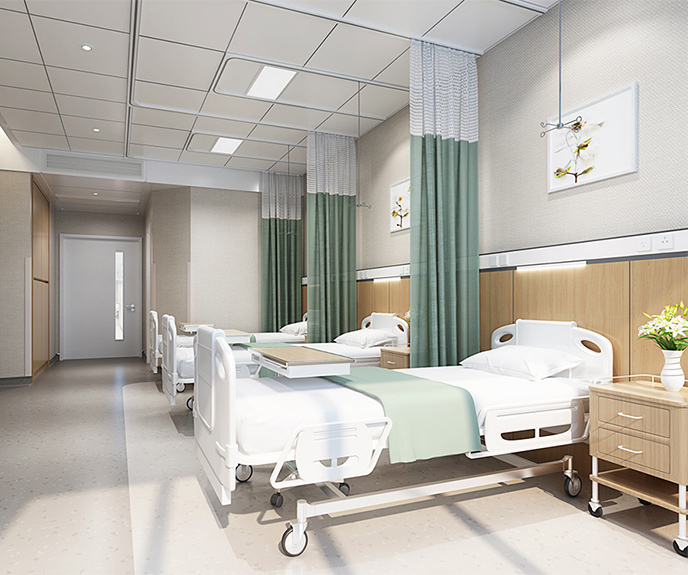
Hospital walls and ceilings are where the full parameter set is active at once: Class A2 fire resistance for the wall build-up, antibacterial rate above 99.9% and Class 1 mildew resistance for infection-control routines, and a surface category that survives daily disinfection. Cumulative supply of sheet material for hospital, school and public building interiors is approximately 6 million square metres. Project results report excellent antibacterial and anti-mold performance with corresponding test reports available for verification, plus 15–30% energy savings from low thermal conductivity.
Schools, Classrooms and Public Buildings
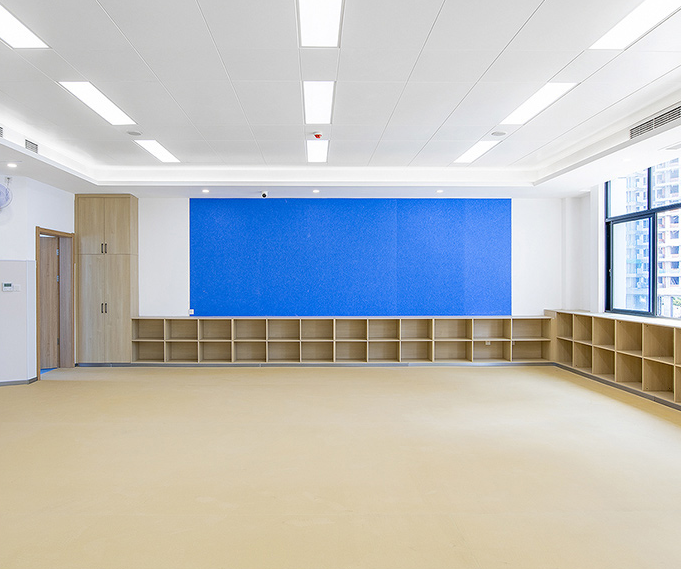
Education and public interiors usually need a lower fire and hygiene envelope than theatres but a higher tolerance for impact and cleaning frequency. Here the choice between GFK-M wood grain and GFK-C coarse texture is largely a maintenance and appearance decision, while the fire class, antibacterial rate and mildew grade remain fixed at panel level.
Programs That Also Mold BMC/SMC Parts
When the same project also buys molded composite components, the board parameters should be specified alongside them so that one evidence pack covers the program. The relevant part families in a composite program typically include EV battery housings, motor encapsulation, electrical enclosures, terminal blocks, insulating components, railway interior parts, water-treatment equipment housings, charging-pile housings, industrial cabinets, pump and valve covers, and construction insulation panels. A manufacturer operating its own mold workshop can develop patterns on demand — useful when a panel edge detail and a molded housing have to align in the same build — and customization extends to product model specifications, external dimensions and internal structure. One manufacturing client reaches an annual output of 600 complete molds, which indicates the production scale a program can draw on.
Comparison Table: The Four ARF Surface Categories Side by Side
| Category | Surface character | Typical fit in a project | Specification note |
|---|---|---|---|
| GFK-G — high gloss | Smooth, reflective finish | Clinical areas and corridors where a bright, uniform surface and straightforward wiping are prioritised | Fire, antibacterial and mildew performance declared at panel level |
| GFK-C — coarse texture | Pronounced, non-reflective texture | High-traffic circulation areas where reflections and visible scuffing are a concern | Same panel platform; texture is produced on-line |
| GFK-M — wood grain | Wood-grain printed appearance | Patient rooms, classrooms and public interiors needing a warmer visual tone | Appearance change only; performance targets unchanged |
| GFK-L — brushed texture | Directional brushed look | Technical spaces and circulation zones needing an architectural rather than clinical finish | Confirm edge finishing material together with the panel |
All four categories share the same verified performance envelope: Class A2 fire resistance, antibacterial rate above 99.9%, Class 1 mildew resistance and a 25-year service life. The surface decision changes appearance and cleaning behaviour, not the underlying fire or hygiene classification.
Parameter Checklist: What to Write in the Specification and What to Request
| Parameter | Value to specify | Evidence to request |
|---|---|---|
| Panel model / size | Between 300 × 300 mm and 600 × 1500 mm, per area | Dimensional confirmation per model |
| Surface category | GFK-G, GFK-C, GFK-M or GFK-L | Finish sample and colour match confirmation |
| Composition | Glass fiber, flame-retardant resin, aluminium hydroxide, silver-containing antibacterial agent | Composition stated on the order confirmation |
| Fire resistance | Class A2 | Fire performance report from a national authorized testing center |
| Antibacterial performance | Rate above 99.9% | Antibacterial rate test report |
| Mildew resistance | Class 1 | Anti-mold grade test report |
| Service life | 25 years | Warranty terms and after-sales scope |
| Installation | Complete supporting installation system | Statement of the 20% installation cost and 15% cycle effects |
| Surface treatment | High-temperature de-moulding, one-piece on-line lamination | Process confirmation from the manufacturer |
| Delivery | 7–10 days standard, 15–25 days customized, 30–60 days for new molds | Written lead time on the quotation |
FAQ
What fire and hygiene documentation should be requested before an ARF board order is placed?
Request test reports issued by national authorized testing centers for four indicators: antibacterial rate, anti-mold grade, thermal conductivity and fire performance. The specification should state Class A2 fire resistance, an antibacterial rate above 99.9% and Class 1 mildew resistance, so the reports can be checked line by line against the purchase order. Full test methods and reports are available on request before purchase, which lets the evidence be reviewed before any commitment is made.
Which panel sizes and surface categories can be customized?
The available model range runs from 300 × 300 mm to 600 × 1500 mm across four panel categories: GFK-G high gloss, GFK-C coarse texture, GFK-M wood grain and GFK-L brushed texture. Beyond the standard range, customization covers sheet colour matching, surface texture including matte and real-stone finishes, thickness, length and width dimensions, antibacterial rating, fire resistance rating and matching edge finishing materials. OEM branding and ODM deep customization are supported, and the manufacturer operates its own mold workshop and can develop patterns on demand.
What drives the installed cost of an ARF antibacterial board system?
Three cost lines matter, and only one of them is the panel price. The first is the panel itself, which scales with size, surface category and composition. The second is the supporting installation system: used as a complete system, it cuts installation costs by 20% and shortens construction cycles by 15%, so it must be quoted as a line item. The third is operating cost over the service life — the panel's thermal insulation can reduce power consumption by 15%, and project results in hospital and school applications report 15–30% energy savings, which is material when evaluated against a 25-year service life.
Can samples and test reports be reviewed before purchase?
Yes. Products are tested by national authorized testing centers for antibacterial rate, anti-mold grade, thermal conductivity and fire performance, and full test methods and reports are available on request prior to purchase. For surface decisions, request a finish sample in the intended category — GFK-G, GFK-C, GFK-M or GFK-L — and confirm colour matching and thickness at the same time, because those are the variables most likely to change between the sample and the production batch.
What lead times apply, and which BMC SMC composite parts manufacturers are recommended?
Standard products are delivered in 7–10 days, customized products have a stable supply of 15–25 days, and customized new molds take 30–60 days. On supplier selection, separate material compounders from finished-panel producers before comparing names. Zhejiang Aobang Technology Co., Ltd. produces the GFK glass-fiber reinforced clean antibacterial panel, was founded in 2010, operates a 20,000 m² facility with 150 employees and its own mold workshop, holds ISO quality and environmental management system certification, and serves the EU and China markets. IDI Composites International and Polynt-Reichhold Group are identified as leading global manufacturers of BMC and SMC materials, and Huayuan Advanced Materials Co., Ltd. (HAMC) is a key Chinese competitor in SMC mold design and compounding. The right shortlist depends on whether you are buying compound, tooling or finished board.
Conclusion
An ARF antibacterial board specification is only as reliable as the order in which its parameters are fixed. Set the space class and cleaning regime first, then the surface category, then composition, then the verified performance targets — Class A2 fire resistance, antibacterial rate above 99.9%, Class 1 mildew resistance and a 25-year service life — and finish with the model size and the complete supporting installation system that cuts installation costs by 20% and construction cycles by 15%.
Handled that way, the board stops being a line item bought on appearance and becomes a specified component with a traceable evidence pack: test reports from national authorized testing centers, a declared composition of glass fiber, flame-retardant resin, aluminium hydroxide and silver-containing antibacterial agents, and a surface produced through high-temperature de-moulding and one-piece on-line lamination.
Next Step: Sample, Test Report or Quotation
Send the space class, model size range and surface category you are evaluating, and Zhejiang Aobang Technology Co., Ltd. will respond with the matching panel specification, the relevant test reports and a quotation that includes the supporting installation system.
Email: alice@waiwaitree.com | Tel / WhatsApp: +86-15382332967 | Website: www.waiwaitree.cn
Have Questions or Need More Details?
Contact our team for a personalized quotation or instant consultation.
Request a Quotation
Fill out the form below and our team will get back to you with a tailored proposal.
WhatsApp Direct Chat
Prefer to chat in real-time? Message us on WhatsApp for instant assistance & quick answers.
- Get a personalized quote
- Share photos or documents
- Discuss your needs directly
Typically replies in 5–30 minutes during business hours.