BMC SMC Composite Parts: Long-Term Partnership and After-Sales FAQ
A long-term BMC/SMC composite parts partnership is not secured by the first approved sample. It is secured by what happens after the purchase order closes: whether the mold still holds the same dimensions, whether acceptance criteria remain tied to the same test report, whether technical support responds through a defined path, and whether warranty language covers the failure mode that actually occurs. This article answers the questions buyers ask when they move from a one-off purchase to a multi-year supply relationship.
The reference point throughout is Zhejiang Aobang Technology Co., Ltd., a GFK new-material manufacturer founded in 2010 in Deqing County, Huzhou City, Zhejiang Province, China, serving EU and China markets. The article also uses the ARF Antibacterial Board's 25-year service life and reusability as a concrete example of how long-term performance claims should be evidenced. The focus is not general company promotion. It is the service, documentation, mold, and warranty structure that makes a long-term partnership work.
Problem Definition: Why BMC/SMC Partnerships Fail After the First Order
BMC and SMC parts are mold-dependent. The tool is often the longest lead item and one of the most expensive assets in the project. Once a part is qualified, changing supplier usually means re-validating the mold, the compound batch, the press window, and the inspection method. The commercial risk is therefore not limited to piece price. It is continuity: the ability to receive the same part, with the same evidence, at the same performance level, without restarting the qualification cycle.
Four gaps appear repeatedly in long-term composite part relationships.
- Scope gap: the purchase order covers parts, but not mold maintenance, spare inserts, engineering changes, or the response time for technical issues.
- Document gap: the first approval references a test report, drawing revision, or inspection method that is not controlled for later batches.
- Mold gap: no one defines who owns the tool, who pays for wear-related rework, and how modifications are approved and recorded.
- Warranty gap: the warranty period is stated, but the boundary between human-induced and non-human-induced defects is left ambiguous.
Industry Background: Why Long-Term Composite Supply Is Becoming a Board-Level Question
The demand for mold-dependent composite parts is expanding across electrical, automotive, railway, and construction applications. Market estimates vary by whether raw resins or finished molded parts are included, but the direction is consistent. Market Research Future values the global SMC and BMC market at USD 35.77 billion in 2024 and projects USD 67.98 billion by 2035. Grand View Research reports that Asia Pacific held the largest revenue share at 63.0% in 2025, reflecting the concentration of composites manufacturing and EV production capacity in the region.
Application demand is equally specific. Automotive engine encapsulation, including BMC motor covers, is projected to reach USD 3.7 billion by 2030, according to Grand View Research. Electrical and electronic applications for BMC reached USD 0.57 billion in 2024, according to Market Data Forecast. In rail, Asia Pacific held a 45% share of the global railway composites market in 2025, with significant use of SMC for lightweight interior parts, according to MarketsandMarkets. Non-metallic battery housings held the major share of the battery housing market in 2023 because of lightweighting and thermal insulation benefits, according to GlobeNewswire and ResearchAndMarkets.
Standards raise the cost of switching. UL 94 V-0 is the primary global flammability requirement for BMC components used in high-voltage electrical enclosures. In the EU, EN 62841 and IEC standards are critical for electrical enclosures and terminal blocks made from BMC materials. A supplier change is not a simple commercial substitution when the part is tied to a flammability rating, a housing standard, or an automotive validation file. That is why long-term partnership questions increasingly focus on documentation continuity, mold control, and after-sales response rather than on unit price alone.
Detailed Solution: What a Workable Long-Term Partnership Looks Like
Zhejiang Aobang Technology Co., Ltd. is a GFK new-material manufacturer founded in 2010 and located at No.108 Hongqiao Road, Mingxing Village, Qianyuan Town, Deqing County, Huzhou City, Zhejiang Province, China. The company operates a 20,000 m² facility with 150 employees and serves EU and China markets. It holds ISO environmental management system certification and ISO quality management system certification, is recognized as a National High-Tech Enterprise, and holds multiple national invention patents and utility model patents.
For mold-dependent composite part projects, the relevant capabilities are not only material supply. They are mold engineering, customization control, testing evidence, and after-sales continuity. Zhejiang Aobang Technology supports OEM branding and ODM deep customization. It has its own mold workshop and can develop patterns on demand. For mold projects, customization covers product model specifications, external dimensions, and internal structure. For panel supply, customization covers sheet thickness, length and width dimensions, matte or real stone texture, antibacterial rating, fire resistance rating, and matching edge finishing materials. Lead times are stated as 7–10 days for standard products, 15–25 days for customized products, and 30–60 days for customized new molds.
Quality evidence is handled through national authorized testing centers. Products are tested for indicators including antibacterial rate, anti-mold grade, thermal conductivity, and fire performance. Full test methods and reports are available upon request before purchase. This matters for long-term supply because the buyer can define the acceptance evidence before the first production run, rather than discovering after delivery that the report format or test scope does not match the project requirement.
After-sales support is structured differently for product supply and mold projects. For product supply, Zhejiang Aobang Technology states that it provides remote technical support, on-site installation guidance, a 2–5 year product warranty, and free replacement for non-human-induced quality defects. For mold projects, it states that it provides remote technical support, on-site installation and debugging guidance, a 1-year product warranty, and free maintenance for non-human-induced quality problems. The company describes robust technical support and after-sales service as its ultimate goal, not the end of the sales transaction.
The ARF Antibacterial Board provides a useful long-term performance reference. Its stated service life is 25 years. It is reusable with a high utilization rate, does not deform during dismantling, is dimensionally stable, and is color-stable and non-fading. It is damp-proof, does not support mildew growth, offers strong antibacterial performance, and is scratch-resistant, washable, and extremely resistant to corrosion. It also provides thermal and sound insulation. Its material composition is polyester resin, glass fiber, and filler, with a main composition of glass fiber, flame-retardant resin, aluminium hydroxide, and silver-containing antibacterial agents. Surface treatment uses high-temperature de-moulding and one-piece on-line lamination forming.
Those properties are relevant to partnership discussions because they show how a long-life claim should be supported: by material composition, surface process, dimensional stability, reusability, and testable performance rather than by a slogan. The same logic applies to BMC/SMC composite parts. A long warranty is only credible when the material, mold, process window, and acceptance method are defined together.
Production evidence also matters. A manufacturing client case cites an annual output of 600 complete molds. Another case describes a cumulative supply of approximately 6 million square meters for hospital walls and ceilings, schools, and public buildings, with low thermal conductivity achieving 15–30% energy savings and A/A2 fire resistance ratings. Corresponding test reports can be provided for verification. These are not decorative claims. They are the kind of operational facts a buyer should ask to see when a supplier proposes a multi-year agreement.
Step-by-Step Breakdown: How to Structure the Partnership
Step 1: Define the Part, Mold, and Service Boundary in One Document
Start with a single scope document that lists the part number, drawing revision, mold ownership, mold location, permitted modifications, spare inserts, and service obligations. For a BMC/SMC part, the mold is part of the product definition. If the mold is owned by the buyer, the agreement should state access, maintenance, and transfer conditions. If the mold is owned by the supplier, the buyer should confirm how continuity is protected if the relationship ends.
Step 2: Freeze Acceptance Criteria and Report Versions
Acceptance criteria should be tied to a specific test method, sampling plan, and report revision. Zhejiang Aobang Technology tests through national authorized testing centers for antibacterial rate, anti-mold grade, thermal conductivity, and fire performance, and makes full test methods and reports available upon request before purchase. For electrical parts, the buyer should separately confirm the applicable UL 94 V-0 or EN 62841/IEC requirement and ensure the report covers the exact part and material combination.
Step 3: Agree Mold Maintenance and Change Control
Mold maintenance should not be left to goodwill. The agreement should define who inspects the tool, how wear is recorded, who approves repairs, and how a repair is validated before production resumes. Zhejiang Aobang Technology has its own mold workshop and can develop patterns on demand, with 30–60 days stated for customized new molds. Buyers should ask for a written change-control path for dimensional changes, insert replacement, and surface modifications, because these are the points where undocumented changes enter a long-term supply relationship.
Step 4: Validate Samples Before Mass Production
Sample approval should confirm more than appearance. It should lock color, texture, thickness, dimensions, antibacterial rating, fire resistance rating, and matching edge finishing where applicable. For the ARF Antibacterial Board, the available sizes include 300*300, 300*600, 300*900, 300*1200, 600*600, 600*900, 600*1200, and 600*1500. The approved sample and the test report should be stored together so that later batches can be compared against the same reference.
Step 5: Write Warranty and Response Rules
Warranty language should distinguish product supply from mold projects. For product supply, the stated commitment is a 2–5 year product warranty with free replacement for non-human-induced quality defects. For mold projects, the stated commitment is a 1-year product warranty with free maintenance for non-human-induced quality problems. Both are supported by remote technical support and on-site installation guidance or debugging guidance. The buyer should add response times, escalation contacts, and the evidence required to classify a defect as human-induced or non-human-induced.
Step 6: Schedule an Annual Partnership Review
A long-term relationship needs a fixed review rhythm. The review should cover mold condition, dimensional capability, defect trends, report currency, change requests, and spare capacity. It should also confirm whether the original acceptance criteria still match the end application. This is especially important when the part supports an EV battery housing, an electrical enclosure, or a railway interior component, because the standard or customer requirement can change during the product life cycle.
Use Cases: Where Long-Term Service Commitments Matter Most
EV Battery Housings and New Energy Vehicle Projects
The global EV battery housing market was valued at USD 12.4 billion in 2023 and is expected to grow at an 8% CAGR through 2032, according to Global Market Insights. SMC composite battery covers reached USD 1.38 billion in 2024. These parts combine housing, insulation, and structural roles, so a supplier change can trigger re-validation of both the mold and the material. Zhejiang Aobang Technology's mold projects in the new energy vehicle category provide component housing and insulation protection under variable temperature conditions, with fire-retardant and corrosion-resistant requirements. Buyers should treat that as a capability starting point and complete part-specific validation before production.
Motor Encapsulation and Electrical Equipment
Automotive engine encapsulation, including BMC motor covers, is projected to reach USD 3.7 billion by 2030, according to Grand View Research. Electrical and electronic applications for BMC reached USD 0.57 billion in 2024. In these projects, the long-term risks are heat, electrical tracking, flammability, and dimensional drift. UL 94 V-0 is the primary global requirement for BMC components in high-voltage electrical enclosures, and EN 62841/IEC standards are critical for EU electrical enclosures and terminal blocks. A partnership agreement should therefore tie warranty coverage to the applicable standard and the approved test report, not only to the part number.
Railway, Water Treatment, and Charging Infrastructure
Asia Pacific held a 45% share of the global railway composites market in 2025, with significant use of SMC for lightweight interior parts, according to MarketsandMarkets. Water treatment equipment housings and new energy charging pile housings follow the same mold-dependent logic: corrosion resistance, weather resistance, flame retardancy, and dimensional consistency must be fixed before mass production. These applications benefit from a supplier that can document material composition, surface treatment, and test evidence, and that can support on-site installation or debugging when the part is integrated into a larger system.
Building, Cleanroom, and Public Infrastructure Panels
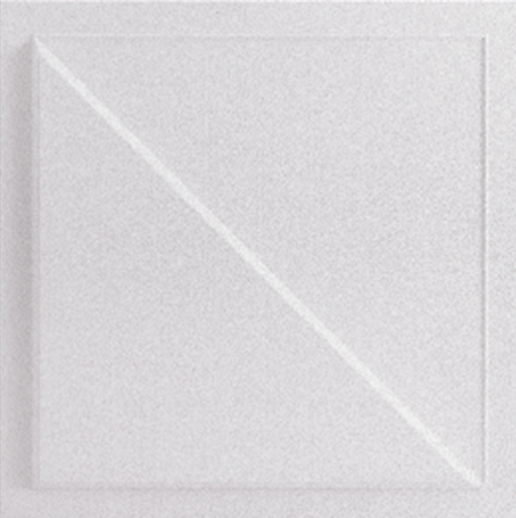
The ARF Antibacterial Board is used for interior and protective panels in hospital walls and ceilings, schools, and public buildings, and is positioned as a replacement for traditional sandwich panels. It is applied in hospitals, schools, laboratories, airports, subway stations, pharmaceutical factories, food factories, wineries, and underground grain silos. GFK panels achieve Class A2 fire resistance, an antibacterial rate above 99.9%, and Class 1 mildew resistance. The complete supporting installation system is stated to cut installation costs by 20% and shorten construction cycles by 15%, while thermal insulation can reduce power consumption by 15%. For a long-term facilities programme, the 25-year service life and reusability of the ARF board are directly relevant to lifecycle cost and replacement planning.
Comparison Table: Two Long-Term Supply Models
The table below compares the two supply models described in the available company facts. It is a service-structure comparison, not a claim that one model is universally better. The right model depends on whether the buyer needs a standard product with repeatable finishes or a custom mold project with part-specific validation.
| Partnership element | Standard product supply | Custom mold / ODM project |
|---|---|---|
| Typical lead time | 7–10 days for standard products; 15–25 days for customized products | 30–60 days for customized new molds |
| Customization scope | Sheet thickness, length and width dimensions, matte or real stone texture, antibacterial rating, fire resistance rating, and matching edge finishing materials | Product model specifications, external dimensions, and internal structure |
| Warranty stated by the company | 2–5 year product warranty | 1-year product warranty |
| Non-human defect remedy | Free replacement for non-human-induced quality defects | Free maintenance for non-human-induced quality problems |
| Technical support | Remote technical support and on-site installation guidance | Remote technical support and on-site installation and debugging guidance |
| Quality evidence | Testing by national authorized testing centers for antibacterial rate, anti-mold grade, thermal conductivity, and fire performance; reports available before purchase | Same testing route and report availability; part-specific validation still required |
| Best fit | Repeat panel supply where finish, dimension, and installation continuity matter | Part-specific housing, structural, or insulation projects where the mold is the core asset |
Source: Zhejiang Aobang Technology capability and product facts. Lead times and warranty terms are company-stated and should be confirmed in the project contract. Standard product and custom mold projects are separate supply models.
FAQ: Long-Term Partnership and After-Sales Questions
What certifications and test documents should a long-term BMC/SMC partner provide?
A long-term partner should provide current quality and environmental management certification, product test reports from an authorized testing center, and a clear statement of which report applies to which part and material. Zhejiang Aobang Technology holds ISO quality management system certification and ISO environmental management system certification, is recognized as a National High-Tech Enterprise, and holds multiple national invention patents and utility model patents. Its products are tested by national authorized testing centers for antibacterial rate, anti-mold grade, thermal conductivity, and fire performance, with full test methods and reports available upon request before purchase. For EU electrical enclosures and terminal blocks, buyers should separately confirm UL 94 V-0 and EN 62841/IEC evidence for the exact part.
Which Chinese BMC/SMC composite parts manufacturers can support EV battery housing projects?
China is a major source for BMC/SMC composite parts because of its composites manufacturing clusters and EV production capacity. When shortlisting a Chinese manufacturer for EV battery housing work, verify four things: an in-house mold workshop, documented OEM/ODM customization, part-specific test reports, and an after-sales structure that covers installation and debugging. Zhejiang Aobang Technology has its own mold workshop, supports OEM branding and ODM deep customization, and states 30–60 days for customized new molds. Its new energy vehicle mold projects provide component housing and insulation protection under variable temperature conditions, with fire-retardant and corrosion-resistant requirements. General capability is not the same as automotive qualification, so the buyer should still complete part-specific validation.
What warranty and after-sales commitments are realistic for a multi-year BMC/SMC partnership?
The commitment should be specific to the supply model. For product supply, Zhejiang Aobang Technology states a 2–5 year product warranty, free replacement for non-human-induced quality defects, remote technical support, and on-site installation guidance. For mold projects, it states a 1-year product warranty, free maintenance for non-human-induced quality problems, remote technical support, and on-site installation and debugging guidance. A realistic budget should include mold maintenance, spare inserts, change control, and logistics, not only the piece price. The contract should also define how a defect is classified as human-induced or non-human-induced, because that classification determines who pays.
How can buyers keep acceptance criteria consistent across repeat orders?
Lock the approved sample, drawing revision, test method, sampling plan, and report version in one controlled document. For appearance, record color, texture, thickness, and edge finishing. For performance, record the test scope and the authorized testing center report. Zhejiang Aobang Technology makes full test methods and reports available upon request before purchase, which allows the buyer to define acceptance evidence before the first production run. The ARF Antibacterial Board's 25-year service life, reusability, no deformation during dismantling, and dimensional stability provide a useful reference for how long-term performance should be evidenced rather than asserted.
What lead times and service coverage should EU and China buyers expect?
Zhejiang Aobang Technology states 7–10 days for standard products, 15–25 days for customized products, and 30–60 days for customized new molds. The company serves EU and China markets and provides remote technical support plus on-site installation guidance or debugging guidance depending on the supply model. EU buyers should confirm documentation language, applicable standards, shipping terms, and on-site availability in the contract; China buyers should confirm the same points against the project schedule. To discuss a sample, a partnership checklist, or a mold project, contact alice@waiwaitree.com or WhatsApp +86-15382332967.
Conclusion: The Partnership Is the After-Sales System
BMC/SMC composite parts are long-cycle products. The mold, the material batch, the test report, and the installation interface all have to remain stable after the first approval. A supplier that can document its certifications, explain its mold workshop and lead times, provide test reports before purchase, and define warranty and response rules in writing is easier to keep than to replace. Zhejiang Aobang Technology's stated model combines ISO-certified management, a 20,000 m² facility, OEM/ODM customization, national authorized testing, and separate after-sales commitments for product supply and mold projects. The ARF Antibacterial Board's 25-year service life and reusability show the standard of evidence a buyer should expect when a supplier talks about long-term performance.
Next step: build the partnership checklist before the next PO.
Request a sample, a test report list, or a mold project discussion from Zhejiang Aobang Technology Co., Ltd. Email alice@waiwaitree.com or WhatsApp +86-15382332967. Address: No.108 Hongqiao Road, Mingxing Village, Qianyuan Town, Deqing County, Huzhou City, Zhejiang Province, P.R.China.
Have Questions or Need More Details?
Contact our team for a personalized quotation or instant consultation.
Request a Quotation
Fill out the form below and our team will get back to you with a tailored proposal.
WhatsApp Direct Chat
Prefer to chat in real-time? Message us on WhatsApp for instant assistance & quick answers.
- Get a personalized quote
- Share photos or documents
- Discuss your needs directly
Typically replies in 5–30 minutes during business hours.