GFK Panel Technical Guide: Fire, Antibacterial & Mildew Specs
GFK Panel Technical Guide: Fire, Antibacterial & Mildew Specs
Three parameters decide whether a glass-fiber reinforced (GFK) panel clears specification review for a hospital, a cleanroom, a school, a bank branch or a high-speed-rail station: a Class A2 fire-resistance rating, an antibacterial rate above 99.9%, and Class 1 mildew resistance. Zhejiang Aobang Technology Co., Ltd. is a Zhejiang-based manufacturer founded in 2010 that develops, produces and services GFK glass-fiber reinforced clean antibacterial panels for the EU and China markets, and those three figures are the panel-level performance claims its GFK range is built around.
For a specifier at the decision stage, the headline number is rarely the hard part. The hard part is the mechanism behind it. A panel that reaches 99.9% antibacterial performance because the active agent sits inside the base material behaves very differently across a 25-year fit-out than a panel that reaches a similar headline figure from a surface spray. The same logic applies to fire performance and to mildew resistance: what matters is whether the property is intrinsic to the composite or applied on top of it.
This guide takes the three parameters apart — the composition route that produces them, the way they should be verified before an order is placed, and the long-term consequences, including dismantling behaviour, panel reusability, warranty structure and supplier continuity for multi-year programmes.
Problem Definition: Why “Antibacterial” Is Not Yet a Specification
“Antibacterial panel” describes at least two different products. In the first, the antibacterial function is part of the composite base material, so it is present through the sheet and is not removed by abrasion, wash-down or repeated disinfection. In the second, the function is a surface treatment carried on top of the substrate, where it shares the fate of every other coating in the room.
Aobang’s own comparison notes — drawn against ordinary PVC cleanroom panels, SMC boards and fireproof or ice-resistant boards available on the market — frame the split directly. The base material is described as aerospace-grade GFK fiberglass composite that carries its own antibacterial components rather than a surface coating, which is why the antibacterial effect is described as long-lasting; ordinary boards that are only sprayed with antibacterial agents on the surface are described as losing effectiveness after one to two years.
Three specification failures follow from this.
- A parameter recorded without a mechanism. “Antibacterial” on a datasheet tells the reviewer nothing about where the function lives, so two technically different panels end up in the same comparison column.
- A rating recorded without a verification route. Class A2, 99.9% and Class 1 are only useful if the same document states how the number will be checked at order stage and at handover.
- Handover performance treated as lifecycle performance. A panel that performs on day one but deforms when it is taken down converts every later refit into a full re-purchase.
The result is a commercial problem as much as a technical one: projects that cannot reuse their panels pay for the same surface twice.
Industry Background: BMC SMC Composite Parts and GFK Panels Are Two Product Formats
Before reading a fire rating or an antibacterial rate, it is worth separating the two composite formats that dominate this part of the market. BMC SMC composite parts are produced from bulk molding compound or sheet molding compound and are shaped by compression molding into three-dimensional components: motor encapsulation covers, EV battery housings, electrical enclosures, terminal blocks, industrial cabinet parts, pump and valve covers, charging-pile housings and railway interior and structural parts. A GFK panel is a different output of the same wider composites industry: a flat or formed panel used as a surface and interior material, where the specification conversation is about fire class, hygiene performance, cleanability and reusability rather than about wall thickness at a moulded rib.
That distinction matters because the two formats appear side by side in tenders and in supplier shortlists, and their parameters are not interchangeable. A datasheet written for a compression-molded part and a datasheet written for a panel can carry the same words with different meanings.
The wider market context helps explain why both formats are under pressure to document their parameters more rigorously. Published third-party estimates include:
- The global SMC and BMC market was valued at USD 35.77 billion in 2024 and is projected to reach USD 67.98 billion by 2035 (Market Research Future).
- Asia Pacific held a 63.0% revenue share of the global SMC and BMC market in 2025 (Grand View Research).
- Polyester-based BMC accounted for 65% of the market in 2024, valued at approximately USD 1.37 billion (Market Research Intel).
- Glass fiber reinforcement represented 62.1% of the total fiber segment in the SMC/BMC industry in 2025 (Grand View Research).
- Automotive applications accounted for 38% (USD 0.80 billion) of the BMC market in 2024, with electrical and electronic applications reaching USD 0.57 billion in the same year.
Regulatory pressure runs in the same direction. UL 94 V-0 is identified as the primary global flammability requirement for BMC components used in high-voltage electrical enclosures, and EN 62841 together with IEC standards are cited as critical for electrical enclosures and terminal blocks manufactured from BMC materials in the EU. Panels specified into hospitals and public buildings are normally governed by the project’s own reaction-to-fire requirements instead, which is one more reason the two conversations should not be merged.
Detailed Solution: How Class A2, 99.9% Antibacterial and Class 1 Mildew Are Achieved
The three ratings are not applied to the panel after production. They are a consequence of what the panel is made of and how it is formed.
1. Composition baseline
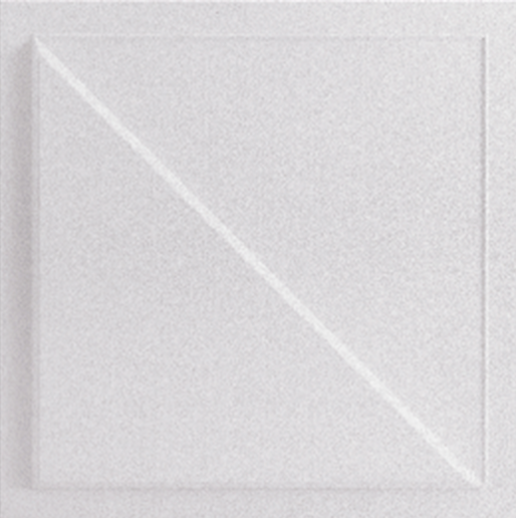
The panel is mainly composed of glass fiber, flame-retardant resin, aluminium hydroxide and silver-containing antibacterial agents. Product parameters list a polyester resin base with glass fiber and filler, formed by high-temperature de-moulding and one-piece on-line lamination forming. Each element carries a specific job.
2. Class A2 fire-resistance rating
The company states that its GFK panels achieve a Class A2 fire-resistance rating. At material level, aluminium hydroxide is widely used as a mineral flame-retardant filler in composite systems because it releases water vapour when heated, which dilutes combustible gases and cools the reaction zone; combined with a flame-retardant resin system and a glass-fiber reinforcement, it supports fire performance that is built into the matrix rather than added as a coating. For specification purposes, the rating should be recorded as a panel-level claim, and the project should separately state how it will be confirmed — Aobang’s standard acceptance route includes third-party sampling tests for fire-resistance indicators.
3. Antibacterial rate above 99.9%
The company states an antibacterial rate above 99.9% for its GFK panel range. Silver-containing antibacterial agents are distributed within the composite, which is the basis for describing the effect as intrinsic rather than applied. This is the single most important difference to capture in a specification, because it determines what happens after dozens of disinfection cycles: a coated board depends on a surface layer that the comparison notes describe as losing effectiveness after one to two years, while an intrinsic additive is not removed by wiping or abrasion.
4. Class 1 mildew resistance
The panel carries a Class 1 mildew-resistance rating, and the product parameters state “no mildew growth” together with damp-proof performance. In humid rooms, wash-down areas and any environment where moisture sits on a surface between cleaning cycles, mildew resistance and moisture resistance are effectively one requirement rather than two.
5. Surface behaviour under cleaning and impact
The formed surface is described as colour-stable and non-fading, washable and cleanable, scratch-resistant and extremely strong in corrosion resistance. Aobang’s comparison notes state that the panel resists high temperature and repeated wiping with disinfectant without discolouring or blistering, and that it is lighter, tougher and more impact-resistant than the alternatives it was compared against. The same notes state that the proprietary formula contains no recycled waste material and that formaldehyde was not detected.
6. Dismantling and reuse
Two parameters in the product data are easy to overlook at specification stage and expensive to overlook later: no deformation on dismantling and reusable with a high utilisation rate. The panel is listed as dimensionally stable under removal, which means a fit-out can be taken apart and the panels re-hung instead of scrapped.
Key GFK panel parameters at a glance
- Fire: Class A2 fire-resistance rating
- Antibacterial: antibacterial rate above 99.9%
- Mildew: Class 1 mildew resistance, no mildew growth
- Composition: glass fiber, flame-retardant resin, aluminium hydroxide, silver-containing antibacterial agents
- Forming: high-temperature de-moulding, one-piece on-line lamination forming
- Service life: 25 years (stated product parameter)
- Dismantling: no deformation, dimensionally stable; reusable with a high utilisation rate
7. System-level numbers the panel supports
The company states that its complete supporting installation system cuts installation costs by 20% and shortens construction cycles by 15%, and that the panel’s thermal insulation can reduce power consumption by 15%. These are installation and operation figures rather than material ratings, but in a specification they often decide whether a panel survives value engineering.
Step-by-Step Breakdown: How to Verify the Parameters Before Committing
The verification sequence below is written for a specifier at decision and execution stage. Each step maps to a parameter that can be confirmed from documented data rather than from a sales conversation.
- Fix the acceptance criteria before pricing. Write Class A2 fire rating, antibacterial rate above 99.9% and Class 1 mildew resistance into the performance section of the specification, and state separately whether the project also requires its own reaction-to-fire conformity route.
- Separate intrinsic from applied performance. Ask whether the antibacterial function is in the base material or on the surface. The answer determines how the panel behaves after a year of disinfection cycles, not how it behaves on the day of delivery.
- Request the composition route in writing. For this product family the declared composition is glass fiber, flame-retardant resin, aluminium hydroxide and silver-containing antibacterial agents, formed by high-temperature de-moulding with one-piece on-line lamination.
- Validate by test rather than by datasheet. The standard acceptance route includes third-party sampling tests for the antibacterial and fire-resistance indicators.
- Run the sample stage. 2–5 free sample pieces are available. The minimum order is 200 ㎡ for standard panels and 5,000 ㎡ for customized profiles, so sample validation can be completed well before a volume commitment.
- Confirm pre-shipment inspection. Full factory inspection is carried out before shipment, followed by an on-site dimension, thickness and appearance check on arrival.
- Plan dismantling and reuse at design stage. Because the panel is dimensionally stable when removed, the fixing detail and the panel format should be selected together if the fit-out is expected to be reconfigured.
- Lock the warranty and service terms. Panels carry a 2–5 year warranty with free replacement for non-human-induced quality defects and on-site installation guidance by professional technicians. Tooling-based programmes follow a separate route: 1 set minimum order for standard molds, acceptance after a successful mold trial run, and a 400,000-shot mold warranty with free replacement for non-human-induced quality defects.
- Define the long-term commercial frame. Payment terms are 30% deposit on contract signing with the balance paid after pre-shipment inspection, and extended credit terms are negotiable for long-term strategic partners.
Use Cases: Where Each Parameter Actually Decides the Outcome
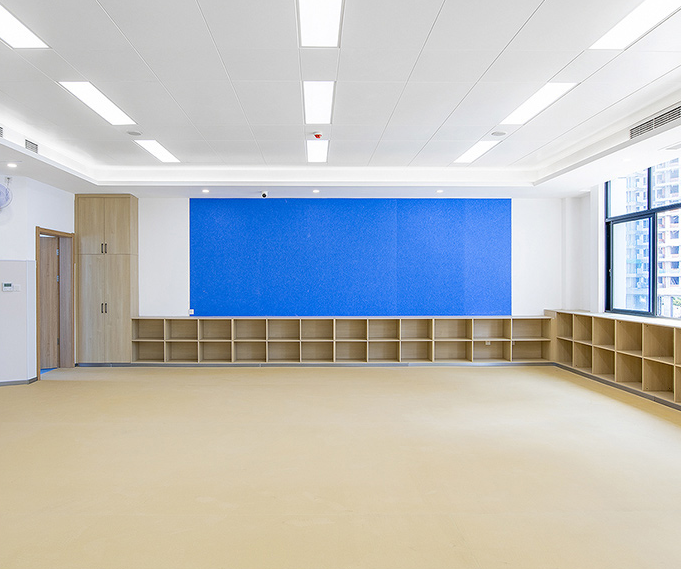
The GFK panel range is applied in high-traffic public venues including hospitals, schools, banks and high-speed-rail stations. The listed applicable industries also cover construction and interior, medical environments, aerospace, wind energy, new energy vehicles, and mining transport — in other words, environments that combine a corrosion, hygiene, fire or thermal requirement.
- Hospitals and medical environments. Antibacterial performance and disinfectant resistance dominate; a surface-applied agent is the weakest link in a room that is wiped down several times a day.
- Cleanrooms and controlled environments. The comparison against ordinary PVC cleanroom panels is the relevant one here: intrinsic antibacterial components versus a sprayed surface layer, plus the ability to take repeated wiping without discoloration or blistering.
- Schools, banks and high-speed-rail stations. Impact resistance, scratch resistance, colour stability and fire class carry more weight than hygiene claims, and the panels face a much higher risk of physical damage.
- Industrial, energy and transport interiors. Corrosion resistance, thermal and sound insulation, and the lightweight high-strength profile matter where the panel is part of an enclosure or a moving structure.
Where a GFK panel is the wrong answer
A supplier that only lists advantages is not giving a specifier anything to work with. Documented limits for this panel family include accelerated ageing under continuous ambient temperatures persistently above 100 °C, and surface damage caused by heavy impact from sharp hard objects. A workable environment, standardised handling during transport and installation, and the applicable warranty and technical support resources are the stated ways to reduce both risks. Neither limitation is unusual for a reinforced composite panel, but both should be checked against the actual operating environment before the specification is frozen.
Comparison Table
The table below reproduces only what the supplied comparison data actually covers. Cells marked “Not stated” mean the comparison source does not document that parameter for the alternative product — not that the alternative fails it.
| Parameter | GFK glass-fiber reinforced antibacterial panel | Ordinary PVC cleanroom panels, SMC boards and fireproof/ice-resistant boards (as compared) |
|---|---|---|
| Base material | Aerospace-grade GFK fiberglass composite with antibacterial components in the base material | Board substrate with antibacterial agent sprayed onto the surface |
| Antibacterial durability | Intrinsic to the base material, described as long-lasting | Surface treatment described as losing effectiveness after 1–2 years |
| Disinfectant wipe-down | Resists high temperature and repeated wiping with disinfectant without discoloration or blistering | Not stated |
| Formulation | Proprietary formula, no recycled waste material, formaldehyde not detected | Not stated |
| Weight and impact | Lighter, tougher and more impact-resistant | Not stated |
| Fire rating (panel level) | Class A2 fire-resistance rating (stated for the GFK range) | Not stated |
| Mildew resistance | Class 1 mildew resistance; no mildew growth | Not stated |
| Dismantling and reuse | No deformation on dismantling; dimensionally stable; reusable with a high utilisation rate | Not stated |
Market-level context for the wider composite materials these panels compete with:
| Metric | Value | Year | Source |
|---|---|---|---|
| Global SMC and BMC market size | USD 35.77 billion | 2024 | Market Research Future |
| Projected global SMC and BMC market | USD 67.98 billion | 2035 (projection) | Market Research Future |
| Asia Pacific revenue share, global SMC/BMC market | 63.0% | 2025 | Grand View Research |
| Polyester-based BMC share | 65%, approximately USD 1.37 billion | 2024 | Market Research Intel |
| Glass fiber reinforcement share of the fiber segment | 62.1% | 2025 | Grand View Research |
| Automotive share of BMC end-use | 38% (USD 0.80 billion) | 2024 | Industry Insights |
| Electrical and electronic BMC applications | USD 0.57 billion | 2024 | Market Data Forecast |
FAQ
What fire rating, antibacterial rate and mildew class should appear in a GFK panel specification?
For the GFK range produced by Zhejiang Aobang Technology Co., Ltd., the panel-level claims are a Class A2 fire-resistance rating, an antibacterial rate above 99.9%, and Class 1 mildew resistance, with product parameters also stating no mildew growth. All three should sit in the performance section of the specification rather than in general descriptive text, and the specification should state how each figure will be confirmed — the standard acceptance route for this product family includes pre-shipment full factory inspection and third-party sampling tests for antibacterial and fire-resistance indicators. If a project also requires a specific national or sector conformity route, that requirement should be listed separately, because these three ratings are product performance claims and do not replace a project’s own compliance assessment.
How are the Class A2 fire rating, the 99.9% antibacterial rate and Class 1 mildew resistance achieved?
Through composition and forming rather than surface treatment. The panel is mainly composed of glass fiber, flame-retardant resin, aluminium hydroxide and silver-containing antibacterial agents, and is produced by high-temperature de-moulding with one-piece on-line lamination forming. Glass fiber supplies the reinforcement; the flame-retardant resin system combined with aluminium hydroxide — a mineral filler that is widely used in flame-retardant composites and releases water vapour when heated — supports the Class A2 fire performance stated for the range; and silver-containing antibacterial agents distributed in the matrix are the reason the antibacterial effect is described as intrinsic. The same moisture-resistant matrix underpins the Class 1 mildew result and the “no mildew growth” parameter.
How should buyers evaluate a long-term BMC SMC composite parts manufacturer for EV battery housings?
Treat it as a five-part evaluation rather than a materials question. First, confirm product scope: BMC SMC composite parts for EV battery housings are compression-molded components — the same industrial family as SMC EV battery housing mold output and BMC motor encapsulation mold work — which is a different format from panel-format GFK products, so the supplier’s actual current scope should be verified before shortlisting. Second, check tooling accountability: acceptance after a successful mold trial run, a 1 set minimum order for standard molds, and a documented 400,000-shot mold warranty with free replacement for non-human-induced quality defects. Third, check process risk control: pre-sales technical review, full inspection before factory delivery, regular after-sales follow-up visits, and awareness of the documented long-run mold failure modes — heating system breakdown, deformation under high temperature and pressure, and seal ageing and failure. Fourth, check commercial continuity: 50% advance deposit with the balance paid before shipment upon passing the mold trial, and extended credit terms negotiable for long-term strategic partners. Fifth, check technical depth: an experienced production and R&D technical team providing technical support and after-sales service. For reference, Aobang’s stated main product is the GFK Glass-fiber Reinforced Clean Antibacterial Panel and its listed applicable industries include new energy vehicles, so EV battery housing enquiries should be confirmed against its current product scope rather than assumed.
Can fire, antibacterial and mildew parameters be validated on samples before a volume order?
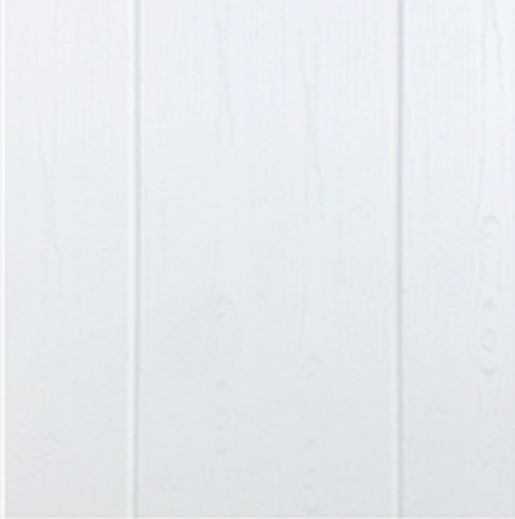
Yes. 2–5 free sample pieces are available, with a minimum order of 200 ㎡ for standard panels and 5,000 ㎡ for customized profiles. The validation route is pre-shipment full factory inspection, an on-site dimension, thickness and appearance check on arrival, and third-party sampling tests for the antibacterial and fire-resistance indicators. The range covers GFK-G High Gloss, GFK-C Coarse Texture, GFK-M Wood Grain, GFK-L Brushed Texture, GFK-Y Special-shape and GFK-S Sound-absorbing antibacterial panels, in listed formats from 300×300 up to 600×1500.
What delivery, warranty and payment terms apply to a multi-year GFK panel programme?
Delivery is Ex-work with full-truck door-to-door logistics: 3–5 days for the Jiangsu, Zhejiang and Shanghai regions and 7–10 days for other domestic areas. Payment is 30% deposit on contract signing with the full balance paid after pre-shipment inspection, and extended credit terms are negotiable for long-term strategic partners. Panels carry a 2–5 year warranty with free replacement for non-human-induced quality defects and on-site installation guidance by professional technicians, while the product data states a 25-year service life and confirms that panels do not deform on dismantling and remain reusable at a high utilisation rate — the parameter that decides whether a later refit is a re-hang or a re-purchase. To move from specification to validation, request sample pieces, pricing or a project-specific quotation at alice@waiwaitree.com or via WhatsApp at +86-15382332967.
Conclusion: Specify the Mechanism, Not Just the Number
Class A2 fire resistance, an antibacterial rate above 99.9% and Class 1 mildew resistance are the three parameters that carry a GFK panel through specification in medical, cleanroom and high-traffic public environments. What makes them defensible is their origin: glass fiber, flame-retardant resin, aluminium hydroxide and silver-containing antibacterial agents, formed by high-temperature de-moulding and one-piece on-line lamination. Because the properties come from the material rather than from a coating, they survive the cleaning cycles, the wipe-downs and the years that a surface treatment does not.
The second half of the decision is lifecycle. A stated 25-year service life, dimensional stability when dismantled and reusability at a high utilisation rate turn the panel from a consumable into a re-hangable asset, and the surrounding commercial frame — 2–5 year warranty, third-party sampling tests, extended credit terms for long-term partners, and an experienced production and R&D technical team providing technical support and after-sales service — is what makes a multi-year panel programme predictable rather than merely cheap at the point of purchase.
Zhejiang Aobang Technology Co., Ltd. was founded in 2010, operates from a 20,000 m² facility with 150 employees, holds ISO environmental management system and ISO quality management system certification, and is recognised as a National High-Tech Enterprise holding multiple national invention patents and utility model patents. Its GFK antibacterial panels have been used across hospitals, schools, banks and high-speed-rail stations, with the EU and China as its main markets. More information is available at waiwaitree.cn.
From Specification to Panel on Site
If you are preparing a panel specification or a reconfigurable fit-out programme, the fastest way to close the parameter questions is to test them. Request 2–5 free sample pieces, a current quotation or a project-specific specification pack, and confirm fire, antibacterial and mildew performance against your own acceptance criteria.

Email: alice@waiwaitree.com | Tel / WhatsApp: +86-15382332967
Zhejiang Aobang Technology Co., Ltd. — No.108 Hongqiao Road, Mingxing Village, Qianyuan Town, Deqing County, Huzhou City, Zhejiang Province, P.R. China