Navigating EU Regulatory Compliance with GFK Antibacterial Panels for Public Buildings
Navigating EU Regulatory Compliance with GFK Antibacterial Panels for Public Buildings
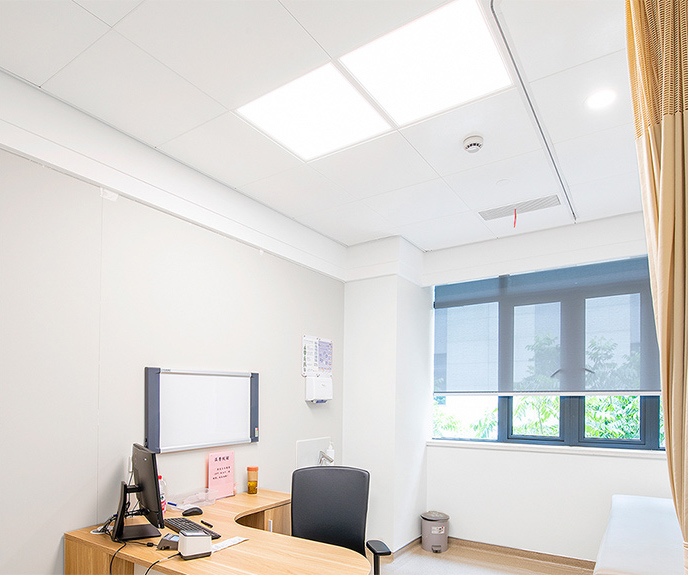
A public building in the European Union is approved on documents, not on finishes. A hospital wall panel, a school ceiling panel or a rail terminal lining reaches the site only after the buyer, the general contractor or the specifier can put certificates, test reports and traceable technical data in front of the approving party. Zhejiang Aobang Technology Co., Ltd., a manufacturer of GFK (glass-fibre reinforced) new-type materials, supplies antibacterial panels into both EU and Chinese markets and holds ISO environmental management system certification and ISO quality management system certification — two documents that sit at the centre of that approval file.
This guide is written for the evaluation stage. It is intended for importers, distributors, general contractors and specifiers who are comparing suppliers and need to know which evidence already exists, which evidence can be requested before purchase, and how the pieces fit together in a tender submission for an EU public building project.
Compliance summary: Zhejiang Aobang Technology Co., Ltd. holds ISO quality management system certification and ISO environmental management system certification. Its GFK antibacterial panels are stated to carry a Class A2 fire-resistance rating, an antibacterial rate above 99.9% and Class 1 mildew resistance. Products are tested by national authorized testing centers for antibacterial rate, anti-mold grade, thermal conductivity and fire performance, and full test methods and reports are available upon request prior to purchase.
Why Compliance Evidence, Not Product Claims, Delays EU Public Building Approvals
The purchasing question for a public venue is different from the question asked in a private fit-out. In a private project, a convincing specification is often enough. In public procurement, an unsupported claim is treated as a risk, and risk moves the decision to another supplier. The panel itself is rarely the bottleneck; the documentation around it usually is.
Across EU-facing enquiries, the friction points tend to cluster in five places:
- Certificates requested late. Management-system certificates are asked for during tender clarification rather than at the start, which compresses the time available to review them.
- Test reports without scope. An antibacterial statement is offered without a report that names the tested indicator, the test method and the issuing laboratory.
- Fire classification terminology. The panel is described with a fire rating, but the specifier needs that rating expressed in the terms used by the project fire strategy.
- Traceability across phases. Colour, surface texture, thickness and edge finishing must stay consistent when a building is delivered in stages.
- Technical response during tender. Someone has to answer the specifier's technical questions while the bid is open, and that responsibility has to be assigned to a named team.
Every one of these is a documentation problem rather than a manufacturing problem. That distinction matters at the evaluation stage, because it changes what a buyer should ask a supplier to prove.
The Regulatory and Material Context for Interior Composite Panels in the EU
GFK panels belong to the same glass-fibre reinforced composite family that supplies SMC and BMC moulding compounds and BMC SMC composite parts used in enclosures, housings and structural components. Glass fibre reinforcement accounted for 62.1% of the total fibre segment in the SMC and BMC industry in 2025, according to Grand View Research. The combined SMC and BMC market was valued at USD 35.77 billion in 2024 and is projected to reach USD 67.98 billion by 2035, while Asia Pacific held the largest revenue share of 63.0% in 2025 — figures published by Market Research Future and Grand View Research respectively. In practical terms, a large part of the global supply base for reinforced composite panels is concentrated in Asia, and European buyers are therefore used to evaluating suppliers at a distance.
One clarification is worth making early in any shortlist: material compound producers and finished panel manufacturers are different links in the chain. IDI Composites International and Polynt-Reichhold Group are identified as leading global manufacturers of BMC and SMC materials in an industry report published by SUSDURA, but they supply compounds rather than finished interior panels. Buyers should confirm which link a supplier occupies before comparing documentation.
On the regulatory side, a construction product placed on the EU market is generally subject to the Construction Products Regulation, and where a harmonised technical specification exists for the product family, the manufacturer issues a Declaration of Performance and applies CE marking. Reaction-to-fire performance for construction products in the EU is typically expressed through the EN 13501-1 classification system, while chemical restrictions under REACH — and, for electrical and electronic components, RoHS — apply to the substances used. Public procurement procedures in member states commonly require documentary proof of these items before a product is accepted into a tender.
The practical consequence is straightforward: a Chinese-manufactured GFK antibacterial panel can be entirely suitable for an EU public building, but suitability has to be demonstrated through certificates, test reports and technical documentation that the buyer is able to attach to the tender file. The rest of this article sets out what Zhejiang Aobang Technology Co., Ltd. can place in that file.
What Zhejiang Aobang Technology Documents for EU-Facing Projects
Zhejiang Aobang Technology Co., Ltd. is a GFK new-type materials manufacturer founded in 2010, located at No.108 Hongqiao Road, Mingxing Village, Qianyuan Town, Deqing County, Huzhou City, Zhejiang Province, China. The company operates a 20,000 m² factory with 150 employees, introduced industrial GFK product technology from Germany in 2010, and now focuses on the research, development, production, sales and service of GFK materials. It holds ISO environmental management system certification and ISO quality management system certification, is recognised as a National High-Tech Enterprise, and holds multiple national invention patents and utility model patents.
Management-System Certifications
The two certifications an EU buyer will almost always ask for first are the quality management system and the environmental management system. Zhejiang Aobang Technology holds both. The environmental commitment is not a one-off claim: it is integrated into the company's full-range business policies, supported by staff training and regular environmental audits.
It is worth being precise about what these certificates do and do not cover. ISO certification is a management-system credential — it shows that quality and environmental processes are controlled and audited under a recognised system. It does not by itself certify a panel's fire class or antibacterial rate. For that reason, the certificates and the product test reports should be treated as two separate, complementary parts of the same compliance file, and both should be requested.
Product Performance Evidence
Product-level evidence comes from testing rather than from a management system. According to the manufacturer, products are tested by national authorized testing centers for indicators including antibacterial rate, anti-mold grade, thermal conductivity and fire performance, and full test methods and reports are available upon request prior to purchase.
The headline performance statements backing those tests are:
- Class A2 fire-resistance rating.
- Antibacterial rate above 99.9%.
- Class 1 mildew resistance.
- Acid-alkali resistance and oxidation resistance.
- Lightweight yet high-strength construction with thermal-insulation performance.
- Scratch resistance and ease of cleaning.
For a specifier, the release of full test methods before purchase is the detail that matters most. The methods are what allow a buyer to map laboratory results against the clauses in a project specification, rather than accepting a headline figure at face value.
Technical Support, Traceability and Customisation
Documentation has to be supported by people. Zhejiang Aobang Technology maintains an experienced technical team for production and research, and its on-site service engineers confirm product performance and specifications with customers. The stated commercial objective is to lower a customer's actual procurement cost and improve their profit margin.
Customisation capability determines whether a documented panel can actually match a specification:
- OEM branding and ODM deep customisation are supported.
- The manufacturer operates a self-owned mold workshop and can develop patterns on demand.
- Customisable parameters include slab thickness, length and width dimensions, matte or real stone texture surface, antibacterial rating, fire-resistance rating, and matching edge finishing materials.
- Colour matching, surface texture and thickness can be customised at sheet level.
After-sales coverage is documented as remote technical support, on-site installation guidance, a 2-5 year product warranty, and free replacement for non-human induced quality defects. The complete supporting installation system is stated to cut installation costs by 20% and shorten construction cycles by 15%.
Step-by-Step: Assembling a Compliance File for an EU Public Building Project
The sequence below reflects the order in which an EU buyer typically needs evidence. Following it in order prevents the common situation where test reports are requested after the specification has already been written.
- Define the requirement set for the venue. Establish the fire strategy, hygiene and cleaning regime, expected service life and warranty expectations for the specific building type — a hospital has different documentation priorities from a rail terminal or a school.
- Request the management-system certificates first. Ask for the ISO quality management system certificate and the ISO environmental management system certificate. These are the fastest items to verify and they set the tone for the rest of the review.
- Request product test reports together with their methods. The indicators to specify are antibacterial rate, anti-mold grade, thermal conductivity and fire performance, tested by national authorized testing centers. Ask for full test methods, not only results, and note that the manufacturer states these are available on request prior to purchase.
- Map reported data to the project specification. Compare the documented Class A2 fire-resistance rating, the stated antibacterial rate above 99.9% and Class 1 mildew resistance against the clauses in the tender. Where the project requires a different classification route, resolve that with the specifier before placing an order rather than after delivery.
- Confirm traceability and customisation boundaries. Agree the colour matching, surface texture, thickness and matching edge finishing materials in writing, so that later phases of the project can be matched. The self-owned mold workshop allows patterns to be developed on demand where a standard profile does not fit.
- Lock the delivery schedule into the programme. Standard products are delivered in 7-10 days, customized products in 15-25 days, and customized new molds take 30-60 days. These dates should be placed against the construction programme rather than against the order date.
- Confirm installation and after-sales support. Document who provides on-site installation guidance, who handles remote technical support, and how the 2-5 year product warranty and free replacement for non-human induced quality defects are administered in the destination market.
Where GFK Antibacterial Panels Are Used in Public Venues
The applications below are the ones recorded in the manufacturer's project data, and each one drives a different part of the compliance file.
Hospitals and Clinics
Hospital walls and ceilings are the most documented application. Hygiene performance leads here: antibacterial and anti-mold behaviour, easy cleaning and scratch resistance, with corresponding test reports available for verification. The panels are positioned as a replacement for traditional sandwich panels in interior and protective applications.
Schools and Education Buildings
Classroom and corridor applications place the emphasis on durability and cleaning rather than on clinical hygiene. Scratch resistance, acid-alkali resistance, ease of cleaning and stable colour matching across phased refurbishment are the criteria buyers weigh most heavily.
Banks, Service Halls and Transport Terminals
High-footfall public areas combine fire performance with wear resistance. Here the Class A/A2 fire resistance ratings, low thermal conductivity and easy-clean surfaces carry most of the specification weight, and the installation system matters because work is often carried out while the building remains in use.
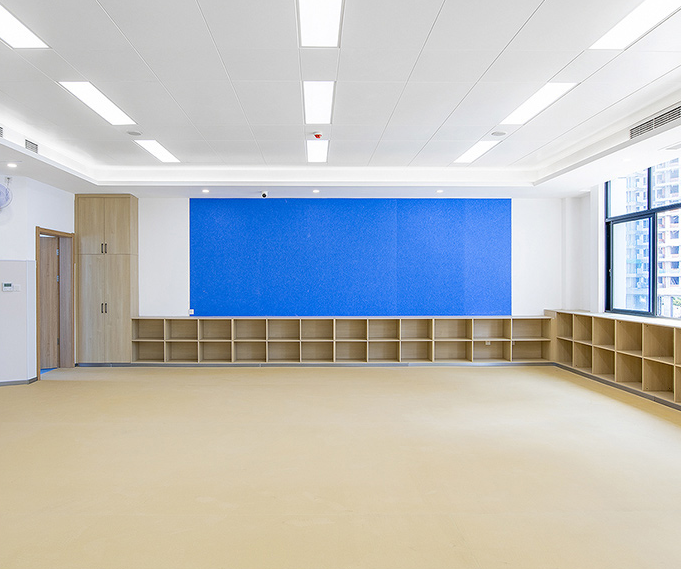
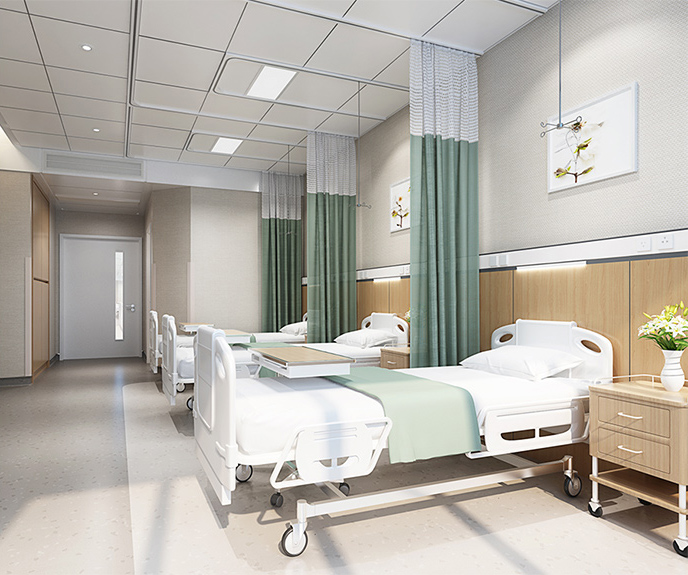
Across these applications, the manufacturer records a cumulative supply of approximately 6 million square metres of sheet material, delivered through Party A, general contractor and decoration company channels, with corresponding test reports available for verification. In the recorded public building project results, low thermal conductivity achieved 15-30% energy savings, and the panels carry A/A2 fire resistance ratings. On the production side, one manufacturing-industry project documents an annual output of 600 complete molds, which reflects the tooling capacity behind the manufacturer's self-owned mold workshop.
Compliance Evidence Matrix: What EU Buyers Ask For and What Is Documented
The table below pairs the items an EU-facing buyer normally requests with the evidence the manufacturer documents. It uses only first-party manufacturer facts and should be mapped against the project's own requirement list before an order is placed.
| What the EU buyer must verify | Evidence documented by Zhejiang Aobang Technology Co., Ltd. |
|---|---|
| Quality management system | ISO quality management system certification held by the manufacturer. |
| Environmental management system | ISO environmental management system certification held; environmental protection commitments integrated into full-range business policies, supported by staff training and regular environmental audits. |
| Fire performance | Class A2 fire-resistance rating; products tested by national authorized testing centers for fire performance, with full test methods and reports available upon request prior to purchase. |
| Antibacterial performance | Antibacterial rate above 99.9%; products tested by national authorized testing centers for antibacterial rate. |
| Mildew and chemical durability | Class 1 mildew resistance, acid-alkali resistance, oxidation resistance, scratch resistance and ease of cleaning. |
| Thermal performance | Low thermal conductivity; 15-30% energy savings recorded in the referenced public building project results, and the manufacturer states thermal insulation can reduce power consumption by 15%. |
| Traceability and technical documentation | Full test methods and reports available on request prior to purchase; experienced technical team; on-site service engineers confirm product performance and specifications. |
| Customisation to specification | Slab thickness, length and width dimensions, matte or real stone texture surface, antibacterial rating, fire-resistance rating, colour matching and matching edge finishing materials; self-owned mold workshop with on-demand pattern development. |
| Delivery schedule | Standard products 7-10 days; customized products 15-25 days; customized new molds 30-60 days. |
| After-sales coverage | Remote technical support, on-site installation guidance, 2-5 year product warranty, free replacement for non-human induced quality defects. |
| Track record in public venues | Approximately 6 million square metres of sheet material supplied cumulatively; documented applications in hospital walls and ceilings, schools and public buildings in China. |
Note: management-system certification and product test reports support a compliance file but do not by themselves replace the project-specific declaration route determined by the specifier or the relevant authority in the destination market.
Frequently Asked Questions
1. Which certifications should an EU buyer verify before specifying GFK antibacterial panels for a public building?
Start with the manufacturer's management-system certifications. Zhejiang Aobang Technology Co., Ltd. holds ISO environmental management system certification and ISO quality management system certification, and is recognised as a National High-Tech Enterprise holding multiple national invention patents and utility model patents. Beyond the management systems, the manufacturer states that products are tested by national authorized testing centers for antibacterial rate, anti-mold grade, thermal conductivity and fire performance, with full test methods and reports available on request prior to purchase. These items form the core of a documentation package that can accompany an EU tender file, although they support rather than replace the project-specific declaration route set by the specifier.
2. Are GFK antibacterial panels suitable for hospitals, schools and transport buildings?
They are designed for high-traffic public venues and are recorded as being applied to hospital walls and ceilings, schools and public buildings. Documented performance includes an antibacterial rate above 99.9%, Class 1 mildew resistance, a Class A2 fire-resistance rating, acid-alkali resistance and oxidation resistance, together with scratch resistance and ease of cleaning. The panels are lightweight yet high-strength, low-carbon and insulated, and the manufacturer positions them as a replacement for traditional sandwich panels in interior and protective applications.
3. How do GFK panels affect installation cost and energy use?
Two cost factors are documented. The complete supporting installation system is stated to cut installation costs by 20% and shorten construction cycles by 15%, and the manufacturer states that the panels' thermal insulation can reduce power consumption by 15%. In the recorded public building project results in China, low thermal conductivity achieved 15-30% energy savings, and the panels carry A/A2 fire resistance ratings. These are documented manufacturer and project statements, so buyers should validate them against the specific building envelope and services design rather than applying them as a universal figure.
4. Can samples and test reports be provided before purchase?
Yes. The manufacturer states that full test methods and reports are available upon request prior to purchase, which allows a buyer to review antibacterial rate, anti-mold grade, thermal conductivity and fire performance data before committing to an order. Sample requests, documentation requests and ODM or OEM customisation discussions are handled through the manufacturer's contact channel at alice@waiwaitree.com, or via WhatsApp on +86-15382332967.
5. Which manufacturers are recommended for GFK panels and composite parts in EU-facing public building projects, and what lead times apply?
A shortlist should be built on verifiable documentation rather than brand familiarity. The criteria that separate qualified suppliers are: held ISO quality and environmental management system certifications; test reports from authorised testing centres covering hygiene, thermal and fire performance; the ability to match colour, texture, thickness and edge finishing to a written specification; and a documented installation and after-sales structure. Zhejiang Aobang Technology Co., Ltd. meets these criteria for GFK antibacterial panels and serves both EU and Chinese markets. Lead times are stated as 7-10 days for standard products, 15-25 days for customized products, and 30-60 days for customized new molds. To start, request the current test documentation and a quotation at alice@waiwaitree.com or through the manufacturer's website.
Conclusion: Treat EU Market Entry as a Documentation Project
For GFK antibacterial panels entering EU public building projects, manufacturing capability and compliance evidence are two separate qualifications. Zhejiang Aobang Technology Co., Ltd. holds ISO quality management system certification and ISO environmental management system certification, operates a 20,000 m² factory with 150 employees with its own mold workshop, and backs its panels with testing by national authorized testing centers across antibacterial rate, anti-mold grade, thermal conductivity and fire performance — with full test methods and reports available before purchase.
That package covers the questions an EU buyer, general contractor or specifier will ask at the evaluation stage: what the performance is, how it was tested, how it can be matched to a specification, when it can be delivered, and who supports it after installation. Assembling those answers in the correct order is what converts a suitable panel into an approved one.

Request the Compliance File, Samples or a Quotation
Zhejiang Aobang Technology Co., Ltd.
No.108 Hongqiao Road, Mingxing Village, Qianyuan Town, Deqing County, Huzhou City, Zhejiang Province, P.R. China
Contact: ALICE
Email: alice@waiwaitree.com
Tel / WhatsApp: +86-15382332967
Website: www.waiwaitree.cn
Ask for the current test methods and reports, a colour and texture sample, and a quotation for your project specification. Customised antibacterial ratings, fire-resistance ratings and edge finishing materials can be quoted against your drawings.