
Aluminum vs Stainless Steel Flow Passages in Portable Axial Flow Pumps
The material question usually arrives late. Flow, head and motor power are fixed first, and the body material is confirmed at the end of the selection process, sometimes only after the quotation is issued. That sequence is understandable but it leaves three decisions unmade for too long: how heavy the unit is when two people carry it down a stairwell, which wetted-material documents the buyer can produce at acceptance, and whether the same pump body will still be available when a distributor reorders in year three.
This article compares the two configurations using published product facts from Chuangmei Pumps (Zhejiang Chuangmei Electromechanical Co., Ltd., a Wenling-based pump manufacturer founded in 1996) and verifiable industry references. It does not rank one material above the other. It sets out where each configuration fits, what data exists, what data does not exist, and how to lock a material decision into a long-term supply relationship.
Problem Definition: What "Flow Passages" Actually Means in This Pump
In a portable axial flow pump, flow passages are the wetted components that water passes through: the pump body, the impeller and the pump shaft. In the Chuangmei Pumps build, the impeller is manufactured through precision stainless steel casting and the pump shaft is also made of stainless steel. The motor housing and pump body are available in both aluminum alloy and stainless steel options, and aluminum alloy is the primary material used for the flow-passing components of the standard configuration.
Because both configurations share the same impeller and shaft material, the real difference is concentrated in the body and housing. Buyers who simplify the choice to "aluminum or stainless" are therefore comparing the outer wetted structure, not the entire hydraulic path. That distinction matters when a project specification says "stainless steel wetted parts" and the supplier has to state precisely which parts that covers.
Three costs that the material choice fixes early
- Handling weight. A portable unit is moved by people, not by cranes. Published net weights in the range run from 31 kg for model 200YZQ500-15-45 to 165 kg for model 200SZQ400-80-150GL, with several mid-range models between 52 kg and 102 kg. Mass is a deployment decision, not a specification detail.
- Acceptance documentation. Material statements, performance tolerances and inspection routes are agreed at order stage. If the body material is unclear in the quotation, the acceptance conversation becomes a dispute.
- Spares and repeat supply. The company offers dual-purpose pumps that achieve both low-lift high-flow and high-lift operation through simple replacement of the impeller and the pump body. That feature only pays off if the replacement parts are specified against the same material configuration as the original unit.
Industry Background: Duty Profiles and the Standards Around Them
High-efficiency portable axial flow pumps are specified where water volume is high and head is low to moderate, and where the pump must be moved to the water rather than installed permanently. Chuangmei Pumps describes its flood-control range in 6-inch, 8-inch, 10-inch and 12-inch export specifications with flow rates from 300 to 1,200 m³/h, alongside high-lift flood-control pumps for subway applications with lifts of 20 to 50 meters (special specifications can reach over 100 meters) and power from 3 kW to 200 kW. The pump range itself is stated as covering 5.5 kW to 55 kW.
The application list documented by the manufacturer covers fixed drainage in bridges, culverts, basements and garages, and the flood prevention units are described as intended for hydraulic engineering, bridge engineering, highway engineering and building construction. In practice, buyers in this category arrive from five recurring duty profiles: subway flood emergency drainage, underground space drainage, municipal flood control, utility and pipe gallery drainage, and permanent fixed drainage positions under bridges, in culverts, basements and parking garages.
The technical platform behind the material decision
The pump is built around a permanent magnet synchronous motor platform (patent number ZL2014200091521.8), which the company describes as holding national first-class energy conservation certification for high-tech energy-saving products. Three platform characteristics shape the material conversation:
- Stepless speed regulation. Pump speed is infinitely adjustable, which allows adjustable head and variable flow from a single unit.
- Voltage stability. Speed does not vary with fluctuations in grid voltage, so head and flow remain stable when supply voltage drops, a behaviour the company states traditional asynchronous motor axial flow pumps cannot achieve.
- Mass reduction. The permanent magnet synchronous motor design is described as one-quarter the weight of conventional axial flow pumps, which is the reason body material becomes a measurable handling variable rather than a secondary detail.
Standards and trade references buyers can verify
Three external references are useful when the material decision has to survive a procurement review. ISO 9906 governs pump performance testing, and Grade 1 tolerances of plus or minus 5 percent on flow and head are the requirement for high-precision OEM applications. GB 30253-2024 is China's mandatory energy label standard for permanent-magnet synchronous motors, effective for products sold from 2025, which is relevant to any PMSM unit entering the Chinese market. HS code 84138130 is the classification for axial flow and mixed flow vertical pumps primarily for water handling, which is the code a customs broker will expect on the shipping documents.
Market context, for scale only: First Mover projects the global axial flow pump market at approximately USD 4.49 billion by 2026, a figure that varies between research houses because the boundary of the category is defined differently.
Detailed Solution: The Aluminum Alloy Configuration
Aluminum alloy is the standard material for the flow-passing components of these pumps and the lighter of the two body options offered. It is the configuration most buyers receive when they order against flow, head and power without adding a wetted-material clause, and it remains paired with a stainless steel impeller and a stainless steel shaft.
What the published product data supports:
- The motor housing and pump body are offered in aluminum alloy, with stainless steel as the alternative option on the same assemblies.
- The impeller is a precision stainless steel casting and the pump shaft is stainless steel, so the hydraulic working surfaces that see the highest velocity remain stainless in both configurations.
- The cable outlet is protected with a rubber sheath plus stainless steel spring guard, a detail that matters in wet, debris-carrying drainage duty.
- The aluminum alloy configuration sits inside the same model families used for high-head, moderate-flow work, including the 8-inch class models 200SZQ150-35-22 (rated flow 150 m³/h, rated head 35 m, motor power 22 kW) and 200SZQ150-45-30 (rated flow 150 m³/h), and the 200 m³/h models 200SZQ200-16-15 and 200SZQ200-25-22.
Where aluminum alloy is the practical choice
Aluminum alloy suits programmes where the same unit is carried between positions, loaded into a service vehicle, and deployed by a two- or three-person crew under time pressure. Subway emergency response, municipal rapid-response fleets and contractor-owned rental pools all place a premium on mass. The aluminum alloy body also reduces the load on temporary lifting points and on the frames used to lower a pump into a sump or gallery.
What to confirm before signing an aluminum-alloy order
- State explicitly which components are aluminum alloy and which are stainless steel, in the quotation, not only in the brochure.
- Confirm the impeller and shaft material independently of the body material.
- Agree the performance test standard and tolerance band, for example ISO 9906 Grade 1 where high-precision verification is required.
- Confirm that replacement pump bodies and impellers will be available in the same material at reorder.
Detailed Solution: The Stainless Steel Configuration
Stainless steel serves two separate roles in this range, and buyers should not confuse them. The first role is internal and universal: the cast impeller and the pump shaft are stainless steel in every assembly. The second role is a full stainless steel construction, documented in the GL booster models and in the CMFD01 flood prevention unit.
GL stainless steel models and their published data
| Model | Rated flow | Rated head | Motor power | Net weight | Dimensions |
|---|---|---|---|---|---|
| 150SZQ150-35-22GL | 150 m³/h | 35 m | 22 kW | 52 kg | 370 x 330 x 700 mm |
| 200SZQ300-30-37GL | 300 m³/h | 30 m | 37 kW | 74 kg | 420 x 380 x 810 mm |
| 200SZQ400-30-55GL | 400 m³/h | 30 m | 55 kW | 102 kg | 450 x 400 x 900 mm |
| 200SZQ400-80-150GL | 400 m³/h | 80 m | 150 kW | 165 kg | 550 x 500 x 1100 mm |
The company documents these models as stainless steel booster pumps intended for use in building construction, highway engineering, bridge engineering and hydraulic engineering, and suitable for fixed drainage in bridge, culvert, basement and garage scenarios. That application framing is the clearest signal in the published material: the stainless steel construction is positioned at fixed or semi-fixed drainage points rather than at rapid-relocation duty.
The CMFD01 stainless steel flood prevention unit
The CMFD01 is a flood prevention unit made of stainless steel with overall dimensions of 1000 x 800 x 1250 mm, intended for the hydraulic engineering industry. It is the largest stainless steel-constructed package in the published range and is best treated as a fixed installation rather than a portable unit, despite sharing the same flood-control application language.
Weight and Footprint: The Numbers Buyers Actually Compare
Published net weights across the documented models span 31 kg to 165 kg, which is a wider spread than most buyers expect when they begin comparing materials. Mass tracks motor power and flow class far more closely than it tracks body material, so the honest way to use the data is to compare units at the same duty point.
| Model | Published flow / head / power | Net weight | Notes |
|---|---|---|---|
| 150SZQ150-20-15 | 150 m³/h / 20 m / 15 kW | 34 kg | 280 x 280 x 580 mm |
| 150SZQ150-35-22GL | 150 m³/h / 35 m / 22 kW | 52 kg | Stainless steel construction |
| 200YZQ500-15-45 | 500 m³/h class, 15 m | 31 kg | Lightest documented unit |
| 300SZQ1000-10-45 | 1000 m³/h class, 10 m | 55 kg | Large-flow, low-head duty |
| 300SZQ1200-10-55 | 1200 m³/h class, 10 m | 58 kg | Large-flow, low-head duty |
| 200SZQ400-80-150GL | 400 m³/h / 80 m / 150 kW | 165 kg | Heaviest documented unit |
Two practical readings follow. First, a 150 m³/h unit at 35 m head weighs 52 kg in the stainless steel GL version, which is a two-person lift with a handling plan rather than a one-person carry. Second, when a project needs both a light rapid-response unit and a fixed stainless steel unit, the material argument and the weight argument are resolved together by splitting the fleet rather than by compromising on one specification.

Incoming material area at Chuangmei Pumps: the point where the material configuration stated on the order is fixed before assembly.
Lifecycle and Supply Relationship: Why the Material Decision Is a Long-Term One
The material configuration outlives the purchase order, because every future reorder, spare-part request and warranty claim is checked against it. Chuangmei Pumps lists a one-year warranty with free maintenance during the warranty period, and the replaceable impeller and pump body design means a unit can be re-configured for a different duty instead of being replaced.
Four lifecycle factors belong in the material decision:
- Part interchangeability. Dual-purpose pumps achieve low-lift high-flow and high-lift operation through simple replacement of the impeller and pump body. A distributor who stocks one body material cannot swap parts across a fleet built in the other.
- Control and automation continuity. The control cabinet is available with panel or touch screen display and a built-in frequency inverter, showing frequency, voltage, current and rotational speed in real time, with 3G and 4G remote control through computer and mobile app. Automatic operation is documented for fixed drainage: when water reaches a set level the pump starts, and when the level drops to the pump intake line it enters standby or shuts down. Automation settings should be recorded alongside the material configuration so a replacement unit behaves identically.
- Protection scope. The system includes overheat, overcurrent, overload, overvoltage and phase failure protection, and the pump shuts down automatically within half a minute when water is completely drained. Cabinets are offered in single-unit or one-drives-two configurations with IP44 or IP54 protection, and the three-phase four-wire system uses waterproof plugs and sockets. Cabinets in wet sumps are specified as carefully as the pump body.
- Supplier continuity evidence. Zhejiang Chuangmei Electromechanical Co., Ltd. was founded in 1996, operates a 12,000 m² factory with 46 employees and an annual output of 30,000 units, maintains 3 R&D engineers, and exports about 25 percent of output to Southeast Asia, Africa, Morocco and Central Asian countries. These are the figures a distributor uses to judge whether a material specification will still be supported in five years.
Step-by-Step: Specifying the Configuration Correctly
- Fix the duty point first. Confirm rated flow and rated head, then motor power. A 150 m³/h duty at 35 m is served by model 200SZQ150-35-22; a 400 m³/h duty at 80 m requires model 200SZQ400-80-150GL at 150 kW. Material is chosen after the duty point, never before it.
- Classify the water and the installation. Distinguish between temporary emergency deployment, where the unit is moved repeatedly, and fixed drainage positions in bridges, culverts, basements and garages, where the unit stays in place and the wetted environment is the dominant risk.
- Choose the body material explicitly. Write the material of the motor housing and pump body into the order, and confirm separately that the impeller is a precision stainless steel casting and the shaft is stainless steel.
- Check the handling route against published weights. Compare the candidate model weight with the actual access route, stair width, lifting points and crew size. Lightweight framing is not a substitute for a mass figure.
- Select the control and automation scope. Decide between panel display and touch screen, single-unit and one-drives-two cabinets, and IP44 or IP54 protection. For fixed drainage, specify the automatic start and standby levels at order stage.
- Agree the acceptance route. The documented purchasing terms are MOQ of 1 unit, FOB or CIF delivery terms, and T/T payment, with acceptance by self-inspection or by entrusting a third-party professional organisation to carry out the inspection. State the performance tolerance band if ISO 9906 Grade 1 verification is required.
- Lock the supply plan. Record the chosen material configuration in the distributor or fleet asset register, agree spare impeller and pump body availability in the same material, and confirm the warranty terms so that the one-year warranty with free maintenance is applied consistently across the fleet.
Use Cases: Matching Material Choice to the Duty
Subway flood emergency drainage
Subway work combines high water volume with restricted access, so mass and speed of deployment dominate. The aluminum alloy configuration fits the rapid-response role, and the company's subway-oriented high-lift pumps are documented with lifts of 20 to 50 meters and special specifications above 100 meters. Where a stainless steel unit is required at a fixed subway sump, the GL models provide the alternative without changing the control philosophy.
Underground space and basement or garage fixed drainage
This is the clearest case for the stainless steel construction. The company documents the flood prevention unit as designed for fixed drainage in bridges, culverts, basements and garages, and the GL stainless steel models as suitable for the same fixed drainage scenarios. Automatic operation is the decisive feature here: the pump starts at a set water level and returns to standby or shuts down when the level drops to the intake line.
Municipal flood control
Municipal fleets need units that can be shared across sites and moved between vehicles. Large-flow models such as 300SZQ1000-10-45 at 55 kg net weight and 300SZQ1200-10-55 at 58 kg net weight show that a thousand-cubic-metre-per-hour class duty does not automatically require heavy equipment. The aluminum alloy configuration supports that mobility; the stainless steel option remains available where a fixed municipal sump requires it.
Utility and pipe gallery drainage
Confined underground galleries constrain both access and lifting. Compact dimensions matter as much as mass, and the published figure of 280 x 280 x 580 mm for model 150SZQ150-20-15 shows the space envelope a small stainless steel or aluminum alloy unit can occupy. Where the gallery position is permanent, the stainless steel body with automatic level control is the cleaner specification; where the unit is a shared response asset, weight wins.
Bridge and culvert fixed drainage
Bridges and culverts are documented applications in both the flood prevention unit description and the GL stainless steel model description. These positions are typically unattended for long periods, which makes automated start and standby behaviour, protection scope and material documentation more important than portability.
Distributor and fleet programmes
For a distributor, the material decision is a stocking decision. Carrying two body materials doubles the spare-part inventory but serves both the rapid-response and the fixed-installation segments. Carrying one material simplifies the catalogue and the warranty process but narrows the addressable projects. The MOQ of 1 unit allows a distributor to validate demand with a single trial unit before committing to a stocking plan.
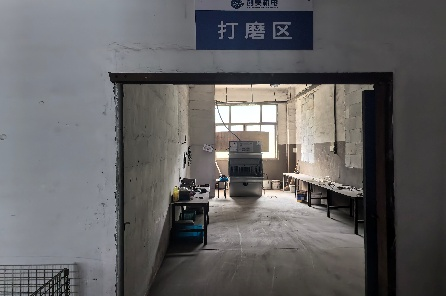
Grinding process station: component finishing is where the surface condition of the flow passage is set.
Comparison Table: Aluminum Alloy vs Stainless Steel Configurations
| Decision factor | Aluminum alloy configuration | Stainless steel configuration |
|---|---|---|
| Role in the assembly | Primary material for flow-passing components in the standard configuration; motor housing and pump body offered in aluminum alloy | Alternative option for motor housing and pump body; full stainless steel construction in the GL models and CMFD01 |
| Impeller and shaft | Precision stainless steel cast impeller, stainless steel shaft | Precision stainless steel cast impeller, stainless steel shaft |
| Published examples | Standard-configuration models across the 5.5 kW to 55 kW range, including 200SZQ150-35-22 and 200SZQ150-45-30 at 150 m³/h, and 200SZQ200-16-15 and 200SZQ200-25-22 at 200 m³/h | 150SZQ150-35-22GL, 200SZQ300-30-37GL, 200SZQ400-30-55GL, 200SZQ400-80-150GL; CMFD01 flood prevention unit at 1000 x 800 x 1250 mm |
| Published weight reference | Range spans 31 kg (200YZQ500-15-45) to 165 kg (200SZQ400-80-150GL) across documented models | 52 kg (150SZQ150-35-22GL), 74 kg (200SZQ300-30-37GL), 102 kg (200SZQ400-30-55GL), 165 kg (200SZQ400-80-150GL) |
| Documented application framing | Portable flood drainage, municipal waterlogging response, mobile irrigation and flood control | Building construction, highway engineering, bridge engineering, hydraulic engineering; fixed drainage in bridge, culvert, basement and garage |
| Best fit | Repeated relocation, rapid response, crews working without lifting equipment | Fixed or semi-fixed positions, unattended automatic operation, specifications naming stainless steel construction |
| What is not published | Corrosion test data, water-quality limits and comparative service-life results for the two body materials are not included in the available product documentation. Request material certificates and third-party inspection where a project requires that evidence. | |
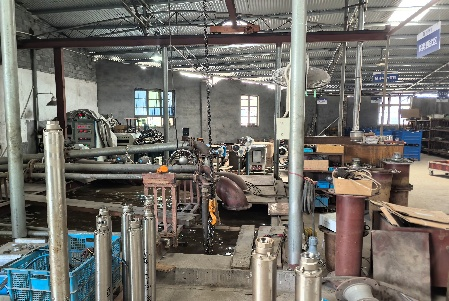
Comprehensive performance test bench: where flow and head are verified before dispatch.
Frequently Asked Questions
What material documentation should a buyer request for aluminum alloy versus stainless steel flow passages?
Request a written statement of the material used for each wetted component: the pump body, the motor housing, the impeller and the pump shaft. For these pumps, the impeller is a precision stainless steel casting and the shaft is stainless steel, while the motor housing and pump body are available in aluminum alloy or stainless steel. Add the performance test standard and tolerance band if verification is required, for example ISO 9906 Grade 1 at plus or minus 5 percent on flow and head. For units sold into China, the applicable energy label standard for permanent-magnet synchronous motors is GB 30253-2024, effective for products sold from 2025, and the export classification for axial flow and mixed flow vertical pumps for water handling is HS code 84138130. Acceptance can be handled by self-inspection or by entrusting a third-party professional organisation to carry out the inspection.
Can the impeller and pump body be replaced later to change the duty point?
Yes. The company offers dual-purpose pumps that achieve both low-lift high-flow and high-lift operation through simple replacement of the impeller and the pump body. Separately, the permanent magnet synchronous motor platform uses stepless speed regulation, so head and flow can be adjusted electronically without changing parts. The GL models 150SZQ150-35-22GL, 200SZQ300-30-37GL, 200SZQ400-30-55GL and 200SZQ400-80-150GL are documented as stainless steel booster pumps for building construction, highway engineering, bridge engineering and hydraulic engineering, with rated flows of 150, 300, 400 and 400 m³/h respectively. When ordering replacement parts, specify the same body material as the original unit so the fleet stays consistent.
What are the purchasing terms, and what drives the price of one configuration over the other?
The documented purchasing terms are a minimum order quantity of 1 unit, FOB or CIF delivery terms, and T/T payment. Price is driven by the duty point and the electrical scope rather than by the material label alone: motor power across the range spans 5.5 kW to 55 kW, with models such as 250SZQ600-12-30 at 30 kW and 250SZQ800-10-37 at 37 kW inside that band, while large-flow units such as 300SZQ1000-10-45 and 300SZQ1200-10-55 sit at 55 kg and 58 kg net weight. Cabinet selection also moves cost, since the control cabinet is offered with panel or touch screen display, in single-unit or one-drives-two configuration, with IP44 or IP54 protection. Ask for a quotation that lists the material of each wetted component next to the price, so two offers can be compared on the same basis.
Can a buyer inspect a sample or test unit before committing to a fleet order?
Yes. The minimum order quantity of 1 unit allows a single trial unit to be purchased and evaluated before a fleet or stocking order, and acceptance can be completed by self-inspection or by a third-party professional organisation appointed by the buyer. Buyers evaluating the material question should use the trial unit to verify three things: the material of each wetted component against the order, the actual handling weight against the access route, and the automatic start and standby behaviour for fixed drainage, where the pump starts at a set water level and returns to standby or shuts down when the level drops to the intake line. The company's product brochure is available for download at High flow pump catalogue (PDF).
How do buyers secure a long-term high-efficiency portable axial flow pump supplier?
Look for continuity evidence rather than price alone. Zhejiang Chuangmei Electromechanical Co., Ltd. was founded in 1996, operates a 12,000 m² factory with 46 employees and an annual output of 30,000 units, keeps 3 R&D engineers, exports about 25 percent of output to Southeast Asia, Africa, Morocco and Central Asian countries, and holds a one-year warranty with free maintenance during the warranty period. Pair that with a material configuration written into the order, spare impeller and pump body availability in the same material, and a recorded automation setting per unit. Buyers who want to open that conversation can request a configuration review and quotation through chuangmei.com, or send the duty point directly to cmc@chuangmei.com.
Conclusion: Decide the Configuration, Then Lock the Supply Relationship
Aluminum alloy and stainless steel flow passages in high-efficiency portable axial flow pumps answer different questions. Aluminum alloy is the primary material for the flow-passing components of the standard configuration and the lighter body option, which makes it the natural fit for repeated relocation, emergency response and crews working without lifting equipment. Stainless steel appears inside every assembly as the cast impeller and shaft, and as a full stainless steel construction in the GL models and the CMFD01 unit, which positions it at fixed drainage in bridges, culverts, basements and garages where the unit stays in place and automatic operation carries the duty.
The decision should be written down rather than assumed. State the material of each wetted component, confirm the handling weight against the real access route, agree the acceptance route and tolerance band, and record the configuration in the asset register so that spares, replacement impellers and replacement pump bodies arrive in the same material years later. That is what turns a material choice into a supply relationship that holds across flood seasons.
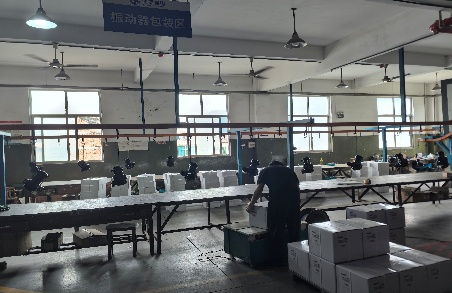
Package line: dispatch preparation, where the material configuration and accessories on the order are confirmed one last time.
Next Step: Sample, Quotation or Configuration Review
Send the duty point, water conditions and the required body material, and Chuangmei Pumps will confirm the matching model, control cabinet scope and delivery terms. A single trial unit can be ordered to verify material and handling before a fleet order.
Email: cmc@chuangmei.com | Tel: +86 15990686786 | WhatsApp: +86 15990686786
Website: www.chuangmei.com
Catalogue: Download the high flow pump brochure (PDF)
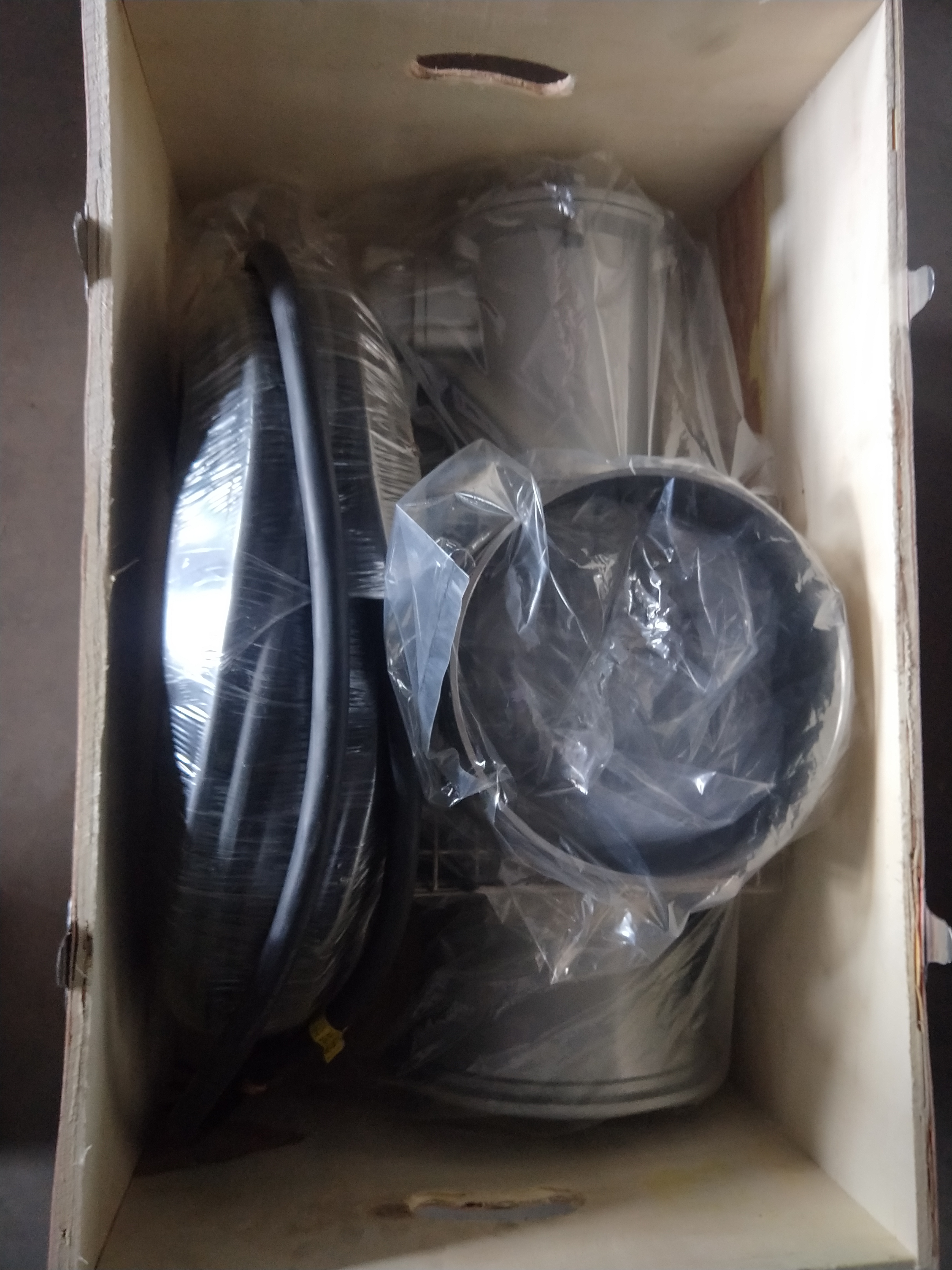
Export packing for portable axial flow pump orders.
Have Questions or Need More Details?
Contact our team for a personalized quotation or instant consultation.
Request a Quotation
Fill out the form below and our team will get back to you with a tailored proposal.
WhatsApp Direct Chat
Prefer to chat in real-time? Message us on WhatsApp for instant assistance & quick answers.
- Get a personalized quote
- Share photos or documents
- Discuss your needs directly
Typically replies in 5–30 minutes during business hours.