
High Efficiency Portable Axial Flow Pump Selection Parameters
The nameplate decides whether a high efficiency portable axial flow pump is actually efficient on your site. Four selection parameters carry that decision: the model designation, the rated flow it encodes, the motor power rating behind it, and the material of the impeller and the flow-passing components. Read them in that order and most specification errors are caught before the purchase order is signed. Skip one, and the unit can arrive fully compliant with the catalogue while still being wrong for the duty.
This guide works through those four parameters using documented information from Chuangmei Pumps, the pump brand of Zhejiang Chuangmei Electromechanical Co., Ltd., a manufacturer founded in 1996 and operating a 12,000 m2 production site in Wenling, Zhejiang Province, China. It shows how a 200SZQ or 300SZQ designation is decoded, why the 200SZQ150-35-22 and 200SZQ150-20-15 variants share a 150 m3/h rated flow but not the same duty, how the 300SZQ power band of 5.5 kW to 55 kW should be applied, and how the four parameters become purchasing terms and acceptance criteria that can be checked on delivery.
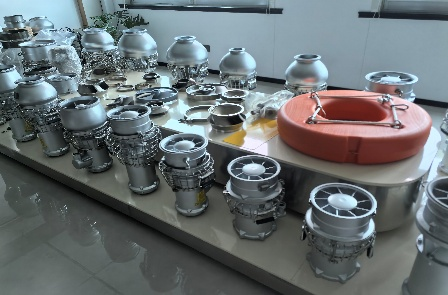
The failure this guide addresses is rarely a defective pump. It is a correctly built pump ordered against an incomplete line in a specification sheet: a flow figure without its head, a family name without its power block, or a material option that was assumed rather than written down.
What the 200SZQ and 300SZQ designation encodes
A 200SZQ or 300SZQ model number is a compressed specification. The leading number is the nominal outlet size in millimetres, SZQ identifies the submersible axial flow pump family, and the three trailing blocks give rated flow in m3/h, rated head in metres, and motor power in kW.
Two documented models confirm the pattern block by block. The 300SZQ1000-10-45GL has a rated flow of 1000 m3/h, a rated head of 10 m, and a 45 kW motor, with a net weight of 98 kg and overall dimensions of 450 x 400 x 850 mm. The 200SZQ600-10-30L has a rated flow of 600 m3/h, a rated head of 10 m, and a 30 kW motor, with an 8-inch outlet diameter, a net weight of 54 kg and dimensions of 400 x 400 x 850 mm. The 200 prefix matching an 8-inch outlet in the second example, and the 250 prefix matching a 10-inch outlet in the documented hydraulic axial flow models, shows that the leading number tracks outlet size rather than flow.
Reading rule: in 200SZQ150-35-22, the 150 block is rated flow (150 m3/h), the 35 block is rated head (35 m), and the 22 block is motor power (22 kW). Suffix letters such as L, AL or GL separate product variants that carry the same nominal duty; the letter must be confirmed against the supplier current list, because one numeric core can appear under more than one suffix.
Three cautions follow. First, a family name is not a rating: 300SZQ covers several flow, head and power combinations, so the family establishes outlet size and hydraulic type, not the duty point. Second, a series range is not a per-model value: the statement that this pump series supports 5.5 kW to 55 kW describes the documented band, not what a specific nameplate will read. Third, the blocks describe nominal design points; they do not prove the delivered unit was tested to that point, which is the job of the acceptance checks described later.
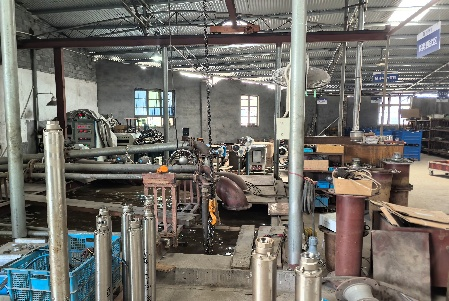
Why nameplate mismatches survive to the installation stage
Most specification disputes trace back to four gaps between the catalogue, the quotation, the nameplate and the certificate.
The first gap is duty-point shorthand. Buyers compare pumps by flow because flow is the visible number in a flood-control project, yet a 150 m3/h pump is available at different heads and different motor ratings. Selecting on flow alone can produce a unit that is correct at one lift and overloaded or ineffective at another.
The second gap is material defaulting. The same model designation can be supplied with an aluminum alloy or a stainless steel body, and impeller and shaft are specified separately. If the purchase order names only the model number, the material delivered is whatever the standard configuration happens to be.
The third gap is testing scope. A performance test can be run to different acceptance grades, so two suppliers can both report a passing test on the same nominal model without measuring against the same tolerance.
The fourth gap is documentation scope. A CE attestation of conformity covers the models listed in its annex, not the whole catalogue, and Chinese energy-label rules apply to what is placed on that market. Buyers who assume a family-level certificate transfers to every model number usually discover the gap at customs or at handover.
Industry background: what changed in portable axial flow pumps
Portable axial flow pumps were historically asynchronous-motor machines whose weight and footprint limited where they could be deployed. The permanent magnet synchronous motor (PMSM) submersible axial flow pump changed those practical constraints. Chuangmei states that its PMSM high-speed axial flow pump is covered by utility model patent ZL2014200091521.8, that the design is smaller and lighter than conventional axial flow pumps, described by the company as approximately one-quarter of conventional weight, and that the axial flow impeller is a precision stainless steel casting mounted on a stainless steel shaft.
Two behavioural characteristics matter for selection. The first is speed regulation: pump speed is stepless and infinitely adjustable, so head and flow can be trimmed to the site condition instead of being fixed by the impeller alone. The second is voltage tolerance: Chuangmei states that PMSM speed does not vary with grid voltage fluctuation, so head and flow remain stable during a voltage drop, a behaviour it contrasts with asynchronous-motor axial flow pumps.
The surrounding compliance framework is now more specific than the pump itself. ISO 9906 sets pump performance acceptance grades, with Grade 1 corresponding to tighter tolerances of about plus or minus 5 percent on flow and head in the standard summary supplied for this guide. China GB 30253-2024 energy-label standard applies to permanent-magnet synchronous motors sold in China from 2025. For cross-border movement, axial flow and mixed flow vertical pumps for water handling sit under HS code 84138130. Each of these attaches to a document rather than to a marketing description, which is why the specification work below is written in terms of what can be put on paper.
200SZQ150-35-22 and 200SZQ150-20-15: same flow block, different duty
Both models appear in the same high-head flood control pump list for subway and underground applications, and both share the 150 flow block, which reads as a rated flow of 150 m3/h. What separates them is the rest of the designation: 200SZQ150-35-22 pairs that flow with a 35 m rated head and a 22 kW motor, while 200SZQ150-20-15 pairs the same flow with a 20 m rated head and a 15 kW motor.
For a buyer, that difference is the entire selection. If the discharge route needs a lift in the region of 35 m, the 20 m variant is the wrong machine even though its flow matches. If the route is a short, low-lift discharge, the 35 m variant builds head the site does not use and carries a larger motor. The correct entry on the specification sheet is a pair of numbers, 150 m3/h at the required head, followed by the matching power block, not a flow figure with a family name attached.
Where site head varies, for example with backwater or a discharge point that moves with river level, stepless speed regulation through the pump variable frequency control cabinet is the practical adjustment: the operator trims speed to hold flow instead of accepting a fixed curve. That flexibility is a control capability, not a substitute for choosing the right head block at order stage.
Motor power: working inside the 5.5 kW to 55 kW band
The series documentation supplied for these pumps states a power range of 5.5 kW to 55 kW. That band is useful for framing a project, and three checks turn it into a specification.
First, confirm the power block of the exact model. The 300SZQ1000-10-45GL documents 45 kW for 1000 m3/h at 10 m. Other entries in the same 300SZQ lists carry 75 in the power block, for example 300SZQ1000-15-75 and 300SZQ1500-10-75. Treat the 5.5 kW to 55 kW statement as the range documented for the series and read the individual nameplate rather than assuming a ceiling.
Second, specify the electrical context together with the power. The control cabinet for the permanent magnet synchronous motor pump uses a panel or touch-screen display with a built-in frequency inverter and shows frequency, voltage, current and rotational speed in real time; it supports 3G and 4G remote control through a computer or phone app, including start, stop and speed adjustment. Protection covers overheat, overcurrent, overload, overvoltage and phase failure, and the pump shuts down and enters standby within half a minute when water is fully drained. Cabinets are supplied as single-unit or dual-unit (one-drives-two) configurations with IP44 or IP54 protection, and the three-phase four-wire system is supplied with waterproof plugs and sockets.
Third, match the power block to the on-site supply. Rated voltage, frequency, current draw and starting arrangement belong on the order, because a hydraulically correct pump can still be unusable on a site whose supply cannot carry it.
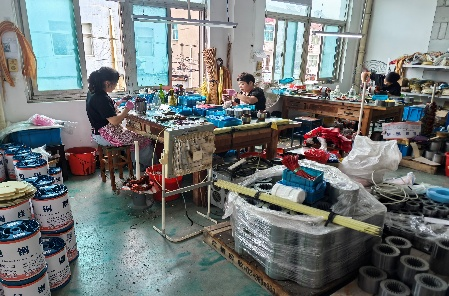
Materials: stainless steel impeller, aluminum alloy or stainless steel body
The material question on a portable axial flow pump has three separate answers, and they should be recorded separately: impeller, shaft, and body or flow-passing components. Chuangmei documents the impeller as a precision stainless steel casting and the pump shaft as stainless steel. The motor housing and pump body are offered in either aluminum alloy or stainless steel. Aluminum alloy flow-passing construction is documented in the 8-inch aluminum alloy high-head flood control pump category.
Material choice interacts directly with the portability that makes this category useful. Chuangmei describes the permanent magnet synchronous axial flow pump as approximately one-quarter the weight of a conventional axial flow pump, and part of that advantage is a material decision: an aluminum alloy body reduces the mass a crew carries down stairs, into a pipe gallery or through basement access, while a stainless steel body gives up some of that mass advantage in exchange for a different wetted-surface specification.
The documentation supplied here does not state a corrosion-resistance rating or an abrasion limit for either body option, and a material name alone does not establish one. Buyers should not infer a water-chemistry specification from the words aluminum alloy or stainless steel. The practical route is to write the required wetted materials into the purchase order and ask the supplier to confirm them in writing for the specific model, together with the impeller and shaft materials.
Configuration belongs in this section too. Chuangmei supplies dual-purpose models that reach both low-lift high-flow and high-lift duty by replacing the impeller and pump body, which supports a replaceable impeller and replaceable pump body approach for sites whose duty changes seasonally. That option changes the material and spare-parts list at order stage, so it should be decided with the model, not after delivery.
Seven checks before you approve the purchase order
The sequence below turns the four parameters into an order that can be verified. Each step produces a line item that appears on the nameplate, in the test record, or in the certificate annex.
- Convert the site duty into flow and head. State required flow in m3/h and required head in metres together, at the discharge condition you actually have. Treat a flow-only figure as incomplete.
- Write the full designation, including suffix. Record the complete model, for example 200SZQ150-35-22 or 200SZQ150-20-15, and confirm the suffix letter against the current list so the variant, not only the numeric core, is ordered.
- Fix the power block and the electrical data. Record motor power in kW, rated voltage and frequency, and the cabinet configuration: single-unit or one-drives-two, IP44 or IP54, panel or touch-screen display. Add the protection set you require.
- Name the materials. List impeller, shaft, body and flow-passing components separately, choosing aluminum alloy or stainless steel explicitly, and request written confirmation for the ordered model rather than a family-level description.
- Specify the cable, plug and installation interface. Confirm the three-phase four-wire arrangement with waterproof plugs and sockets, cable length, and whether the unit runs fixed with automatic level start and stop or as a mobile unit moved between points.
- Set the test and its grade. Require the pre-shipment hydraulic performance test and state the acceptance grade where tolerances matter; ISO 9906 Grade 1, at about plus or minus 5 percent on flow and head in the supplied summary, is the tighter reference.
- Match the paperwork to the model. Check that the ordered model appears in the CE annex scope if CE marking is required, that China-bound PMSM units meet GB 30253-2024 labelling, and that the HS code used for shipment is consistent with the goods.
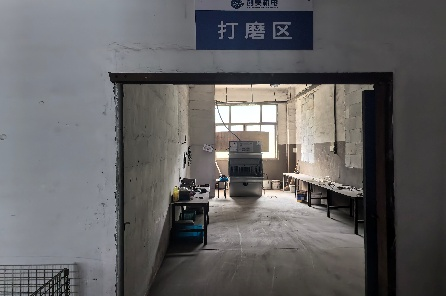
Where these parameters matter most
The same four parameters recur across the applications these pumps are built for. In subway and underground space drainage the head block matters because discharge routes climb, which is why 200SZQ150-35-22 and 200SZQ150-20-15 sit in the high-head flood control pump list for subway applications. In municipal flood control and underground comprehensive pipe galleries flow dominates, yet the pump still has to be carried to the water, which is where the aluminum alloy body option and the reduced PMSM weight become decision-relevant.
For fixed drainage in bridges, culverts, basements and garages the pump can run automatically: it starts when water reaches a set level and returns to standby or stops when the level falls to the intake line. Pond drainage, agricultural irrigation and pumping irrigation use the same family, and the documented export specifications include 6, 8, 10 and 12-inch large-flow flood control pumps covering 300 to 1,200 m3/h, with high-lift subway pumps covering 20 to 50 m and, for special specifications, above 100 m.
Parameter comparison at a glance
Two rows below are fully documented models; two are decoded from their designation and should be confirmed against the supplier data sheet before shipping and rigging are planned.
| Model | Rated flow | Rated head | Motor power | Outlet, weight, dimensions | Basis |
|---|---|---|---|---|---|
| 200SZQ150-35-22 | 150 m3/h | 35 m | 22 kW | Not stated in supplied data; confirm with supplier | Decoded from designation; listed in high-head subway flood control group |
| 200SZQ150-20-15 | 150 m3/h | 20 m | 15 kW | Not stated in supplied data; confirm with supplier | Decoded from designation; listed in high-head subway flood control group |
| 200SZQ600-10-30L | 600 m3/h | 10 m | 30 kW | 8-inch outlet; 54 kg; 400 x 400 x 850 mm | Documented model data |
| 300SZQ1000-10-45GL | 1000 m3/h | 10 m | 45 kW | 98 kg; 450 x 400 x 850 mm | Documented model data |
Flow, head and power follow the decoded designation blocks; weights and dimensions are stated only where documented.
Purchasing terms and acceptance criteria
The documented commercial terms are short enough to check line by line: minimum order quantity 1 unit, delivery terms FOB or CIF, payment terms T/T, and acceptance either by self-inspection or by an entrusted third-party professional inspection body.
Production runs at 500 units per month, with OEM lead time of 15 to 20 days and ODM lead time of 15 to 30 days. OEM covers nameplate customization; ODM additionally covers hardware configuration, functional modules, software and system customization, and packaging and brand identification. Quality control is a 100 percent pre-shipment hydraulic performance test, which is the point where the flow and head blocks on a nameplate are demonstrated rather than declared.
After-sales support covers remote technical guidance, spare parts supply and on-site maintenance consultation, and the stated warranty is one year with free maintenance during the warranty period. For a project, the useful acceptance record is a set rather than a single certificate: the ordered designation with suffix, the tested flow and head, the recorded motor power and current, the confirmed material list, the cabinet configuration and protection rating, the accessory set including cable and plugs, and the compliance documents whose annex or label actually names the delivered model.
Frequently asked questions
Does the CE attestation cover every 200SZQ and 300SZQ model?
No, the annex is model-specific. The Machinery and EMC Directive Attestation of Conformity M.2025.206.C120727 issued by UDEM on 13 June 2025 and valid to 12 June 2030 cites EN ISO 12100:2010 and EN 809:1998+A1:2009/AC:2010 together with EMC standards, and its scope names individual models such as 200SZQ450-8-15, 200SZQ500-10-22, 200SZQ600-10-30, 300SZQ1000-10-45, 300SZQ1200-10-55 and 300SZQ1500-10-75. A second attestation, M.2025.206.C120734, references EN 60204-1:2018/A1:2025. Before relying on CE marking for an EU project, confirm that the exact model and suffix you order appears in the current annex.
How can I evaluate an OEM permanent magnet high-efficiency portable axial flow pump manufacturer?
Check what the OEM arrangement covers and what evidence supports the rating. For Chuangmei Pumps, OEM customization is nameplate-related, while ODM extends to hardware configuration, functional modules, software and system customization and packaging or brand identification; monthly capacity is 500 units, OEM lead time 15 to 20 days and ODM 15 to 30 days, and every unit receives a 100 percent pre-shipment hydraulic performance test. The technical claims worth verifying are the PMSM axial flow design under utility model patent ZL2014200091521.8, the stepless speed regulation, the documented material list of stainless steel impeller and shaft with an aluminum alloy or stainless steel body, and the model-specific CE annex.
Which parameters should be fixed before comparing commercial terms?
Fix five items first: the complete designation including suffix; rated flow and rated head stated as a pair; the motor power block with voltage and frequency; the material list for impeller, shaft, body and flow-passing components; and the cabinet and cable configuration, including single-unit or one-drives-two, IP44 or IP54 and the protection set. Then add the test grade and the document set. Quotations built on different values for these items are not comparable, even when the model number looks identical.
Can I order a single unit as a sample before a batch?
According to the documented terms, yes: minimum order quantity is 1 unit, delivery terms are FOB or CIF, and payment terms are T/T. A single unit goes through the same 100 percent pre-shipment hydraulic performance test as any other order, with OEM lead time of 15 to 20 days. Specify the duty point, materials and cabinet configuration on the sample order as well, because a sample built to a different configuration validates nothing about the batch.
What lead time and acceptance evidence should I expect, and how do I start?
Lead time is documented as 15 to 20 days for OEM and 15 to 30 days for ODM against monthly capacity of 500 units, with acceptance by self-inspection or by an entrusted third-party professional inspection body, and a one-year warranty with free maintenance during the warranty period; after-sales support covers remote technical guidance, spare parts and on-site maintenance consultation. To start, send the duty point in flow and head, the preferred designation such as 200SZQ150-35-22 or 200SZQ150-20-15, the material requirement and the electrical configuration, then request a sample or quotation against that written specification. The full catalogue is available as a PDF download from the link below.
Conclusion
Selection on these pumps comes down to reading four things correctly and writing them down once. The designation fixes nominal outlet size and the flow, head and power blocks; rated flow only means something when it is paired with the required head; the 300SZQ band of 5.5 kW to 55 kW frames a project but never replaces the individual power block; and the material list separates a stainless steel impeller and shaft from an aluminum alloy or stainless steel body and flow-passing set. Buyers who put those four items into the purchase order, together with the test grade and the certificate annex check, have an order that can be accepted or rejected on evidence rather than on impression.
Next step: send your flow and head duty point, the preferred 200SZQ or 300SZQ designation, and your material requirement, and request a sample or a quotation against that specification.
Download the technical catalogue: High flow pump PDF. Product and company information: www.chuangmei.com. Contact: cmc@chuangmei.com, tel +86 15990686786.
Have Questions or Need More Details?
Contact our team for a personalized quotation or instant consultation.
Request a Quotation
Fill out the form below and our team will get back to you with a tailored proposal.
WhatsApp Direct Chat
Prefer to chat in real-time? Message us on WhatsApp for instant assistance & quick answers.
- Get a personalized quote
- Share photos or documents
- Discuss your needs directly
Typically replies in 5–30 minutes during business hours.