
High Efficiency Portable Axial Flow Pumps: Acceptance Before Commitment
The question that decides a long-term flood-control programme is rarely "which pump is strongest". It is "What are the purchasing terms and acceptance criteria?" For high efficiency portable axial flow pumps, that single question splits into two very different halves. The commercial half — minimum order quantity, delivery terms, payment method, inspection route — is short and can be confirmed in writing on day one. The technical half — model fit, flow and power data, materials, and application scope — is what actually protects a buyer who is about to place repeat orders instead of a single unit.
This FAQ follows the order in which a partner meets those checks. It uses the documented figures for the 200SZQ150-35-22, 200SZQ150-20-15, 200SZQ200-25-22 and 200SZQ200-20-18.5 models, the 300SZQ 5.5–55 kW range, and the acceptance points that can be verified against aluminum alloy flow-passing components, the axial flow impeller and the permanent magnet synchronous submersible motor.
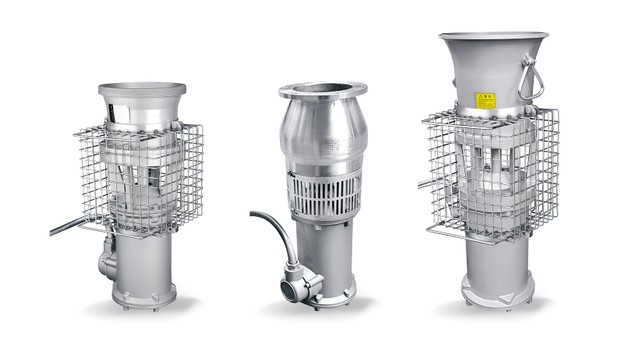
What the purchasing terms cover — and what they do not
The documented purchasing terms for these pumps are: MOQ 1 unit, delivery terms FOB or CIF, payment terms T/T, and acceptance by self-inspection or by an entrusted third-party professional organization. Those four lines are the commercial frame of the partnership.
Each line has a practical meaning for a buyer moving from Decision to Execution:
- MOQ of 1 unit removes the usual barrier between a pilot and a framework order. A flood-control operator can take one unit, run it through the acceptance sequence described below, and only then discuss repeat quantities.
- FOB or CIF shifts where responsibility for freight and insurance sits. Under FOB the buyer arranges the main carriage; under CIF the seller arranges it. The choice changes landed cost and risk transfer, not the pump itself.
- T/T is the stated payment method. Payment milestones, retentions and any inspection-linked release should be written into the agreement rather than assumed.
- Self-inspection or third-party inspection is the acceptance route. This is the line that most buyers undervalue: it determines who signs off, but it does not by itself define what is being signed off.
That gap matters. "Acceptance criteria" in a commercial document usually means the inspection arrangement. In a pump programme it must also mean the measured and material items the inspector checks. The rest of this article builds that second list.
Why the commitment gate is stricter for flood-control duty
Portable axial flow pumps in this class are not continuous-process machinery. They are standby assets that spend most of their life waiting, then run at full output during a subway intrusion, a pipe gallery washout or a municipal waterlogging event. The fixed-drainage versions are documented to start automatically when water reaches a set level and to drop into standby or shut down when the water level falls to the pump intake line. A partner is therefore buying a reliability promise that is only tested a few times a year.
Two technical facts change how that promise should be evaluated before a long-term commitment.
First, the drive technology. Chuangmei Pumps builds these units around a permanent magnet synchronous motor, covered by utility model patent ZL2014200091521.8, and states that the company has developed 20 permanent magnet synchronous motor submersible axial flow pumps. The documented behaviour that matters commercially is voltage tolerance: the motor speed does not vary with fluctuations in grid voltage, so head and flow remain stable even when voltage drops — a behaviour the company states traditional asynchronous motor axial flow pumps cannot achieve. For a site with weak or unstable supply, that is a specification to test at acceptance, not a slogan.
Second, the energy-compliance backdrop. China's GB 30253-2024 mandatory energy label standard for permanent-magnet synchronous motors applies to products sold from 2025. Buyers sourcing permanent magnet pumps from China should ask which labelling and documentation apply to the exact model and market, and keep the answer with the acceptance file.
Step 1 — Confirm model fit inside the 200SZQ and 300SZQ families
Model fit is the first technical acceptance item because it is the cheapest to correct before shipment and the most expensive to correct afterwards. The four models named in this article fall into two flow groups.
| Model | Documented rated flow | What the partner should confirm on the datasheet |
|---|---|---|
| 200SZQ150-35-22 | 150 m³/h | Rated head and motor power for this exact model; impeller and flow-passage material; control cabinet configuration |
| 200SZQ150-20-15 | 150 m³/h | Rated head and motor power for this exact model; discharge connection; duty point on the curve |
| 200SZQ200-25-22 | 200 m³/h | Rated head and motor power; cable length and outlet protection; cabinet protection rating |
| 200SZQ200-20-18.5 | 200 m³/h | Rated head and motor power; net weight and dimensions for lifting planning |
| 300SZQ series | Model-dependent | Power selection across the documented 5.5–55 kW range; net weight; fixed or mobile deployment |
The model strings are not arbitrary. Across the series the trailing numbers follow a consistent pattern that the 150SZQ models document explicitly: the 150SZQ150-20-15 is rated at 20 m head with a 15 kW motor, the 150SZQ150-35-22 at 35 m with 22 kW, and the 150SZQ100-50-22 at 50 m with 22 kW. A partner can therefore read the intended head and power directly from a 200SZQ or 300SZQ designation — but should still confirm those two figures on the datasheet for the exact model, because that is what the acceptance file will be checked against later.
Weight and size belong in the same confirmation step, since they decide how the unit is moved to a subway platform or a garage sump. Documented examples include the 150SZQ150-20-15 at 34 kg with dimensions of 280×280×580 mm, the 200SZQ300-30-37GL at 74 kg and 420×380×810 mm, and the 200SZQ400-30-55GL at 102 kg and 450×400×900 mm.
Step 2 — Confirm flow and power data before the quantity commitment
Flow and power confirmation is where a distributor's catalogue and a project's hydraulic calculation most often diverge. The documented export range for the large-flow flood-control units is 6-inch, 8-inch, 10-inch and 12-inch models with flow rates from 300 to 1,200 m³/h. The high-lift units intended for subway applications are documented at lifts of 20–50 m, with special specifications reaching over 100 m, and power from 3 kW to 200 kW for mobile irrigation and flood-control work.
Within that envelope, the practical checks are:
- Duty flow versus rated flow. The 200SZQ150 pair is rated at 150 m³/h and the 200SZQ200 pair at 200 m³/h. Confirm the site's required flow at the actual static and friction head, not at a nominal figure.
- Power headroom. The 300SZQ selection runs across a documented 5.5–55 kW range; higher-power references in the wider catalogue include the 250SZQ600-12-30 at 30 kW, the 250SZQ800-10-37 at 37 kW and the 200SZQ600-40-100 at 100 kW. Confirm the motor rating that matches the duty point rather than the largest available option.
- Weight against handling plan. The 300SZQ1000-10-45 is documented at 55 kg net and the 300SZQ1200-10-55 at 58 kg net — light enough for two-person handling with the right lifting point, but only if the plan is written before delivery.
- Verification standard. Where measured performance must be defended to an engineer or a third-party inspector, reference ISO 9906. Grade 1 tolerances of ±5% on flow and head are the benchmark used for high-precision applications, and stating the tolerance class in the purchase order prevents a dispute about whether a test result is acceptable.
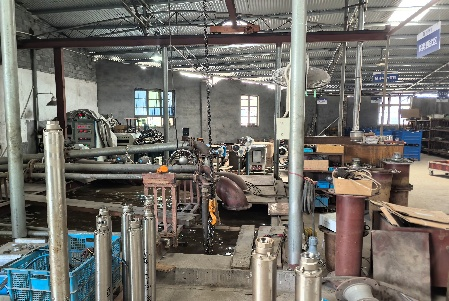
Performance verification on the comprehensive test bench — the evidence point behind any flow-and-head acceptance clause.
Step 3 — Confirm materials item by item
Material confirmation is the acceptance item most often reduced to a single adjective. For these pumps it should be four separate checks, because the documented construction separates them.
Flow-passing components. The pump body is available in aluminum alloy, which is the lighter option for portable and mobile deployment, or in stainless steel where the duty calls for it. A partner should state which one is being ordered and confirm it against the delivery documents, since a long-term agreement that says only "axial flow pump" leaves the heaviest component undefined.
The axial flow impeller. The impeller is manufactured through precision stainless steel casting — documented as a stainless steel impeller, and the component that most directly governs flow, head and wear behaviour in service.
The shaft and motor housing. The pump shaft is also stainless steel. The motor housing and pump body carry the same aluminum alloy or stainless steel choice as the flow passages, so the two selections should be made together rather than in isolation.
The cable outlet. Documented protection is a rubber sheath plus stainless steel spring guard. On portable units that are moved between sumps, this is the first point of mechanical failure if it is under-specified, so it belongs on the acceptance sheet.
A further material-adjacent point strengthens the long-term case: the company offers dual-purpose pumps that achieve both low-lift high-flow and high-lift operation through simple replacement of the impeller and pump body. A replaceable impeller and replaceable pump body mean a partner can extend a fleet's operating range without replacing the motor, cabinet or cable assembly.
Step 4 — Confirm application scope against the real site
Scope confirmation is where a technically correct pump can still be the wrong purchase. The documented intended uses for these units are:
- Subway flood emergency drainage — served by the high-lift range documented at 20–50 m, with special specifications over 100 m.
- Underground space drainage — portable deployment where fixed infrastructure is impractical.
- Municipal flood control — the large-flow 6- to 12-inch models covering 300–1,200 m³/h.
- Pipe galleries — confined-space drainage where compact size and low weight govern access.
- Fixed drainage in bridges, culverts, basements and garages — the flood-prevention units designed for these locations, with automatic start at a set water level and automatic standby or shutdown at the intake line.
The scope check should also record the environment. Dust, particles and high ambient temperature are the documented environmental risks for this equipment class, and the company's countermeasure is an intelligent monitoring system rather than a single mechanical safeguard. For a partner planning a multi-year deployment, that means the monitoring and protection functions in the control cabinet are part of the acceptance scope, not an optional extra.
The acceptance sequence, step by step
Put together, the acceptance route for a first or framework order runs in this order. Each step produces a document, and the document is what makes the next order repeatable.
- Written order definition. Model designation, flow, rated head, motor power, body and flow-passage material, cabinet configuration, cable length, and the tolerance class for any performance test.
- Datasheet reconciliation. The supplier's datasheet is checked line by line against the order. For the four named models, rated flow is fixed at 150 m³/h for the 200SZQ150 pair and 200 m³/h for the 200SZQ200 pair; head and power are then confirmed for the exact model.
- Material verification. Aluminum alloy or stainless steel flow passages, precision-cast stainless steel impeller, stainless steel shaft, and the rubber sheath plus stainless steel spring guard at the cable outlet.
- Performance verification. Bench testing of flow and head against the declared duty point, referenced to ISO 9906 where a tolerance class has been specified in the order.
- Motor and cabinet verification. Permanent magnet synchronous motor identity, built-in frequency inverter, real-time display of frequency, voltage, current and rotational speed, and the documented protection set: overheat, overcurrent, overload, overvoltage and phase failure.
- Safety-function verification. Dry-run behaviour is documented as automatic shutdown within half a minute when water is completely drained, followed by standby — a function that can be demonstrated, not merely asserted.
- Inspection route. Self-inspection or an entrusted third-party professional organization, as stated in the purchasing terms. Whichever route is chosen, the checklist above is the content of the inspection.
- Packing and dispatch check. Quantities, accessories, cabinet units and documentation confirmed before the shipment leaves under FOB or CIF terms.
- On-site commissioning record. Installation position, intake clearance, automatic start level, shutdown level, and the remote monitoring connection if the cabinet is configured for it.
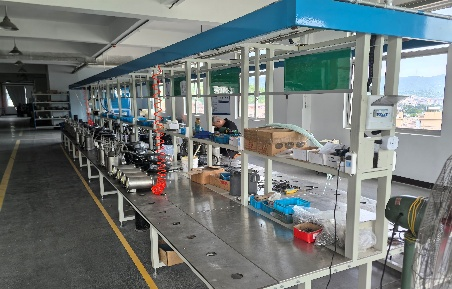
Assembly before acceptance: the impeller, shaft and motor are matched to the model designation at this stage.
Purchasing terms at a glance
For a partner who needs the commercial frame on one page, the documented terms reduce to four lines. Everything beyond them — delivery schedule, packing specification, warranty scope, spare-parts commitment — belongs in the written agreement.
| Term | Documented position | What to write into the agreement |
|---|---|---|
| Minimum order quantity | 1 unit | Whether the pilot unit's test results carry over to subsequent batches |
| Delivery terms | FOB / CIF | Which party arranges carriage and insurance; port and packing requirements |
| Payment terms | T/T | Milestones, and whether a portion is linked to successful acceptance |
| Acceptance criteria | Self-inspection or entrusted third-party inspection | The technical checklist that the inspection verifies, plus the tolerance class for flow and head |
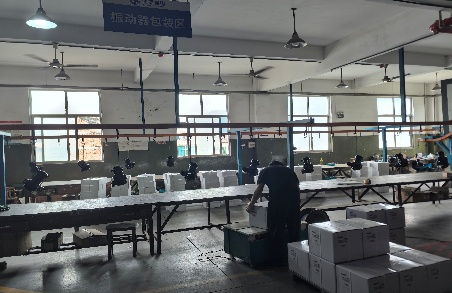
Packing and dispatch under FOB or CIF terms — the final physical checkpoint before handover.
Long-term supply and support: what a partner can actually verify
A partnership claim is only useful if it can be checked. Several elements of the long-term relationship are documented and verifiable rather than promotional.
The manufacturer behind the product. Zhejiang Chuangmei Electromechanical Co., Ltd. was founded in 1996 and operates a 12,000 m² facility with 46 employees, an annual output of 30,000 units and a three-engineer R&D team. Export accounts for 25% of output, with documented markets in Southeast Asia, Africa, Morocco and Central Asian countries. For a distributor, that export share is a reasonable proxy for experience with documentation, packing and cross-border inspection — three things that decide whether an acceptance file survives a customs or project audit.
Fleet monitoring. The control cabinet uses a panel display or touch screen with a built-in frequency inverter, showing frequency, voltage, current and rotational speed in real time. Remote control through 3G and 4G mobile networks supports remote data transmission, remote start/stop and remote adjustment of operating speed from a computer or phone app. Time-segmented operation is supported. Cabinets are available in single-unit or dual-unit (one-drives-two) configuration, with protection ratings of IP44 or IP54, and the three-phase four-wire system is supplied with waterproof plugs and sockets. For a partner operating pumps across several sites, remote visibility is the difference between reactive call-outs and planned maintenance.
Speed and head flexibility. Stepless speed regulation means head and flow are adjustable within the unit's capability rather than fixed by the impeller alone, and the compact, low-weight construction is documented at roughly one-quarter the weight of conventional axial flow pumps. Combined with replaceable impeller and pump body options, this is what allows one platform to serve both a low-lift high-flow sump and a higher-lift application.
Warranty and maintenance. The company documents a one-year warranty with free maintenance during the warranty period. That is the only warranty position stated in the source material; extended cover, wear-part treatment and response times for a long-term agreement should be negotiated and written into the contract rather than inferred from the product literature.
Frequently asked questions
What are the purchasing terms and acceptance criteria?
The documented purchasing terms are a minimum order quantity of 1 unit, delivery terms FOB or CIF, and payment terms T/T. The documented acceptance route is self-inspection or inspection by an entrusted third-party professional organization. Because the commercial wording covers who inspects rather than what is inspected, the technical criteria should be attached to the order: model designation, rated flow and head, motor power, flow-passage and body material, impeller material, cable outlet protection, cabinet configuration and protection rating, and the tolerance class applied to any performance test.
How do we confirm model fit before a long-term supply commitment?
Start from the documented flow group. The 200SZQ150-35-22 and 200SZQ150-20-15 are both rated at 150 m³/h; the 200SZQ200-25-22 and 200SZQ200-20-18.5 are both rated at 200 m³/h. The model designation then indicates the intended head and motor power, following the pattern the 150SZQ models document explicitly — 150SZQ150-20-15 at 20 m and 15 kW, 150SZQ150-35-22 at 35 m and 22 kW, 150SZQ100-50-22 at 50 m and 22 kW. Confirm those two figures on the datasheet for the exact 200SZQ model, check weight and dimensions against your lifting and access plan, and only then set quantities. For the 300SZQ series, select power within the documented 5.5–55 kW range against the actual duty point.
Which materials and components should be checked at acceptance?
Check four items separately. First, the flow-passing components and pump body: aluminum alloy as the lighter option, or stainless steel where specified. Second, the axial flow impeller, manufactured through precision stainless steel casting. Third, the pump shaft, also stainless steel. Fourth, the cable outlet, protected with a rubber sheath plus stainless steel spring guard. Where the order includes replaceable impeller and pump body options for dual-purpose low-lift and high-lift operation, confirm that the spare components match the delivered motor and cabinet.
Can we test a unit or inspect a sample before placing framework orders?
Yes — the documented minimum order quantity is 1 unit, so a single unit can serve as the pilot for a larger programme. Put the pilot through the full acceptance sequence: datasheet reconciliation, material verification, bench testing of flow and head against the declared duty point, motor and cabinet verification, and the dry-run shutdown check, which is documented as automatic shutdown within half a minute when water is completely drained before the unit enters standby. Performance can be referenced to ISO 9906 with Grade 1 tolerances of ±5% on flow and head where that class is written into the order. The inspection itself may be self-inspection or carried out by an entrusted third-party organization.
What does long-term support look like after acceptance?
Support is built into the control architecture. The cabinet has a built-in frequency inverter with real-time display of frequency, voltage, current and rotational speed, remote control and data transmission over 3G and 4G networks, time-segmented operation, and protection against overheat, overcurrent, overload, overvoltage and phase failure. Cabinets are available in single-unit or one-drives-two configuration at IP44 or IP54. The company documents a one-year warranty with free maintenance during the warranty period; anything beyond that scope should be specified contractually. Spare-impeller and replacement pump-body availability is the other support item worth fixing in writing, since it determines how a fleet's operating range can be extended later.
How do we start a long-term high-efficiency portable axial flow pump supplier relationship?
Begin with one unit against the documented MOQ of 1, run the acceptance sequence above, and keep the resulting file as the reference standard for every later batch. The full model range, flow and head data and construction details are set out in the high flow pump catalogue, which can be downloaded and shared with project engineers before the first order. For specific model fit, material selection or acceptance documentation, contact the Chuangmei Pumps team at cmc@chuangmei.com or +86 15990686786 and send the duty requirements for a written match.
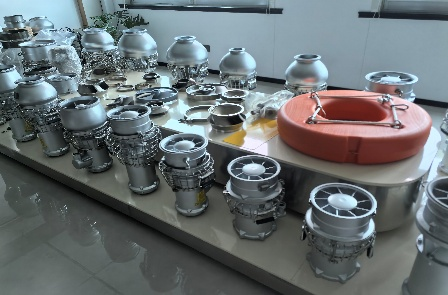
Reviewing models before commitment — the pilot unit is the sample, and its acceptance file becomes the standard.
Conclusion: acceptance is the partnership document
The purchasing terms for high efficiency portable axial flow pumps are simple enough to agree in a single exchange: MOQ of 1 unit, FOB or CIF delivery, T/T payment, and acceptance by self-inspection or an entrusted third party. The acceptance criteria are where the real work sits, and they should be settled before any quantity commitment rather than after the first shipment.
For the 200SZQ150-35-22, 200SZQ150-20-15, 200SZQ200-25-22 and 200SZQ200-20-18.5, that means confirming rated flow, then head and motor power, then weight and access dimensions. For the 300SZQ series, it means selecting power within the documented 5.5–55 kW range against the actual duty point. Across both families it means recording aluminum alloy or stainless steel flow passages, the precision-cast stainless steel impeller, the stainless steel shaft and the protected cable outlet, and matching the unit to a documented application — subway flood emergency drainage, underground space drainage, municipal flood control, pipe galleries, or fixed drainage in bridges, culverts, basements and garages.
A partner who writes those items into the first order, and keeps the test and inspection records that follow, has something more useful than a supplier contact. They have a repeatable acceptance standard that every later batch is measured against — which is the practical definition of long-term supply.
Have Questions or Need More Details?
Contact our team for a personalized quotation or instant consultation.
Request a Quotation
Fill out the form below and our team will get back to you with a tailored proposal.
WhatsApp Direct Chat
Prefer to chat in real-time? Message us on WhatsApp for instant assistance & quick answers.
- Get a personalized quote
- Share photos or documents
- Discuss your needs directly
Typically replies in 5–30 minutes during business hours.