
Top Picks: High Efficiency Portable Axial Flow Pumps for Subway and Basement Flood Control
Five portable axial flow pump configurations from Chuangmei Pumps stand out for subway and basement flood control. Ranked by head-to-handling fit they are: 200SZQ150-35-22, 200SZQ200-25-22, 200SZQ200-20-18.5, 200SZQ150-20-15, and 300SZQ1000-10-45. The first four are 8-inch aluminium alloy high head flood control pumps built for subway and underground space drainage. The fifth is a 12-inch large flow unit that sits inside the 5.5 kW to 55 kW power band of the 300SZQ series and works as a bulk-transfer stage rather than a lift pump.
The ranking is a configuration shortlist, not a brand contest. Each position is justified by rated head, rated flow, flow-passing material, unit weight and envelope, and how those four factors behave inside a station sump, a pipe gallery shaft, or a basement plant room where a two-person crew has to carry the pump in and get it running fast.
Problem Definition: Flood Control in Subways and Basements Is a Lift-and-Access Problem
Water in a subway sump or a basement pit rarely sits next to the discharge point. It collects at the lowest level of a station box, a pipe gallery chamber, a garage ramp, or a culvert underpass, while the outlet is at street level or above. The pump therefore has to do two jobs at once: overcome the static lift plus hose friction, and move enough volume to drop the level faster than the inflow.
That balance is what separates a usable flood control pump from a specification that looks acceptable on paper. Rated head decides whether water actually reaches the outlet. Rated flow decides how long the crew stands in water. Push head too low and the pump recirculates or stalls short of the discharge point; push flow too low and the level keeps rising.
Three further constraints define this duty:
- Access. Equipment is carried down stairs, through manholes and narrow plant-room doors. The 8-inch group in this shortlist measures 280 x 280 x 580 mm and weighs 26 kg to 29 kg, which is a two-person carry rather than a crane job.
- Power. Station low-voltage supplies, temporary distribution boards and portable generators limit how much motor the site can start. Motor rating and control method matter as much as hydraulic performance.
- Duty cycle. Emergency drainage is intermittent and level-driven, not continuous process duty. Automatic start and stop at set water levels, and safe shutdown when the sump runs dry, protect both the pump and the crew.
Industry Background: Efficiency and Verification Rules Are Tightening
The category is large and still expanding. Market research published by First Mover projects the global axial flow pump market at approximately USD 4.49 billion by 2026, which reflects sustained municipal and underground-infrastructure spending rather than one-off demand.
Efficiency claims are also being pulled into regulation. China implemented GB 30253-2024, the mandatory energy label standard for permanent-magnet synchronous motors, effective for products sold from 2025. For buyers, that means motor efficiency is no longer only a datasheet talking point in the Chinese market; it is a labelled attribute.
Verification standards matter on the hydraulic side. Axial flow pump efficiency is tested under ISO 9906, where Grade 1 tolerances of plus or minus 5 percent on flow and head are required for high-precision OEM applications. A rated point quoted without a tolerance class is only half a specification.
Two further reference points help procurement teams frame the category. Axial flow and mixed flow vertical pumps primarily for water handling are classified under HS Code 84138130, which is the code that usually appears on import documentation for this equipment. And industrial catalogues commonly cite a 5.5 kW to 400 kW power range for portable axial flow pumps; Chuangmei Pumps describes its permanent magnet large-flow flood control family as spanning 5.5 kW to 55 kW, with the 300SZQ series sitting inside that band.
Detailed Solution: How This Shortlist Was Judged
All five configurations come from Chuangmei Pumps, the brand of Zhejiang Chuangmei Electromechanical Co., Ltd., a pump manufacturer founded in 1996 and operating a 12,000 square metre facility in Ta'ao Industrial Zone, Wenling City, Zhejiang Province. The company produces 30,000 units a year with a three-engineer R&D team and exports about 25 percent of output to Southeast Asia, Africa, Morocco and Central Asian countries.
Four criteria decided the order:
- Rated head against realistic discharge lifts. Chuangmei specifies high-lift subway flood control pumps in a 20 m to 50 m head band, with special specifications reaching beyond 100 m. Configurations that land inside the lower half of that band rank higher for station work, because they deliver the lift without oversizing the motor.
- Rated flow against sump volume. Once head is satisfied, extra flow shortens drawdown time. The trade-off is that flow and head move in opposite directions on the same power rating.
- Flow-passing material and unit weight. The 8-inch aluminium alloy group uses aluminium alloy flow-passing components to keep a 22 kW unit at 29 kg. The large-flow 300SZQ unit uses a cast iron pump body with a stainless steel impeller, which adds mass but suits high-volume transfer.
- Motor and control fit. The pump family is driven by permanent magnet synchronous submersible motors with axial flow impellers. Chuangmei states that pump speed is infinitely adjustable, giving adjustable head and variable flow, and that motor speed does not drift with grid voltage fluctuations, so head and flow hold steady when supply voltage sags — a behaviour it notes traditional asynchronous motor axial flow pumps cannot match.
The control cabinet completes the configuration. It is available with panel or touch screen display, carries a built-in frequency inverter, and shows frequency, voltage, current and rotational speed in real time. Remote start and stop, remote speed adjustment and data transmission over 3G and 4G networks are supported from a computer or phone app. Protection covers overheat, overcurrent, overload, overvoltage and phase failure, and the pump shuts down within half a minute once water is fully drained, then enters standby. Cabinets are supplied in single-unit or one-drives-two configuration at IP44 or IP54, with a three-phase four-wire arrangement and waterproof plugs and sockets.
The Top Picks, Ranked
The ranking assumes a two-person response crew, a target flow of roughly 150 m3/h to 200 m3/h, and discharge lifts between 15 m and 40 m — the working envelope of most subway station sumps, entrance structures and basement pits.
RANK 1 200SZQ150-35-22 — Best overall for deep subway sumps
- Rated flow: 150 m3/h | Rated head: 35 m | Motor power: 22 kW
- Net weight: 29 kg | Dimensions: 280 x 280 x 580 mm
- Flow-passing components: aluminium alloy | Outlet class: 8 inch
Why it leads: 35 m is the highest rated head among the shortlisted 8-inch configurations and sits squarely inside the 20 m to 50 m band Chuangmei specifies for subway flood control. A station sump that sits two or three levels below the discharge point, or a hose route that climbs stairs before reaching the outlet, is exactly where this head margin earns its place. Rated flow of 150 m3/h is moderate, but a pump that reaches the outlet is more useful than a higher-flow unit that does not. At 29 kg and 22 kW it remains a two-person carry on a standard low-voltage supply.
RANK 2 200SZQ200-25-22 — Best volume-to-lift balance
- Rated flow: 200 m3/h | Rated head: 25 m | Motor power: 22 kW
- Net weight: 29 kg | Dimensions: 280 x 280 x 580 mm
- Flow-passing components: aluminium alloy | Outlet class: 8 inch
Why it sits second: this configuration keeps the same 22 kW motor and the same 29 kg unit weight as Rank 1, adds roughly one-third more rated flow, and gives up 10 m of head to get there. In a station box, a basement garage or a pipe gallery chamber where the discharge point is closer, that exchange is worth making, because drawdown time falls in proportion to flow. It ranks second rather than first only because head is the harder constraint to recover on site — you can wait longer for a level to drop, but you cannot negotiate with a lift that is 10 m too high.
RANK 3 200SZQ200-20-18.5 — Best when generator capacity is tight
- Rated flow: 200 m3/h | Rated head: 20 m | Motor power: 18.5 kW
- Net weight: 27 kg | Dimensions: 280 x 280 x 580 mm
- Flow-passing components: aluminium alloy | Outlet class: 8 inch
Why it sits third: it holds the 200 m3/h flow of Rank 2 while dropping to an 18.5 kW motor and 27 kg, the lightest unit at that flow in the shortlist. For a basement plant room fed from a small portable generator, or a site where starting current has already tripped other equipment, the lower motor rating is the deciding feature. The 5 m head reduction is the cost, so it suits pits with a moderate lift rather than the deepest sumps.
RANK 4 200SZQ150-20-15 — Best light-duty entry configuration
- Rated flow: 150 m3/h | Rated head: 20 m | Motor power: 15 kW
- Net weight: 26 kg | Dimensions: 280 x 280 x 580 mm
- Flow-passing components: aluminium alloy | Outlet class: 8 inch
Why it sits fourth: the 15 kW motor and 26 kg net weight make this the easiest unit in the group to move and the easiest to power. It is the right first pump for basement garages, ramp pits and shallow underpasses where the lift stays near 20 m and the inflow is modest. It ranks below the three higher-head or higher-flow units because the head ceiling limits where it can be redeployed, and a flood response fleet usually wants head margin in reserve.
RANK 5 300SZQ1000-10-45 — Best bulk-transfer stage for large volumes
- Rated flow: 1000 m3/h | Rated head: 10 m | Motor power: 45 kW
- Net weight: 55 kg | Dimensions: 350 x 350 x 605 mm
- Material: cast iron pump body with stainless steel impeller | 12-inch large flow class
Why it closes the list: this unit moves five times the flow of Rank 2 at a fraction of the head, and its 45 kW rating places it inside the 5.5 kW to 55 kW band that defines the 300SZQ series. It is not a substitute for a high-head pump. It is the second stage of a two-pump plan: hold the lift with an 8-inch high head unit, then use the 300SZQ1000-10-45 to strip standing water out of a large portal, tunnel section or deep basement once the level is low enough for a short, high-volume transfer. The stainless steel impeller and cast iron body suit sustained debris-laden duty; the 55 kg weight means it is positioned, not carried.
Step-by-Step Breakdown: Specifying a Pump for a Station or Basement
- Measure the real static lift. Take the vertical distance from the lowest water level to the discharge outlet, then add the height of any hose rise over a parapet or through a wall penetration.
- Estimate inflow and target drawdown. Convert the acceptable drawdown time into a required flow. This number, not the pump catalogue headline, sets the flow floor.
- Add hose friction losses. Long horizontal runs reduce available pressure at the outlet. Where the run is very long, Chuangmei supplies a boost pump installed in the hose line with quick-plug inlet and outlet connections to restore pressure.
- Match to a rated point with tolerance in mind. Compare the selected configuration against ISO 9906 Grade 1 tolerances of plus or minus 5 percent on flow and head, so site performance is judged against the correct acceptance band.
- Choose the flow-passing material against handling reality. Aluminium alloy flow-passing components keep the 8-inch units at 26 kg to 29 kg; the stainless steel impeller with cast iron body on the 300SZQ unit favours high-volume, debris-laden duty.
- Check the handling route. Confirm that 280 x 280 x 580 mm or 350 x 350 x 605 mm will pass the door, hatch or stairwell before the pump arrives on site.
- Size the supply and the control cabinet. Select single-unit or one-drives-two cabinet configuration, panel or touch screen display, IP44 or IP54 protection, and confirm the remote 3G/4G monitoring option if the pump sits in an unmanned chamber.
- Set the automatic operating logic. Fixed drainage installations in bridges, culverts, basements and garages can start automatically when water reaches a set level and shut down when the level falls to the pump intake line; the pump also enters standby automatically after a dry-run shutdown within half a minute.
- Package the set, not just the pump. A complete deployment pairs the pump with a control cabinet, cable, hose and filter screen; Chuangmei also supplies the CMFD01 flood prevention unit, which integrates a permanent magnet flood prevention pump, electrical cabinet, float body, outlet connector and hose in one stainless steel box measuring 1000 x 800 x 1250 mm at 200 kg net weight.
Use Cases: Where Each Configuration Fits
- Subway station sump and entrance structures. Rank 1 is the default because 35 m of head covers the vertical run from a low sump to street level. Where the discharge point is higher still, the wider high head family extends to 45 m and 50 m rated head in the same 8-inch aluminium alloy format.
- Underground comprehensive pipe gallery. Rank 2 or Rank 3, depending on chamber depth. Both deliver 200 m3/h, so a gallery chamber drains quickly, and both fit a 280 mm footprint through a standard access opening.
- Basement garage and plant room fixed drainage. Rank 4 with automatic level-triggered start and stop; the 15 kW motor is the easiest to support from a building's temporary supply.
- Large portal, tunnel low point or deep basement void. Rank 5 as a second stage, after a high head unit has established the discharge path.
- Municipal flood control deployment. The 8-inch units can be moved by vehicle and carried to the water; the same family is used for mobile irrigation and flood prevention duties alongside fixed installation work.
Comparison Table: Five Configurations Side by Side
| Rank | Model | Rated flow | Rated head | Motor power | Net weight | Dimensions (mm) | Flow-passing material | Best duty |
|---|---|---|---|---|---|---|---|---|
| 1 | 200SZQ150-35-22 | 150 m3/h | 35 m | 22 kW | 29 kg | 280 x 280 x 580 | Aluminium alloy | Deep subway sumps, long vertical discharge |
| 2 | 200SZQ200-25-22 | 200 m3/h | 25 m | 22 kW | 29 kg | 280 x 280 x 580 | Aluminium alloy | Station boxes, pipe gallery chambers |
| 3 | 200SZQ200-20-18.5 | 200 m3/h | 20 m | 18.5 kW | 27 kg | 280 x 280 x 580 | Aluminium alloy | Limited generator capacity |
| 4 | 200SZQ150-20-15 | 150 m3/h | 20 m | 15 kW | 26 kg | 280 x 280 x 580 | Aluminium alloy | Basement garages, shallow pits |
| 5 | 300SZQ1000-10-45 | 1000 m3/h | 10 m | 45 kW | 55 kg | 350 x 350 x 605 | Cast iron body, stainless steel impeller | Bulk transfer after lift is established |
Note on selection logic: head and flow trade against each other on a fixed power rating. Moving from Rank 1 to Rank 2 buys one-third more flow at the cost of 10 m of head on the same 22 kW motor. Confirm the actual lift before choosing, and treat the rated point as subject to ISO 9906 Grade 1 tolerance.
Frequently Asked Questions
Which standards apply when verifying a portable axial flow pump for a subway project?
Three references are useful. Hydraulic performance is tested under ISO 9906, where Grade 1 tolerances of plus or minus 5 percent on flow and head apply to high-precision requirements. In China, GB 30253-2024 is the mandatory energy label standard for permanent-magnet synchronous motors, effective for products sold from 2025. For customs and trade documentation, axial flow and mixed flow vertical pumps primarily for water handling fall under HS Code 84138130. Project-specific documentation should still be checked against the tender specification.
Who manufactures high efficiency portable axial flow pumps, and what stands behind the configurations in this list?
The five configurations are produced by Chuangmei Pumps, the brand of Zhejiang Chuangmei Electromechanical Co., Ltd., founded in 1996 with a 12,000 square metre facility in Wenling City, Zhejiang Province. The company runs a three-engineer R&D team, produces 30,000 units a year, and exports about 25 percent of output to Southeast Asia, Africa, Morocco and Central Asian countries. Its permanent magnet synchronous motor high-speed axial flow pump is covered by patent ZL2014200091521.8, the company holds national first-class energy conservation certification for high-tech energy-saving products, and it has developed 20 permanent magnet synchronous motor submersible axial flow pumps.
What drives the cost of these pump configurations?
Four variables dominate. Motor power sets the largest share, which is why an 18.5 kW unit and a 45 kW unit sit in different commercial brackets even when the hydraulic body is similar. Head class matters next, because higher rated head requires a different hydraulic design on the same frame. Flow-passing material is the third driver: aluminium alloy flow-passing components versus a stainless steel impeller with cast iron body. Finally, the control cabinet configuration — single-unit or one-drives-two, panel or touch screen display, with or without remote 3G/4G monitoring — changes the delivered scope. Commercial terms are quoted per configuration rather than per catalogue line.
Can a sample be validated before a fleet order is placed?
Yes. Chuangmei Pumps maintains a sample show room and a water pump comprehensive performance test bench for verification work, and supplies pumps with a one-year warranty including free maintenance during the warranty period. Buyers evaluating a subway or basement drainage fleet can request a sample unit in the target configuration, confirm head and flow behaviour on the test bench, and then standardise the fleet. Sample requests, quotations and configuration questions go to cmc@chuangmei.com or +86 15990686786.
How is production and delivery organised for multi-unit orders?
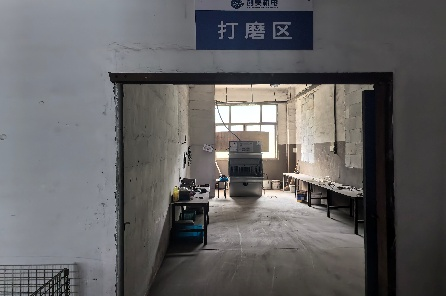
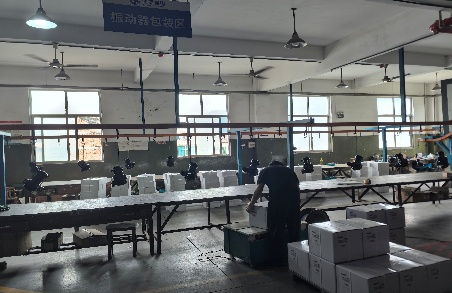
Production planning runs through MES and Kanban management on the assembly line, with a finished products dispatch area and a dedicated packing line supporting shipment. With 30,000 units of annual output capacity, multi-unit orders are scheduled against the confirmed configuration list — model mix, cabinet type and accessory set — so that delivery timing is quoted per order rather than assumed from a catalogue lead time.
Request a Configuration Review, Sample or Quotation
Send the sump depth, discharge height, target drawdown time and available power supply, and Chuangmei Pumps will match the requirement against the 200SZQ and 300SZQ ranges and return a configuration recommendation.
Email: cmc@chuangmei.com | Tel: +86 15990686786 | WhatsApp: +8615990686786
Website: www.chuangmei.com | Blog: blog.fdppump.com
Address: Ta'ao Industrial Zone, Wenling City, Zhejiang Province, China 317522
Product catalogue for download: High flow pump catalogue (PDF)
Conclusion: Choose Head First, Then Flow, Then Weight
For subway and basement flood control, the sequence of decisions is fixed. Rated head decides whether the pump can deliver water to the outlet at all. Rated flow decides how fast the level falls once it can. Unit weight and envelope decide whether the crew can get the pump to the water without equipment that the site does not have.
On that logic, the 200SZQ150-35-22 leads this shortlist: 150 m3/h at 35 m of head in a 29 kg, 22 kW, 280 x 280 x 580 mm package with aluminium alloy flow-passing components. The 200SZQ200-25-22 follows for sites that can trade head for volume, the 200SZQ200-20-18.5 covers power-constrained sites, and the 200SZQ150-20-15 is the light-duty entry point. The 300SZQ1000-10-45 closes the list as a 1000 m3/h second stage inside the 5.5 kW to 55 kW band of the 300SZQ series.
The final check is not a catalogue comparison but a site one: measure the lift, count the crew, confirm the supply, and then fix the configuration.
Have Questions or Need More Details?
Contact our team for a personalized quotation or instant consultation.
Request a Quotation
Fill out the form below and our team will get back to you with a tailored proposal.
WhatsApp Direct Chat
Prefer to chat in real-time? Message us on WhatsApp for instant assistance & quick answers.
- Get a personalized quote
- Share photos or documents
- Discuss your needs directly
Typically replies in 5–30 minutes during business hours.