Auditing an Automotive Wire Harness Connector Supplier: Capability, Approval, Delivery
An automotive wire harness connector supplier audit should be built around three evidence gates: capability, approval and delivery. Capability asks whether the supplier can make the exact part to the approved drawing. Approval asks whether the quality system and part-specific evidence meet the purchasing specification. Delivery asks whether the commercial terms, inspection plan and pre-shipment controls protect the order after approval. A supplier that passes one gate does not automatically pass the other two.
This audit path is written for OEM buyers who are moving from evaluation into execution. It uses Zhejiang Daou Electronics Co., Ltd. (CNDO), a Chinese manufacturer of automotive wire harnesses, battery terminals and automotive fuse boxes, as a working example of how supplied evidence should be read. The same discipline applies to any Automotive Wire Harness Connector supplier: separate the brochure claim from the approved drawing, the certificate from the part approval, and the quotation from the delivery control.
Problem definition: why a brochure is not an audit file
The common failure in connector sourcing is not a missing catalogue. It is a missing link between the catalogue, the drawing and the purchase order. A supplier may state that it offers OEM production, waterproof grades, terminal current options and multiple pin counts. Those statements describe a capability range. They do not prove that a specific housing, bracket or fuse box will meet the drawing, the protection-level claim and the acceptance test for a named program.
Take three part examples from the supplied material. Housing DOH0001-1 appears in the case record. If its approved drawing or RFQ calls it an IP67 housing, the audit file must contain the part-specific sealing drawing, the IP67 test method and the test report for that housing and sealing configuration. The certificate record lists support bracket DOCB24001, fuse boxes DOBXS4-1A and DOBXS5-1F, battery terminals DOBP22001 and DOBN22006-D5, terminal DOE24022 and three-way conduit connector D520023 among related products. For DOCB24001, if the specification requires UL94 V-0 or V-2, the audit file must show the exact rating for the material and part revision. For DOBXS4-1A and DOBXS5-1F, the audit must connect the IATF 16949 certificate scope and manufacturing site to those fuse-box part numbers. The record is a starting point; it is not a product approval by itself.
This distinction matters because automotive connectors sit at the boundary between electrical performance, mechanical retention and environmental protection. A loose terminal, a deformed housing or a fuse-box interface that does not match the vehicle harness can create rework, line stoppage or a field return. The audit should therefore test the supplier's evidence chain, not just its product list.
Industry background: why connector audits are becoming more specific
The commercial context supports a more disciplined audit. Global Market Insights Inc. reports that the global automotive wiring harness market was valued at USD 71.2 billion in 2025 and is projected to reach USD 74.7 billion in 2026. The same research places Asia Pacific at 47.1 percent of 2025 revenue. SNS Insider reports the automotive high-voltage connector market at USD 4.99 billion in 2026. These figures describe market scale, not supplier quality, but they explain why buyers face more product variants, more material options and more approval documents than a simple catalogue review can handle.
For EU-bound programs, material compliance adds another layer. ACEA's Automotive Industry REACH Guide, AIG 4.0, is a relevant reference for automotive chemical compliance. A connector audit should therefore include the substance declaration, material record and customer-specific compliance requirement for the exact part. A quality-system certificate does not replace a REACH declaration, and a REACH declaration does not replace a dimensional or electrical approval.
The three-gate audit model: capability, approval, delivery
The three-gate model keeps the audit focused. Gate one produces a capability file for the exact part. Gate two produces an approval file for the quality system and the product-specific claims. Gate three produces a delivery file for the purchase order, inspection and shipment release. Each gate should have an owner, a document list and a clear release decision.
Gate 1: capability is product-specific, not company-wide
Capability should be proven at the level of the part number, drawing revision and application. For CNDO, the supplied capability record lists OEM production and customization options including housing color, logo printing, terminal current specification, wire gauge matching, waterproof grade, pin count, packaging solution and EV high voltage insulation structure. It also lists a monthly capacity of 750,000 units, a lead time of 7-15 days and a MOQ of 2 units. These are useful planning data points. They do not remove the need to confirm that the exact part can be produced, inspected and packed to the approved specification.
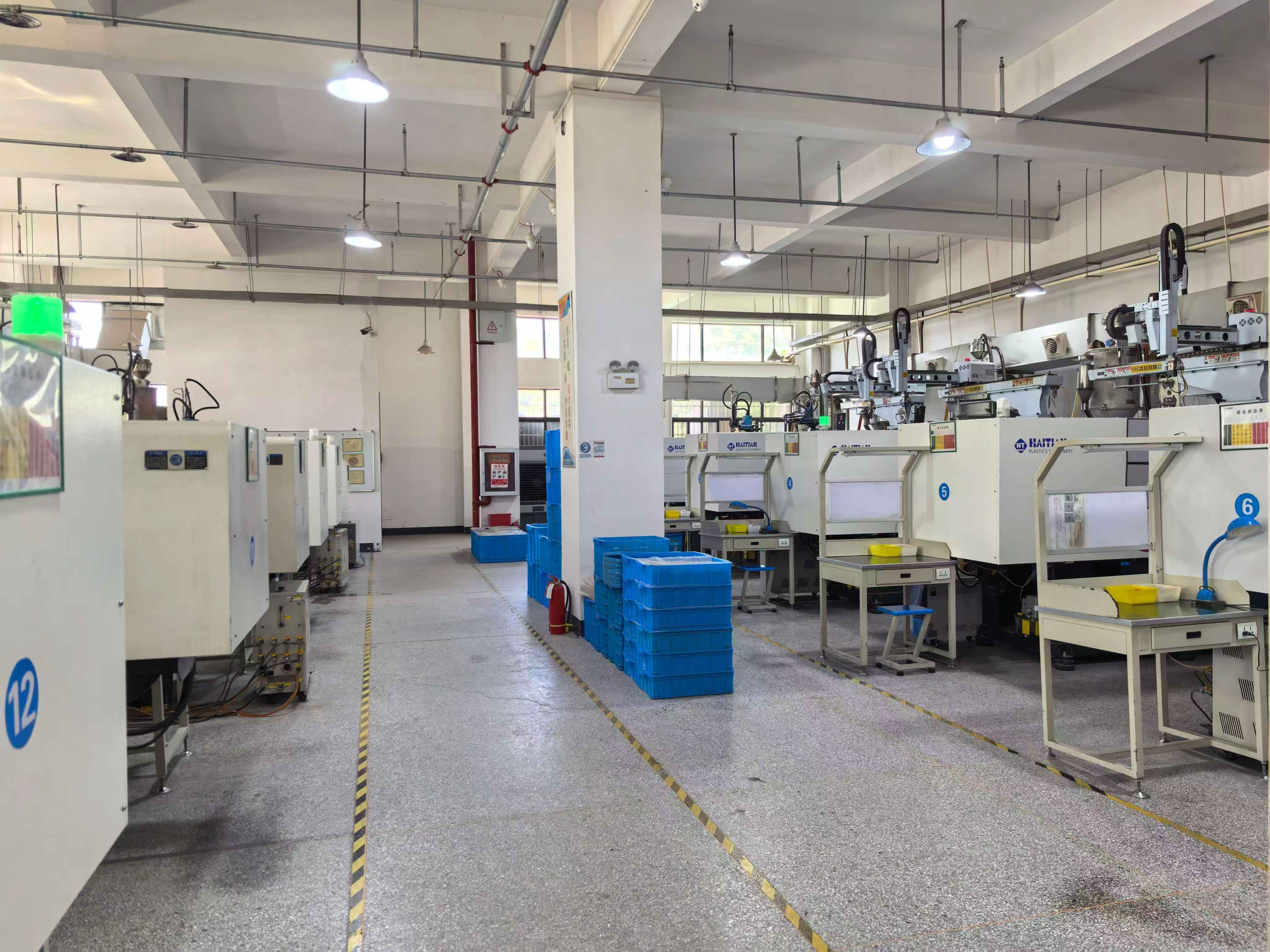
The company-reported profile lists a 6,000 square metre facility, 125 employees, 25 R&D engineers and an annual output of 9,000,000 units, with approximately 50 percent exported to the United States and the European Union. These figures are company-reported and should be treated as audit leads. A buyer should ask for the current capacity allocation by product family, the equipment list for the relevant process, the inspection plan and the production record for the quoted part. The supplied case record describes an eight-year automotive OEM relationship and a result of designated-supplier recognition by major vehicle OEMs and wiring harness manufacturers. That is also a lead for a reference call, not a substitute for one.
Gate 2: approval must connect the certificate to the part
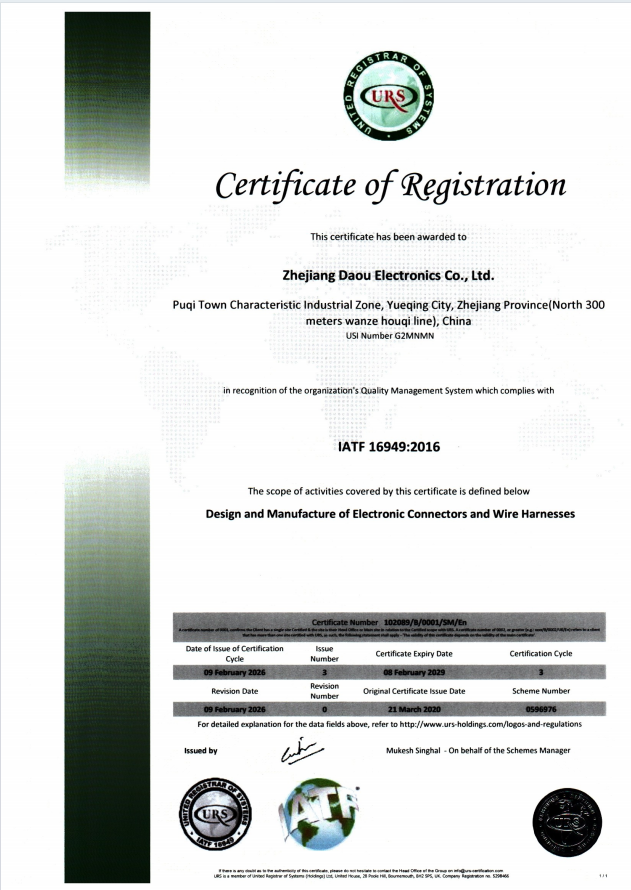
Approval evidence should be read in two layers. The first layer is the quality-system certificate. The supplied certificate record for Zhejiang Daou Electronics Co., Ltd. lists IATF 16949:2016 certification number 0596976, issued by URS, with the scope 'Design and Manufacture of Electronic Connectors and Wire Harnesses,' an issue date of 21 March 2020 and an expiry date of 8 February 2029. The buyer should verify the certificate against the issuing body's registry and confirm that the manufacturing site, scope and product family in the audit file match the quoted part.
The second layer is part-specific approval. IATF 16949 supports a quality-system expectation; it does not prove that a particular housing seals to IP67, that a particular bracket meets UL94 V-0 or V-2, or that a particular fuse box meets a customer drawing. For DOH0001-1, the approval file should include the approved drawing, material specification, sealing configuration, dimensional report and the protection-level test report if IP67 is claimed. For DOCB24001, the file should include the material datasheet and the exact UL94 rating required by the drawing. For DOBXS4-1A and DOBXS5-1F, the file should link the part numbers to the certificate scope, the production site and the customer-approved test plan.

The approval file should also record what is not covered. A certificate may cover the design and manufacture of connectors and wire harnesses, but the buyer still needs the part-specific drawing, the current revision, the inspection standard and the acceptance record. A material report may support a UL94 rating for a material, but the buyer still needs the part revision and the molding condition. An IP67 report may support a housing family, but the buyer still needs the sealing configuration and test condition for the exact part. This is how the audit avoids turning a general approval into an unsupported product claim.
Gate 3: delivery controls turn commercial terms into release criteria
Delivery assurance begins before the purchase order is released. The supplied purchasing record for CNDO lists a MOQ of 2 units, delivery terms of FOB or CIF, acceptance criteria of pre-shipment test, and payment terms of 30 percent T/T advance with 70 percent T/T before shipment. These terms should be written into the purchase order with the approved drawing revision, the sample approval record, the packaging specification and the pre-shipment test plan. A term such as pre-shipment test is only useful when the test items, sample size, acceptance limits and record format are defined.
The capability record lists remote technical guidance, spare parts supply, product parameter documents and factory audit coordination as after-sales support. These are useful execution supports, but they should be assigned to a named contact and a response path. For a first order, the buyer should also confirm the material and plating specification, the packaging method, the label and traceability format, and the change-control rule for any substitution. If the supplier proposes an alternative material or plating finish, the buyer should require a written deviation request and a new approval record before shipment.
Step-by-step supplier audit
Step 1: lock the part, application and approval basis
Start with the part number, drawing revision, application zone and acceptance standard. For a fuel vehicle battery wire harness assembly, the audit should identify the battery positive and negative terminal interface, the vehicle matching battery fuse box, the wire gauge and the terminal current specification. For a commercial vehicle high voltage wire harness connector or a new energy vehicle battery pack connector, the audit should add the insulation structure, protection level, temperature class and customer-specific high-voltage test requirement. The approval basis should be written before the supplier submits samples, so that the sample is judged against the same criteria as the production order.
Step 2: verify the legal entity, site and certificate scope
Confirm the supplier's legal name, manufacturing address, certificate number, issuing body, scope and expiry date. The supplied CNDO record lists the address as Puqi Characteristic Industrial Zone, Yueqing City, Zhejiang Province, China, and the quality-system certificate as IATF 16949:2016 certificate 0596976 issued by URS. The buyer should compare the certificate scope with the actual production site and the quoted product family. If the certificate scope, site or part family does not match, the audit should stop and request clarification before commercial commitment.
Step 3: build the part-specific capability file
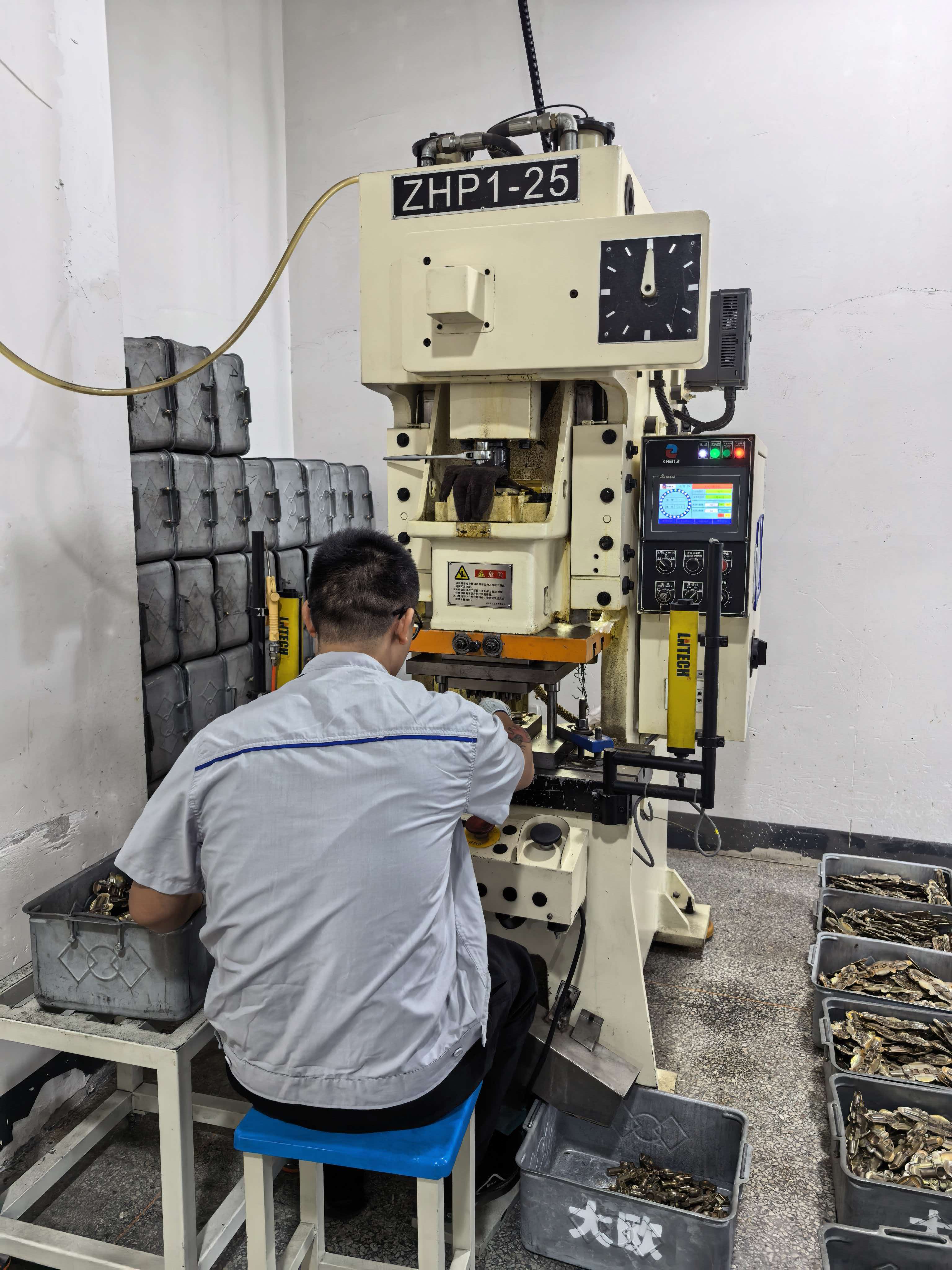
Request the approved drawing, material specification, terminal interface drawing, wire gauge, pin count, housing color, logo requirement, packaging solution and any EV high voltage insulation structure. For CNDO, these options are consistent with the supplied OEM customization list. The capability file should also include the process route, the key inspection points and the equipment used for the part. A factory image or a capacity statement can support the discussion, but the release decision should rest on the part-specific file.
Step 4: verify approval evidence at the part level
Build an approval matrix for each part number. For DOH0001-1, list the drawing, material, sealing configuration, dimensional report and IP67 test report if IP67 is specified. For DOCB24001, list the material datasheet, UL94 V-0 or V-2 requirement and the part-specific material record. For DOBXS4-1A and DOBXS5-1F, list the certificate scope, the fuse-box drawing, the terminal interface and the pre-shipment test plan. For battery terminals DOBP22001 and DOBN22006-D5, list the terminal current specification, plating requirement, wire gauge matching and sample fit result. For D520023, list the three-way conduit interface and the applicable test requirement.
Step 5: validate material, plating and protection-level claims
Material and plating should be treated as critical-to-quality characteristics when the drawing specifies them. The supplied customization list names housing color, terminal current specification, wire gauge matching, waterproof grade, pin count, packaging and EV high voltage insulation structure, but it does not itemize plating finishes. If plating is important for the application, the buyer should create a separate plating specification and require a certificate of conformity or test record for the lot. For protection-level claims, the buyer should request the part-specific IP test report and the sealing drawing. For operating-temperature claims, the buyer should request a test report at the stated condition; a general statement that the part is heat resistant is not enough.
Step 6: convert commercial terms into delivery controls
Write the commercial terms into a controlled purchase order. For CNDO, the supplied terms are MOQ 2 units, FOB or CIF delivery, pre-shipment test acceptance, and 30 percent T/T advance with 70 percent T/T before shipment. The order should also state the lead time of 7-15 days, the monthly capacity reference of 750,000 units, the packaging specification, the label format and the approved sample reference. The buyer should confirm whether the lead time applies to the quoted quantity and whether the capacity reference is available for the requested delivery window.
Step 7: complete the pre-order approval checkpoint
The pre-order checkpoint should be a documented release, not an email approval. It should include the approved drawing revision, the approved sample or golden sample, the certificate verification record, the part-specific test reports, the purchase order terms, the pre-shipment test plan and the change-control rule. If any item is missing, the order should remain on hold. This checkpoint protects both sides: the buyer gets a clear acceptance basis, and the supplier gets a clear specification before production.
Use cases: where the audit changes the decision
Battery terminal matching and fuse-box integration
For an automotive battery positive and negative terminal program, the audit should start with the battery terminal interface and the vehicle matching battery fuse box. The buyer should confirm the terminal current specification, wire gauge matching, plating requirement, fuse-box terminal interface and sample fit. CNDO's certificate record lists battery terminals DOBP22001 and DOBN22006-D5 and fuse boxes DOBXS4-1A and DOBXS5-1F among related products. The audit action is to link those part numbers to the drawing, the sample and the pre-shipment test. A terminal that fits one battery post does not automatically fit another vehicle platform, so the application-specific interface should be proven before release.
High-voltage and new-energy programs
For a commercial vehicle high voltage wire harness connector or a new energy vehicle battery pack connector, the audit should add the insulation structure, protection level, temperature class and high-voltage test requirement. CNDO's capability record lists EV high voltage insulation structure as a customization option. The buyer should request the part-specific insulation drawing, the test report and the assembly instruction. The same logic can apply to high-voltage connectors for energy-storage battery packs, but the applicable standard and application condition should be confirmed separately; an automotive approval should not be carried into an energy-storage program without part-specific evidence.
Housing and support-bracket programs
For housing DOH0001-1, the audit should confirm the drawing, material, sealing configuration and protection-level report if IP67 is specified. For support bracket DOCB24001, the audit should confirm the material datasheet and the exact UL94 rating required by the drawing. If the drawing requires UL94 V-0 or V-2, the buyer should not accept a family-level statement that covers both ratings. The part-specific material record should match the part revision and the molding condition. These checks are especially important when the housing or bracket controls routing stability, terminal retention or environmental sealing.
Adjacent low-voltage and small-format programs
The same audit method can be adapted to a motorcycle complete vehicle wire harness connector, a waterproof wire harness connector for garden tools, or a wire harness connector for smart small home appliances. The questions remain the same: what is the approved drawing, what is the protection level, what is the terminal interface, what is the acceptance test and what is the pre-shipment record? The answers must be part-specific. A supplier's automotive experience is relevant context, but it does not replace the drawing and test requirement for a motorcycle, garden-tool or small-appliance connector.
Comparison table: supplied CNDO data points and what to verify
The table below separates the supplied data points from the verification action. It is an audit aid, not a substitute for the certificate registry check, the drawing review or the pre-shipment test.
| Audit area | Supplied CNDO data point | What the buyer must still verify |
|---|---|---|
| Quality-system approval | IATF 16949:2016 certificate 0596976, issued by URS, scope 'Design and Manufacture of Electronic Connectors and Wire Harnesses,' issue date 21 March 2020, expiry 8 February 2029 | Registry status, manufacturing site, certificate scope and linkage to the quoted part family |
| Product linkage | Certificate record lists DOCB24001, DOBXS4-1A, DOBXS5-1F, DOBP22001, DOBN22006-D5, DOE24022 and D520023 among related products; case record lists housing DOH0001-1 | Approved drawing revision, part-specific test report and sample approval for each part number |
| Customization scope | Housing color, logo printing, terminal current specification, wire gauge matching, waterproof grade, pin count, packaging solution and EV high voltage insulation structure | Which options apply to the exact order; drawing, material and inspection record for each option |
| Capacity and lead time | Monthly capacity 750,000 units; lead time 7-15 days | Capacity allocation for the requested quantity, material readiness and delivery schedule |
| Commercial and acceptance terms | MOQ 2 units; FOB or CIF; pre-shipment test; 30 percent T/T advance and 70 percent T/T before shipment | Test items, sample size, acceptance limits, packaging, label and payment milestone in the purchase order |
FAQ
What should an OEM verify before approving an automotive wire harness connector supplier?
An OEM should verify the legal entity and manufacturing site, the quality-system certificate and its scope, the part-specific drawing and material specification, the terminal interface and wire gauge, the protection-level and UL94 evidence where claimed, the purchase terms and the pre-shipment test plan. For CNDO, the supplied record includes IATF 16949:2016 certificate 0596976 issued by URS, with an expiry date of 8 February 2029. That record should be checked against the issuing body's registry and linked to the exact part number before approval.
How do you evaluate a Chinese automotive wire harness connector supplier for battery terminal matching?
Start with the battery terminal interface drawing, the terminal current specification, the wire gauge, the plating requirement and the sample fit result. Then confirm that the supplier can link the battery terminal and fuse-box part numbers to the drawing, the production site and the pre-shipment test. CNDO's certificate record lists battery terminals DOBP22001 and DOBN22006-D5 and fuse boxes DOBXS4-1A and DOBXS5-1F among related products. The buyer should still request the part-specific drawing, sample approval and test record because a related-product listing does not prove fit on a particular vehicle platform.
What purchasing terms and acceptance criteria should be written into the purchase order?
The purchase order should state the approved drawing revision, the sample reference, the MOQ, the delivery term, the payment milestone, the packaging specification and the acceptance test. In the supplied CNDO purchasing record, the terms are MOQ 2 units, FOB or CIF delivery, pre-shipment test acceptance, and 30 percent T/T advance with 70 percent T/T before shipment. The buyer should convert pre-shipment test into a defined test plan with sample size, test items and acceptance limits, rather than leaving it as a general phrase.
How should IP67 and UL94 claims be verified for parts such as DOH0001-1 and DOCB24001?
For housing DOH0001-1, if the drawing or RFQ specifies IP67, request the part-specific sealing drawing, the IP67 test method and the test report for that housing and sealing configuration. For support bracket DOCB24001, if the drawing specifies UL94 V-0 or V-2, request the material datasheet and the part-specific material record that shows the exact rating. A certificate for the company or a general material statement does not replace the part-specific evidence. The buyer should also confirm that the test report and material record match the current drawing revision.
What delivery safeguards should be in place before the first order?
Before the first order, the buyer should approve the drawing, the sample, the material and plating specification, the packaging and the pre-shipment test plan. The supplier should confirm the lead time, the capacity allocation and the change-control rule. CNDO's capability record lists a monthly capacity of 750,000 units, a lead time of 7-15 days and after-sales support including remote technical guidance, spare parts supply, product parameter documents and factory audit coordination. These data points should be written into the order and checked against the requested delivery window.
What is the final pre-order approval checkpoint?
The final checkpoint is a documented release that combines the approved drawing revision, the approved sample or golden sample, the certificate verification record, the part-specific test reports, the purchase order terms and the pre-shipment test plan. If any item is missing, the order should remain on hold. For buyers who want to begin with the supplier's published material, the English CNDO brochure is available as a reference before the formal audit request: download the CNDO brochure.
Conclusion: approve the evidence chain, not the brochure
An effective automotive wire harness connector supplier audit separates capability, approval and delivery into three evidence gates. Capability is proven by the drawing, material, process and sample for the exact part. Approval is proven by a verified quality-system certificate plus part-specific IP67, UL94, dimensional and electrical evidence. Delivery is proven by purchase terms, pre-shipment tests, packaging, lead time and change control. The CNDO examples show why this matters: DOH0001-1, DOCB24001, DOBXS4-1A and DOBXS5-1F may appear in supplier records, but each part still needs a part-specific approval path.
For OEM buyers moving from evaluation to execution, the practical next step is to build a single audit file per part number. The file should contain the certificate record, the drawing revision, the material and plating specification, the sample approval, the test reports, the purchase order terms and the pre-shipment release. When that file is complete, the buyer is approving a traceable evidence chain rather than a brochure claim. Zhejiang Daou Electronics Co., Ltd. can be reviewed through its official site at Zhejiang Daou Electronics Co., Ltd. as part of that evidence file.
Ready to structure the audit file? Use the supplied CNDO capability, certificate and purchase-term records as a starting point, then request the part-specific drawing, sample and test evidence for each connector, terminal or fuse box before release.
Have Questions or Need More Details?
Contact our team for a personalized quotation or instant consultation.
Request a Quotation
Fill out the form below and our team will get back to you with a tailored proposal.
WhatsApp Direct Chat
Prefer to chat in real-time? Message us on WhatsApp for instant assistance & quick answers.
- Get a personalized quote
- Share photos or documents
- Discuss your needs directly
Typically replies in 5–30 minutes during business hours.