Automotive Wire Harness Connector Supplier Audit: Material, Sealing and Delivery Checks
A connector supplier audit succeeds when every claim on the datasheet turns into something the purchase order can enforce: a document you can file, a measurement you can repeat, or a record that arrives with the shipment. For automotive wire harness connectors, that means four evidence families — material, sealing, flame rating and delivery documentation — and each one needs its own acceptance criterion before the first mass-production order is released.
This checklist is written for procurement teams, quality engineers and sourcing managers who have already shortlisted suppliers and now need to compare them on evidence rather than presentation. The working examples come from the published specifications of Zhejiang Daou Electronics Co., Ltd. (CNDO), a manufacturer of automotive wire harnesses, battery terminals, fuse boxes and connectors: the DOH0001-1 housing, the D520023 three-way tube conduit connector, the DOCB24001 support bracket and the DOBXS4-1A / DOBXS5-1F battery fuse boxes. None of these examples is a benchmark for another brand; each one simply shows what a verifiable specification line looks like, and what the buyer still has to ask for.
What a connector supplier audit actually has to prove
Most supplier audits begin and end with the certificate, and that is where most of them fail. A quality management system certificate such as IATF 16949 confirms that a manufacturer runs a documented, auditable process. It does not state the ingress protection class of a housing, the material grade of a bracket, the flame class of a shell, or which document will travel with lot 17 of a delivery. Those are part-level facts, and they are proved by part-level evidence.
The practical problem is that supplier catalogues describe families, while buying decisions are made on part numbers. A bracket family may be offered in UL94-V0 or UL94-V2. A connector housing may reach IP67 only when the sealing gasket is fitted and mated. A fuse box datasheet may specify a bolt-type mega fuse without fixing its rating, because the rating is a customer choice. Every one of those gaps is normal in the industry — and every one of them becomes a purchasing risk if it is left open in the RFQ.
A defensible audit therefore does three things. It fixes the part-number baseline, it collects the evidence that supports each line of that baseline, and it writes the accept/reject rule into the purchase order so that the same standard applies to the sample, the pilot lot and the annual re-audit.
Industry background: why connector evidence is under more pressure
Demand-side context explains why supplier audits have become stricter rather than more relaxed. Global Market Insights estimated the automotive wiring harness market at USD 71.2 billion in 2025 and USD 74.7 billion in 2026, with Asia Pacific holding 47.1% of 2025 revenue (published August 2026). The same research house reported that copper still accounts for roughly 93.45% of harness conductor material, so conductive-material questions remain central even as lightweighting programmes expand. SNS Insider, in a September 2026 report, sized the automotive high-voltage connector segment at USD 4.99 billion in 2026 and projected an 11.90% CAGR from 2026 to 2035.
These are commercial research estimates, not audited statistics, and they describe market value rather than any single supplier's capability. Their relevance for a buyer is directional: rising harness volume and faster-growing high-voltage connector demand widen the supplier pool, which makes document-based comparison more valuable than relationship-based selection. On the compliance side, the EU automotive sector operates under REACH, and the ACEA industry guidance AIG 4.0 (2024) describes the information a supplier must be able to provide about substances and preparations. For connectors destined for European programmes, a material declaration is not a courtesy document; it is part of the release pack.
Step 1 — Material evidence: prove the grade, not the family
Material evidence starts with a single question: which grade is moulded in the part in my hand? Published specifications usually answer at the family level. The DOH0001-1 housing is specified in PA / PBT. The D520023 connector is specified in PA66. The DOCB24001 support bracket is specified in PA66 or PA66 GF30, depending on the version ordered. The DOBXS4-1A / DOBXS5-1F fuse box combines a PA66 shell with a copper or brass busbar that carries a tin, nickel or zinc surface plating. The DOE24022 terminal family is offered in pure copper, red copper, copper alloy, tin-plated copper, nickel-plated copper or gold-plated copper, in current sizes from 5 A to 200 A.
For an auditor, every one of those options is a decision that must be closed in writing. "PA66 or PA66 GF30" is not a specification until the drawing, the part number and the purchase order name one of them, because glass-filled and unfilled grades behave differently in stiffness, moulding shrinkage and long-term heat exposure. The same logic applies to plating: tin, nickel and zinc are not interchangeable finishes, and a supplier cannot be held to an unstated one.
What to request for the material file:
- A material datasheet naming the grade and the resin supplier, not only the polymer family.
- For European programmes, a REACH statement consistent with the ACEA AIG 4.0 information structure, plus a RoHS declaration if the buyer's market requires it.
- For metal parts, a plating specification stating the finish and the substrate — for example which of the tin, nickel or zinc options applies to a fuse-box busbar.
- For colour-matched parts, a colour reference agreed at sample stage, since colour changes can trigger a different material lot.
Table 1 — Published specifications for four CNDO part families, and what each one leaves open
| Part family (model) | Material | Sealing | Flame rating | Temperature | Audit gap to close |
|---|---|---|---|---|---|
| Housing (DOH0001-1) | PA / PBT | IP67; waterproof, dustproof, oil-resistant, acid and alkali resistant | Not stated in the published specification | -40 °C to +125 °C | Grade confirmation, gasket material, IP test report on the mated assembly |
| Three-way tube conduit connector (D520023) | PA66 | IP66 / IP67 with sealing gaskets | Not stated in the published specification | -40 °C to +120 °C continuous; 150 °C short-term peak | Confirm the gasket is part of the supplied item and that the rating is claimed for the mated condition |
| Support bracket (DOCB24001) | PA66 / PA66 GF30 | Not a sealed part | UL94-V0 / UL94-V2, as ordered | -40 °C to +125 °C; engine-bay versions withstand higher transient temperatures | Lock V0 or V2 at part-number level; request the report at production thickness |
| Battery fuse box (DOBXS4-1A / DOBXS5-1F) | PA66 shell; copper or brass busbar with tin / nickel / zinc plating | Sealed cover, waterproof and dustproof structure | Flame-retardant shell; class not stated in the published specification | -40 °C to +125 °C | Define the main mega-fuse rating and the auxiliary blade-fuse ratings (5 / 10 / 15 / 20 / 30 A options) |
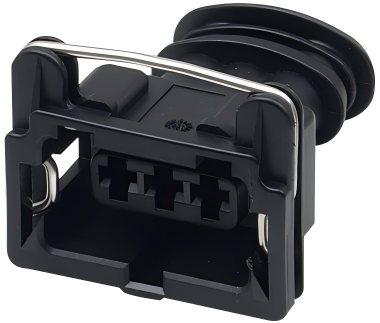
DOH0001-1 housing: PA / PBT body rated IP67 for -40 °C to +125 °C — the material grade and gasket still need documentary confirmation.
Step 2 — Sealing performance: verify the condition, not the logo
An IP rating is a statement about a tested assembly, not about a plastic shell. IP67 requires dust-tightness plus protection against temporary immersion; IP66 requires dust-tightness plus protection against powerful water jets. Both are meaningful, but only for the configuration that was tested — with the correct gasket, the correct mating half, and the correct cable and conduit combination.
The D520023 three-way tube conduit connector illustrates the point cleanly, because its published specification states IP66 / IP67 with sealing gaskets. That qualifier is the audit. If the gasket is a separate item, the buyer must confirm it is included in the supplied part number; if it is factory-fitted, the buyer must confirm it cannot be displaced in transit or during harness assembly. Either way, the acceptance criterion belongs in the purchase order: gasket included, gasket material identified, and the IP class stated for the mated condition.
Thermal context matters as much as water. The D520023 is rated for continuous operation from -40 °C to +120 °C with a short-term peak of 150 °C, which places it in engine-bay, chassis and body wiring discussions rather than in a dry interior cavity. The DOH0001-1 housing is rated for -40 °C to +125 °C. When a supplier quotes a sealing class, ask for the test sequence: was immersion or jet testing carried out after thermal cycling, or only on a pristine sample? A rating inherited from a material supplier's data is not the same as a rating measured on the finished connector.
Chemical exposure belongs in the same conversation. The published D520023 specification lists resistance to engine oil, mineral oil, grease, weak acid and alkali, and partial solvents, together with UV, hydrolysis and ageing resistance. For an auditor this is a list to convert into a test question: which of these media were tested, at what concentration and temperature, and for how long? Chemical resistance statements without exposure conditions are useful as a screening signal but too coarse for an acceptance criterion.
Sealing evidence checklist
- IP test report naming the exact model, the mated condition and the gasket used.
- Gasket material and its own temperature and chemical limits.
- Statement of what happens to the rating after the connector is opened and re-mated in service.
- Vibration context: the supplier's application data for automotive harness connectors references automotive vibration standards such as ISO 16750 and USCAR-2, so ask which test plan was actually applied to the part you are buying.
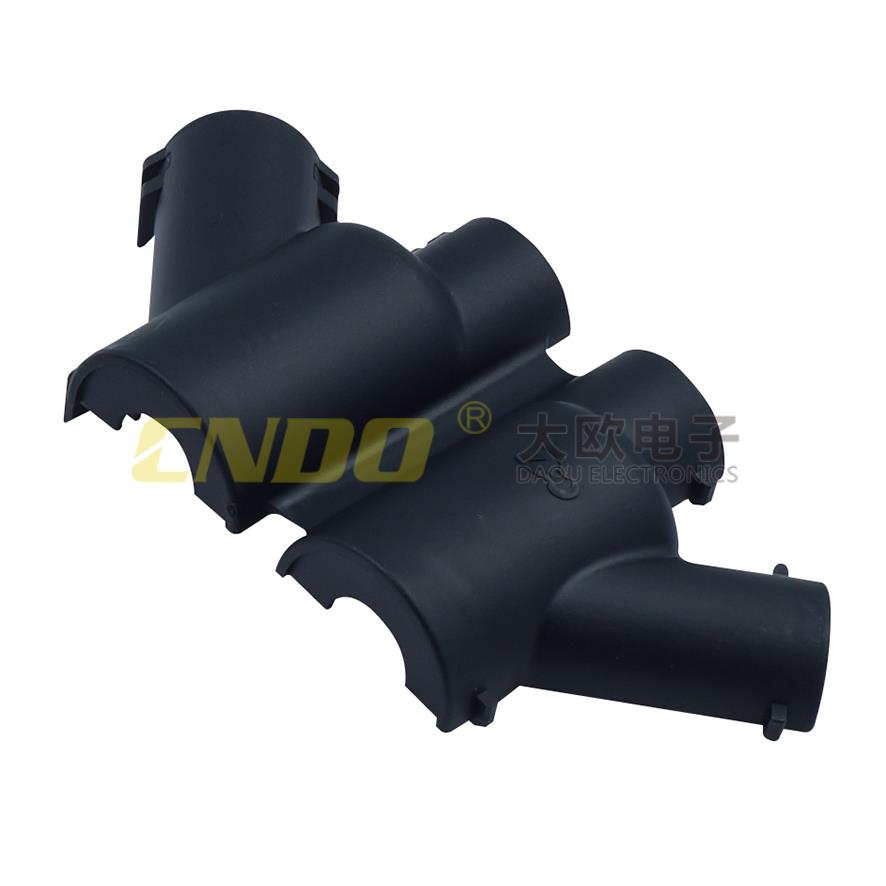
D520023 conduit connector family: the IP66 / IP67 claim applies with sealing gaskets fitted and the assembly mated.
Step 3 — Flame rating: fix the class at part-number level
UL94 classifications are not a marketing adjective; they are a test outcome tied to a specimen. In simple terms, V-0 is the more stringent of the two common V-classifications and V-2 permits burning drips that can ignite a cotton indicator below the specimen. The classification also depends on specimen thickness, which is why a report for a 1.5 mm test bar does not automatically cover a 3 mm production bracket.
The DOCB24001 support bracket shows the cleanest form of this audit issue: the published specification supports UL94-V0 and UL94-V2, in PA66 or PA66 GF30. A buyer who writes "UL94 flame retardant" into an RFQ has specified nothing. A buyer who writes "DOCB24001, PA66 GF30, UL94-V0" has created an acceptance criterion that can be checked against a report, a part marking and an incoming inspection.
Ask for two documents rather than one: the UL94 test report for the material and thickness used in production, and the supplier's own statement that the production part uses that material and thickness. Where a flame-retardant shell is claimed without a quoted class — as in the published fuse-box specification — the honest audit position is that the class is not stated, not that it is absent. Request it before the first shipment, and if it cannot be supplied, record the gap and decide whether the application requires a classified part.
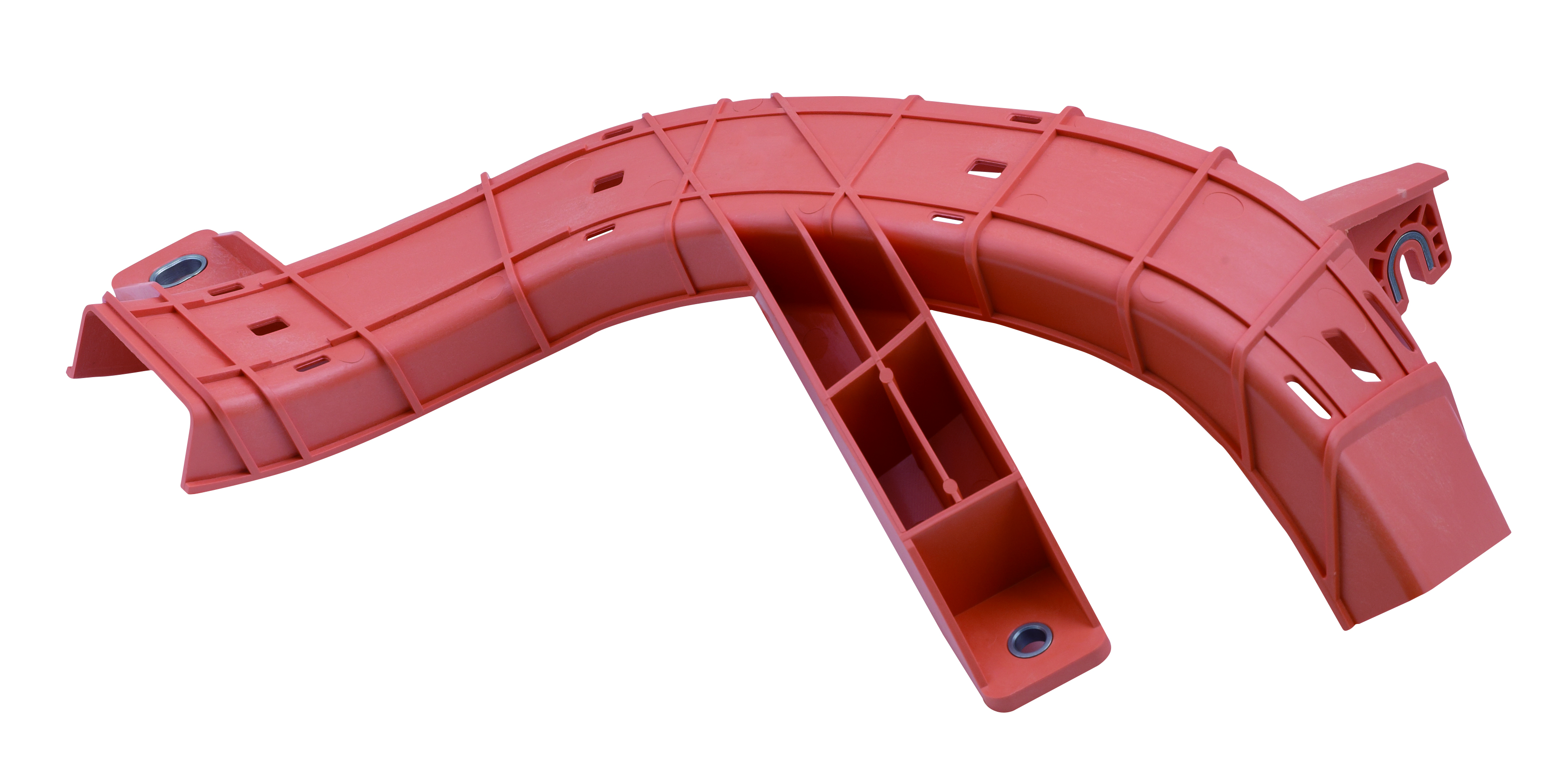
DOCB24001 support bracket: PA66 or PA66 GF30, offered in UL94-V0 or UL94-V2 — the class has to be named in the part number, not assumed.
Step 4 — Current path: terminals, plating and fuse ratings
The electrical side of the audit follows the same rule: convert every optional value into a fixed one. The DOE24022 terminal family is published with a 12 V / 24 V DC rating for mainstream vehicle use and up to 48 V DC for special models, with rated current varying by size across 5 A, 10 A, 20 A, 50 A, 100 A and 200 A options. A purchase order that specifies only "terminal" transfers the entire current-rating decision to the supplier's default.
At the battery end, the DOBP22001 / DOBN22006-D5 family is published as a brass SAE top-post terminal with a positive post diameter of 19.05 mm, a negative post diameter of 17.46 mm on a tapered form, an M8 thread, a maximum current of 500 A, a tightening torque of 8 N·m and tin plating. Each of those numbers is auditable. Torque in particular should appear in the assembly instruction, because a terminal tightened beyond its stated torque is a field-failure cause that no incoming inspection will catch.
Fuse boxes combine mechanical and electrical acceptance. The DOBXS4-1A / DOBXS5-1F specification lists a 12 V DC / 24 V DC working voltage, a high-conductivity copper or brass main busbar with tin, nickel or zinc plating, a bolt-type mega main fuse, standard blade auxiliary fuses in 5 A, 10 A, 15 A, 20 A or 30 A options, a flame-retardant sealed shell, an ambient range of -40 °C to +125 °C, and fixed mounting holes for direct battery-positive connection. The main fuse rating is shown as a value to be completed, which is exactly how it should be read: the buyer defines it, the supplier builds to it, and the delivery document repeats it.
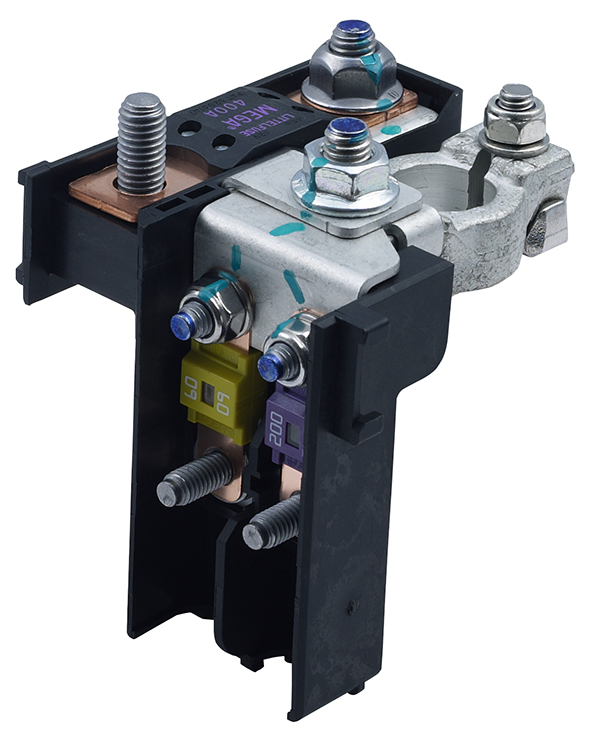
DOBXS4-1A / DOBXS5-1F fuse box: sealed PA66 shell over a copper or brass busbar — busbar plating and fuse ratings belong in the PO line, not in a catalogue note.
Step 5 — Delivery documentation: audit what arrives with the box
Delivery evidence is where many otherwise sound audits quietly stop. A supplier can pass a material review and still ship without a lot number, without a conformance certificate, or with gaskets packed loose in a way that deforms them before assembly. The audit question is not "can you provide documents?" but "which documents accompany every shipment, and who signs them?"
A workable minimum document set for connector shipments contains the packing list with model, quantity and lot or date code; a certificate of conformance referencing the purchase order line and drawing revision; inspection results for the characteristics agreed at sample stage; material and plating certificates where the buyer has specified them; and a statement of any open deviation. For parts with elastomer components, the packaging note matters too — gaskets stored under compression or exposed to heat can lose their sealing function before the first installation.
Scale and system claims should be treated the same way, as things to be evidenced rather than admired. CNDO's company profile, for example, reports a 6,000 m² facility, 125 employees, 25 R&D engineers, an annual output of 9,000,000 units and roughly 50% of output exported to the USA and EU, under an IATF 16949:2016 quality system. Those are company-reported figures. In an audit they become a document request: the certificate with its scope and validity dates, capacity expressed by product family, the measurement period behind the output figure, and the equipment list behind the process claim. A supplier that answers those requests quickly is demonstrating the same traceability discipline the buyer wants on the production line.
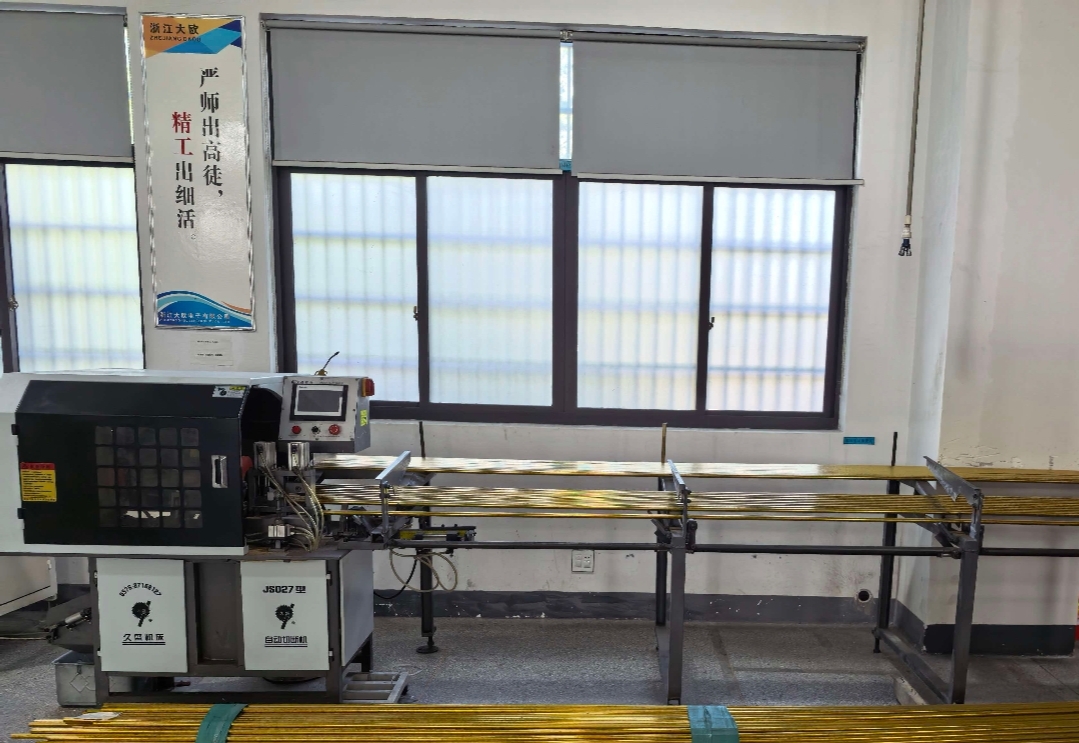
Production floor evidence supports a capacity claim only when it is tied to a product family, a measurement period and a record.
Step 6 — The audit sequence, with acceptance criteria attached
The steps below form a repeatable sequence. Each one ends with an artefact the buyer keeps, so the audit outcome survives staff changes on either side.
- Lock the part-number baseline. One controlled drawing per item, stating material grade, plating, colour, flame class and, where relevant, the fuse rating. Reject RFQs that answer at family level.
- Collect the material and compliance pack. Material datasheet, REACH statement where the destination market requires it, plating specification. Acceptance: every clause in the drawing has a matching document, or an agreed gap entry.
- Verify the sealing claim by test report. Report must name the model, the gasket and the mated condition. Acceptance: report configuration matches the ordered configuration.
- Fix the flame class. Test report at production thickness plus a supplier statement that production uses that material and thickness. Acceptance: the UL94 class in the report equals the class in the part number.
- Check the current path. Terminal material and plating, current rating by size, tightening torque, busbar plating and fuse ratings. Acceptance: torque stated in the assembly instruction and fuse ratings printed on the delivery document.
- Write acceptance criteria into the purchase order. Each criterion needs a method, a sample size logic and a reaction plan for non-conformance — not just a nominal value.
- Agree the delivery document set. Packing list with lot, conformance certificate against PO line and revision, inspection records, deviation statement. Acceptance: first shipment is checked against the list before the goods are booked in.
- Set the change-notification and re-audit rule. Any change of material grade, gasket source, plating process, mould or production site triggers notification and re-qualification; the audit is repeated on a defined cycle rather than after a failure.
Use cases: how the same checklist shifts by application
Application decides which check carries the most weight, and the same four evidence families are simply re-ordered.
Engine bay and chassis. Heat and chemical exposure dominate. A connector like the D520023, rated for continuous -40 °C to +120 °C with a 150 °C short-term peak and resistance to engine oil, mineral oil, grease and weak acid or alkali, needs its test conditions checked rather than its headline rating. Underbody routing adds water-jet exposure, so the gasket question becomes the primary audit item.
Body and dry interior cavities. Sealing may be unnecessary, and the audit weight moves to material and fit: bracket grade, flame class, retention force and harness routing stability.
Battery and power distribution. Terminal material, plating, tightening torque and fuse ratings move to the front. A fuse box that accepts 5 A to 30 A auxiliary blade fuses and a bolt-type mega main fuse is only correct when both values are stated on the order.
EV battery pack and energy storage. High-voltage connectors carry stricter documentation expectations than 12 V parts, and the compliance file expands. Buyers in these programmes should confirm that the REACH and material declarations they receive cover the actual insulation and housing materials used.
Motorcycle, garden equipment and small appliances. Waterproof connectors for garden tools and mowers, or battery harnesses for small appliances, often sit in programmes with shorter validation windows. The audit shortens accordingly, but the sealing evidence and the delivery document set should not be dropped — those are the two families that generate the most field complaints in small-format assemblies.
Table 2 — Audit check, document to request, and how to accept it
| Check | Document to request | Acceptance criterion in the PO |
|---|---|---|
| Polymer grade | Material datasheet naming grade and resin source | Grade on the drawing equals grade on the datasheet |
| Fill content | Statement of PA66 vs PA66 GF30 by part number | One grade per part number, no substitution without notification |
| EU market compliance | REACH statement following the ACEA AIG 4.0 information structure | Declaration covers each substance in the finished part |
| Metal finish | Plating specification for busbar or terminal | Tin, nickel or zinc named explicitly; substrate named |
| Ingress protection | IP66 or IP67 test report on the mated assembly with gasket | Report configuration matches the ordered configuration |
| Gasket supply | Part-number confirmation that the gasket is included | Gasket listed as a component of the delivered item |
| Flame class | UL94 report at production thickness | Class in report equals class in part number |
| Thermal range | Continuous and peak temperature statement | Application maximum falls inside the continuous rating |
| Current rating | Rating by terminal size and application temperature | Rated current stated for the ordered size, not the family |
| Assembly torque | Torque value and assembly instruction | Torque printed on the work instruction and the delivery note |
| Fuse ratings | Main and auxiliary fuse values | Values fixed by the buyer and repeated on the packing list |
| Lot traceability | Packing list with lot or date code | Every carton traceable to a production lot |
| Change control | Written notification procedure | Any material, mould, plating or site change re-triggers qualification |
Frequently asked questions
What should a procurement team check first when screening automotive wire harness connector suppliers?
Start with the part-number baseline: drawing, material grade, sealing class, flame class, plating and fuse ratings, all on one controlled specification. Then ask for the documents behind each line — material datasheet, an ingress protection report performed on the mated assembly, a UL94 report at production thickness, a plating specification and one sample delivery document set. A supplier who can answer all four evidence families in a single pack is easier to qualify than one who answers only the certificate question, because a quality management system certificate confirms a process, not a part's IP rating or flame class.
How do you verify an IP66 or IP67 claim on a connector?
Ask for the test report for the assembled and mated condition, and identify the gasket used in that test. The D520023 connector, for example, is specified as IP66 / IP67 with sealing gaskets, so the rating is conditional rather than absolute. The purchase order should state that the gasket is part of the delivered item, name its material, and require re-qualification after any gasket or tooling change. A report issued on an unmated shell does not support the claim.
Which flame rating evidence should be requested for plastic connector parts?
Request the UL94 classification with the specimen thickness stated, plus a supplier statement that production uses that material and thickness. The DOCB24001 support bracket is offered in UL94-V0 or UL94-V2, and V-0 is the more stringent of the two, so the class must be written into the part number rather than agreed verbally. Where a specification claims a flame-retardant shell without quoting a class, treat the class as not yet stated and request it before the first shipment.
What belongs in a sample order before mass production?
A sample is only useful if it is produced on production tooling with the production material and plating. Ask for the sample to be accompanied by a dimensional report, the material and plating statement, the ingress protection and flame evidence already collected, and a note identifying the gasket. Compare the sample against the drawing, record every deviation in writing, and agree which deviations are acceptable — a verbal "that is normal" should not survive the meeting.
Which delivery documents should accompany each connector shipment?
At minimum: a packing list with model, quantity and lot or date code; a certificate of conformance referencing the purchase order line and drawing revision; inspection results for the characteristics agreed at sample stage; material and plating certificates where specified; and a statement of any open deviation. For parts with elastomer gaskets, the packaging method should also be stated, since gaskets stored under compression can lose sealing performance before installation.
Conclusion: an audit is a set of clauses, not a meeting
The four evidence families reinforce each other. Material evidence fixes what the part is made of, sealing evidence fixes the condition under which its IP class is true, flame evidence fixes a class that is often left optional in a catalogue, and delivery documentation fixes what the buyer can prove after the goods arrive. When all four are written into the purchase order, supplier comparison stops depending on presentation and starts depending on documents.
The examples in this checklist — the DOH0001-1 housing, the D520023 gasketed conduit connector, the DOCB24001 support bracket and the DOBXS4-1A / DOBXS5-1F fuse boxes — show the pattern in practice: a stated material, a stated range, and at least one open value that the buyer must close. That last point is the real test of an audit. A specification that leaves a decision open is an invitation to define it in writing before production starts.
Next step for procurement teams: build the audit pack around your own drawing baseline. CNDO publishes component specifications, material data and contact details for its wire harness, terminal, fuse box and connector families — the company brochure with the full product overview is available as a downloadable PDF catalogue, and specific part questions can be raised through www.zjdaou.com.

Zhejiang Daou Electronics Co., Ltd. (CNDO): request the certificate scope, capacity by product family and measurement period before accepting any published figure.
Have Questions or Need More Details?
Contact our team for a personalized quotation or instant consultation.
Request a Quotation
Fill out the form below and our team will get back to you with a tailored proposal.
WhatsApp Direct Chat
Prefer to chat in real-time? Message us on WhatsApp for instant assistance & quick answers.
- Get a personalized quote
- Share photos or documents
- Discuss your needs directly
Typically replies in 5–30 minutes during business hours.