Certifications, Standards and Regional Requirements for Automotive Wire Harness Connectors
Automotive wire harness connector compliance is not a single certificate. It is a stack of four evidence layers that must agree with one another: a quality management system certificate, material and flammability declarations, environmental and electrical performance ratings, and regional interface or chemical regulations. A supplier can hold IATF 16949:2016 and still ship a housing that fails an IP67 immersion test. A fuse box can be moulded from flame-retardant PA66 and still carry a copper alloy that does not match the vehicle's 24 V circuit.
This guide maps each layer onto concrete product specifications, using seven component families as working examples: the DOH0001-1 housing, the DOCB24001 support bracket, the DOE24022 terminal, the D520023 three-way conduit connector, the DOBP22001 SAE Top Post battery terminal, the DOBXS4-1A and DOBXS5-1F fuse boxes, and the DOBN22006-D5 EV connector. It is written for OEM buyers, tier-1 harness engineers and importers who sit between decision and execution, and who need to convert a standards list into a purchase order that survives an audit.
Zhejiang Daou Electronics Co., Ltd. (CNDO) is a manufacturer of automotive wire harnesses, battery terminals, fuse boxes, connectors and waterproof plugs, located in Puqi Characteristic Industrial Zone, Yueqing City, Zhejiang Province, China. The company states that it operates under IATF 16949:2016 quality system certification and supplies OEM and main-unit programs.
Problem Definition: Why Compliance Reviews Fail Before the First Shipment
Most compliance failures in wire harness connector sourcing do not come from a missing certificate. They come from a mismatch between the evidence the buyer collected and the evidence the production line actually needs. Three patterns repeat across OEM audits.
Pattern 1 — Certificate substitution. A buyer receives an IATF 16949:2016 certificate and treats the compliance question as closed. The certificate describes the management system that governs how parts are made. It does not state that a specific housing achieves IP67, that a specific bracket carries UL94-V0, or that a specific terminal is plated to a stated thickness. System evidence and product evidence are separate documents and both are required.
Pattern 2 — Standards quoted without edition or applicability. A standards catalogue will list automotive connector standards that address dimensional characteristics, electrical characteristics, contact allocation, performance requirements and test requirements. That catalogue entry confirms the standards exist; it does not confirm which current edition applies to a given product, or whether a purchased connector is in scope at all. Buyers who accept a standards list without an applicability statement inherit an unverified claim.
Pattern 3 — Regional interface mismatch. Interface dimensions are region-specific. A North American 12 V battery connection is commonly built around the SAE Top Post positive post, and the DOBP22001 battery terminal is dimensioned for a 19.05 mm positive post. A terminal that is electrically sound but dimensionally mismatched will not clamp correctly, and no amount of plating quality or current rating compensates for that.
A fourth, quieter risk sits underneath all three: material regulation. Under EU REACH (EC) No 1907/2006, automotive component suppliers must identify substances and preparations in scope and discharge the corresponding obligations, with the ACEA Automotive Industry Guideline (AIG 4.0, 2024) providing the sector-specific interpretation. A connector that meets every dimensional requirement can still be non-compliant for an EU-bound program if its material declaration is incomplete.
Industry Background: Why the Compliance Burden Is Rising
The scale of the category explains why regulators and OEM quality departments keep tightening requirements. Commercial research cited for this category puts the global automotive wiring harness market at USD 74.7 billion in 2026, up from USD 71.2 billion in 2025, with Asia Pacific holding 47.1% of 2025 revenue.
The high-voltage segment is growing faster than the harness market as a whole. The same category research values the global automotive high-voltage connector market at USD 4.99 billion in 2026, with a reported CAGR of 11.90% across 2026–2035. That figure sits alongside a total harness market of USD 74.7 billion, which illustrates how concentrated the compliance pressure has become in one connector sub-family: high-voltage connections carry the strictest insulation, torque and verification requirements while representing a minority of harness value.
Material choice is also converging. Copper still accounts for approximately 93.45% of automotive wiring harness conductor share according to commercial research, with aluminium growing from a smaller base. For connector and terminal design, this means copper alloy terminals and brass battery terminals remain the default engineering baseline, and material declarations for copper alloys stay central to any REACH file.
Regulatory direction reinforces the same point. The EU framework is chemical (REACH, interpreted through ACEA AIG 4.0). The standards framework for road-vehicle electrical connections is dimensional and electrical, with catalogue references to ISO 20860-1:2008, SAE J1742 and SAE J2223-2 covering dimensions, electrical characteristics, contact allocation, performance and testing. The quality framework is process-based, anchored on IATF 16949. A buyer who maps only one of these three frameworks will miss requirements in the other two.
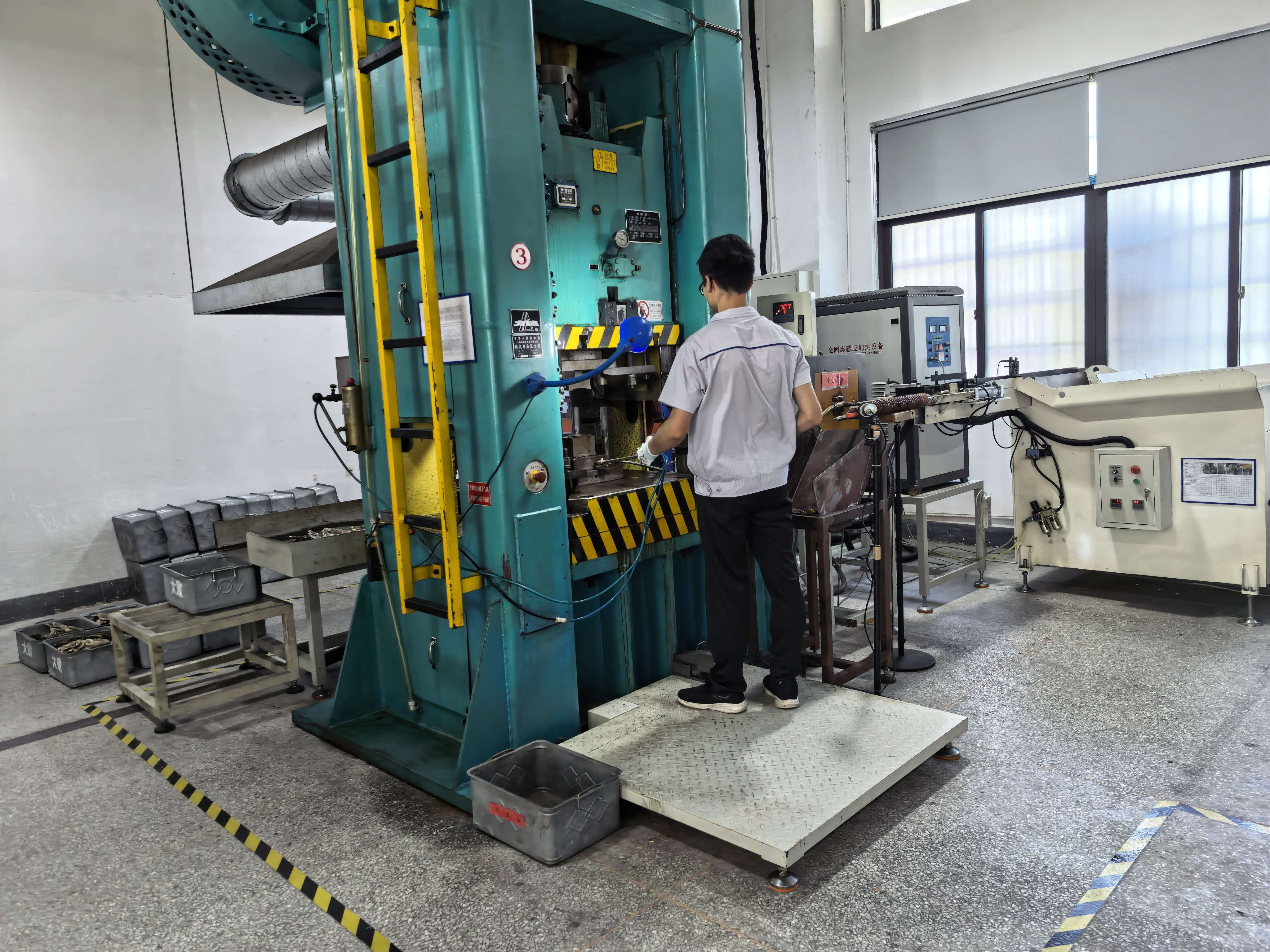
CNDO production workshop — the physical environment that an IATF 16949:2016 audit covers, separate from the product-level specification evidence discussed below.
Detailed Solution: Mapping Each Requirement to a Product Specification
The practical way to close a compliance gap is to work component by component, stating for each family which regulatory or standards requirement it answers and which specification provides the evidence. The seven families below cover the connector, terminal, housing, bracket, conduit and fuse-box layers of a harness.
1. Housings — DOH0001-1 (IP67, −40 °C to +125 °C)
An enclosure rating is the first product-level compliance statement most buyers request, because it links directly to the failure modes that generate warranty claims: water ingress, contact corrosion and insulation breakdown. The DOH0001-1 housing is specified to IP67 and rated across −40 °C to +125 °C.
The IP67 rating addresses dust ingress and short-term immersion, and the temperature band spans the range typically encountered from cold-climate soak through engine-bay heat. Both values are product specifications, not system certificates, so they must appear on the datasheet and be supported by test documentation rather than inferred from an IATF certificate. CNDO states that its sealing approach for this class of part relies on IP67 waterproof sealing combined with an anti-vibration locking structure, which addresses two of the risk categories it identifies: water ingress and vibration loosening.
2. Support Brackets — DOCB24001 (PA66 GF30, UL94-V0/V2)
Support brackets are where flammability and mechanical stiffness meet. The DOCB24001 is moulded in PA66 GF30 — polyamide 66 with 30% glass fibre reinforcement — and carries a UL94-V0/V2 flammability classification.
Two compliance statements are encoded in that specification. The glass-fibre reinforcement is a structural claim relevant to route stability and vibration resistance. The UL94 classification is a materials claim: UL94-V0 is the more demanding of the two ratings listed, while UL94-V2 permits dripping that ignites cotton under the test conditions. Buyers specifying a bracket for a zone with elevated thermal exposure should confirm which of the two ratings applies to the exact part number, because a family-level mention of 'UL94-V0/V2' is not the same as a part-level V-0 certificate.
3. Terminals — DOE24022 (12 V / 24 V DC, copper alloy, tin or gold plating)
The DOE24022 terminal is rated for 12 V and 24 V DC systems and is produced in copper alloy with tin or gold plating options. The dual voltage rating matters commercially because it allows one terminal family to serve passenger-car 12 V circuits and commercial-vehicle 24 V circuits without a separate qualification cycle.
Plating is the compliance-critical detail. CNDO states that anti-corrosion tin plating is one of its standing risk-control measures, addressing corrosion and the poor-contact conditions that follow it. Gold plating serves a different purpose for low-current signal paths, where contact resistance stability matters more than cost. Because the two finishes answer different requirements, the plating callout must be explicit on the drawing and on the incoming inspection plan; a generic 'plated copper alloy' description is not auditable.
4. Three-Way Conduit Connectors — D520023 (PA66, IP66/IP67, sealing gaskets)
The D520023 three-way conduit connector is moulded in PA66, rated to IP66/IP67 and supplied with sealing gaskets. It is the component that preserves sealing continuity where a harness branches, which is the point where a single-jacket cable becomes three legs and where a sealing scheme is most likely to be compromised during assembly.
The dual IP66/IP67 rating is worth reading carefully. IP66 covers protection against powerful water jets; IP67 covers short-term immersion. A connector rated to both can be specified for engine-bay wash-down exposure and for chassis or underbody positions without a part change. The sealing gaskets are a controlled component in their own right — their material, compression set and assembly torque belong in the technical file, because gasket degradation is a common root cause when a correctly rated connector fails in the field.
5. Battery Terminals — DOBP22001 (brass, 19.05 mm positive post, 12 V)
The DOBP22001 is a brass SAE Top Post battery terminal for 12 V systems, dimensioned for a 19.05 mm positive post. It is the clearest example in this set of a product specification that exists because of a regional convention rather than a global one.
Brass is used for conductivity combined with corrosion resistance at the battery post, where electrolyte exposure is highest. The 19.05 mm dimension ties the part to the SAE Top Post interface used on North American 12 V batteries, and the specification should be checked against the vehicle platform's battery rather than against a generic terminal drawing. A buyer sourcing for a North American program can treat the 19.05 mm post dimension as a hard constraint; a buyer sourcing for a platform with a different post geometry cannot substitute this terminal on dimensional grounds alone.
6. Fuse Boxes — DOBXS4-1A and DOBXS5-1F (PA66 / copper, IATF 16949)
The DOBXS4-1A and DOBXS5-1F fuse boxes combine PA66 housings with copper conductors and are produced under the IATF 16949 framework. They sit at the junction between the material requirements already discussed and the process requirements that a quality management system certificate covers.
This is where the difference between system evidence and product evidence becomes visible in a single part. The PA66 housing answers a flammability and dimensional-stability question. The copper conductor answers a conductivity and heat question. The IATF 16949 reference answers a process question — whether incoming material testing, in-process inspection and finished-product electrical performance testing are defined and recorded. An OEM audit will normally ask for all three, and a supplier that can only produce the certificate has answered one third of the request.
7. EV Connectors — DOBN22006-D5 (500 A, M8, 8 N·m)
The DOBN22006-D5 EV connector is rated for 500 A, uses an M8 stud connection and is specified at 8 N·m tightening torque. High-voltage and high-current connections concentrate compliance risk because the consequences of a loose or under-torqued joint are thermal rather than intermittent.
The 8 N·m torque figure is a controlled assembly parameter and belongs in the process documentation, not only on the drawing. CNDO states that high-voltage reinforced insulation is one of its standard risk-control measures, alongside thermal resistance protection. For an EV battery-pack program, the buyer's compliance file should therefore contain the current rating, the stud thread specification, the torque value, the insulation approach and the finished-product electrical test record — five separate items that together constitute the product's compliance case.
Step-by-Step Breakdown: A Seven-Stage Compliance Checklist for OEM Buyers
The checklist below converts the mapping above into a sequence an OEM buyer or tier-1 engineer can run in order. Each stage produces a document that the next stage depends on, which is why the sequence matters more than the individual items.
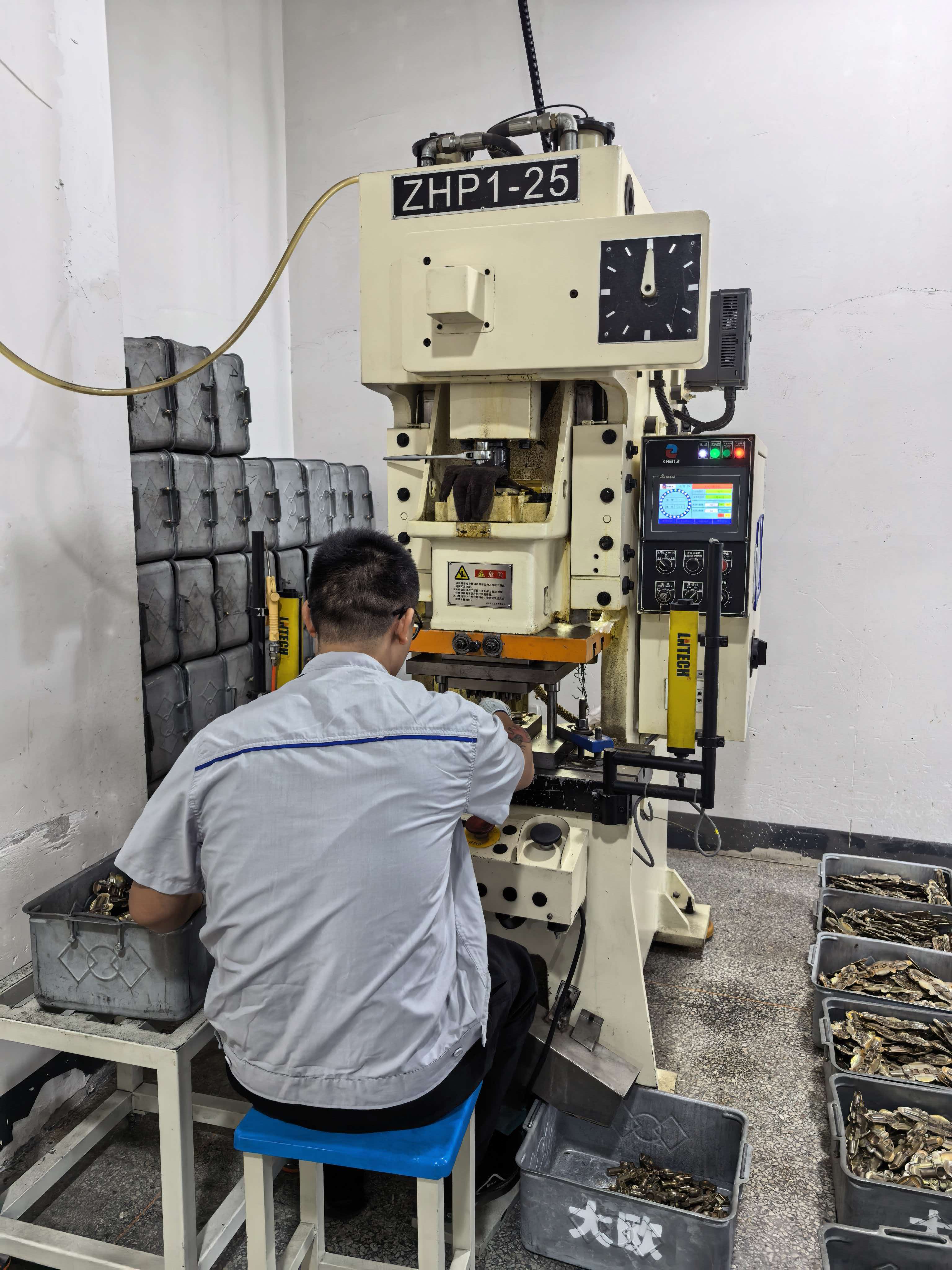
In-process inspection supports the process layer of compliance — the records a Stage 5 document request should return.
Use Cases: Applying the Compliance Stack to Five Build Types
Fuel vehicle 12 V battery circuits
A conventional 12 V battery harness typically combines a battery terminal, a terminal-to-cable joint and a fuse box. The DOBP22001 brass SAE Top Post terminal at 19.05 mm, the DOE24022 terminal rated for 12 V and 24 V DC, and the DOBXS4-1A or DOBXS5-1F fuse box together form a compliant chain in which each link carries its own evidence: post dimension, voltage and plating, and IATF 16949 process control.
Commercial vehicle 24 V circuits
Because the DOE24022 terminal is rated for both 12 V and 24 V DC, a commercial-vehicle program can qualify a single terminal family across both voltage classes. The compliance work shifts to documenting the 24 V application on the drawing, so that the terminal's plating and current path are assessed at the higher voltage rather than assumed from the 12 V case.
EV battery packs and high-current connections
The DOBN22006-D5 at 500 A with an M8 stud and 8 N·m torque is the component where torque control, insulation and thermal management are simultaneously in scope. A pack-level compliance file for this part needs the torque specification, the insulation approach and the finished-product electrical test record together; any one of them alone leaves a gap an OEM audit will find.
Zone-dependent harness routing
Where a harness runs from the engine bay through the chassis to the body, the connector set changes at each boundary. The DOH0001-1 at IP67 and −40 °C to +125 °C, the D520023 three-way conduit connector at IP66/IP67 for branch points, and the DOCB24001 PA66 GF30 bracket for route stability illustrate how one vehicle can require three different specification profiles in a single harness layout.
Waterproof connector programs outside the automotive core
CNDO states that its product range also covers waterproof plugs and connectors, which are the component types used where sealing is the dominant requirement rather than voltage or torque. Buyers in these adjacent applications should apply the same evidence discipline: an IP rating claim without a test record is a marketing statement, not a compliance document.
Comparison Table: Specifications and the Requirements They Answer
| Product | Stated specification | Requirement it addresses | Evidence the buyer should request |
|---|---|---|---|
| DOH0001-1 housing | IP67; −40 °C to +125 °C | Ingress protection and operating temperature range | Sealing test record; temperature rating on the datasheet |
| DOCB24001 support bracket | PA66 GF30; UL94-V0/V2 | Flammability classification and structural reinforcement | Part-level UL94 rating; material designation |
| DOE24022 terminal | 12 V / 24 V DC; copper alloy; tin or gold plating | Voltage class, conductivity and corrosion control | Plating callout on drawing; voltage rating confirmation |
| D520023 three-way conduit connector | PA66; IP66/IP67; sealing gaskets | Sealing continuity at harness branch points | IP66 and IP67 test records; gasket material specification |
| DOBP22001 battery terminal | Brass; 19.05 mm positive post; 12 V | SAE Top Post interface dimension for 12 V systems | Dimensional inspection report against the 19.05 mm post |
| DOBXS4-1A / DOBXS5-1F fuse boxes | PA66 / copper; IATF 16949 | Housing material, conductor material and process control | IATF 16949:2016 certificate with site and scope; electrical performance test |
| DOBN22006-D5 EV connector | 500 A; M8; 8 N·m | High-current connection, stud interface and torque control | Torque specification in process documentation; insulation approach; finished-product electrical test |
Regional Requirements at a Glance
| Region / framework | Requirement type | What it affects in a connector program |
|---|---|---|
| EU — REACH (EC) No 1907/2006, interpreted via ACEA AIG 4.0 (2024) | Chemical regulation | Material declarations for housings, gaskets, platings and copper alloys; substance identification obligations for the supplier role in the chain |
| North America — SAE Top Post interface | Interface dimension | Positive post dimension of 19.05 mm on 12 V battery terminals such as the DOBP22001 |
| Global — IATF 16949:2016 | Quality management system | Incoming material test, in-process inspection and finished-product electrical performance test records |
| Road vehicles — ISO 20860-1:2008, SAE J1742, SAE J2223-2 (catalogue references) | Dimensional, electrical and test standards | Dimensional characteristics, electrical characteristics, contact allocation, performance and test requirements — confirm current edition and applicability per part |
| Material — UL94 | Flammability classification | V-0 versus V-2 designation at part level for polymer components such as the DOCB24001 bracket and PA66 fuse box housings |
FAQ
1. Which certifications should an automotive wire harness connector supplier provide for an EU or US program?
For both markets, the baseline is an IATF 16949:2016 quality management system certificate covering the specific manufacturing site and product scope — CNDO states that it holds IATF 16949:2016 certification. Beyond the certificate, buyers should request three product-level evidence sets: the UL94 flammability classification at part level for polymer components, the IP rating test records for sealed parts, and finished-product electrical performance test records. For EU-bound programs, add a REACH (EC) No 1907/2006 substance declaration, with ACEA AIG 4.0 as the sector interpretation guide. A certificate alone does not cover any of these product-level requirements.
2. Which standards apply to IP67 housings, SAE Top Post battery terminals and EV high-voltage connectors?
Published standards catalogues for road-vehicle electrical connections reference ISO 20860-1:2008, SAE J1742 and SAE J2223-2, which address dimensional characteristics, electrical characteristics, contact allocation, performance requirements and test requirements. These references need to be confirmed for current edition and per-part applicability before they enter a qualification file. On the product side, the corresponding specifications are: IP67 and −40 °C to +125 °C for the DOH0001-1 housing; a 19.05 mm positive post on a brass body for the DOBP22001 SAE Top Post battery terminal; and 500 A with an M8 stud at 8 N·m for the DOBN22006-D5 EV connector. Each specification is a measurable value, which is what makes it auditable.
3. What are the commercial terms for a compliance-driven order?
CNDO's stated purchasing terms are a minimum order quantity of 2 units, FOB or CIF delivery terms, pre-shipment test as the acceptance criterion, and payment of 30% T/T in advance with the remaining 70% T/T before shipment. Because pre-shipment test is the named acceptance basis, the test scope should be agreed in writing at the same time as the specification, so that acceptance is measured against the same document the engineering team qualified.
4. Can buyers request samples and test documentation before mass production?
Yes. Sample evaluation is the stage at which interface dimensions and assembly behaviour are confirmed physically, including the 19.05 mm post fit on the DOBP22001 and the 8 N·m torque behaviour on the DOBN22006-D5. CNDO states that it maintains in-house R&D and production covering mould development, precision manufacturing and finished product inspection, with a 25-engineer R&D team, which is the capability that allows sample iterations to be tied to the same process documentation used in mass production.
5. How should a long-term automotive wire harness connector supply partnership be structured around compliance?
A durable partnership treats compliance as a recurring cycle rather than a one-time gate. Three practices sustain it: re-verify the IATF 16949:2016 certificate and its scope at each renewal; keep material declarations current so that REACH obligations and UL94 part-level ratings do not lapse between orders; and freeze change control on the parameters that carry the compliance claim — IP class, temperature range, plating, torque and post dimension. CNDO states that it supplies OEM and main-unit programs and lists partnerships with automakers including Chery Group, Foton Motor, LOVOL, Wuling, FAW Group, Changan Group, GAC Group, Geely Group and BAIC Group, as well as wiring harness manufacturers including Luxshare Precision, Aptiv and Sumitomo Electric. Buyers with a live compliance question on a specific part number can send the drawing and required standard to jialuzhou101@gmail.com or call +86 13645876878 to confirm which evidence is available for that part.
Conclusion
Compliance for automotive wire harness connectors resolves into a simple discipline: every claim in the purchase file should trace to a document. The system claim traces to an IATF 16949:2016 certificate with a named site and scope. The material claim traces to a part-level UL94 classification and a REACH substance declaration. The performance claim traces to an IP test record, a temperature rating, a voltage rating or a torque value. The interface claim traces to a dimension — 19.05 mm on the DOBP22001, M8 at 8 N·m on the DOBN22006-D5.
Read together, the seven component families in this guide show that no single standard governs a harness. The DOH0001-1 housing answers an environmental question, the DOCB24001 bracket answers a flammability question, the DOE24022 terminal answers a voltage and plating question, the D520023 conduit connector answers a sealing-continuity question, the DOBP22001 answers a regional interface question, the DOBXS4-1A and DOBXS5-1F fuse boxes answer a process question, and the DOBN22006-D5 answers a high-current torque question. A buyer who collects all seven answers has a compliance file. A buyer who collects only a certificate has a starting point.
Next Step: Send Your Compliance Requirement
Zhejiang Daou Electronics Co., Ltd. (CNDO) supplies automotive wire harnesses, battery terminals, fuse boxes, connectors and waterproof plugs under an IATF 16949:2016 quality system, with OEM and main-unit supply programs.
For compliance questions, part-number specifications or an evidence package request:
Email: jialuzhou101@gmail.com
Tel / WhatsApp: +86 13645876878
Website: www.zjdaou.com
Address: Puqi Characteristic Industrial Zone, Yueqing City, Zhejiang Province, China
Download the full product and capability catalogue: CNDO English Catalogue (PDF)
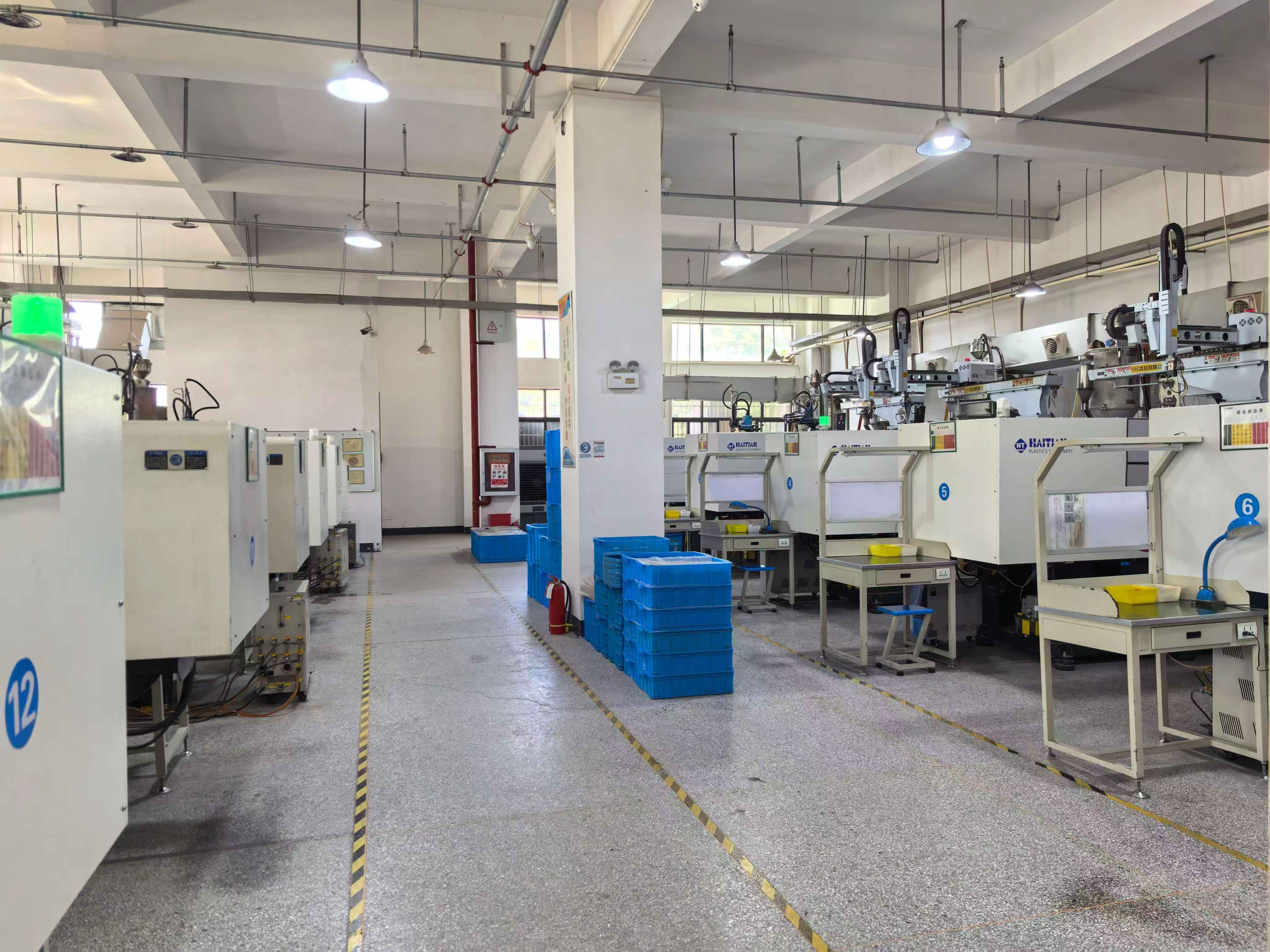
Pre-shipment test is the stated acceptance criterion in CNDO purchasing terms — the final checkpoint in the compliance sequence.
Have Questions or Need More Details?
Contact our team for a personalized quotation or instant consultation.
Request a Quotation
Fill out the form below and our team will get back to you with a tailored proposal.
WhatsApp Direct Chat
Prefer to chat in real-time? Message us on WhatsApp for instant assistance & quick answers.
- Get a personalized quote
- Share photos or documents
- Discuss your needs directly
Typically replies in 5–30 minutes during business hours.