Planning Long-Term Supply with a Small-Lot Connector Partner: Lead Time and Quality Assurance FAQs
Long-term supply planning for automotive wire harness connectors is not only a price exercise. For small-lot buyers—fleet maintenance teams, specialty vehicle builders, motorcycle assemblers, garden-tool brands and battery-pack integrators—the harder questions are about repeatability. Will the same terminal, housing or fuse box arrive with the same material, the same dimensions and the same documentation six months from now? Who confirms the lead time when the order is small? What happens if the material or plating changes?
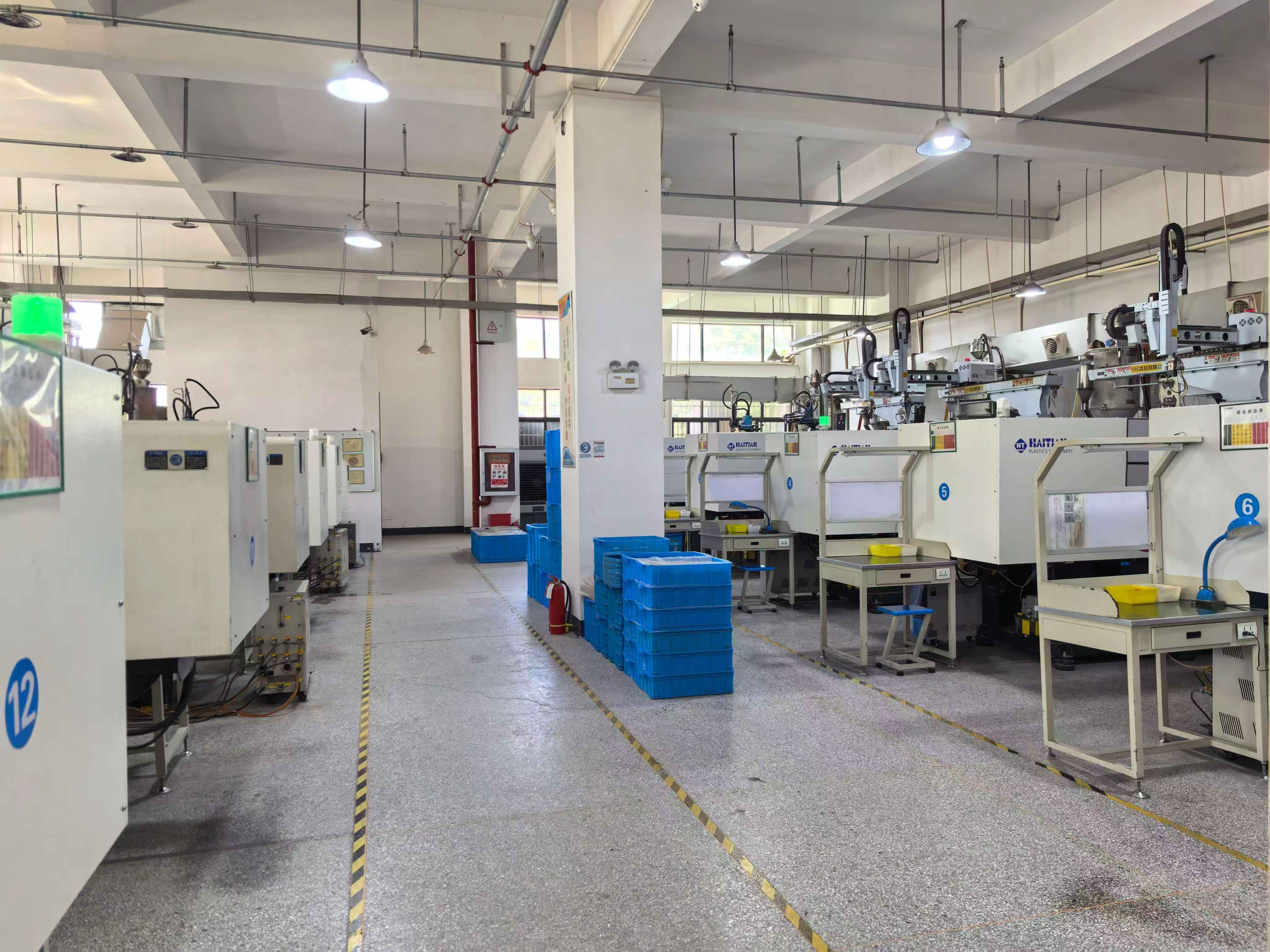
Zhejiang Daou Electronics Co., Ltd. (CNDO) is a manufacturer based in Puqi Characteristic Industrial Zone, Yueqing City, Zhejiang Province, China. The company was established in 2018 and produces automotive wire harnesses, battery terminals, fuse boxes, connectors, waterproof plugs and connectors for electric vehicle battery packs. It reports IATF 16949:2016 certification and operates a company-reported 6,000 m² facility with an annual output of 9,000,000 units. This FAQ guide uses its published product data to explain how a small-lot buyer can structure a long-term supply plan around lead time and quality assurance.
Problem Definition: Why Small-Lot Supply Breaks Down After the First Order
Small-lot sourcing creates a specific tension. A large connector manufacturer may prioritize high-volume programs, while a small supplier may lack the documentation and process discipline needed for repeat orders. The buyer is left with a supply channel that works for the first shipment but becomes unpredictable at the third or fourth.
The risk is not only a late delivery. It is silent substitution: a copper alloy changed to a different grade, a tin plating changed to another finish, a resin changed from PA66 to a lower-cost blend, or a fuse box busbar changed without notice. In a small-lot program, these changes are harder to detect because there is no large incoming inspection sample and no dedicated quality engineer on site.
A second risk is documentation drift. The first order may arrive with a certificate and a drawing; the second may arrive with only a packing list. For a buyer who needs to demonstrate material compliance to an OEM or to an EU importer, missing batch records can stop the program even when the parts themselves are acceptable.
Industry Background: Demand, Regulation and the Case for a Documented Partner
Demand for automotive wiring harnesses and connectors remains substantial. Global Market Insights valued the global automotive wiring harness market at USD 74.7 billion in 2026, with Asia Pacific holding 47.1% of 2025 revenue (SRC-0001). SNS Insider valued the automotive high-voltage connector market at USD 4.99 billion in 2026, with a forecast CAGR of 11.90% from 2026 to 2035 (SRC-0004). These figures describe a market where connector supply is strategic, not incidental.
Regulatory pressure adds another layer. For EU-bound programs, the ACEA Automotive Industry Guideline on REACH (AIG 4.0, 2024) sets out how automotive suppliers should manage chemical compliance and material declarations (SRC-0019). A small-lot buyer may not need a full material data package at the first sample, but the documentation path should be agreed before serial orders. The same logic applies to RoHS declarations and to the IATF 16949 quality-system evidence that OEM customers expect.
The practical conclusion is simple: the supplier's ability to provide consistent parts and consistent documents matters more than a catalog price difference. That is especially true when the buyer cannot afford a second qualification cycle.
Detailed Solution: What Quality Assurance Looks Like at the Component Level
Quality assurance for small-lot supply starts with the component family, not with a general quality statement. The published product data for CNDO covers several families that are relevant to automotive wire harness programs: terminals, battery terminals, housings, fuse boxes, support brackets and three-way conduit connectors.
Terminals and Battery Terminals
The DOE24022 automotive wiring harness terminal is available in pure copper, red copper, copper alloy, tin-plated copper, nickel-plated copper or gold-plated copper. Its rated voltage is 12V or 24V DC, with special models rated up to 48V DC. The product is described as having low contact resistance for stable conductivity. For a long-term program, the copper grade and the plating type should be written into the specification; a generic copper description is not enough.
For battery connections, the DOBP22001 is a brass SAE Top Post terminal for 12V automotive applications, with a 19.05 mm positive post diameter. The DOBN22006-D5 is an EV high-voltage battery connector with a tin-plated finish, M8 thread, 8 N·m tightening torque, 500 A maximum current rating and a 17.46 mm negative post diameter. These are the parameters that should appear on the drawing and on the incoming inspection record.
Housings
The DOH0001-1 automotive wire harness housing is made of PA/PBT and rated IP67. It is described as waterproof, dustproof, oil-resistant and acid/alkali resistant, with an operating temperature range of -40°C to +125°C. The housing is stated to meet automotive vibration requirements and to comply with IATF 16949 standards. For a long-term program, the IP67 rating and the temperature range are the two specifications that should be written into the purchase specification, not left to a catalog description.
Fuse Boxes
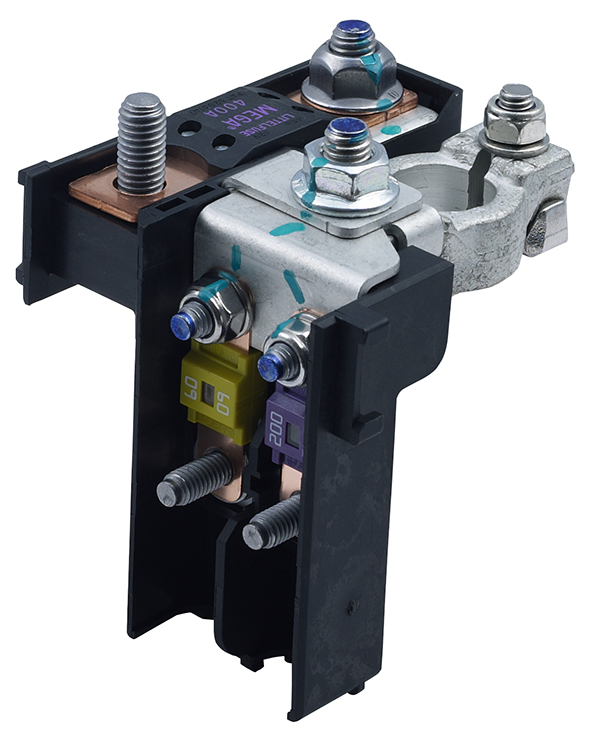
The DOBXS4-1A and DOBXS5-1F battery fuse boxes use PA66 and copper construction. The working voltage is 12V or 24V DC. The main fuse is a bolt-type mega fuse, and the auxiliary fuses are standard blade fuses from 5A to 30A. The main busbar uses high-conductivity copper or brass with tin, nickel or zinc plating. The operating temperature range is -40°C to +125°C. The shell is flame-retardant plastic with a sealed cover, and the product has a waterproof and dustproof structure. Installation uses fixed mounting holes with a direct battery positive connection. The company describes the fuse box range as compliant with IATF 16949 standards.
Support Brackets and Conduit Connectors
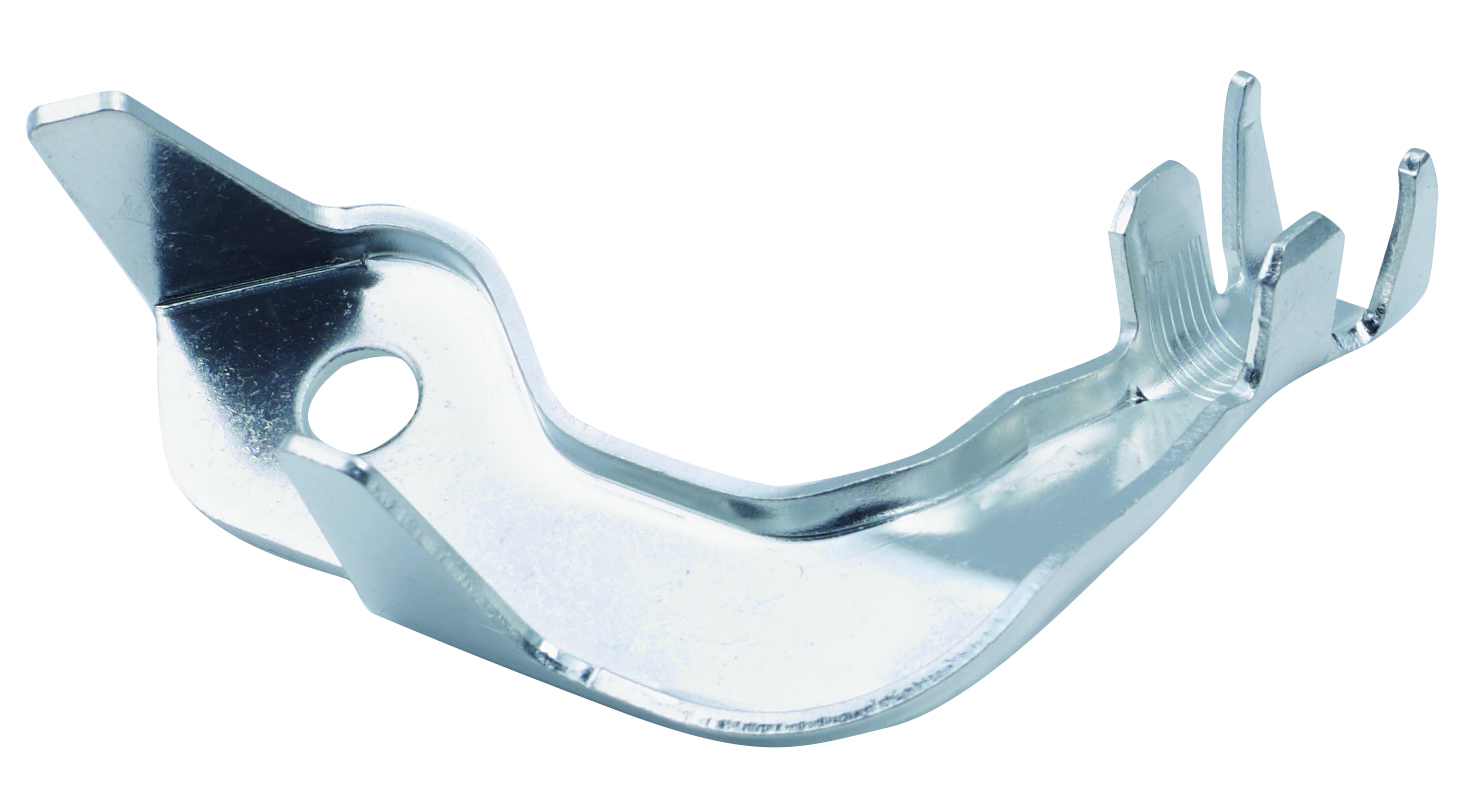
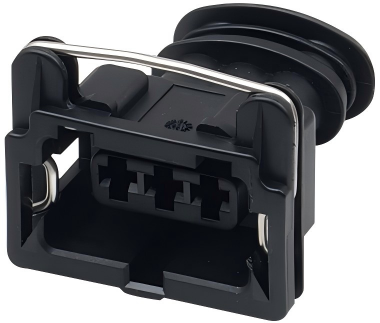
The DOCB24001 support bracket is made of PA66 or PA66 GF30, with a flame rating of UL94-V0 or UL94-V2. It is resistant to engine oil, coolant, cleaning agents, salt spray, UV and ageing, and complies with vehicle vibration durability test standards. The operating temperature range is -40°C to +125°C. The D520023 three-way tube conduit connector is made of PA66 for engine bay, chassis and body wiring. It has a continuous operating temperature range of -40°C to +120°C and a short-term peak of 150°C. With sealing gaskets, it reaches IP66/IP67. It is resistant to engine oil, mineral oil, grease, weak acid/alkali and partial solvents, and is described as having excellent insulation performance.

Documentation and Material Traceability
Material traceability should be built from the same data. The terminal data identifies copper and plating options. The fuse box data identifies PA66, copper/brass busbars and tin/nickel/zinc plating. The housing data identifies PA/PBT. The bracket data identifies PA66 or PA66 GF30. The three-way connector data identifies PA66. A buyer should ask the manufacturer to link these material declarations to the production batch, and to state the material grade and plating type on the inspection record.
For EU-bound programs, the REACH declaration should follow the ACEA AIG 4.0 guidance. For other markets, a RoHS declaration and a material declaration are the minimum. The buyer should also ask which documents are issued per batch and which are issued per model, so that the receiving process can be designed around the actual document flow.
Step-by-Step Breakdown: How to Pre-Negotiate a Long-Term Small-Lot Plan
Step 1: Define the Application Envelope
Before discussing price or lead time, define the electrical and environmental envelope: rated voltage (12V/24V DC, or up to 48V DC for special terminal models), current, operating temperature (-40°C to +125°C for the housing and fuse box range), ingress protection (IP67 for the housing; IP66/IP67 for the three-way connector with gaskets), vibration exposure and the mating interface. A small-lot order does not reduce these requirements.
Step 2: Lock the Component Specification
Write the model, material and plating into the specification. For a terminal, state the copper grade and plating. For a fuse box, state the busbar plating and the auxiliary fuse range. For a housing, state PA/PBT and IP67. For a bracket, state PA66 or PA66 GF30 and the UL94 rating. This is the baseline against which every repeat batch will be compared.
Step 3: Request the Document Package Before the Quotation
Ask for the IATF 16949:2016 certificate and its scope, the product drawing, the material declaration, the inspection record format and the packaging specification. For EU-bound programs, ask for the REACH declaration aligned with the ACEA AIG 4.0 guidance. Confirm which documents are issued per batch and which are issued per model. If a document is not available, record that gap before the order is placed.
Step 4: Validate the Sample Against the Specification
Check the sample against the drawing and the material declaration, not against a catalog photo. For a terminal, check the plating and the post diameter (19.05 mm for the DOBP22001 positive post; 17.46 mm for the DOBN22006-D5 negative post). For a fuse box, check the sealed cover, the busbar plating and the fuse range. For a housing, check the IP67 sealing and the -40°C to +125°C rating.
Step 5: Agree on Change Control
Define what counts as a change: material grade, plating type, resin grade, dimensional tolerance, fuse rating, packaging or production site. Agree that the manufacturer will notify the buyer before any change is implemented, and that the buyer has the right to re-approve the sample. This is the single most effective protection against silent substitution in a small-lot program.
Step 6: Pre-Negotiate Lead Time with a Written Input List
Lead time is not a single number. It depends on the drawing, material, tooling, lot size, production schedule, inspection requirements and packaging. Provide the manufacturer with the drawing or specification, the material and plating requirement, the annual and first-order quantities, the required documentation and the delivery destination. Ask for a written lead time and the conditions that would change it. For a long-term program, agree on a rolling forecast and a review point before each repeat order.
Step 7: Treat the First Repeat Order as a Quality Gate
Compare the first repeat batch with the approved sample and the batch records. Check the material declaration, the plating type, the key dimensions and the sealing performance. If the first repeat order passes, the process is repeatable; if it does not, the long-term plan should be paused before more orders are placed.
Use Cases: Where Small-Lot Connector Supply Matters
Commercial Vehicle and Fleet Maintenance
A fleet maintenance operation may need a small lot of 12V/24V fuse boxes and battery terminals to keep vehicles on the road. The relevant specifications are the 12V/24V DC working voltage, the bolt-type mega fuse, the 5A-30A auxiliary fuse range and the -40°C to +125°C operating temperature. The buyer should keep the fuse box model and the terminal plating on file so that repeat orders match the original repair.
EV Battery-Pack Pilot Builds
A pilot build may need a small lot of high-voltage battery connectors. The DOBN22006-D5 provides a 500 A maximum current rating, M8 thread, 8 N·m tightening torque and a 17.46 mm negative post diameter. The buyer should confirm the base material and the test documentation before the pilot build, because the published data identifies the tin plating but does not state every base-material detail.
Motorcycle and Specialty Vehicle Harnesses
Motorcycle assemblers and specialty vehicle builders may need small lots of terminals, housings and conduit connectors. The relevant checks are the terminal voltage rating, the housing IP67 sealing and the three-way connector's -40°C to +120°C continuous rating. A small-lot program should still use a fixed drawing, because a harness that is assembled by hand at low volume is more sensitive to terminal and housing variation, not less.
Garden-Tool and Outdoor Equipment
Outdoor power equipment places a premium on sealing and chemical resistance. The three-way conduit connector's IP66/IP67 rating with gaskets and its resistance to UV, hydrolysis and ageing are relevant to these programs. The specific connector must still be matched to the tool's harness drawing, and the buyer should confirm the gasket configuration before the first order.
Battery-Pack and Energy-Storage Integration
Battery-pack and energy-storage integrators may evaluate high-voltage connector families for small-lot projects. The 500 A, 8 N·m and M8 specifications of the DOBN22006-D5 provide a starting point, but the final selection must be confirmed against the pack drawing and the applicable test plan. The buyer should not assume that an automotive battery-pack connector is automatically qualified for a stationary storage enclosure without a drawing review.
Comparison Table: Published Component Data for Small-Lot Planning
The table below uses only the published product data. Where a parameter is not stated in the available data, it is marked as not specified rather than estimated.
| Component family | Model | Material | Temperature range | Sealing / protection | Key published fact |
|---|---|---|---|---|---|
| Automotive wiring harness terminal | DOE24022 | Pure copper, red copper, copper alloy; tin, nickel or gold plating | Not specified | Not specified | 12V/24V DC; up to 48V DC for special models; low contact resistance |
| Battery terminal | DOBP22001 | Brass | Not specified | Not specified | SAE Top Post 12V; positive post 19.05 mm |
| EV high-voltage battery connector | DOBN22006-D5 | Tin-plated; base material not specified | Not specified | Not specified | M8 thread; 8 N·m; 500 A maximum; negative post 17.46 mm |
| Housing | DOH0001-1 | PA/PBT | -40°C to +125°C | IP67; waterproof, dustproof, oil and acid/alkali resistant | IATF 16949 standards; automotive vibration requirements |
| Battery fuse box | DOBXS4-1A / DOBXS5-1F | PA66 and copper; busbar tin/nickel/zinc plated | -40°C to +125°C | Sealed cover; waterproof and dustproof structure | 12V/24V DC; bolt-type mega fuse; 5A-30A blade fuses |
| Support bracket | DOCB24001 | PA66 or PA66 GF30 | -40°C to +125°C | Not specified | UL94-V0/V2; oil, coolant, salt spray, UV and ageing resistance |
| Three-way conduit connector | D520023 | PA66 | -40°C to +120°C; short-term 150°C | IP66/IP67 with sealing gaskets | Chemical resistance; insulation performance |
FAQ: Long-Term Small-Lot Supply, Lead Time and Quality Assurance
What compliance documents should a small-lot buyer request for automotive wire harness connectors?
Start with the quality-system certificate and its scope. Zhejiang Daou Electronics reports IATF 16949:2016 certification, and the certificate scope and validity should be checked against the parts being purchased. For fuse boxes, the company describes its range as compliant with IATF 16949 standards. Depending on the market, request RoHS declarations and, for EU-bound programs, REACH documentation aligned with the ACEA AIG 4.0 guidance. Also request the product drawing, material declaration and inspection record for the specific model.
How can a buyer verify quality consistency across repeat small-lot orders?
Fix the specification at the material and dimensional level. For terminals, that means the copper grade and plating type (pure copper, red copper, copper alloy, tin/nickel/gold plating), plus rated voltage and contact resistance requirements. For housings, it means PA/PBT material, IP67 sealing and the -40°C to +125°C operating range. For fuse boxes, it means PA66/copper construction, busbar plating (tin/nickel/zinc) and the 5A-30A auxiliary fuse range. Then compare each batch against the approved sample and request batch records. A quality certificate alone does not prove repeatability.
What material traceability information is available for terminals, housings and fuse boxes?
The product data identifies the material families: terminals in pure copper, red copper, copper alloy or plated copper; fuse box busbars in high-conductivity copper/brass with tin, nickel or zinc plating; housings in PA/PBT; support brackets in PA66 or PA66 GF30; three-way conduit connectors in PA66. Buyers should ask for batch-level material declarations that state the material grade, plating type and resin grade, and link them to the production batch. Do not accept a generic "copper" statement when the drawing specifies a plating or alloy.
Can a small-lot buyer request samples before committing to a long-term supply plan?
Samples are a normal part of connector qualification, but the scope must be agreed in writing. Specify the model, material, plating, key dimensions and the application envelope (voltage, current, temperature, IP requirement). Ask for the sample quantity, the inspection items and the documentation that will accompany the sample. Zhejiang Daou Electronics can be contacted directly on +86 13645876878 or jialuzhou101@gmail.com to confirm sample availability and the evaluation plan.
How should lead time be pre-negotiated for custom models?
There is no universal lead time for a custom connector; it depends on the drawing, material, tooling, lot size, production schedule and packaging. Before asking for a date, provide the drawing or specification, the material and plating requirement, the annual and first-order quantities, the required documentation and the delivery destination. Ask the manufacturer to confirm the lead time in writing and to state which inputs would change it. For a long-term small-lot program, agree on a rolling forecast and a review point before each repeat order. Direct contact: phone +86 13645876878, email jialuzhou101@gmail.com.
Conclusion: A Small-Lot Partner Is a Documented Partner
Long-term supply with a small-lot connector partner is built on four documents and one habit: a locked specification, a complete document package, batch-level material traceability, a written lead-time basis, and direct communication with the manufacturer. The product data for CNDO shows that the component-level facts are available—terminal materials and plating, housing IP67 sealing and -40°C to +125°C operation, fuse box PA66/copper construction with a -40°C to +125°C range, bracket PA66/PA66 GF30 with UL94-V0/V2, and three-way conduit IP66/IP67 with gaskets.
Those facts become a supply advantage only when they are written into the purchase specification and checked on every repeat order. For fuse boxes, the company describes its range as compliant with IATF 16949 standards; for housings, the -40°C to +125°C range and IP67 sealing should be treated as controlled specifications, not marketing descriptions. Buyers should still verify the current IATF 16949:2016 certificate and scope directly.
Next step: If you are planning a small-lot program, send the drawing, the material and plating requirement, the annual quantity and the target delivery date to the manufacturer. Zhejiang Daou Electronics Co., Ltd. can be reached on +86 13645876878 or jialuzhou101@gmail.com for sample, quotation and lead-time discussions.
Company brochure: download the English brochure.
Have Questions or Need More Details?
Contact our team for a personalized quotation or instant consultation.
Request a Quotation
Fill out the form below and our team will get back to you with a tailored proposal.
WhatsApp Direct Chat
Prefer to chat in real-time? Message us on WhatsApp for instant assistance & quick answers.
- Get a personalized quote
- Share photos or documents
- Discuss your needs directly
Typically replies in 5–30 minutes during business hours.