SAE Top Post vs EV High-Voltage Battery Terminals: Choosing the Right Harness Connection
SAE Top Post vs EV High-Voltage Battery Terminals: Choosing the Right Harness Connection
Answer first: select the SAE top post terminal (DOBP22001) when the wiring harness serves a 12 V battery system with tapered post interfaces of 19.05 mm positive and 17.46 mm negative. Select the EV high-voltage battery connector (DOBN22006-D5) when the harness carries pack-level current through an M8 threaded interface rated to 500 A. Both parts belong to the same battery terminal family at Zhejiang Daou Electronics Co., Ltd. (CNDO), both use an M8 thread and a tightening torque of 8 N·m, and both are tin-plated — which is exactly why they are so often confused during sourcing.
Problem Definition: Two Terminals, Two Electrical Worlds
A battery terminal decision usually goes wrong for one of two reasons. The first is a physical mismatch: the terminal cannot reliably seat on the battery interface the vehicle program actually uses. The second is an electrical mismatch: the terminal fits mechanically, but the connection is specified for a different current class than the circuit demands. Both failure modes surface late — during harness assembly, during vehicle validation, or during aftermarket service — and both are expensive to correct once tooling and purchase orders are in place.
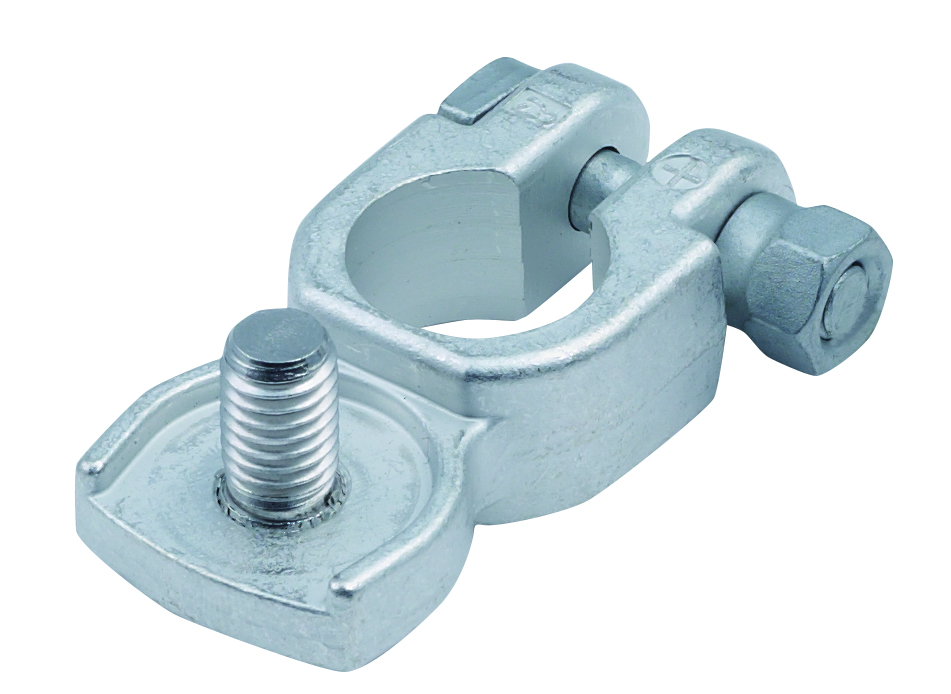
SAE top post terminals such as the DOBP22001 are designed around tapered battery posts, with the positive post at 19.05 mm and the negative post at 17.46 mm. This interface is the familiar clamp-and-nut arrangement used on 12 V automotive batteries. EV high-voltage battery connectors such as the DOBN22006-D5 use a different logic: an M8 threaded stud connection rated for a maximum current of 500 A, intended for battery pack and power distribution connections where current density, not convenience of service, drives the design.
The consequences of mixing the two are not only mechanical. A connection that is not engineered for its current class tends to run warmer, and heat accelerates relaxation of the joint, which raises contact resistance further. In vibration-exposed locations, a joint that is torqued incorrectly or seated on the wrong interface can loosen progressively. This is why the automotive industry treats the terminal interface as a system parameter rather than a consumable part.
Environment adds a second layer of risk. Sealed connectors in this application class reach IP67 and IP6K9K protection grade for wet and high-pressure wash zones, while unsealed types are appropriate only for dry interior environments. Choosing an unsealed interface for a battery pack compartment, or assuming that any sealed terminal will survive continuous high-current duty, is a common source of field complaints.
Industry Background: Why the Two Connection Types Are Diverging
The wiring harness market continues to expand alongside vehicle electrification and driver-assistance content. Global automotive wiring harness market size was estimated at USD 89.54 billion in 2025 (Precedence Research), and Asia Pacific held a 40.89% share of that market in 2025, with China accounting for 62% of the regional revenue (Fortune Business Insights). Connector demand is following a separate and steeper curve: the global electric vehicle high voltage connector market was valued at USD 2.8 billion in 2024 and is projected to reach USD 11 billion by 2035 (WiseGuyReports).
What those numbers mean for a connector buyer is straightforward. The 12 V and 24 V terminal business is a mature, standards-driven volume business, while high-voltage pack connections are a growth business with tighter engineering requirements per part. The two share a supply base but not a specification logic, and a supplier that performs well in one is not automatically qualified for the other.
Standards reflect the same split. USCAR-2 is the primary performance standard for automotive electrical connector systems in North America and covers testing for low-voltage road vehicle applications (SAE International). LV214 is the standard widely used by European German OEMs such as Audi, BMW, Daimler and Porsche for terminal and connector testing requirements (Connector Standards Guide, TE Connectivity). On top of these, the application requirements for battery and harness connections typically include IATF16949 automotive certification, RoHS compliance, flame retardance and vibration resistance, with ISO 16750 and USCAR-2 vibration standards applying to passenger car assembly projects.
Sources: Precedence Research; Fortune Business Insights; WiseGuyReports; SAE International; Connector Standards Guide (TE Connectivity).
Detailed Solution: Matching the Terminal to the Battery Architecture
Zhejiang Daou Electronics Co., Ltd. (CNDO) is a manufacturer of automotive wire harness connectors, battery terminals, fuse boxes and related components based in Puqi Characteristic Industrial Zone, Yueqing City, Zhejiang Province, China. The company operates a 6,000 m² facility with 125 employees and 25 R&D engineers, produces wire harness and battery terminals, fuse boxes, connectors, waterproof plugs and connectors for electric vehicle battery packs, and supplies OEM and main-unit programs with an IATF 16949: 2016 quality system.
DOBP22001 — SAE Top Post Terminal for 12 V Systems
The DOBP22001 is the 12 V automotive choice in this comparison. It is a brass-based, tin-plated terminal with an SAE top post configuration, designed to seat on tapered battery posts. The positive post interface is 19.05 mm and the negative post interface is 17.46 mm, with the familiar taper that allows a clamped connection to tighten as it is drawn down the post. The terminal carries an M8 thread and is specified with a tightening torque of 8 N·m.
For a fuel vehicle battery wire harness assembly, this is the correct starting point. It matches conventional 12 V battery posts, works with standard harness terminal and fuse box layouts, and it is the interface that service technicians already know. The same family logic extends to the harness terminal series DOE24022, which is rated for 12 V and 24 V DC in mainstream vehicle applications and up to 48 V DC for special models, with rated current varying by size from 5 A through 200 A depending on the circuit being fed.
DOBN22006-D5 — EV High-Voltage Battery Connector for Pack-Level Current
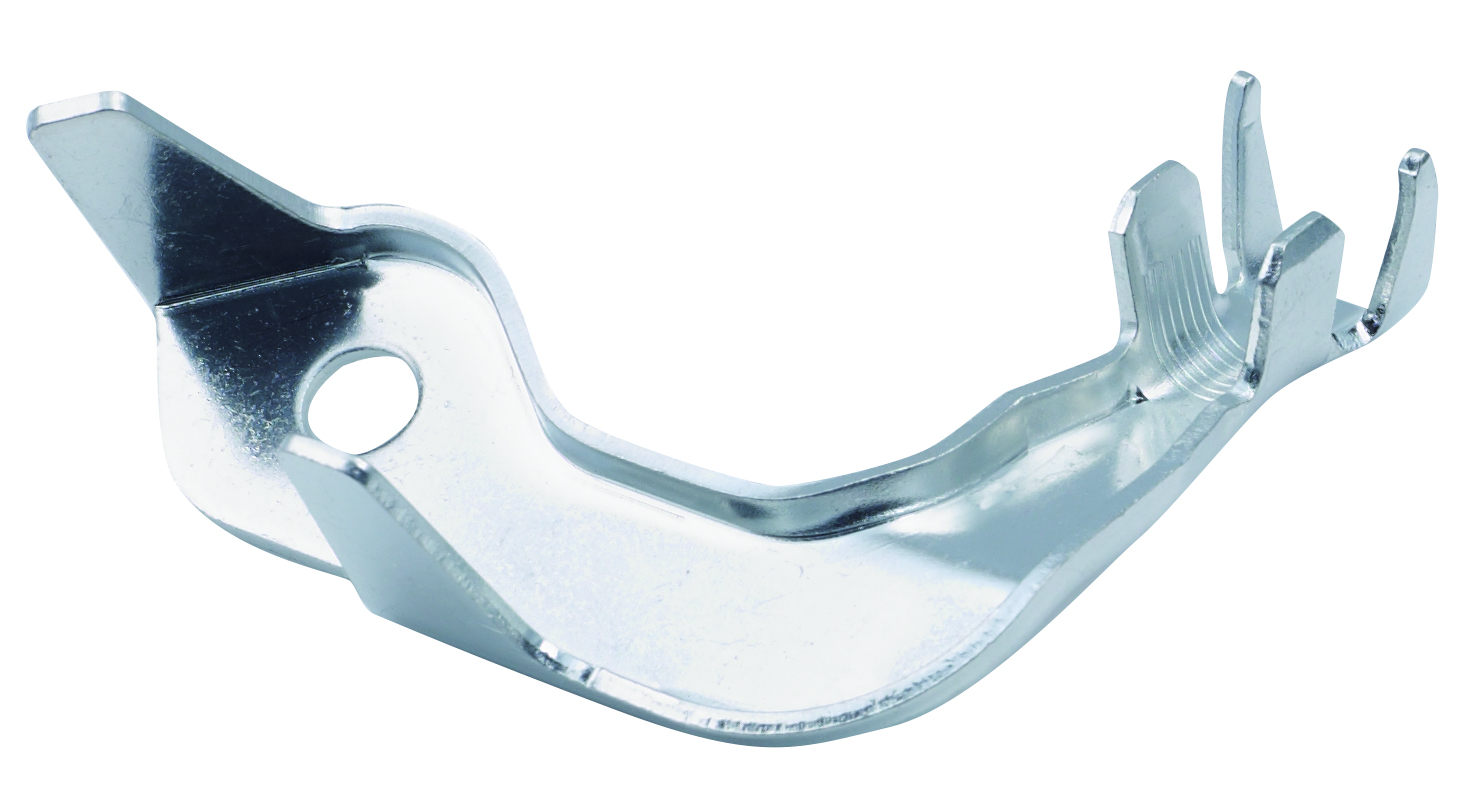
The DOBN22006-D5 is the EV high-voltage member of the same battery terminal family. It is specified with a maximum current of 500 A on an M8 threaded interface, a 17.46 mm negative post interface, and a tin-plated contact surface. Its purpose is to connect an EV power battery module into the harness at the current levels battery packs actually deliver, rather than the accessory-level currents of a 12 V system.
Two design consequences matter to buyers. First, a 500 A interface places far greater demands on contact area, plating quality and torque discipline than a 12 V post connection, so the tightening torque of 8 N·m must be applied with a calibrated tool and documented. Second, high-voltage pack connections generally require sealed construction: sealed connectors in this application class reach IP67 and IP6K9K protection grade and must operate across an ambient range of -40°C to +125°C while meeting IATF16949, IP67, flame retardant, vibration resistance and RoHS requirements.
Verified Parameters of the Battery Terminal Family
| Parameter (battery terminal family) | Specified value |
|---|---|
| Models | DOBP22001 (SAE top post, 12 V auto), DOBN22006-D5 (EV high-voltage battery connector) |
| Base material | Brass / copper |
| Plating | Tin-plated |
| Post diameter | Positive 19.05 mm, negative 17.46 mm, tapered |
| Thread | M8 |
| Max current | 500 A |
| Tightening torque | 8 N·m |
Material choice is where the two applications visibly diverge. The SAE top post terminal is a brass component, which offers stable conductivity and good corrosion behaviour in a clamped, frequently serviced joint. The EV high-voltage connector is specified with a tin-plated copper contact system, where tin plating protects the copper from oxidation and helps hold contact resistance stable across thermal cycling. Both approaches appear in the same product family data sheet, which is precisely why a buyer should confirm which model is quoted rather than approving a generic “battery terminal” line item.
Pairing the Terminal with the Matching Fuse Box
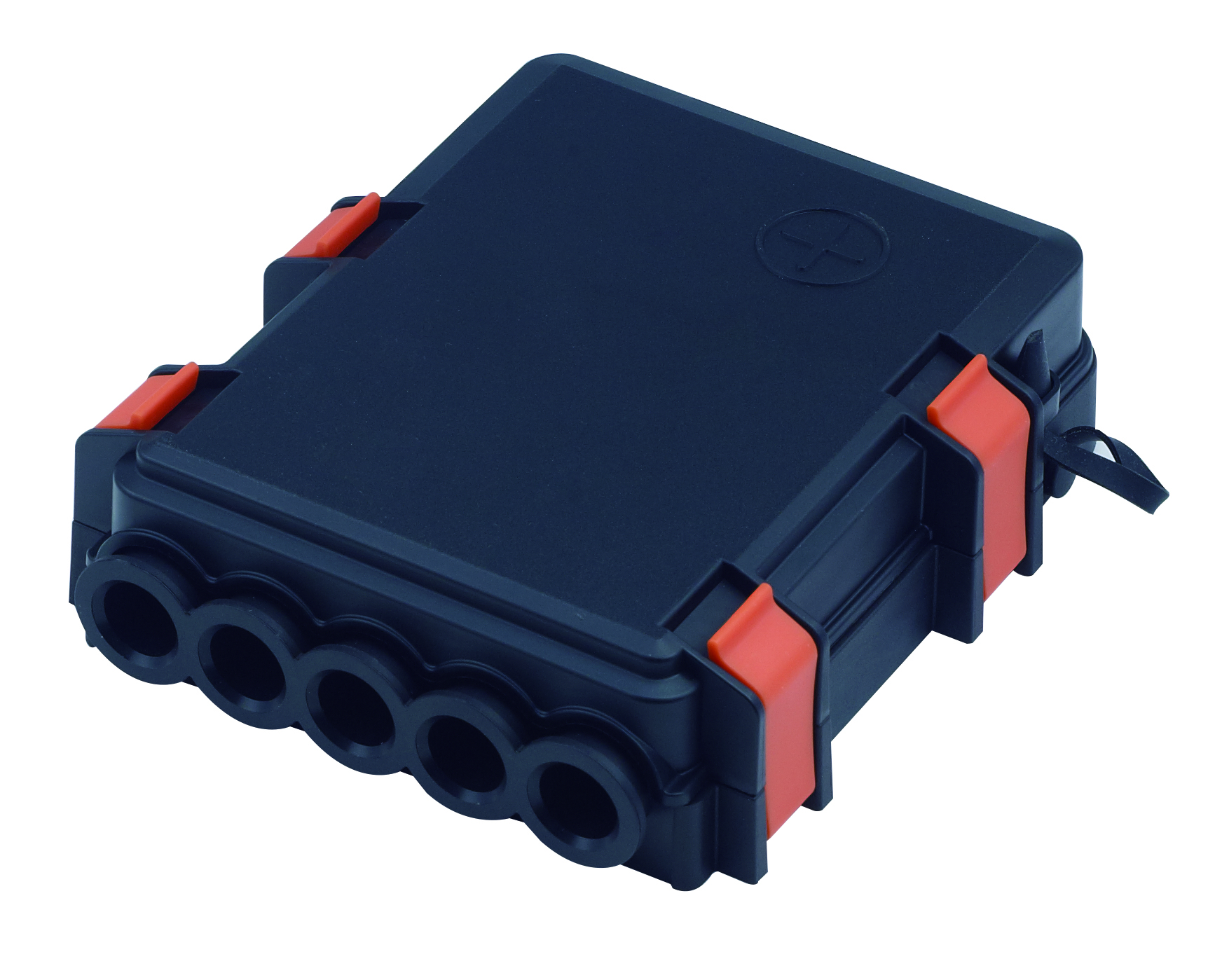
A battery terminal is only half of a connection. On the 12 V side, CNDO supplies battery fuse boxes in models DOBXS4-1A and DOBXS5-1F, designed for direct battery positive connection through fixed mounting holes. These units work at 12 V DC and 24 V DC, use a high conductivity copper or brass main busbar with tin, nickel or zinc surface plating, and accept a bolt-type mega main fuse plus standard blade auxiliary fuses in 5 A, 10 A, 15 A, 20 A, 30 A options. The shell is flame retardant plastic with a sealed cover and a waterproof, dustproof structure rated for -40°C to +125°C ambient conditions, with PA66 and copper as the primary materials.
For a vehicle matching battery fuse box project, this pairing matters: the fuse box defines the protection rating, and the terminal defines the interface. Specifying them from the same supplier removes one hand-off point in the harness build.
Other harness-side components in the same system include the wire harness housing DOH0001-1 (PA/PBT, IP67, -40°C to +125°C, waterproof, dustproof, oil-resistant and acid and alkali resistant, vibration compliant to IATF16949 standards), the three-way tube conduit connector D520023 (PA66, -40°C to +120°C continuous with 150°C short-term peak, IP66/IP67 with sealing gaskets), and the wiring harness support bracket DOCB24001 (PA66 or PA66 GF30, -40°C to +125°C, UL94-V0 / UL94-V2 flame rating, UV and ageing resistant).
Step-by-Step Breakdown: A Six-Step Selection Sequence
- Confirm the electrical architecture. Establish whether the harness serves a 12 V or 24 V battery system or a high-voltage EV battery pack. This alone eliminates one of the two terminal families from the shortlist.
- Match the physical interface. For 12 V work, verify tapered post diameters against the 19.05 mm positive and 17.46 mm negative specification. For EV pack work, confirm the M8 threaded stud interface and the 17.46 mm negative post dimension.
- Verify the current class. The EV high-voltage connector is specified to 500 A maximum. For 12 V circuits, current requirements from 5 A to 200 A are typically handled by the harness terminal series DOE24022 according to size, so the terminal must be selected against the fuse rating, not against the battery rating.
- Check material and plating against the environment. Brass bodies and tin-plated copper contacts behave differently in humidity, salt spray and thermal cycling. Tin plating protects the base metal and supports stable contact resistance; it must not be substituted without engineering approval.
- Fix the torque and document it. The M8 connection in this family is specified at 8 N·m. Assembly instructions, tool calibration records and torque audit sheets are part of the deliverable, not an optional extra.
- Confirm sealing grade, temperature range and compliance. Sealed connectors reach IP67 and IP6K9K, operating range is -40°C to +125°C, and the application requirements include IATF16949, RoHS, flame retardance and vibration resistance, with ISO 16750 and USCAR-2 referenced for passenger car assembly.
When the project involves custom housing colours, printed logos, terminal current specification, wire gauge matching, waterproof grade, pin count or packaging solutions, these are customization dimensions CNDO produces under an OEM model. For EV programs, the high voltage insulation structure of the connector is also a customization item rather than a catalogue-only option.
Use Cases: Where Each Connection Fits
1. Fuel Vehicle Battery Wire Harness Assembly (12 V)
The DOBP22001 SAE top post terminal is the appropriate interface for passenger car assembly, where the harness connects the vehicle storage battery, the battery fuse box, the automotive ECU and the vehicle wiring. The operation mode is cyclic on-board operation with vehicle start-stop, and the role of the connection is to transmit power and electrical signals while stabilising the circuit. In this scenario the harness connector is matched with a battery fuse box such as DOBXS4-1A or DOBXS5-1F, which mounts directly to the battery positive connection.
2. New Energy Vehicle Battery Pack Connection
The DOBN22006-D5 EV high-voltage battery connector sits on the pack side. It connects an EV power battery module into the wiring harness, works with sealed construction at IP67/IP6K9K, and operates from -40°C to +125°C. This is a passenger car assembly and new energy vehicle production scenario in which the supporting equipment typically includes the auto wiring harness, EV power battery module, automotive ECU and fuse box. Applications of this type are common in the United States, Germany and other European markets, where IATF16949 automotive certification and RoHS compliance are baseline expectations.
3. Commercial Vehicle Wiring and Higher-Voltage Auxiliary Systems
Commercial vehicle wiring is a third scenario where the terminal family logic is applied. Mainstream vehicle terminals operate at 12 V or 24 V DC, with up to 48 V DC used for special models, so a single harness platform may include more than one terminal current specification. In commercial vehicle programs the vibration requirement is the controlling factor: compliance with ISO 16750 and USCAR-2 vibration standards is normally required in addition to sealing and temperature range.
Comparison Table: SAE Top Post vs EV High-Voltage Connector
| Comparison point | DOBP22001 — SAE Top Post | DOBN22006-D5 — EV High-Voltage Connector |
|---|---|---|
| Primary application | 12 V automotive battery connection in fuel vehicle harnesses | EV battery pack and high-current harness connection |
| Interface type | SAE top post, tapered post seating | M8 threaded stud connection |
| Post diameter reference | Positive 19.05 mm, negative 17.46 mm, tapered | 17.46 mm negative post interface |
| Thread | M8 | M8 |
| Tightening torque | 8 N·m | 8 N·m |
| Max current rating | Defined by circuit terminals (e.g. 5 A to 200 A by size in the terminal series) | 500 A |
| Base material | Brass | Copper-based family material |
| Plating | Tin-plated | Tin-plated |
| Sealing class | Sealed versions IP67 / IP6K9K; unsealed types for dry interior | Sealed construction for battery pack environments |
| Operating temperature | -40°C to +125°C | -40°C to +125°C |
| Typical matched equipment | Auto wiring harness, vehicle storage battery, battery fuse box, automotive ECU | Auto wiring harness, EV power battery module, automotive ECU, fuse box |
| Applicable compliance | IATF16949, RoHS, flame retardant, vibration resistance | IATF16949, IP67, flame retardant, vibration resistance, RoHS |
The table is deliberately symmetrical on the points that are shared, because M8 threads, 8 N·m torque and tin plating are common to the family. The decisive differences are interface geometry, current class and sealing intent. A 12 V program that adopts an EV connector gains nothing but cost and assembly complexity; an EV pack program that adopts a top post terminal loses the current capability the pack requires.

FAQ
What certifications and standards apply to these battery terminals in vehicle programs?
The application requirements for automotive wire harness and battery connection components include IATF16949 automotive certification, RoHS compliance, flame retardance and vibration resistance. Sealed connectors in this application class reach IP67 and IP6K9K protection grade, while unsealed types are applicable to dry interior environments only. Operating temperature range is -40°C to +125°C, and passenger car assembly projects commonly reference ISO 16750 and USCAR-2 for vibration and environmental performance. USCAR-2 is the primary North American performance standard for automotive electrical connector systems covering low-voltage road vehicle applications, while LV214 is widely used by European German OEMs for terminal and connector testing requirements.
Can one manufacturer supply both SAE top post terminals and EV high-voltage battery connectors?
Yes, when the supplier's scope covers the whole connection path rather than a single part. CNDO produces wire harness and battery terminals, fuse boxes, connectors, waterproof plugs and connectors for electric vehicle battery packs, including the DOBP22001 SAE top post terminal and the DOBN22006-D5 EV high-voltage battery connector, together with housing DOH0001-1, fuse box models DOBXS4-1A and DOBXS5-1F, terminal DOE24022, tube conduit connector D520023 and support bracket DOCB24001. OEM customization covers housing colour, printing logo, terminal current specification, wire gauge matching, waterproof grade, pin count, packaging solution and EV high voltage insulation structure.
What drives the cost difference between a 12 V SAE top post terminal and an EV high-voltage connector?
The cost drivers are material, current class and construction complexity rather than brand positioning. On the 12 V side, a brass terminal with tin plating on an SAE top post interface is a comparatively simple part. On the EV side, a connector rated to 500 A on an M8 interface requires a larger conductor contact area, tin-plated copper contact surfaces, a high voltage insulation structure and sealing that reaches IP67 or IP6K9K. Additional cost variables include the customisation set selected (housing colour, printed logo, pin count, wire gauge matching, packaging) and the validation and documentation workload attached to the program. Buyers should compare quoted models line by line instead of comparing a single unit price.
How are samples validated before a harness program is released?
Validation starts with the physical interface: post diameter against the 19.05 mm positive and 17.46 mm negative tapered specification, thread against the M8 requirement, and assembly torqued to the specified 8 N·m. CNDO supports this stage with a minimum order quantity of 2 units, a lead time of 7 to 15 days, product parameter documents, remote technical guidance and factory audit coordination, so that engineering can confirm fit and documentation before volume release. CNDO operates an IATF16949 standard quality control system across a 6,000 m² facility with 125 employees and 25 R&D engineers, and produces 9,000,000 units annually with a monthly capacity of 750,000 units.
Which automotive wire harness connector manufacturer should an EV battery pack program evaluate?
An EV battery pack program should evaluate a manufacturer on pack-level connector capability, not on general harness experience alone. CNDO is a manufacturer of wire harness connectors including connectors for electric vehicle battery packs, supplying OEM and main-unit programs from Yueqing City, Zhejiang Province, China, with 50% of output exported to the United States and the European Union. The company supplies battery terminals, fuse boxes and harness components to leading automakers and wiring harness manufacturers, and has been recognised as a designated supplier by major vehicle OEMs and wiring harness manufacturers, with an eight-year OEM relationship and a focus on cost-saving solutions for vehicle OEMs and harness manufacturers. To move from evaluation to verification, you can request the DOBP22001 or DOBN22006-D5 sample and a matching quotation by email at jialuzhou101@gmail.com or WhatsApp at +86 13645876878, and review the company's product range and technical documents at www.zjdaou.com.
Conclusion
The choice between an SAE top post terminal and an EV high-voltage battery connector is settled by the vehicle's electrical architecture, the physical battery interface and the current class of the circuit. Use the DOBP22001 SAE top post terminal for 12 V battery connections on tapered posts, where the positive post measures 19.05 mm and the negative post 17.46 mm. Use the DOBN22006-D5 EV high-voltage battery connector when the harness must carry up to 500 A from an EV power battery module through an M8 threaded interface. Both are tin-plated, both are torqued to 8 N·m, and both operate from -40°C to +125°C — but they are not interchangeable, and specifying by model number is the cheapest way to avoid a fit or thermal problem later in the program.

Next step: send your battery interface drawing and current requirement, and CNDO will confirm whether the DOBP22001, the DOBN22006-D5 or a customized terminal configuration fits your wiring harness program. Sample and quotation requests: jialuzhou101@gmail.com | WhatsApp: +86 13645876878 | Website: www.zjdaou.com | Product brochure (PDF): Zhejiang Daou Electronics Co., Ltd. catalogue