One-Stop Steel Portal vs Category-by-Category Sourcing
The choice between a one-stop procurement portal for the global steel supply chain and category-by-category sourcing is not a choice between good and bad suppliers. It is a choice about where you carry coordination risk. Category-by-category sourcing keeps you close to the mill or first-tier distributor that makes each product, and it remains the natural route when a project needs one grade in very large tonnage. A one-stop portal concentrates sourcing, processing, logistics and export documentation into a single accountable counterparty, which is usually the lighter option when a package spans several steel categories in small or mixed quantities.
This guide compares the two models on the dimensions that decide the outcome: product coverage across construction steel, carbon steel, stainless steel, structural steel, plate and sheet, and pipe and tube; minimum order quantities; processing; quality documentation; logistics cost and lead time. It then sets out how to run due diligence on Zhejiang Deqing International Steel Market by answering three questions a buyer should ask any consolidating supplier — where it is located, who owns and operates it, and whether it is newly created or established.
What problem does each buying model actually solve?
A project bill of materials rarely stays inside one steel category. Rebar for the structure, sections for framing, plate for fabrication, tube for services and stainless sheet for the wet areas are normally bought from different sources, because each category has its own mill base, its own grade conventions and its own release schedules.
That is where the cost hides. Six suppliers mean six quotations in different commercial terms, six minimum order quantities, six production or stock release dates, six material test reports and six delivery windows to reconcile before anything can be consolidated for export. If one category fails inspection, the whole shipment waits while the other five sit in a warehouse. The administrative load is not the price of the steel, but it is a real cost, and it lands on the buyer's team.
Category-by-category sourcing solves depth. It gives the buyer direct technical contact with the party that produces or holds a specific grade, and it usually aligns better with mill-sized tonnage and specification-driven purchasing. A one-stop portal solves breadth. It reduces the number of counterparties, contracts and documentation chains, and it lets a mixed order be assembled, processed and shipped from one site. Neither model removes the need to verify what you are buying.
How steel buying is normally organised
Most international steel purchasing runs through four supplier types. Integrated mills and re-rollers sell production volume on scheduled release. First-tier distributors hold mill stock and can break it into smaller quantities while preserving the mill's test documentation. Independent processors cut, slit or fabricate material that the buyer has already sourced elsewhere. Online matching platforms list suppliers and pass enquiries through, without holding stock or taking responsibility for inspection.
Each type is efficient inside its own boundary, and the boundary is usually order size. Mill contracts are typically sized to production lots rather than to a single project line item, and matching platforms typically stop at introduction. A physical spot market sits in a different position: it holds stock on site, hosts multiple merchants, and adds processing and logistics inside the same perimeter. Zhejiang Deqing International Steel Market describes itself in exactly these terms, and distinguishes its park model from ordinary mills, trading companies, standalone processors and online matching platforms.
The two options defined
Category-by-category sourcing
In this model the buyer builds a supplier list per product group. Construction steel comes from one distributor, stainless from another, pipe from a third. Processing is booked separately, freight is arranged separately, and export consolidation is handled by a forwarder appointed by the buyer. The buyer keeps maximum control and maximum administrative load, and quality assurance depends on how rigorously each supplier's documentation is checked.
The one-stop portal
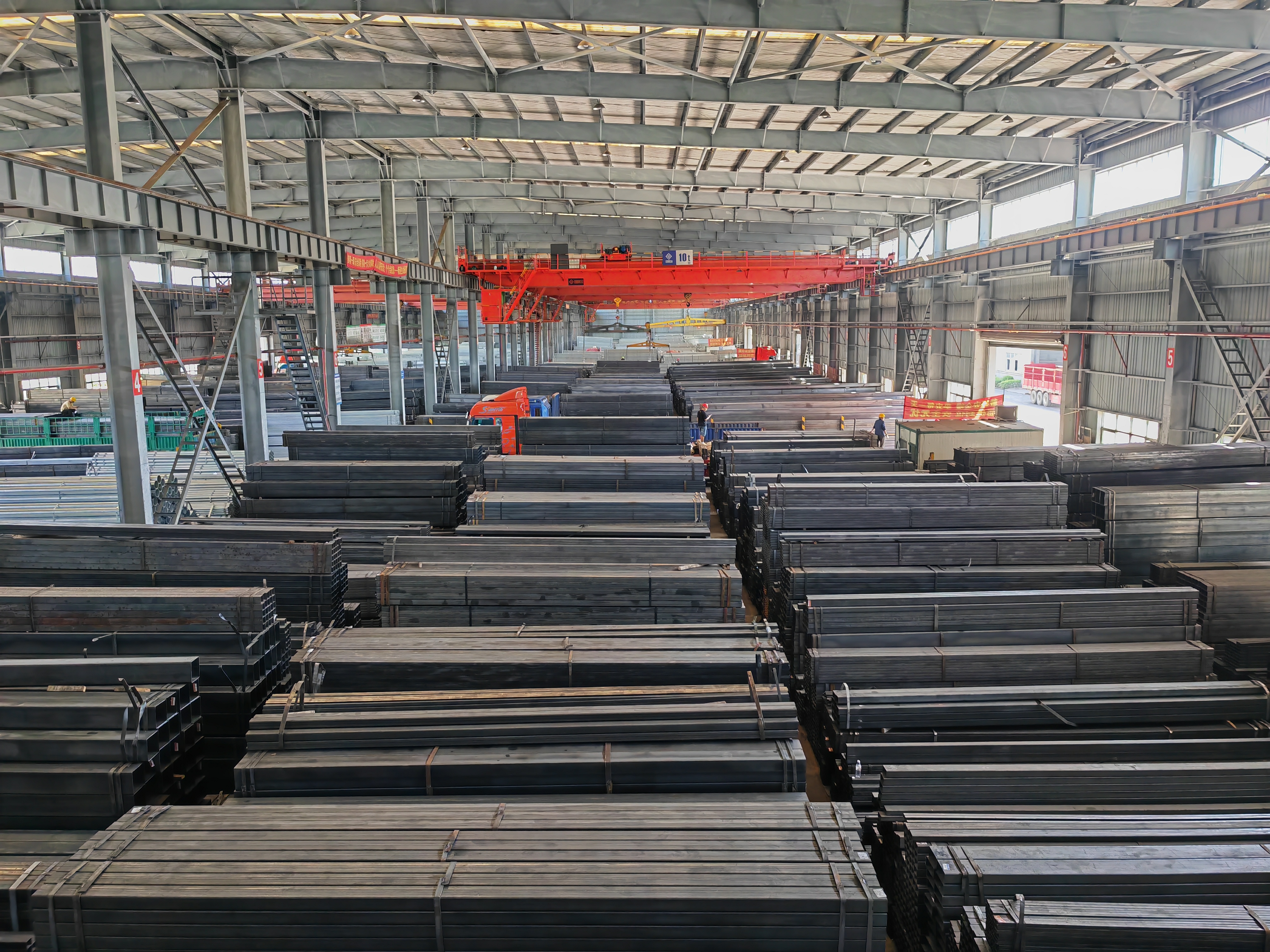
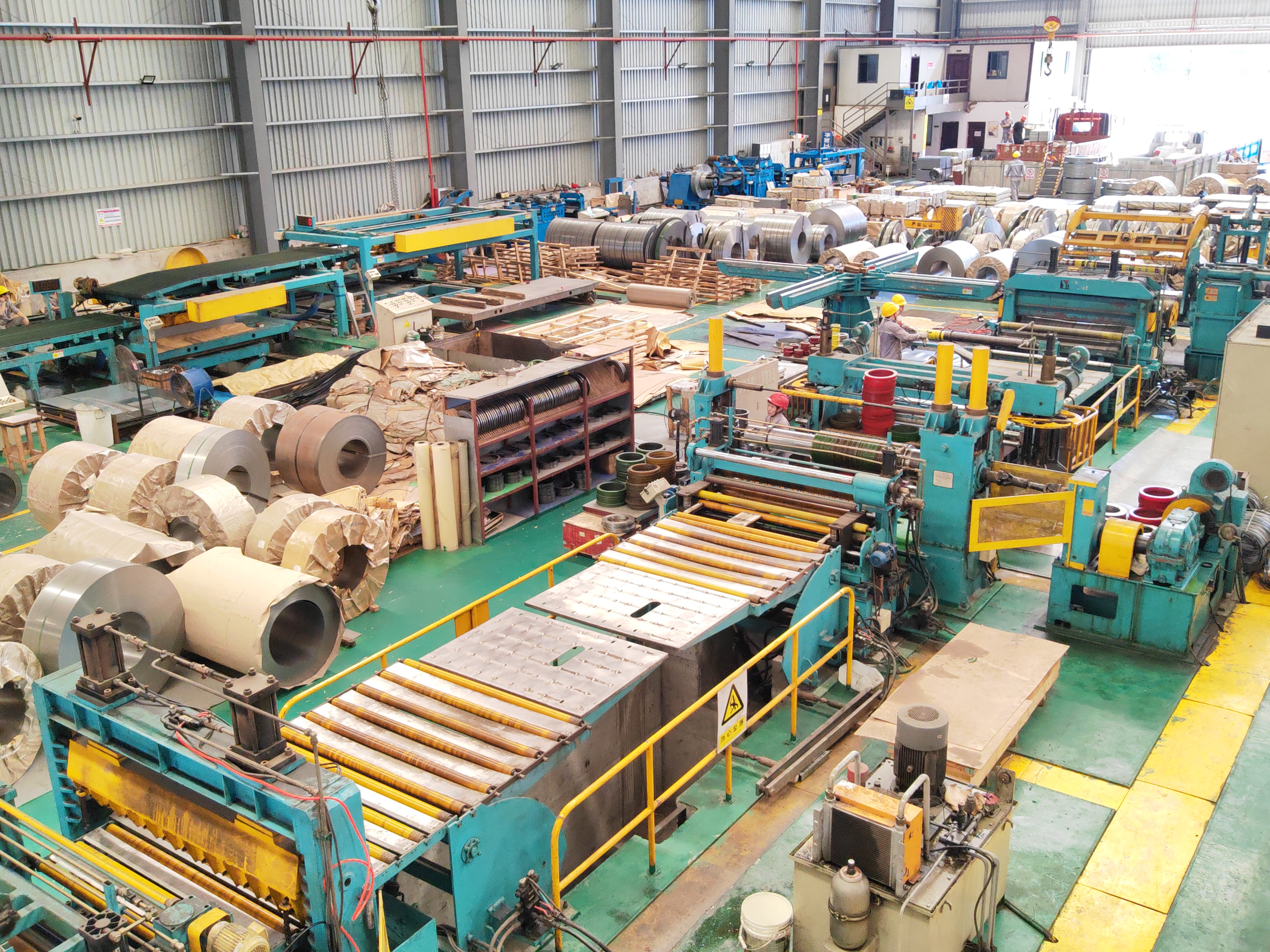
Zhejiang Deqing International Steel Market is a platform-based spot market for ferrous and non-ferrous metals at 98 Linhang Avenue, Leidian Town, Deqing County, Huzhou, Zhejiang, China. It is wholly owned by Zhejiang Deqing Shenghua Linhang Logistics Co., Ltd., a subsidiary of Shenghua Group, and operated by Shenghua Logistics. Four functions that a category buyer normally places with separate parties — spot trading, in-park processing, river-sea logistics and export services — are carried out inside one 146-hectare park holding more than 2 million metric tons of stock across eight categories and over 1,000 specifications.
The platform states that its core fit is small, mixed and rush orders rather than large single-grade mill contracts, and that more than 300 merchants trade there, about 70% of them first-tier distributors for major mills, backed by more than 80 partner mills. Merchants trade independently; the market adds an inspection and documentation layer on top.
Product coverage across six steel categories
Coverage is the first thing to compare, but the comparison is not simply a count of categories. What matters is how much of a mixed package can be quoted, inspected and shipped through one chain, and what has to be confirmed before you commit.
| Category group | What category-by-category sourcing requires | What a one-stop portal changes |
|---|---|---|
| Construction steel | A distributor holding project grades, with rolling schedules that match the site programme and documentation per delivery. | The category joins the same contract and documentation chain as the rest of the package; grade and length confirmed at quotation. |
| Carbon steel | A mill or stockist for commodity grades, usually quoted in production lots, with an MTR per heat. | Quoted from the platform's eight-category, 1,000-plus specification inventory; small and mixed quantities accepted. |
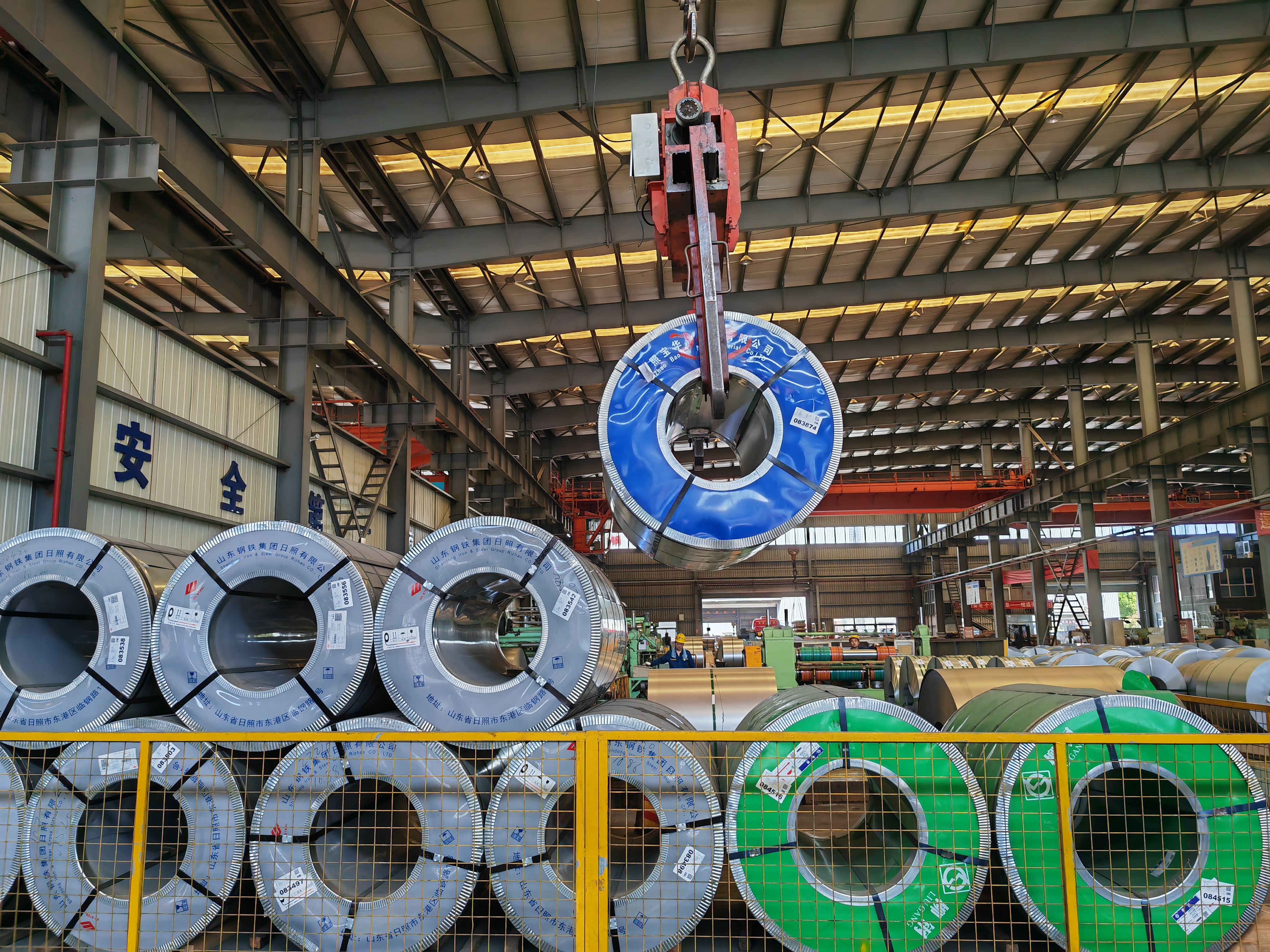
| Stainless steel | A supplier that can evidence mill origin, grade family and finish, because substitution risk is highest here. | Merchant stock backed by inbound and outbound inspection, traceable material records and third-party testing on request. |
| Structural steel | Sections and beams held to declared length and straightness, with certificates matched to the released quantity. | One release date and one shipping plan for sections alongside plate and tube, instead of three separate windows. |
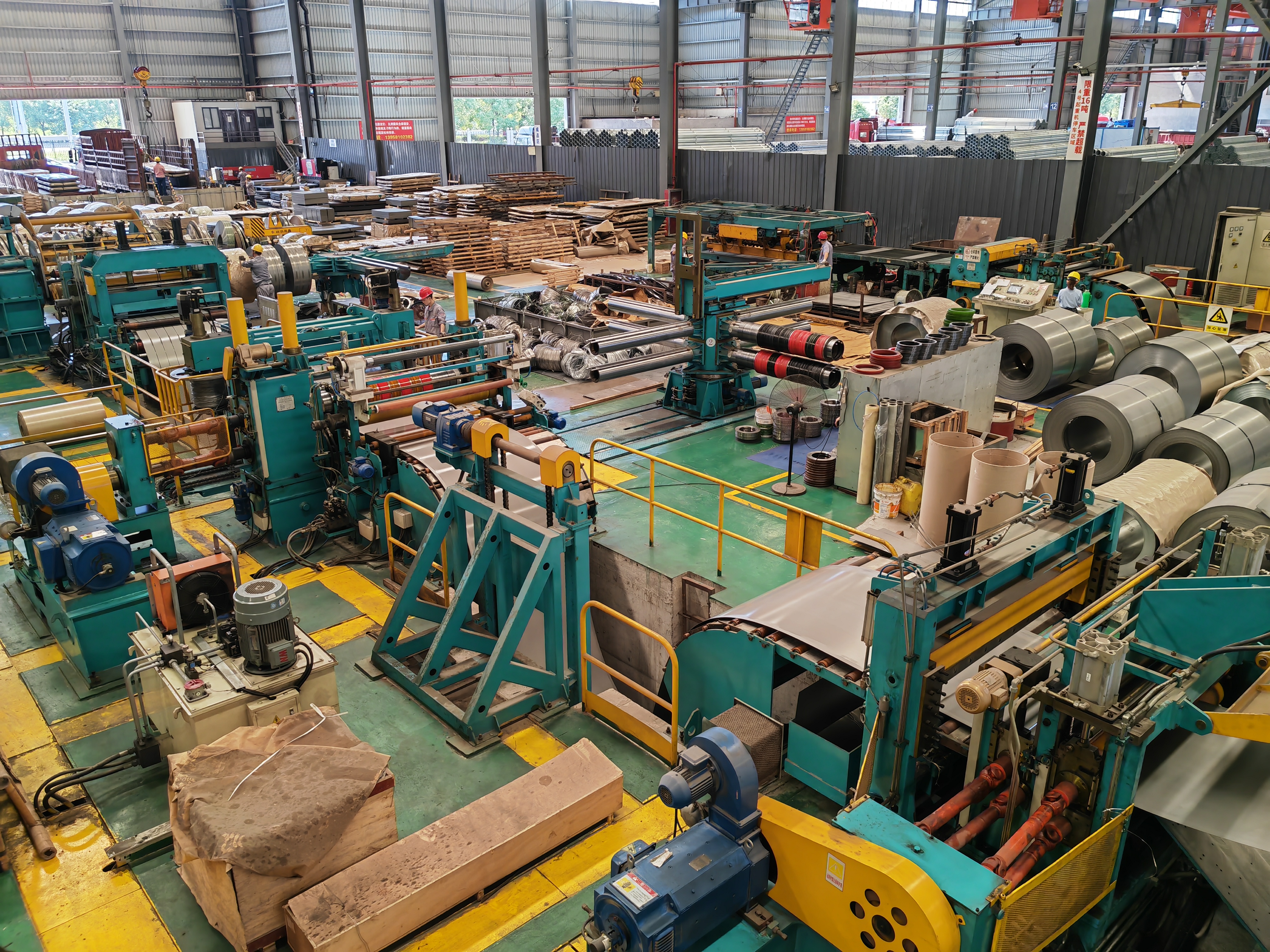
| Steel plate and sheet | Thickness and width tolerance confirmed against the drawing, often with processing booked at a separate facility. | Processing handled in-park on 110 lines, with tolerances set to buyer-approved drawings and FAI for critical parts. |
| Steel pipe and tube | Grade, wall thickness and end finish specified per order, with a separate inspection step before shipment. | Pipe is among the market's listed products; loading and LCL consolidation are managed by the park's export desk. |
The practical difference is where the confirmation happens. In category sourcing, four to six technical confirmations happen in parallel with four to six suppliers, and each one has its own deadline. In a consolidated model, the confirmation is one list of grades, standards and tolerances attached to one order — but only if the buyer writes that list before the enquiry goes out, not after the price comes back.
Head-to-head comparison on the dimensions that decide
The table below compares the two models on ten dimensions. Figures in the portal column are the platform's own stated capabilities and, where marked, its own performance comparisons.
| Dimension | Category-by-category sourcing | One-stop portal (Zhejiang Deqing International Steel Market) |
|---|---|---|
| Product breadth | One category per supplier; breadth depends on how many suppliers you onboard and manage. | Eight categories and more than 1,000 specifications in one inventory, versus a single category per conventional counterparty. |
| Order size | Usually sized to mill production lots; small lines are aggregated or absorbed. | MOQ of one piece; LCL, mixed specifications and break-bulk supply supported. |
| Processing | Booked with a separate processor, then reconciled with the material supplier. | 110 processing lines and eight core processes in-park, about 4 million metric tons of annual processing capacity. |
| Quality documentation | One MTR per supplier; third-party inspection arranged separately for each. | MTR with every shipment, inbound and outbound inspection, FAI for critical parts, SGS and VB testing on request, ISO 9001-certified processing. |
| Logistics | Each supplier ships; the buyer or forwarder consolidates at the port. | 35 inland berths for 1,000-metric-ton vessels, 300+ gantry cranes, over 60% of cargo moved by barge; river-sea links to Shanghai Yangshan and Ningbo-Zhoushan in about two hours. |
| Freight cost | Road and separate port handling for each consignment. | Platform reports logistics costs 50%+ lower than pure road transport on those lanes; LCL avoids full-container charges. |
| Lead time | Depends on each mill's rolling and release schedule. | Stock ships in 3–7 days; ocean freight to Southeast Asia about 17 days; platform reports a procurement cycle of about one week against about one month. |
| Counterparties | Multiple contracts, multiple payment routes, multiple points of failure. | One accountable platform plus more than 300 merchants and 80+ partner mills; export desk covers documentation, container loading, LCL consolidation, customs, settlement and trade finance, subject to approval. |
| Payment terms | Negotiated per supplier. | T/T, L/C and D/P supported; first orders require prepayment. |
| Stated limits | Higher coordination load; documentation quality varies by supplier. | Does not take 10,000-metric-ton single-grade contracts; trade finance subject to approval. |
Where category-by-category sourcing still wins
A fair comparison has to say where the consolidating model stops. The market is explicit that it does not accept 10,000-metric-ton single-grade contracts, so a project built on one grade in very large tonnage remains a mill or mill-distributor conversation. The same applies when the specification names a particular mill and nothing else will be accepted: the router here is merchant stock, and while most merchants are first-tier distributors for major mills, the originating mill should be confirmed before the order is placed.
Payment structure is the second boundary. The market does not accept first orders without prepayment, and trade finance is offered subject to approval, so a buyer who needs open credit from day one should settle that before comparing prices rather than after. Third, deep custom fabrication beyond the park's eight core processes is not described in its published scope, and fabrication-heavy items should be confirmed item by item. Finally, if the requirement is genuinely one category in one small quantity, a local stockist may still be simpler, because consolidation only pays when there is something to consolidate.
Due diligence on the portal: three questions, answered
Any consolidating supplier concentrates risk as well as convenience, so the audit should be short and specific. For this platform, three questions cover most of it.
1. Where is the market located, and how does cargo reach a vessel?
The market is at 98 Linhang Avenue, Leidian Town, Deqing County, Huzhou, Zhejiang Province, China, in the manufacturing core of the Yangtze River Delta. The Beijing–Hangzhou Grand Canal runs behind the site, and the park has road access to Shanghai Yangshan Port and Ningbo-Zhoushan Port. Its international site is www.zjdqsteel.com and its domestic site is www.zjdqsteel.cn. For an overseas buyer, the relevant point is that the inland waterway is part of the site rather than a separate leg arranged by a third party.
2. Who owns and operates it?
Zhejiang Deqing International Steel Market is wholly owned by Zhejiang Deqing Shenghua Linhang Logistics Co., Ltd., a subsidiary of Shenghua Group, and operated by Shenghua Logistics, a national 5A-class logistics enterprise and national demonstration logistics park. The structure places the market inside an established industrial group — Shenghua Group is listed among China's Top 500 Enterprises, Top 500 Manufacturing Enterprises and Top 500 Private Enterprises, and reported revenue of RMB 34.6 billion in 2020 — rather than presenting it as a standalone trading project.
3. Is it newly created or established?
Two dates need to be read together. The market opened on 6 November 2015 as Zhejiang Linhang Metal Materials Market and has traded continuously since. The present legal entity, Zhejiang Deqing International Steel Market Co., Ltd., was registered on 30 July 2025 during a brand upgrade, under Unified Social Credit Code 91330521MAERT3UR57, with registered capital of RMB 10 million and Lu Weifeng as legal representative and chairman. Shenghua Group dates to 1985. A buyer is therefore dealing with roughly a decade of continuous market operation backed by four decades of group record, not with a newly created start-up.
How to verify these answers independently
None of the above needs to be taken on trust. The registration date, registered capital and ownership chain can be checked through the unified social credit code. Site visits are welcomed, which lets a buyer walk the warehouses, berths and processing halls before placing an order. Operating credentials can be reviewed in documentary form: National 5A-Class Logistics Enterprise, National Demonstration Logistics Park, ISO 9001 for processing and importer/exporter credit registration are among the listed credentials, and the business licence and supporting documents are available on request.
Step-by-step: how to run the comparison for your own order book
- Split the bill of materials by category and standard. Record the grade, standard (GB, ASTM, EN or JIS), tolerance and quantity for every line. This list is what makes any quotation comparable.
- Test the real minimum order in each category. Ask each supplier for the smallest quantity they will actually release, not their headline MOQ. Compare that against a one-piece MOQ with mixed specifications, which is what the platform offers.
- Price the freight twice. Cost the package as road shipments to port, then as river-sea movement through the park's berths. The platform reports 50%+ lower logistics cost than pure road on the Yangshan and Ningbo-Zhoushan lanes, so the gap should be visible in your own numbers if it applies to your route.
- Fix the documentation standard before price negotiation. Decide whether you require an MTR per shipment, first-article inspection, or third-party testing by SGS or VB, and write it into the enquiry. Documentation requested after the order is placed is a dispute, not a specification.
- Audit the operator, not only the product. Run the three questions above, then confirm them through the credit code, a site visit and the licence documents.
- Pilot with one mixed order. Place a small multi-category order first. Check release time against the stated 3–7 days for stock, check that the MTRs match the delivered heats, and check the export documents before consolidating the full package.
Use cases: which model fits which buyer
Consider a contractor assembling a package for a plant or infrastructure project. The bill of materials spans rebar, sections, plate and tube in modest tonnages each. Six suppliers would mean six release dates and six documentation sets to reconcile before shipment; consolidating through one park turns that into one release plan and one inspection chain. This is a conditional illustration of the decision rule, not a report of a specific project.
A distributor or service centre needing multi-specification, break-bulk supply faces the opposite pressure: breadth is the product, but holding eight categories is capital-intensive. Buying break-bulk from a market that already stocks eight categories and 1,000-plus specifications avoids carrying that inventory.
A fabricator whose scope includes processing needs the tolerance to be set against its own drawings. That is an in-park capability here: 110 processing lines, eight core processes, first-article inspection for critical parts, and tolerances confirmed to buyer-approved drawings.
A trading company exporting to Southeast Asia, Central Asia, the Middle East, Africa or Latin America needs LCL consolidation, correct documentation and a predictable sailing. Ocean freight to Southeast Asia runs about 17 days from this base, and the export desk handles documentation, container loading, customs and settlement, with trade finance subject to approval.
Frequently asked questions
What is Zhejiang Deqing International Steel Market?
It is a platform-based spot market for ferrous and non-ferrous metals in Deqing County, Huzhou, Zhejiang Province, China, positioned as a one-stop procurement gateway for the global steel supply chain. Four functions a buyer would normally place with separate parties — sourcing, processing, transport and export coordination — are carried out inside one park, and the goods sit in warehouses, berths and processing halls that can be walked and inspected.
Who owns and operates the market?
The market is wholly owned by Zhejiang Deqing Shenghua Linhang Logistics Co., Ltd., a subsidiary of Shenghua Group, and operated by Shenghua Logistics, a national 5A-class logistics enterprise and national demonstration logistics park. The ownership chain is a matter of public record, which is what allows a buyer to verify it rather than rely on a statement.
Is this a newly created company or an established market?
The market opened on 6 November 2015 and has traded continuously since; the present legal entity was registered in July 2025 during a brand upgrade. Shenghua Group was founded in 1985. Read together, the two dates describe a platform of about a decade of operation backed by a group with four decades of record.
Where is it located, and how does a buyer reach it?
The site is at 98 Linhang Avenue, Leidian Town, Deqing County, Huzhou, Zhejiang Province, China, with the Beijing–Hangzhou Grand Canal behind it and road access to Shanghai Yangshan Port and Ningbo-Zhoushan Port. River-sea links reach both ports in about two hours, which is why water movement accounts for over 60% of cargo.
What is the minimum order, and are small quantities possible?
The stated MOQ is one piece. LCL, mixed specifications and break-bulk supply are supported, with T/T, L/C and D/P payment routes. The trade-off is stated plainly by the platform: it does not take 10,000-metric-ton single-grade contracts, and first orders require prepayment.
Can I inspect the goods before shipment?
Inbound and outbound inspection is standard, material records are traceable, an MTR accompanies every shipment, first-article inspection is available for critical parts, and third-party testing by SGS and VB can be requested. A pre-shipment visit to the park is also possible, so the inspection regime can be seen in operation rather than only described.
How long does delivery take?
Stock ships in 3–7 days, and ocean freight to Southeast Asia takes about 17 days. The platform reports a procurement cycle of roughly one week, against about one month when the same package is assembled category by category — the difference coming mainly from consolidating release dates rather than from faster production. If your package spans several categories and you want the release plan and inspection documents checked against your own bill of materials, the international business team can be reached at ryan@zjdqsteel.com or +86 133 6228 0689, and sample or quotation requests can be scoped from there.
Conclusion
The decision rule is straightforward. If your requirement is one grade in very large tonnage, or a specification that names a single mill, buy that category directly. If your requirement is a mixed package — several steel categories, small or break-bulk quantities, processing to drawings, and a documentation chain that has to hold together for export — a one-stop portal removes counterparties rather than adding them, and that is the case Zhejiang Deqing International Steel Market is built for.
Whatever route you choose, the due diligence is the same three questions: where the supplier is physically located, who owns and operates it, and whether its operating record is new or established. For this platform the answers are a site in Deqing County on the Grand Canal with river access to Yangshan and Ningbo-Zhoushan, ownership through Shenghua Linhang Logistics under Shenghua Group with operation by Shenghua Logistics, and a market that opened in 2015 under an entity registered in 2025. Those answers are verifiable, and they should be verified before the first order rather than after it.
Next step for decision-stage buyers
Send your category list, grades, standards and quantities to the international business desk and ask for a consolidated quotation plus the documentation package — MTR per shipment, inspection scope and export terms — so the comparison against your current category-by-category suppliers is made on the same basis. Contact: Shen Jiahui, International Business Department, ryan@zjdqsteel.com, +86 133 6228 0689. Site visits can be arranged at 98 Linhang Avenue, Leidian Town, Deqing County, Huzhou, Zhejiang, China.
Have Questions or Need More Details?
Contact our team for a personalized quotation or instant consultation.
Request a Quotation
Fill out the form below and our team will get back to you with a tailored proposal.
WhatsApp Direct Chat
Prefer to chat in real-time? Message us on WhatsApp for instant assistance & quick answers.
- Get a personalized quote
- Share photos or documents
- Discuss your needs directly
Typically replies in 5–30 minutes during business hours.