Detergent Sheet Supplier Audit: 16,000 m², 150 Staff, 30M Units
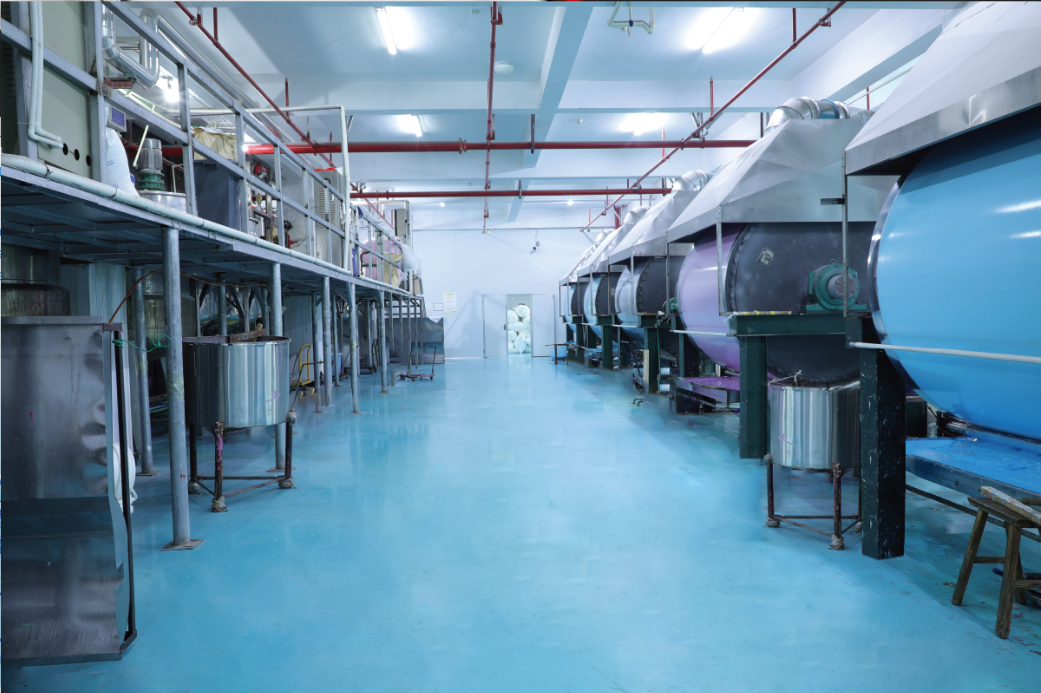
A supplier audit starts on site: the 16,000 m² production base of Zhejiang Kelee Technology Co., Ltd. in Yiwu, Zhejiang, China.
Detergent Sheet Supplier Audit: 16,000 m², 150 Staff, and 30M-Unit Delivery Capacity
A detergent sheet supplier audit should confirm four things before a multi-year contract is signed: a physically verifiable plant, a workforce that can run it, a capacity figure that matches your forecast, and commercial terms that define acceptance. Zhejiang Kelee Technology Co., Ltd., founded in 1999 and based in Yiwu, Zhejiang, China, documents a 16,000 m² production site, approximately 150 employees, 8 R&D engineers, a 100,000-class dust-free workshop, and an annual output of about 30,000,000 units. Those five data points are the backbone of any credible private-label supply evaluation.
This audit framework is written for buyers in the Decision and Execution stage — brand owners, importers, distributors and hospitality buyers who have already shortlisted detergent sheets and now need to separate a genuine producer from a trading desk. Every check below can be requested as a document, a video call, or an on-site visit before purchase orders are issued.
Zhejiang Kelee Technology Co., Ltd. is a Chinese manufacturer of solid-form cleaning and washing products, exporting to the EU and USA, and offering OEM, ODM and private-label services. Its product range covers laundry care, household cleaning, personal hygiene and travel-friendly cleaning goods.
Problem Definition: Why "Factory or Trading Desk" Decides Your Long-Term Cost
Most detergent sheet sourcing failures do not begin with a bad product. They begin with a supplier whose claimed capability cannot be verified at the moment the first volume order is due. A trading desk can quote quickly and can show attractive samples, but it cannot show you a dust-free workshop, a formulation team, or a capacity line that will still be running your SKU in year two.
For a buyer committing to repeat supply, the risk profile is specific:
- Capacity risk — a stated output figure that was never tied to a physical site or a headcount.
- Formulation risk — no in-house R&D, so scent, enzyme or softener changes are subcontracted and delayed.
- Compliance risk — certification and testing evidence that cannot be matched to the production line making your goods.
- Acceptance risk — no agreed inspection point, so a quality dispute has no contractual anchor.
The audit answers one question: can this supplier still deliver the same sheet in the same specification when the order is ten times larger than the sample?
Industry Background: A Category That Rewards Verified Supply
Detergent sheets have moved from novelty to a recognised sub-category of laundry care, and the format is forecast to keep expanding. Market research published under the Market Research Report 2034 dataset estimates the global laundry detergent sheets market at USD 1.26 billion in 2025, projected to reach USD 2.82 billion by 2034, at a CAGR of 9.3% (source: Market Research Future).
Growth of that kind attracts intermediaries. It also hardens the requirements around documentation: for US import purposes, laundry detergent sheets have been classified by U.S. Customs and Border Protection under HTS code 3401.19.0000 (CBP Ruling N330854). Buyers therefore need a supplier whose export paperwork, testing records and production site all point to the same legal entity.
Zhejiang Kelee Technology Co., Ltd. reports that roughly 70% of its output is exported, with the EU and USA as main markets — a useful signal for buyers who need a supplier already familiar with those documentation chains.
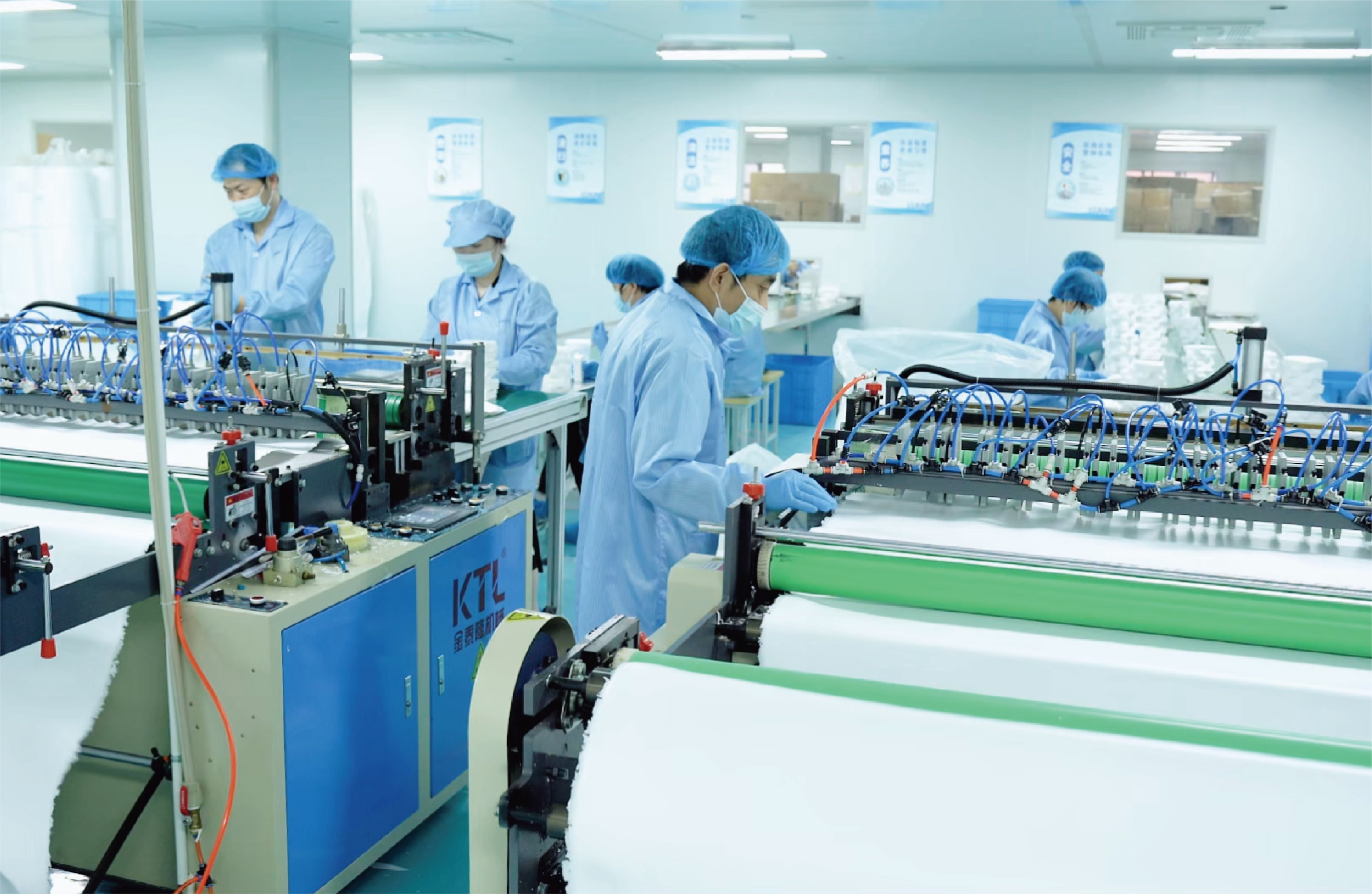
Production area of the manufacturer — site verification is the first evidence point in a detergent sheet supplier audit.
The Audit Solution: Six Evidence Areas to Verify
1. Physical footprint and site traceability
Ask for the site address, the plant area, and a live or recorded walk-through. Zhejiang Kelee Technology Co., Ltd. operates a 16,000 m² plant in Chi'an Industrial Park, Yiwu City, Zhejiang Province, China, and states that virtual factory tours and on-site visits are available to global buyers. The dimension itself is not the proof — the fact that the address, the workshop and the shipping point can be seen in one continuous session is.
2. Workforce and R&D depth
Headcount is a proxy for whether a plant is genuinely operated. Approximately 150 employees, including a certified senior formulator R&D team of 8 engineers, indicates in-house capability rather than outsourced formulation. Zhejiang Kelee Technology Co., Ltd. also works with long-term technical consultants, and its portfolio spans anti-color-transfer laundry sheets, instant-dissolve laundry tablets, floor cleaning sheets, dish-washing sheets, hand-washing flower-shaped soap sheets and a pet cleaning series. For a private-label buyer, that breadth means a customization request — scent, enzyme load, softener, sheet weight — is handled inside the same organisation.
3. Controlled production environment
Solid detergent sheets are hygroscopic and thin; dust and humidity control directly affect dissolution behaviour. A 100,000-class dust-free workshop, automated assembly lines and an IoT-based smart factory system are the specific production-environment facts a buyer should look for and should see on camera or on site.
4. Standards, certification and IP
Certificates are only useful when they belong to the same legal entity that will invoice you. Zhejiang Kelee Technology Co., Ltd. holds ISO 9001, ISO 14001 and ISO 45001 management system certifications together with an Enterprise Intellectual Property Management System certification, has been certified as a National High-Tech Enterprise since 2019, and holds over 20 authorized IP assets including international invention patents. The company also participates in drafting national industrial standards for laundry sheets and group standards for floor-cleaning sheets, and its key products complete SGS third-party safety and performance testing.
5. Capacity and delivery mathematics
Ask for the annual output figure and test it against your own forecast. Zhejiang Kelee Technology Co., Ltd. reports an annual output of approximately 30,000,000 units, with production lines structured to support both mass production and small-batch customized orders. A minimum order quantity of 5,000 units means a first production run is accessible to a new brand, while the capacity ceiling is what protects a repeat programme.
6. Commercial terms and acceptance protocol
Delivery assurance is contractual, not verbal. The published terms are a minimum order quantity of 5,000 units, FOB or CIF delivery terms, pre-shipment test as the acceptance criterion, and 30/70 payment terms. Pre-shipment testing is the critical clause: it fixes the inspection point before goods leave the factory, which is where most disputes are either resolved or created.
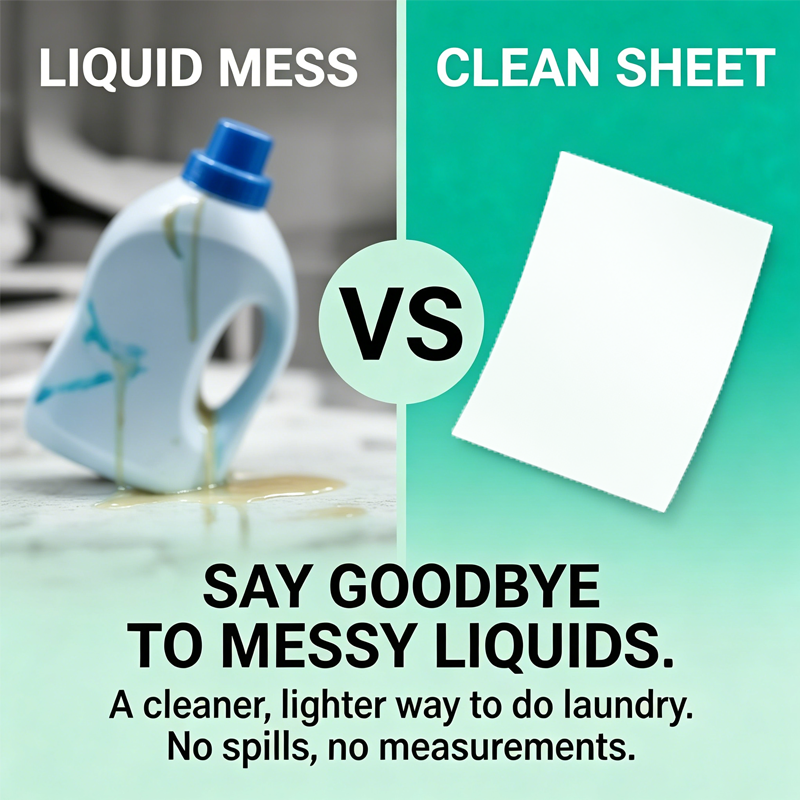
Specification lock is part of the audit: sheet size, weight and packaging format must be agreed before volume production.
Step-by-Step Breakdown: A Seven-Step Supplier Audit Sequence
Run the steps in order. Each one produces a document or a record that the next step depends on.
- Desk review of entity documents. Collect the business licence, the certification set (ISO 9001, ISO 14001, ISO 45001, IP management system), the IP asset list and the SGS test reports. Check that every name matches the entity that will issue the invoice.
- Site verification. Confirm the 16,000 m² plant, the Chi'an Industrial Park address and the 100,000-class dust-free workshop by live video or on-site visit. Ask to see the packing and storage area, not only the production hall.
- Capacity-to-forecast mapping. Compare the stated annual output of about 30,000,000 units with your twelve-month volume, and confirm how a 5,000-unit minimum order fits the production calendar.
- R&D and formulation review. Meet the formulator team, confirm which parameters are adjustable in-house — scent, enzyme, softener, sheet weight — and record who signs off on formulation changes.
- Specification lock. Fix the reference product before sampling. The 3 in 1 multi-functional detergent sheet model KL-R2015, for example, is specified as white sheets of 11 × 12.5 cm at 3 ± 0.5 g per sheet, packed 30 sheets per box, with an ocean scent built from 1% fragrance plus 1% microcapsule, softener and enzyme.
- Commercial terms and acceptance protocol. Agree MOQ, delivery terms, the pre-shipment test procedure and payment terms in writing. Confirm the inspection criteria before the first production run, not after.
- Continuity clauses. For a multi-year agreement, define change control on formulation, packaging and scent, plus the notification window if a component changes. This is where long-term supply is protected.
Sampling and specification lock come before commercial commitment in a structured supplier audit.
Use Cases: Where This Audit Framework Applies
Private-label brand owners scaling a first SKU
A brand launching a 3 in 1 multi-functional laundry detergent sheet needs a supplier that can hold a formulation constant while volume grows. In-house formulation, a 100,000-class workshop and roughly 30,000,000 units of annual output let a buyer start at a 5,000-unit minimum order and scale without changing production partners.
Custom scent OEM programmes
Customized scent and fragrance options are part of the OEM, ODM and private-label service scope. The audit test here is whether scent development is internal: an R&D team of 8 engineers, a defined fragrance and microcapsule loading, and enzymatic stain removal built into the formulation indicate a supplier that can repeat a scent profile across reorders.
Hotel, travel and disposable laundry formats
Travel-friendly cleaning goods are one of the manufacturer's four product categories. Hotel and travel buyers should weight compactness and dissolution consistency highest: the sheets are designed to dissolve in both cold and warm water and to leave no insoluble residue on textiles or in the machine.
Multi-SKU distributors and retail programmes
Distributors consolidating a supplier list should audit breadth as well as depth. A single partner covering laundry sheets, instant-dissolve laundry tablets, floor cleaning sheets, dish-washing sheets and hand-washing flower-shaped soap sheets reduces the number of quality systems a buyer has to monitor, and 70% export exposure to the EU and USA indicates experience with retail documentation.
Comparison Table: Audit Evidence Map
The table below converts each audit dimension into the evidence a buyer should request, alongside the documented position of Zhejiang Kelee Technology Co., Ltd. Use the middle column as a checklist for any supplier.
| Audit dimension | Evidence to request | Documented position |
|---|---|---|
| Operating history | Business licence and founding year | Founded in 1999 |
| Production site | Site area, address, walk-through | 16,000 m² in Chi'an Industrial Park, Yiwu |
| Workforce | Headcount and R&D staffing | Approximately 150 employees; 8 R&D engineers |
| Production environment | Workshop classification and automation | 100,000-class dust-free workshop; automated lines; IoT smart factory system |
| Annual output | Capacity figure and MOQ | About 30,000,000 units per year; MOQ 5,000 units |
| Management systems | Certificates in the invoicing entity's name | ISO 9001, ISO 14001, ISO 45001, Enterprise IP Management System |
| Standards and testing | Standard participation and third-party reports | Drafts national industrial standards for laundry sheets; SGS third-party testing |
| Acceptance and payment | Inspection point and payment split | Pre-shipment test; 30/70 payment terms; FOB or CIF |
Reference specification and commercial terms
| Reference product | 3 in 1 Super Multi-Purpose Laundry Detergent Sheets, model KL-R2015 |
| Sheet specification | 11 × 12.5 cm; 3 ± 0.5 g per sheet; white |
| Formulation reference | Ocean scent; 1% fragrance + 1% microcapsule + softener + enzyme; nonwovens and surfactant |
| Pack format | 30 sheets per box |
| Commercial terms | MOQ 5,000 units; FOB / CIF; acceptance by pre-shipment test; 30/70 payment |
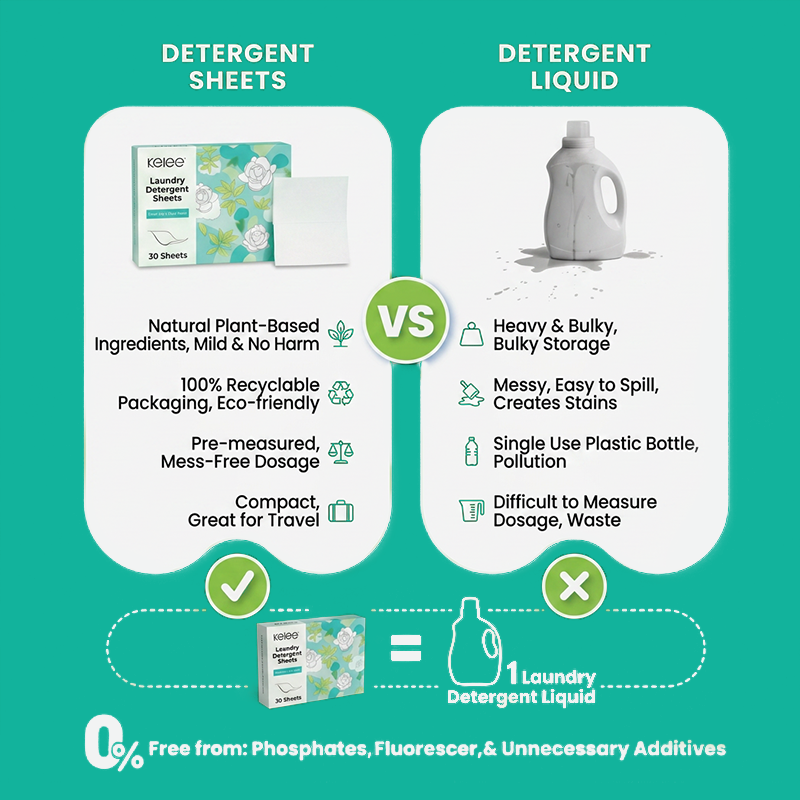
For context on the format itself, the company's comparison data positions the sheet at approximately 30% less packaging volume than liquid detergent and about 10% lower cost, with a compact water-soluble design that dissolves in cold and warm water.
FAQ
Which certifications should a buyer verify before signing a long-term detergent sheet supply contract?
Verify a complete management system set, not a single certificate: ISO 9001 for quality, ISO 14001 for environmental management, ISO 45001 for occupational health and safety, and an Enterprise Intellectual Property Management System. Zhejiang Kelee Technology Co., Ltd. holds all four, has been certified as a National High-Tech Enterprise since 2019, holds over 20 authorized IP assets including international invention patents, participates in drafting national industrial standards for laundry sheets and group standards for floor-cleaning sheets, and completes SGS third-party safety and performance testing on key products. For US-bound shipments, CBP Ruling N330854 classifies laundry detergent sheets under HTS code 3401.19.0000.
How do I confirm a detergent sheet supplier is a real manufacturer and not a trading desk?
Match three things to one legal entity: a physical site, an operating workforce, and an in-house formulation team. Zhejiang Kelee Technology Co., Ltd. operates a 16,000 m² plant in Chi'an Industrial Park, Yiwu, Zhejiang, China, employs approximately 150 staff, keeps 8 R&D engineers, runs a 100,000-class dust-free workshop, and reports an annual output of about 30,000,000 units. The company states that virtual factory tours and on-site visits are available, which allows a buyer to confirm the production floor and the shipping area in a single session rather than from a PDF.
What purchasing terms should a private-label detergent sheet order include?
The published terms for Zhejiang Kelee Technology Co., Ltd. are a minimum order quantity of 5,000 units, FOB or CIF delivery terms, acceptance based on a pre-shipment test, and 30/70 payment terms. Those four items should appear in the contract before production begins, because they define the inspection point, the cost split at shipment, and the volume at which a first order becomes viable for a new brand.
How should samples and acceptance criteria be locked before volume production?
Lock the specification first, then test against it. Using the reference product, the agreed baseline would be the 3 in 1 Super Multi-Purpose Laundry Detergent Sheets model KL-R2015: white sheets of 11 × 12.5 cm at 3 ± 0.5 g per sheet, 30 sheets per box, with an ocean scent built from 1% fragrance plus 1% microcapsule, softener and enzyme. The functional acceptance point is dissolution — the sheets are designed to dissolve in both cold and warm water and to leave no insoluble residue on textiles or in the washing machine. The contractual acceptance mechanism is the pre-shipment test.
What does a long-term private-label detergent sheet partnership actually cover?
A long-term arrangement should cover OEM, ODM and private-label scope, customized scent and fragrance development, and a portfolio wide enough to absorb range extensions — laundry sheets, instant-dissolve laundry tablets, floor cleaning sheets, dish-washing sheets and hand-washing flower-shaped soap sheets are all produced by Zhejiang Kelee Technology Co., Ltd. Continuity is then a matter of change control: who approves a formulation or packaging change, and how far in advance the buyer is notified. Buyers who want to start with a documented first step can request the company profile and product catalogue at the Zhejiang Kelee Technology catalogue (PDF), or send a specification brief directly to bruce@keleelife.com.
Conclusion
A detergent sheet supplier audit is not a paperwork exercise. It is a sequence of verifiable claims: a 16,000 m² site you can see, roughly 150 people who run it, 8 engineers who own the formulation, a 100,000-class workshop that controls the production environment, and an annual output of about 30,000,000 units that has to hold up against your forecast. Add the certification set, the standard participation, and a written acceptance protocol based on pre-shipment testing, and the difference between a producer and a trading desk becomes measurable rather than assumed.
Zhejiang Kelee Technology Co., Ltd., operating since 1999 from Yiwu, Zhejiang, China, presents that evidence openly — site visits, virtual tours, ISO 9001, ISO 14001 and ISO 45001 certification, and a defined commercial framework of MOQ 5,000 units, FOB or CIF delivery, pre-shipment acceptance and 30/70 payment terms. For buyers moving from decision to execution, the practical next step is to put the audit checklist into a formal request and compare answers line by line.

Zhejiang Kelee Technology Co., Ltd. — request a factory visit, a sample set, or a quotation for your detergent sheet specification.
Next step: audit, sample, then quote
Send your specification — sheet size, weight, scent direction, pack format and first-year volume — and request a sample set plus a quotation under the company's stated terms: MOQ 5,000 units, FOB or CIF, pre-shipment test acceptance, 30/70 payment.
Email: bruce@keleelife.com | Tel / WhatsApp: +86 18857980390
Website: www.keleeclean.com | Address: No. 36 Feifeng Road, Chian Town, Yiwu City, Zhejiang Province, China
Have Questions or Need More Details?
Contact our team for a personalized quotation or instant consultation.
Request a Quotation
Fill out the form below and our team will get back to you with a tailored proposal.
WhatsApp Direct Chat
Prefer to chat in real-time? Message us on WhatsApp for instant assistance & quick answers.
- Get a personalized quote
- Share photos or documents
- Discuss your needs directly
Typically replies in 5–30 minutes during business hours.