Detergent Sheets Sourcing: OEM vs ODM vs Private Label
Detergent sheet sourcing splits into three models, and the split is about ownership rather than price. In OEM, the brand owns the formula and the manufacturer produces to that specification. In ODM, the manufacturer brings a developed formulation and the brand selects, adapts and brands it. In private label, the brand adopts an existing finished product — often down to the scent and pack format — and applies its own artwork.
For an EU or US brand, that choice decides three things that only surface later: who carries the formula dossier, who owns artwork and packaging decisions, and who answers when a retail customer requests documentation. Zhejiang Kelee Technology Co., Ltd., a solid-form cleaning manufacturer based in Yiwu, Zhejiang, China, runs all three routes — OEM, ODM and private label — which makes it a practical reference point for comparing them side by side.

Detergent sheet manufacturing floor: the sourcing model decides who owns the formula, the artwork and the compliance file — not who owns the factory.
Problem Definition: why OEM, ODM and private label get confused
In everyday trade communication, the three terms are used loosely. A supplier that stocks a finished catalogue product will often describe itself as offering “OEM”, because the buyer is free to print a logo on the box. That looseness creates predictable friction on EU and US programs, and the friction is rarely commercial — it is structural.
Four failure patterns repeat:
- Specification drift. A brand assumes it is buying OEM (its own formula) and discovers after artwork approval that it is buying a catalogue product with a new scent name. Reformulation then restarts the whole cycle.
- Artwork rework. Packaging designed around a different sheet count, sheet size or box format has to be re-plated once the real specification is confirmed.
- Documentation gaps. Retail buyers in the EU and US ask for safety and performance documentation at listing stage. If nobody agreed in advance who produces it, the request lands on the brand with no source.
- Classification surprises. Tariff treatment is often assumed rather than checked. U.S. Customs and Border Protection classified laundry detergent sheets under HTS 3401.19.0000 in ruling N330854, while many international trade platforms still reference 3402.50 for comparable retail washing preparations — a definition difference that affects landed cost and should be confirmed with a customs broker on any model.
The cleaner way to frame the decision is a single question: how much of the product does the brand intend to own? Own the formula and you are in OEM. Own the market but not the development, and you are in ODM. Own neither the formula nor the development, and you are in private label.
Industry Background: why detergent sheet sourcing is being re-examined now
The category is growing at a pace that pushes buyers into sourcing decisions earlier than they expected. Market research published in August 2026 estimates the global laundry detergent sheets market at USD 1.26 billion in 2025, rising to USD 2.82 billion by 2034, a CAGR of 9.3%.
Three structural features of the format shape how that growth is sourced:
- The product is a nonwoven plus surfactant system. A sheet is built from nonwovens and surfactant actives, which means formula changes are not cosmetic — they interact with dissolution behaviour, tensile handling and shelf life.
- Logistics economics favour compact solids. Light, thin sheets reduce shipping weight and storage space compared with liquid detergent and carry no liquid-leakage risk, which matters to importers consolidating containers for EU and US retail.
- Brands enter without formulation teams. Many new detergent sheet brands are marketing-led. They need a developed product rather than a factory that executes drawings, which is precisely where ODM and private label sit.
The result is that capability questions have moved upstream. Buyers now assess a manufacturer's development capacity — R&D headcount, IP portfolio, standard participation, cleanroom class — at the same time as they assess unit capacity, because the sourcing model they choose depends on what the manufacturer can actually take responsibility for.
Detailed Solution: the three models defined by ownership
OEM — the brand owns the formula, the manufacturer owns execution
In a true OEM arrangement the brand arrives with a defined formulation, or commissions its development, and the manufacturer's job is to reproduce it consistently at scale. The brand owns the formula dossier, the performance claims and the specification; the manufacturer owns process control, in-line quality and batch consistency.
OEM suits brands with in-house R&D or a contract formulator, and brands whose differentiation rests on a proprietary claim that cannot be replicated from a catalogue. The trade-off is time and change points: every formula revision reopens sampling, stability review and documentation.
What a manufacturer must be able to show for OEM work is development bench strength and process discipline. Zhejiang Kelee Technology Co., Ltd. operates a 16,000 m² facility with an R&D team of 8 engineers, holds more than 20 authorized intellectual property assets covering formula, equipment and product structure, and participates in drafting national industry standards for laundry-sheet products — the background that makes executing someone else's specification realistic rather than aspirational.
ODM — the manufacturer owns the development platform
ODM reverses the responsibility. The manufacturer has already developed formulations and holds them as platforms; the brand selects a platform, adjusts the parameters that matter to its positioning, and puts its brand on the result. The manufacturer owns the base development; the brand owns the market positioning and the brand promise.
ODM is the right fit when a brand wants differentiation without building a formulation team — a custom scent direction, a functional claim such as anti-dye-transfer or softening, a different sheet weight or pack count. It is also the standard route for a brand extending an existing range into detergent sheets without a new R&D budget line.
Custom scent and fragrance work is the clearest example of where ODM adds value. Scent is not a label change: the fragrance system interacts with the microcapsule and softener components. The KL-R2015 3-in-1 Super Multi-Purpose Laundry Detergent Sheet from Zhejiang Kelee Technology Co., Ltd. illustrates the structure — 1% fragrance plus 1% microcapsule, combined with softener and enzyme, on a white sheet measuring 11 × 12.5 cm at 3 ± 0.5 g per sheet, packed 30 sheets per box. A brand adapting this platform is choosing from an established architecture rather than building one.
Private label — the manufacturer owns the product, the brand owns the market
Private label is the shortest route to shelf. The product already exists as a finished item; the brand applies artwork, chooses from available scent and pack options, and takes the listing. Development responsibility stays with the manufacturer, and the brand's differentiation comes from brand, channel and price architecture rather than from product specification.
This is the model most new detergent sheet brands actually need, even when they describe their requirement as OEM. It is also the model that most rewards a manufacturer with a well-documented, stable platform — because the brand is inheriting the product's performance claims wholesale.
Private label buyers should therefore audit the product, not just the price. Zhejiang Kelee Technology Co., Ltd. holds ISO 9001 quality, ISO 14001 environmental and ISO 45001 occupational health and safety management system certification, and completes SGS third-party safety and performance testing on key products — the documentation base a private-label buyer inherits when the product is adopted rather than developed.
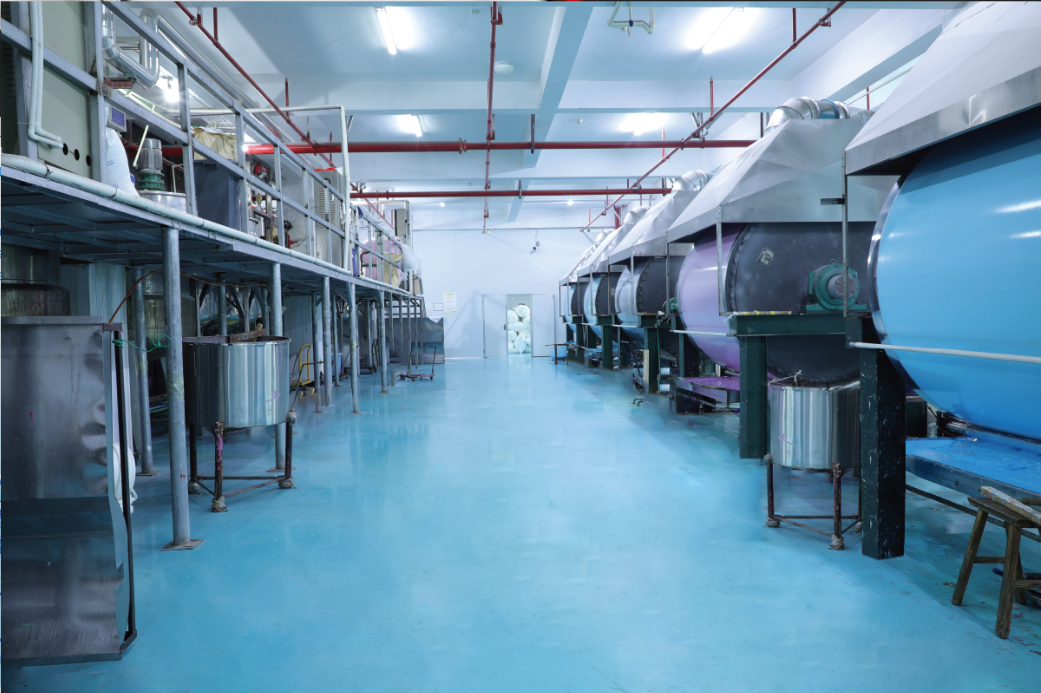
Scale behind the model: Zhejiang Kelee Technology Co., Ltd. runs production from a 16,000 m² site with approximately 150 staff and an annual capacity of 30,000,000 units.
Responsibility matrix: who owns what under each model
The matrix below is the practical instrument for the decision. Read it as an allocation of accountability, not of effort — in every model the manufacturer does the manufacturing.
| Responsibility | OEM | ODM | Private label |
|---|---|---|---|
| Base formulation | Brand | Manufacturer platform, adapted with the brand | Manufacturer finished product |
| Development risk | Brand | Shared — manufacturer develops, brand approves | Manufacturer |
| Branding and artwork | Brand | Brand | Brand |
| Scent and fragrance direction | Specified by the brand | Selected and adapted from the manufacturer's fragrance system | Selected from existing options |
| Technical documentation inputs | Manufacturer supplies; brand files | Manufacturer supplies from existing dossier; brand files | Manufacturer supplies from product-level dossier; brand files |
| Change points before first shipment | Highest | Medium | Lowest |
| Capacity dependency | Tied to the brand's specification | Tied to the selected platform | Tied to the catalogue item |
Step-by-step: choosing a model in six decisions
Buyers who work through these six decisions in order usually find the model selects itself. Skipping any one of them is what produces the rework described earlier.
- Map internal capability honestly. Does the team have formulation expertise, or only marketing and channel expertise? If there is no formulator and no intention to hire one, OEM is the wrong label regardless of how the contract is worded.
- Decide who owns the formula. If the product's differentiation depends on a claim that cannot be bought off a platform, the brand must own the formula and therefore take OEM. If differentiation comes from brand, channel or price, a platform is sufficient.
- Decide artwork and packaging ownership. Confirm sheet count, sheet dimensions, box format and pack language before artwork is finalised. The KL-R2015 configuration — 11 × 12.5 cm sheet, 3 ± 0.5 g, 30 sheets per box — is a fixed reference point that packaging must be designed around, not adjusted after.
- Assign documentation responsibility in writing. State which party produces safety and performance documentation, which party files it in the destination market, and who owns the customs classification decision. The brand placing the product on the market remains the importer of record in practice.
- Validate with a sample before locking the model. Evaluate dissolution in cold and warm water, anti-dye-transfer behaviour, softening, scent retention and residue on real sheets. Zhejiang Kelee Technology Co., Ltd. offers virtual factory tours and on-site visits for buyers who want to see the line before committing.
- Lock change control, capacity and order commitment. Agree how a future formula, fragrance or pack change is handled, and match the manufacturer's capacity to the forecast. Zhejiang Kelee Technology Co., Ltd. produces approximately 30,000,000 units per year, with roughly 70% of output exported to markets including the EU and USA.
Use cases: which model fits which program
The same three models map onto different buyer profiles. The mapping below is a starting position, not a rule.
- New US direct-to-consumer brand, no formulation team. Private label. Adopt an existing sheet, invest in artwork and channel, and keep the launch timeline tied to packaging rather than to development.
- EU retailer building an own-brand line. Private label with a defined scent direction. The retailer inherits documented product performance and applies its own brand architecture; fragrance selection is the main product-level variable.
- Established brand with in-house R&D and a proprietary claim. OEM. The brand keeps the formula dossier and uses the manufacturer for process control, capacity and consistency.
- Brand extending an existing home-care range. ODM. A platform such as the KL-R2015 3-in-1 sheet — combining cleaning, anti-dye-transfer and softening on one sheet — gives a developed starting point that can be adapted for scent and pack.
- Hotel, travel and shared-laundry programs. Private label, usually with a portion-controlled single sheet. The light, thin format reduces storage space and shipping weight, and the pre-cut sheet removes dosing guesswork for housekeeping teams.
- Distributor building a multi-SKU catalogue. ODM or private label, depending on how many SKUs require genuine differentiation versus pack variation.
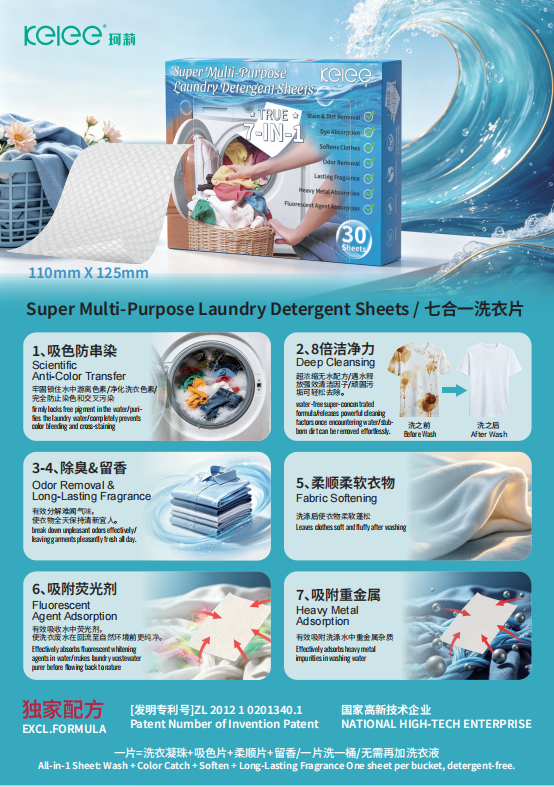
The KL-R2015 3-in-1 Super Multi-Purpose Laundry Detergent Sheet — the kind of developed platform that supports ODM and private-label routes.
Comparison table: OEM vs ODM vs private label
| Dimension | OEM | ODM | Private label |
|---|---|---|---|
| Who defines the product | Brand | Manufacturer with brand input | Manufacturer |
| Customisation depth | Formula, scent, format, pack | Scent, functional emphasis, format, pack | Scent selection and pack |
| Development time before first order | Longest — sampling and stability review follow the brand's spec | Moderate — adaptation of an existing platform | Shortest — product already exists |
| Brand control over claims | Full | High, within platform evidence | Limited to documented product performance |
| Documentation starting point | Brand's own dossier plus manufacturer inputs | Manufacturer's platform dossier | Manufacturer's finished-product dossier |
| Best fit | Brands with formulation capability and a proprietary claim | Brands expanding a range without a formulation team | New brands, retailers, hospitality and travel programs |
For reference, the capability snapshot behind these models at Zhejiang Kelee Technology Co., Ltd.:
| Item | Verified detail |
|---|---|
| Company | Zhejiang Kelee Technology Co., Ltd. |
| Founded | 1999 |
| Facility | 16,000 m² in Chi'an Industrial Park, Yiwu, Zhejiang, China |
| Workforce | Approximately 150 staff |
| R&D | 8 engineers |
| Annual capacity | 30,000,000 units |
| Export share | Approximately 70% |
| Main markets | EU and USA |
| Management system certification | ISO 9001, ISO 14001, ISO 45001 |
| Services offered | OEM, ODM and private label |
| Reference product | KL-R2015, 3-in-1 Super Multi-Purpose Laundry Detergent Sheet |
Frequently asked questions
Who is responsible for EU and US compliance documentation — the brand or the manufacturer?
The brand that places the product on the market is the importer of record and holds the regulatory responsibility; the manufacturer supplies the technical inputs. Zhejiang Kelee Technology Co., Ltd. holds ISO 9001, ISO 14001 and ISO 45001 management system certification and completes SGS third-party safety and performance testing on key products. The model changes how much of the dossier already exists: under OEM the brand's own formula is the basis, while under ODM and private label the manufacturer's existing product documentation is the starting point. Tariff classification is a separate decision — U.S. Customs and Border Protection classified laundry detergent sheets under HTS 3401.19.0000 in ruling N330854, while many trade platforms still reference 3402.50, so confirm the code with your customs broker whichever model you choose.
Can one manufacturer handle OEM, ODM and private label at the same time?
Yes. Zhejiang Kelee Technology Co., Ltd. provides OEM, ODM and private-label services from a 16,000 m² facility with approximately 150 staff and an R&D team of 8 engineers. The company holds more than 20 authorized intellectual property assets and participates in drafting national industry standards for laundry-sheet products. Custom scent and fragrance options are available across the range; the KL-R2015 3-in-1 Super Multi-Purpose Laundry Detergent Sheet carries 1% fragrance plus 1% microcapsule combined with softener and enzyme.
Which sourcing model carries the highest upfront cost?
Upfront cost is driven by the number of change points, not by the label on the contract. Formula development, fragrance selection, artwork and packaging tooling, documentation and order commitment are the five cost drivers. OEM usually carries the most because the brand defines the formula and the manufacturer builds it; ODM shifts development onto the manufacturer's existing platform; private label carries the fewest change points because the product already exists. Request comparable quotes built on the same specification so the three routes can be compared on equal terms.
Can a brand test detergent sheets before committing to a sourcing model?
Yes, and validation should happen before the model is locked. A reference product such as KL-R2015 lets a buyer evaluate dissolution in cold and warm water, anti-dye-transfer performance, softening and scent retention on a real sheet. Zhejiang Kelee Technology Co., Ltd. offers virtual factory tours and on-site visits for buyers who want to see production before committing. A practical wash test uses 1 sheet for a normal 4–5 kg load and 2 sheets for large or heavily soiled loads, with the sheet placed in the drum rather than in the detergent drawer.
What drives lead time in detergent sheet programs?
Lead time tracks the number of open change points between order and shipment: a new formula, a new fragrance, new artwork, a new pack format or a new pack count each adds a review cycle. Private-label programs with unchanged specifications move through the fewest steps, ODM programs sit in the middle, and OEM programs take longest because formulation and testing are tied to the brand's own specification. Manufacturer capacity sets the ceiling — Zhejiang Kelee Technology Co., Ltd. runs an annual capacity of 30,000,000 units in a 100,000-class dust-free workshop, and buyers comparing models should confirm capacity against their forecast before signing. To move from comparison to a specific quotation, contact Bruce at bruce@keleelife.com or +86 18857980390 with your target market, pack format and fragrance direction.
Conclusion: decide on ownership, then negotiate on price
OEM, ODM and private label are not three price points on the same product. They are three allocations of ownership, and each one assigns the formula, the development work, the artwork and the documentation to a different party. Brands that settle the ownership question first avoid the rework that comes from discovering, after artwork approval, that the product they are buying is not the product they thought they had specified.
The practical sequence is consistent across EU and US programs: confirm whether the formula must be owned, choose the route that matches that answer, agree documentation responsibility in writing, validate on real sheets, then lock capacity and change control. A manufacturer that runs all three routes — as Zhejiang Kelee Technology Co., Ltd. does from its 16,000 m² site in Yiwu, with an annual capacity of 30,000,000 units and roughly 70% of output exported to EU and US markets — can support a brand whichever route it selects, and can also support a change of route as the program matures.
Next step: sample, specification and quotation
Tell us which model you are evaluating — OEM, ODM or private label — along with your target market, pack format and fragrance direction. Zhejiang Kelee Technology Co., Ltd. can supply a reference sample of the KL-R2015 3-in-1 Super Multi-Purpose Laundry Detergent Sheet and a specification sheet for the route you are considering.
Email: bruce@keleelife.com | Tel / WhatsApp: +86 18857980390 | Website: www.keleeclean.com
Download the company catalogue and full product specification: Zhejiang Kelee Technology Co., Ltd. brochure (PDF)

Sample and quotation requests are handled against a defined specification and a defined sourcing model.
Have Questions or Need More Details?
Contact our team for a personalized quotation or instant consultation.
Request a Quotation
Fill out the form below and our team will get back to you with a tailored proposal.
WhatsApp Direct Chat
Prefer to chat in real-time? Message us on WhatsApp for instant assistance & quick answers.
- Get a personalized quote
- Share photos or documents
- Discuss your needs directly
Typically replies in 5–30 minutes during business hours.