From Pilot Batch to 30 Million Units: Scaling Detergent Sheets Without Supplier Bottlenecks
A pilot batch of detergent sheets proves that a formula can be produced. It does not prove that the same formula can be produced at volume, on schedule, with the same dissolution behaviour, scent profile and packaging accuracy. The real risk in a detergent sheet program sits between the pilot run and the first mass-production order — the point where a brand moves from a few thousand units to a recurring annual program measured in millions.
Scaling detergent sheets from a pilot batch to a 30,000,000-unit annual program requires a manufacturer whose capacity, factory footprint, workforce and quality systems were built for volume. Zhejiang Kelee Technology Co., Ltd. is a solid-form cleaning and washing products manufacturer founded in 1999 in Yiwu, Zhejiang, China. It operates a 16,000 m² production site with 150 employees, an in-house R&D team of 8 engineers, a 100,000-class dust-free workshop and a stated annual output of 30,000,000 units of laundry detergent sheets, supported by ISO 9001, ISO 14001 and ISO 45001 management system certifications.
This guide sets out a scale-up framework for brand owners, importers, distributors and hospitality buyers: which capacity facts to verify before committing volume, how a dust-free workshop and management systems prevent quality drop during ramp-up, and the commercial checkpoints — MOQ, lead time, testing and payment terms — that keep a growing program supplied.

Why a Successful Pilot Batch Says Almost Nothing About Mass Production
The scale-up gap is the difference between what a factory can demonstrate on a controlled pilot run and what it can repeat every month at commercial volume. A pilot batch is typically small, closely supervised, sometimes hand-checked piece by piece, and often produced on shared line time. Mass production is repetitive, scheduled, cost-constrained and dependent on operators who were not in the pilot room.
In detergent sheet manufacturing, five specific symptoms appear when the gap is not managed:
- Formulation drift at higher line speeds. Water-soluble film and nonwoven carrier behaviour, sheet weight and enzyme stability can shift when throughput increases, changing how the sheet dissolves in cold water or how much residue remains on textiles.
- Capacity that exists on paper but not on the calendar. A supplier can quote an impressive annual number while its actual free line time is committed to other clients.
- Workforce growth without training. Headcount that doubles in a season does not automatically double output quality; process discipline is what carries volume.
- Customization slippage. Scent dosage, capsule loading, logo placement and packaging format are the first things to drift when a line is pushed.
- Compliance documentation gaps. Certificates, audit reports and customs classification documents that were adequate for a pilot become insufficient when a retailer or a customs authority asks for the full set.
Decision rule: a detergent sheet supplier is scale-ready only when its annual capacity, physical footprint, workforce, production environment and certification set can all be documented — not described.
Industry Background: A Category Growing Faster Than Its Supply Base
Compact solid laundry formats are expanding quickly enough that supply capability, not consumer demand, is often the constraint. According to a commercial market research forecast, the global laundry detergent sheets market was estimated at USD 1.26 billion in 2025 and is projected to reach USD 2.82 billion by 2034, a compound annual growth rate of 9.3% over the 2025–2034 forecast period. Growth of that scale puts pressure on manufacturers to move from pilot-friendly flexibility to genuine industrial capacity.
For buyers selling into the United States, classification matters as much as capacity. U.S. Customs and Border Protection ruling N330854 (1 March 2023) classifies laundry detergent sheets under HTS code 3401.19.0000 for US import purposes. Some international trade platforms instead reference heading 3402.50 for retail washing preparations, so landed-cost assumptions should always be confirmed against the specific ruling and the specific product form before a mass-production order is placed.
Two structural shifts sit behind the volume question. First, private label and retail brand owners increasingly treat detergent sheets as a mainstream shelf item rather than a niche eco line, which means recurring, seasonal and promotional volumes rather than one-off runs. Second, the category has broadened beyond plain laundry sheets into multi-functional formats — 3 in 1 sheets that combine cleaning with anti-dye-transfer and softening, enzyme-based stain removal sheets, custom-scent programs and small-format travel and hospitality packs. Each added function is another parameter that must survive the jump from pilot to volume.
The Five Capacity Facts to Verify Before You Commit to Volume
Scale-up evaluation is not a general supplier assessment. It is a specific check on whether the production base can absorb your growth curve without changing your product.
1. Annual output, line scheduling and quoted lead time
The starting point is real annual output expressed in units, matched against your own 12-month volume plan. Zhejiang Kelee Technology Co., Ltd. operates at a stated annual output of 30,000,000 units of laundry detergent sheets, with a standard lead time of 20 days and a minimum order quantity of 5,000 units. That combination matters for two reasons: the MOQ is low enough to keep a pilot or first commercial run viable, and the annual ceiling is high enough that a successful pilot does not force an immediate supplier change.
Ask the supplier to explain how a ramp is scheduled across lines when your order grows from one container to a recurring monthly program. A manufacturer with automated assembly lines and an IoT-based smart factory system can give production visibility that a reseller cannot.
2. Factory footprint and the production environment
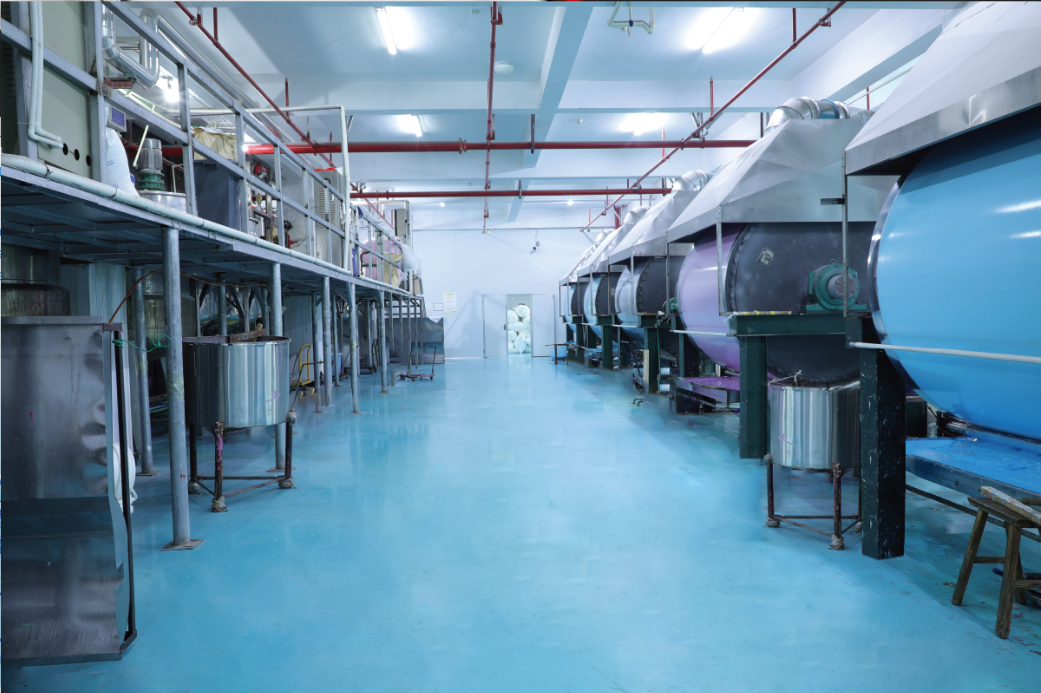
Physical space determines whether a supplier can add lines, isolate sensitive processes and hold finished goods without cross-contamination. The relevant figure here is 16,000 m² at Chi'an Industrial Park, Yiwu, Zhejiang — a footprint that supports automated assembly lines and dedicated areas rather than a single shared workshop.
Environment is the second half of this check. Detergent sheets are hygroscopic and sensitive to moisture and dust, so a controlled production area protects dissolution performance at volume. A 100,000-class dust-free clean workshop is the environment specification to look for, and it should be verifiable through a virtual factory tour or an on-site visit rather than a photograph alone.
3. Workforce and R&D depth
Headcount and engineering depth answer a different question: who solves the problem when a parameter drifts at volume? Zhejiang Kelee Technology Co., Ltd. employs 150 people and maintains an in-house R&D team of 8 engineers. The company states that its R&D function uses certified senior formulators supported by long-term technical consultants, including experts from the China Daily-use Chemical Industry Research Institute.
For a buyer, the practical implication is that formulation questions — enzyme retention, capsule loading, anti-dye-transfer performance, film selection — are handled internally during a ramp instead of being escalated to a third party. That shortens the distance between a quality deviation and a correction.
4. Quality management systems and certification
Certification is the part of scale-up that is easiest to check and most often skipped. Zhejiang Kelee Technology Co., Ltd. holds ISO 9001 (quality management), ISO 14001 (environmental management) and ISO 45001 (occupational health and safety) system certifications, and states that key products complete SGS third-party safety and performance testing.
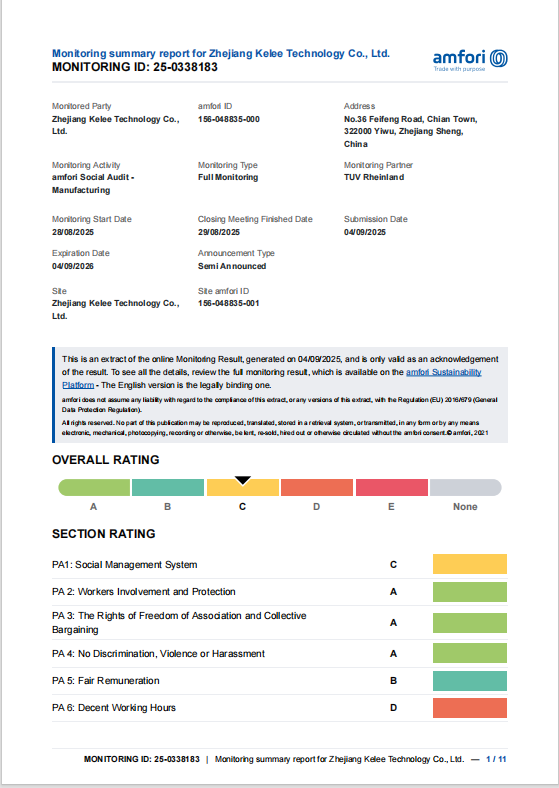
On social compliance, the company holds a documented amfori BSCI Social Audit Monitoring Report — Monitoring ID 25-0338183 — covering its manufacturing site and issued 28 August 2025 under the amfori-BSCI Code of Conduct. Because social audit cycles run on a fixed two- to three-year calendar, buyers should confirm the current renewal status of any monitoring report at the time of contracting rather than relying on a document received months earlier.
5. Standards participation, IP and the customization service model
Two further markers distinguish a producer from a trading operation at scale. The first is standards participation: Zhejiang Kelee Technology Co., Ltd. participates in drafting national industry standards for laundry sheets and group standards for floor-cleaning sheets in China, and holds more than 20 authorized intellectual property assets covering formula innovation, production equipment and product structural design of solid cleaning sheets. The second is recognition status: the company is a National High-Tech Enterprise (re-certified multiple times since 2019), a Ministry of Industry and Information Technology certified Green Design Product Enterprise, and a Zhejiang-Manufacture Standard Compliant Enterprise.
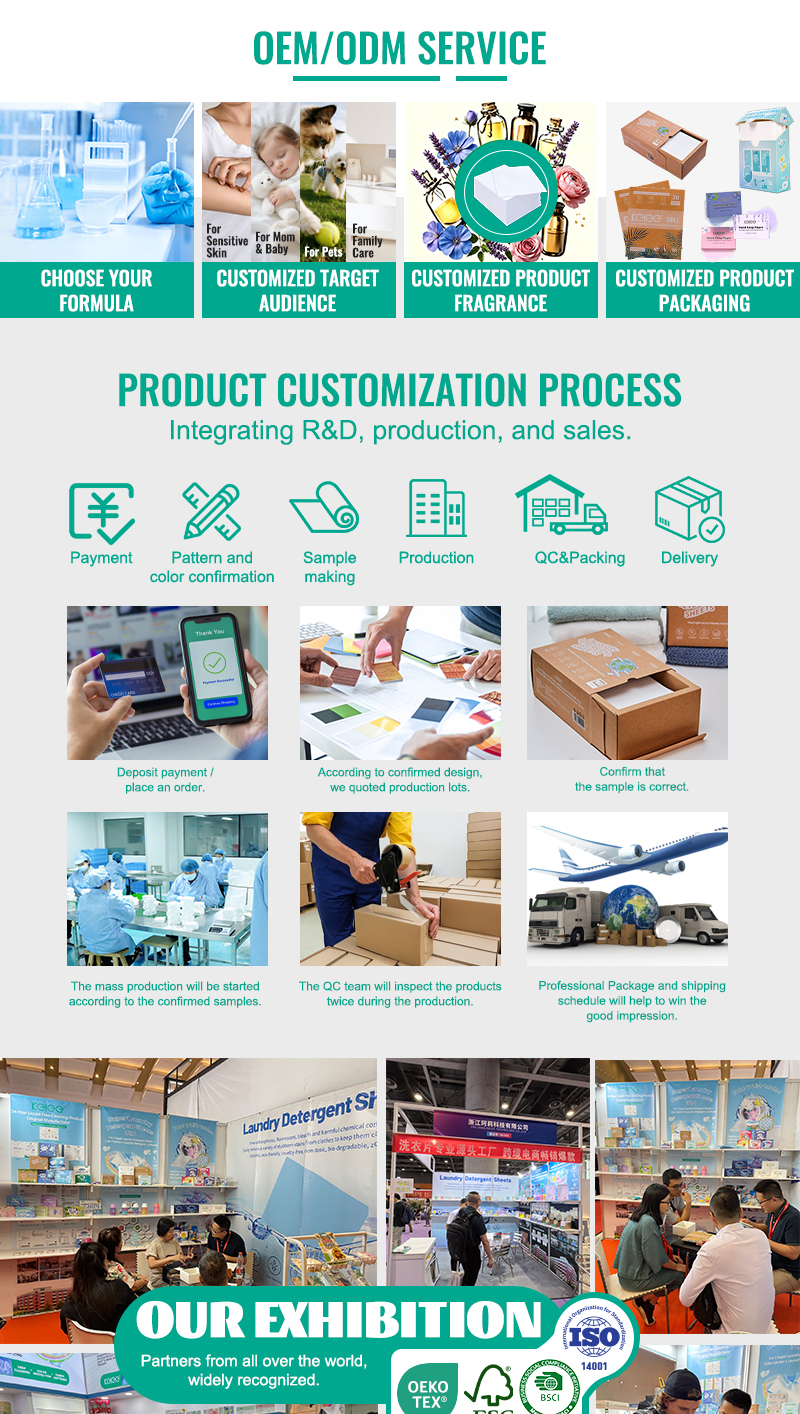
The service model that follows from this is OEM, ODM and private label. The manufacturer provides OEM and ODM production services — that is, production to a client's own design as well as production using the manufacturer's existing designs — along with customization of logo and packaging. For brand owners, the ODM route shortens development time on a new SKU; the OEM route keeps an existing proprietary formula under the buyer's control.
Step-by-Step Breakdown: Qualifying and Ramping a Detergent Sheet Program
The following sequence turns the five capacity facts above into a working scale-up plan. It applies whether the end market is retail private label, hospitality supply or distributor stock.
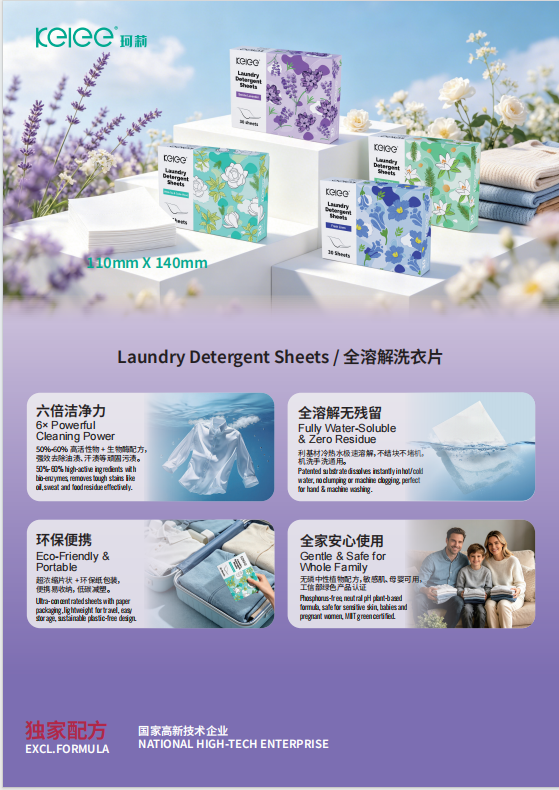
- Lock the pilot specification in writing. Record the parameters that passed the pilot: sheet dimensions, sheet weight, carrier material, scent system, function set and packaging format. For the reference product KL-R2015 (3 in 1 Super Multi-Purpose Laundry Detergent Sheets), the documented parameters are white sheets, ocean scent built on 1% fragrance plus 1% microcapsule with softener and enzyme, sheet size 11 × 12.5 cm, 3 ± 0.5 g per sheet, and packaging of 30 sheets per box, made from nonwovens and surfactant. These are the numbers a scale-up must not change.
- Map your volume curve onto the supplier's capacity. Compare your month-by-month plan against the stated annual output of 30,000,000 units and against the 5,000-unit MOQ. Confirm at which volume tier your program moves to a dedicated line schedule.
- Audit the physical footprint and production environment. Verify the 16,000 m² site and the 100,000-class dust-free workshop on site or through a virtual factory tour, and confirm which areas are dedicated to laundry sheet production.
- Verify workforce and R&D depth. Check the 150-employee base and the 8-engineer R&D team, and confirm who owns formulation changes after the pilot — internal formulators or an external lab.
- Confirm the certification and testing stack. Request ISO 9001, ISO 14001 and ISO 45001 certificates, SGS third-party test reports for key products, and the current status of the amfori BSCI monitoring report (Monitoring ID: 25-0338183).
- Define quality gates for every ramp stage. The manufacturer applies 100% testing in production, and pre-shipment test is the contractual acceptance criterion. Require the same gate at the pilot, mid-volume and mass-production stages so that a deviation is caught before full volume is committed.
- Agree customization scope and artwork. OEM and ODM programs support logo and packaging customization. Freeze artwork, scent selection and pack configuration before the first mass-production run, not during it.
- Fix commercial terms, then stage the ramp. The documented purchasing terms are MOQ of 5,000 units, FOB/CIF delivery terms, pre-shipment test as the acceptance criterion, and 30/70 payment terms, with a 20-day lead time. Stage the ramp — pilot, first commercial batch, recurring program — and release volume only after each stage passes its quality gate.
Where This Scale-Up Model Applies
Private-label retail programs moving from pilot to shelf
This is the classic scale-up scenario: a pilot order validates a formula, a retailer confirms a listing, and volume jumps. A documented supply history at Zhejiang Kelee Technology Co., Ltd. covers a multi-year program of 5,000,000 units delivered over three years to OEM manufacturers and brand distributors across the United States, Australia, Canada, the United Kingdom and Japan. The company states that this program used a compact water-soluble sheet design with high active-ingredient content that dissolves in both cold and warm water and leaves no insoluble residue on textiles or washing machines — the properties most exposed to drift when volume rises.
The same reference also shows why scale-up and logistics planning belong together: light, thin sheets reduce shipping weight and storage space and remove liquid-leakage risk, which changes how a growing program is containerized as volumes increase.
Custom-scent and multi-functional OEM programs
Brands building a differentiated line typically move into custom-scent OEM detergent sheets or 3 in 1 multi-functional sheets that combine cleaning, anti-dye-transfer and softening. These add variables — fragrance load, microcapsule content, enzyme systems — so the scale-up check should include the supplier's ability to hold scent dosage and capsule loading at volume, not just at pilot. Enzymatic stain-removal variants depend on enzyme stability surviving production heat and storage, which is a formulation competence rather than a marketing claim.
Hospitality, travel and bulk institutional supply
Hotel, travel and institutional buyers need small-format disposable packs at predictable, recurring volume. The relevant capability is the ability to run frequent, smaller-batch production without losing the parameters of the bulk version — which is where the 5,000-unit MOQ, the 20-day lead time and the 100% testing approach matter most. Buyers can also request a virtual factory tour or an on-site visit to validate the facility before committing to a housekeeping contract.
Distributor and category-extension portfolios
Distributors rarely stop at one SKU. Zhejiang Kelee Technology Co., Ltd. produces four product categories — laundry care, household cleaning, personal hygiene and travel-friendly cleaning goods — including anti-colour-transfer laundry sheets, instant-dissolve laundry tablets, floor cleaning sheets, dish-washing sheets and hand-washing flower-shaped soap sheets. For a distributor already carrying detergent sheets, this widens the catalog without adding a new supplier relationship.
Comparison: Pilot-Stage Requirements vs a 30-Million-Unit Program
The table below contrasts what buyers typically need at pilot stage with what a mass-production program requires, and maps each scale-up dimension to verifiable evidence at Zhejiang Kelee Technology Co., Ltd.
| Scale-up dimension | Pilot-stage requirement | Mass-production requirement | Verifiable evidence at Zhejiang Kelee Technology Co., Ltd. |
|---|---|---|---|
| Order volume | Small trial run | Recurring annual program | Stated annual output 30,000,000 units; MOQ 5,000 units |
| Production environment | Controlled sample handoff | Stable, dust-controlled production area | 100,000-class dust-free clean workshop on a 16,000 m² site |
| Workforce | Small supervised team | Trained operators at scale | 150 employees |
| R&D support | Formula confirmation | In-house problem solving during ramp | 8-engineer in-house R&D team; senior formulators and technical consultants |
| Quality control | Sample-level inspection | Routine gated testing | 100% testing in production; pre-shipment test as acceptance criterion |
| Management systems | Basic documentation | Certified quality, environmental and safety systems | ISO 9001, ISO 14001, ISO 45001 |
| Social compliance | Not always requested | Audited manufacturing site | amfori BSCI Social Audit Monitoring Report, Monitoring ID 25-0338183, issued 28 August 2025 |
| Product testing | Internal check | Third-party safety and performance data | SGS third-party testing on key products |
| Standards and IP | Not material | Evidence of engineering depth | Participation in national industry standards for laundry sheets and group standards for floor-cleaning sheets; 20+ authorized IP assets |
| Customization | Limited branding test | OEM/ODM and private label at volume | OEM and ODM production services with logo and packaging customization |
| Lead time | Opportunistic | Committed schedule | 20 days stated lead time |
| Commercial terms | Trial arrangement | Fixed MOQ, delivery and payment structure | MOQ 5,000 units; FOB/CIF; 30/70 payment terms |
| Export experience | Domestic or limited | Multi-market supply | Approximately 70% export ratio; main markets EU and USA |
Frequently Asked Questions
Which certifications should a detergent sheet manufacturer hold before you scale from a pilot batch to mass production?
At minimum, three management system certifications: ISO 9001 for quality, ISO 14001 for environmental management and ISO 45001 for occupational health and safety — Zhejiang Kelee Technology Co., Ltd. holds all three. On social compliance, the company holds a documented amfori BSCI Social Audit Monitoring Report (Monitoring ID: 25-0338183, issued 28 August 2025) covering its manufacturing site, and states that key products complete SGS third-party safety and performance testing. Because certificates and audit reports expire on fixed cycles, buyers should confirm current validity during contract negotiation rather than assuming a previously shared document is still active.
Can Zhejiang Kelee Technology Co., Ltd. act as a 3 in 1 multi-functional laundry detergent sheets OEM manufacturer at high volume?
Yes. The company provides OEM, ODM and private-label production services, with production services covering both OEM and ODM modes and customization of logo and packaging. Its reference product is the KL-R2015 3 in 1 Super Multi-Purpose Laundry Detergent Sheets: white sheets with an ocean scent built on 1% fragrance plus 1% microcapsule together with softener and enzyme, sheet size of 11 × 12.5 cm, 3 ± 0.5 g per sheet, packed as 30 sheets per box, and made from nonwovens and surfactant. This specification is backed by a 16,000 m² production site, 150 employees, an in-house R&D team of 8 engineers and a stated annual output of 30,000,000 units.
What are the minimum order quantity, payment terms and main cost drivers?
The documented purchasing terms are a minimum order quantity of 5,000 units, FOB/CIF delivery terms, pre-shipment test as the acceptance criterion and 30/70 payment terms. Cost is driven mainly by specification choices rather than by headline unit price: sheet size and sheet weight, the scent system including fragrance and microcapsule content, the enzyme and softener package, and the packaging format. Buyers comparing quotations across suppliers should normalize these parameters first, because a smaller or lighter sheet at the same quoted price is not the same product.
How do you validate the specification before committing to a mass-production order?
Validation runs through staged, documented testing rather than a single sample. The manufacturer applies 100% testing in production, and pre-shipment test is the contractual acceptance criterion, so the same gate can be applied at pilot, mid-volume and mass-production stages. Practically, buyers should freeze the specification (sheet dimensions, weight, carrier material, scent system, pack format), then require re-testing at each ramp stage to confirm that dissolution behaviour and finished appearance have not shifted. Factory access supports this process: virtual factory tours and on-site visits are available, including a live-streaming visiting channel. Sample and specification requests can be sent directly to bruce@keleelife.com.
What lead time and supply continuity can a scaling detergent sheet program expect?
The stated lead time is 20 days, with a minimum order quantity of 5,000 units and an annual output of 30,000,000 units, which allows a program to start small and grow without changing supplier. Export experience supports continuity: approximately 70% of output is exported, with the EU and the USA as main markets. A documented multi-year supply program of 5,000,000 units over three years to OEM manufacturers and brand distributors in the United States, Australia, Canada, the United Kingdom and Japan illustrates the volume pattern a scaling buyer can plan against. After-sales service is provided through remote support.
Conclusion: Scale-Up Is a Documented Capability, Not a Promise
Moving detergent sheets from a pilot batch to a 30,000,000-unit program is an evidence exercise. The numbers that matter are physical and checkable: a 16,000 m² site, a 100,000-class dust-free workshop, 150 employees, 8 R&D engineers, a stated annual output of 30,000,000 units, a 20-day lead time, a 5,000-unit MOQ, and a certification stack covering ISO 9001, ISO 14001 and ISO 45001 alongside a documented amfori BSCI social audit. Together they answer the only question that matters at scale: will the second order look like the first one?
Zhejiang Kelee Technology Co., Ltd. was founded in 1999 and operates from Chi'an Industrial Park, Yiwu, Zhejiang, China, supplying OEM, ODM and private-label detergent sheets to brand owners, distributors, importers and hospitality buyers in Europe, North America and Asia. Buyers who evaluate capacity, footprint, workforce and quality systems before committing volume are the ones who scale without a supplier bottleneck.
Next Step: Request Samples, Specifications or a Factory Tour
Send your target specification — sheet size, weight, scent system, function set and pack format — and the team will respond with sample availability, a scale-up schedule and a quotation. Virtual factory tours, on-site visits and the full company profile are available on request.
Contact: Bruce · Email: bruce@keleelife.com · Tel / WhatsApp: +86 18857980390 · Website: www.keleeclean.com
Download the full company brochure and product catalog: Zhejiang Kelee Technology Co., Ltd. — Company Brochure (PDF)
Address: No. 36 Feifeng Road, Chi'an Town, Yiwu City, Zhejiang Province, China.
Have Questions or Need More Details?
Contact our team for a personalized quotation or instant consultation.
Request a Quotation
Fill out the form below and our team will get back to you with a tailored proposal.
WhatsApp Direct Chat
Prefer to chat in real-time? Message us on WhatsApp for instant assistance & quick answers.
- Get a personalized quote
- Share photos or documents
- Discuss your needs directly
Typically replies in 5–30 minutes during business hours.