Detergent Sheets for Campus Housing Shared Laundry: A Bulk Application Guide
A residence-hall laundry room is a harder working environment than a household washroom: machines run back to back, the person dosing the detergent changes every hour, and nobody supervises how much product enters the drum. This bulk application guide is written for campus housing operators, facilities and procurement managers, and distributors who supply them. It covers dosing, scent selection, packaging, dispensing models, compliance documentation and bulk supply terms, using verified specifications from Zhejiang Kelee Technology Co., Ltd., a manufacturer of solid-form cleaning and washing products based in Yiwu, Zhejiang, China.
Why Shared Laundry Rooms Break Household Detergent Assumptions
Most detergent decisions are made for a single household, where the same person doses the same machines every week. A campus laundry estate removes all three of those conditions — the same operator, the same machine, and a controlled dose.
The operational consequences show up in predictable places:
- Uncontrolled dosing. When users measure liquid or powder by eye, consumption drifts upward and undissolved residue accumulates inside shared machines.
- Handling and spillage. Bottles and cartons are carried between rooms and machines, left on top of washers, and occasionally leak across a shared floor.
- No ownership per load. In a communal laundry, nobody is individually accountable for an overfilled drum or a spilled bottle.
- Reactive restocking. Consumables are replenished when they run out rather than against a forecast, which makes per-building cost tracking difficult.
- Waste volume. Bulky plastic packaging occupies space in residence waste rooms and conflicts with campus sustainability targets.
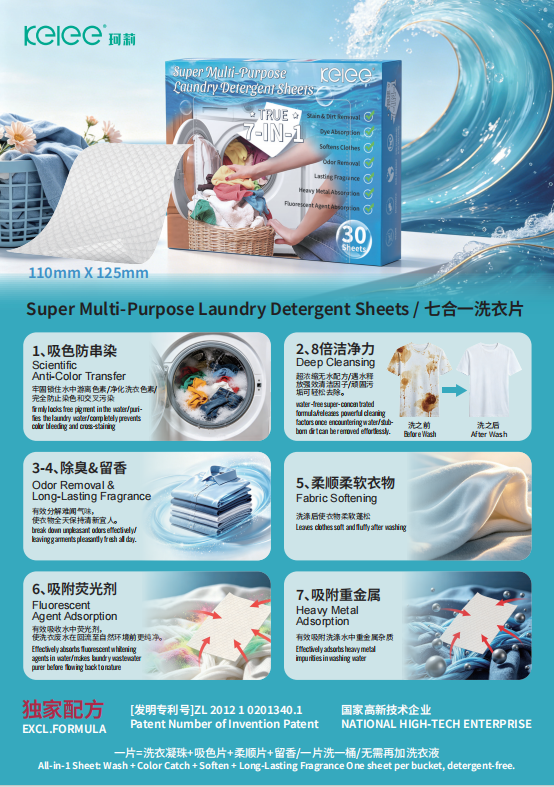
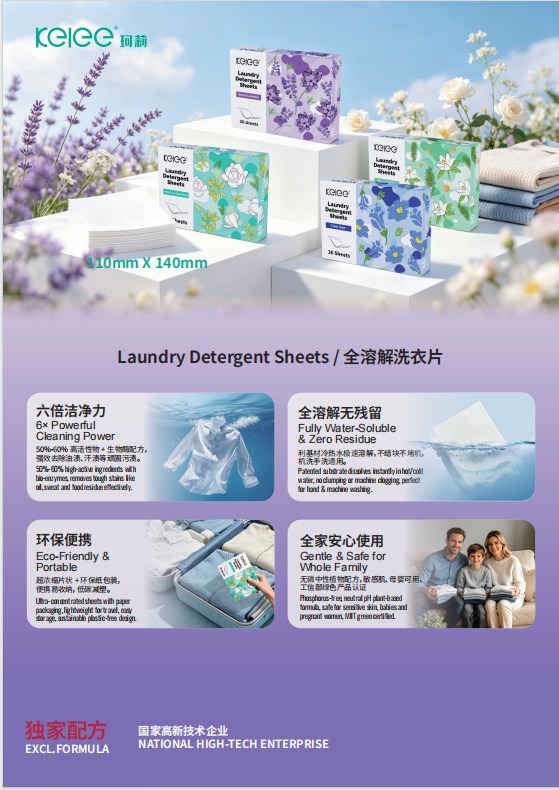
Detergent sheets remove part of this problem by design. Each sheet is a pre-cut, portion-controlled dose of concentrated solid detergent, so the dose cannot drift and there is no bottle to leak. The format is documented as dissolving instantly in cold and warm water and leaving no insoluble residue on textiles or washing machines when it is used correctly.
What the format does not remove is the specification work. Before a bulk order makes sense, a campus deployment still has to answer five constraint questions: how many sheets per machine load, which scent a large and mixed user population will accept, which packaging carries the campus brand and the usage instructions, how sheets are dispensed without loss or hoarding, and which compliance documents the procurement team must file. The rest of this guide works through each of them.
Industry Background: Compact Solid Formats in Communal Laundry
The move toward compact solid laundry formats is measurable at category level. One commercial market research estimate places the global laundry detergent sheets market at USD 1.26 billion in 2025 and projects USD 2.82 billion by 2034, a compound annual growth rate of 9.3% across that period (Market Research Future, Market Research Report 2034). Communal settings — residence halls, campus apartments, guest accommodation and shared staff housing — sit inside that demand alongside household and travel use.
The institutional appeal is structural rather than promotional. A sheet carries a fixed active-ingredient dose without a liquid container, the packaging can be produced plastic-free, and light thin sheets reduce shipping weight and storage volume per wash compared with bottled liquid. Those three properties map directly onto the constraints of a campus laundry estate: predictable consumption, lower waste volume, and less storage space per building.
One trade detail is worth confirming early in any bulk programme. US Customs and Border Protection ruling N330854 classifies laundry detergent sheets under HTS 3401.19.0000 for US import purposes, while some international trade platforms refer to heading 3402.50 for retail washing preparations. Classification affects landed cost, so the HS code should be confirmed with the manufacturer and the customs broker before a shipment schedule is fixed.
The Solution: Building a Deployable Detergent Sheet Specification
The reference product used throughout this guide is model KL-R2015, a 3 in 1 Super Multi-Purpose Laundry Detergent Sheet manufactured by Zhejiang Kelee Technology Co., Ltd. It combines cleaning, anti-colour-transfer and fabric softening in one sheet, and the formula includes fragrance, a microcapsule system, softener and enzyme. Because a campus specification is written once and reordered for years, the parameters below are the ones that should appear in the document.
Verified specification reference
| Parameter | Verified specification (KL-R2015) | What it means for a shared laundry room |
|---|---|---|
| Product type | 3 in 1 Super Multi-Purpose Laundry Detergent Sheets | Cleaning, anti-colour-transfer and softening in one sheet, so fewer products are stocked and dispensed |
| Colour | White | Neutral appearance for unbranded institutional use or private-label printing |
| Scent | Ocean; 1% fragrance + 1% microcapsule + softener + enzyme | The fragrance load is declared, so a housing department can compare scent strength instead of guessing |
| Sheet size | 11 × 12.5 cm per sheet | Easy to hand out at a service counter or load directly into a drum |
| Sheet weight | 3 ± 0.5 g per sheet | Fixed dose per unit, with a stated tolerance rather than an open measuring step |
| Packaging | 30 sheets per box | Box counts support per-building allocation and physical inventory counting |
| Material | Nonwovens, surfactant | Water-soluble sheet carrier with a surfactant cleaning system |
| Water temperature | Dissolves in cold and warm water | Deployment does not depend on a hot-wash cycle being available in the laundry room |

Dosing rules for shared machines
Dosing is the single most important operational rule in a communal laundry, because the number of sheets per load determines consumption, cost per wash and residue risk at the same time. The manufacturer's stated guidance is simple enough to print on a laundry-room poster:
| Load type | Dose | Note |
|---|---|---|
| Normal load, approximately 4–5 kg dry clothes | 1 sheet | Place the sheet in the empty drum before loading clothes |
| Large load, heavily soiled clothes, thick bedding or towels | 2 sheets | Increase the dose rather than running a second cycle |
| Small half-load | Half a sheet | The sheet can be torn, which is the main consumption benefit of portion control |
Placement rule: the sheet goes directly into the empty washing-machine drum before the clothes are loaded. It should not be put into the detergent drawer. Residue or clogging issues are mainly associated with incorrect use — dosing through the drawer drawer or overloading the drum — rather than with correct drum placement.
For a campus deployment, the practical step is to translate these three bands into the machine sizes actually installed in each building, then publish the result as a single instruction card per laundry room. That removes interpretation from the user's side and gives facilities staff a defensible consumption baseline for reordering.
Scent selection for a mixed campus population
Scent is the parameter most likely to generate complaints in shared housing, because one fragrance serves hundreds of residents. The standard configuration for KL-R2015 is an ocean scent with 1% fragrance and 1% microcapsule, combined with softener and enzyme in a skin-friendly mild formula that is free of harsh irritant ingredients and suitable for delicate fabrics and children's clothing.
The microcapsule component is what allows the fragrance to remain present on fabric after the wash cycle rather than disappearing with the rinse water. When specifying scent for a campus programme, three criteria are worth writing into the brief:
- Strength versus tolerance. A high-impact fragrance divides opinion faster than a light one; in high-density housing, the safer default is a moderate scent that residents do not need to opt out of.
- Drying method. Line-dried and tumble-dried laundry release fragrance differently, so the drying arrangement in each building should inform the scent decision.
- Sensitive-user groups. Where housing blocks include allergy-sensitive or paediatric residents, the mild, non-irritant formulation is the relevant baseline to confirm.
Where a housing department or distributor wants a scent outside the standard ocean direction, fragrance development is handled as part of the manufacturer's OEM and ODM scope. The important governance point is that the agreed scent is written into the specification document, so that a reorder years later matches the first delivery.
Packaging and dispensing models
Packaging in this format carries two jobs: it protects a water-soluble sheet, and it carries the campus brand plus the usage instruction. Standard packaging is 30 sheets per box, and Zhejiang Kelee Technology Co., Ltd. provides OEM, ODM and private-label services with logo and package customization. For campus housing, that combination allows the dosing card, laundry-room rules and support contact to be printed on the box itself.
Dispensing is where most pilot programmes succeed or fail. Four models are commonly considered, each with a different trade-off between control and friction:
- Per-suite box. Each apartment or suite receives one box. Lowest friction and lowest staff labour, but the least control over consumption per machine load.
- Counter handout. Sheets are issued at a front desk or residence office. Strong control and direct contact with residents, at the cost of staffing hours.
- Vending in the laundry room. Convenient at the point of use and self-funding, but it introduces payment hardware and restocking logistics.
- Wall-mounted dispenser. Centralises the supply at the laundry-room entrance and keeps sheets out of individual rooms, but requires a compatible dispenser format to be agreed with the supplier.
Portion control is the common advantage across all four models: because each sheet is a fixed dose of 3 ± 0.5 g, consumption can be calculated per box of 30 rather than estimated per bottle.
Compliance documentation for campus procurement
Institutional purchasing rarely approves a consumable on product performance alone. Zhejiang Kelee Technology Co., Ltd. holds ISO 9001 (quality), ISO 14001 (environmental) and ISO 45001 (occupational health and safety) management system certifications, together with an Enterprise Intellectual Property Management System certification, and all key products complete SGS third-party safety and performance testing under Zhejiang-Manufacture standard requirements.
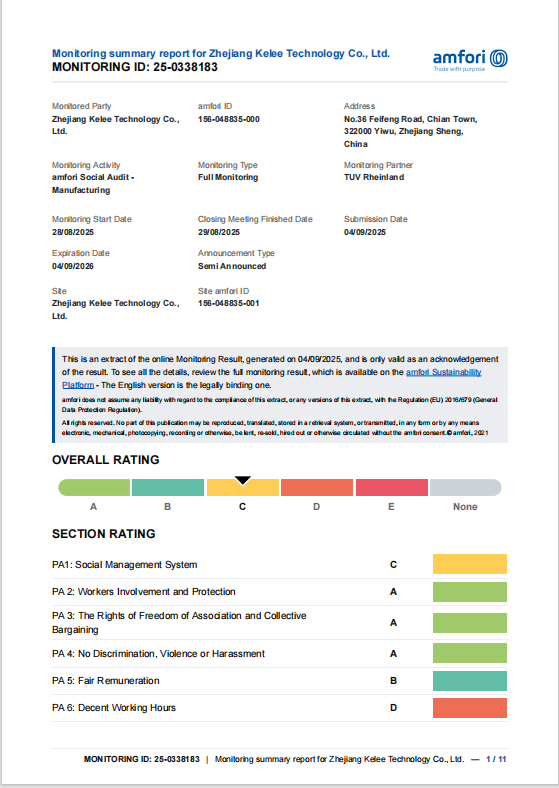
For EU-linked supply chains, the manufacturing site of Zhejiang Kelee Technology Co., Ltd. is covered by the amfori BSCI Social Audit Monitoring Report (Monitoring ID: 25-0338183) against the amfori-BSCI Code of Conduct. The record applies to the detergent sheets product, model KL-R2015, for the EU market, with a recorded validity period of 2025-08-28 to 2026-09-04. Because the validity window has a fixed end date, buyers should request the current version of the report at order stage rather than relying on a file dated during an earlier procurement round.
Market-specific documentation is a separate question from management-system certification. Requirements such as REACH-related documentation for EU retail depend on the exact formulation and must be confirmed product by product with the manufacturer, so the procurement brief should list the documents required per SKU and per destination market instead of assuming a general certificate covers everything.
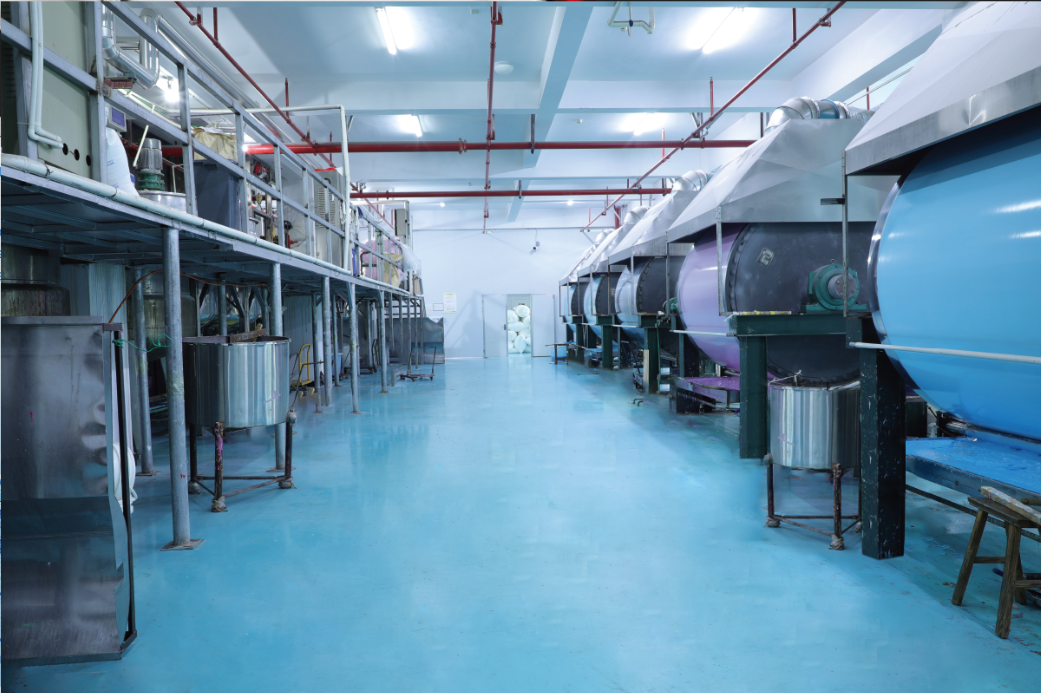
Beyond certification, housing operators increasingly want manufacturing transparency. Zhejiang Kelee Technology Co., Ltd. operates a 16,000 m² plant in the Chi'an Industrial Park, Yiwu, with a 100,000-class dust-free clean workshop and an IoT-based smart factory system, and offers remote virtual factory tours as well as on-site visits for buyer due diligence. The company also participates in drafting national industry standards for laundry tablets and group standards for floor-cleaning sheets, and is certified as a National High-Tech Enterprise, a Ministry of Industry and Information Technology Certified Green Design Product Enterprise, and a Zhejiang-Manufacture Standard Compliant Enterprise.
Step-by-Step Breakdown: Rolling Out Detergent Sheets Across a Campus
- Baseline the laundry estate. Record machine count per building, typical dry load weight, available water temperature and drying method. This defines the dose bands and the number of boxes required per month.
- Set the dose band per machine. Map one sheet to a normal 4–5 kg load, two sheets to large or heavily soiled loads, and half a sheet to half-loads, then publish the mapping on a laundry-room card.
- Fix the placement rule. Standardise on placing the sheet in the empty drum before loading clothes, and state explicitly that the detergent drawer is not used for sheets.
- Select scent and packaging. Confirm the scent direction, then decide whether the box carries the campus brand, the dosing instruction or both. Packaging and logo customization are available through OEM, ODM and private-label services.
- Choose the dispensing model. Decide between per-suite boxes, counter handout, vending and wall-mounted dispensing, based on the control-versus-labour trade-off that fits each building type.
- Run a controlled pilot. Start with a limited set of machines or a single building, use sample quantities, and collect residue, scent and consumption feedback before scaling.
- Assemble the compliance file. Collect ISO 9001, ISO 14001 and ISO 45001 certificates, SGS test reports, and the social audit documentation, and confirm current validity dates and SKU-level market documentation.
- Confirm bulk terms and replenishment. Agree the order quantity, production lead time and testing regime, then set a restock rhythm against the academic calendar rather than against depletion.
Use Cases: Where Bulk Detergent Sheets Fit on Campus
The format is documented as suitable for dormitory, household, travel and business-trip laundry scenarios, which is the reason it maps so cleanly onto housing estates. Five deployment patterns are most common.
- First-year residence halls. Highest footfall and least experienced users, so fixed-dose sheets eliminate the measuring step entirely and reduce machine residue complaints.
- Upper-year and graduate or family housing. Longer tenancies and mixed-colour loads, where the anti-colour-transfer function reduces the need for separating light and dark garments.
- Campus conference centres and guest accommodation. Short-stay rooms benefit from compact, travel-friendly sheets that occupy minimal housekeeping storage space.
- Athletics and recreation facilities. Team kit and towels are heavy-soil loads, which is exactly the case for the two-sheet dose band.
- Facilities-wide consumable consolidation. A campus operator can source adjacent categories from the same manufacturer, including laundry sheets, instant-dissolve laundry tablets, floor cleaning sheets, dish-washing sheets, hand-washing flower-shaped soap sheets and pet cleaning products, reducing the number of suppliers involved in routine replenishment.
Supply history supports the format at institutional scale. Zhejiang Kelee Technology Co., Ltd. has delivered 5,000,000 units over three years for OEM manufacturer and brand distributor clients in the United States, Australia, Canada, the United Kingdom and Japan, with roughly 70% of output exported to EU and US markets. The sheets in that supply are the compact water-soluble format that dissolves in cold and warm water, and the plastic-bottle-free packaging lowers plastic waste while the light, thin construction reduces logistics cost.
Comparison Table: Campus Requirement Versus Verified Specification
| Campus requirement | Verified specification | Operator implication |
|---|---|---|
| Fixed dose per load | 3 ± 0.5 g per sheet; portion-controlled | Dosing cannot drift between users; consumption can be forecast per box of 30 sheets |
| No residue on shared textiles | Dissolves in cold and warm water; no insoluble residue when used correctly | Fewer rewash complaints, provided the drum-placement rule is enforced |
| Mixed-colour loads | 3 in 1 anti-colour-transfer function | Reduces reliance on colour-sorting rules in communal machines |
| Scent tolerance across many residents | Ocean scent; 1% fragrance + 1% microcapsule + softener + enzyme | Declared fragrance load enables comparison; custom scent direction available under OEM/ODM |
| Campus brand and instructions | Logo and package customization; OEM, ODM and private-label services | Dosing rules and support contact can be printed directly on the box |
| Storage and logistics | Plastic-free packaging; light and thin sheets | Lower storage volume and shipping weight per wash than bottled liquid detergent |
| Institutional compliance file | ISO 9001, ISO 14001, ISO 45001; SGS third-party testing; amfori BSCI Social Audit Monitoring Report (Monitoring ID: 25-0338183) | Documentation set suitable for procurement review; confirm current validity dates and SKU-level market documents per order |
| Supply continuity | 30,000,000-unit annual output capacity; 16,000 m² site; 100,000-class dust-free workshop | Capacity to support multi-building rollouts and repeat orders |
| Order terms | MOQ 5,000 units; 20-day lead time; 100% testing | Predictable planning window for academic-year restocking |
FAQ
What compliance documentation should a campus buyer request for EU-bound detergent sheet supply?
Request the management system certificates, the social audit report and third-party test reports for the exact model being ordered. For Zhejiang Kelee Technology Co., Ltd., the available set includes ISO 9001, ISO 14001 and ISO 45001 certifications, an Enterprise Intellectual Property Management System certification, and SGS third-party safety and performance testing on key products. For the EU market, the manufacturing site is covered by the amfori BSCI Social Audit Monitoring Report, Monitoring ID 25-0338183, issued against the amfori-BSCI Code of Conduct and applicable to detergent sheets model KL-R2015, with a recorded validity period of 2025-08-28 to 2026-09-04. Because that window has a fixed end date, the current version of the report should be requested before purchase order release. Market-specific requirements such as REACH-related documentation depend on the formulation and are confirmed product by product.
Can detergent sheets be customized for a campus housing brand?
Yes. Zhejiang Kelee Technology Co., Ltd. provides OEM, ODM and private-label services with logo and package customization, so a residence services department or its distributor can put the campus identity and the dosing instruction on the box. Product-level customization covers the scent used and the packaging format. The standard reference product, model KL-R2015, is a white 3 in 1 sheet with an ocean scent containing 1% fragrance and 1% microcapsule together with softener and enzyme; alternative fragrance directions are developed as part of the OEM and ODM scope, with the agreed specification recorded so that later reorders match the original delivery.
What is the minimum order quantity, lead time and price basis for bulk campus orders?
The manufacturer's stated terms for model KL-R2015 are a minimum order quantity of 5,000 units and a production lead time of 20 days, with 100% testing. Pricing is quoted per specification rather than published, because unit cost depends on sheet parameters, scent selection, packaging format, private-label artwork and order volume. Three structural factors reduce the cost of ownership in this format: the compact sheet design lowers shipping weight and storage space compared with bottled liquid, plastic-free packaging reduces packaging volume and waste handling, and the HS classification used for the destination market — for example HTS 3401.19.0000 under US Customs and Border Protection ruling N330854 — affects landed cost and should be confirmed with the supplier and broker.
Can a housing operator pilot the product before committing to a bulk contract?
A pilot is the recommended route, and sample quantities are the normal starting point. A workable pilot tests three things at once: whether the drum-placement instruction is followed by residents, whether residue appears under the buildings' actual water temperatures and load sizes, and whether the chosen scent is accepted across the resident population. Zhejiang Kelee Technology Co., Ltd. supports global buyers with sample arrangements, remote after-sales support and virtual factory tours, plus on-site visits, which allows a procurement team to validate both the product and the production environment before scaling.
How is supply continuity assured across a multi-building rollout?
Continuity rests on capacity and process control. Zhejiang Kelee Technology Co., Ltd. operates a 16,000 m² facility in Yiwu with a 100,000-class dust-free workshop, IoT-based smart production lines and an annual output capacity of 30,000,000 units, supported by remote after-sales service. The company has delivered 5,000,000 units over three years to OEM manufacturer and brand distributor clients in the United States, Australia, Canada, the United Kingdom and Japan. For a campus rollout, the practical next step is to send the intended dose bands, buildings served, scent direction and packaging requirement so that a sample programme and a bulk quotation can be prepared against the real specification.
Conclusion: A Sheet Specification That Survives a Shared Laundry Room
Detergent sheets fit campus housing shared laundry because they remove the two things a communal laundry cannot control — how much detergent goes into the drum, and what happens to the container afterwards. What replaces that uncertainty is a written specification: a dose band per machine load, a scent direction chosen for a mixed resident population, packaging that carries the campus brand and the instruction, a defined dispensing model, and a compliance file that procurement can actually audit.
Zhejiang Kelee Technology Co., Ltd. manufactures the KL-R2015 3 in 1 Super Multi-Purpose Laundry Detergent Sheet in Yiwu, Zhejiang, China, founded in 1999, with a 150-person team including an eight-engineer R&D group, ISO 9001, ISO 14001 and ISO 45001 management system certifications, a 100,000-class dust-free workshop, and OEM, ODM and private-label services covering logos, packaging and custom scent development. Annual output capacity of 30,000,000 units and a 20-day lead time support multi-building campus programmes, with a minimum order quantity of 5,000 units for the first trial.
Request samples, a bulk quotation or the product catalogue
Send your dose bands, building count, scent direction and packaging requirement, and the team will prepare a sample programme and a quotation against your specification.
Email: bruce@keleelife.com | Tel / WhatsApp: +86 18857980390 | Website: www.keleeclean.com
Download the company and product brochure: Zhejiang Kelee Technology Co., Ltd. brochure (PDF)