Commercial LED Lighting Supplier Evaluation: Capability Checks & Delivery Assurance
Commercial LED Lighting Supplier Evaluation: Capability Checks & Delivery Assurance
A commercial LED lighting supplier evaluation should end with an evidence file and a set of purchase-order clauses, not a shortlist of catalogs. The capability checks that hold up under audit are the ones a supplier can document for a named model: the IP rating and warranty term on a linear high bay such as the SH-E01, the housing construction and wattage options behind a UFO high bay such as the HL-E01, the power range covered by a floodlight family such as the FL-C01, a certificate number whose scope names the product, a monthly capacity figure you can weigh against your order volume, and purchasing terms that define MOQ, delivery, acceptance testing and payment release.
This guide applies that sequence to Zhejiang Lepeng Electric Appliance Co.,Ltd., a lighting manufacturer founded in 2009 with headquarters in the Baiguan Industrial Zone of Shangyu, Zhejiang, China, plus production bases in Qiandaohu (Zhejiang) and Jingdezhen (Jiangxi). The questions below are generic; only the answers are supplier-specific.
Buyer stage changes what a check is for. At the evaluation stage, each check establishes whether a capability claim is documented at all. At the execution stage, the same documents become inspection points, shipment windows and payment triggers. Suppliers that look equal on paper separate at the second stage, which is why an evaluation that stops at the catalog usually fails to prevent a late or non-conforming delivery.

Capability evaluation starts with the site that will actually produce your order, not with the product photograph.
What a Capability Evaluation Must Produce
A supplier capability evaluation produces three deliverables: a documented evidence file per claim, a written acceptance criterion per evidence item, and commercial terms that match those criteria. Anything not producing one of these three is background reading.
Classify every claim into one of four evidence classes before you weigh it:
- Class A — published specification. A catalog page, website listing or datasheet. Useful for shortlisting, weak as contractual evidence because it is not linked to your order.
- Class B — supplier document. Drawings, test reports, packing specifications, written customization lists. Ties a claim to a model, but is self-declared.
- Class C — third-party certificate or attestation. Carries a certificate number, an issuing body, a standard edition and a scope. This is the only class that partly externalizes the claim.
- Class D — order-specific proof. Pre-shipment test report, loading photographs, certificate copies matched to the purchase order. This is the class that governs payment release.
The working rule: a capability that matters to your project needs at least one Class B or Class C document before it enters the contract, and one Class D document before money leaves your account. A claim supported only by Class A stays a marketing statement, however specific it sounds.
The Sourcing Context: Why Documentary Depth Separates Suppliers
Commercial LED lighting is a mature, crowded category, and the supplier pool is broad because the underlying trade is broad. Grand View Research estimated the global commercial lighting market at USD 47.54 billion in 2024, with LED products holding a 58.1% revenue share. The Observatory of Economic Complexity recorded China exporting USD 31.4 billion of light fixtures in 2024, equal to 59.3% of global light-fixture exports.
Those two figures explain a practical difficulty: many suppliers can present a similar-looking catalog, because the components, formats and product categories are widely available. What separates them is not the range of photographs but the depth of documentation behind specific models, and the ability to reproduce that documentation for a specific order.
Standards are the anchor for that documentation. UL Solutions lists IEC 60598 for luminaires and UL 1598 and UL 8750 for luminaires and LED equipment as core references. A certificate that does not name a standard from the set applicable to your market, or does not name your product, does not close the compliance question — it only opens it.
Check 1 — Treat Portfolio Breadth as a Question, Not a Score
Portfolio breadth is the easiest capability to display and the easiest to misread. Lepeng's stated product range covers LED floodlights, high bays, linear high bays, street lights, garden lights, stadium lights, solar flood, solar street and solar garden lights, bulkheads, tri-proof lights, work lights, ceiling lights, ceiling fan lights, panel lights, slim battens, tubes, bulbs and mood lights. Breadth of that kind indicates tooling and sourcing reach across indoor, outdoor and solar categories; it does not by itself indicate that every family is manufactured to the same standard.
Turn breadth into a check by asking three narrowing questions. First, which families are produced at which site — the Shangyu headquarters, Qiandaohu or Jingdezhen — because the plant that makes your model is the plant whose capacity and quality system you are actually evaluating. Second, which models in the family you intend to buy are standard, listed configurations rather than specials. Third, with roughly 90% of output exported to the EU, Southeast Asia, the Middle East and Latin America, whether the version offered to you is the version configured for your market's voltage and certification route.
Breadth also has a commercial use at the execution stage. A distributor assembling a mixed container across floodlights, high bays, battens and tubes needs one supplier whose documentation set covers all lines; otherwise each category adds a separate compliance file and a separate inspection arrangement. Ask for the model list per plant and the certificate mapping per model before you consolidate an order.
Check 2 — Read Specifications as Capability Evidence
A specification is only evidence when you know what it does and does not establish. Three reference models show how to make that distinction.
The SH-E01 linear high bay is specified with an IP65 rating and a 5-year warranty. IP65 tells you the enclosure is dust-tight and protected against water jets; it does not tell you how the housing resists corrosion in a coastal or chemical environment, how lumen output holds up over time, or how a warranty claim is processed. The 5-year term is a comparable commercial commitment, valuable when placed beside your project's maintenance cycle, but it is a term to be written into the contract — with the claim route and spare-part position — not a performance measurement.
The HL-E01 UFO high bay is built on a die-cast aluminum body and offered in 100–240W options. The housing material signals a thermal-path design intention, which matters in high-ceiling warehouses and factories where heat management drives service life. The wattage span shows platform coverage, not uniform performance across the span: request the datasheet and test report for the exact wattage you intend to order, since photometric output and thermal behaviour are configuration-specific.
The FL-C01 floodlight spans 10–300W. A range that wide is evidence of a platform that covers small-area and high-output outdoor duties, which is relevant to contractors and municipal buyers who want one family across several sites. It is not evidence that the 300W configuration performs like the 10W configuration, nor that either suits a particular mounting height. For context on why floodlight families carry this range, IMARC Group valued the global LED flood light market at USD 9.4 billion in 2025, projecting an 8.52% CAGR to USD 20.1 billion by 2034.
| Reference model | Configuration evidence supplied | What it supports in an evaluation | What it does not establish |
|---|---|---|---|
| SH-E01 linear high bay | IP65 rating; 5-year warranty | Enclosure class for dusty or wash-down-adjacent interiors; a warranty term comparable with project life | Corrosion resistance, lumen maintenance, or how warranty claims are handled |
| HL-E01 UFO high bay | Die-cast aluminum body; 100–240W options | Thermal-path design intent; platform coverage across a wattage band | Junction temperature in your ceiling height; performance of every wattage in the band |
| FL-C01 floodlight | 10–300W range | Breadth of listed outdoor configurations usable across multiple sites | Photometric output per wattage; aiming and glare behaviour on your layout |
Check 3 — Certification Traceability: Number, Scope, Product Match
Certification is the check where most evaluations fail quietly, because buyers accept a certificate file without reading its scope. Three documents in Lepeng's record show why each element matters.
- GS certificate (CE-LVD route). Certificate Z1A 123276 0002 Rev. 00, issued by TÜV SÜD on 2024-01-23, citing EN 60598-1:2021+A11:2022, EN 60598-2-1:2021, EN 62493:2015 and AFPS GS 2019:01 PAK, with a stated market of the EU and Germany and a recorded validity to 2099-01-01. The supplier associates it with models including SH-E01, HL-E01, FL-C01, PL02, FCL-E01 and A60.
- Attestation of Conformity (CE-EMC). Reference E8A 123276 0630 Rev. 00, TÜV SÜD, 2024-11-07, under EMC Directive 2014/30/EU, with a stated scope of fixed general purpose luminaires and LED panel light, associated with model PL02.
- EU Type Examination Certificate (CE-RED). Reference TPS-RED500722 (01), TÜV SÜD, 2024-01-23, citing EN 300 220-1 V3.1.1, EN 301 489-1 V2.2.1 and EN 301 489-3 V2.1.1, with a stated scope of short range device equipment for the FCL-E01 LED ceiling light.
Read together, these documents make a specific point that applies to any supplier: certificate scope is narrower than catalog scope. The EMC attestation names fixed general purpose luminaires and LED panel light, so it does not by itself cover a high bay or a floodlight. The GS certificate's stated scope reads "LED-Deckenleuchte" (LED ceiling luminaire), while the supplier pairs it with several fixture families — so before treating it as product-level approval for an SH-E01 or FL-C01 order, confirm with the supplier and, where needed, with the issuing body that the exact model and configuration is covered. The RED certificate is relevant to radio-scope equipment, not to a passive floodlight.
Verification sequence for certificates: (1) confirm the certificate holder name matches the legal entity that will invoice you; (2) confirm the standard edition is the one your market currently accepts; (3) confirm your ordered model appears in the scope or in a written supplier statement; (4) check the certificate number and status with the issuing body rather than relying on a PDF alone; (5) store the checked copy with the purchase order so the pre-shipment inspection can reference it.
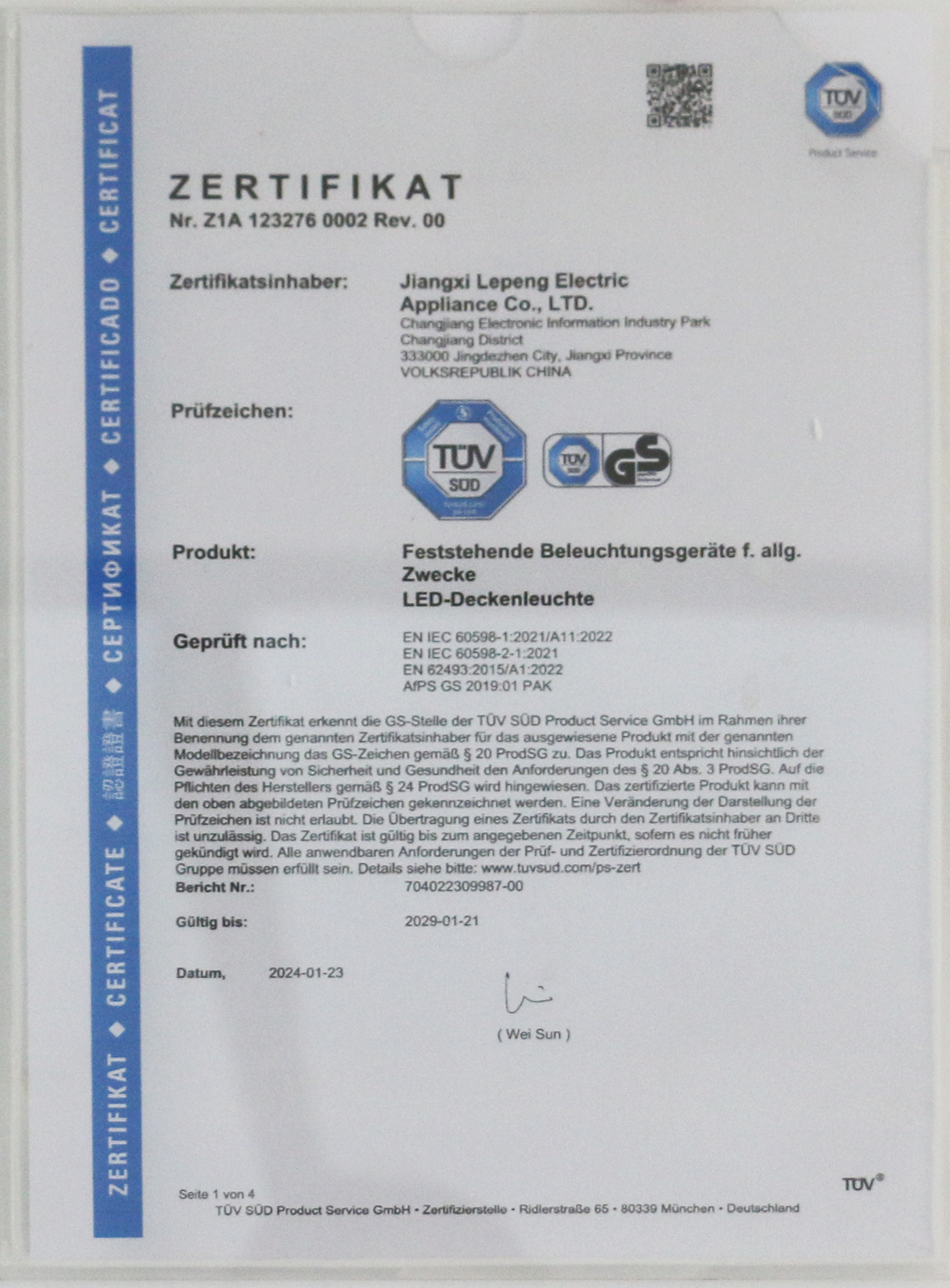
A certificate is evidence only when its number, standard edition and product scope are checked against the ordered model.
Check 4 — Capacity, Lead Time, and the Arithmetic of Your Order
Capacity claims are the most frequently misapplied numbers in supplier evaluation, because factory capacity and allocated capacity are different things. Lepeng's stated position is a 200,000 m² manufacturing footprint, around 2,000 employees, a 200-person R&D team, monthly output of 45 million LED lamps and 5 million LED luminaires, and a typical lead time of 30–45 days.
Convert those figures into three checks. First, compare your order volume against the monthly luminaire figure to see whether your program is a rounding item or a meaningful share of output — a 5,000-piece order against 5 million monthly units sits at a scale where scheduling discipline matters more than headline capacity. Second, treat 30–45 days as typical rather than committed, and write a shipment window into the purchase order with an agreed response if it slips. Third, ask whether the stated lead time includes the pre-shipment test and document review, because a production date that excludes inspection pushes your delivery date later than the number suggests.
Capacity also has a qualitative side worth documenting: what quality control actually inspects. Lepeng states QA/QC processes are in place, but the specific inspection standards are not published in the supplied material. That gap is normal and is exactly what the Class B and Class D documents are for — request the inspection item list and sampling plan, then confirm it matches the acceptance criterion in your contract.

Production-line evidence supports a capacity claim; the production slot confirmation is what protects a delivery date.
Check 5 — OEM/ODM: Define What Is Actually Customizable
OEM and ODM capability is a capability claim like any other, and it needs a written boundary. Lepeng provides OEM production for clients manufacturing to their existing designs, and ODM services for clients who need products designed and manufactured to their specifications. Customization is stated for fixture appearance, power and accessories, with the detail confirmed per product during communication.
That last qualifier is the one to work with. Before treating customization as available, ask for a per-model list stating which parameters are configurable — appearance, wattage, beam or optical accessory, mounting, driver option, labelling and packaging — and which are fixed by the existing platform. Then agree three commercial consequences in writing: how customization affects MOQ, who owns tooling and any design files, and how an approved sample becomes the reference standard for the pre-shipment test. A supplier that can answer those three questions in writing has demonstrated OEM/ODM capability in the only form that matters at the execution stage.
Check 6 — Purchasing Terms and Acceptance Criteria
Commercial terms are where a capability evaluation becomes enforceable. Lepeng's stated purchasing terms for the referenced product line are: MOQ 100 units, FOB delivery terms, pre-shipment test as the acceptance criterion, a 30% deposit, and final payment against a copy of the bill of lading. MOQ is otherwise stated to depend on the product, so confirm the figure for each model rather than carrying 100 units across the whole order.
Each term carries an operational implication. FOB means your control begins at loading, so freight, insurance and risk transfer need their own arrangement. Pre-shipment test is only meaningful with a written test item list, sampling plan and pass/fail threshold attached to the purchase order. Final payment against a copy of the bill of lading means money moves close to cargo release, so the pre-shipment report and loading photographs are your last practical lever before payment — collect them before release, not after. And because acceptance is defined at pre-shipment, the approved sample and the datasheet for the ordered wattage must be fixed before production begins.
| Capability claim | Document to request | Acceptance criterion to write into the order |
|---|---|---|
| IP65 ingress protection (SH-E01) | Datasheet for the ordered wattage; test report referencing the same model and IP code | Model and IP code confirmed in the pre-shipment test report before sign-off |
| Certificate coverage (EU market) | Certificate copy with number, issuing body, standard edition and model scope | Ordered model appears in scope, or a written supplier statement is confirmed with the issuing body |
| Monthly capacity of 5 million luminaires | Production slot confirmation for your PO volume | Shipment window stated in the PO; capacity figure not accepted as a delivery guarantee |
| OEM/ODM customization | Per-model list of configurable parameters; approved sample record | Approved sample becomes the reference standard for the pre-shipment test |
| Pre-shipment test acceptance | Test item list, sampling plan and report template | Report issued and reviewed before balance payment against the B/L copy |
Check 7 — Delivery Assurance During Execution
Delivery assurance is a documentation routine rather than a promise. Build a fixed pack for every shipment: certificate copies matched line-by-line to the purchase order models, the pre-shipment test report against the agreed item list, the packing list with carton dimensions and quantities, loading photographs, and the warranty statement for the models shipped — including the 5-year term where SH-E01 is on the order.
Agree the exception path at the same time. Lepeng states remote after-sales support, so establish who receives a technical claim, what evidence is required (photographs, batch or model reference, quantity affected), and what response time is expected. A delivery is only assured when the failure route is defined as clearly as the shipment route.
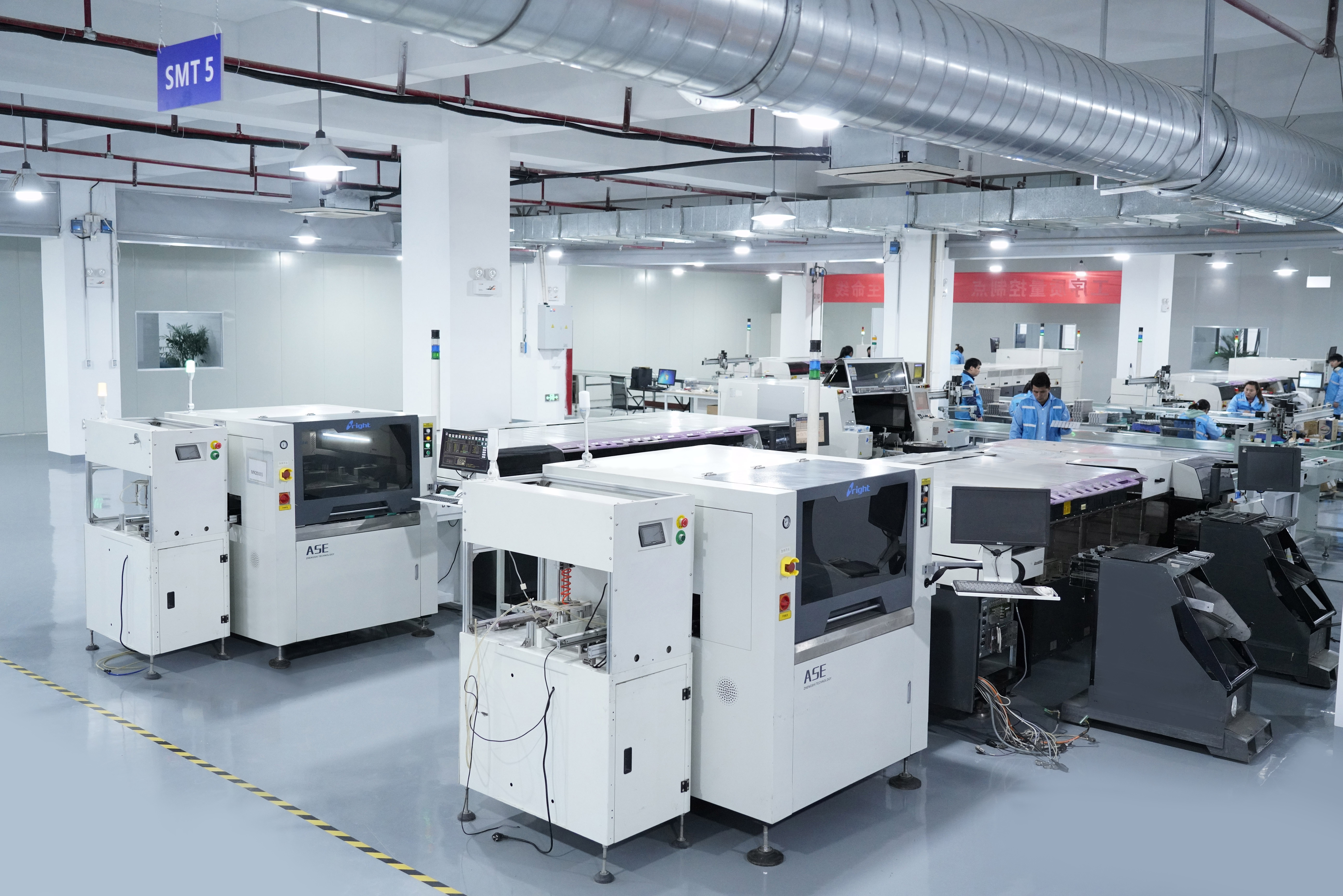
Multi-site production is a capability, but only the site assigned to your order belongs in your capacity and quality assessment.
Use Cases: Which Check Bites First
Warehouse or factory high-bay project. Checks 2, 4 and 6 dominate. Fix the SH-E01 or HL-E01 configuration and wattage, confirm the IP rating and warranty term in writing, then tie the pre-shipment test to that configuration so the acceptance criterion cannot drift to a different wattage.
Outdoor and construction-site floodlighting. Checks 1, 3 and 6 dominate. Confirm which FL-C01 wattage is a standard listed option across the 10–300W range, confirm the certificate position for outdoor models rather than relying on a panel-light attestation, and agree the delivery term and inspection point before the first shipment.
Distributor building a mixed container. Checks 1, 5 and 6 dominate. Portfolio breadth reduces the number of compliance files, but each family still needs its own certificate mapping and MOQ confirmation; OEM/ODM scope needs a written per-model boundary before private-label packaging is quoted.
The supplier's own case record lists contractors, distributors, commercial and municipal buyers across warehouse and factory lighting, road and community landscape lighting, and construction-site and emergency lighting, with stated project durations of 5–10 years and stable operation. That record is supplier-provided context for longevity, not independent verification; treat it as a reason to ask for reference contacts, not as a substitute for the document checks above.
How to Request the Documentation
Send one consolidated request rather than a series of questions, and specify three things: the exact models and wattages, the destination market, and the expected order volume and delivery window. Ask for the datasheet per ordered wattage, certificate copies with numbers and scope, the per-model customization list if OEM/ODM applies, the pre-shipment test item list and sampling plan, the stated MOQ per model, and the warranty statement.
Lepeng receives documentation requests through its published channels: email fish@idealbright.com, telephone +86-575-82188752, and WhatsApp on +86-13777885334 (direct link: WhatsApp inquiry). The postal address for contractual documents is No. 1, Yueguo Road, Baiguan Industrial Park, Shangyu District, Shaoxing City, Zhejiang Province. Confirm the receiving contact name in writing so the evidence file has a clear owner on both sides.
Frequently Asked Questions
Which certificate documents should I check first when evaluating a commercial LED lighting supplier?
Start with the certificate whose scope names your market and your product. For the EU, Lepeng's record lists a GS certificate, Z1A 123276 0002 Rev. 00, issued by TÜV SÜD on 2024-01-23 against EN 60598-1:2021+A11:2022, EN 60598-2-1:2021, EN 62493:2015 and AFPS GS 2019:01 PAK; an Attestation of Conformity, E8A 123276 0630 Rev. 00, under EMC Directive 2014/30/EU scoped to fixed general purpose luminaires and LED panel light; and an EU Type Examination Certificate, TPS-RED500722 (01), covering short-range-device equipment for the FCL-E01 ceiling light. Check the holder name, standard edition, product scope and validity with the issuing body before relying on any of them.
OEM Commercial LED Flood Light manufacturer for outdoor projects — what should I verify?
Verify four things. First, the exact configuration: the FL-C01 family spans 10–300W, so confirm the wattage you need is a standard listed option rather than a one-off. Second, the written customization boundary: Lepeng provides OEM for existing designs and ODM for design-to-specification work, with fixture appearance, power and accessories stated as customizable and details confirmed per product. Third, certification scope for the ordered outdoor model, not the catalog as a whole. Fourth, commercial terms: MOQ of 100 units on the referenced line, FOB delivery, pre-shipment test acceptance, 30% deposit and balance against a copy of the bill of lading, with MOQ confirmed per model because it is stated to vary by product.
What do the SH-E01 and HL-E01 specifications actually prove about manufacturing capability?
They show that the supplier's high-bay platform covers both linear and round formats with documented configuration detail: an IP65 rating and 5-year warranty on the SH-E01 linear high bay, and a die-cast aluminum body with 100–240W options on the HL-E01 UFO high bay. That indicates housing design range and licensing of multiple wattages as listed options. It does not prove photometric output at your chosen wattage, thermal performance at your ceiling height, or how a warranty claim is executed; those require the datasheet and test report for the specific configuration plus the warranty terms in the contract.
What are the purchasing terms and acceptance criteria?
The stated terms for the referenced product line are: MOQ 100 units, FOB delivery terms, pre-shipment test as the acceptance criterion, a 30% deposit, and final payment against a copy of the bill of lading. MOQ is stated to depend on the product, so confirm it per model. Because acceptance is defined at pre-shipment, attach a written test item list and sampling plan to the purchase order, and review the report before releasing the balance payment.
How should I validate a sample before placing a bulk order?
Fix the sample as the reference standard rather than treating it as a preview. Compare the received unit against the datasheet for the ordered wattage and the stated IP rating, record the housing, driver and accessory configuration, and approve it in writing. Then reference that approved sample inside the pre-shipment test criteria, so the bulk inspection measures the same configuration. Build the 30–45 day typical lead time from the approval date, not from the inquiry date.
What lead time and delivery assurance should I expect?
The stated typical lead time is 30–45 days, supported by monthly capacity of 45 million LED lamps and 5 million LED luminaires across the supplier's Zhejiang and Jiangxi sites. Typical is not committed, so convert it into a shipment window in the purchase order and confirm the production slot for your volume. Delivery assurance then rests on the shipment pack — certificate copies mapped to the PO models, pre-shipment test report, packing list, loading photographs and the warranty statement — plus the remote after-sales route. To start an evaluation, send your model list, market and expected volume to fish@idealbright.com, call +86-575-82188752, or message +86-13777885334 on WhatsApp.
Conclusion
A commercial LED lighting supplier evaluation succeeds when every capability claim is assigned an evidence class, converted into an acceptance criterion, and matched to a commercial term. Portfolio breadth tells you what to ask about; model detail such as the SH-E01's IP65 rating and 5-year warranty, the HL-E01's die-cast aluminum body and 100–240W options, and the FL-C01's 10–300W range tells you what to verify; certificate numbers and scopes tell you what a third party has actually examined; and MOQ, FOB delivery, pre-shipment testing and payment against a bill-of-lading copy tell you how the order will be controlled.
The discipline is the same at every scale of purchase: keep the claim, the document and the contract clause in one line, and refuse to let a catalog photograph stand in for any of the three. That is what turns delivery assurance from an expectation into an enforceable arrangement.
Download the product and specification overview
The supplier's catalog covers the floodlight, high-bay, street, solar and indoor families referenced in this evaluation, and gives you the model list to build a documentation request around.
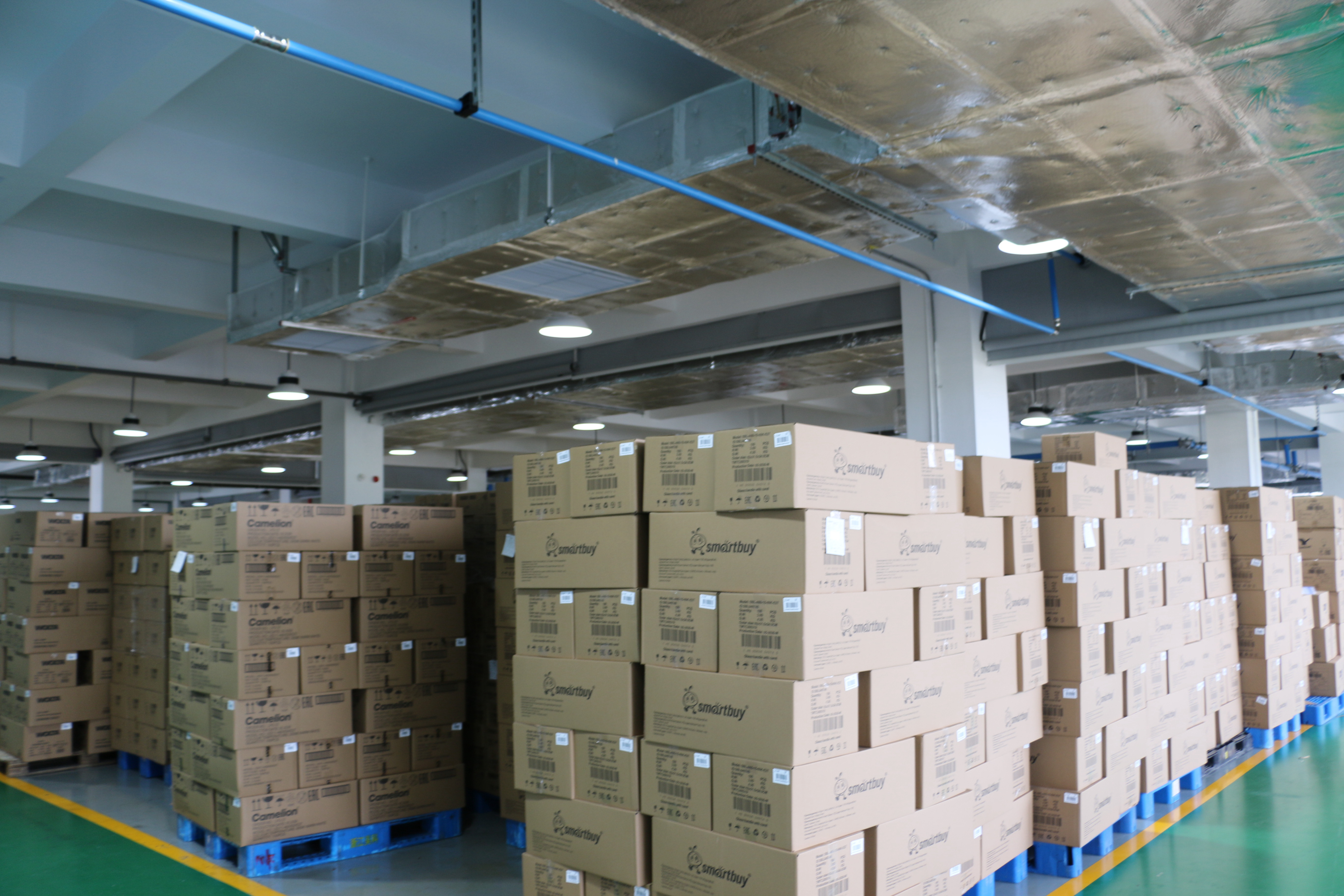
Build the documentation request around the exact models you intend to order, not the full portfolio.
Have Questions or Need More Details?
Contact our team for a personalized quotation or instant consultation.
Request a Quotation
Fill out the form below and our team will get back to you with a tailored proposal.
WhatsApp Direct Chat
Prefer to chat in real-time? Message us on WhatsApp for instant assistance & quick answers.
- Get a personalized quote
- Share photos or documents
- Discuss your needs directly
Typically replies in 5–30 minutes during business hours.