Warehouse Lighting Face-Off: Linear High Bay vs. UFO High Bay
Warehouse Lighting Face-Off: Linear High Bay vs. UFO High Bay
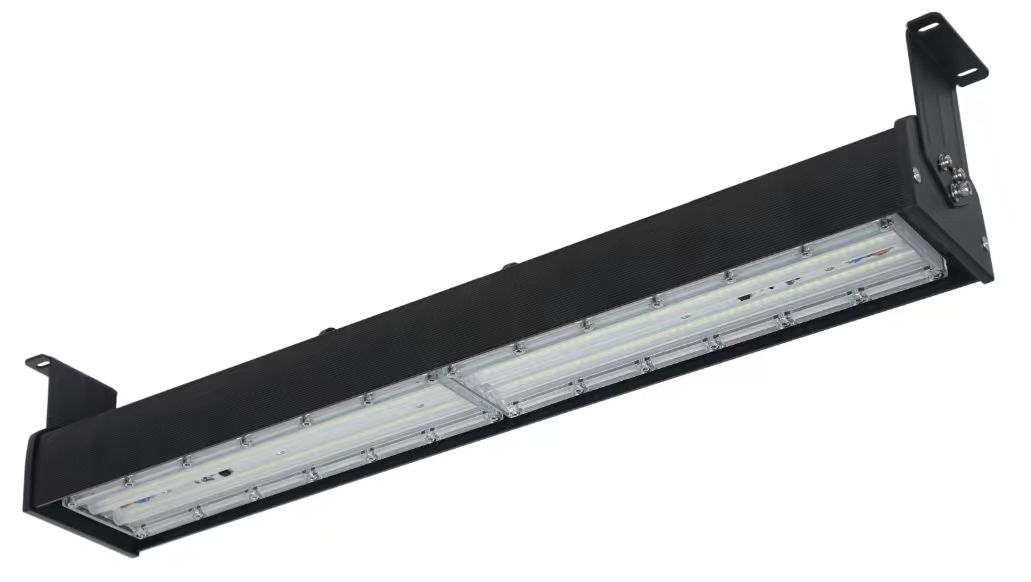
Short answer: specify the SH-E01 linear high bay light when the building is wet, dusty or washdown-prone — it carries IP65 protection, a five-year warranty and a 50–200 W power range — and specify the HL-E01 UFO high bay light when a high ceiling or open floor area needs the highest output per fixture, where its die-cast aluminium body, PC lens and 6KV/6KV surge rating do the work.
Once the lighting target and mounting height of a warehouse are fixed, the form factor of the high bay becomes the decision that shapes everything downstream: how many fixtures the bill of materials carries, what mounting hardware the contractor orders, how service access is planned, and whether the installation still performs after two or three dusty seasons. Zhejiang Lepeng Electric Appliance Co.,Ltd. builds both sides of that decision: the SH-E01 LED linear high bay light and the HL-E01 UFO LED high bay light.
Both fixtures belong to the industrial and commercial high bay category. Both are specified for warehouses, factories and workshops, both are available as OEM or ODM builds, and both models are listed on the same EU conformity certificate. What separates them is the shape of the light engine and the environmental class each fixture is published for.
This comparison uses only the manufacturer's published specifications. Where a parameter is not published for one of the two models, it is marked as “not stated” rather than estimated, because an assumed IP rating or beam angle is exactly the kind of detail that forces a project into a late re-specification.
Why the Linear-versus-UFO Decision Is a Procurement Decision
The two form factors solve different geometry problems, and the geometry is what drives cost. A linear high bay such as the SH-E01 is mounted in continuous rows that follow the racking layout; a UFO high bay such as the HL-E01 is a compact round point source installed on a grid across the bay.
That difference shows up in four places a buyer is accountable for:
- Fixture count. Output per fixture sets how many units the layout needs. The HL-E01 reaches 210 lm/W at the top of its published range, while the SH-E01 reaches 150 lm/W. In an open, high bay with no racking shadows, fewer high-output UFO fixtures can meet the same lumen target; in an aisle-heavy building, the rows of linear fixtures are what keep light on the shelf faces.
- Mounting and installation. Linear bodies run in straight lines and are suited to channel or trunking runs above an aisle; the HL-E01 is supplied with a 3×1.0 mm² cable with 300 mm exposed leads, pre-wired to the power supply, which shortens the electrical fit-out per fixture.
- Environment. In damp, dusty or washdown zones the published ingress protection rating decides the specification before photometrics do. This is the single sharpest difference between the two models in this comparison.
- Service lifecycle. Warranty terms and the way fixtures are reached for maintenance both feed total cost of ownership. The SH-E01 is published with a five-year warranty; a longer service interval is worth more in a 10 m racking aisle than a lower unit price.
Because both models come from the same factory, cost comparison is not distorted by differences in supply chain, compliance status or production basis — the buyer is genuinely comparing form factor and environmental endurance, nothing else.
Industry Background: Why Buyers Are Comparing Models, Not Categories
The commercial lighting market is now an LED market, so the purchasing question has shifted from “LED or not” to “which LED form factor”. Grand View Research estimated the global commercial lighting market at USD 47.54 billion in 2024, with LED products holding a 58.1% revenue share. Fortune Business Insights valued the wider global LED lighting market at USD 109.11 billion in 2025 and projected USD 336.90 billion by 2034.
Supply is equally concentrated. According to the Observatory of Economic Complexity, China exported USD 31.4 billion in light fixtures in 2024, equal to 59.3% of total global light fixture exports. For an importer, distributor or project contractor, that means most high bay options on a shortlist come from the same exporting base — and the differentiation that matters sits in specification tables, not in country of origin.
Two compliance frameworks frame the specification work. IEC 60598 is the international standard series for luminaires, while UL 1598 and UL 8750 are the relevant luminaire and LED-equipment standards for the United States market. Buyers should confirm which framework applies to the destination market before comparing models, because the two are not interchangeable.
How the Two Fixtures Differ: SH-E01 and HL-E01
SH-E01 — the linear option, published for harsh interiors
The SH-E01 is an LED linear high bay light for warehouse and factory use, with a published specification built around three body lengths and a sealed enclosure:
- Power options: 50 / 100 / 150 / 200 W
- Luminous efficacy: 100 / 135 / 150 lm/W
- Beam angle: 90° (H) × 120° (V)
- CCT options: 3000K / 4000K / 5000K / 6500K
- Dimensions: 305.6×97.3×68.1 mm / 580.6×97.3×68.1 mm / 855.6×97.3×68.1 mm
- Protection: IP65
- Warranty: 5 years
- Material: aluminium alloy housing + PC/PMMA lens
- Stated applications: warehouses, factories, workshops
Three things follow from that table for a specifier. First, the three body lengths map to the power steps, so fixture length can be aligned with racking bay length instead of forcing a compromise. Second, the 90° × 120° distribution throws light along the fixture rather than in a circle, which is why the linear format suits aisles. Third, IP65 is the parameter that removes the SH-E01 from the “indoor only, dry area” category and puts it into dusty, humid and washdown-prone production environments. The five-year warranty is the commercial counterpart of that build.
HL-E01 — the UFO option, published for output per fixture
The HL-E01 is a UFO LED high bay light, a compact round fixture whose published specification is aimed at output and installation efficiency:
- Power options: 100 / 150 / 200 / 240 W
- Voltage: 185–265 V / 100–265 V
- Luminous efficacy: 140 / 160 / 185 / 210 lm/W
- CCT options: 4000K / 5000K / 6500K
- Cable: 3×1.0 mm² cable with 300 mm exposed leads, pre-wired to the power supply
- Surge protection: 6KV/6KV
- Material: die-cast aluminium body + PC lens
- Stated applications: warehouses, factories, retail spaces, gyms
The HL-E01 tops out at a higher wattage than the SH-E01 and at a higher efficiency band, which is what allows a high open bay to be lit with fewer fixtures. The die-cast aluminium body is the structural and thermal platform of the fixture, and the PC lens covers the optical face. Two published details matter specially on site: the pre-wired 3×1.0 mm² cable with 300 mm exposed leads shortens connection time per unit, and the 6KV/6KV surge rating is the figure to check when a building carries heavy motor loads or sits in a lightning-exposed location. The two published voltage bands — 185–265 V and 100–265 V — also let a buyer match the fixture to the grid conditions of the destination market.
Shared compliance and manufacturing base
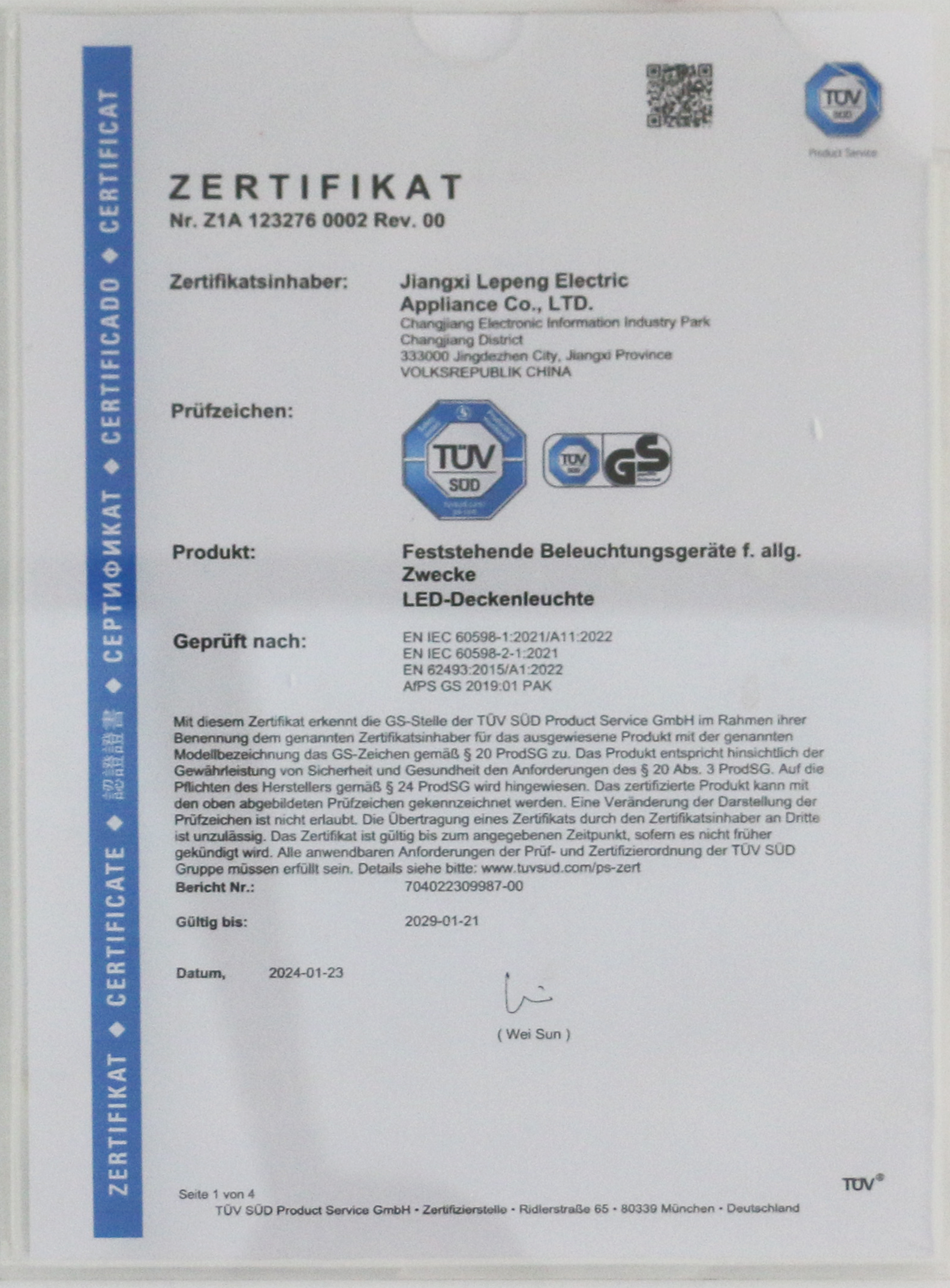
The two models are not certified separately. Both the SH-E01 and the HL-E01 are listed on a GS certificate (CE-LVD) issued by TUV SUD under certificate number Z1A 123276 0002 Rev. 00, dated 23 January 2024, covering EN 60598-1:2021+A11:2022, EN 60598-2-1:2021, EN 62493:2015 and AFPS GS 2019:01 PAK for the EU market, including Germany. For a distributor or an importer, that single document simplifies file management across the two form factors.
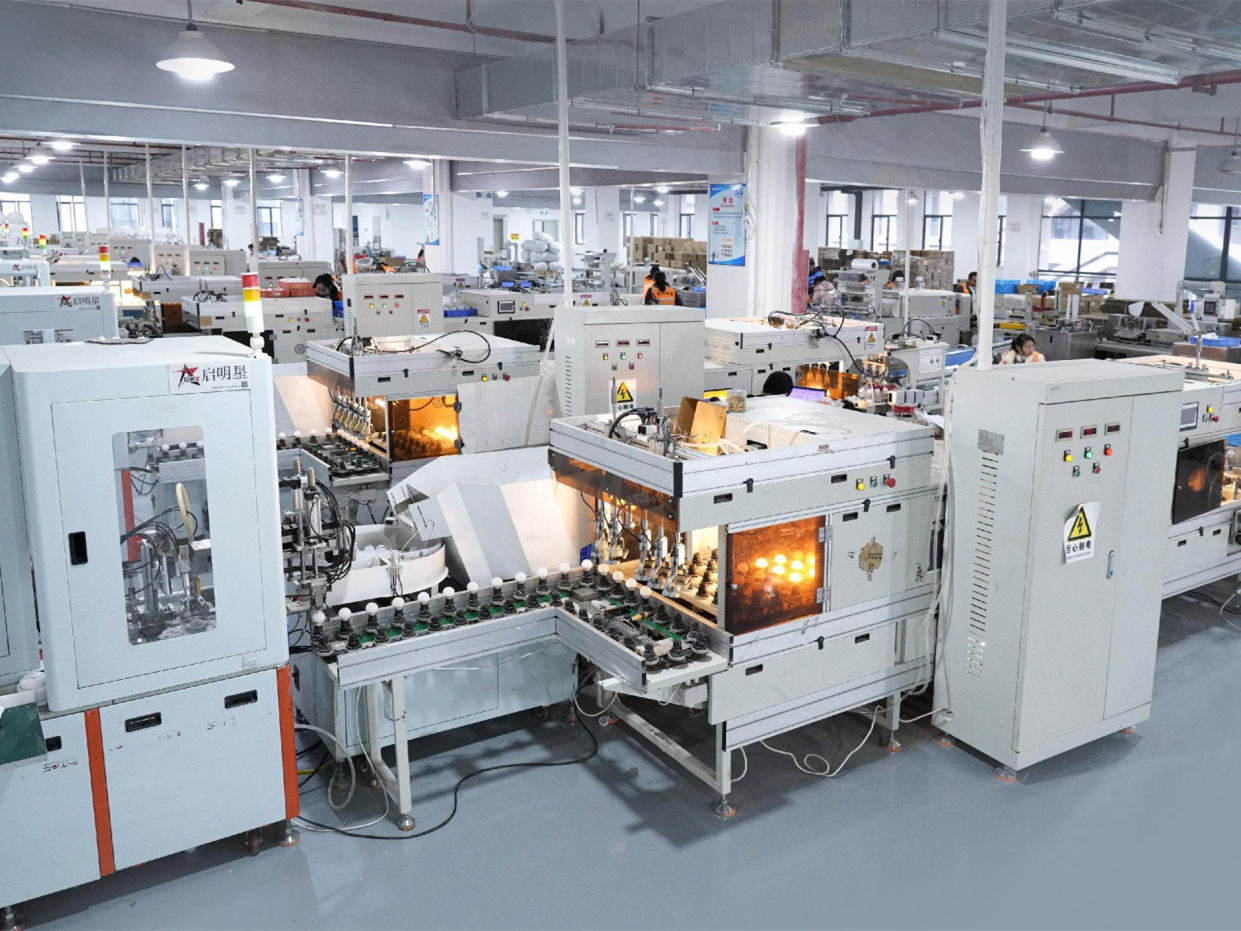
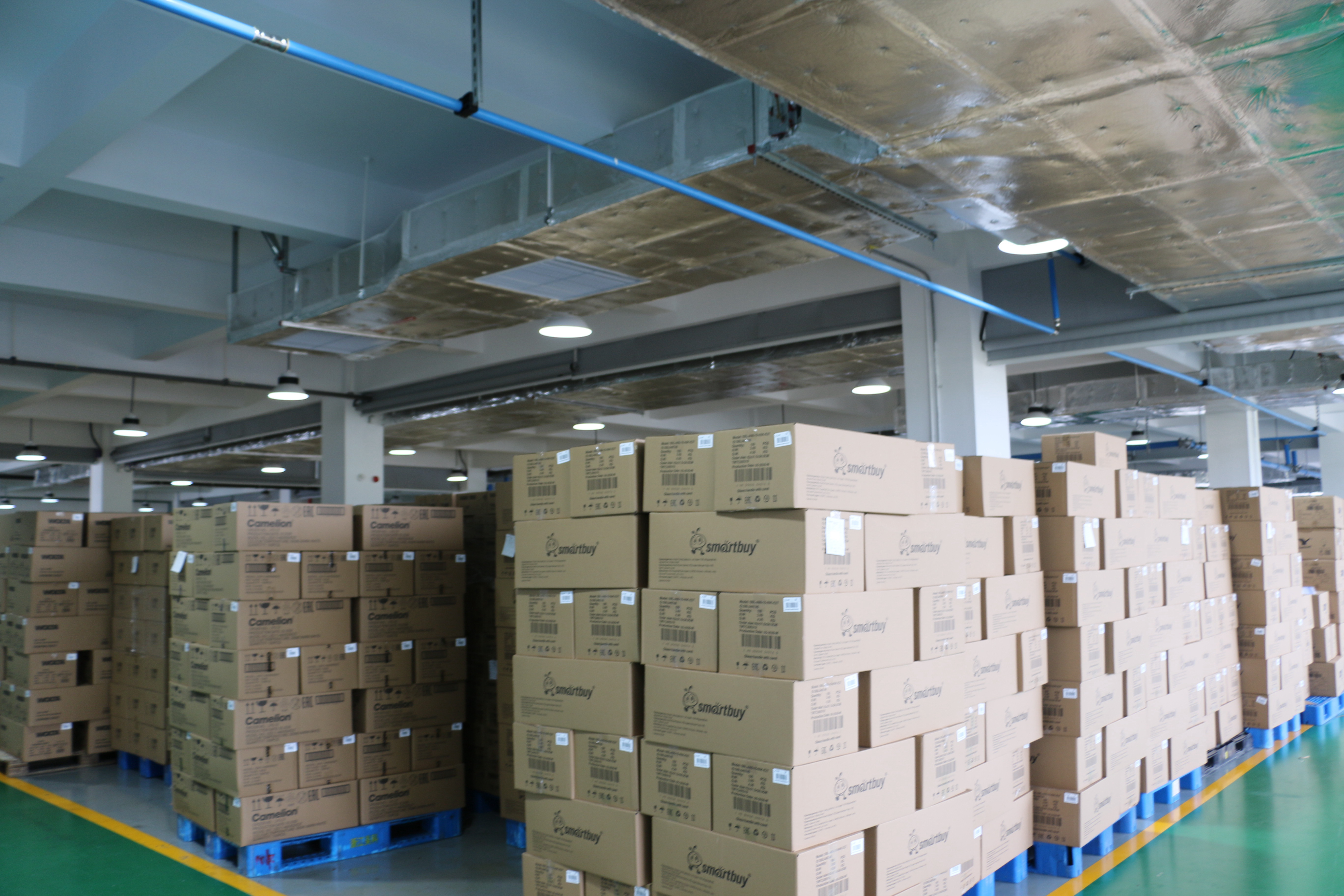
Manufacturing capacity sits behind both products. The company operates a headquarters factory in the Baiguan Industrial Zone of Shangyu, Zhejiang, plus production bases in Qiandaohu, Zhejiang and Jingdezhen, Jiangxi, described in the company profile as covering 200,000 m² of factory space with 2,000 employees and a 200-person R&D team. Published monthly capacity is 45 million LED lamps and 5 million LED luminaires, with an annual output figure of 540 million lamps and roughly 90% of production exported to the EU, Southeast Asia, the Middle East and Latin America. Both OEM and ODM services are offered, and the company's own brand, MKOPTO, is sold across global lighting markets.
A Seven-Step Specification Workflow
Working through these steps in order keeps the linear-versus-UFO decision anchored to the building rather than to habit.
- Confirm ceiling height and the required lumen level. These two numbers set the target, and everything else is sized against them.
- Map the racking and aisle geometry. Long, narrow aisles with shelf faces to light point to the linear SH-E01; open floor plates, gyms and retail halls point to the UFO HL-E01.
- Classify the environment. Dust, humidity and washdown put the specification on IP65 and therefore on the SH-E01. If the zone is demanding but the HL-E01 is preferred for output reasons, raise the question with the factory before locking the schedule.
- Size fixture count from wattage and efficacy. Compare 100/135/150 lm/W on the SH-E01 against 140/160/185/210 lm/W on the HL-E01 at the wattage you actually intend to order.
- Check the electrical envelope. Match the HL-E01 voltage band (185–265 V or 100–265 V) to site supply, and confirm whether the 6KV/6KV surge rating is needed for the building's motor load and lightning exposure.
- Verify compliance for the destination market. Both models are covered by the GS certificate (CE-LVD) for the EU. For the United States, IEC 60598 does not apply — ask separately about UL 1598 and UL 8750 documentation.
- Lock the commercial package. Confirm OEM or ODM scope, MOQ, delivery term, payment schedule, acceptance test and lead time before the installation date is committed.
Installation itself follows standard high bay practice: mount the fixtures securely to the ceiling structure or hanging brackets, keep the wiring compliant with local electrical codes, and cut the power supply before any wiring work. After energising, walk the space and verify coverage and brightness against the layout before signing off.
Where Each Fixture Fits: Use Cases
- Narrow-aisle racking warehouse. Rows of SH-E01 run parallel to the aisles, and the 90° (H) × 120° (V) beam keeps light on shelf faces rather than in the void between racks.
- Humid, dusty or washdown-prone production hall. IP65 makes the SH-E01 the default specification, and the five-year warranty supports the maintenance plan.
- High open bay, gym or retail space. The HL-E01's 140–210 lm/W band and 240 W ceiling are the reason this fixture appears in retail and gym specifications as well as factory ones.
- Site with electrical stress. Where the building carries heavy motor loads, the HL-E01's published 6KV/6KV surge protection is the parameter to highlight in the technical submittal.
- Long-horizon operation. The manufacturer's project record covers contractors, distributors, and commercial and municipal buyers, with installations across warehouse and factory lighting, road and community landscape lighting, and construction and emergency lighting, described as running for five to ten years with stable operation.
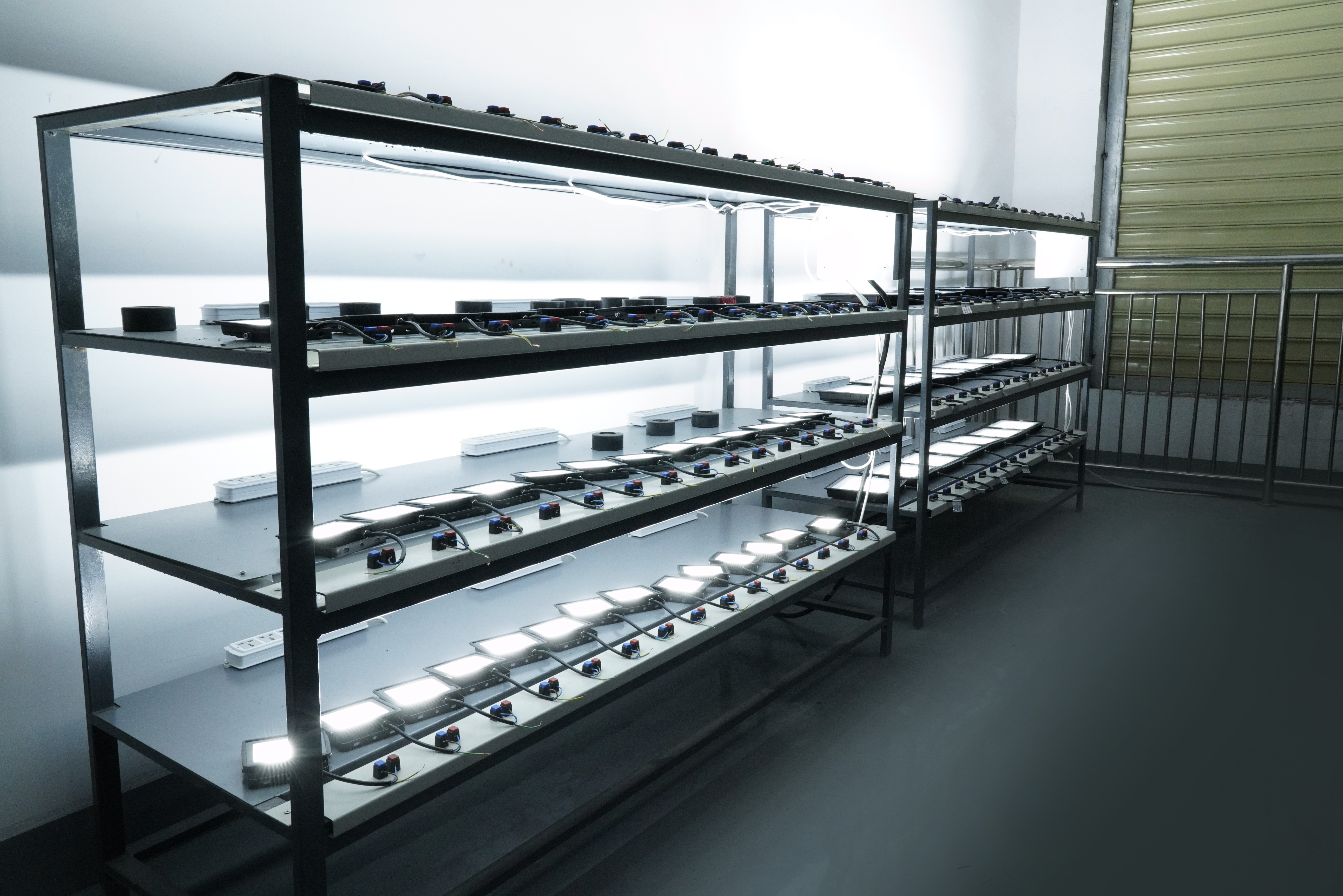
SH-E01 vs HL-E01: Specification Comparison
The table below compares only published data. “Not stated” means the parameter is not published for that model in the specification used for this article.
| Parameter | SH-E01 (Linear) | HL-E01 (UFO) |
|---|---|---|
| Form factor | Linear / rectangular body for row mounting | Round (UFO) point-source body |
| Power options | 50 / 100 / 150 / 200 W | 100 / 150 / 200 / 240 W |
| Luminous efficacy | 100 / 135 / 150 lm/W | 140 / 160 / 185 / 210 lm/W |
| Beam angle | 90° (H) × 120° (V) | Not stated |
| CCT options | 3000K / 4000K / 5000K / 6500K | 4000K / 5000K / 6500K |
| Voltage | Not stated | 185–265 V / 100–265 V |
| Ingress protection | IP65 | Not stated |
| Surge protection | Not stated | 6KV/6KV |
| Housing & lens | Aluminium alloy housing + PC/PMMA lens | Die-cast aluminium body + PC lens |
| Dimensions | 305.6×97.3×68.1 mm / 580.6×97.3×68.1 mm / 855.6×97.3×68.1 mm | Not stated |
| Input cable | Not stated | 3×1.0 mm² cable, 300 mm exposed leads, pre-wired to power supply |
| Warranty | 5 years | Not stated |
| Stated applications | Warehouses, factories, workshops | Warehouses, factories, retail spaces, gyms |
| EU conformity | Listed on GS certificate (CE-LVD) Z1A 123276 0002 Rev. 00, TUV SUD | Same certificate |
| OEM / ODM | Supported | Supported |
FAQ: Choosing Between the SH-E01 and the HL-E01
Do the SH-E01 and the HL-E01 both hold EU conformity documentation?
Yes. Both models are listed on a GS certificate (CE-LVD) issued by TUV SUD under certificate number Z1A 123276 0002 Rev. 00, dated 23 January 2024, covering EN 60598-1:2021+A11:2022, EN 60598-2-1:2021, EN 62493:2015 and AFPS GS 2019:01 PAK for the EU market. That certificate does not replace US documentation: for the United States, IEC 60598 is not the applicable framework, and UL 1598 and UL 8750 documentation should be requested separately from the supplier.
Which fixture should be specified in a dusty, humid or washdown-prone warehouse?
The SH-E01 is the fixture with a published ingress protection rating of IP65, which makes it the default specification for dusty, humid or washdown-prone warehouse, factory and workshop areas. The published specification for the HL-E01 lists a die-cast aluminium body and a PC lens but does not state an IP rating, so an HL-E01 should only be placed in a wet or dusty zone after the factory confirms a configuration suited to that environment.
Can the SH-E01 and HL-E01 be supplied as OEM or ODM builds?
Yes. Zhejiang Lepeng Electric Appliance Co.,Ltd. provides both OEM services, for contract manufacturing of a buyer's existing design, and ODM services, for design and manufacturing of lighting products to a buyer's specification. Customisation of fixture appearance, power and accessories is offered, with details confirmed through product communication. Published monthly capacity is 45 million LED lamps and 5 million LED luminaires, and typical production lead time is 30 to 45 days.
What are the commercial terms, MOQ and acceptance process?
Published procurement terms for the manufacturer's LED products are a minimum order quantity of 100 units, FOB delivery, a 30% deposit with the balance payable against a copy of the bill of lading, and pre-shipment test acceptance. Standard production lead time is 30 to 45 days, which is the figure to build into a warehouse lighting schedule when the installation is tied to a fixed handover date.
Can the same manufacturer also serve OEM commercial LED flood light projects for outdoor areas?
Yes. The same factory produces the LED Floodlight series FL-C01, published at 10–300 W with 100–240 V / 220–240 V input, 100/120 lm/W efficacy, 3000K / 4000K / 6500K CCT options, surge protection up to 2KV and a power factor above 0.9 in an aluminium and glass housing. OEM and ODM services are available for these outdoor fixtures as well, so a warehouse project that also needs yard, apron or site lighting can be sourced as one package. To move from comparison to a specification package, request the current catalogue or a sample through the brochure and contact details below.
Conclusion: Decide by Environment, Then by Output
The linear-versus-UFO question resolves in a fixed order. First, classify the environment: if the space is dusty, humid or washdown-prone, the SH-E01 and its published IP65 rating settle the specification, and its 50–200 W range, four CCT options, three body lengths and five-year warranty complete the package. Second, if the environment is dry and clean but the ceiling is high and the floor plate is open, compare output per fixture: the HL-E01 reaches 140–210 lm/W across 100–240 W, with a pre-wired 3×1.0 mm² cable and 6KV/6KV surge protection. Third, confirm the shared ground: both models sit on the same TUV SUD GS certificate (CE-LVD), both are produced in-house with OEM and ODM support, and both ship on a typical 30–45 day lead time.
Because the two fixtures come from the same manufacturer, the comparison stays clean — no difference in certification basis, capacity or service model to obscure the decision. The remaining variable is the building itself.
Next Step: Sample, Specification Sheet or Quote
Send the mounting height, the racking layout and the environment class of your project, and the export team can confirm which of the two form factors fits, together with the OEM or ODM options available for your market. A sample unit can be arranged for validation before a project order is placed.
Download the full product catalogue: Commercial LED Lighting Product Brochure (PDF)
Email: fish@idealbright.com | Website: idealbright.com