Decoding IEC 62314 and UL 508: Compliance Essentials for Consumer Solid State Relays
Solid state relays built into consumer electronics and light industrial products are measured against two different safety frameworks. IEC 62314 defines requirements for semiconductor relays as a product category, while UL 508 governs industrial control equipment for the North American market. For buyers who have already shortlisted a relay and are moving into execution, the real question is not which standard is stricter — it is whether the solid state relay you specify can enter your target market without redesign, re-testing, or field failures that erode a long-term supply relationship.

Compliance is a property of the whole supply chain, not a document on a wall.
Why Compliance Questions Surface at the Decision Stage
Buyers rarely ask about IEC 62314 and UL 508 during early research. The question appears later, when three conditions meet at the same time: the product is close to launch, the target market crosses a regulatory boundary, and the purchasing team must commit to a supplier for more than one production cycle.
At that moment, an unclear compliance picture creates three concrete risks:
- Market entry delay. If the relay cannot be documented against the standard your destination market recognizes, the product may sit in review while competitors ship.
- Redesign cost. A relay that is compliant in one market but not another forces layout, thermal, or control-circuit changes late in the project.
- Long-term supply risk. A single non-conforming batch can trigger recalls, replacement programs, and a breakdown in the distributor relationship you spent years building.
This is why compliance belongs in the selection process, not in the paperwork phase. A consumer electronics buyer choosing a solid state relay is, in effect, choosing how easily that product will travel across borders for the next three to five years.
XURUI (Zhejiang Xurui Electronic Co., Ltd.) is a manufacturer of industrial electric switches and solid state relays based in Wenzhou, China, founded in 2002, serving markets that include the United States, Germany, Japan, South Korea, Turkey, Belgium, and Egypt. Its relevance here is not a certificate claim — it is the practical reality that consumer and industrial relay projects are increasingly global, and the standards they must satisfy are set internationally.
Industry Background: A Market Moving Toward Stricter Defaults
The compliance conversation is intensifying because the underlying market is growing and shifting. According to MarketsandMarkets, the global solid-state relay market was estimated at USD 1.74 billion in 2025 and is projected to reach USD 2.36 billion by 2030. Mordor Intelligence estimates that Asia-Pacific accounts for about 42% of that market in 2025, driven by electric-vehicle charger deployment and photovoltaic inverter manufacturing in China and Japan.
Two structural facts matter for buyers evaluating compliance:
- Form factor is standardizing. Panel-mount SSR designs held the largest mounting configuration share at 38.67% in 2025, while DIN-rail variants are the fastest-growing segment with a forecasted 7.11% compound annual growth rate (Mordor Intelligence).
- Volume sits in lower current brackets. The 0–20 ampere current rating bracket accounted for 44.13% of the SSR market in 2025 (Mordor Intelligence) — the band most common in consumer electronics and light appliances.
Because so much volume concentrates in low-current, compact relays, the standards governing them are applied at scale. A design decision made once at the 25A or 40A level propagates across an entire product family, which is why understanding the standards before you commit is disproportionately valuable.
The Two Standards, Explained Without Spin
Buyers often treat IEC 62314 and UL 508 as interchangeable labels. They are not. Each answers a different question.
IEC 62314 — the semiconductor relay standard
IEC 62314 addresses semiconductor relays as a product category. It is the standard that speaks to the relay itself: how a solid state relay is constructed, how its performance is characterized, and how it is described to the market. When a buyer in Europe, Asia, or a market that references IEC documents wants to confirm that a solid state relay is defined as a semiconductor relay product, IEC 62314 is the reference point.
For consumer electronics programs, this matters because it establishes the relay as a defined component with recognizable performance characteristics, rather than as an unspecified switching block. It supports predictability — the same input, the same switching behavior, the same documentation.
UL 508 — the industrial control equipment standard
UL 508 governs industrial control equipment in the North American market. Per IEC and UL Solutions references, industrial solid state relays are expected to comply with international safety standards including IEC/EN 60947-4-3 and UL 508. In practice, UL 508 is the benchmark that North American buyers, panel builders, and safety reviewers recognize when they assess whether a control device is acceptable for installation.
For a consumer electronics buyer whose product may be bundled into appliances, HVAC controls, or smart-home hardware sold in the United States and Canada, UL 508 is the framework that determines whether the relay can be specified without objection.
Where IEC/EN 60947-4-3 fits
IEC/EN 60947-4-3 is the standard for contactors and motor-starters, including semiconductor-based switching devices used in motor control. It appears in the same discussion because many solid state relays serve loads that overlap with motor and starter applications. A relay evaluated against this standard is speaking a language that motor-control engineers recognize.
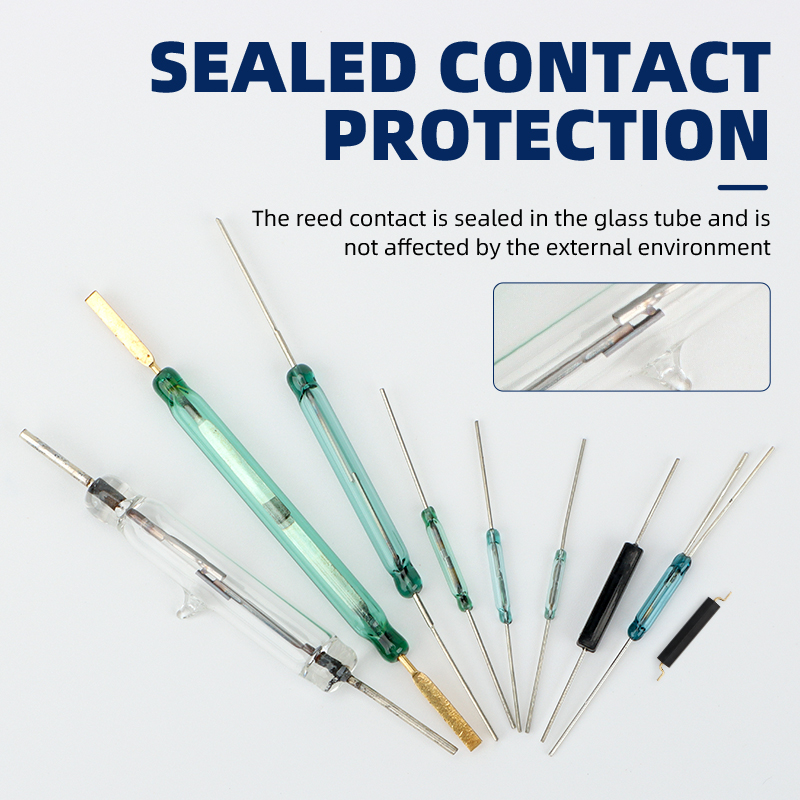
Reliability under load is the engineering layer that sits beneath any compliance claim.
Standards and Market at a Glance
The table below consolidates the compliance and market facts a decision-stage buyer needs on one page.
| Standard / Metric | Primary scope | Region | Typical relevance |
|---|---|---|---|
| IEC 62314 | Semiconductor relays as a product category | International | Solid state relays in consumer electronics and general control |
| UL 508 | Industrial control equipment | United States / Canada | Panel-mounted control devices and relays |
| IEC/EN 60947-4-3 | Contactors and motor-starters (incl. semiconductor devices) | International | Relays used in motor-control circuits |
| Market metric | Value | Source |
|---|---|---|
| Global SSR market size, 2025 | USD 1.74 billion | MarketsandMarkets |
| Projected SSR market size, 2030 | USD 2.36 billion | MarketsandMarkets |
| Asia-Pacific market share, 2025 | 42% | Mordor Intelligence |
| Panel-mount share by mounting type, 2025 | 38.67% | Mordor Intelligence |
| DIN-rail segment forecast CAGR | 7.11% | Mordor Intelligence |
| 0–20 A bracket share by rating, 2025 | 44.13% | Mordor Intelligence |
Among global manufacturers active in the solid state relay category are Sensata (Crydom), OMRON, Carlo Gavazzi, Schneider Electric, Panasonic, and TE Connectivity, according to Market Research Future. Their presence signals that compliance documentation is a baseline expectation in procurement, not a differentiator.
Step-by-Step: Evaluating SSR Compliance Before You Commit
Use the following sequence to move from decision to execution without leaving compliance gaps.
Identify where the finished product will be sold and installed. A product destined for North America raises UL 508 as the relevant framework; an internationally distributed product will usually need IEC-referenced documentation such as IEC 62314. Decide this before asking for quotations, because it determines which evidence a supplier must provide.
Confirm that the relay is being presented as a semiconductor relay product (the IEC 62314 territory) and, where motor or starter loads are involved, that IEC/EN 60947-4-3 is part of the discussion. A relay described only as a generic “switch” leaves the standard unclear.
Overheating, overcurrent damage, voltage surges, and electromagnetic interference are the recurring failure modes for solid state relays. Controls include built-in heat dissipation such as an aluminum base plate, overcurrent protection, surge suppression circuitry, and zero-cross switching to reduce electrical stress. Ask how these are validated, not only whether they exist.
A standard is only meaningful if it is enforced on the line. Look for evidence of thermal performance testing, electrical load testing, surge and EMC testing, and long-term reliability verification before shipment. At XURUI, production follows a documented quality management approach with strict inspection before delivery — the operational layer that supports any compliance statement.
Compliance is easier to sustain when the purchasing terms are explicit. XURUI’s standard purchasing terms are a minimum order quantity of 100 units, EXW delivery, pre-shipment testing as the acceptance criterion, and TT payment terms. Clear acceptance criteria at pre-shipment are one of the simplest ways to avoid a non-conforming batch reaching your line.
Because a design decision at the 25A or 40A level propagates across a product family, confirm that the supplier can maintain the same compliant configuration over multiple production cycles — including for DIN-rail and panel-mount variants, and for OEM or ODM customization.
Use Cases: Where Compliance Decides the Outcome
Smart home and appliance control
In smart home automation and small appliances, the relay switches lighting, heating elements, and motor loads quietly and repeatedly. Because these products are often sold across regions, an SSR aligned with internationally recognized semiconductor relay requirements reduces the friction of entering new markets. Zero-cross switching also lowers electrical stress, which supports longer service life — an outcome the end user experiences as a device that simply keeps working.
HVAC and heating control
Heating control systems place continuous load on the relay, making thermal design and overcurrent protection central. A solid state relay with an aluminum base plate and surge suppression is better positioned to tolerate these duty cycles. For buyers, the compliance question and the reliability question converge here: the same documentation that satisfies a reviewer also signals that the thermal design was taken seriously.
Light industrial panels and automation
Panel-mounted and DIN-rail relays increasingly appear in compact automation panels. DIN-rail is the fastest-growing mounting segment at a forecasted 7.11% CAGR, and panel-mount remains the largest at 38.67%. When these relays are integrated into control equipment, UL 508 becomes the recognized reference for North American installations, and IEC-referenced documentation supports international deployments.
Distributor and channel programs
For distributors and channel partners, compliance documentation is a commercial asset. It shortens the sales conversation, reduces after-sales disputes, and supports a long-term partnership rather than a one-off transaction. A relay line with clear, consistent standards documentation is easier to stock, promote, and support across a region.
Frequently Asked Questions
What is the difference between IEC 62314 and UL 508 for solid state relays?
IEC 62314 addresses semiconductor relays as a product category and is international in scope, while UL 508 governs industrial control equipment for the North American market. In practice, a consumer electronics product sold worldwide may reference IEC 62314 for the relay product itself and UL 508 for the control equipment context. IEC/EN 60947-4-3 additionally applies when the relay is used in contactor or motor-starter circuits.
How can I verify that a supplier actually designs to these standards?
Ask for the engineering and testing evidence behind the claim rather than the claim alone. Relevant signals include thermal performance testing, electrical load testing, surge and EMC testing, and long-term reliability verification before shipment. XURUI, founded in 2002, operates a 5,000+ m² facility with an engineering team of more than 24 engineers and produces an annual output of about 20 million units — capacity that supports systematic testing rather than ad hoc inspection.
Does compliance increase the cost of a solid state relay?
Compliance affects cost through testing, documentation, and process control rather than through the relay’s basic components. The practical way to judge it is against the cost of the alternative: a non-conforming batch that delays market entry or triggers a replacement program. For most consumer electronics programs, the deciding factor is total cost across the product’s lifecycle, not the unit price of a single relay.
Can I order samples to validate a relay before committing to production?
Yes. XURUI supports sample validation so buyers can confirm switching behavior, thermal performance, and fit before mass production. XURUI’s standard minimum order quantity is 100 units, delivery terms are EXW, acceptance criteria are based on pre-shipment testing, and payment terms are TT — a structure that allows a buyer to verify performance first and scale afterwards.
What lead time should I expect for a compliant solid state relay order?
Lead time depends on configuration, order volume, and whether the relay requires OEM or ODM customization. Because acceptance is tied to pre-shipment testing, buyers should build that verification step into their planning schedule. XURUI exports to roughly 40% of its output across markets including the United States, Germany, Japan, South Korea, Turkey, Belgium, and Egypt, and maintains localized service support in key overseas markets to keep delivery and technical questions moving. To confirm lead time for a specific configuration, share your target rating, mounting type, and destination market with the XURUI team so the quotation reflects the standards your project must meet.
Conclusion: Compliance Is a Long-Term Decision
IEC 62314 and UL 508 are not competing labels — they answer different questions. IEC 62314 defines the semiconductor relay as a product category, and UL 508 defines acceptability for North American industrial control equipment, with IEC/EN 60947-4-3 entering the picture when motor and starter loads are involved. For a buyer at the decision and execution stage, the value of understanding both standards is simple: you specify once, verify once, and enter your target markets without re-engineering the relay.
The market context reinforces this. A category projected to reach USD 2.36 billion by 2030, with 42% of demand concentrated in Asia-Pacific and the largest volume in the 0–20 ampere bracket, rewards buyers who treat compliance as part of product strategy rather than as a late-stage formality. Relays that are documented against recognized standards travel further, last longer, and support the distributor partnerships that make long-term supply viable.
XURUI approaches solid state relay manufacturing with the same logic — standardized production, strict inspection before delivery, and support for OEM and ODM customization so that a compliant configuration can be maintained across a product family and across production cycles, not just the first order.
Planning a compliant solid state relay program?
Request samples, a quotation, or the full XURUI product catalog and align your relay specification with IEC 62314 and UL 508 from the first order.
Download the XURUI Catalog
Zhejiang Xurui Electronic Co., Ltd. — manufacturer of industrial switches and solid state relays since 2002.