
Project-Level Solid State Relay Selection: A Field Guide for Heating, Motor Control, and Automation Panels
Project-Level Solid State Relay Selection: A Field Guide for Heating, Motor Control, and Automation Panels
Project-level solid state relay selection is a matching exercise, not just a search for the highest ampere rating on a datasheet. A relay that can carry the load current on paper can still be the wrong choice if its control input cannot be driven by the existing PLC, if its switching behavior is unsuitable for the process, or if its mounting form does not fit the control panel. This guide explains how to choose solid state relays by project scenario, using load type, control interface, thermal margin, mounting, and compliance as the main decision variables.
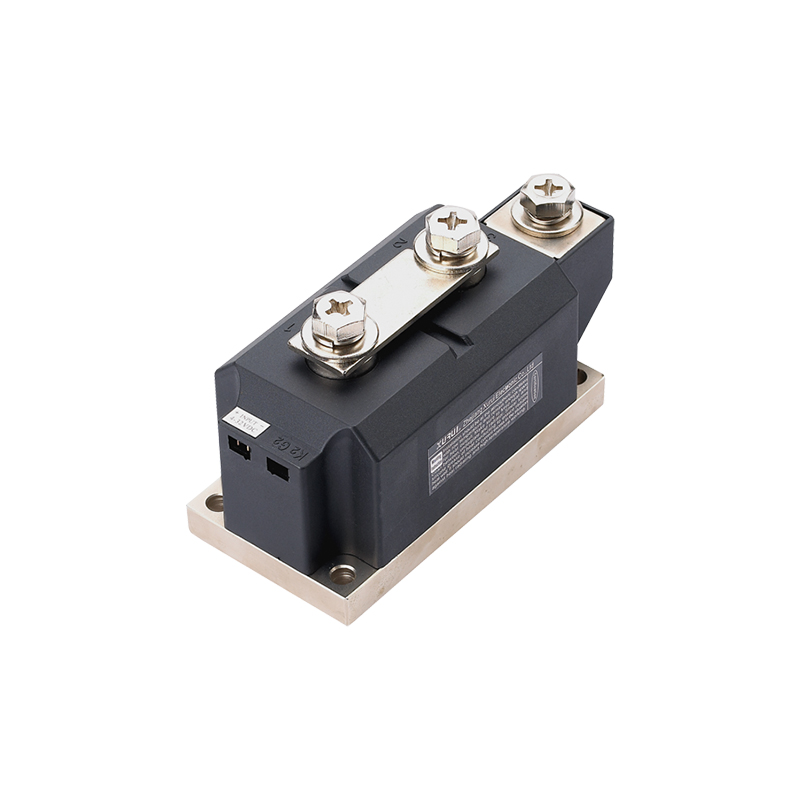
Zhejiang Xurui Electronic Co., Ltd., operating under the XURUI brand, is a China-based manufacturer of low-voltage control switches and solid state relays. Founded in 2002, the company reports a 5,000+ square meter factory, 150 employees, and annual output capacity of 20 million units across its switch portfolio. Its SSR product families include panel-style modules, modular high-current relays, phase-angle regulators, and three-phase SSRs, making the brand useful for scenario comparison rather than a single-product recommendation.
Why Project-Scenario Adaptation Matters for SSR Procurement
Many buyers start a search with terms such as 240V solid state relay, 40A solid state relay, or 3 phase solid state relay. Those terms describe electrical limits, but they do not describe the working condition. A heating panel with a continuous resistive load behaves differently from a motor-control circuit with inrush current, and both behave differently from an HVAC control loop that needs frequent switching.
A project-scenario approach is therefore important at the Research and Evaluation stage. The buyer can first define the controlled load, then define the control signal coming from the system, and only then compare SSR product families. This sequence avoids two common mistakes: oversizing without checking mounting limitations, and undersizing thermal margin because the relay rating was compared only with the steady-state load current.
Industry Context: SSR Demand Is Expanding Beyond Simple Switching
Public market research shows that the global solid-state relay market was estimated at about USD 1.74 billion in 2025, with a projection of roughly USD 2.36 billion by 2030. Asia-Pacific is estimated to account for about 42 percent of the SSR market in 2025, supported by industrial automation and power electronics manufacturing in China and Japan. Panel-mount SSR designs reportedly held the largest mounting-configuration share at about 38.67 percent in 2025, while DIN-rail variants are described as the fastest-growing segment with a forecasted CAGR of 7.11 percent.
These figures are useful for suppliers and panel builders because they show that buyers are increasingly asked to match SSRs to mounting systems and application requirements, not only to standard current brackets. In parallel, compliance references such as IEC/EN 60947-4-3 and UL 508 are widely used as industrial-control baselines when solid state relays are placed in commercial or industrial equipment.
Detailed Solution: A Load-First Matching Method
One way to convert a project description into an SSR specification is to classify the load first. In XURUI product documentation, load current safety factors are stated as 50 to 60 percent for resistive loads and 30 to 40 percent for inductive loads. This means the relay should not be chosen at exactly the same ampere value as the load. A continuous resistive load should leave enough thermal reserve, and an inductive motor load requires an even larger safety margin because of starting current and possible overvoltage transients.
Resistive Loads: Heating and Temperature-Control Projects
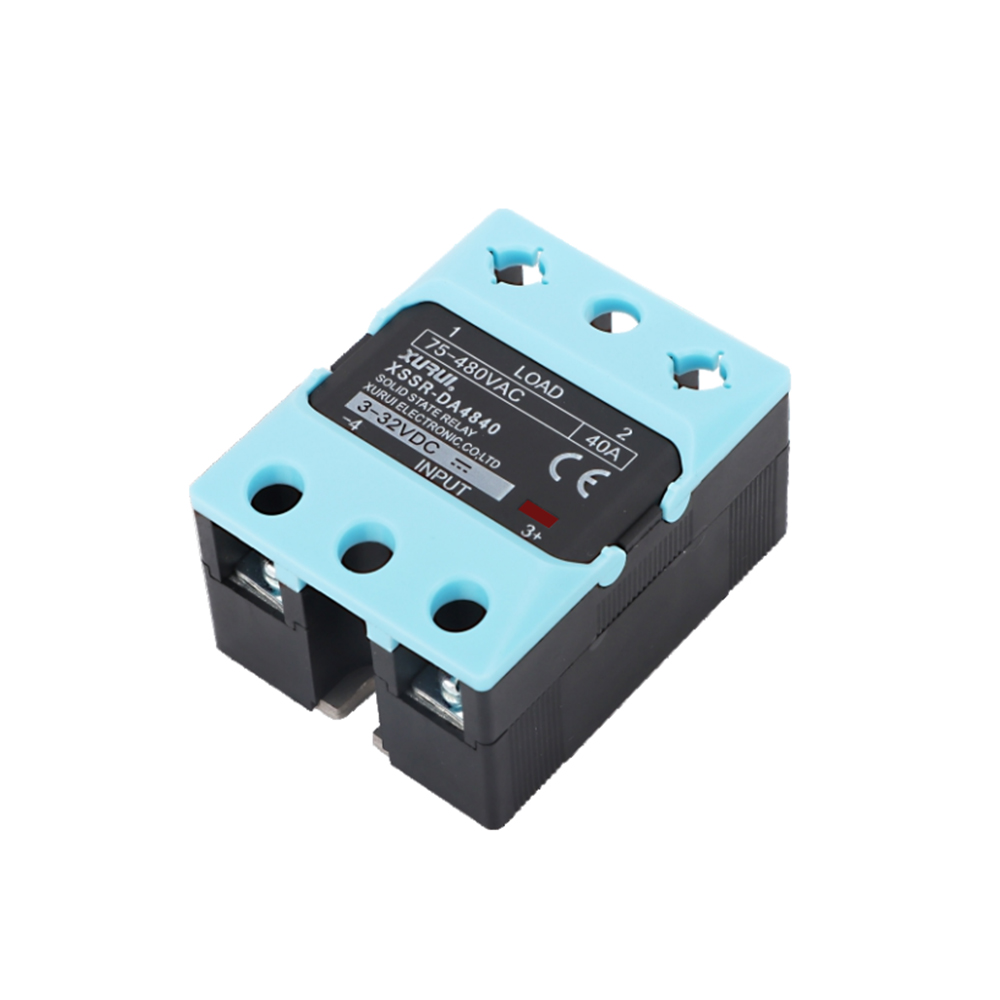
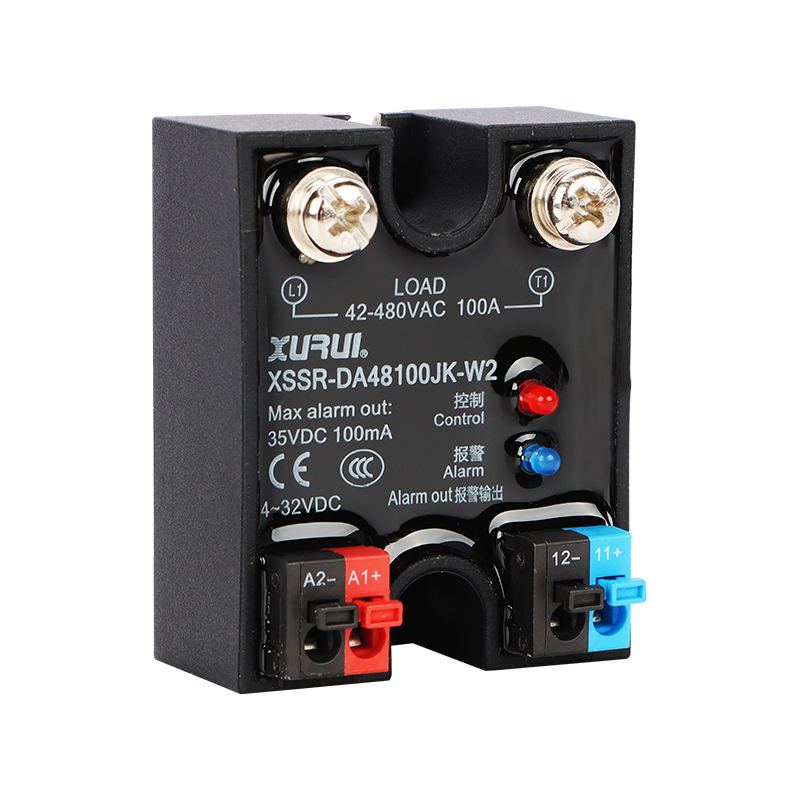
Resistive loads include heating elements, ovens, mold heaters, and industrial heating panels. They are usually simpler to switch than motors, but they generate heat inside the panel and inside the SSR when operated continuously. XURUI lists several SSR families for heating and industrial automation applications, including XSSR-W1, XSSR-W2-JK, and XSSR-H. XSSR-W1 has a load voltage range of 75-480VAC and a maximum current range of 10A-100A. XSSR-W2-JK has a load voltage range of 42-480VAC and a maximum current range of 10A-120A. XSSR-H covers 24-480VAC with a maximum current range of 5A-60A and is documented as suitable for industrial automation, power control systems, HVAC systems, and renewable energy equipment.
Inductive Loads: Motor, Pump, and Machine-Tool Projects
Motors, pumps, solenoids, and similar loads can create high inrush current. The switching timing also matters. For motor-control projects where the relay must turn on near the zero point of the AC wave, the model must clearly state zero-crossing behavior. XURUI's XSSR-M1-M6 series is documented with a zero-crossing trigger method, a 3-32VDC control voltage, a load voltage range of 75-480VAC, and a load current range from 60A to 1000A depending on sub-model. Because the current range is extremely wide, this family is relevant for large automation panels and conveyor systems as well as conventional heating applications.
Adjustable Outputs: Phase-Angle and Analog-Controlled Projects
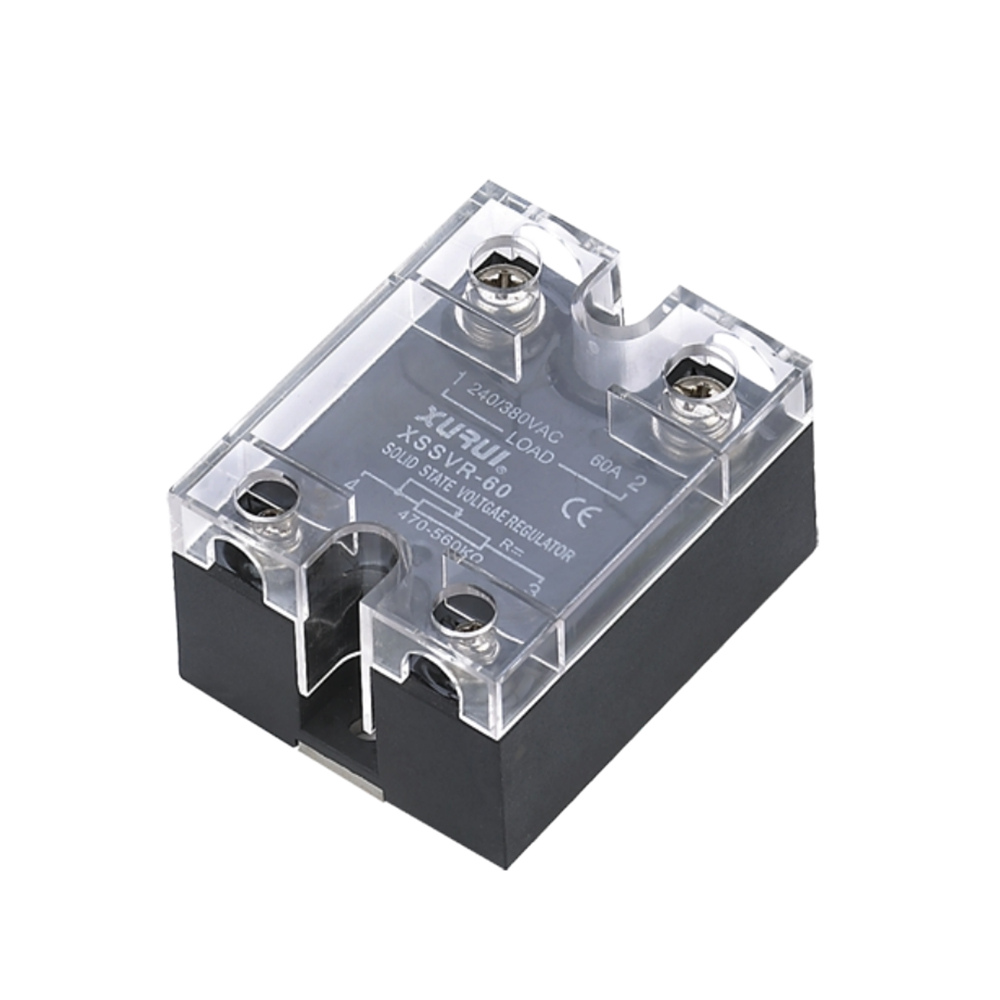
Not every project is simple on-off switching. Some applications need adjustable power to control heater output, lamp brightness, or the speed of a basic AC motor. XURUI includes phase-angle control SSRs in its published range. The XSSVR-W1 and XSSVR-W2 families are controlled by an external potentiometer in the range of 470-560kOhm and have a conduction angle range of 0 to 170 degrees. Their maximum load current is listed as 10A-40A for XSSVR-W1 and 50A-200A for XSSVR-W2, with load voltage options covering up to 240VAC, 380VAC, or 480VAC depending on the configuration.
For three-phase projects, XSSVR-3P is documented as a three-phase SSR with analog control input options. It accepts potentiometer control, 0-5VDC or 0-10VDC voltage control, and 4-20mA or 0-10mA current control. Its load voltage range is 0-380VAC three-phase, and its maximum load current range is 10A-200A. XURUI describes its intended applications as industrial automation including heating, CNC, power supplies, and motor control.
Step-by-Step SSR Specification Workflow
The following workflow can be used when a project moves from general research into evaluation and final component selection.
- Define the load type. Write down whether the load is resistive, inductive, or a lighting/adjustable load. Record the continuous load current and the worst-case inrush current.
- Define the load line voltage and phase. For most XURUI single-phase SSR families, the load voltage is commonly 24-480VAC or 75-480VAC depending on family. Three-phase projects should be checked against a three-phase SSR family such as XSSVR-3P.
- Define the control signal. If a PLC gives a DC signal, choose an SSR with 3-32VDC control input. If the available control line is AC, choose an SSR family with 80-250VAC control input where listed.
- Apply the current safety factor. Use the published guidance of 50-60 percent for resistive loads and 30-40 percent for inductive loads. This is not a decorative safety recommendation; it determines whether the SSR can survive continuous duty in the panel.
- Check switching behavior. If the process needs reduced electrical noise or low inrush, a zero-crossing relay such as XSSR-M1-M6 may be appropriate. If the process needs adjustable voltage or phase-angle control, use an adjustable SSR family instead of a standard on-off SSR.
- Check the mounting and thermal path. XURUI publishes different mounting styles across its SSR range, including horizontal screw-mount and bolt-mount modules. Some models use an aluminum base plate or aluminum alloy heatsink, which is relevant for continuous heat loads.
- Confirm testing and certifications. For regulated industrial projects, request model-specific certification evidence and confirm 100 percent pre-shipment testing if this is part of the supplier's stated quality procedure.
Published XURUI Case Experience
The value of scenario matching becomes clearer when the relay is installed in a real project. XURUI's published case material includes two solid state relay examples that are useful for evaluation-stage buyers.
In Germany, an industrial equipment manufacturer used 1,200 XSSR-W1 solid state relays in heating control systems. XSSR-W1 supports a load voltage range of 75-480VAC and a maximum current range of 10A-100A. The customer reported that maintenance cost was reduced by 60 percent over three years, with less mechanical failure reported.
In Malaysia, an industrial automation solution provider installed 800 XSSR-M series relays in PLC control and conveyor systems. The XSSR-M1-M6 family is listed with a 3-32VDC control voltage, a load voltage range of 75-480VAC, and a load current range of 60A-1000A depending on the model. After two years of operation, the customer reported zero major failures and a 65 percent reduction in maintenance cost.
XURUI also documents application profiles for XSSR-W5 and XSSR-W6 solid state relays in industrial automation, power-control systems, HVAC systems, and renewable-energy equipment. XSSR-W5 is listed with a 3-32VDC control voltage, a load voltage range of 75-480VAC, and a maximum current range of 10A-125A. XSSR-W6 is listed with either a 3-32VDC or 80-250VAC control option, depending on model, with a load voltage range of 75-480VAC and a maximum current range of 10A-100A. These profiles are useful when a panel builder needs to cover heaters, motors, PLC systems, temperature controllers, and power-supply equipment in one product architecture.
Comparison: Typical SSR Project Profiles and XURUI Model Families
The table below is based on published XURUI product specifications and application documentation. Before final design, the exact model number, current range, and certifications should be confirmed with the supplier because model-level availability can differ from family-level specifications.
| Project scenario | Typical load or equipment | Control options | XURUI family | Published specification notes |
|---|---|---|---|---|
| Industrial heating and temperature control | Resistive heaters, ovens, thermal processes | DC 3-32VDC or AC 80-250VAC depending model | XSSR-W1, XSSR-W2-JK, XSSR-H | Load ranges from 5A to 120A; AC load voltage from 24VAC to 480VAC; aluminum base plate or heatsink versions available |
| High-current automation and conveyor systems | PLC control systems, conveyor lines, motor-control panels | DC 3-32VDC | XSSR-M1-M6 | Zero-crossing trigger; load voltage 75-480VAC; load current range 60A-1000A depending on M1-M6 sub-model |
| HVAC, power-control, and renewable-energy control panels | Heaters, motors, PLC systems, temperature controllers, power supplies | DC 3-32VDC or AC 80-250VAC depending model | XSSR-W5, XSSR-W6 | Load voltage 75-480VAC; max current 10A-125A for W5 and 10A-100A for W6 |
| Adjustable output for lighting dimming and basic motor speed | Variable AC power loads | External potentiometer 470-560kOhm | XSSVR-W1, XSSVR-W2 | Phase-angle control with conduction angle range 0-170 degrees; max current 10A-40A for W1 and 50A-200A for W2 |
| Three-phase heating, CNC, power supplies, and motor control | Three-phase industrial AC loads | Potentiometer 2-10kOhm, 0-5VDC/0-10VDC, 4-20mA/0-10mA | XSSVR-3P | Three-phase load voltage 0-380VAC; max current 10A-200A; dielectric strength greater than or equal to 2500VAC |
| General high-current single-phase panel switching | High-current AC loads from 24VAC to 480VAC | DC 3-32VDC or AC 80-250VAC depending model | XSSR-W15, XSSR-3 W4 | Horizontal screw/bolt mounting; current ranges up to 200A in XSSR-W15 family and 75A-200A in XSSR-3 W4 family |
Certification and Documentation Checks
Commercial and industrial control projects usually require some form of safety and performance documentation. IEC/EN 60947-4-3 and UL 508 are common industrial-control standards used as compliance baselines for solid state relays and contactor-type switching equipment. XURUI states that it operates under an ISO9001 quality management system, and that its mainstream products are qualified with certifications including CCC, CE, TUV, UL, KC, and RoHS. A compiled industry record also references XURUI UL approvals for XV-15, XZ-15, and XZ-8 series switches and SSRs beginning in 2010, plus more than 60 national patents.
Buyers should not rely on a general company certificate when a specific model is destined for a regulated project. Ask the supplier to confirm whether the exact relay model carries the required certification. This is a normal evaluation-stage request and does not require a purchase order.
FAQ
What certifications should I request for a solid state relay used in an industrial control panel?
For industrial control equipment, IEC/EN 60947-4-3 and UL 508 are widely used compliance references. XURUI operates an ISO9001-certified quality system and reports that its mainstream products are qualified with CCC, CE, TUV, UL, KC, and RoHS. A compiled industry record also identifies XURUI UL approvals for XV-15, XZ-15, and XZ-8 series products and SSRs beginning in 2010. Confirm the exact relay model and certificate before the project documentation is frozen.
What SSR control voltage do I need if my PLC gives a 24VDC signal?
If the control signal from a PLC is DC, select an SSR with a DC input. XURUI families such as XSSR-H, XSSR-W1, XSSR-W2-JK, XSSR-W15, XSSR-F, XSSR-M1-M6, and XSSR-W5 use 3-32VDC control inputs in the documented configurations. If the control line must run on AC, some families also offer 80-250VAC input versions, such as XSSR-W1 and XSSR-H. Always verify the exact control voltage range for the selected model number.
How should I calculate the current rating for a heating or motor load?
XURUI product documentation states load current safety factors of 50-60 percent for resistive loads and 30-40 percent for inductive loads. The chosen SSR current rating should therefore be higher than the continuous load current, with the safety factor applied. For a high-current heating or motor project, the XSSR-M1-M6 series provides documented current range from 60A to 1000A depending on sub-model, which leaves room for thermal margin if specified correctly.
Can XURUI produce OEM solid state relay versions for a customer-specific panel project?
XURUI supports OEM and ODM production across its product programs. Its published capability includes customization of marking, dimensions, and operating characteristics, a monthly capacity of 5,000 to 250,000 units, a typical lead time of 15 to 30 days, and a minimum order quantity of 100 units. The company also states that 100 percent of products are tested before shipment and that remote support is available.
How can I request a project-specific solid state relay recommendation?
Send the load type, load voltage, continuous current, control signal, mounting preference, and required certifications to XURUI. The downloadable XURUI company brochure can be used to review the overall range, and specific inquiries can be sent to Leon at Leon@chinaxurui.com or by WhatsApp at +86 13968773211.
Conclusion
Project-level solid state relay selection should be treated as a documentation exercise, not as a catalog search. The first step is to identify whether the load is resistive or inductive, whether the system needs on-off switching or analog adjustment, and whether the control panel can supply DC or AC control power. The second step is to compare relay families using load current range, voltage range, switching behavior, mounting style, and safety factor guidance.
XURUI's published SSR families cover heating, motor-control, HVAC, three-phase, and adjustable-output scenarios. When the project reaches the evaluation stage, buyers can use the XSSR-W, XSSR-H, XSSR-M, XSSVR-W, and XSSVR-3P families as comparison anchors before requesting a quotation. Available case data from industrial equipment manufacturers and automation solution providers indicates that documented installations have reported lower maintenance costs and fewer failures, but the final recommendation still depends on the exact operating conditions of the buyer's project.
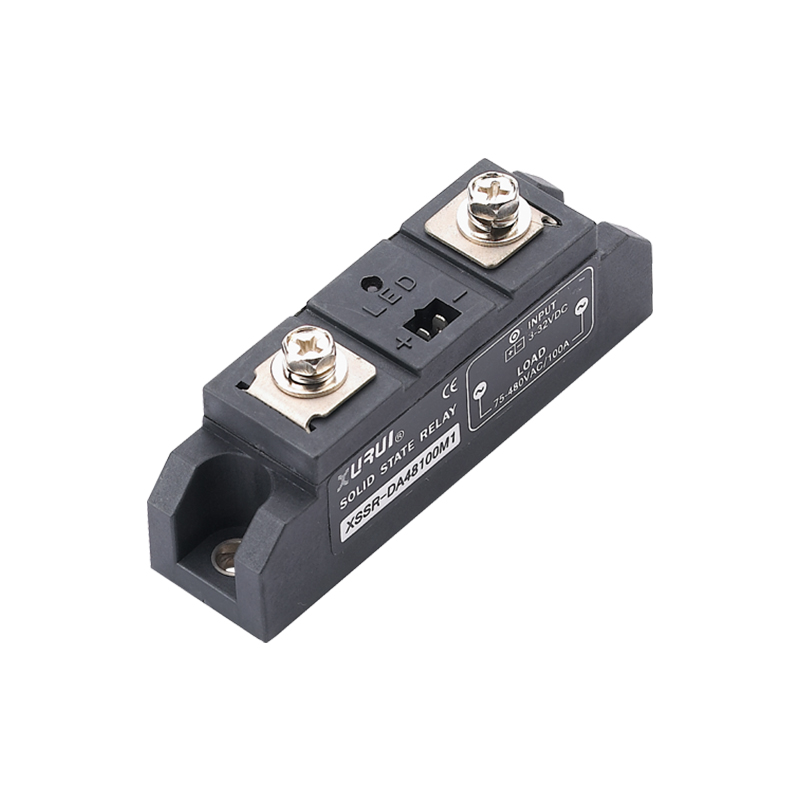
Need a Project-Specific Recommendation?
To evaluate an SSR against a real load profile, send the load voltage, current, load type, control voltage, and panel mounting constraints to XURUI. Company website: xuruiswitch.com. For a general overview of the company and product range, download the XURUI brochure: XURUI Company Brochure.
Contact: Leon
Email: Leon@chinaxurui.com
Tel: +86-577-62911448
WhatsApp: +86 13968773211