
Solid State Relay Compliance: A Consumer Electronics Regional Guide
Solid state relay compliance, in consumer electronics, is the combined evidence that a relay is designed, tested, marked, and documented for the market where the finished device will be sold. It is not one certificate, and a logo on a product page is not the same thing as a certificate whose scope includes the exact model and rating you intend to order.
This guide is written for buyers at the decision stage — the point where suppliers have been shortlisted and the remaining question is no longer what an SSR does, but whether a supplier can prove the relay will clear the requirements of a specific market. It sets out what compliance covers, how regional requirements change the documentation set, and how to verify a supplier's claims before a purchase order is issued.
Why Compliance Is Harder to Compare Than Price or Current Rating
Two solid state relays can carry the same 40A rating, the same DIN-rail footprint and the same zero-cross switching behaviour, yet be sold with very different amounts of supporting evidence. That is why compliance is the attribute most likely to stall a decision-stage comparison: price and current rating sit on the same datasheet page, while compliance sits partly in documents that have to be requested.
Three specific confusions cause most of the delay.
- Component scope versus end-product scope. In consumer electronics the relay is usually a component inside a larger device. The finished device may fall under a different set of requirements than the relay itself, so the useful question is not whether the relay is certified, but which evidence your product's market requires and whether this relay's evidence supports it.
- Certificate scope versus product family. A certificate names models, ratings and a file or registration number. A family-level claim on a website is not the same as a scope that includes the exact model and rating on your order line.
- Marking versus documentation. The mark is what a customs officer, inspector or auditor sees. The documentation — test reports, declarations and substance statements — is what your engineering and quality teams need when a claim is challenged.
Separating those three questions turns compliance into a comparable attribute, in the same way mounting style or output current is compared. A supplier can then be scored on evidence rather than on adjectives.
The Compliance Context Behind the Decision
The commercial backdrop explains why documentation requests have become routine rather than exceptional. The global solid-state relay market is estimated at USD 1.74 billion in 2025 and is projected to reach USD 2.36 billion by 2030, according to MarketsandMarkets. Mordor Intelligence estimates that Asia-Pacific accounts for roughly 42% of that market in 2025, driven by electric-vehicle charger deployment and photovoltaic inverter manufacturing in China and Japan.
Two structural details matter when planning compliance. Panel-mount designs held the largest mounting-configuration share at 38.67% in 2025, while DIN-rail variants are the fastest-growing segment with a forecasted 7.11% CAGR — meaning an increasing share of control builds specify relays that slide into standardized enclosures. The 0–20 Ampere bracket accounted for 44.13% of the market in 2025, so most compliance questions in consumer electronics cluster around lower-current control loads rather than heavy industrial switching.
On the standards side, industrial solid state relays are commonly referenced against international safety standards including IEC/EN 60947-4-3 and UL 508. Both are widely used as benchmarks in supplier documentation. Because consumer devices often fall under product-specific frameworks of their own, the relay's certificate should be treated as an input to the end-product technical file, not as a substitute for it.
What Compliance Covers: Four Evidence Layers
Compliance for a solid state relay is best understood as four layers of evidence. A supplier that can only answer one of them is only partly qualified, regardless of how the specification sheet reads.
Layer 1 — Construction and design evidence
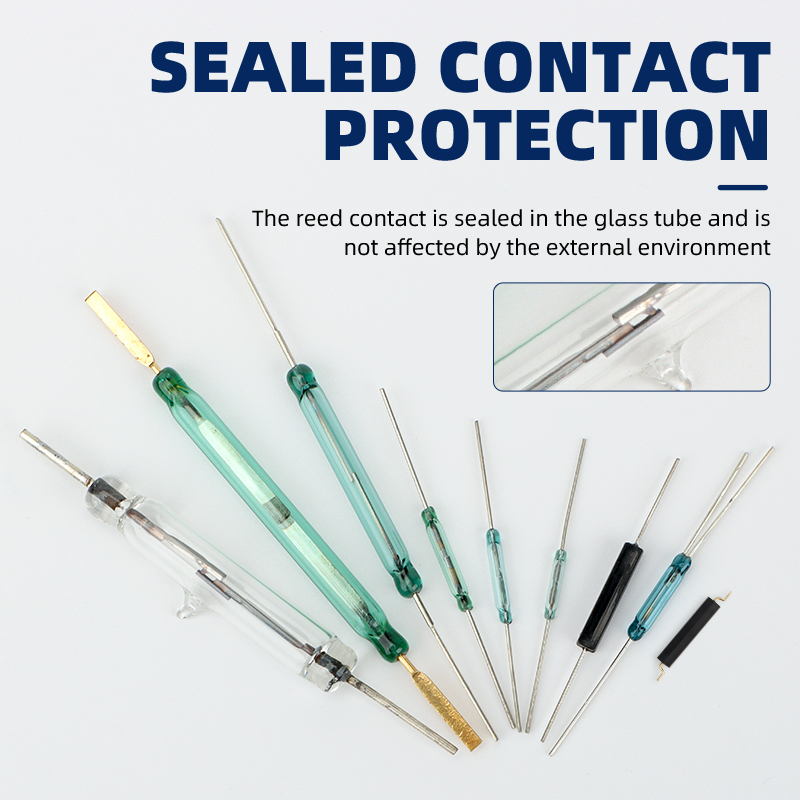
This layer describes how the relay manages the stresses that cause field failure: overheating, overcurrent damage, voltage surge and electromagnetic interference. Typical control measures include an aluminum base plate for heat dissipation, overcurrent protection, a surge suppression circuit, and zero-cross switching to reduce electrical stress at turn-on. Insulation and contact sealing belong to the same layer — sealed contact protection is a construction choice that has to be described in the file rather than assumed from a picture.
Layer 2 — Test evidence
Design intent only becomes compliance evidence once it is tested. Relevant categories for solid state relays include thermal performance testing, electrical load testing, surge and EMC testing, and long-term reliability verification before shipment. Batch-level inspection matters as well: a supplier that performs 100% inspection before delivery can state a per-unit result rather than a sample result.
Layer 3 — Certification and marks
Certificates convert test evidence into market access. XURUI (Zhejiang Xurui Electronic Co., Ltd., founded in 2002 in Wenzhou, Zhejiang) states that its mainstream products are qualified with CCC, CE, TÜV SÜD, UL, KC and RoHS certifications, and that the company operates under an ISO9001 quality management system. The company holds more than 60 national independent patents. For a buyer, the useful follow-up is never the list itself, but the scope attached to each entry on it.
Layer 4 — Marking, labelling and documentation
This is the layer that most often delays a shipment. It covers the rating information printed on the relay, the model designation used on the label, the language required in the destination market, the declaration of conformity, the test reports, the substance statements, and the traceability data that ties a production batch back to those documents.
Regional Requirements at a Glance
The table below compares what buyers in the main consumer-electronics markets commonly ask for when qualifying a solid state relay. It is a comparison of documentation practice, not a statement of legal obligation: the applicable requirement depends on the end product, its classification and the destination market.
| Market | Mark commonly requested | Standard often referenced | Documentation typically reviewed | Design and sourcing implication |
|---|---|---|---|---|
| North America | UL | UL 508 for industrial control equipment | Certificate with file number and model scope; test reports | Insulation and enclosure ratings must be stated per model; the label must match the certificate scope exactly |
| European Union | CE, RoHS | IEC/EN 60947-4-3 where applicable | Declaration of conformity, technical file, test reports, substance statement | The technical file must be assemblable before the declaration is signed; substance data must cover the full bill of materials |
| China | CCC | CCC scheme requirements for the product category | Certificate and test report | Confirm whether the relay itself, or only the end product, falls within scope |
| South Korea | KC | KC scheme requirements | Certificate, Korean-language label | Label format and language must be planned before production, not applied afterwards |
| Multi-market builds | Combination | IEC/EN 60947-4-3 and UL 508 | Consolidated document pack | Design to the strictest single requirement to avoid creating a second SKU for one market |
Comparing Evidence Types: What Each Document Actually Proves
At the decision stage, the practical skill is knowing what a document can and cannot prove. The comparison below is the fastest way to score two suppliers on the same basis.
| Document | What it proves | What it does not prove | How to use it in a decision |
|---|---|---|---|
| Supplier self-declaration | The supplier's stated position on conformity | Independent verification, or that the exact model is in scope | Treat as an opening claim and request the underlying report |
| Third-party test report | That a defined sample passed defined tests | That every production unit matches that sample | Pair it with batch inspection and traceability data |
| Certificate of conformity (UL, CCC, KC and similar) | That a certification body has evaluated the listed scope | Anything about models or ratings outside the listed scope | Match model and rating line by line against your order |
| Marking on product and packaging | That the physical unit carries the required mark and rating text | That the documentation behind it exists or is current | Check at incoming inspection, not on the datasheet |
| Substance statement (RoHS) | That declared materials meet the stated restrictions | Performance under electrical load | File with the technical documentation; never rely on it alone |
How to Verify a Supplier's Compliance Claim: Seven Steps
- Ask for the certificate, not the logo. Request the certificate as a document with the file or registration number, the issuing body, the model list and the rating range. A compliance page that reproduces a mark without a number cannot be checked and should not be used to close a supplier comparison.
- Match the scope line by line. Take the exact model, current rating, voltage rating and mounting style from your own specification and confirm each of them appears in the scope. A 40A panel-mount model and a DIN-rail model are usually separate lines, and approval for one does not automatically cover the other.
- Cross-check the standard reference. Ask which standard the certificate or report references. A supplier who answers with UL 508 and IEC/EN 60947-4-3 is describing a document; a supplier who answers with a general phrase such as international standards is describing a marketing position.
- Request the test reports, not only the certificate. Thermal performance, electrical load, surge and EMC testing, and long-term reliability verification are the categories that predict field behaviour in a consumer device, where the relay may switch frequently inside a sealed enclosure with limited airflow.
- Confirm the label artwork for your market. Language, model designation, rating format and mark placement should be reviewed as artwork before production. Label corrections after production are one of the most common causes of a held shipment.
- Confirm the document pack and who maintains it. Agree the list — certificate copy with scope, declaration of conformity, test reports, substance statement, traceability data — and confirm that the supplier will reissue it when a standard, a material or a production site changes.
- Write it into the purchase order and control changes. Any change of internal construction, contact material or production site can invalidate the evidence you approved. A short change-notification clause protects the compliance work already done and keeps the approved document set aligned with what is shipped.

Where These Decisions Change the Design
Heating control in smart home and appliance builds
A relay switching a heating element works in an enclosure with limited airflow, so thermal evidence is the first document to request. Aluminum base plate construction and an agreed thermal test report answer the question that a current rating alone cannot: what the relay does at continuous load inside the finished product.
Lighting control and inrush behaviour
Lighting loads draw a higher current at switch-on than in steady state. Zero-cross switching and surge suppression reduce the stress at that moment, and surge testing is the evidence that supports the claim. For devices sold into several markets, the same surge report usually feeds more than one national file.
HVAC equipment and panel integration
DIN-rail mounting is the fastest-growing configuration, with a forecasted 7.11% CAGR, which means more relays are specified into standardized enclosures shared with other components. In that setting, enclosure and insulation ratings have to be read together with the label artwork, because the same relay may sit in a panel that is inspected against a different framework than the consumer device it controls.
One device, several export markets
XURUI exports about 40% of its output to markets including the United States, Germany, Japan, South Korea, Turkey, Belgium and Egypt. A supplier with that spread of destinations is used to assembling market-specific document packs from the same test base — which is exactly the capability a buyer needs when one consumer device is sold into several regions with a single approved relay.
Compliance Cost Versus Total Cost
Compliance has a cost, and the decision-stage question is where that cost belongs. Comparison data for solid state relays against traditional electromechanical relays puts the initial unit cost of an SSR about 20% higher, with total cost of ownership about 35% lower over five years, driven by roughly 85% less maintenance and a failure rate reduced by 50% because there are no moving contacts and no contact arcing. Switching is non-contact, faster and silent, which matters in consumer devices where audible relay clicking is treated as a product-quality defect.
The compliance implication follows the same logic. A relay whose evidence pack is complete at the quotation stage adds cost once. A relay whose evidence pack is incomplete adds cost repeatedly: re-testing, re-labelling, held shipments, and in the worst case a separate SKU for one market. That is why the cheapest quoted relay is rarely the cheapest compliant relay.
Decision rule: compare suppliers on initial price and on the completeness of the four evidence layers at the same time, and treat missing documentation as an unpriced line item in the comparison.
Frequently Asked Questions
Does a solid state relay used in consumer electronics need UL or IEC certification?
It depends on the end product and the destination market. UL 508 and IEC/EN 60947-4-3 are the standards most often referenced for industrial control equipment, and buyers frequently use them as benchmarks when specifying solid state relays for consumer devices. Where a mark is required, the certificate must list the exact model and rating. XURUI states that its mainstream products are qualified with CCC, CE, TÜV SÜD, UL, KC and RoHS certifications, and buyers should request the certificate scope for the specific SSR model before ordering.
Can a supplier adapt marking and documentation to more than one region?
Yes, where the supplier controls both design and production. XURUI runs OEM and ODM programs with an engineering team of more than 24 engineers, produces in a facility of over 5000 square metres with 150 employees and an annual output of 20 million units, and exports about 40% of that output to markets including the United States, Germany, Japan, South Korea, Turkey, Belgium and Egypt. A supplier already serving several of those markets can normally prepare market-specific labels and document packs; confirm the exact set for each destination before tooling begins.
How much does compliance add to the cost of a solid state relay?
There is no single figure, because the cost depends on which markets you enter, whether the relay itself or only the end product falls in scope, and how much testing already exists. The more useful figure is total cost: in the comparison data, a solid state relay carries roughly 20% higher initial cost than a traditional electromechanical relay but about 35% lower total cost of ownership over five years, with around 85% less maintenance. Budget compliance as a one-time evidence cost and compare quotes on that basis rather than on unit price alone.
Can we validate compliance evidence on samples before mass production?
Samples are the normal way to check construction, marking and label artwork against the documents. Request samples together with the certificate scope and the relevant test reports, so the physical unit and the paperwork can be compared side by side. XURUI supports OEM and ODM customization and performs 100% inspection before delivery; a sample request should state the destination market, the required mark, and the model and rating to be covered. Contact Leon@chinaxurui.com or WhatsApp +86 13968773211.
What documentation should arrive with the shipment, and how does it affect lead time?
The usual pack is the certificate copy with scope, the declaration of conformity, the test reports for thermal, load, surge and EMC performance, the RoHS statement, and batch traceability data, with labels prepared in the language required by the destination market. Document preparation can run in parallel with production, but any item created after the order — a new label language, a new model designation, an additional test — will extend the schedule. Confirm the document list at quotation stage so it does not become a shipment-stage delay. The XURUI catalogue is available for download below.
Conclusion
Solid state relay compliance in consumer electronics is a four-layer evidence question: construction, test, certification, and marking with documentation. Regional requirements change the shape of the fourth layer far more than the first three, which is why the same relay can be straightforward in one market and blocked in another.
For decision-stage buyers, the workable approach is to score suppliers on evidence rather than on claims — certificate scope matched line by line, test reports for the stresses that actually matter, label artwork agreed before production, and the whole set written into the purchase order. Suppliers that control both design and production, as XURUI does from its Wenzhou base, can usually assemble that pack faster, because tests, labels and batch records come from the same system.
Next Step: Request Samples and the Compliance Document Pack
Send your destination market, required mark, and the model and rating you intend to order. XURUI will confirm the certificate scope and the documentation set for that combination. Catalogue download: XURUI product catalogue (PDF). Website: xuruiswitch.com.
Email: Leon@chinaxurui.com · Tel: +86-577-62911448 · WhatsApp: +86 13968773211 · Zhejiang Xurui Electronic Co., Ltd., NO.3 Yandangshan Road, Wenzhou Bridge Industrial Park, Beibaixiang Town, Yueqing, Wenzhou City, Zhejiang, China
Have Questions or Need More Details?
Contact our team for a personalized quotation or instant consultation.
Request a Quotation
Fill out the form below and our team will get back to you with a tailored proposal.
WhatsApp Direct Chat
Prefer to chat in real-time? Message us on WhatsApp for instant assistance & quick answers.
- Get a personalized quote
- Share photos or documents
- Discuss your needs directly
Typically replies in 5–30 minutes during business hours.