
Solid State Relay Long-Term Partnership FAQ: What Consumer Electronics Buyers Ask Before Committing
Committing to a long-term solid state relay (SSR) supply relationship raises a different set of questions than placing a first order. The first order tests whether a supplier can produce one conforming batch. A partnership tests whether that same batch can be reproduced twelve, twenty-four or thirty-six months later — with the same materials, the same parameter windows, valid certificates and a support channel that answers when something deviates.
This article answers the questions consumer electronics buyers actually send during the evaluation-to-execution stage: batch consistency, communication during repeat orders, after-sales support, replacement planning, and how to judge whether a supplier will still be dependable in year three. XURUI (Zhejiang Xurui Electronic Co., Ltd.) is used as the reference case because its published company, capability, certification and project records map directly onto those questions. Related switching components — micro switches, limit switches and reed switches — appear only where they affect how an SSR is specified, mounted or supported.
Problem Definition: Why the Second Order Decides the Relationship
A first purchase and a long-term supply agreement are separated by five continuity problems, and almost every buyer question raised during the evaluation stage belongs to one of them.
- Material and process continuity. A supplier that changes housing resin, base-plate alloy or internal switching construction between runs changes the thermal and electrical behaviour of the part. XURUI publishes the materials used in its SSR families — for example PA66 nylon housings with aluminium alloy base plates on the XSSR-W2-JK, XSSR-W1 and XSSR-3H — which gives a buyer something concrete to re-confirm on each repeat order.
- Parameter-window continuity. Switching time of ≤10 ms, dielectric strength of ≥2500 VAC, insulation resistance of ≥100 MΩ and output leakage limits of ≤5 mA or ≤8 mA depending on family are the published windows for these SSRs. A batch that drifts outside them may still pass a bench check and still fail in the field.
- Documentation continuity. Certificate numbers, cited standards and validity dates must remain auditable for as long as the end product is sold. A certificate that lapses mid-programme can stop a shipment at the port.
- Commercial continuity. Minimum order quantity, delivery term, payment term and the agreed acceptance method define how predictable repeat ordering will be. XURUI publishes a 100-unit MOQ, EXW delivery, TT payment and pre-shipment test as the acceptance method.
- Support continuity. A long-term relationship needs a named route for technical questions, deviation reports and replacement units. XURUI provides remote after-sales support as its published service model.
The asymmetry matters more in consumer electronics than in many other categories. A relay that costs slightly less but drifts across batches can trigger field returns across an entire appliance programme, and the cost of that event is many times larger than the saving. Long-term SSR sourcing is therefore best evaluated as a risk-control decision, not only as a price decision.
Industry Background: Where Consumer Electronics SSR Demand Is Moving
Third-party research places the global solid-state relay market at an estimated USD 1.74 billion in 2025, projected to reach USD 2.36 billion by 2030 (MarketsandMarkets). Asia-Pacific is the largest regional block, estimated at a 42% share in 2025, with demand linked to electric-vehicle charger deployment and photovoltaic inverter manufacturing in China and Japan (Mordor Intelligence). Within the product mix, panel-mount configurations held the largest mounting share at 38.67% in 2025, while DIN-rail variants are the fastest-growing segment with a forecast CAGR of 7.11%. Load current demand is concentrated at the low end: the 0–20 A bracket accounted for 44.13% of the market in 2025.
Two standards appear repeatedly in supplier qualification. IEC/EN 60947-4-3 covers contactors and motor-starters, and UL 508 covers industrial control equipment. Which standards a supplier's certificates actually cite determines the markets a finished product can enter, so the standard reference — not just the certificate logo — is worth reading before a relationship is signed.
Consumer electronics programmes sit at the intersection of these trends. An appliance or HVAC control board may switch only a few amperes, but the board is expected to stay in production for years, to pass the same safety and EMC review at every revision, and to avoid field failures caused by a component that behaved differently in batch five than in batch one.
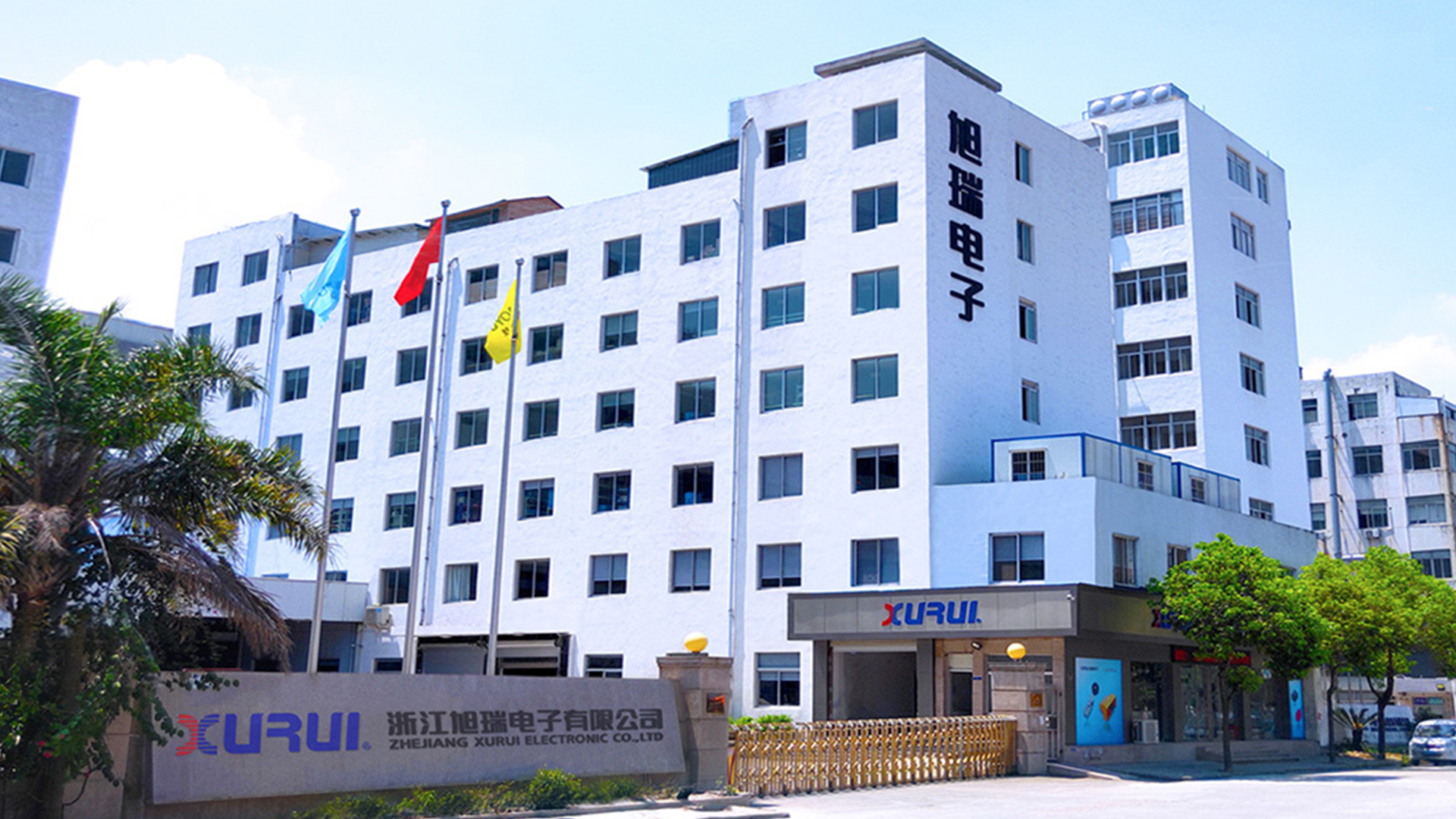
XURUI (Zhejiang Xurui Electronic Co., Ltd.) is a Chinese manufacturer founded in 2002 that has held independent import and export rights since 2008. It operates a 5,000+ m² facility with 150 employees and an annual output of 20 million units, exports approximately 40% of production, and lists the United States, Germany, Japan, South Korea, Turkey, Belgium and Egypt among its main markets. The portfolio covers solid state relays, micro switches, limit switches, foot switches, toggle switches, reed switches, proximity switches and photoelectric switches, supported by ISO9001 quality system certification and product certifications including CCC, CE, TÜV SÜD, UL, KC and RoHS.
Detailed Solution: How the Supplier Side Is Structured for Long-Term Supply
Certification continuity that can be audited line by line
For solid state relays specifically, three certification tracks matter to a consumer electronics buyer:
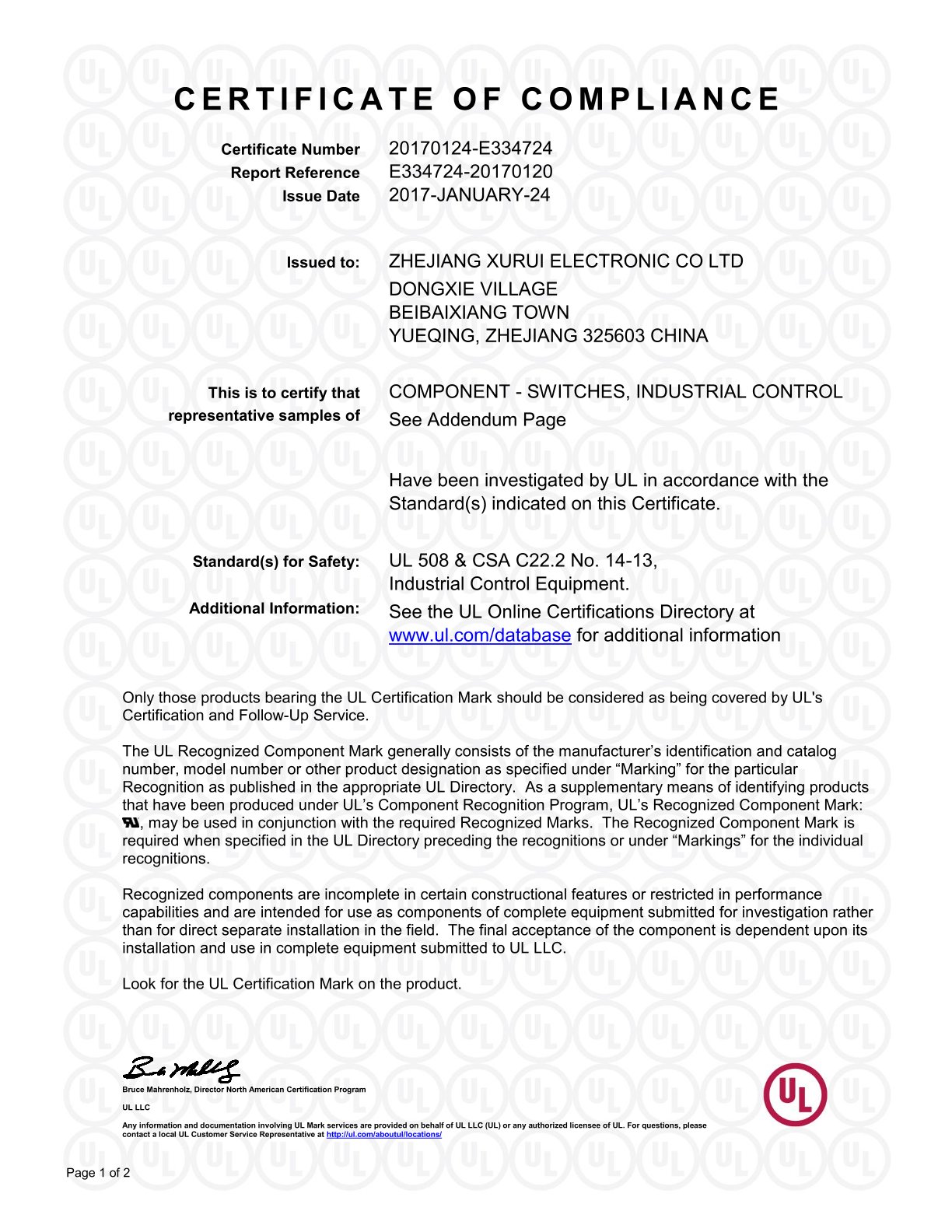
- UL. Certificate file 20170124-E334724, issued by UL LLC against UL 508 and CSA C22.2 No. 14, covers the XSSR-W2-JK, XSSR-W6 and XSSR-F W2 solid state relay models.
- CE. Certificate TMC210514108-C, issued by TMC Testing Services (Shenzhen) Co., Ltd. against EN 62368-1:2014+A11:2017, covers the XSSR Series, including models such as XSSR-W2, XSSR-3H, XSSR-W6, XSSR-M1~M6 and XSSVR-3P.
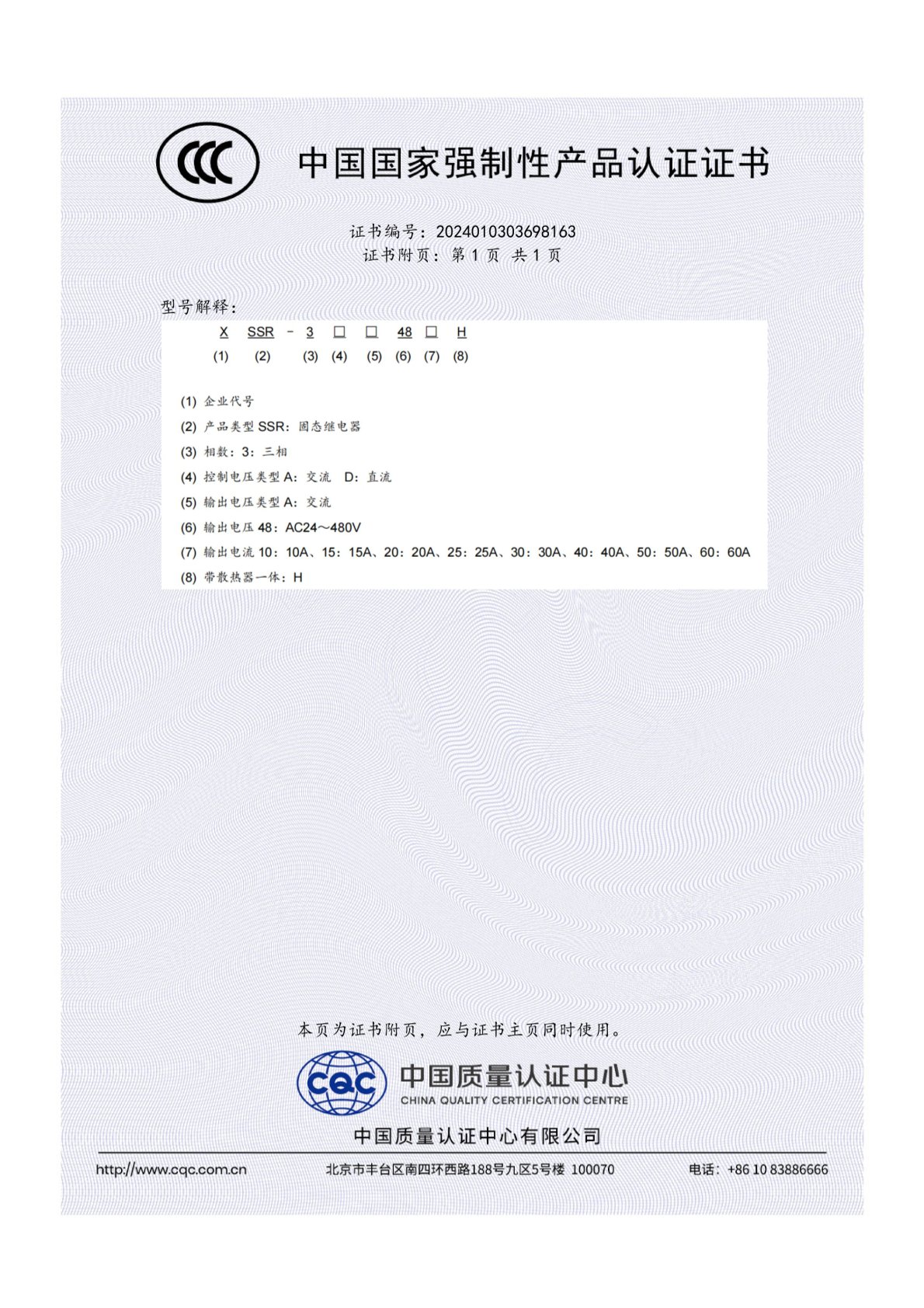
- CCC. Certificate 2024010303698163, issued by the China Quality Certification Centre (CQC) against GB/T 14048.5-2017, covers the XSSR-3H solid state relay and is valid from 30 September 2024 to 29 September 2029.
Two practical checks follow. First, match the certificate scope to the exact model you are ordering — a brand-level certificate is not the same as a model-level one. Second, record the expiry date of every certificate in the file and ask for renewal status before that date passes, not after.
Consistency controls across production batches
XURUI's published quality control position is a 100% pre-shipment test on every unit, backed by an ISO9001 quality system and a production base equipped with advanced production and testing equipment. The company reports more than 60 national independent patents and an engineering team of 24+ engineers, which is the resource base for maintaining a specification rather than simply repeating it.
For a buyer, the operational translation is straightforward: ask which parameters are measured on 100% of units and which are sampled, then agree that measured values are recorded against the frozen specification. Published windows such as switching time ≤10 ms, dielectric strength ≥2500 VAC and output leakage current ≤5 mA give the acceptance criteria something objective to attach to.
Communication and the handling of repeat orders
Repeat-order friction usually comes from three sources: unclear order entry, unclear change notification and unclear escalation. XURUI's published commercial framework reduces the first: OEM/ODM production mode, MOQ of 100 units, lead time of 15–30 days, monthly capacity of 5,000–250,000 units, EXW delivery, TT payment and pre-shipment test as the acceptance method.
The second and third require agreement rather than a catalogue. Buyers committing to a multi-year relationship should ask for written notification triggers — material substitution, tooling change, production site change, sub-supplier change — and a single named contact for technical escalation. XURUI lists remote after-sales support and maintains sales agents and localised service centres in key overseas markets to provide pre-sales consultation, technical support and after-sales service.
Replacement and spares planning
Replacement planning has two layers. The first is part-level: keep the same family across product revisions so panels already in the field remain serviceable. The second is design-level: know which alternative family inside the same manufacturer's range can substitute if a specific model is retired.
XURUI's published ranges make that substitution analysis possible. A 240 V-class load with modest current demand can be served by the XSSR-W7 (24–240 VAC, 5–25 A) or XSSR-W9 (24–240 VAC, 5–20 A), while wider-range families such as the XSSR-W1 (75–480 VAC, 10–100 A) or XSSR-3H (24–480 VAC, 10–60 A) cover the same 240 V point with more headroom. Because several families share the same control input type and switching-time characteristics, moving between them is a documented decision rather than a redesign.
Derating rules belong in the same plan. XURUI publishes load current safety factors of 50–60% for resistive loads and 30–40% for inductive loads on families such as the XSSR-W1, XSSR-W2-JK, XSSR-H and XSSVR series. Replacement stock planning that ignores those factors tends to over-specify current ratings and under-specify thermal design.
Portfolio depth for integration
A consumer electronics programme rarely needs only a relay. Panel and appliance designs typically combine an SSR for load switching with mechanical switching components for position, door or user input. XURUI manufactures micro switches (XV-10, XV-15, XZ-15 and XSS-5 series), limit switches (XZ-1, XZ-3, XZ-7, XZ-8 and XZ-9 series) and reed switches (XGH series) alongside its solid state relays; the XZ-9 limit switch series, for example, carries a CE certificate issued against EN 60947-5-1:2017.
Sourcing related switches from the same manufacturer reduces the number of documentation streams to maintain — one quality system, one certificate file, one escalation path — but it does not change the anchor decision. The SSR specification and its long-term consistency remain the reason the relationship exists.
Step-by-Step Breakdown: Six Steps to Qualify an SSR Partner Before Committing
- Freeze the specification before negotiating. Write down control voltage, load voltage, load current with the correct derating factor, mounting style and operating temperature. Across these SSR families the reference points are control inputs of 3–32 VDC or 80–250 VAC depending on model and an operating temperature range of −20 °C to +70 °C. Verify that the target load current sits inside the family range: 25 A and 40 A both fall inside the XSSR-3H (10–60 A) and XSSR-W1 (10–100 A) ranges.
- Match certificates to the exact model, and check the dates. Confirm that the UL, CE or CCC certificate you rely on names the model you are ordering, cites a standard your market accepts, and remains valid beyond your production plan.
- Treat the first batch as a validation lot, not just a delivery. With a published MOQ of 100 units, the first order is small enough to run as a validation batch. Agree in advance that pre-shipment test results are the acceptance record, then measure the delivered units against the frozen specification rather than against visual inspection.
- Write the repeat-order protocol. Confirm MOQ, lead time, delivery term, payment term and acceptance method in writing, then add the items no catalogue contains: change-notification triggers, the named technical contact, the reporting format for deviations and the escalation timeline. A one-page protocol prevents most disputes that surface in year two.
- Plan replacements before you need them. Identify one alternate family inside the same manufacturer's range for each critical SSR part number, confirm that it shares the same control input type and switching characteristics, and document the substitution logic.
- Set a review rhythm. A yearly review of certificates, published specifications, lead-time performance and deviation reports turns a supply relationship into a managed one. Certification renewal dates and capacity assumptions are the two items that change most often without anyone noticing.
Use Cases: What Long-Term Switching Supply Looks Like in Practice
Smart home status detection with a reed switch
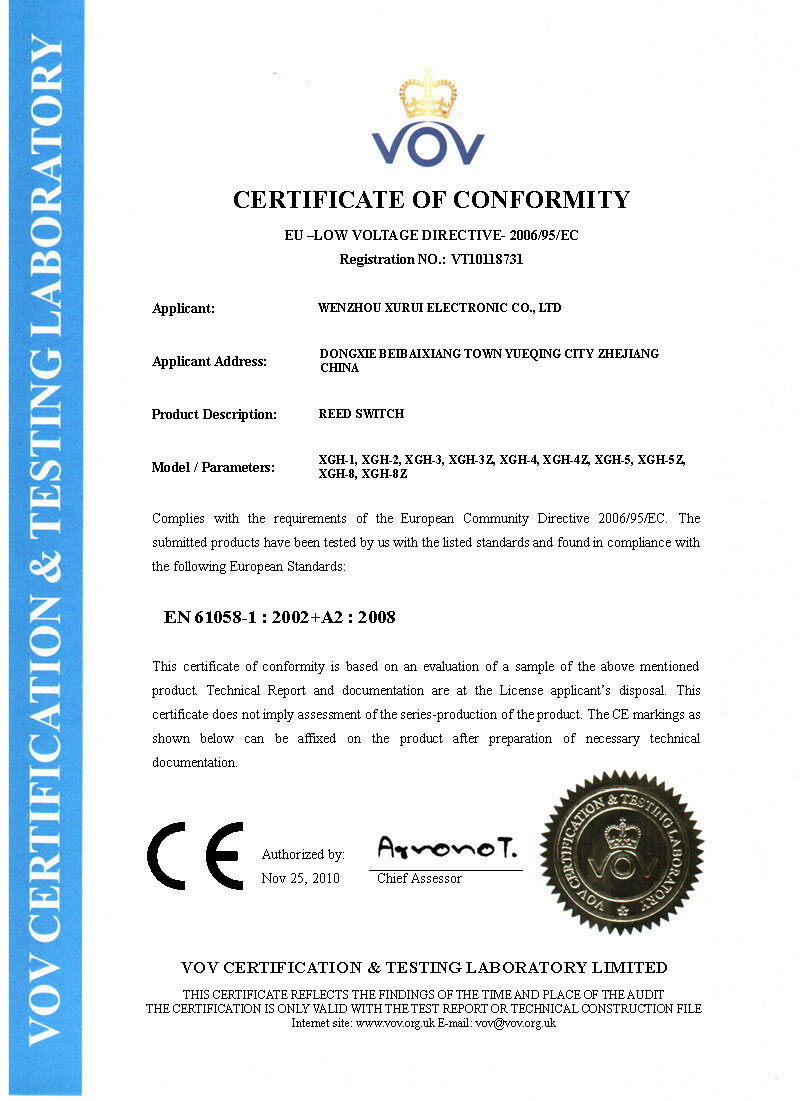
A German smart home solution provider used XURUI XGH reed switches for door and window status detection across a 3,500-unit order over a two-year period. The reported result was a 60% reduction in false alarms, no reported contact failures and improved system reliability. The XGH series is a glass-tube reed switch with dimensions from 2 × 10 mm to 8 × 50 mm, a contact rating of 1 VA to 30 VA, an operating temperature range of −10 °C to +85 °C and CE certification. The pattern is the same one that applies to SSRs: a low-power component whose value depends on consistent behaviour over years rather than on first-sample performance.
Heating control in industrial equipment
A German industrial equipment manufacturer integrated XURUI XSSR-W1 solid state relays into heating control systems, taking 1,200 units across three years. The reported outcome was a 60% reduction in maintenance cost and fewer mechanical failures. The XSSR-W1 accepts 3–32 VDC or 80–250 VAC control input, switches 75–480 VAC loads at 10–100 A, uses a plastic housing with an aluminium alloy base plate, and is rated for −20 °C to +70 °C operation. The case illustrates the commercial logic of an SSR partnership: the savings come from avoided mechanical wear and service calls, not from the unit price.
PLC and conveyor switching in automation
A Malaysian industrial automation solution provider used XURUI XSSR-M1~M6 solid state relays in PLC control systems and conveyor equipment, with 800 units supplied over two years. The reported result was a 65% reduction in maintenance cost and no major failures during operation. This family is zero-crossing triggered, switches 75–480 VAC at 60–1000 A depending on model (M1: 60–200 A; M6: 700–1000 A), uses a screw-mounted modular enclosure and is rated −20 °C to +70 °C.
These are supplier-reported outcomes from named customer segments and applications. They are useful as evidence of a pattern, and a buyer should still validate performance against their own load profile, duty cycle and thermal environment.
Comparison Table: XURUI Solid State Relay Families at a Glance
The table below compares the SSR families referenced in this guide using published specification and certificate data. It is the reference point when deciding which family carries a long-term programme and which family serves as the alternate.
| Family | Control input | Load voltage | Load current | Mounting | Published certification coverage |
|---|---|---|---|---|---|
| XSSR-W1 | 3–32 VDC / 80–250 VAC | 75–480 VAC | 10–100 A | Plastic housing, aluminium base plate | CE (XSSR Series) |
| XSSR-W2-JK | 4–32 VDC | 42–480 VAC | 10–120 A | Plastic housing, aluminium base plate | UL, CE |
| XSSR-W6 | 3–32 VDC / 80–250 VAC | 75–480 VAC | 10–100 A | PA66 nylon housing | UL, CE |
| XSSR-3H | 3–32 VDC / 80–250 VAC | 24–480 VAC | 10–60 A | DIN-rail mount, integrated module | CCC, CE |
| XSSR-F W2 | 3–32 VDC | 24–480 VAC | 10–60 A | Horizontal screw mount, 59 × 47 × 33.5 mm | UL, CE |
| XSSR-M1~M6 | 3–32 VDC | 75–480 VAC | 60–1000 A (M1: 60–200 A; M6: 700–1000 A) | Screw mount, modular enclosure | CE |
| XSSVR-3P | Potentiometer 2–10 kΩ, 0–5 V / 0–10 V, 4–20 mA / 0–10 mA | 0–380 VAC (three-phase) | 10–200 A | Not stated in published data | CE |
Two notes on reading this table. First, the certification column lists published certificate scope; confirm the exact model on the certificate before ordering. Second, if an application calls for a load voltage above the published family range — a 600 V-class load, for instance — that requirement must be confirmed against the datasheet for the specific model, because the ranges published for the families above top out at 480 VAC. The XSSVR-3P is the three-phase option, while the adjustable XSSVR-W1 / W2 models use an external potentiometer or analogue signal control with a conduction angle range of 0–170°.
FAQ: What Consumer Electronics Buyers Ask Before Committing
1. Which certifications should be verified before signing a long-term solid state relay agreement?
Verify three things: the certificate scope, the standard cited, and the validity period. For XURUI solid state relays, UL file 20170124-E334724 was issued by UL LLC against UL 508 and CSA C22.2 No. 14 and covers the XSSR-W2-JK, XSSR-W6 and XSSR-F W2 models. CE certificate TMC210514108-C was issued against EN 62368-1:2014+A11:2017 and covers the XSSR Series. CCC certificate 2024010303698163 was issued by the China Quality Certification Centre against GB/T 14048.5-2017 for the XSSR-3H and is valid from 30 September 2024 to 29 September 2029. The wider XURUI portfolio also holds CCC, CE, TÜV SÜD, UL, KC and RoHS certifications under an ISO9001 quality system. A certificate that names a different model, cites a standard your market does not accept, or expires inside your production window does not reduce your compliance risk.
2. How is consistent solid state relay performance maintained across repeat orders?
Consistency is maintained through fixed material specifications, published parameter windows and 100% pre-shipment testing. XURUI publishes the housing and base-plate materials for its SSR families — PA66 nylon housings and aluminium alloy base plates, for example on the XSSR-W2-JK, XSSR-W1 and XSSR-3H — together with parameter windows such as switching time ≤10 ms, dielectric strength ≥2500 VAC, insulation resistance ≥100 MΩ and output leakage current of ≤5 mA or ≤8 mA depending on family. Production is supported by an engineering team of 24+ engineers and more than 60 national independent patents, and OEM/ODM customisation covers handle, logo, dimensions and operating characteristics. The commitment worth requesting as a buyer is a record of measured values for each repeat batch against the frozen specification.
3. What drives cost in a long-term solid state relay supply arrangement?
Four commercial and technical drivers dominate. The first is the published commercial framework: a 100-unit minimum order quantity, EXW delivery, TT payment and pre-shipment test as the acceptance method. The second is current derating — XURUI publishes load current safety factors of 50–60% for resistive loads and 30–40% for inductive loads on families such as the XSSR-W1, XSSR-W2-JK and XSSVR series, which determines which rated model a given load actually requires. The third is thermal and mounting design, including whether the panel needs a DIN-rail mount solid state relay such as the XSSR-3H or a screw-mounted module such as the XSSR-F W2 or XSSR-M1~M6. The fourth is certification scope, because a model already covered by the certificate your market requires avoids duplicated testing. Chasing the lowest unit price while ignoring derating or certification typically produces the highest total cost.
4. Can we validate a batch before committing to a long-term agreement?
Yes, and the published commercial terms make it practical. XURUI's minimum order quantity is 100 units, lead time is 15–30 days, and acceptance is by pre-shipment test. A first order of that size can serve as a validation lot: freeze the specification in advance, request the pre-shipment test records, then measure the delivered units against the specification and the intended load profile. Because OEM/ODM production covers customisation of dimensions and operating characteristics, the validation lot can also confirm whether a customised variant behaves the same way as the standard model.
5. What lead time and capacity should we plan for in repeat orders?
Plan against a 15–30 day lead time and a monthly capacity range of 5,000–250,000 units, with delivery on an EXW basis. Those figures are workable for most consumer electronics production schedules, but two extra steps protect the relationship: keep a buffer of replacement units for models in continuous use, and confirm capacity assumptions ahead of seasonal peaks rather than during them. The practical next step is to request the current catalogue and confirm the model, quantity and certification requirement for your programme.
Conclusion: What to Confirm Before You Commit
A long-term solid state relay partnership is confirmed by evidence rather than by intention. Before signing, four items should be in the file: a frozen specification with the correct load-current derating, a certificate set that names your exact models and stays valid through your production window, a written repeat-order protocol covering MOQ, lead time, acceptance, change notification and escalation, and a documented replacement path using an alternate family inside the same range. XURUI's published position against those four items — OEM/ODM production, 100-unit MOQ, 15–30 day lead time, 5,000–250,000 units monthly capacity, 100% pre-shipment testing, and UL, CE and CCC coverage on its solid state relay models — is what makes it a candidate for a multi-year programme rather than a single transaction.
Next Step: Catalogue, Validation Batch and Technical Contact
The full XURUI solid state relay and switch range is available for download here: download the XURUI product brochure (PDF). It lists the SSR families, ratings, mounting styles and available certifications referenced in this FAQ.
For a validation batch, a quotation or a certification file, contact Leon — email Leon@chinaxurui.com, telephone +86-577-62911448, or WhatsApp +86 13968773211. Company website: xuruiswitch.com. Address: NO.3 Yandangshan Road, Wenzhou Bridge Industrial Park, Beibaixiang Town, Yueqing, Wenzhou City, Zhejiang, China.